Shared Value and Clusters 
Dane Smith 
Shared Value Creation 
11 November
2 
Shared Value and Clusters 
Dane Smith, Managing Director
3 
FSG.ORG 
© 2014 FSG 
FSG is a nonprofit consulting firm focused on finding 
better solutions to social problems 
• Consulting firm founded by Professor 
Michael Porter and Mark Kramer 
• Specializing in strategy, evaluation and 
research in the social sector 
• Over 160 employees in six offices 
• Thought leader on corporate 
engagement with society 
Michael Porter Mark Kramer 
Representative Corporate Clients
4 © 2013 FSG 
4 
FSG.ORG 
© 2013 FSG 
“Creating Shared Value” 
– Porter/Kramer, HBR, 2011 
Shared value holds the key 
to unlocking the next wave of 
business innovation and 
growth… 
An ongoing exploration of 
social needs will lead 
companies to discover new 
opportunities … they previously 
overlooked. ” 
“
FSG.ORG 
Evolving Perspectives on Corporate Social Engagement Approaches 
“We should do 
something” 
“We see 
opportunity” 
5 © 2013 FSG 
“Problems 
could harm 
us” 
- Let’s donate 
money to 
minimize brand 
damage 
- Let’s create 
dedicated CSR 
efforts 
“What 
problems?” 
- Let’s ignore the 
problems 
- Let’s 
strengthen our 
company by 
solving societal 
problems 
relevant to our 
business
FSG.ORG 
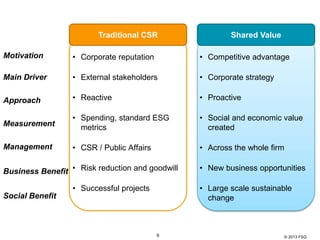
Traditional CSR Shared Value 
6 © 2013 FSG 
• Corporate reputation 
• External stakeholders 
• Reactive 
• Spending, standard ESG 
metrics 
• CSR / Public Affairs 
• Risk reduction and goodwill 
• Successful projects 
• Competitive advantage 
• Corporate strategy 
• Proactive 
• Social and economic value 
created 
• Across the whole firm 
• New business opportunities 
• Large scale sustainable 
change 
Motivation 
Main Driver 
Approach 
Measurement 
Management 
Business Benefit 
Social Benefit
Virtuous Cycle 
By creating a “virtuous cycle,” 
companies can maximize 
social impact and 
business returns 
Shared Value is NOT: 
• Sharing the value already 
created (philanthropy) 
• Personal values 
• Balancing stakeholder 
interests 
• Compliance with local 
regulations 
7 FSG
Shared value occurs in developed markets… 
“Bad” fats causing 
20’000 deaths 
HIV co-infection from 
needle stick injuries 
Cooking oils Safety devices 
600’000 tons of transfats 
taken out of the U.S. diet, 
# 1 product line for Dow 
Protected millions of 
health workers, 
25% of BD’s revenues 
8 FSG
…and in developing countries 
No access to financial 
services 
Mobile banking 
service 
70% of women, 57% of 
children anemic in India 
Reinforced spices 
14M users in East Africa 
18% of Safaricom’s 
revenues 
138M servings sold, 87% 
growth 
9 FSG
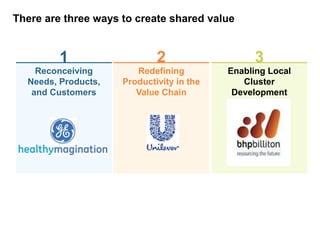
There are three ways to create shared value 
1 
Reconceiving 
Needs, Products, 
and Customers 
2 
Redefining 
Productivity in the 
Value Chain 
3 
Enabling Local 
Cluster 
Development 
10 FSG
FSG.ORG 
11 © 2010 FSG 
Arogya Parivar 
Strengthening Interrelated 
Companies and Institutions 
 Partnering with ~50 000 
pharmacists and clinics 
 Training 300 health 
educators 
 Continuity of supply to 
rural villages 
 Health infrastructure 
financing 
Nestlé Portugal 9/29/11 
40 million 
new customers 
Results 
 Improved access for 42 
million patients in 28,000 
villages 
 Expanding to Indonesia, 
Vietnam and Kenya
Barriers to Cluster Competitiveness 
Shared Value by Design and Shared Value by Default 
Traditional Challenges 
• Technical 
• Market 
• Government / Regulatory 
Shared Value Challenges 
• Poverty 
• Weak educational systems 
• Weak health systems 
• Environmental degradation 
12 FSG
Increasing SME Competitiveness 
World Class Provider Program 
Increase innovation and efficiency by creating a cluster of 250 
world class suppliers by 2020 
13 FSG
Closing the Skills Gap 
Consejo de Competencias Mineras 
• Shortage of qualified human 
capital: critical challenge for 
the industry competitiveness 
• Cluster level response: clarity 
regarding skills gaps, defining 
profiles and career paths 
• New career opportunities for 
students, increased focus for 
public expenditures 
14 FSG
Increasing shared value by design at the cluster level 
• Cluster-level efforts are needed to solve many problems 
– Resources required 
– Market power 
– Institution building 
• Significant challenges exist 
– Lack of trust 
– Desire to take credit 
– Interest in building individual brands 
• Next steps 
– More deliberate effort 
– Share success stories 
– Build new tools 
15 FSG

TCI 2014 Shared Value and Clusters

  • 1.
    Shared Value andClusters Dane Smith Shared Value Creation 11 November
  • 2.
    2 Shared Valueand Clusters Dane Smith, Managing Director
  • 3.
    3 FSG.ORG ©2014 FSG FSG is a nonprofit consulting firm focused on finding better solutions to social problems • Consulting firm founded by Professor Michael Porter and Mark Kramer • Specializing in strategy, evaluation and research in the social sector • Over 160 employees in six offices • Thought leader on corporate engagement with society Michael Porter Mark Kramer Representative Corporate Clients
  • 4.
    4 © 2013FSG 4 FSG.ORG © 2013 FSG “Creating Shared Value” – Porter/Kramer, HBR, 2011 Shared value holds the key to unlocking the next wave of business innovation and growth… An ongoing exploration of social needs will lead companies to discover new opportunities … they previously overlooked. ” “
  • 5.
    FSG.ORG Evolving Perspectiveson Corporate Social Engagement Approaches “We should do something” “We see opportunity” 5 © 2013 FSG “Problems could harm us” - Let’s donate money to minimize brand damage - Let’s create dedicated CSR efforts “What problems?” - Let’s ignore the problems - Let’s strengthen our company by solving societal problems relevant to our business
  • 6.
    FSG.ORG Traditional CSRShared Value 6 © 2013 FSG • Corporate reputation • External stakeholders • Reactive • Spending, standard ESG metrics • CSR / Public Affairs • Risk reduction and goodwill • Successful projects • Competitive advantage • Corporate strategy • Proactive • Social and economic value created • Across the whole firm • New business opportunities • Large scale sustainable change Motivation Main Driver Approach Measurement Management Business Benefit Social Benefit
  • 7.
    Virtuous Cycle Bycreating a “virtuous cycle,” companies can maximize social impact and business returns Shared Value is NOT: • Sharing the value already created (philanthropy) • Personal values • Balancing stakeholder interests • Compliance with local regulations 7 FSG
  • 8.
    Shared value occursin developed markets… “Bad” fats causing 20’000 deaths HIV co-infection from needle stick injuries Cooking oils Safety devices 600’000 tons of transfats taken out of the U.S. diet, # 1 product line for Dow Protected millions of health workers, 25% of BD’s revenues 8 FSG
  • 9.
    …and in developingcountries No access to financial services Mobile banking service 70% of women, 57% of children anemic in India Reinforced spices 14M users in East Africa 18% of Safaricom’s revenues 138M servings sold, 87% growth 9 FSG
  • 10.
    There are threeways to create shared value 1 Reconceiving Needs, Products, and Customers 2 Redefining Productivity in the Value Chain 3 Enabling Local Cluster Development 10 FSG
  • 11.
    FSG.ORG 11 ©2010 FSG Arogya Parivar Strengthening Interrelated Companies and Institutions  Partnering with ~50 000 pharmacists and clinics  Training 300 health educators  Continuity of supply to rural villages  Health infrastructure financing Nestlé Portugal 9/29/11 40 million new customers Results  Improved access for 42 million patients in 28,000 villages  Expanding to Indonesia, Vietnam and Kenya
  • 12.
    Barriers to ClusterCompetitiveness Shared Value by Design and Shared Value by Default Traditional Challenges • Technical • Market • Government / Regulatory Shared Value Challenges • Poverty • Weak educational systems • Weak health systems • Environmental degradation 12 FSG
  • 13.
    Increasing SME Competitiveness World Class Provider Program Increase innovation and efficiency by creating a cluster of 250 world class suppliers by 2020 13 FSG
  • 14.
    Closing the SkillsGap Consejo de Competencias Mineras • Shortage of qualified human capital: critical challenge for the industry competitiveness • Cluster level response: clarity regarding skills gaps, defining profiles and career paths • New career opportunities for students, increased focus for public expenditures 14 FSG
  • 15.
    Increasing shared valueby design at the cluster level • Cluster-level efforts are needed to solve many problems – Resources required – Market power – Institution building • Significant challenges exist – Lack of trust – Desire to take credit – Interest in building individual brands • Next steps – More deliberate effort – Share success stories – Build new tools 15 FSG