• "A star is an image not a real person that is constructed (as any
  other aspect of fiction is) out of a range of materials (eg
  advertising, magazines etc as well as films [music])." - Dyer
Lady Gaga as an example of
       Dyer’s ‘Star theory’
•   Stefani Joanne Angelina Germanotta (born March
    28, 1986,) best known by her stage name Lady Gaga,
    is an American singer/ songwriter. Stage names are
    commonly used by artists in the music industry,
    either for legal reasons – or to enhance their
    ‘character.’ The adoption of a new name is the first
    step in become a ‘constructed, artificial image.’
•   Lady Gaga’s ‘identity’ isn’t exactly a mainstream one;
    she isn’t the ideal representation of a woman.
    However, the ‘weird’ or ‘eccentric’ persona that she
    has created contributes towards her USP (unique
    selling point.) Robert Dyer says that ‘it helps if their
    image contains a USP.’
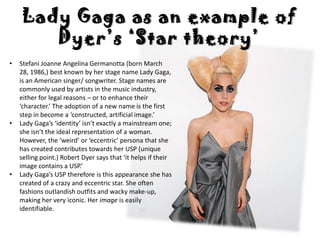
•   Lady Gaga’s USP therefore is this appearance she has
    created of a crazy and eccentric star. She often
    fashions outlandish outfits and wacky make-up,
    making her very iconic. Her image is easily
    identifiable.
Ideology and Culture
• Dyer: ‘Stars represent shared cultural values and attitudes, and promote a
  certain ideology. Audience interest in these values enhances their 'star
  quality', and it is through conveying beliefs ideas and opinions outside music
  that performers help create their star persona. A star may initiate a fashion
  trend, with legions of fans copying their hairstyle and clothing. Stars initiate or
  benefit from cultural discourse (e.g. via their Twitter feed), and create an on-
  going critical commentary.’
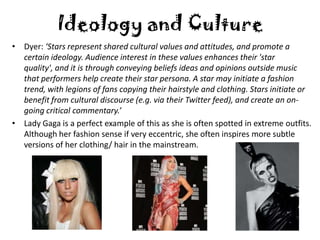
• Lady Gaga is a perfect example of this as she is often spotted in extreme outfits.
  Although her fashion sense if very eccentric, she often inspires more subtle
  versions of her clothing/ hair in the mainstream.
•   Dyer also said: ‘Now more than ever before,
    social networks give pop stars the opportunity to
    establish their own values outside their music.’
•   Lady Gaga has always been a strong and open
    supporter or LBGT rights. She presents these
    very strongly in her music (including videos) –
    with songs such as ‘born this way’ clearly aimed
    at/ regarding LGBT issues.
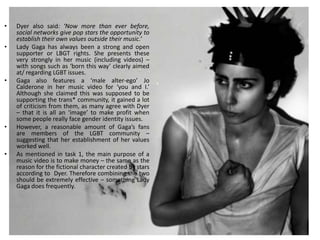
•   Gaga also features a ‘male alter-ego’ Jo
    Calderone in her music video for ‘you and I.’
    Although she claimed this was supposed to be
    supporting the trans* community, it gained a lot
    of criticism from them, as many agree with Dyer
    – that it is all an ‘image’ to make profit when
    some people really face gender identity issues.
•   However, a reasonable amount of Gaga’s fans
    are members of the LGBT community –
    suggesting that her establishment of her values
    worked well.
•   As mentioned in task 1, the main purpose of a
    music video is to make money – the same as the
    reason for the fictional character created by stars
    according to Dyer. Therefore combining the two
    should be extremely effective – something Lady
    Gaga does frequently.

Task 3

  • 1.
    • "A staris an image not a real person that is constructed (as any other aspect of fiction is) out of a range of materials (eg advertising, magazines etc as well as films [music])." - Dyer
  • 2.
    Lady Gaga asan example of Dyer’s ‘Star theory’ • Stefani Joanne Angelina Germanotta (born March 28, 1986,) best known by her stage name Lady Gaga, is an American singer/ songwriter. Stage names are commonly used by artists in the music industry, either for legal reasons – or to enhance their ‘character.’ The adoption of a new name is the first step in become a ‘constructed, artificial image.’ • Lady Gaga’s ‘identity’ isn’t exactly a mainstream one; she isn’t the ideal representation of a woman. However, the ‘weird’ or ‘eccentric’ persona that she has created contributes towards her USP (unique selling point.) Robert Dyer says that ‘it helps if their image contains a USP.’ • Lady Gaga’s USP therefore is this appearance she has created of a crazy and eccentric star. She often fashions outlandish outfits and wacky make-up, making her very iconic. Her image is easily identifiable.
  • 3.
    Ideology and Culture •Dyer: ‘Stars represent shared cultural values and attitudes, and promote a certain ideology. Audience interest in these values enhances their 'star quality', and it is through conveying beliefs ideas and opinions outside music that performers help create their star persona. A star may initiate a fashion trend, with legions of fans copying their hairstyle and clothing. Stars initiate or benefit from cultural discourse (e.g. via their Twitter feed), and create an on- going critical commentary.’ • Lady Gaga is a perfect example of this as she is often spotted in extreme outfits. Although her fashion sense if very eccentric, she often inspires more subtle versions of her clothing/ hair in the mainstream.
  • 4.
    Dyer also said: ‘Now more than ever before, social networks give pop stars the opportunity to establish their own values outside their music.’ • Lady Gaga has always been a strong and open supporter or LBGT rights. She presents these very strongly in her music (including videos) – with songs such as ‘born this way’ clearly aimed at/ regarding LGBT issues. • Gaga also features a ‘male alter-ego’ Jo Calderone in her music video for ‘you and I.’ Although she claimed this was supposed to be supporting the trans* community, it gained a lot of criticism from them, as many agree with Dyer – that it is all an ‘image’ to make profit when some people really face gender identity issues. • However, a reasonable amount of Gaga’s fans are members of the LGBT community – suggesting that her establishment of her values worked well. • As mentioned in task 1, the main purpose of a music video is to make money – the same as the reason for the fictional character created by stars according to Dyer. Therefore combining the two should be extremely effective – something Lady Gaga does frequently.