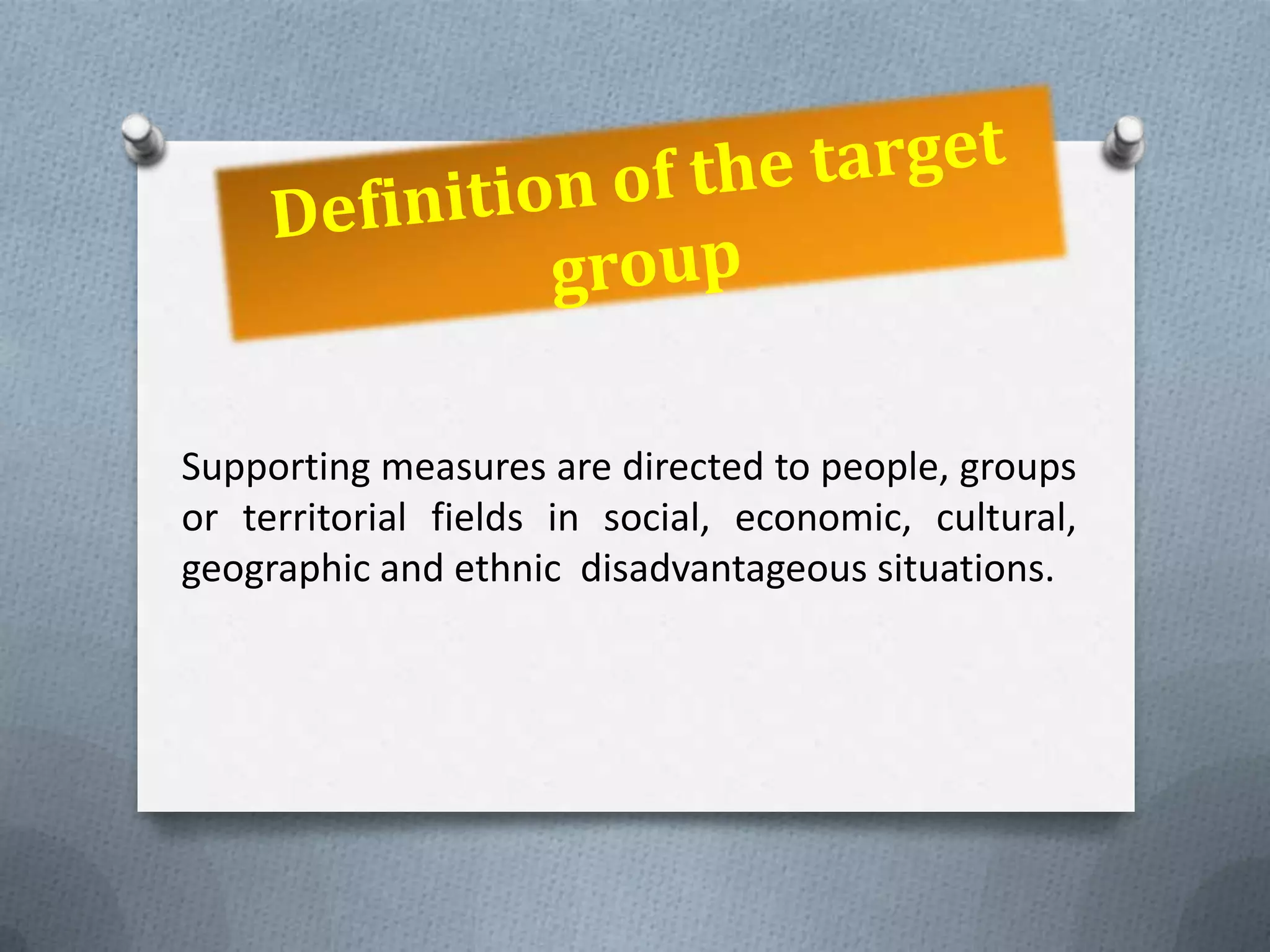
Supporting measures are directed to people, groups
or territorial fields in social, economic, cultural,
geographic and ethnic disadvantageous situations.
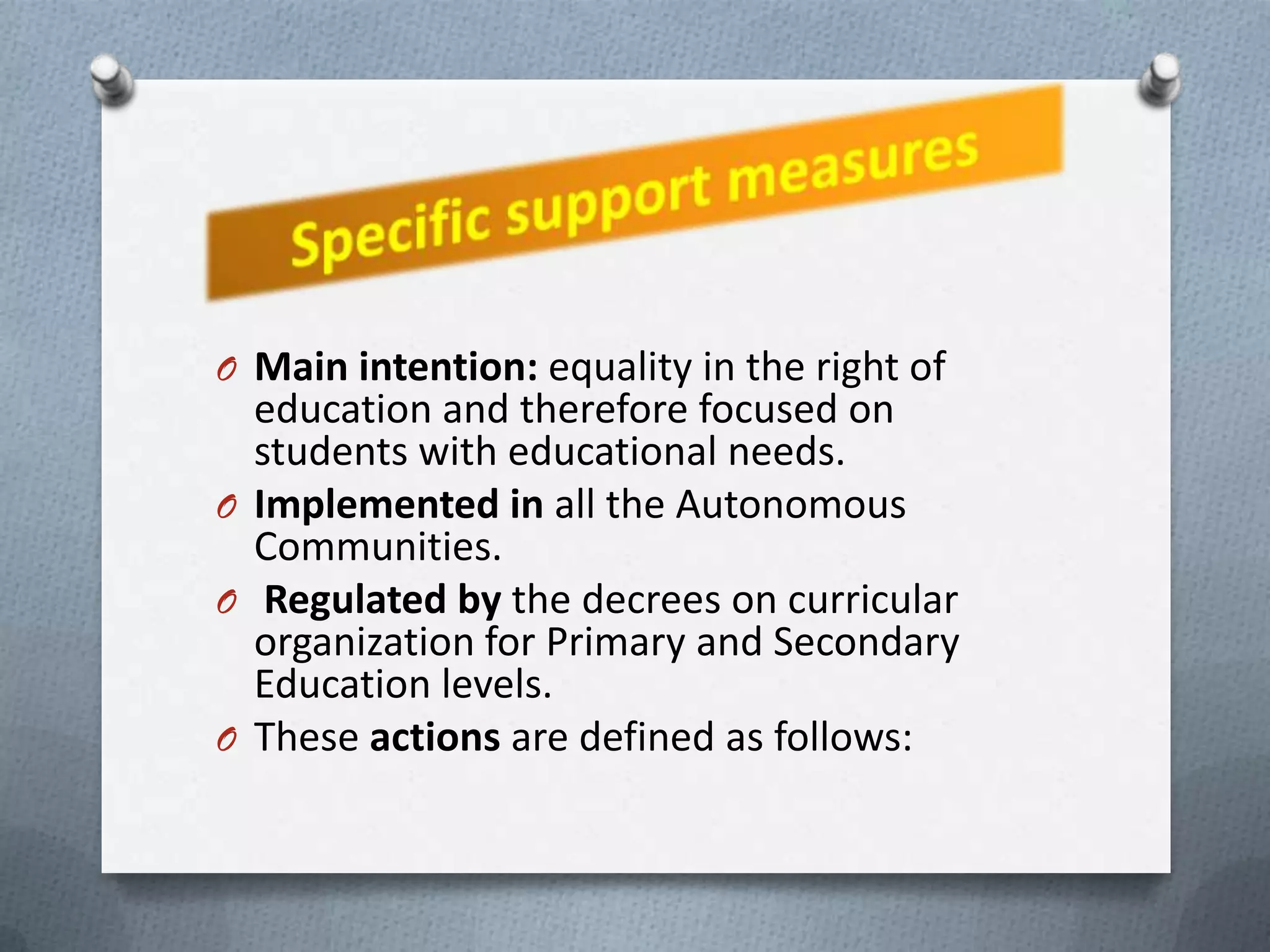
O Main intention: equality in the right of
  education and therefore focused on
  students with educational needs.
O Implemented in all the Autonomous
  Communities.
O Regulated by the decrees on curricular
  organization for Primary and Secondary
  Education levels.
O These actions are defined as follows:
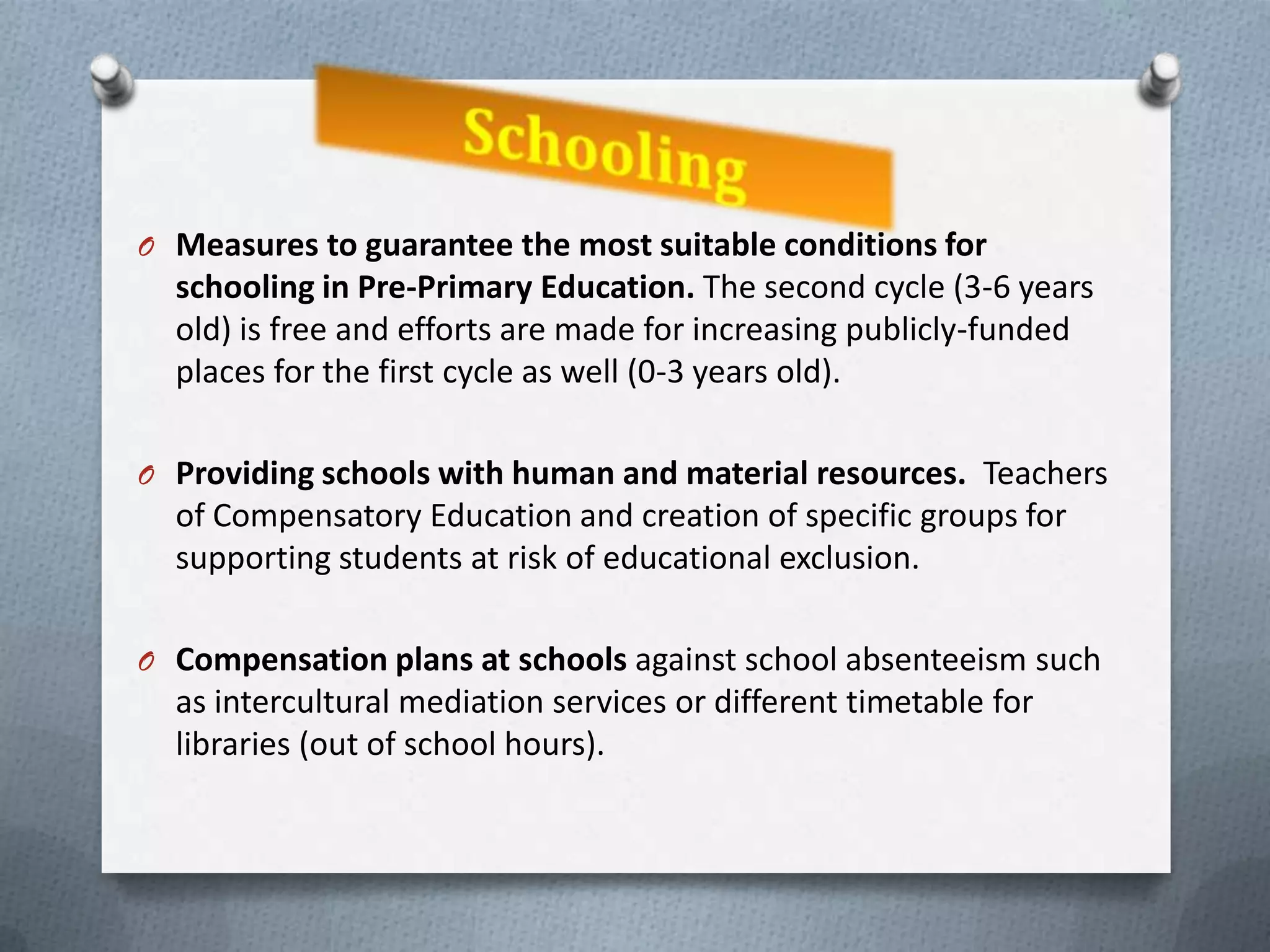
O Measures to guarantee the most suitable conditions for
  schooling in Pre-Primary Education. The second cycle (3-6 years
  old) is free and efforts are made for increasing publicly-funded
  places for the first cycle as well (0-3 years old).

O Providing schools with human and material resources. Teachers
  of Compensatory Education and creation of specific groups for
  supporting students at risk of educational exclusion.

O Compensation plans at schools against school absenteeism such
  as intercultural mediation services or different timetable for
  libraries (out of school hours).
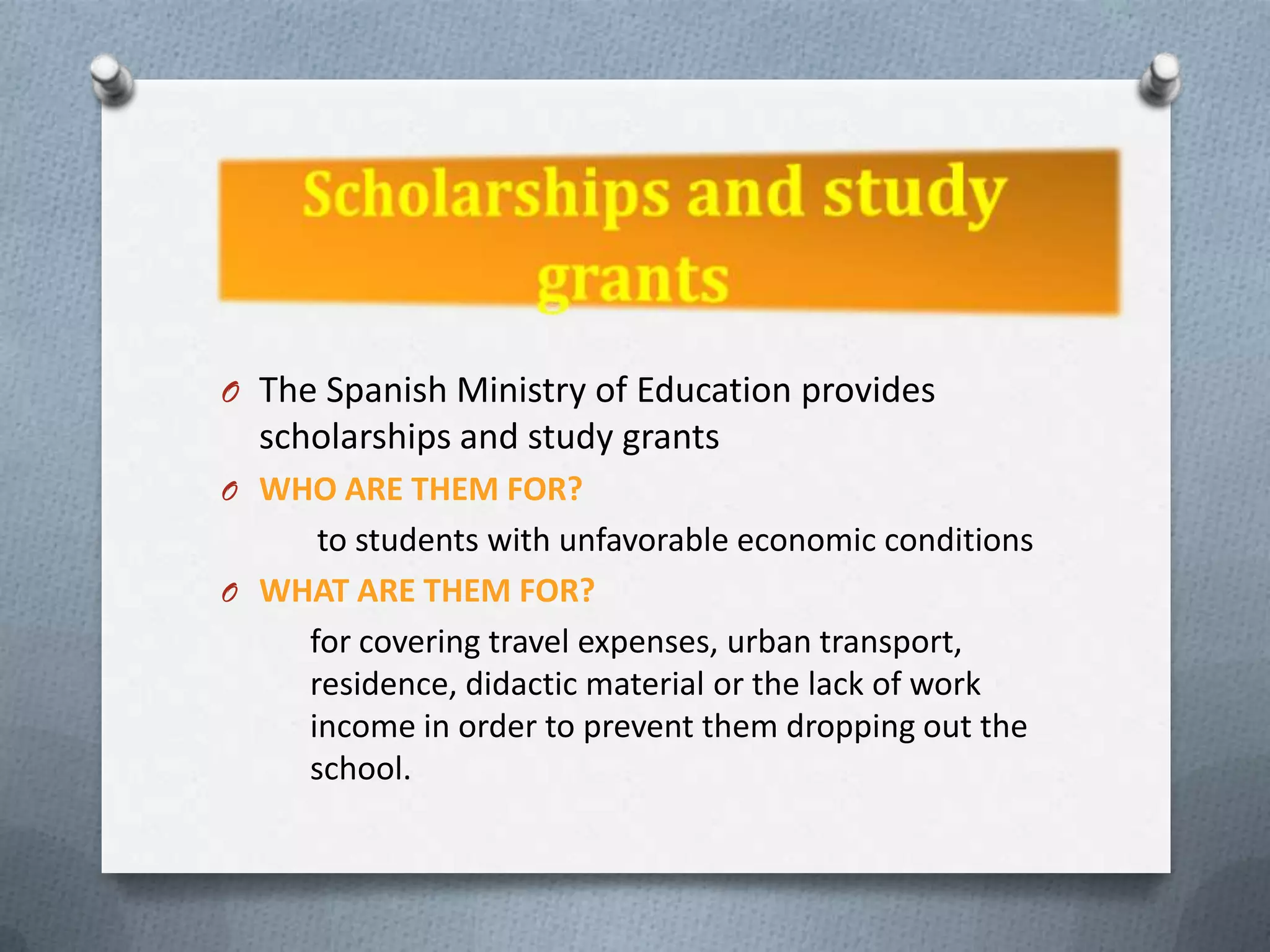
O The Spanish Ministry of Education provides
  scholarships and study grants
O WHO ARE THEM FOR?
     to students with unfavorable economic conditions
O WHAT ARE THEM FOR?
    for covering travel expenses, urban transport,
    residence, didactic material or the lack of work
    income in order to prevent them dropping out the
    school.
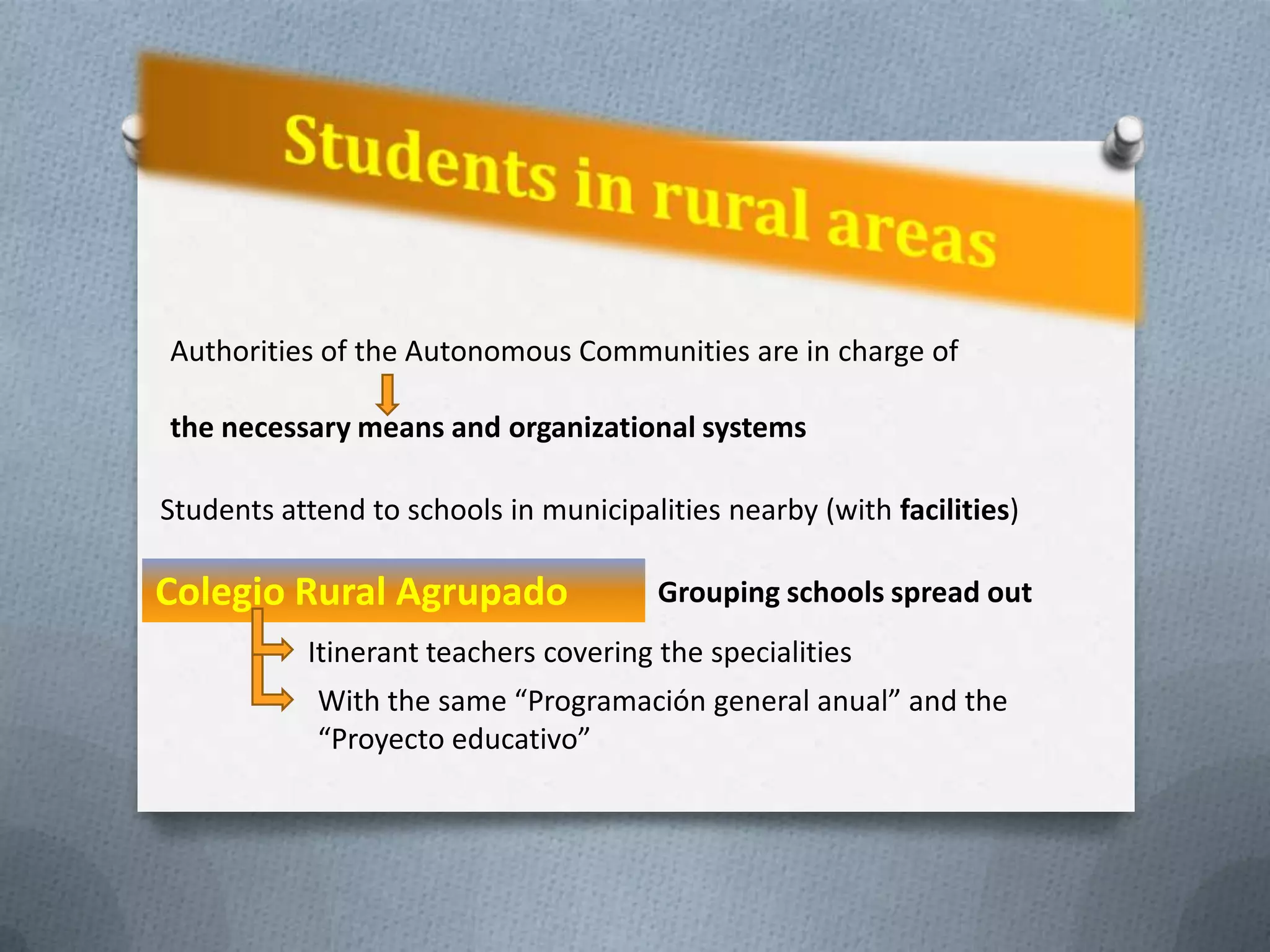
Authorities of the Autonomous Communities are in charge of

the necessary means and organizational systems

Students attend to schools in municipalities nearby (with facilities)

Colegio Rural Agrupado                 Grouping schools spread out
           Itinerant teachers covering the specialities
            With the same “Programación general anual” and the
            “Proyecto educativo”
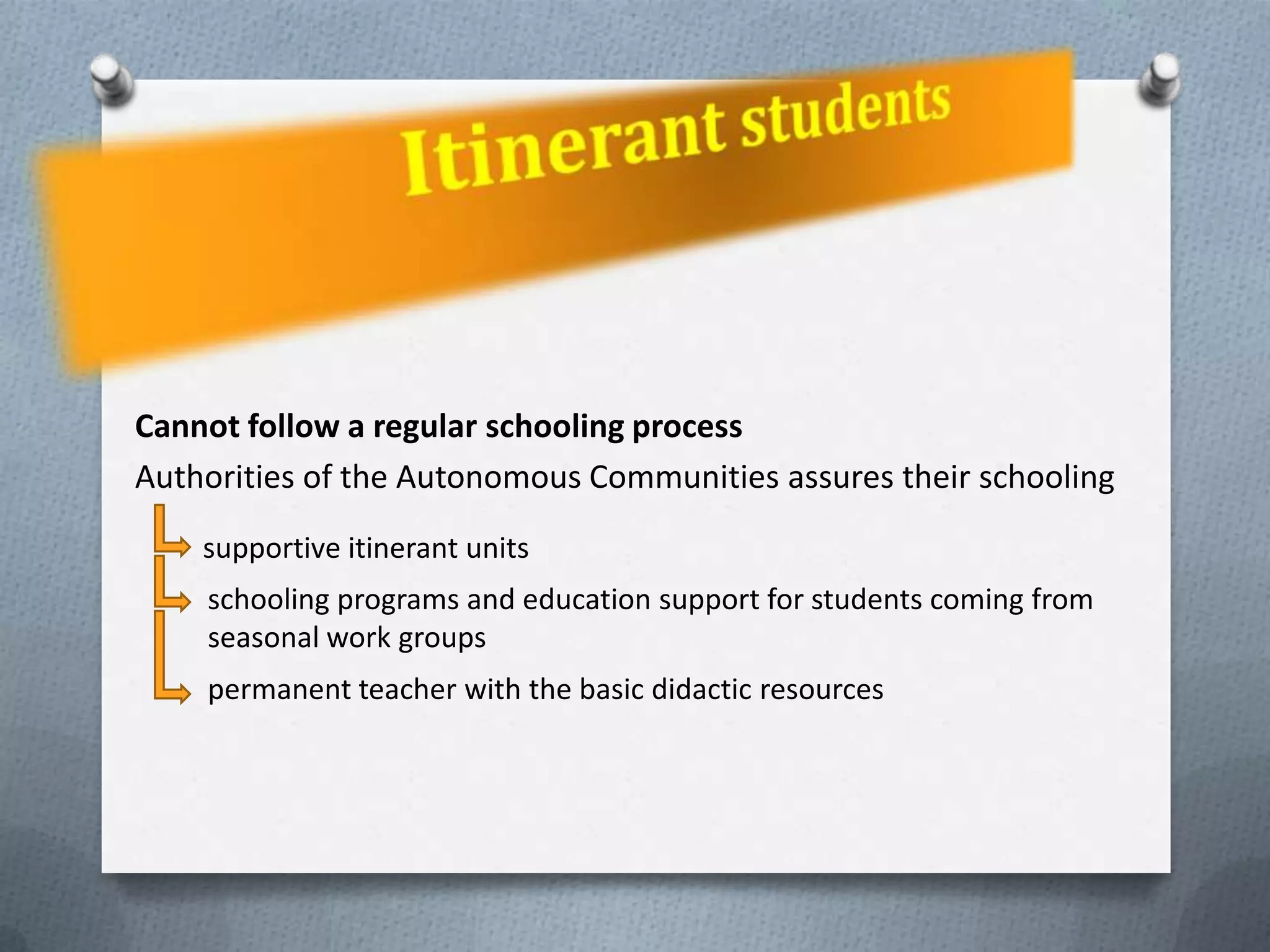
Cannot follow a regular schooling process
Authorities of the Autonomous Communities assures their schooling
    supportive itinerant units
    schooling programs and education support for students coming from
    seasonal work groups
    permanent teacher with the basic didactic resources
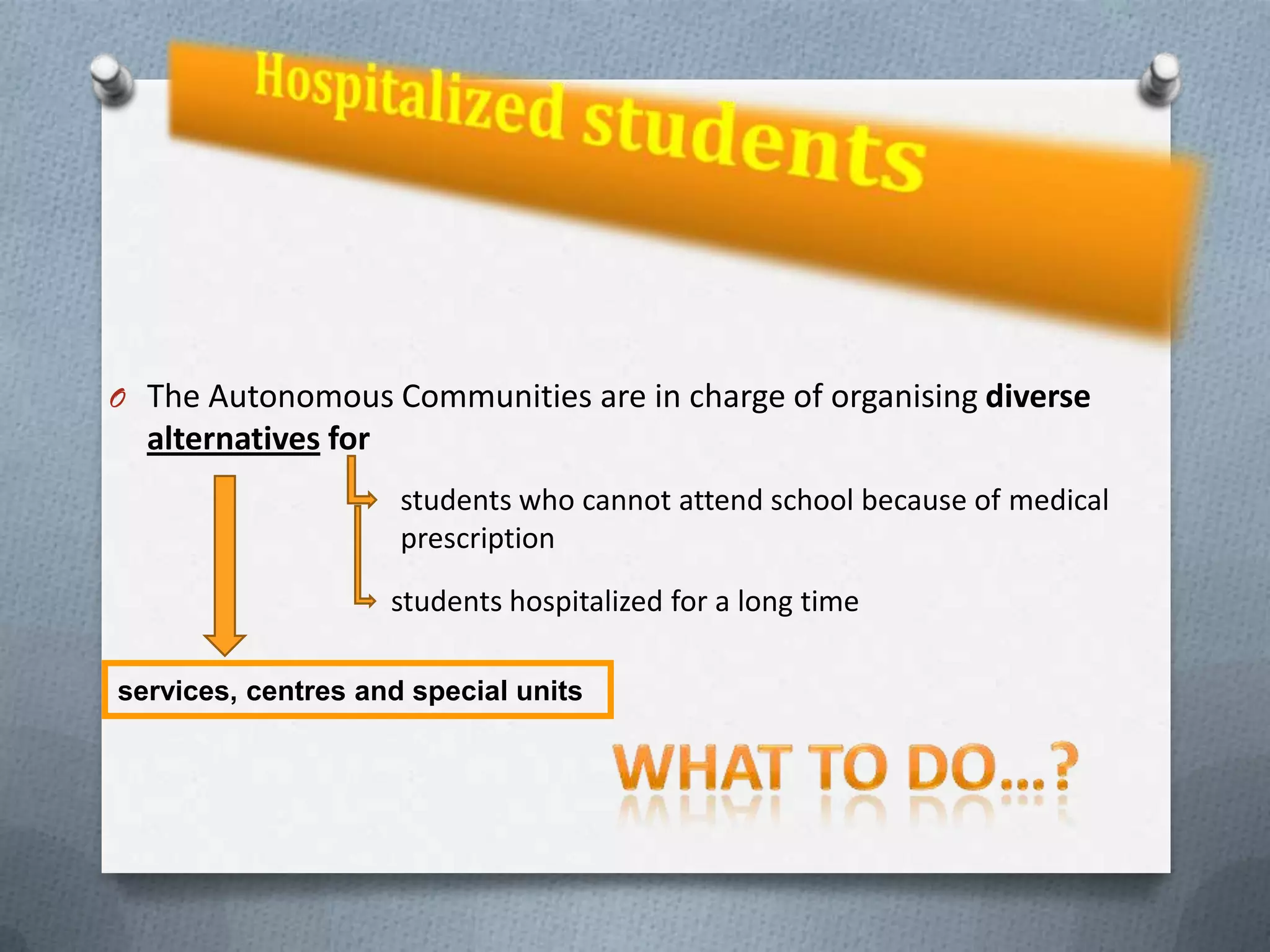
O The Autonomous Communities are in charge of organising diverse
  alternatives for
                     students who cannot attend school because of medical
                     prescription
                     students hospitalized for a long time

services, centres and special units
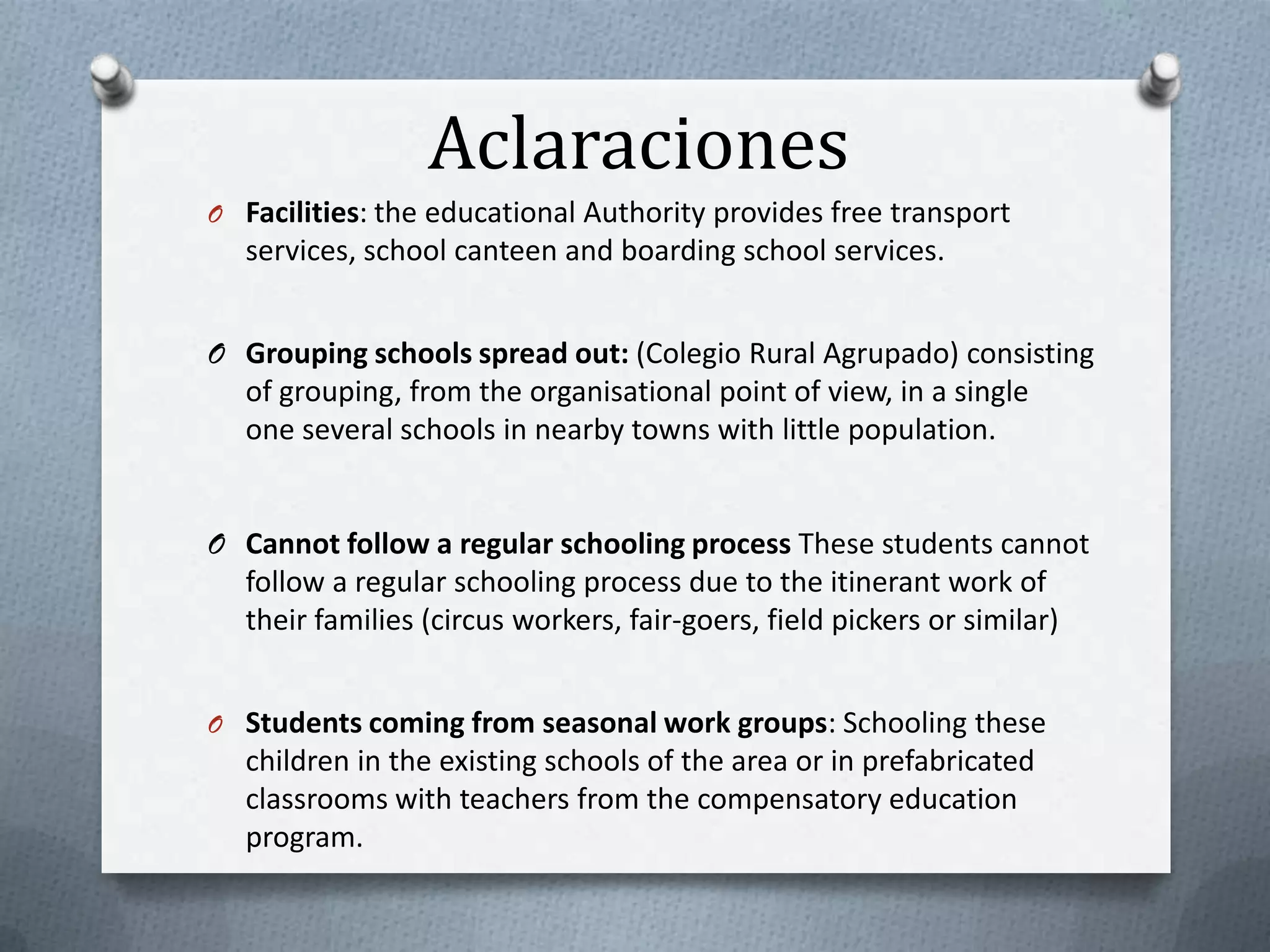
Aclaraciones
O Facilities: the educational Authority provides free transport
   services, school canteen and boarding school services.


O Grouping schools spread out: (Colegio Rural Agrupado) consisting
  of grouping, from the organisational point of view, in a single
  one several schools in nearby towns with little population.


O Cannot follow a regular schooling process These students cannot
  follow a regular schooling process due to the itinerant work of
  their families (circus workers, fair-goers, field pickers or similar)


O Students coming from seasonal work groups: Schooling these
   children in the existing schools of the area or in prefabricated
   classrooms with teachers from the compensatory education
   program.

Target groups presentacion

  • 2.
    Supporting measures aredirected to people, groups or territorial fields in social, economic, cultural, geographic and ethnic disadvantageous situations.
  • 3.
    O Main intention:equality in the right of education and therefore focused on students with educational needs. O Implemented in all the Autonomous Communities. O Regulated by the decrees on curricular organization for Primary and Secondary Education levels. O These actions are defined as follows:
  • 4.
    O Measures toguarantee the most suitable conditions for schooling in Pre-Primary Education. The second cycle (3-6 years old) is free and efforts are made for increasing publicly-funded places for the first cycle as well (0-3 years old). O Providing schools with human and material resources. Teachers of Compensatory Education and creation of specific groups for supporting students at risk of educational exclusion. O Compensation plans at schools against school absenteeism such as intercultural mediation services or different timetable for libraries (out of school hours).
  • 5.
    O The SpanishMinistry of Education provides scholarships and study grants O WHO ARE THEM FOR? to students with unfavorable economic conditions O WHAT ARE THEM FOR? for covering travel expenses, urban transport, residence, didactic material or the lack of work income in order to prevent them dropping out the school.
  • 6.
    Authorities of theAutonomous Communities are in charge of the necessary means and organizational systems Students attend to schools in municipalities nearby (with facilities) Colegio Rural Agrupado Grouping schools spread out Itinerant teachers covering the specialities With the same “Programación general anual” and the “Proyecto educativo”
  • 7.
    Cannot follow aregular schooling process Authorities of the Autonomous Communities assures their schooling supportive itinerant units schooling programs and education support for students coming from seasonal work groups permanent teacher with the basic didactic resources
  • 8.
    O The AutonomousCommunities are in charge of organising diverse alternatives for students who cannot attend school because of medical prescription students hospitalized for a long time services, centres and special units
  • 9.
    Aclaraciones O Facilities: theeducational Authority provides free transport services, school canteen and boarding school services. O Grouping schools spread out: (Colegio Rural Agrupado) consisting of grouping, from the organisational point of view, in a single one several schools in nearby towns with little population. O Cannot follow a regular schooling process These students cannot follow a regular schooling process due to the itinerant work of their families (circus workers, fair-goers, field pickers or similar) O Students coming from seasonal work groups: Schooling these children in the existing schools of the area or in prefabricated classrooms with teachers from the compensatory education program.