Patient Counselling
Presented by
Rameen Anwar
Objectives
• To understand the concepts of counseling in family medicine.
• To learn the counseling skills and why it is important.
• To learn the stages of counseling.
• To identify the possible barriers in counselling.
• To be able to use counseling techniques
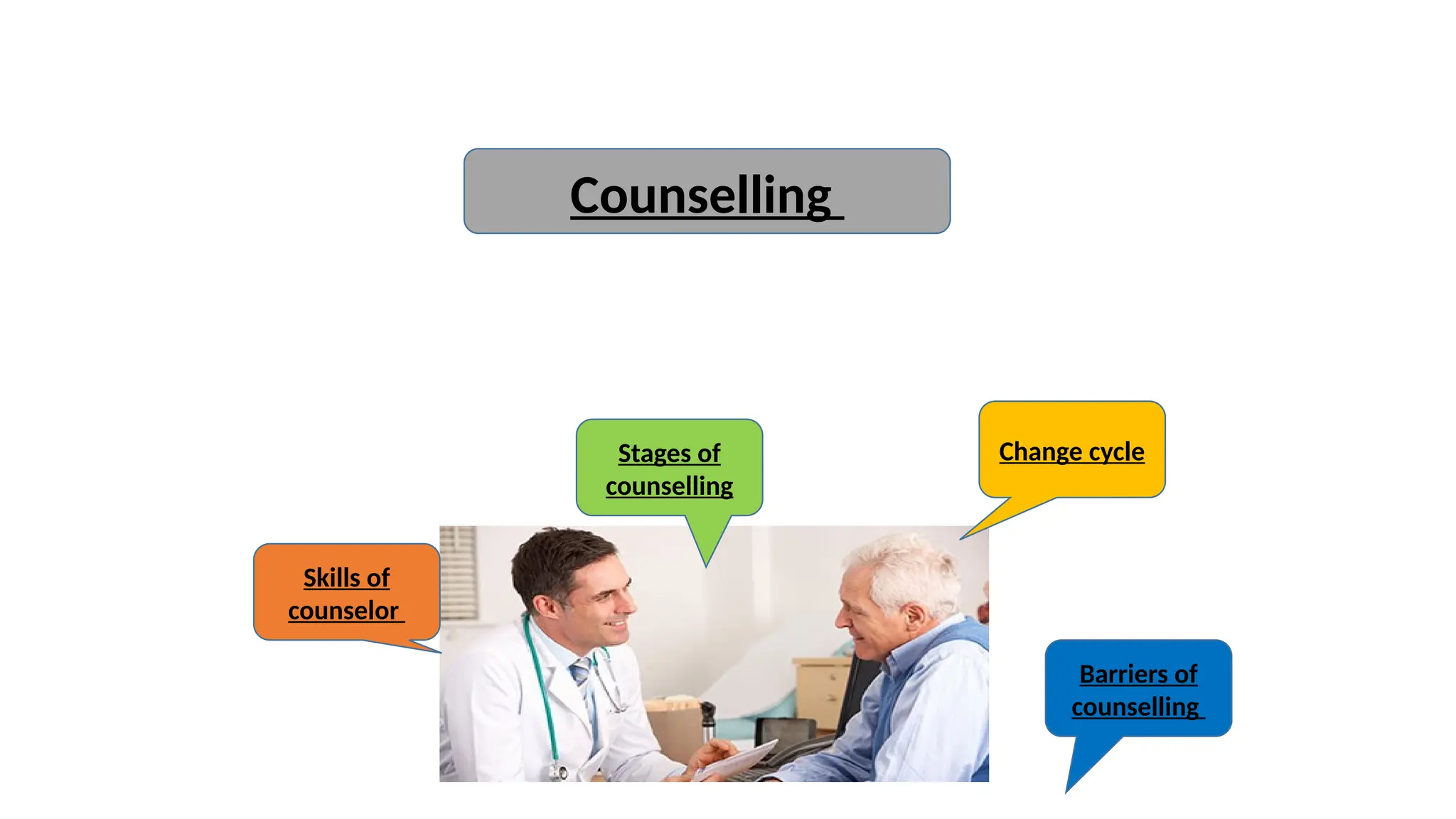
Counselling
Skills of
counselor
Stages of
counselling
Change cycle
Barriers of
counselling
consultation
communication
skills
counselling
Definition
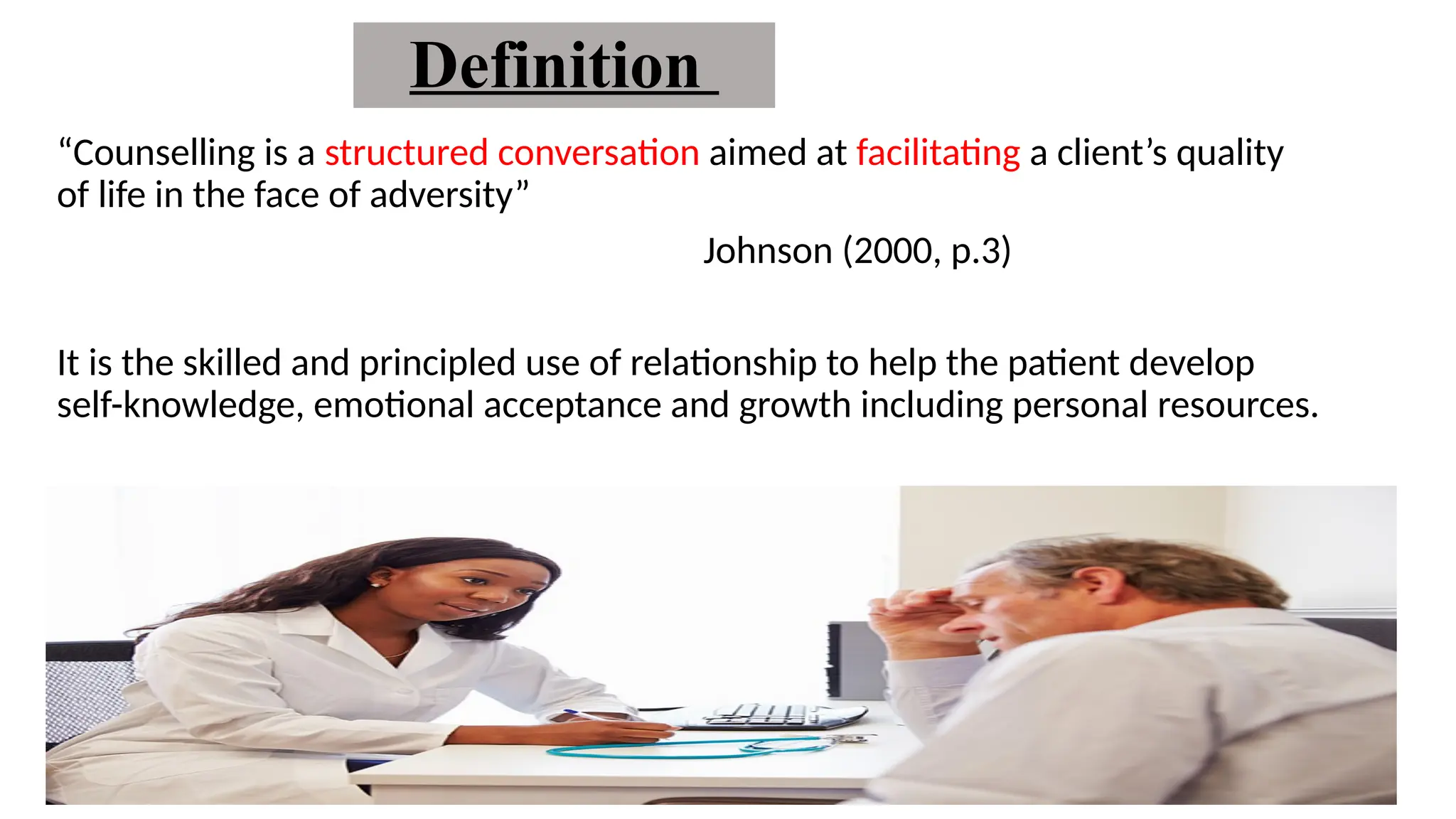
“Counselling is a structured conversation aimed at facilitating a client’s quality
of life in the face of adversity”
Johnson (2000, p.3)
It is the skilled and principled use of relationship to help the patient develop
self-knowledge, emotional acceptance and growth including personal resources.
THE AIMS OF COUNSELLING
The aims of Counselling should always be based on the needs of the client, which
are:
• to help the clients manage their problems more effectively and develop unused
or underused opportunities to cope more fully.
• to help and empower clients to become more effective self-helpers in the
future (Egan,1998).
Helping is about constructive change and making a substantive difference to the
life of the client.
Key skills of counsellor
Listening
Believing in client
Recognize your own limitations.
Patience
Non-judgemental
Stay focused
Knowledgeable.
• A 45-year-old lady attends the clinic regarding her symptoms of anxiety due to difficulties in her
relationship with her co-workers at a school. Her examination is normal and the doctor has
decided that there is no need for any investigation
• Which one of the following approaches by a counselor would make counseling for this
patient more effective?
A. Empathy during consultation*
B. Giving instructions how to deal with others*
C. Humor (being funny) on directing questions*
D. Teaching her to stand up for her rights*
6 Micro skills of counsellor
1. Listen Actively
• Accept the clients as they are.
• Listen to what your client say and how they say it. Notice the
tone of the voice ,facial expression and gesture.
• Keep silent sometimes. Give your client to think ,ask question.
• Sit comfortably.
• Look directly into the client when they speak ,not on your
papers and windows.
• Ensure that you are continually involved in the conversation
by either “nodding head, saying then or oh”
• According to communication expert:-
10 % of our communication represented by words.
30 % are represented by sounds we make (by mimimum verbal)
60 % are represented by body language ( eg- eye contact ,
body posture etc.)
2. Questioning
• Ask the question to understand clearly the client problem or worries to
help the client go deeper into his/her own awareness or insight.
• Question- centered around the concerns of client and open
ended.
• At the time of asking question: Remember
Ask one question at a time.
Look at one person
Be brief and clear
Ask question that serve for purpose
Use question that enables clients to talk about their feelings and
behaviours.
Use question to explore and understand issues and not to collect juicy
material for gossip.
• Don’t ask
Irrevalent question.
Too many question at one time.
3.Using silence
• Give time to the client to think about what to say next.
• Provide space to experience feeling.
• Allows client to proceed at their own pace.
• Give the client freedom to choose whether or not to continue.
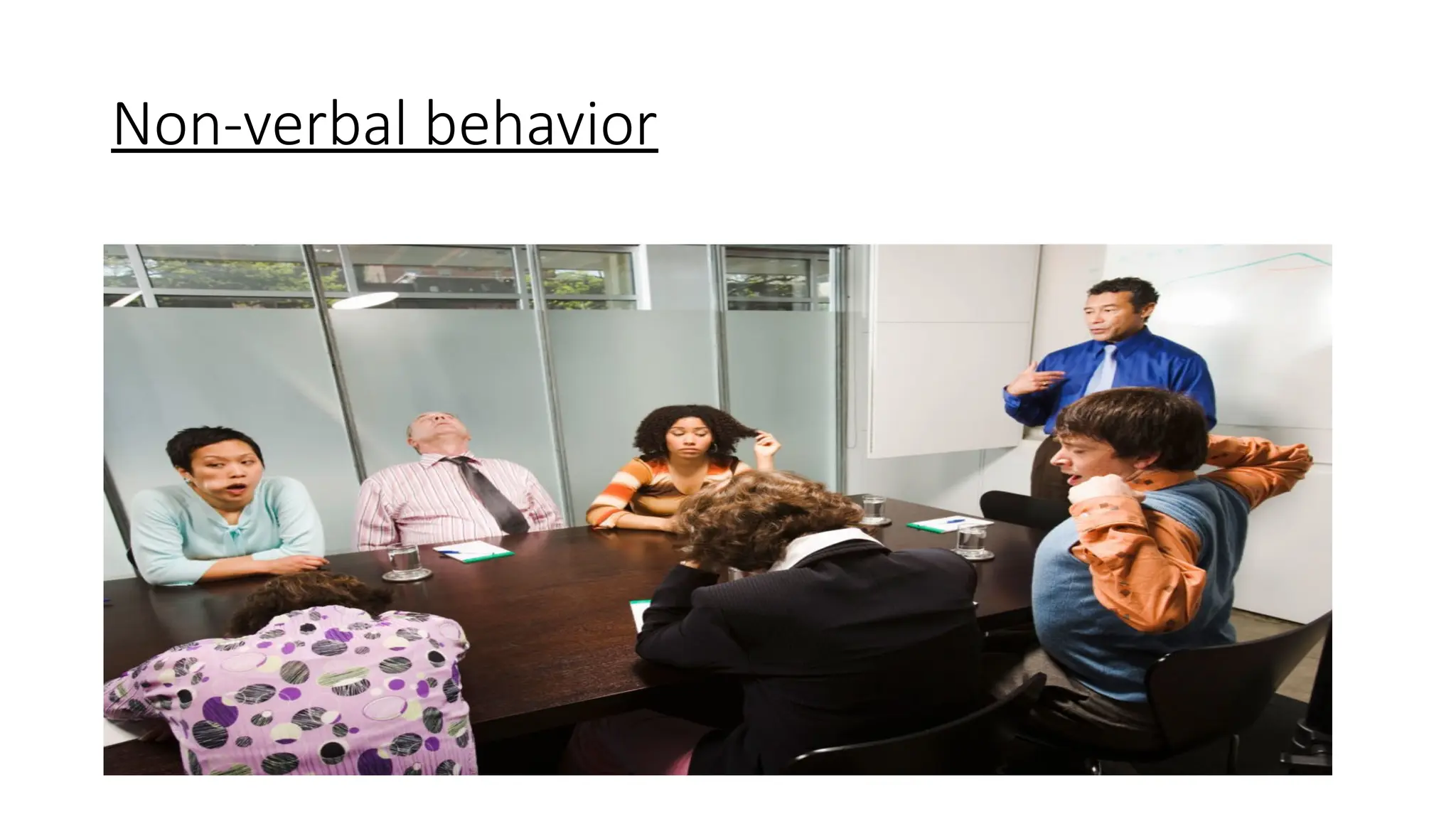
Non-verbal behavior
4. Non-verbal behavior
• It is not what you say but how you say is important.
• Majority –non verbal
• Person body language is not similar to what they are saying, it results in
verbal confusion/mis-interpretation.
• Effective counsellor-sensitive to nonverbal communication .
• Examples :-gestures, facial expression, posture, eye contact, tapping
fingers, change in voice pitch and fluency of voice.
5. Accurate Empathy
• Empathy means- recognition and understanding of clients thoughts
and emotions.
• It is characterized by ability to put oneself into another's shoes i.e
experience the view point of another within oneself.
6. Paraphrasing
• Counsellor repeat in his/her own words what client has said to show
understanding.
• Say in few words so that it can give summary of client’s word.
Stages of Counselling GATHER
G = Greet client in a friendly, helpful, and respectful manner.
A = Ask client about needs, concerns, and previous use.
T = Tell client about different options and methods.
H = Help client to make decision about choice of method s/he prefers.
E = Explain to client how to use the method.
R = Return: Schedule and carry out return visit and follow-up of client
Greet
• Welcome and register client.
• Prepare chart/record.
• Determine purpose of visit.
• Give clients full attention.
• Assure the client that all information discussed will be confidential.
• Talk in a private place if possible.
Ask
• Ask client about her/his needs.
• Write down the client's: age, marital status, number of previous
pregnancies and births, number of living children, basic medical history,
previous use of family planning methods, history and risk for STDs.
• Assess what the client knows about family planning methods.
• Ask the client if there is a particular method s/he is interested in.
• Discuss any client concerns about risks vs. benefits of modern methods
(dispel rumors and misconceptions).
Tell
• Tell the client about the available methods.
• Focus on methods that most interest the client, but briefly mention other
available methods.
• Describe how each method works, the advantages, benefits, possible side
effects, and disadvantages.
• Answer client concerns and questions
Help
• Help the client to choose a method.
• Repeat information if necessary.
• Explain any procedures or lab tests to be performed.
Explain
• Explain how to use the method (how, when, where).
• Explain to the client how and when s/he can/should get resupplies of the
method, if necessary.
Return
• At the follow-up or return visit ask the client if s/he is still using the method.
• If the answer is yes, ask her/him if s/he is experiencing any problems or side effects
and answer her/his questions, solve any problems, if possible.
• If the answer is no, ask why s/he stopped using the method and counsel her/him to
see if s/he would like to try another method or re-try the same method again.
• Make sure s/he is using the method correctly (ask her/him how s/he is using it).
Counselling and health education
Counselling Health education
1. Confidential Not confidential
2. One to one process or a small group. For a group of people
3. Focused, specific and goal directed Generalized
4. Facilitates change in attitude and
motivates behavior change
Information is provided to increase
the knowledge
5. Problem oriented Content oriented
6. Based on needs of client Based on public health needs.
Cycle of changes
Patients who requires Counseling on regular
intervals:
• Patients who require counseling may include:
• 1. Those with chronic or terminal illnesses (e.g., cancer, HIV,
Alzheimer's)
• 2. Individuals with mental health conditions (e.g., depression, anxiety,
PTSD)
• 3. Patients with substance abuse or addiction issues
• 4. Those experiencing grief or bereavement
• 5. Individuals with relationship issues or family conflicts
• 6. Patients with body image concerns or eating disorders
• 7. Those struggling with sexual health or identity issues
• 8. Individuals with spiritual or existential concerns
• 9. Patients facing end-of-life decisions or advance care planning
• 10. Those experiencing trauma or abuse
• 11. Individuals with learning disabilities or developmental disorders
• 12. Patients with chronic pain or somatic symptom disorders
• 13. Those dealing with major life changes (e.g., divorce, job loss, retirement)
• 14. Individuals with self-esteem or confidence issues
• 15. Patients with phobias or anxiety disorders
• Counseling can help patients:
• - Manage symptoms and emotions
• - Develop coping strategies
• - Improve relationships
• - Enhance quality of life
• - Make informed decisions
• - Find meaning and purpose
• - Achieve personal growth
• Remember, counseling is a collaborative process between the patient and the
counselor, and it's essential to approach each individual with empathy,
understanding, and respect.
Barriers to Counseling in Clinical Practice
•Personal Barriers
•Lack of training: undergraduate/postgraduate
•Undervaluing importance of communication
•Focus only on treating diseases
•Personal Limitations
•Organizational Barriers
•Lack of time
•Pressure of work
•Interruptions
Conclusion
Counselling is a process and not merely a technique through which clients are
helped to modify their behavior and cope with their status effectively.
Counselling is not
• Telling or directing
• Giving advice
• A casual concern
• A confession
• Praying

Take medication as prescribed, ask questions if unsure.

  • 1.
  • 2.
    Objectives • To understandthe concepts of counseling in family medicine. • To learn the counseling skills and why it is important. • To learn the stages of counseling. • To identify the possible barriers in counselling. • To be able to use counseling techniques
  • 3.
  • 4.
  • 5.
    Definition “Counselling is astructured conversation aimed at facilitating a client’s quality of life in the face of adversity” Johnson (2000, p.3) It is the skilled and principled use of relationship to help the patient develop self-knowledge, emotional acceptance and growth including personal resources.
  • 6.
    THE AIMS OFCOUNSELLING The aims of Counselling should always be based on the needs of the client, which are: • to help the clients manage their problems more effectively and develop unused or underused opportunities to cope more fully. • to help and empower clients to become more effective self-helpers in the future (Egan,1998). Helping is about constructive change and making a substantive difference to the life of the client.
  • 7.
    Key skills ofcounsellor Listening Believing in client Recognize your own limitations. Patience Non-judgemental Stay focused Knowledgeable.
  • 8.
    • A 45-year-oldlady attends the clinic regarding her symptoms of anxiety due to difficulties in her relationship with her co-workers at a school. Her examination is normal and the doctor has decided that there is no need for any investigation • Which one of the following approaches by a counselor would make counseling for this patient more effective? A. Empathy during consultation* B. Giving instructions how to deal with others* C. Humor (being funny) on directing questions* D. Teaching her to stand up for her rights*
  • 9.
    6 Micro skillsof counsellor 1. Listen Actively • Accept the clients as they are. • Listen to what your client say and how they say it. Notice the tone of the voice ,facial expression and gesture. • Keep silent sometimes. Give your client to think ,ask question. • Sit comfortably. • Look directly into the client when they speak ,not on your papers and windows. • Ensure that you are continually involved in the conversation by either “nodding head, saying then or oh”
  • 10.
    • According tocommunication expert:- 10 % of our communication represented by words. 30 % are represented by sounds we make (by mimimum verbal) 60 % are represented by body language ( eg- eye contact , body posture etc.)
  • 11.
    2. Questioning • Askthe question to understand clearly the client problem or worries to help the client go deeper into his/her own awareness or insight. • Question- centered around the concerns of client and open ended.
  • 12.
    • At thetime of asking question: Remember Ask one question at a time. Look at one person Be brief and clear Ask question that serve for purpose Use question that enables clients to talk about their feelings and behaviours. Use question to explore and understand issues and not to collect juicy material for gossip. • Don’t ask Irrevalent question. Too many question at one time.
  • 13.
    3.Using silence • Givetime to the client to think about what to say next. • Provide space to experience feeling. • Allows client to proceed at their own pace. • Give the client freedom to choose whether or not to continue.
  • 14.
  • 15.
    4. Non-verbal behavior •It is not what you say but how you say is important. • Majority –non verbal • Person body language is not similar to what they are saying, it results in verbal confusion/mis-interpretation. • Effective counsellor-sensitive to nonverbal communication . • Examples :-gestures, facial expression, posture, eye contact, tapping fingers, change in voice pitch and fluency of voice.
  • 16.
    5. Accurate Empathy •Empathy means- recognition and understanding of clients thoughts and emotions. • It is characterized by ability to put oneself into another's shoes i.e experience the view point of another within oneself. 6. Paraphrasing • Counsellor repeat in his/her own words what client has said to show understanding. • Say in few words so that it can give summary of client’s word.
  • 17.
    Stages of CounsellingGATHER G = Greet client in a friendly, helpful, and respectful manner. A = Ask client about needs, concerns, and previous use. T = Tell client about different options and methods. H = Help client to make decision about choice of method s/he prefers. E = Explain to client how to use the method. R = Return: Schedule and carry out return visit and follow-up of client
  • 18.
    Greet • Welcome andregister client. • Prepare chart/record. • Determine purpose of visit. • Give clients full attention. • Assure the client that all information discussed will be confidential. • Talk in a private place if possible.
  • 19.
    Ask • Ask clientabout her/his needs. • Write down the client's: age, marital status, number of previous pregnancies and births, number of living children, basic medical history, previous use of family planning methods, history and risk for STDs. • Assess what the client knows about family planning methods. • Ask the client if there is a particular method s/he is interested in. • Discuss any client concerns about risks vs. benefits of modern methods (dispel rumors and misconceptions).
  • 20.
    Tell • Tell theclient about the available methods. • Focus on methods that most interest the client, but briefly mention other available methods. • Describe how each method works, the advantages, benefits, possible side effects, and disadvantages. • Answer client concerns and questions
  • 21.
    Help • Help theclient to choose a method. • Repeat information if necessary. • Explain any procedures or lab tests to be performed. Explain • Explain how to use the method (how, when, where). • Explain to the client how and when s/he can/should get resupplies of the method, if necessary.
  • 22.
    Return • At thefollow-up or return visit ask the client if s/he is still using the method. • If the answer is yes, ask her/him if s/he is experiencing any problems or side effects and answer her/his questions, solve any problems, if possible. • If the answer is no, ask why s/he stopped using the method and counsel her/him to see if s/he would like to try another method or re-try the same method again. • Make sure s/he is using the method correctly (ask her/him how s/he is using it).
  • 23.
    Counselling and healtheducation Counselling Health education 1. Confidential Not confidential 2. One to one process or a small group. For a group of people 3. Focused, specific and goal directed Generalized 4. Facilitates change in attitude and motivates behavior change Information is provided to increase the knowledge 5. Problem oriented Content oriented 6. Based on needs of client Based on public health needs.
  • 24.
  • 25.
    Patients who requiresCounseling on regular intervals: • Patients who require counseling may include: • 1. Those with chronic or terminal illnesses (e.g., cancer, HIV, Alzheimer's) • 2. Individuals with mental health conditions (e.g., depression, anxiety, PTSD) • 3. Patients with substance abuse or addiction issues • 4. Those experiencing grief or bereavement • 5. Individuals with relationship issues or family conflicts • 6. Patients with body image concerns or eating disorders
  • 26.
    • 7. Thosestruggling with sexual health or identity issues • 8. Individuals with spiritual or existential concerns • 9. Patients facing end-of-life decisions or advance care planning • 10. Those experiencing trauma or abuse • 11. Individuals with learning disabilities or developmental disorders • 12. Patients with chronic pain or somatic symptom disorders • 13. Those dealing with major life changes (e.g., divorce, job loss, retirement) • 14. Individuals with self-esteem or confidence issues • 15. Patients with phobias or anxiety disorders
  • 27.
    • Counseling canhelp patients: • - Manage symptoms and emotions • - Develop coping strategies • - Improve relationships • - Enhance quality of life • - Make informed decisions • - Find meaning and purpose • - Achieve personal growth • Remember, counseling is a collaborative process between the patient and the counselor, and it's essential to approach each individual with empathy, understanding, and respect.
  • 28.
    Barriers to Counselingin Clinical Practice •Personal Barriers •Lack of training: undergraduate/postgraduate •Undervaluing importance of communication •Focus only on treating diseases •Personal Limitations •Organizational Barriers •Lack of time •Pressure of work •Interruptions
  • 29.
    Conclusion Counselling is aprocess and not merely a technique through which clients are helped to modify their behavior and cope with their status effectively. Counselling is not • Telling or directing • Giving advice • A casual concern • A confession • Praying