AQA
A Level
Computer Science
T7c | Big Data
T7
Functional Paradigm
Objectives
• Explain the concept of Big Data
• Describe examples of Big Data
• Explain the fact-based model for representing data
• Explain the graph schema for capturing structure
• Analyse the features of functional programming that
make it suitable for Big Data
Big Data
• Volume
• too big for a single server
• Velocity
• milliseconds or seconds to respond
• Variety
• many forms, structured/unstructured/text/multimedia
Big Data
• Does mobile use increase likelihood of cancer?
• Six billion mobile phones in the world, lots of data to analyse
• How can you improve voice-translation software?
• Score the probability that a snippet corresponds to a specific
word
• How does the bank of England check if house prices
are rising or falling?
• Analyse search queries on property
Healthcare
• Retrospective data (prior)
• Real-time data (blood pressure, temperature, etc)
• We can now consider gene sequencing but its
estimated a human body contains 150 trillion
gigabytes of information…
Google
• Process more than 24 petabytes of data every day
• >3 billion search queries every day (and each one is
saved)
• Between 2003 – 2008, this data was used to see
which areas of the US was affected by seasonal flu
Amazon
• Recommends books based on purchases
• Originally done by similar topics/authors
• However, if you bought a book on Python, you might
not need another one
• Now they apply Big Data techniques to analyse
purchases e.g. huge numbers of customers bought
both Dan Brown and Ian McEwan books, therefore
one author recommends the other
Functional Programming
• No side effects
• They don’t modify global variables
• Statelessness – not affected by how often a function is called
or the order
• Support higher order functions
• One or more functions as an input
• Outputs a function
• Forbid assignment
• Makes parallel processing across server easy as each will
always give the same result
Fact-base Model
• Facts are recorded with timestamp
• Continues to grow
• Changes (e.g. surname) are added as another fact
so history is always there
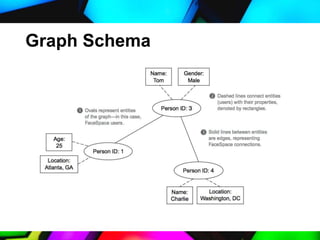
Graph Schema
Graph Schema
Objectives
• Explain the concept of Big Data
• Describe examples of Big Data
• Explain the fact-based model for representing data
• Explain the graph schema for capturing structure
• Analyse the features of functional programming that
make it suitable for Big Data

T7c - Big Data.pptx

  • 1.
    AQA A Level Computer Science T7c| Big Data T7 Functional Paradigm
  • 2.
    Objectives • Explain theconcept of Big Data • Describe examples of Big Data • Explain the fact-based model for representing data • Explain the graph schema for capturing structure • Analyse the features of functional programming that make it suitable for Big Data
  • 3.
    Big Data • Volume •too big for a single server • Velocity • milliseconds or seconds to respond • Variety • many forms, structured/unstructured/text/multimedia
  • 4.
    Big Data • Doesmobile use increase likelihood of cancer? • Six billion mobile phones in the world, lots of data to analyse • How can you improve voice-translation software? • Score the probability that a snippet corresponds to a specific word • How does the bank of England check if house prices are rising or falling? • Analyse search queries on property
  • 5.
    Healthcare • Retrospective data(prior) • Real-time data (blood pressure, temperature, etc) • We can now consider gene sequencing but its estimated a human body contains 150 trillion gigabytes of information…
  • 6.
    Google • Process morethan 24 petabytes of data every day • >3 billion search queries every day (and each one is saved) • Between 2003 – 2008, this data was used to see which areas of the US was affected by seasonal flu
  • 7.
    Amazon • Recommends booksbased on purchases • Originally done by similar topics/authors • However, if you bought a book on Python, you might not need another one • Now they apply Big Data techniques to analyse purchases e.g. huge numbers of customers bought both Dan Brown and Ian McEwan books, therefore one author recommends the other
  • 8.
    Functional Programming • Noside effects • They don’t modify global variables • Statelessness – not affected by how often a function is called or the order • Support higher order functions • One or more functions as an input • Outputs a function • Forbid assignment • Makes parallel processing across server easy as each will always give the same result
  • 9.
    Fact-base Model • Factsare recorded with timestamp • Continues to grow • Changes (e.g. surname) are added as another fact so history is always there
  • 10.
  • 11.
  • 12.
    Objectives • Explain theconcept of Big Data • Describe examples of Big Data • Explain the fact-based model for representing data • Explain the graph schema for capturing structure • Analyse the features of functional programming that make it suitable for Big Data

Editor's Notes

  • #7 Correlation between search terms and the spread of the flu, used in 2009 to identify the spread quicker than the government statistics.
  • #11 Properties in same node
  • #12 Properties in separate node, relationship not show on this example