Systems Engineering
The Art of Gluing Pieces
Escuela Técnica Superior de Ingenieros Industriales
Universidad Politécnica de Madrid
Madrid, Spain, 22th May 2017
Bernardo A. Delicado
INCOSE Institute for Technical Leadership
Bernardo.Delicado@incose.org
Content
2
Different Perceptions
Systems Engineering (SE)
Technical Leadership
SE Career Path
Conclusions
Introduction
Content
3
Different Perceptions
Systems Engineering (SE)
Technical Leadership
SE Career Path
Conclusions
Introduction
In an increasingly complex
world, sometimes old
questions require new answers
@bernardo
Complex World
5
Art of Gluing = Leadership
6
About me
7
About me
INCOSE’s Vision 2025 identifies the
development of Systems Thinking
and Technical Leadership as one of
seven key areas of Systems
Engineering Competencies
@incose
Industrial Revolution
8
More than ever
have to develop a
systems engineering
approach and skill
set
(Bechtold et al, 2014)
Leading the Next Industrial
Revolution
9
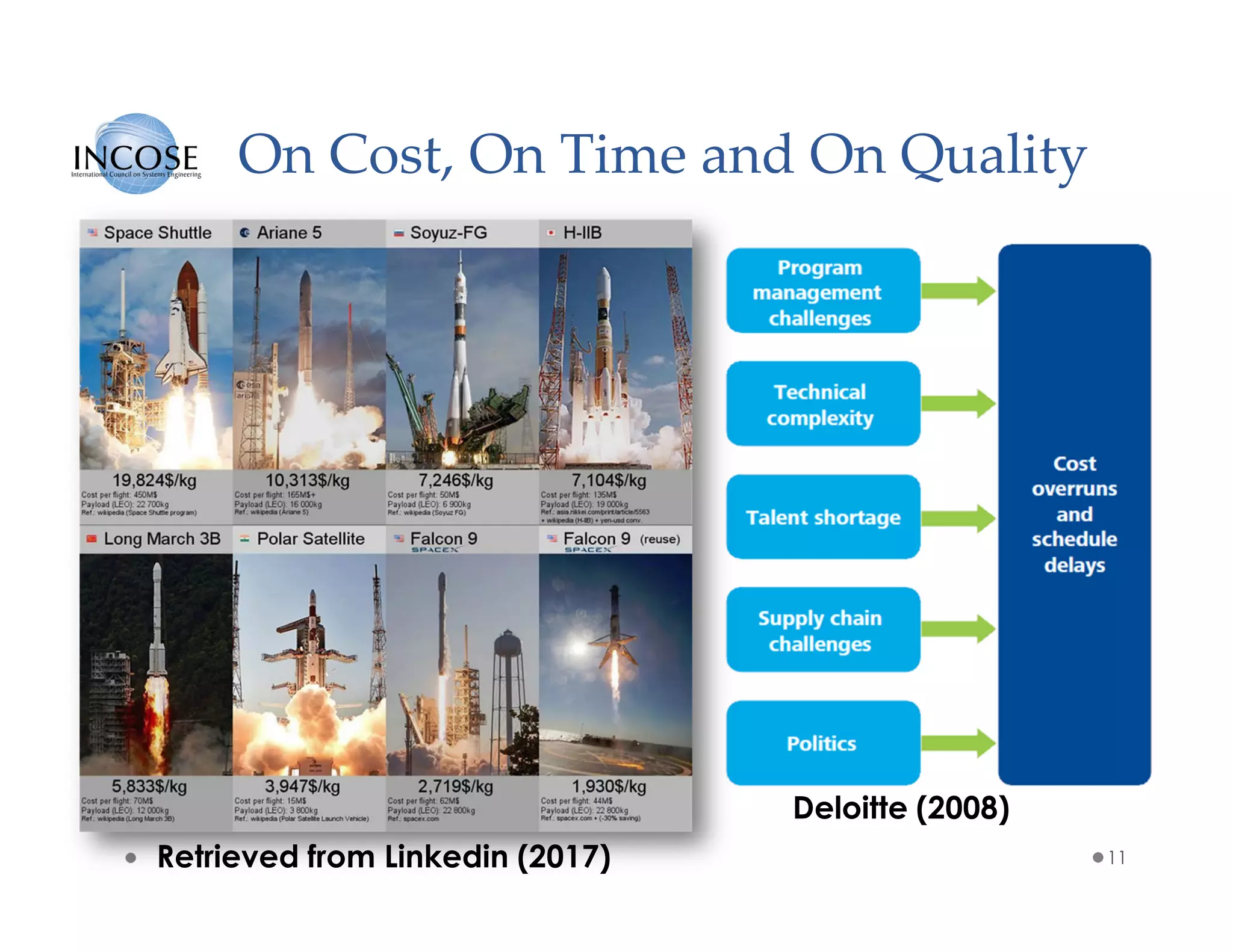
But are we ready to execute
transformation ?
10
Retrieved from Linkedin (2017)
On Cost, On Time and On Quality
11
Deloitte (2008)
Retrieved from Linkedin (2017)
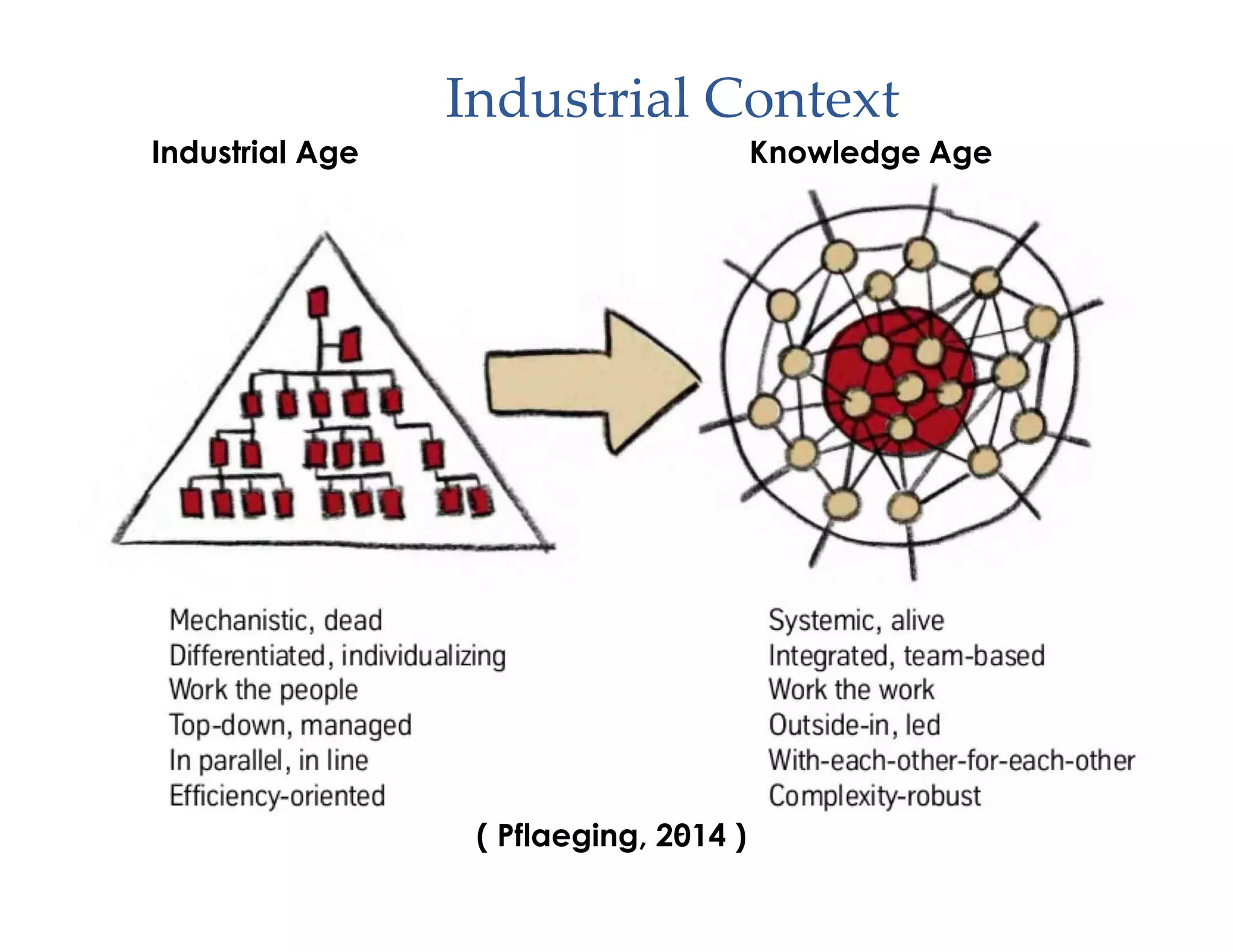
( Pflaeging, 2014 )
Industrial Age Knowledge Age
Industrial Context
13
Organisation as machine
14
Organisation as living system
World Today
Content
16
Different Perceptions
Systems Engineering (SE)
Technical Leadership
SE Career Path
Conclusions
Introduction
17
Human Challenge
Debilidad
Procesos de Ingeniería de Sistemas
Personas
con competencias
OrganizaciónWeakness = too many
specialised
@bernardo
Perspectives vs Mental Models
19
Exercise 1
20
21
22
Procesos de Ingeniería de Sistemas
Personas
con competencias
OrganizaciónThe Challenge
@bernardo
25
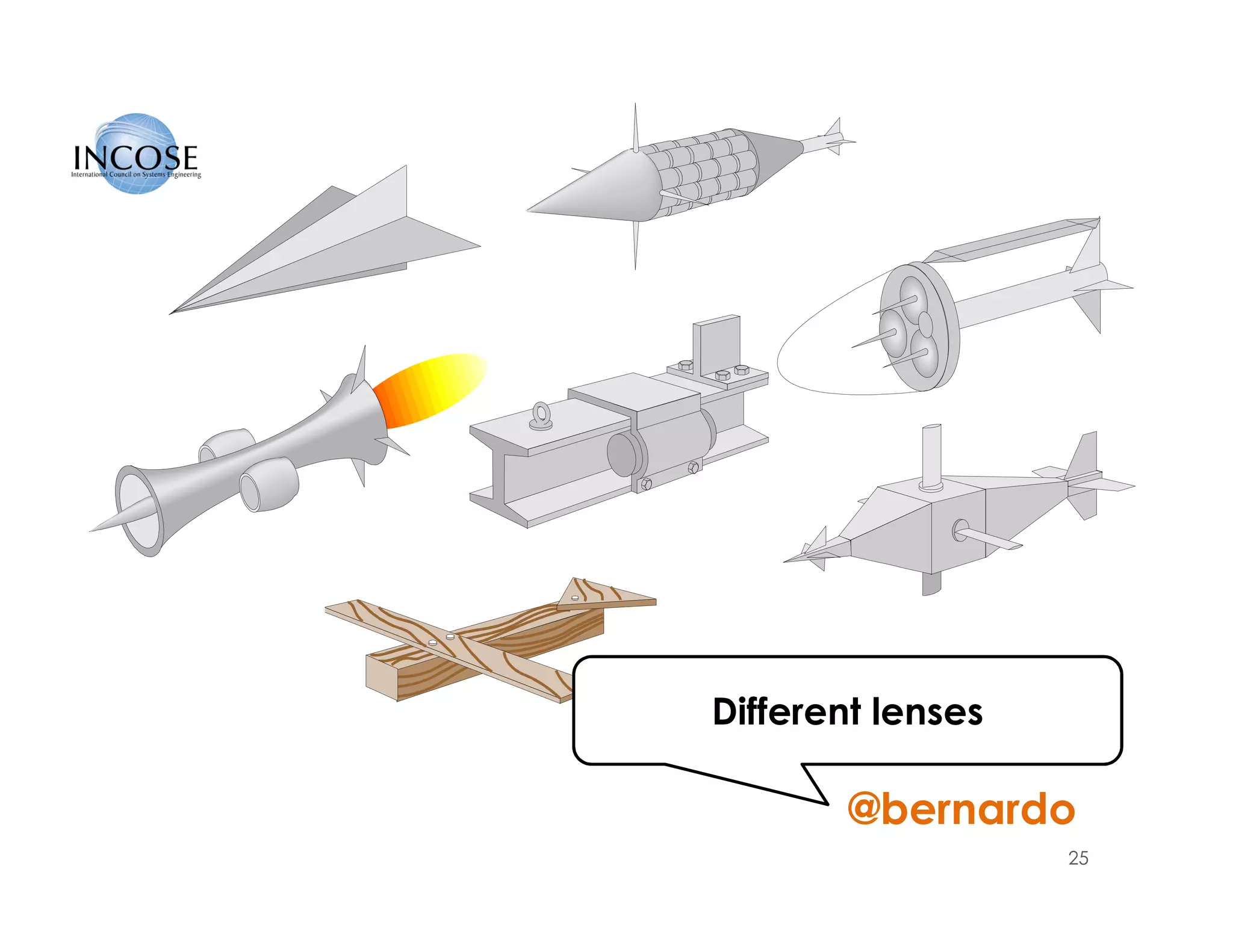
Different lenses
@bernardo
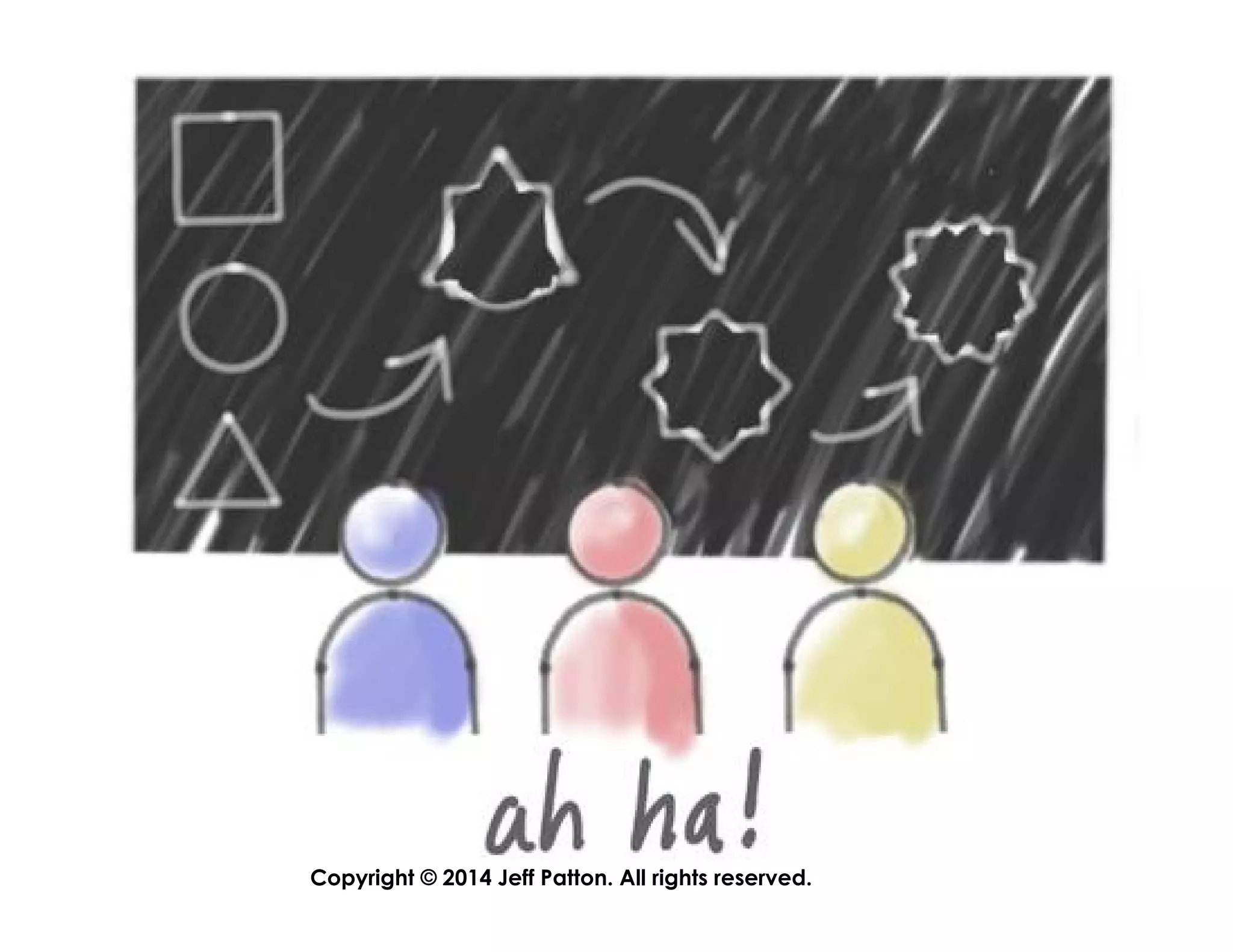
Copyright © 2014 Jeff Patton. All rights reserved.
Synthesis = Integration
@bernardo
31
Communication
@bernardo
Content
32
Different Perceptions
Systems Engineering (SE)
Technical Leadership
SE Career Path
Conclusions
Introduction
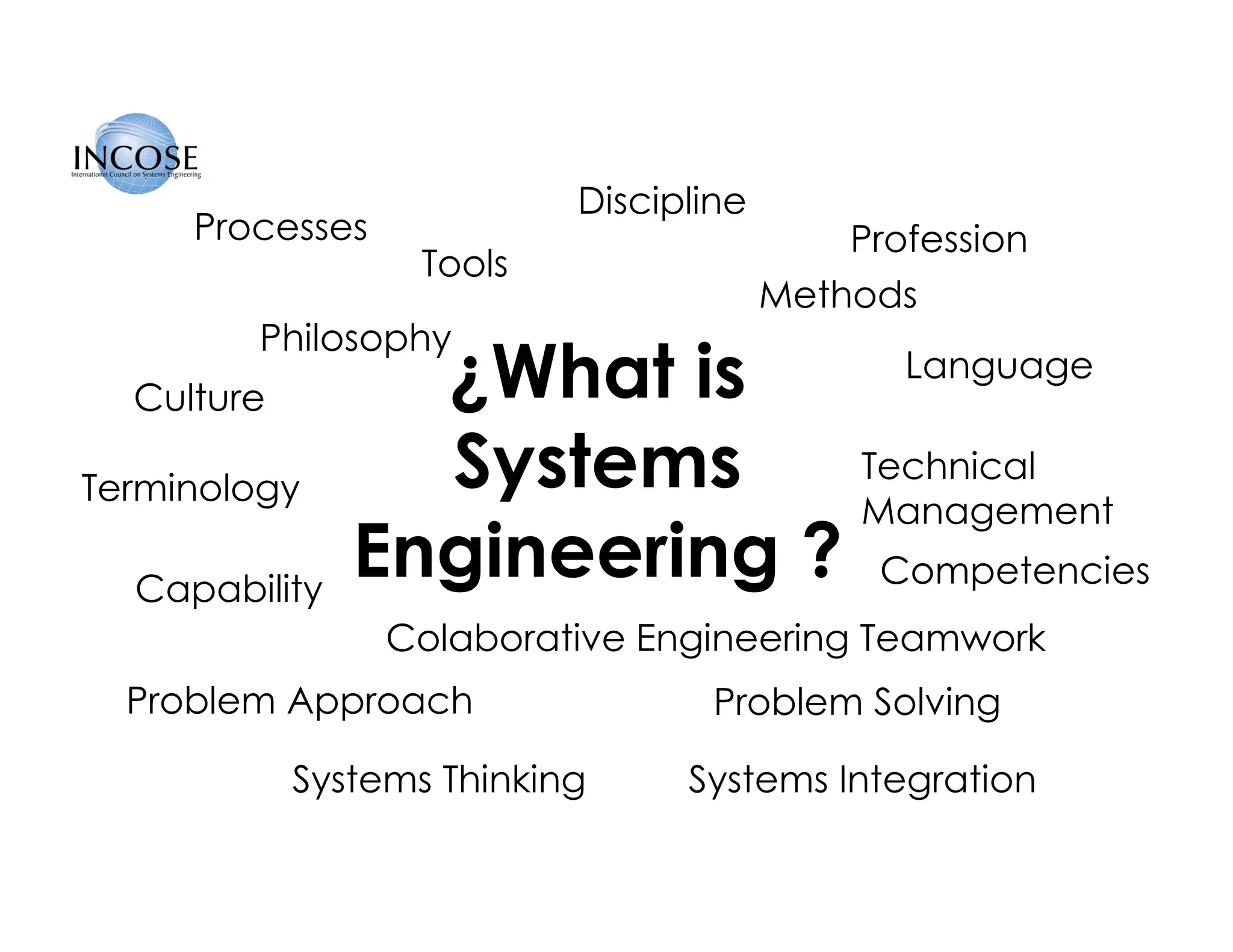
Systems Engineering : Pillars
33
Processes
Philosophy
Culture
Profession
Methods
Tools
Terminology
Technical
Management
Language
Competencies
Colaborative Engineering Teamwork
Capability
Discipline
Problem Approach
¿What is
Systems
Engineering ?
Problem Solving
Systems Thinking Systems Integration
Systems Engineering vs Organization
Methods
&
Tools
Systems Engineering Processes
People
Systems Engineering population by
industry sector : UK
36
(Dawes & Malleson, 2010 )
37
Processes
Technical
Processes
Project
Management
Processes
Business &
Organization
OtherOrganizations
@incose
Processes
V
Video 1 &2
SE tools
38
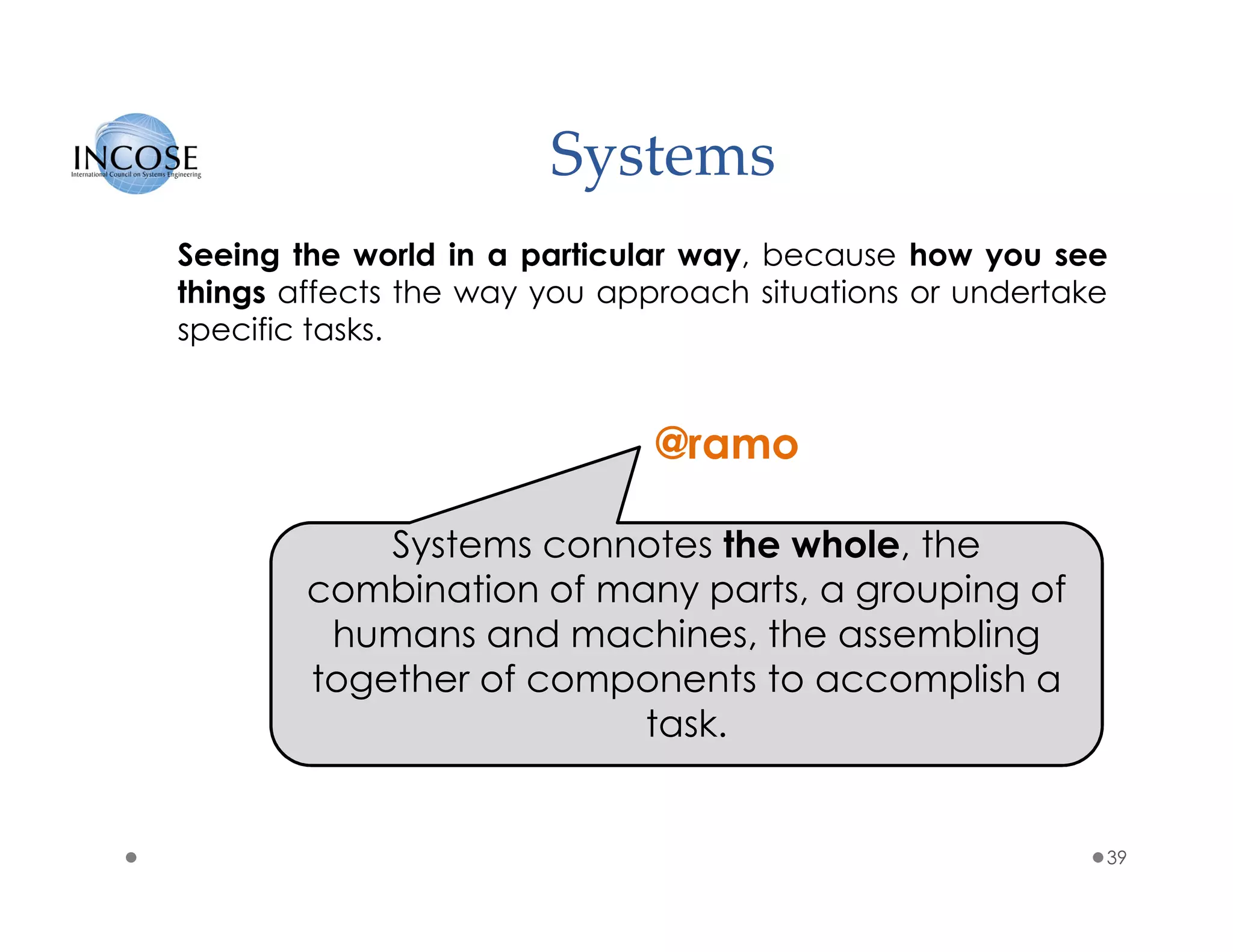
Systems
39
Seeing the world in a particular way, because how you see
things affects the way you approach situations or undertake
specific tasks.
Systems connotes the whole, the
combination of many parts, a grouping of
humans and machines, the assembling
together of components to accomplish a
task.
@ramo
Introduction to INCOSE 41
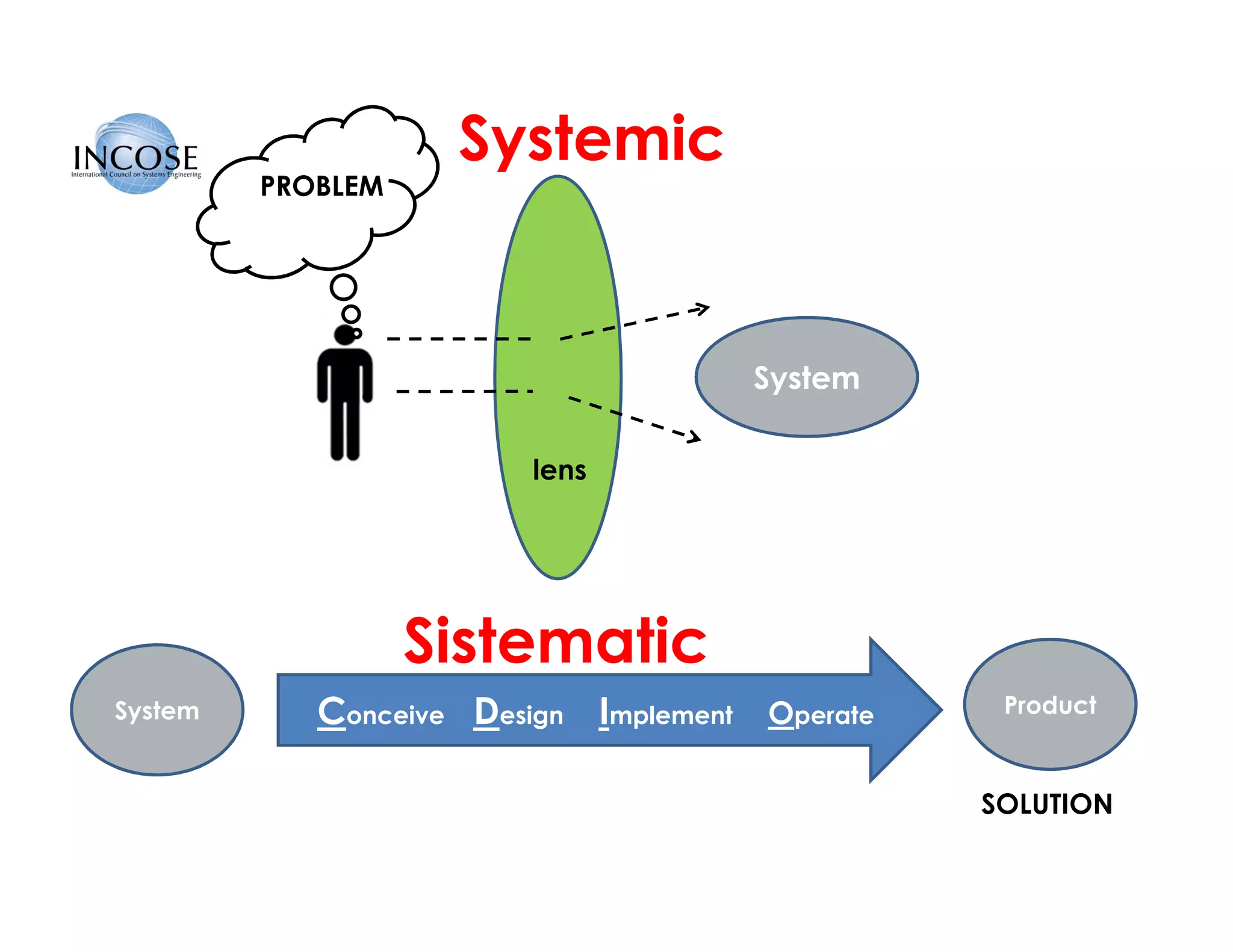
System Life Cycle
Systemic
System
Sistematic
Conceive Design Implement OperateSystem
PROBLEM
SOLUTION
Product
lens
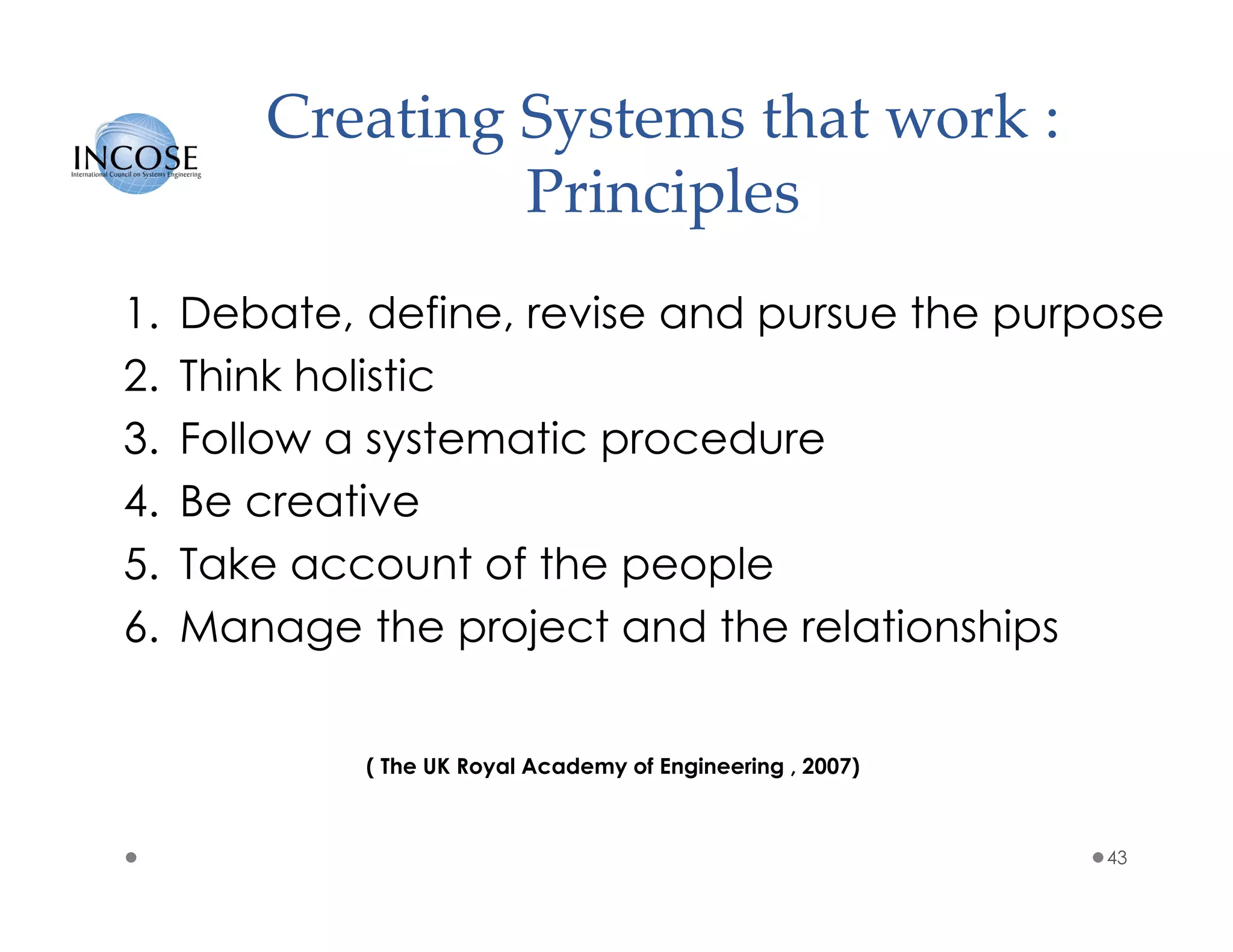
Creating Systems that work :
Principles
1. Debate, define, revise and pursue the purpose
2. Think holistic
3. Follow a systematic procedure
4. Be creative
5. Take account of the people
6. Manage the project and the relationships
43
( The UK Royal Academy of Engineering , 2007)
Creating Systems that work :
Principles
1. Debate, define, revise and pursue the purpose
2. Think holistic
3. Follow a systematic procedure
4. Be creative
5. Take account of the people
6. Manage the project and the relationships
44
My personal view in terms of
maturity level
@bernardo
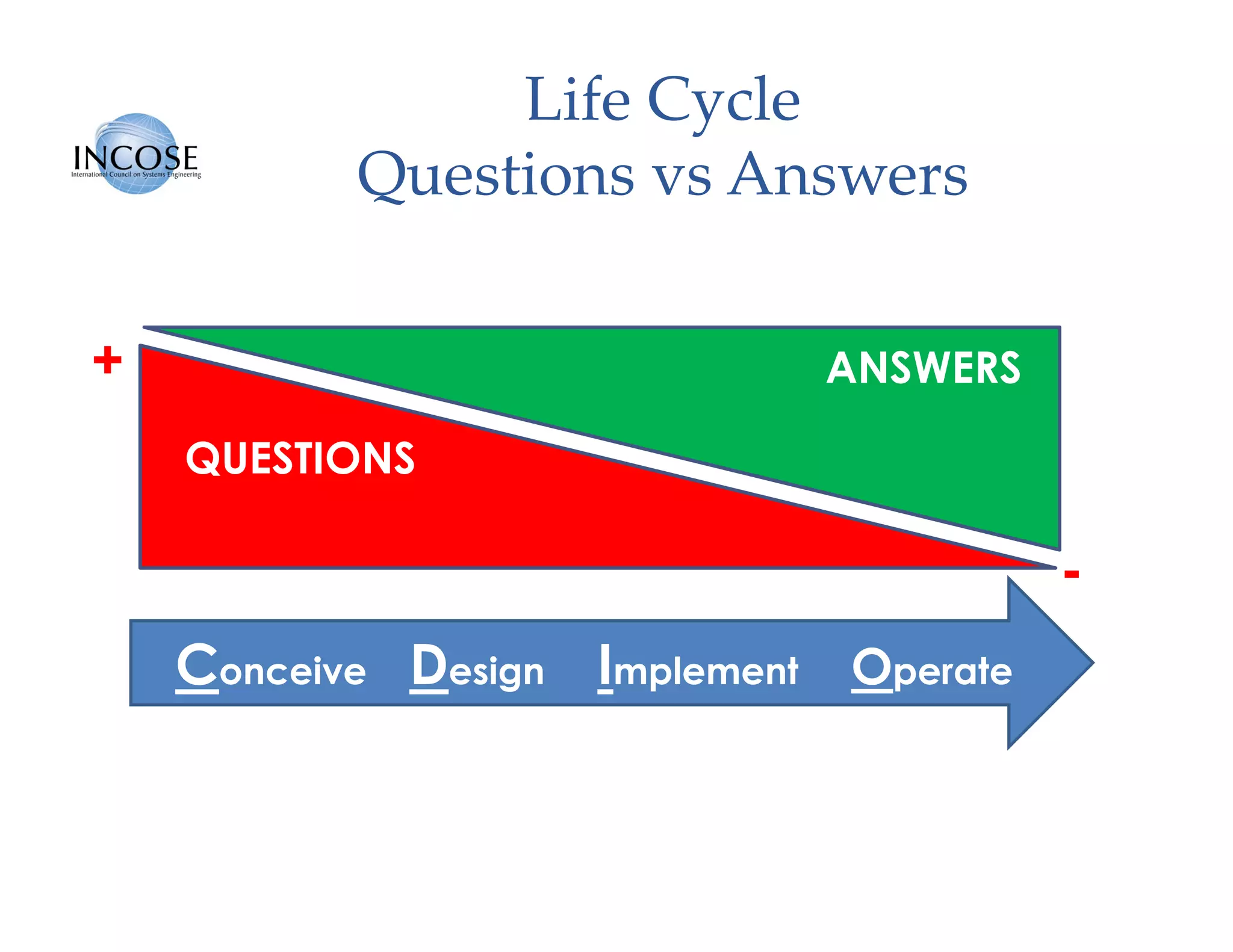
Conceive Design Implement Operate
Life Cycle
Questions vs Answers
QUESTIONS
+
-
ANSWERS
and the unknown
46
Creativity is the dance between the known
Answers
Questions
47
It’s not that I’m so smart. But
I stay with the questions
much longer.
Albert Einstein
Problem Space vs Solution Space :
Keeping Separate is Critical
49
Problem
Space
Systems
QUESTIONS
Solution
Space
Technologies &
Products
ANSWERS
It is all about needs
It is all about the offerings
that satisfy needs
Creating Systems = Battle
50
Conceive Design Implement Operate
PROBLEM PROBLEM PROBLEM PROBLEM PROBLEM
Problem Solving Method = Systems Engineering
Introduction to INCOSE 51
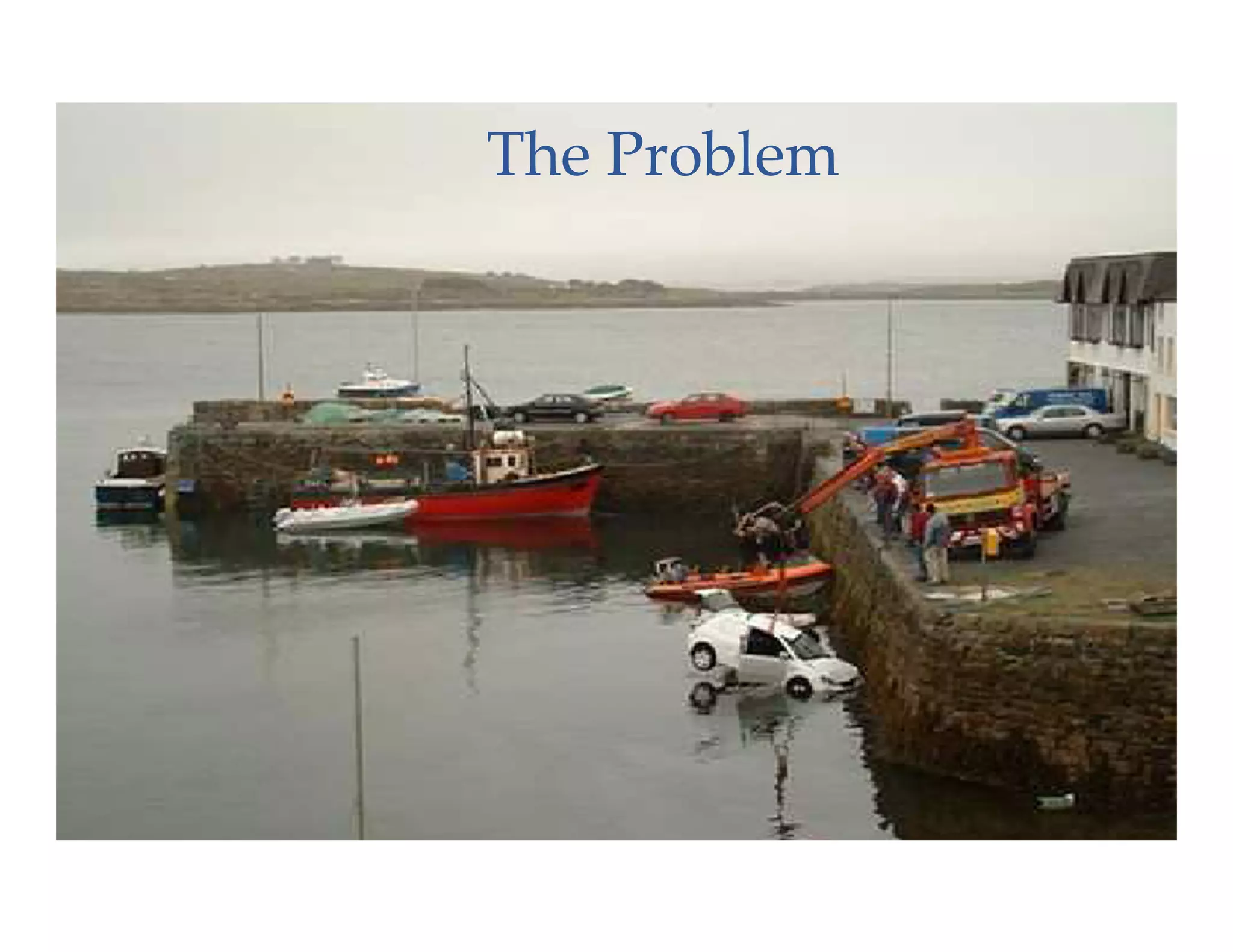
The problemThe Problem
Introduction to INCOSE 52
Introduction to INCOSE 53
Introduction to INCOSE 54
Introduction to INCOSE 55
Introduction to INCOSE 56
Introduction to INCOSE 57
Introduction to INCOSE 58
Introduction to INCOSE 59
60
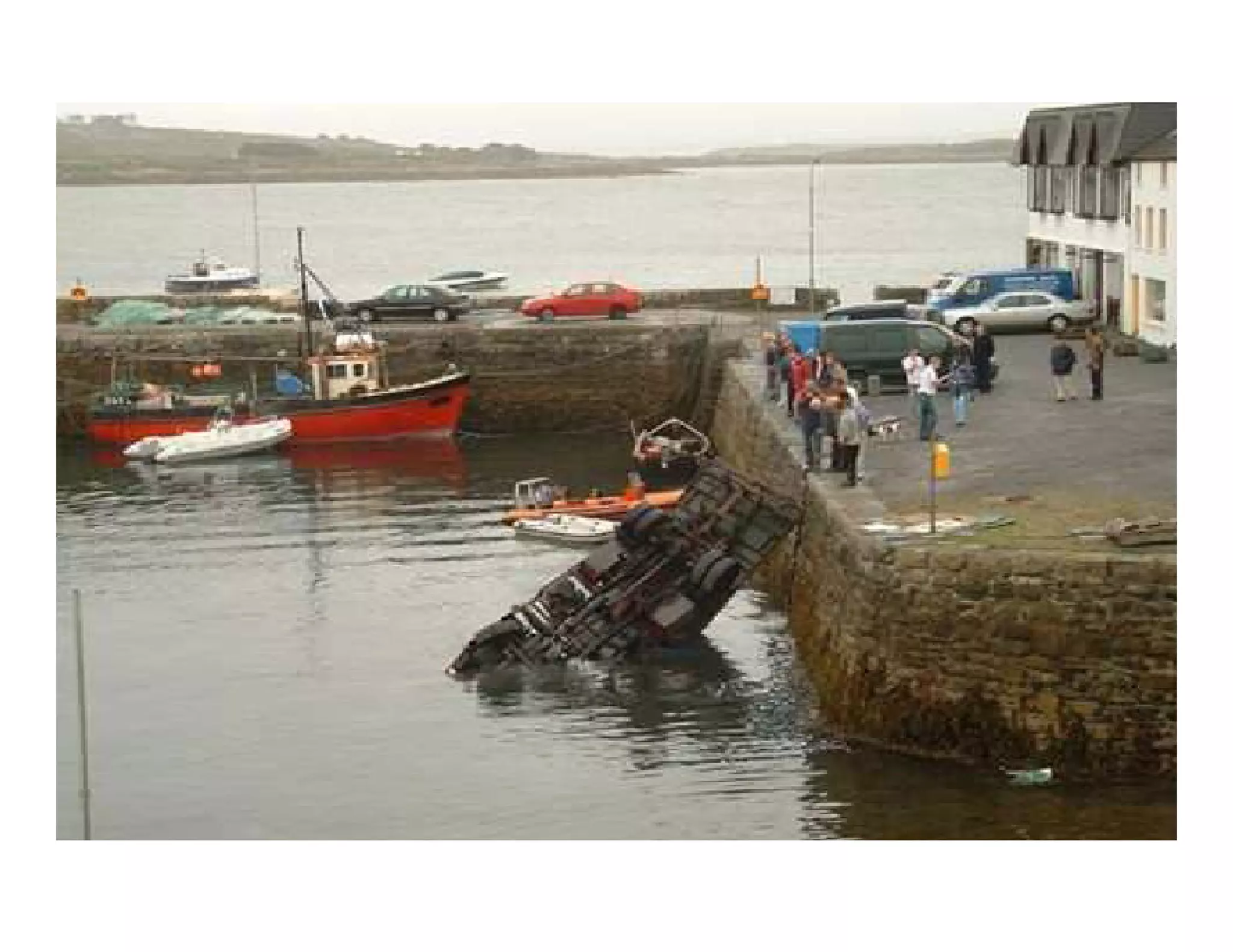
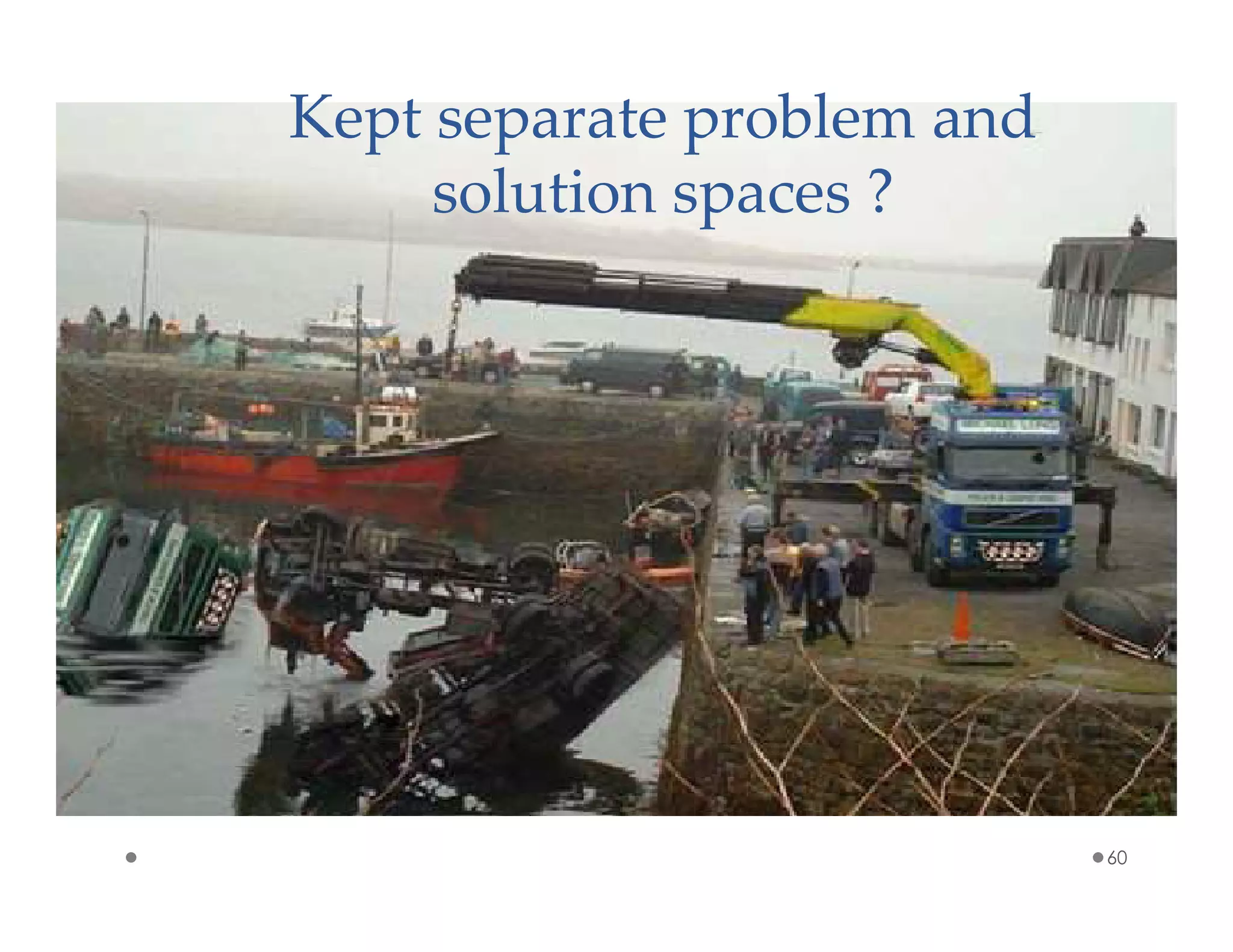
Kept separate problem and
solution spaces ?
Introduction to INCOSE 61
Introduction to INCOSE 62
Introduction to INCOSE 63
Addressed Users' Real Needs ?
Introduction to INCOSE 64
Problem vs Money
65
HAVING a problem IS NOT a problem.
PAYING a problem IS a problem.
( Salado, 2013 )
66
67
68
69
70
71
72
73
74
Exercise 2
75
Why Systems Engineering ?
76
%
100
50
75
25
Commitment to technology,
configuration, cost etc
System specific knowledge
Cost incurred
Ease of change
Concept & prelim.
design
Detail design &
development
Production Use, phase-out
disposal
( Blanchard & Fabrycky, 2010 )
Content
77
Different Perceptions
Systems Engineering (SE)
Technical Leadership
SE Career Path
Conclusions
Introduction
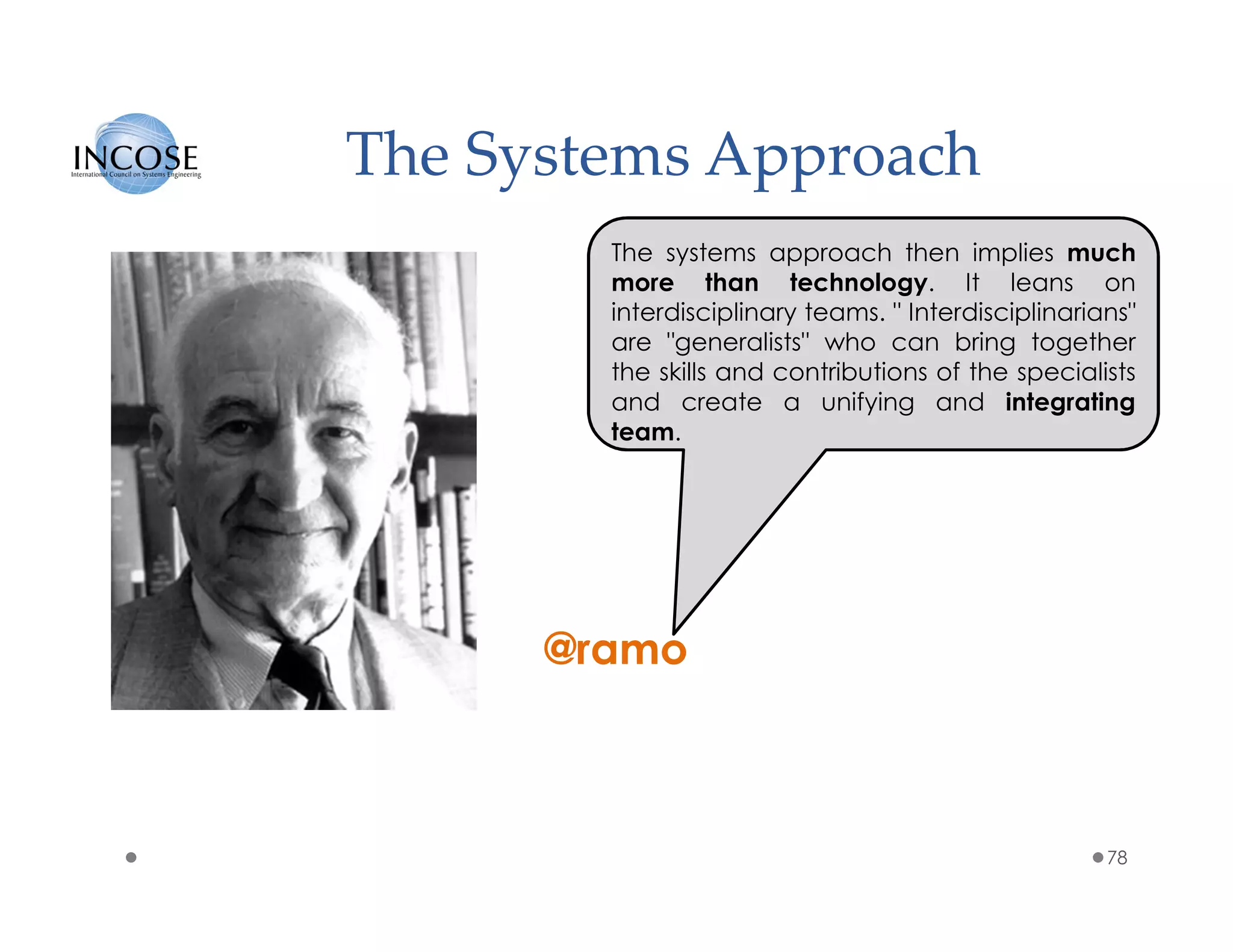
The Systems Approach
78
@ramo
The systems approach then implies much
more than technology. It leans on
interdisciplinary teams. " Interdisciplinarians"
are "generalists" who can bring together
the skills and contributions of the specialists
and create a unifying and integrating
team.
Debilidad
Procesos de Ingeniería de Sistemas
Personas
con competencias
Organización
@bernardo
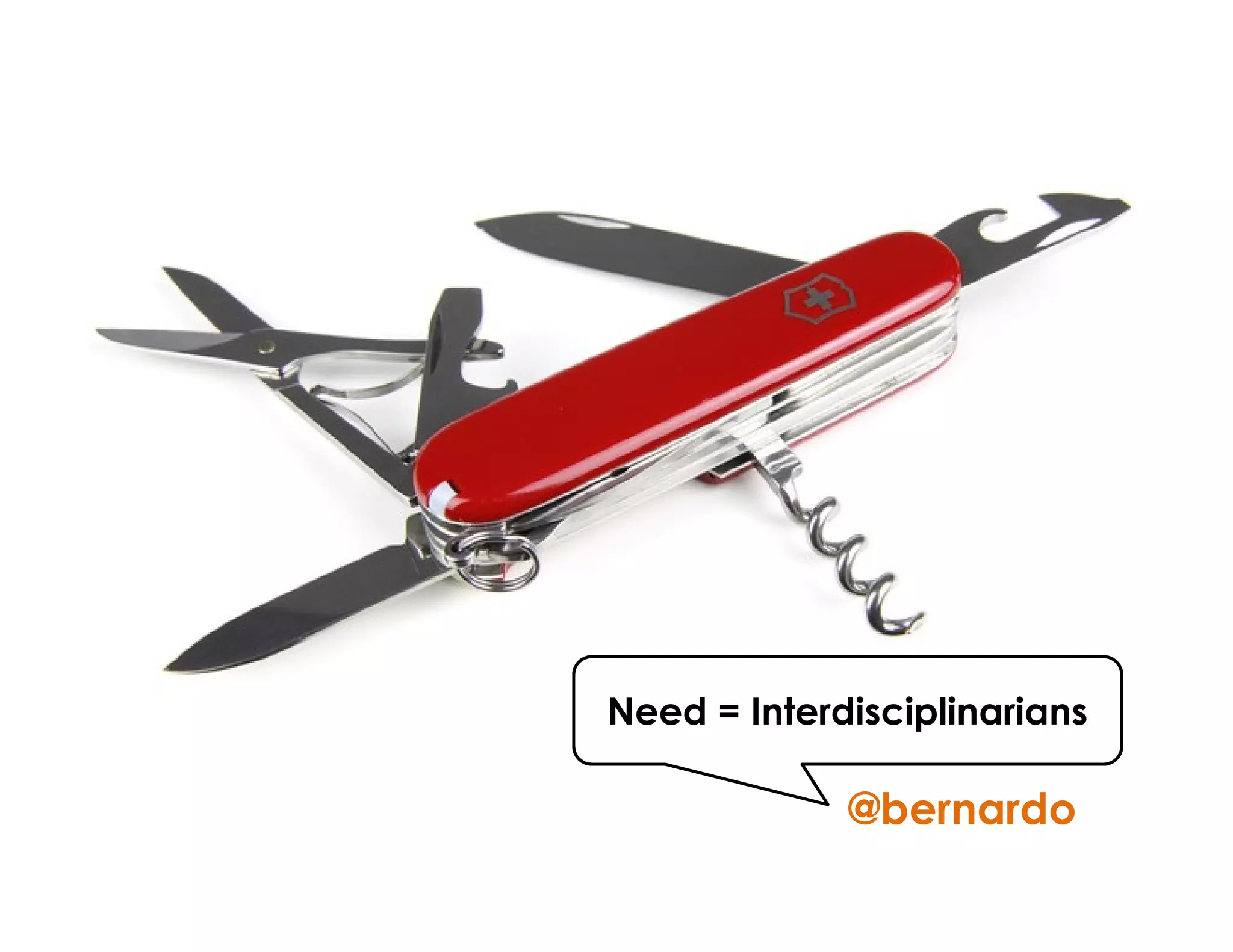
Need = Interdisciplinarians
Video 3
Interdisciplinarians
80
We are not robots, processes are only a
good check-list to be followed
@bernardo
Systems engineering not only
processes
The engineer of the future…
82
..should possess strong analytical skills like engineers of
yesterday and he/she should exhibit practical ingenuity,
creativity in terms of invention, innovation and thinking outside
the box, communication skills, business and management
skills, leadership, a high ethical standard, professionalism,
dynamism, agility, resilience, flexibility, and lifelong learning.
The new engineer is thus a ‘‘T-shaped’’ person whose
‘‘vertical’’ domain specialization (the ‘‘I-shaped’’) is
integrated by a set of horizontal strategic skills and
competencies referred to Business Management, Professional
skills and Entrepreneurial attitudes.
( Secundo et al, 2013 )
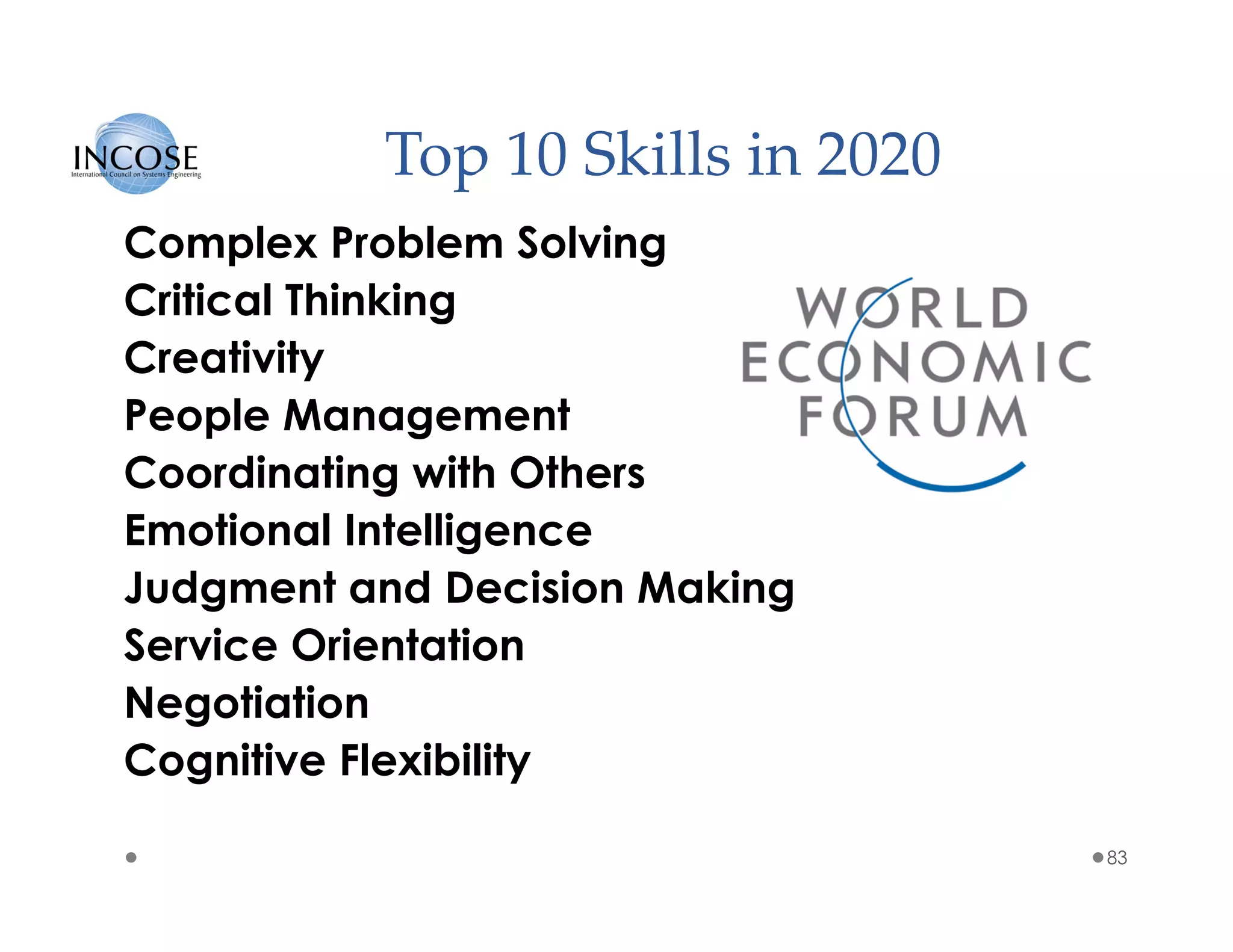
Top 10 Skills in 2020
83
Complex Problem Solving
Critical Thinking
Creativity
People Management
Coordinating with Others
Emotional Intelligence
Judgment and Decision Making
Service Orientation
Negotiation
Cognitive Flexibility
T-Shaped Systems Engineer
84
Breath
Deep
Ability to work outside of core area
Specialty or core
area of expertise
INCOSE updating its COMPETENCY MODEL
SYSTEMS ENGINEERING = ZOOM
@bernardo
The breath Systems Engineering
Competencies
86SE Vision 2025. Copyright © 2014 by INCOSE. All rights reserved.
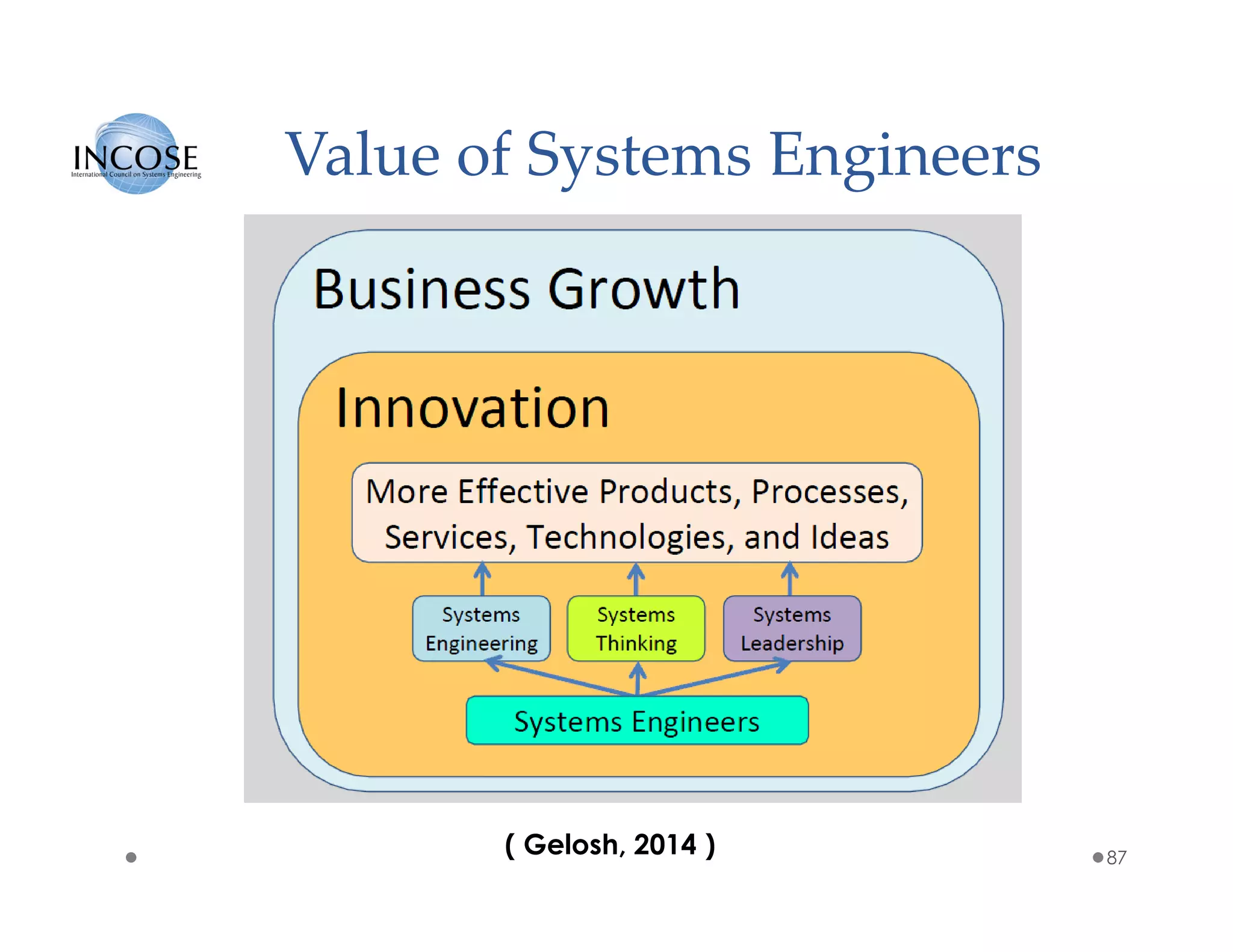
Value of Systems Engineers
87
( Gelosh, 2014 )
Technical Systems Leadership
88
Being the technical systems leader is a tall
challenge, a tremendous opportunity, and an
extremely rewarding endeavor.
• Comfort in dealing with complexity
• Capability to make decisions under uncertainty
• Ability to motivate and inspire individuals and teams
Holds de vision
INCOSE Technical Leadership Model
89
( Patrick Godfrey,2016 )
Thinks strategically
INCOSE Technical Leadership Model
90( Patrick Godfrey,2016 )
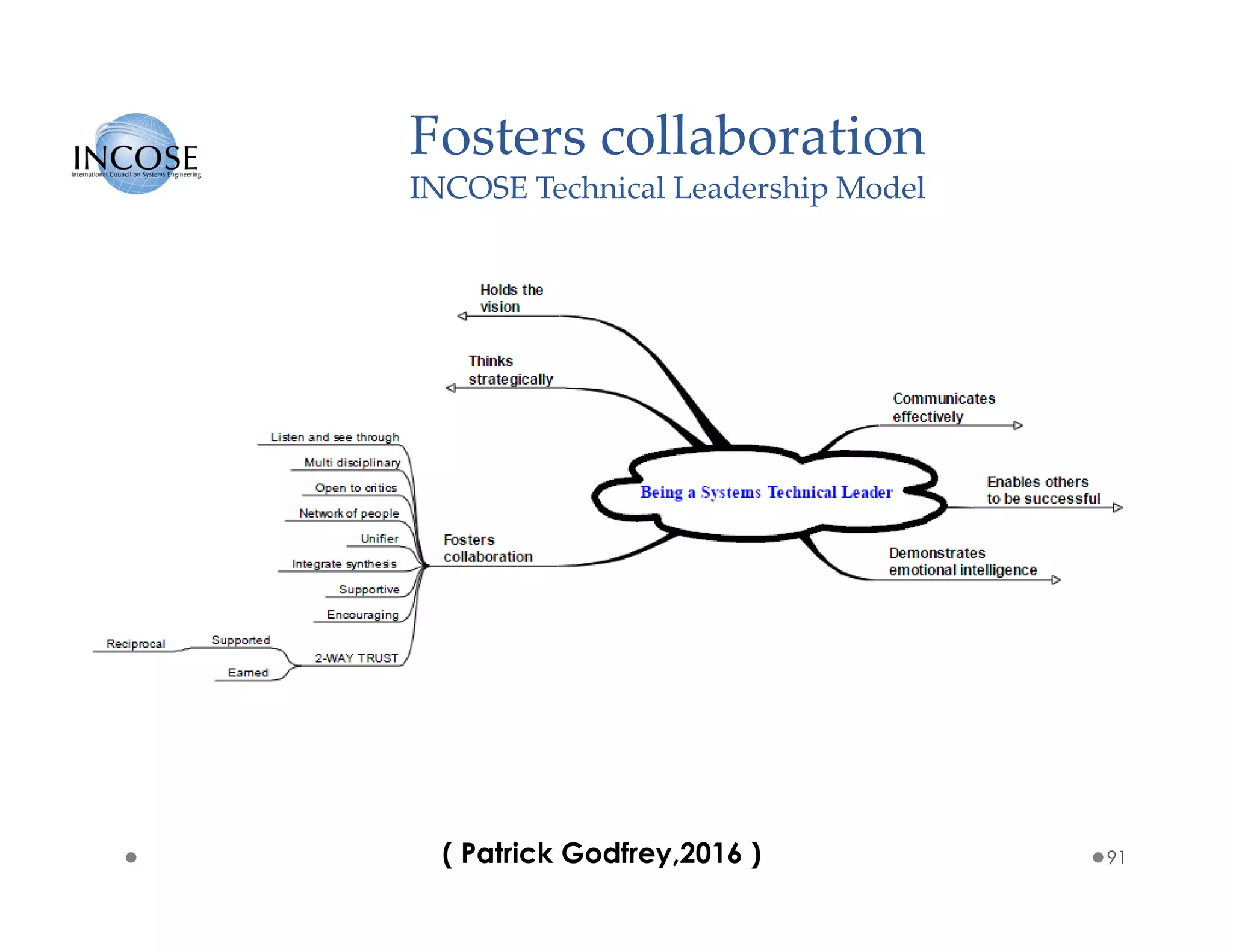
Fosters collaboration
INCOSE Technical Leadership Model
91( Patrick Godfrey,2016 )
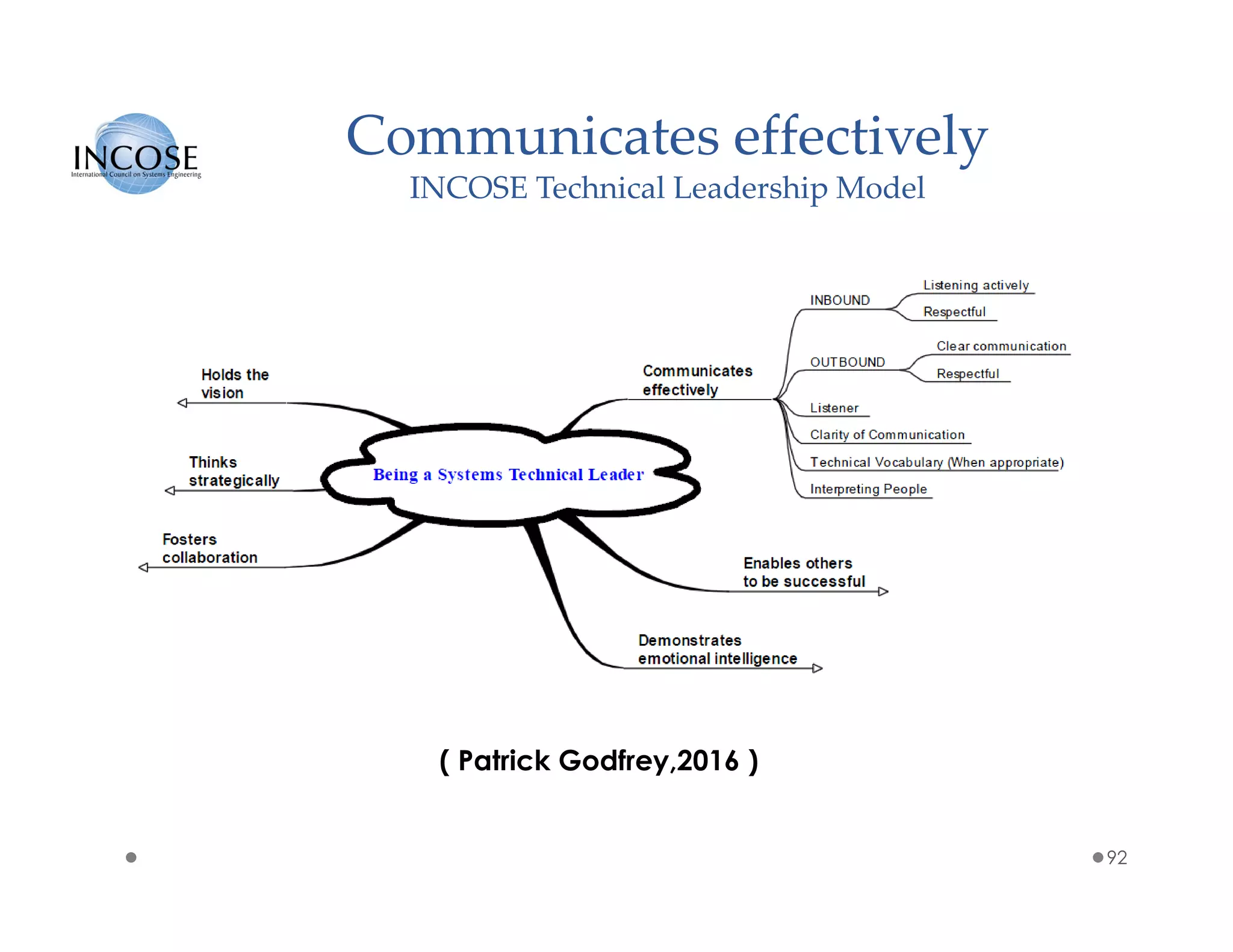
Communicates effectively
INCOSE Technical Leadership Model
92
( Patrick Godfrey,2016 )
Enables others to be successful
INCOSE Technical Leadership Model
93
( Patrick Godfrey,2016 )
Demonstrates emotional intelligence
INCOSE Technical Leadership Model
94
( Patrick Godfrey,2016 )
95
Systems Engineer Best Job in America
Video 4
Complexity in Organizations
96
Content
97
Different Perceptions
Systems Engineering (SE)
Technical Leadership
SE Career Path
Conclusions
Introduction
Conclusions
• Complexity needs Systems Engineering
• Leadership is the art of gluing things.
• Systems Engineers facilitate the glue
therefore they are leaders.
• Systems Engineering is a profession with
future in the new industrial revolution.
98
99
A well-educated mind will
always have more
questions than answers.
Helen Keller
I recommend you
Systems Engineering
Profession
100
Thank You
References
• Bechtold, Jochen ; Kern, Andreas; Lauenstein, Christoph ; Bernhofer, Lena ( 2014 ), “Industry 4.0 - The
Capgemini Consulting View: Sharpening the Picture beyond the Hype”, Capgemini Consulting.
• Blanchard , Benjamin ; Fabrycky ,Wolter (2010) “ Systems Engineering and Analysis”, ISBN-13: 978-
0132217354
• Dawes, Steve; Malleson, Steve ( 2010 ), “ SE Market Survey Findings – What the survey tells us about the
UK Systems Engineering Community”, INCOSE UK Ltd, October 2010.
• Gelosh, Don S. ( 2014 ), “Empowering Business Growth through Systems Engineering Leadership and
Innovation”, Worcester Polytechnic Institute, USA
• Patrick Godfrey ( 2016 ), ” Building a Technical Leadership Model”, INCOSE International Symposium, 26:
757–772. doi:10.1002/j.2334-5837.2016.00191.x
• Patton, Jeff (2014), “User Story Mapping”, Published by O’Reilly Media, Inc., ISBN: 978-1-491-90490-9
• Pflaeging, Niels ( 2014), “Organize for Complexity: How to Get Life Back Into Work to Build the High-
Performance Organization, BetaCodex Publishing, 2014, ISBN-10: 0991537602
• Ramo, Simon ; St.Clair, Robin K. (1998), “ The Systems Approach : Fresh Solutions to Complex Problems
Through Combining Science and Practical Common Sense”, Kni Incorporated, California
• Salado, Alejandro ( 2013) , “Problems during system integration: When architecture and contracts
meet”, KSEE 2013 - Kongsberg systems engineering event.
• The UK Royal Academy of Engineering ( 2007), “Creating systems that work: Principles of engineering
systems for the 21st century”, ISBN: 1-903496-34-9
102

Systems Engineering : The Art of Gluing Pieces