SYSTEMATIC
PHONIC
INSTRUCTION
REPORTED BY: MARIA LUISA
PERPETUAL MASONG
TO HELP CHILDREN DEVELOP PHONEMIC
AWARENESS, THE TEACHER MUST PLAN
CAREFULLY ACTIVITIES FOR:
• Phonics
• Letter – sound relations
• Sight – word vocabulary
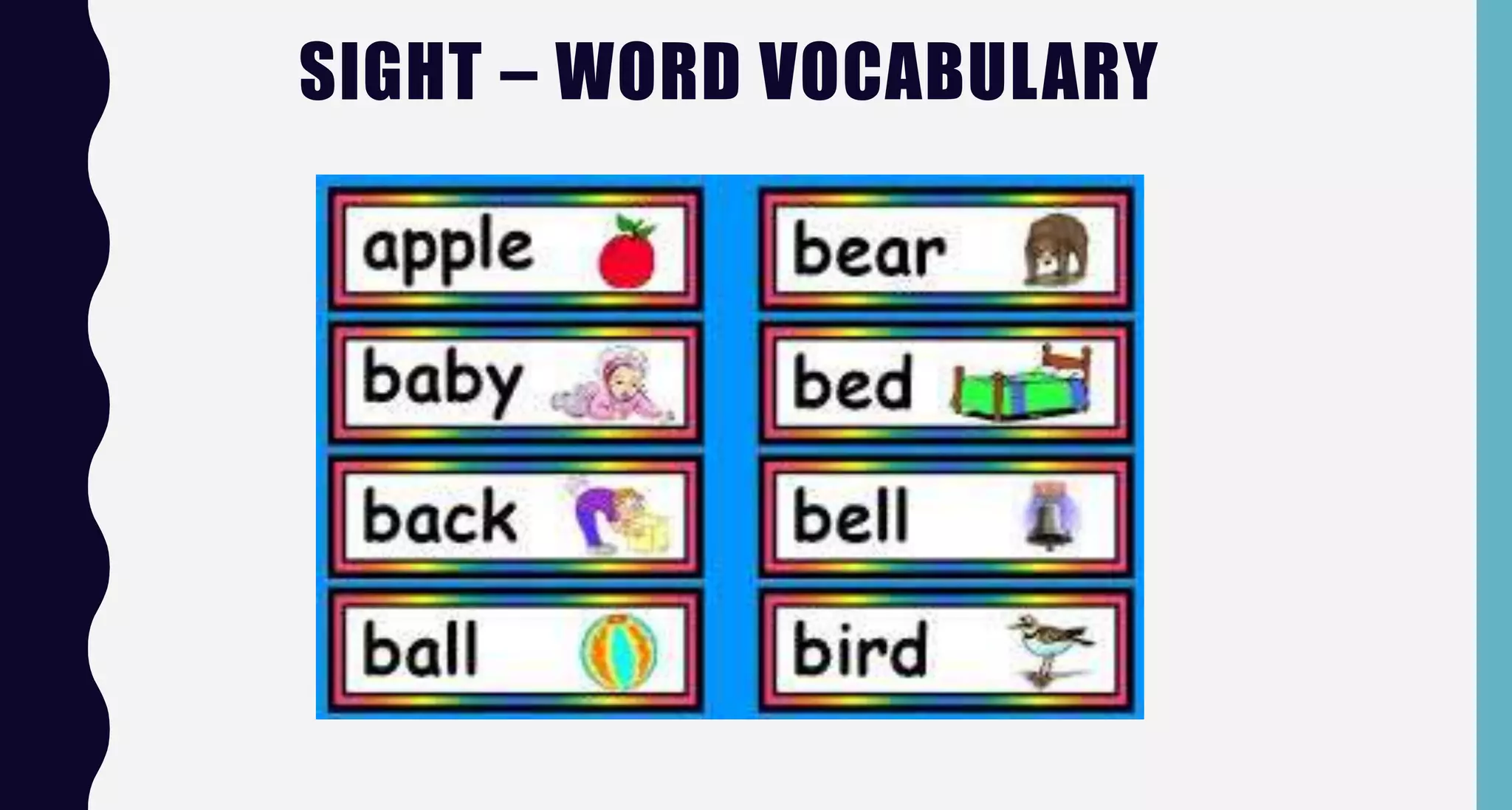
SIGHT – WORD VOCABULARY
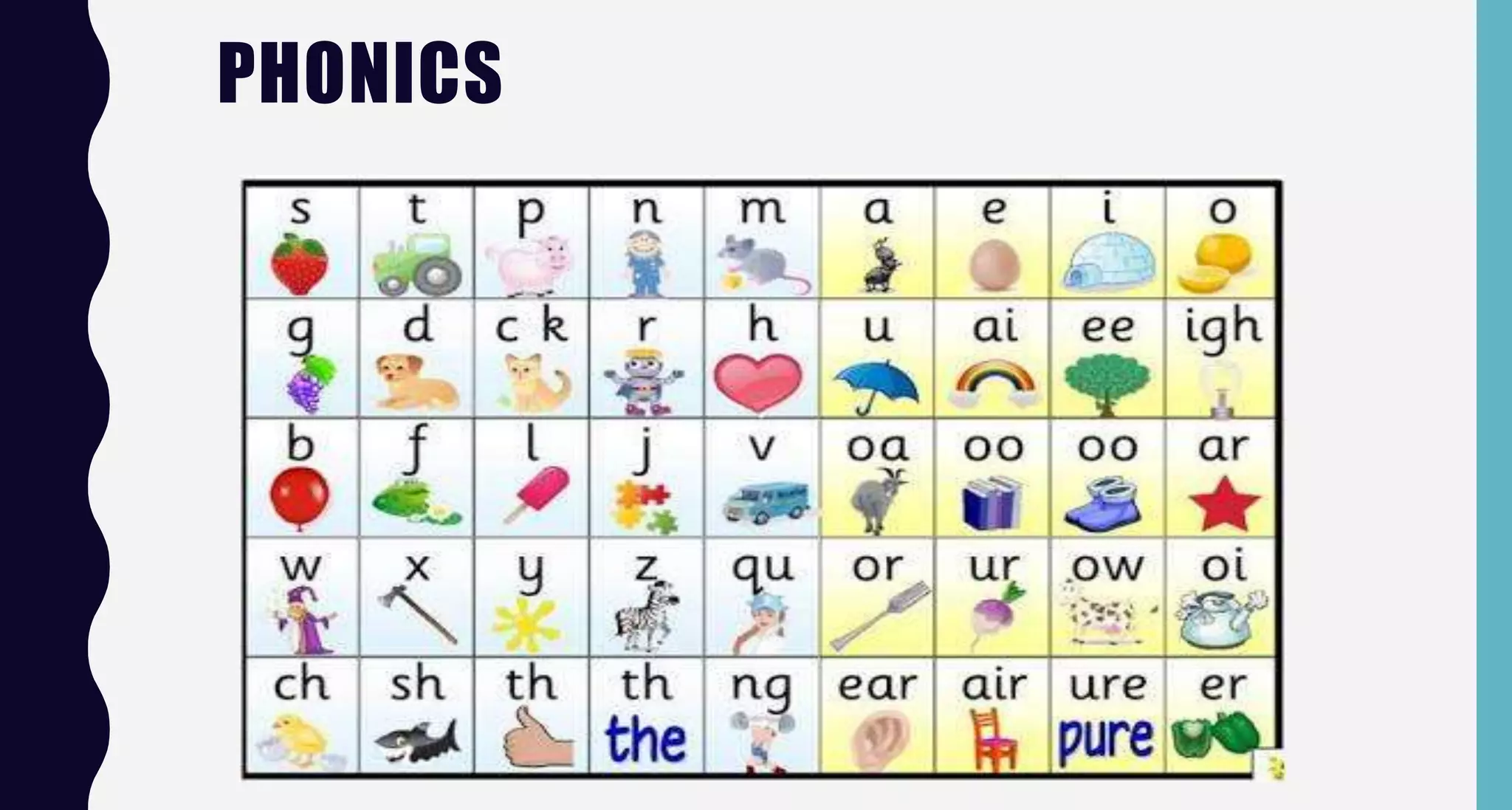
PHONICS
CLEMENTS AND WARNCKE (1994), GUNN,
SIMONS AND KAMEENUI (1996)
- Identified common strategies in good early childhood
classroom which all contribute to phonemic awareness
and knowledge of letter – sound relations.
- These strategies include story reading, making class
books based on children's responses, asking children to
describe pieces of work and calling their attention to the
letters used in context.
PHONEMIC AWARENESS
• Cunningham (1996) defines phonemic awareness as the ability
to examine language independently of meaning and to
manipulate its complement sounds
• Listening, speaking, reading and writing activities will allow
children to demonstrate their growing understanding of the
phonemes and of letter – sound relations or letter – sound
combinations.
SIGHT WORD VOCABULARY
• The most appropriate strategies for helping young learners
develop their abilities to use letter – sound relations and to build
sight word vocabulary are careful observation of their writing and
attention to letter – sound relations and association between the
words.
• Moreover, sight – word includes colors and numbers because of
convenient referents. It is more helpful, if students are provided
with pictures of words or concepts and are used in context to
deduce their meaning.
CHUKOVSKY (1963) REPORTED THAT
CHILDREN FIND RHYMING WORDS
AND RHYMES FASCINATING.
PHONEMIC AWARENESS IS
COMMONLY DEVELOPED THROUGH:
• Rhymes are especially used in dramatic play, drawing and painting
activities. Significant parts of children’s oral language are echoing rhymes
and songs. Which allow them to use words and phrase in new and
meaningful contexts.
(Interesting to note is when kids use rhymes to invent additional lines and
to create new rhymes)
• When given specific examples of rhymes, children actively respond,
critically distinguish rhyming words, and consciously are able to recognize,
say or even invent rhyming words, Wells (1987) recognized the value of
rhymes in proving access to narrative.
• Environmental prints enable children to develop children to develop further
their word recognition and phonemic awareness. Nursery rhymes, songs
and environmental print extended literacy activities.
• Games and toys like flashcards, alphabet cards, pictures with words,
jigsaws with words and magnetic letters provide indirect literacy lessons
DEVELOPMENT OF VOCABULARY,
COMPREHENSION AND WRITING SKILLS
• The complexity of early literacy experience is marked by the natural
development of literacy skills and by the need for adult supervision to
improve skills and to transfer learning.
• The development of vocabulary, comprehension and writing skills can be
achieved through specific literacy experiences like the ones previously
identified such as story reading, storytelling, phonemic awareness, sight
word vocabulary, socio – dramatic play, free – play and guided play.
• However, these development are possibly successful when teachers and
parents recognize their collaboration effort in engaging children in
meaningful literary activities.
“END OF THE REPORT”

Systematic phonic instruction

  • 1.
  • 2.
    TO HELP CHILDRENDEVELOP PHONEMIC AWARENESS, THE TEACHER MUST PLAN CAREFULLY ACTIVITIES FOR: • Phonics • Letter – sound relations • Sight – word vocabulary
  • 3.
    SIGHT – WORDVOCABULARY
  • 4.
  • 5.
    CLEMENTS AND WARNCKE(1994), GUNN, SIMONS AND KAMEENUI (1996) - Identified common strategies in good early childhood classroom which all contribute to phonemic awareness and knowledge of letter – sound relations. - These strategies include story reading, making class books based on children's responses, asking children to describe pieces of work and calling their attention to the letters used in context.
  • 6.
    PHONEMIC AWARENESS • Cunningham(1996) defines phonemic awareness as the ability to examine language independently of meaning and to manipulate its complement sounds • Listening, speaking, reading and writing activities will allow children to demonstrate their growing understanding of the phonemes and of letter – sound relations or letter – sound combinations.
  • 7.
    SIGHT WORD VOCABULARY •The most appropriate strategies for helping young learners develop their abilities to use letter – sound relations and to build sight word vocabulary are careful observation of their writing and attention to letter – sound relations and association between the words. • Moreover, sight – word includes colors and numbers because of convenient referents. It is more helpful, if students are provided with pictures of words or concepts and are used in context to deduce their meaning.
  • 8.
    CHUKOVSKY (1963) REPORTEDTHAT CHILDREN FIND RHYMING WORDS AND RHYMES FASCINATING. PHONEMIC AWARENESS IS COMMONLY DEVELOPED THROUGH:
  • 9.
    • Rhymes areespecially used in dramatic play, drawing and painting activities. Significant parts of children’s oral language are echoing rhymes and songs. Which allow them to use words and phrase in new and meaningful contexts. (Interesting to note is when kids use rhymes to invent additional lines and to create new rhymes) • When given specific examples of rhymes, children actively respond, critically distinguish rhyming words, and consciously are able to recognize, say or even invent rhyming words, Wells (1987) recognized the value of rhymes in proving access to narrative. • Environmental prints enable children to develop children to develop further their word recognition and phonemic awareness. Nursery rhymes, songs and environmental print extended literacy activities. • Games and toys like flashcards, alphabet cards, pictures with words, jigsaws with words and magnetic letters provide indirect literacy lessons
  • 10.
    DEVELOPMENT OF VOCABULARY, COMPREHENSIONAND WRITING SKILLS • The complexity of early literacy experience is marked by the natural development of literacy skills and by the need for adult supervision to improve skills and to transfer learning. • The development of vocabulary, comprehension and writing skills can be achieved through specific literacy experiences like the ones previously identified such as story reading, storytelling, phonemic awareness, sight word vocabulary, socio – dramatic play, free – play and guided play. • However, these development are possibly successful when teachers and parents recognize their collaboration effort in engaging children in meaningful literary activities.
  • 11.
    “END OF THEREPORT”