Dustin Kidd
Associate Professor,
Sociology
Director, Intellectu a l
Heritage
Temple Univers i ty
dkidd@te mp le .ed u
@ PopCulture F rea k
dustinki dd. net
SYLLABUS
TRANSFORMATION
WORKSHOP
 The goal of this workshop is to engage a set of useful
practices for addressing inequalities that are institutionalized
in our syllabi, such as that our curricula not only reflect those
inequalities but even become mechanisms for their
reproduction.
 We will focus on gender from an intersectional perspective,
but these practices are useful for many other issues:
 Race & Ethnicity
 Sexuality
 Disability and Health
 Nationality
 Religion
 Ideology & Method
WORKSHOP PURPOSE
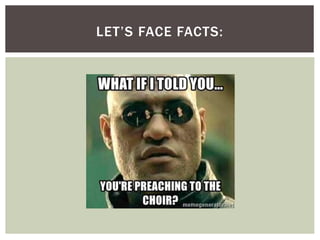
LET’S FACE FACTS:
 Anyone engaged in the lifelong process of critically examining
the relationship between what we teach and the inequalities
in the world we live in, as well as…
 Anyone designing a new class
 Anyone who has inherited a course designed by someone else
 Anyone designing or approving curricula in a centralized fashion
 Department chairs and undergraduate directors
 Departmental/programmatic committees
 General Education
 College/University-wide curricular committees
 Anyone concerned about whether their curricula reflects and speaks
to their students
 Anyone working with a colleague to transform a course
 Anyone else?
WHO IS THIS WORKSHOP FOR?
 It’s the right thing to do
 We’re accountable to students to teach material that is reflective
of their diversity and the diversity of the world we live in
 We’re accountable to our fields to teach material that is
reflective of the diversity of the field
 We have a moral and scholarly imperative to examine,
understand, critique, and challenge social inequalities
 We have an opportunity to discover and share new ideas,
perspectives, and voices
 We have an opportunity to expand our understanding of the
human experience and share it with our students
 Anything else?
WHY ENGAGE IN SYLLABUS
TRANSFORMATION AND REVISION?
 In groups of 2-3, share the course that you are critically
examining in this workshop:
 What is the course and what is the context?
 What are your areas of concern?
 What ideas do you have already?
WHAT ARE YOU WORKING ON?
 Avoid the ADD WOMEN model
 Take the existing syllabus and add women authors, perhaps replacing
a few of the men or adding women authors as additional readings
 Use the principles of backwards design
 Create inclusive learning objectives that follow from an inclusive
course description
 Design inclusive assessments that align with learning objectives
 Design classroom learning activities (readings, discussions, lectures,
active learning, etc.) that align with the objectives and assessments
BEST PRACTICES
 How could our learning objectives generate exclusivity?
 What are some ways that we could transform those learning
objectives to make them inclusive?
LEARNING OBJECTIVES
 Current learning objective in Classical Sociological Theory: By
the end of this semester, all students should be able to
discuss the key contributions of the major founders of the
field of sociology.
 PLEASE REVISE!
LEARNING OBJECTIVES
 Write one inclusive learning objective
 Briefly describe an inclusive assessment of that objective
 Identify 2-3 inclusive learning activities that prepare students
for that assessment and help to achieve that objective
 If you have extra time, add additional learning objectives
BACKWARDS DESIGN
 With a partner or two share what you came up with
 What struggles did you have?
 What feedback do you have for each other?
 What readings might this approach suggest and how do they differ
from the readings you currently use?
 What issues and opportunities do you anticipate and you extend this
to additional learning objectives?
PAIR, SHARE, PUBLIC SQUARE!
 Existing inequalities are the direct result of business as usual.
You cannot maintain the same practices and expect a new
result.
 We cannot teach every text/author/topic. What and who we
teach is a reflection of our priorities.
 Canons are social constructions that appear stable but are
very fluid. Canon change is the result of transformative
pedagogical and scholarly practice.
 Syllabus and curricular transformation is not a 1-time
process. It’s a lifelong process that involves on-going
conversations with new scholarship, new ideas, new self-
reflections, and new inequalities.
KEY PRINCIPLES
 Teaching ideas: Teaching for Diversity and Social Justice by
Maurianne Adams and Lee Ann Bell
 Unpacking canons:
 Sarah Corse and Saundra Westervelt “Gender and Literary
Valorization: The Awakening of a Canonical Novel.” Socilogical
Perspectives 2002.
 Sarah Corse and Monica Griffin “Cultural Valorization and African
American Literary History: Reconstructing the Canon.” Sociological
Forum 1997.
 Lawrence Levine’s Highbrow/Lowbrow and The Opening of the
American Mind.
 Backwards Design:
https://educationaltechnology.net/backward-design-
understanding-by-design/.
 The Knapsack Institute: https://www.uccs.edu/knapsack/.
RESOURCES

Syllabus Transformation Workshop

  • 1.
    Dustin Kidd Associate Professor, Sociology Director,Intellectu a l Heritage Temple Univers i ty dkidd@te mp le .ed u @ PopCulture F rea k dustinki dd. net SYLLABUS TRANSFORMATION WORKSHOP
  • 2.
     The goalof this workshop is to engage a set of useful practices for addressing inequalities that are institutionalized in our syllabi, such as that our curricula not only reflect those inequalities but even become mechanisms for their reproduction.  We will focus on gender from an intersectional perspective, but these practices are useful for many other issues:  Race & Ethnicity  Sexuality  Disability and Health  Nationality  Religion  Ideology & Method WORKSHOP PURPOSE
  • 3.
  • 4.
     Anyone engagedin the lifelong process of critically examining the relationship between what we teach and the inequalities in the world we live in, as well as…  Anyone designing a new class  Anyone who has inherited a course designed by someone else  Anyone designing or approving curricula in a centralized fashion  Department chairs and undergraduate directors  Departmental/programmatic committees  General Education  College/University-wide curricular committees  Anyone concerned about whether their curricula reflects and speaks to their students  Anyone working with a colleague to transform a course  Anyone else? WHO IS THIS WORKSHOP FOR?
  • 5.
     It’s theright thing to do  We’re accountable to students to teach material that is reflective of their diversity and the diversity of the world we live in  We’re accountable to our fields to teach material that is reflective of the diversity of the field  We have a moral and scholarly imperative to examine, understand, critique, and challenge social inequalities  We have an opportunity to discover and share new ideas, perspectives, and voices  We have an opportunity to expand our understanding of the human experience and share it with our students  Anything else? WHY ENGAGE IN SYLLABUS TRANSFORMATION AND REVISION?
  • 6.
     In groupsof 2-3, share the course that you are critically examining in this workshop:  What is the course and what is the context?  What are your areas of concern?  What ideas do you have already? WHAT ARE YOU WORKING ON?
  • 7.
     Avoid theADD WOMEN model  Take the existing syllabus and add women authors, perhaps replacing a few of the men or adding women authors as additional readings  Use the principles of backwards design  Create inclusive learning objectives that follow from an inclusive course description  Design inclusive assessments that align with learning objectives  Design classroom learning activities (readings, discussions, lectures, active learning, etc.) that align with the objectives and assessments BEST PRACTICES
  • 8.
     How couldour learning objectives generate exclusivity?  What are some ways that we could transform those learning objectives to make them inclusive? LEARNING OBJECTIVES
  • 9.
     Current learningobjective in Classical Sociological Theory: By the end of this semester, all students should be able to discuss the key contributions of the major founders of the field of sociology.  PLEASE REVISE! LEARNING OBJECTIVES
  • 10.
     Write oneinclusive learning objective  Briefly describe an inclusive assessment of that objective  Identify 2-3 inclusive learning activities that prepare students for that assessment and help to achieve that objective  If you have extra time, add additional learning objectives BACKWARDS DESIGN
  • 11.
     With apartner or two share what you came up with  What struggles did you have?  What feedback do you have for each other?  What readings might this approach suggest and how do they differ from the readings you currently use?  What issues and opportunities do you anticipate and you extend this to additional learning objectives? PAIR, SHARE, PUBLIC SQUARE!
  • 12.
     Existing inequalitiesare the direct result of business as usual. You cannot maintain the same practices and expect a new result.  We cannot teach every text/author/topic. What and who we teach is a reflection of our priorities.  Canons are social constructions that appear stable but are very fluid. Canon change is the result of transformative pedagogical and scholarly practice.  Syllabus and curricular transformation is not a 1-time process. It’s a lifelong process that involves on-going conversations with new scholarship, new ideas, new self- reflections, and new inequalities. KEY PRINCIPLES
  • 13.
     Teaching ideas:Teaching for Diversity and Social Justice by Maurianne Adams and Lee Ann Bell  Unpacking canons:  Sarah Corse and Saundra Westervelt “Gender and Literary Valorization: The Awakening of a Canonical Novel.” Socilogical Perspectives 2002.  Sarah Corse and Monica Griffin “Cultural Valorization and African American Literary History: Reconstructing the Canon.” Sociological Forum 1997.  Lawrence Levine’s Highbrow/Lowbrow and The Opening of the American Mind.  Backwards Design: https://educationaltechnology.net/backward-design- understanding-by-design/.  The Knapsack Institute: https://www.uccs.edu/knapsack/. RESOURCES