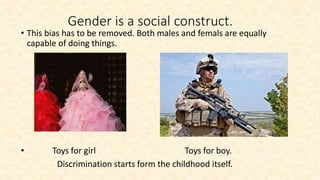
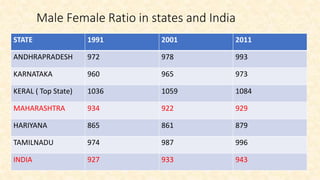
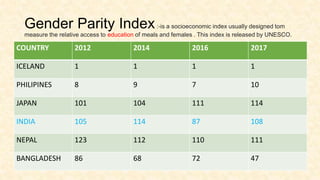
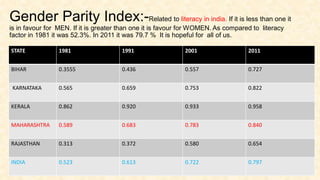
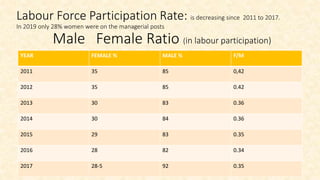
This document discusses gender equality as a principle of sustainable development. It begins by defining gender and explaining that gender is a social construct, as there are natural biological differences but society also creates differences in roles and treatment. It then defines gender equality as equal conditions, treatment, and opportunities for women and men to realize their full potential. The document notes that gender equality is one of the 17 sustainable development goals aimed to be achieved by 2030. It provides data on gender ratios, literacy rates, labor force participation rates, and political participation in India to assess progress and gaps in achieving gender equality. It also discusses benefits of gender equality such as better business and economy, reduced poverty, and better health. The document advocates for more girls' education