12/06/2025
Survival Models:
Proper Scoring Rule and Stochastic
Optimization for Competing Risks
Julie Alberge
PhD student under the supervision of Judith Abécassis and Gaël
Varoquaux
1
Collaborators
Vincent Maladière Olivier Grisel Judith Abécassis Gaël Varoquaux
2
What is survival analysis?
3
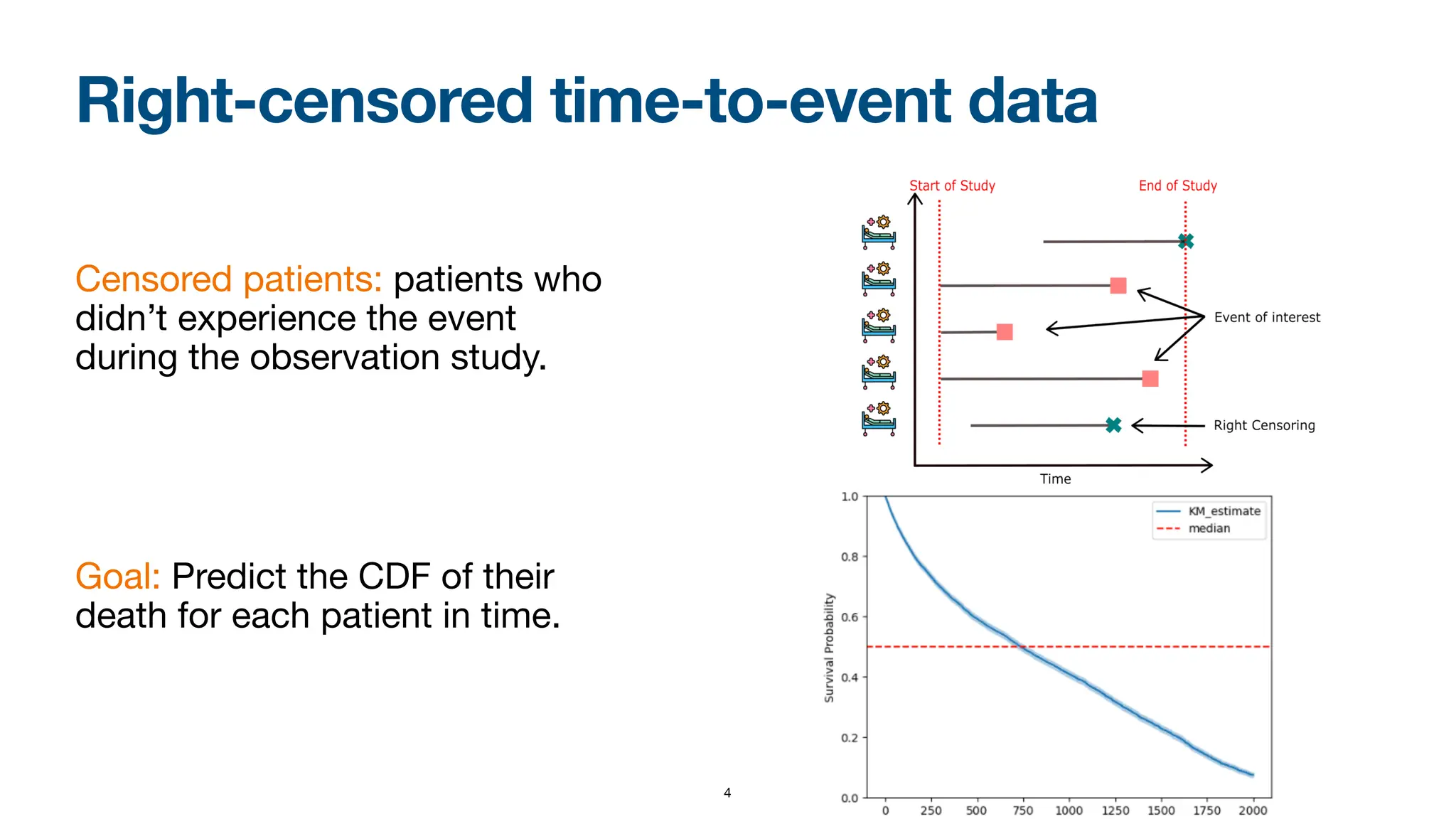
Right-censored time-to-event data
Censored patients: patients who
didn’t experience the event
during the observation study.
Goal: Predict the CDF of their
death for each patient in time.
4
Survival Analysis
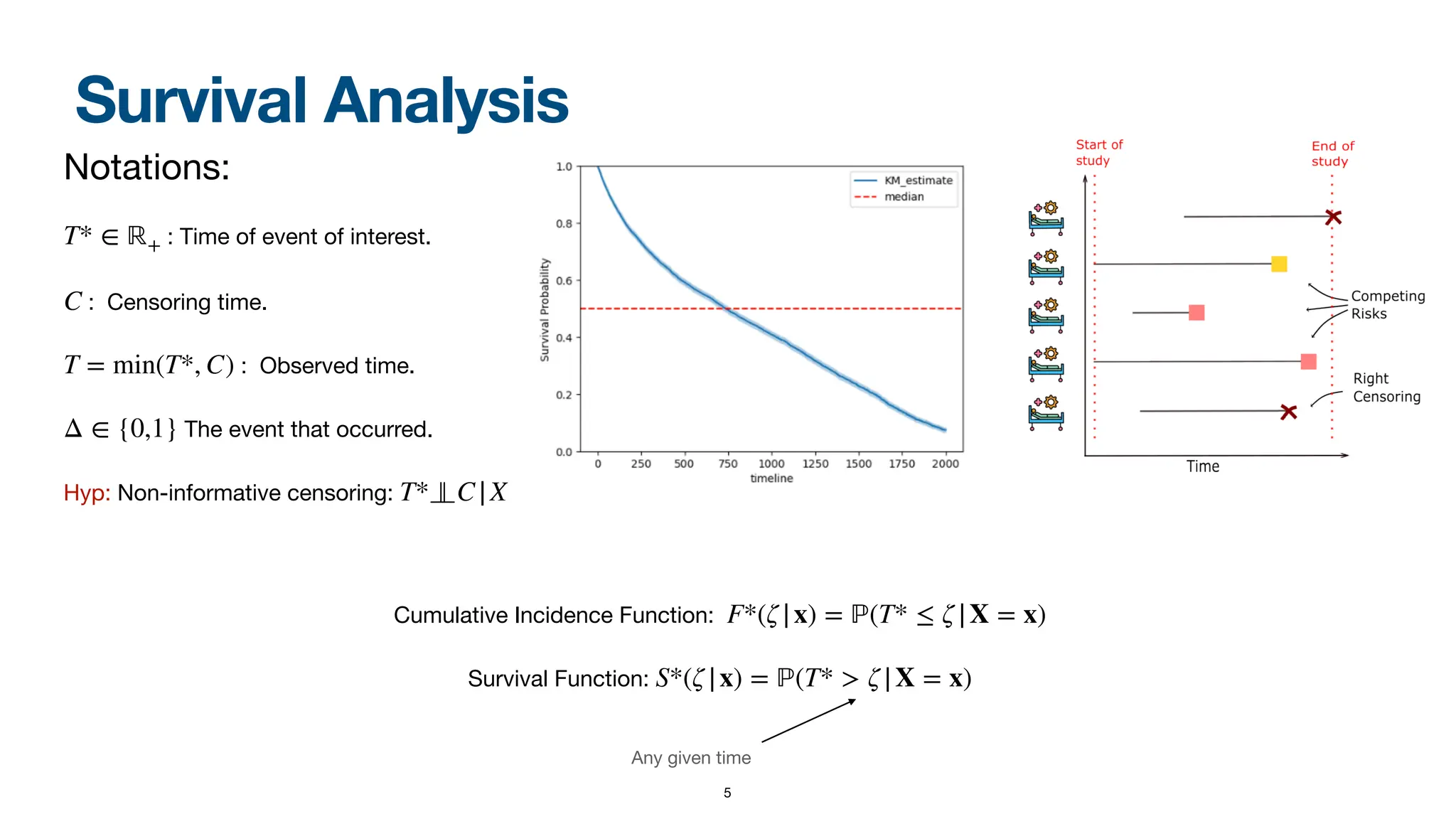
Notations:
: Time of event of interest.
: Censoring time.
: Observed time.
The event that occurred.
Hyp: Non-informative censoring:
Cumulative Incidence Function:
Survival Function:
T* ∈ ℝ+
C
T = min(T*, C)
Δ ∈ {0,1}
T* C|X
F*(ζ|x) = ℙ(T* ≤ ζ|X = x)
S*(ζ|x) = ℙ(T* > ζ|X = x)
Any given time
5
How to deal with the censoring distribution?
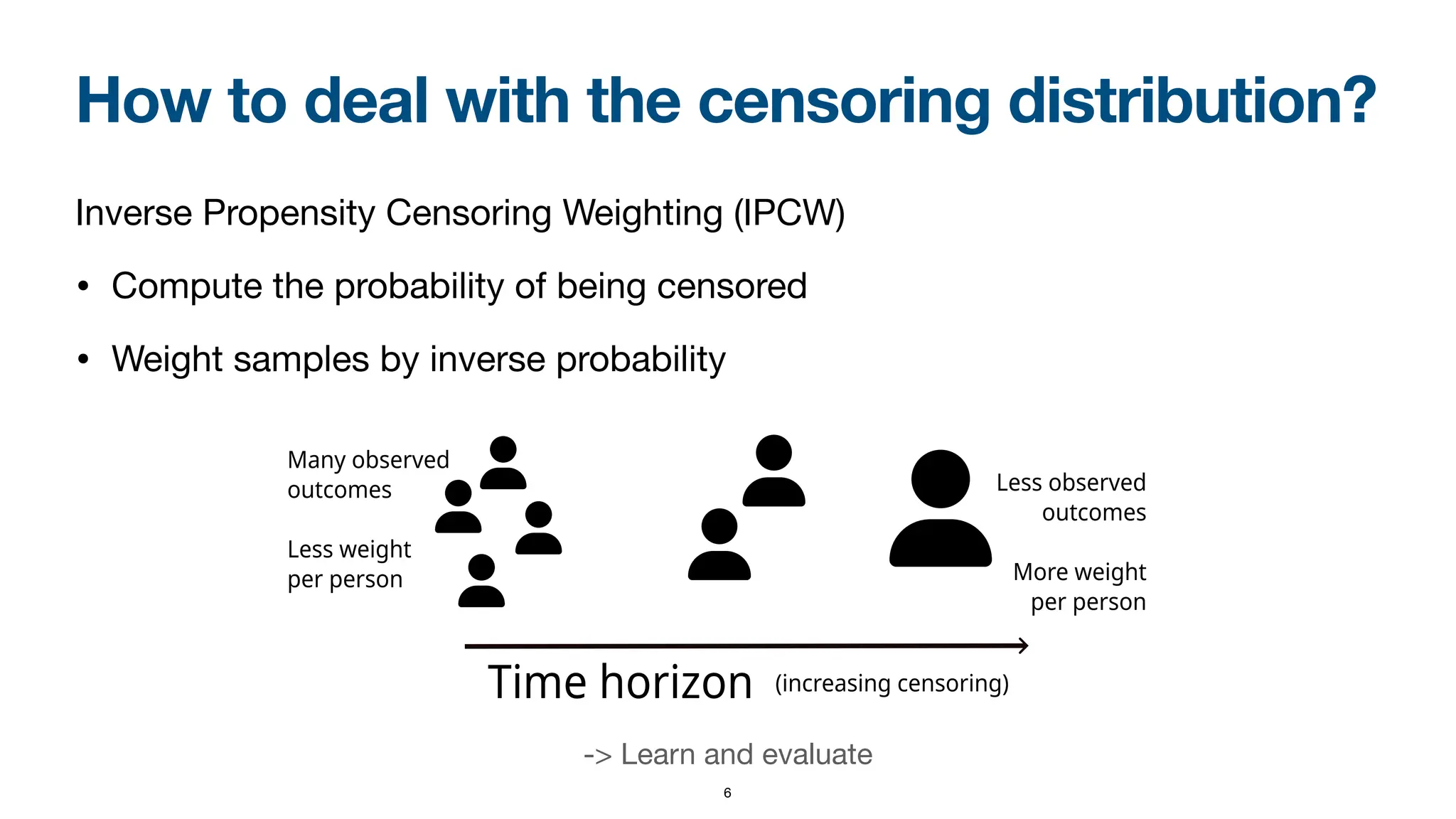
Inverse Propensity Censoring Weighting (IPCW)
• Compute the probability of being censored
• Weight samples by inverse probability
Time horizon
Less observed
outcomes
More weight
per person
(increasing censoring)
Many observed
outcomes
Less weight
per person
-> Learn and evaluate
6
Usual evaluation metrics
7
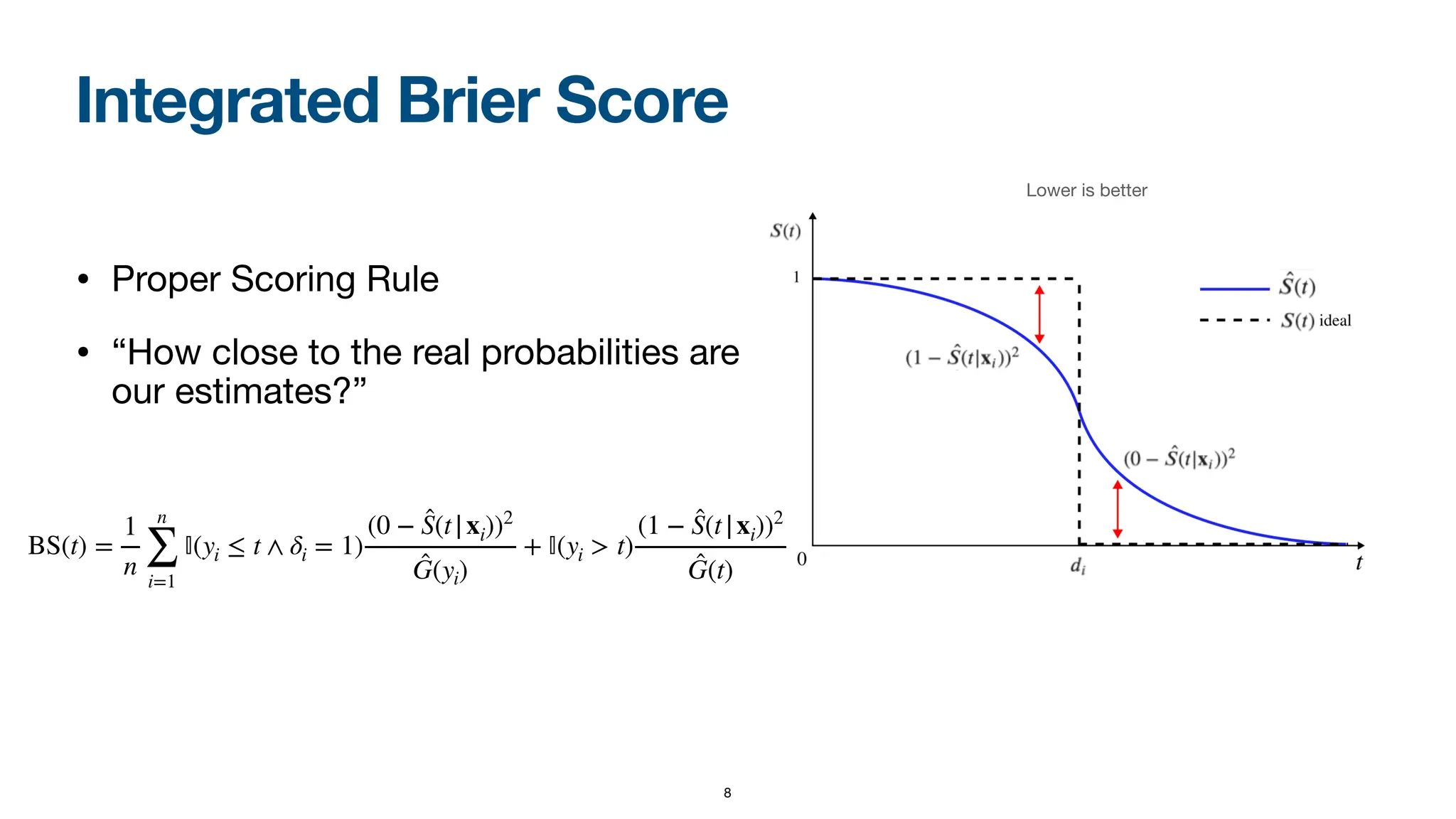
Integrated Brier Score
• Proper Scoring Rule
• “How close to the real probabilities are
our estimates?”
Lower is better
8
BS(t) =
1
n
n
∑
i=1
𝕀
(yi ≤ t ∧ δi = 1)
(0 − ̂
S(t|xi))2
̂
G(yi)
+
𝕀
(yi > t)
(1 − ̂
S(t|xi))2
̂
G(t)
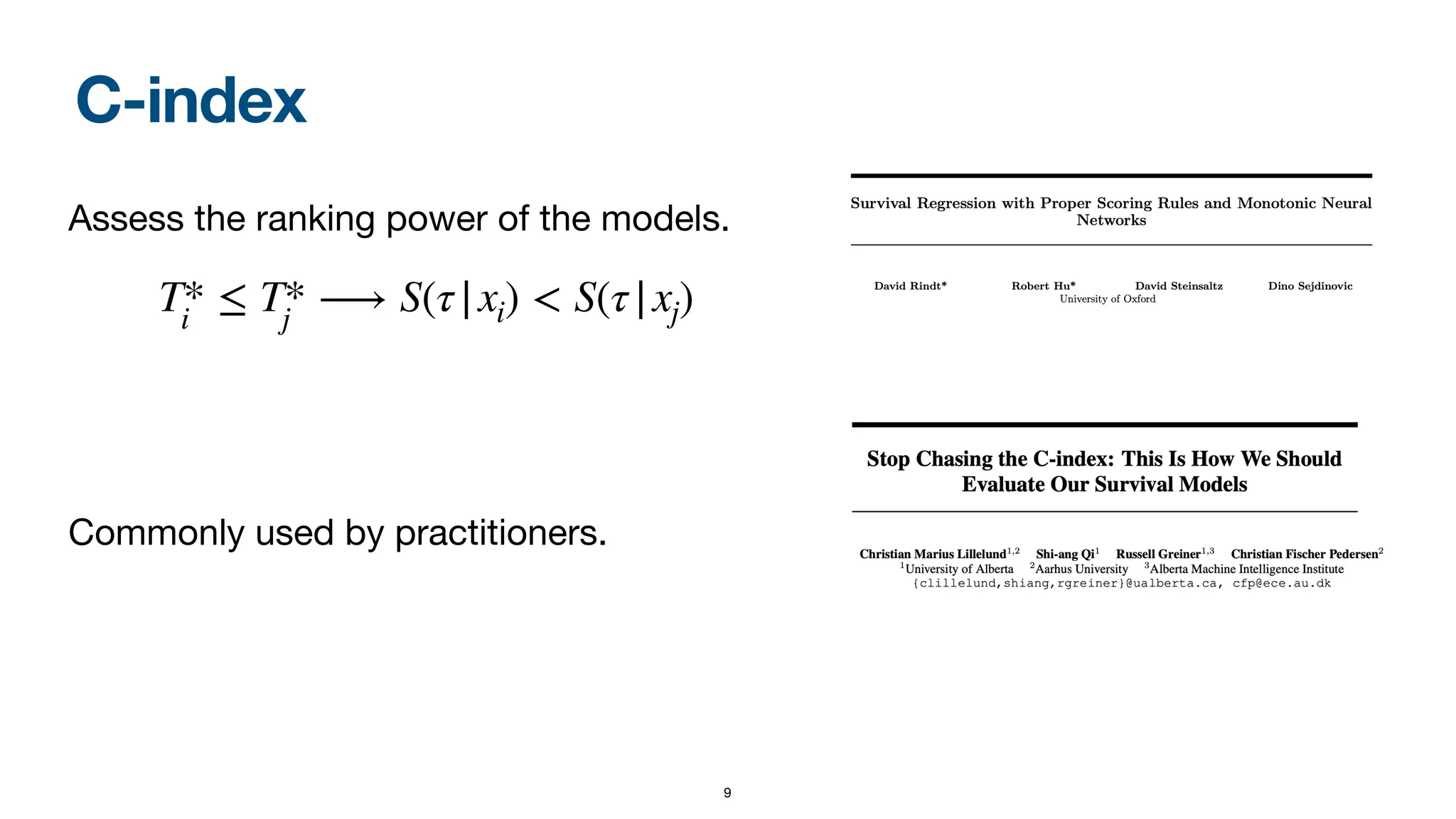
C-index
Assess the ranking power of the models.
Commonly used by practitioners.
T*
i
≤ T*
j
⟶ S(τ|xi) < S(τ|xj)
9
Competing Risks
10
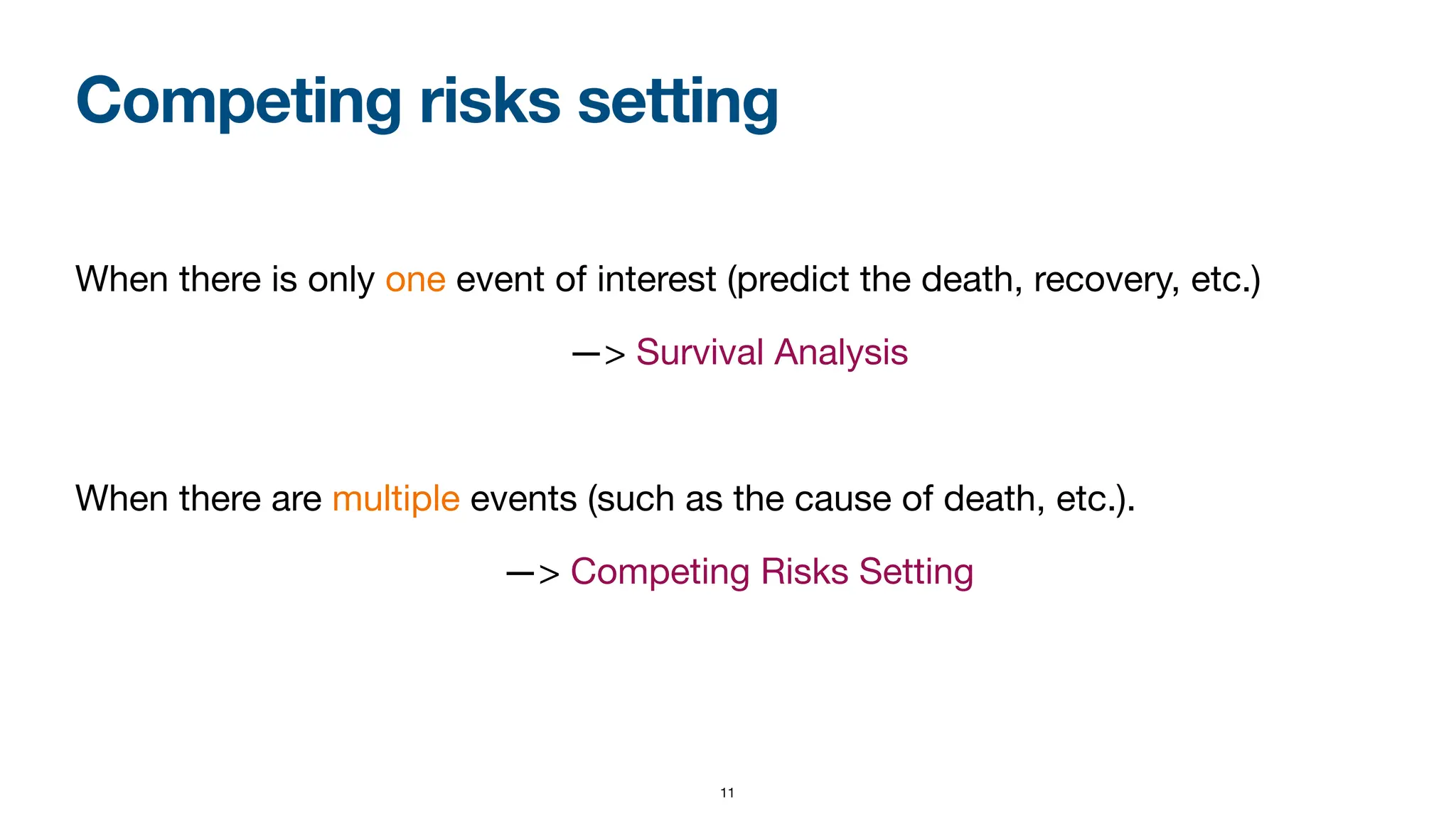
Competing risks setting
When there is only one event of interest (predict the death, recovery, etc.)
—> Survival Analysis
When there are multiple events (such as the cause of death, etc.).
—> Competing Risks Setting
11
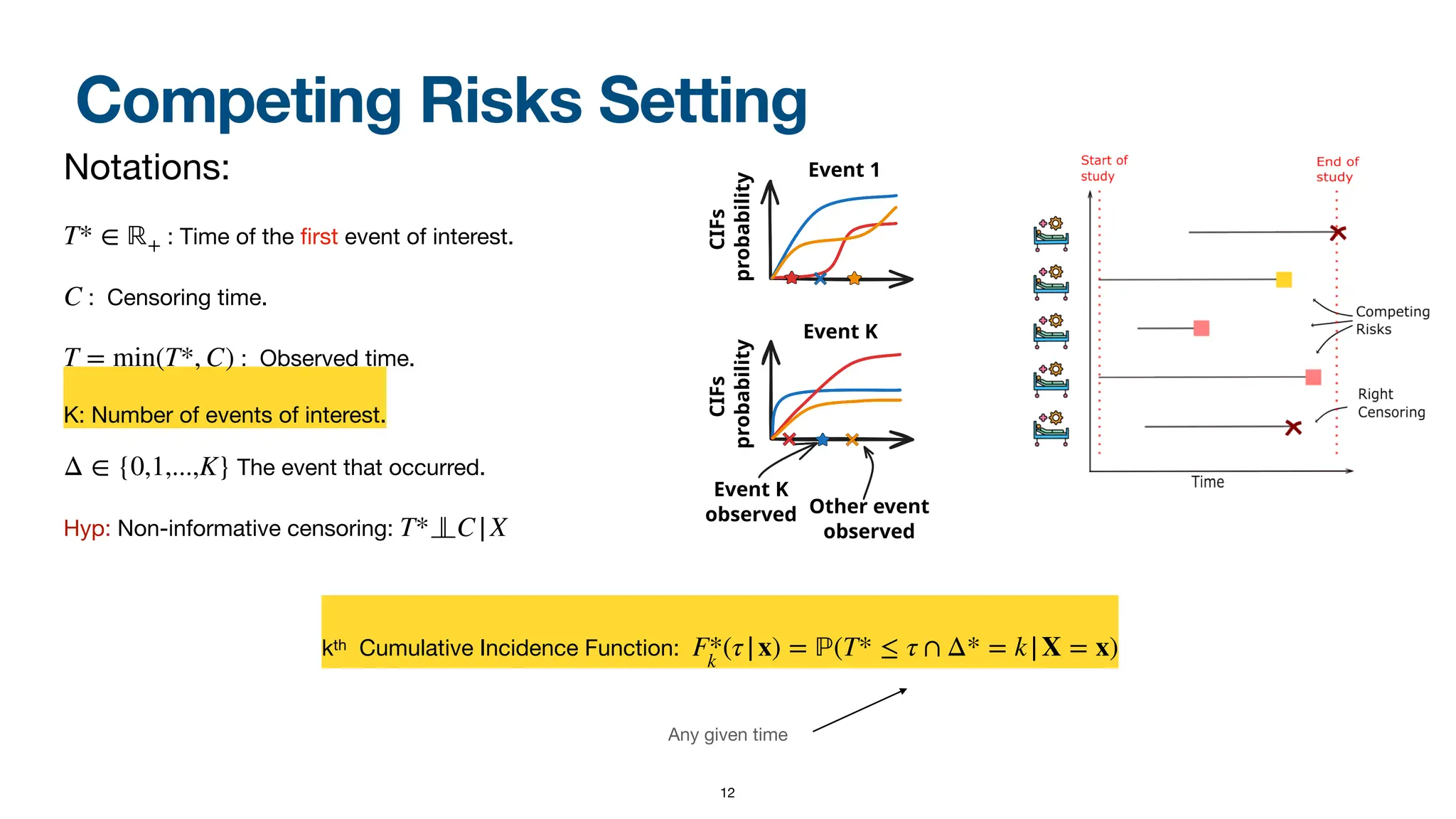
Competing Risks Setting
Notations:
: Time of the
fi
rst event of interest.
: Censoring time.
: Observed time.
K: Number of events of interest.
The event that occurred.
Hyp: Non-informative censoring:
kth Cumulative Incidence Function:
T* ∈ ℝ+
C
T = min(T*, C)
Δ ∈ {0,1,...,K}
T* C|X
F*
k
(τ|x) = ℙ(T* ≤ τ ∩ Δ* = k|X = x)
Any given time
12
Buckets
Buckets
Perfect
calibratio
Model's CR
D-calibratio
Event 1
Aggregate results to obta
the D-CR calibration
Computation of the
probability of the event
at the true time event
Other event
observed
Event K
observed
CIFs
probability
CIFs
probability
Event K
Event 1
...
...
Motivation of our work
13
What do we want to achieve?
• Handles competing risks (limited results available).
• Predict the
fi
rst event for each patient correctly.
• Good trade-o
ff
between predictions and
fi
tting time.
• A model that handles tabular data well.
14
Survival Models:
Proper Scoring Rule and Stochastic
Optimization for Competing Risks
Published in AISTATS 2025
15
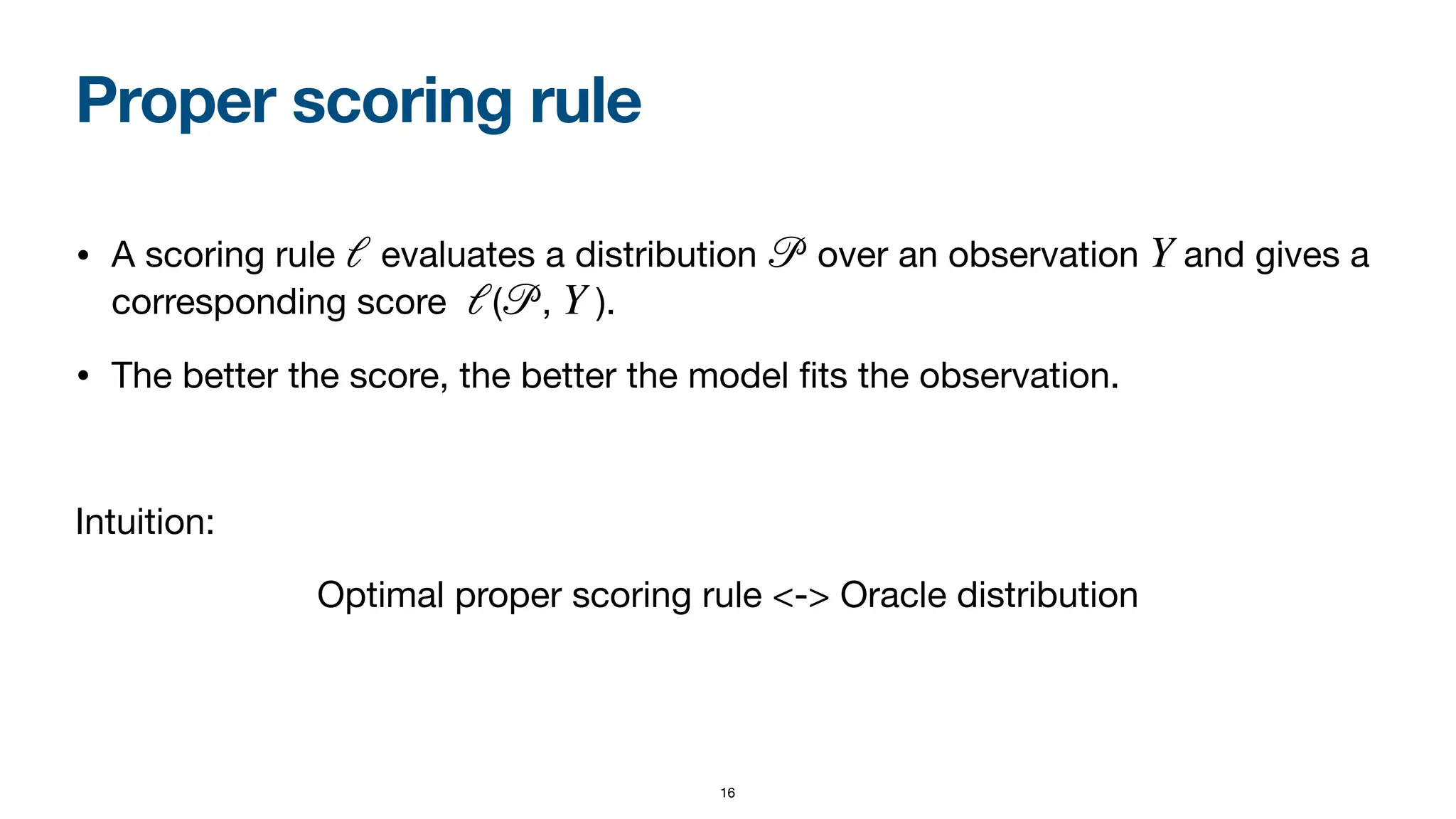
Proper scoring rule
• A scoring rule evaluates a distribution over an observation and gives a
corresponding score ( , ).
• The better the score, the better the model
fi
ts the observation.
Intuition:
Optimal proper scoring rule <-> Oracle distribution
ℓ
𝒫
Y
ℓ
𝒫
Y
16
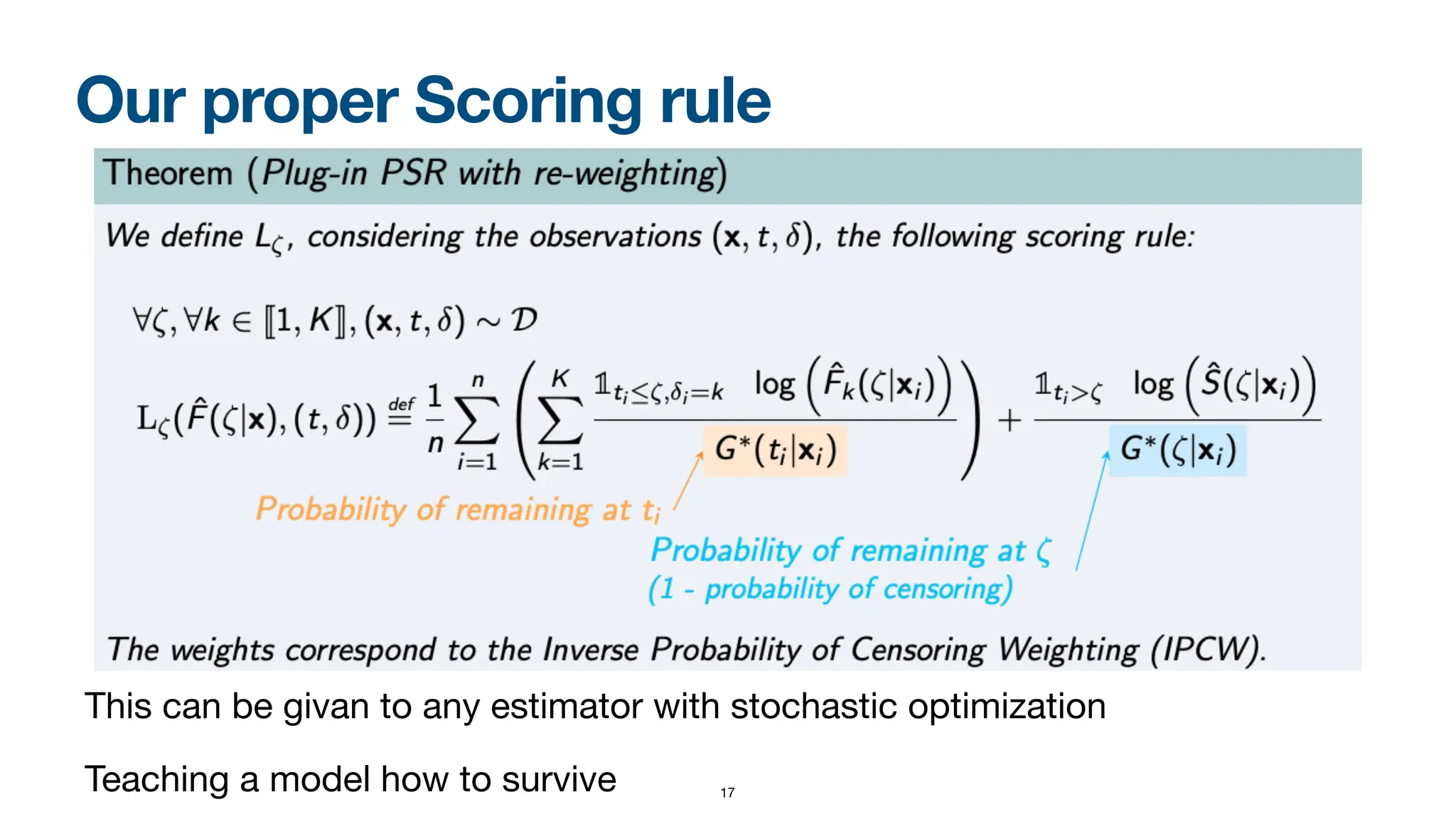
Our proper Scoring rule
This can be givan to any estimator with stochastic optimization
Teaching a model how to survive 17
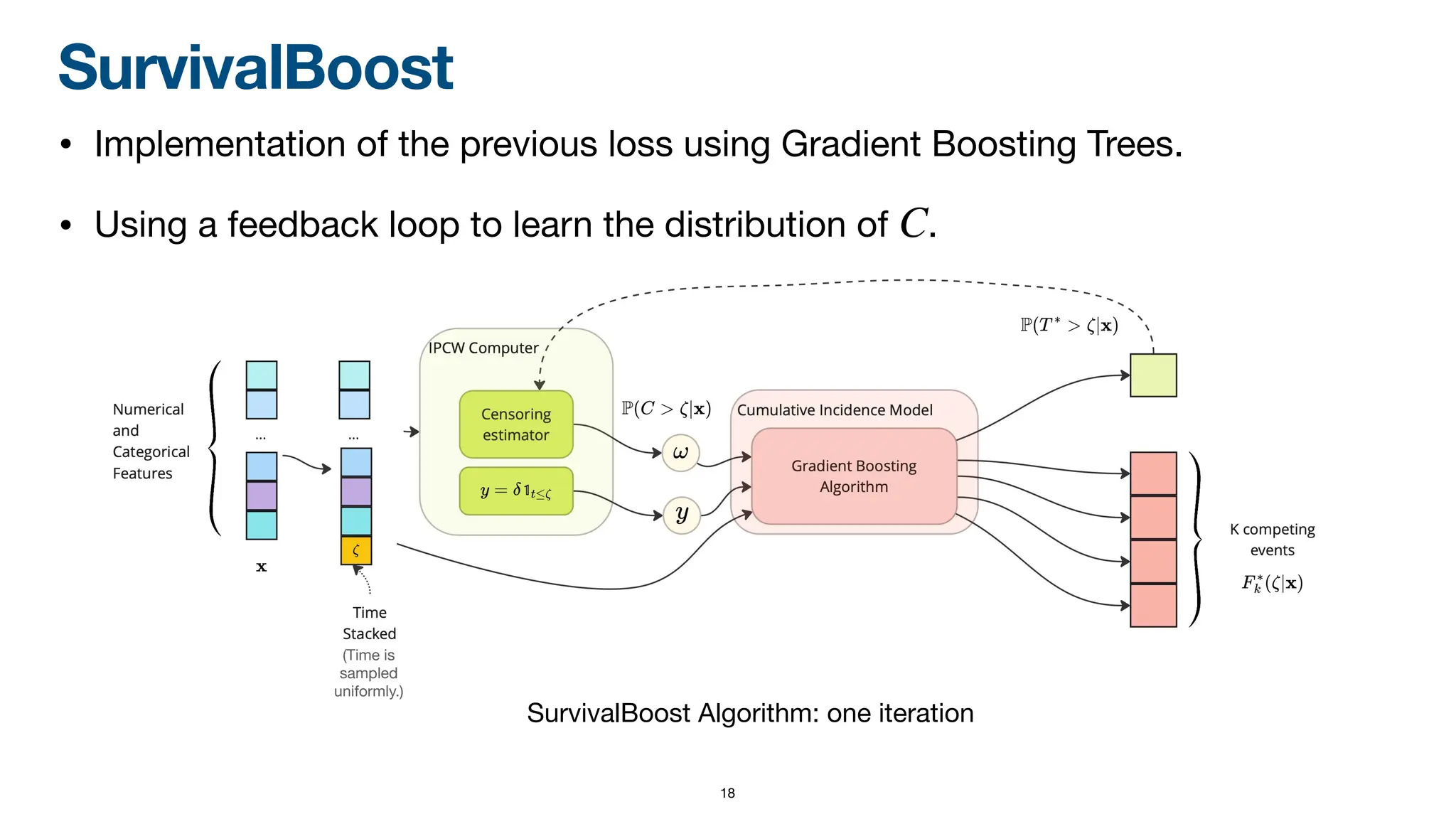
SurvivalBoost
• Implementation of the previous loss using Gradient Boosting Trees.
• Using a feedback loop to learn the distribution of .
C
SurvivalBoost Algorithm: one iteration
(Time is
sampled
uniformly.)
18
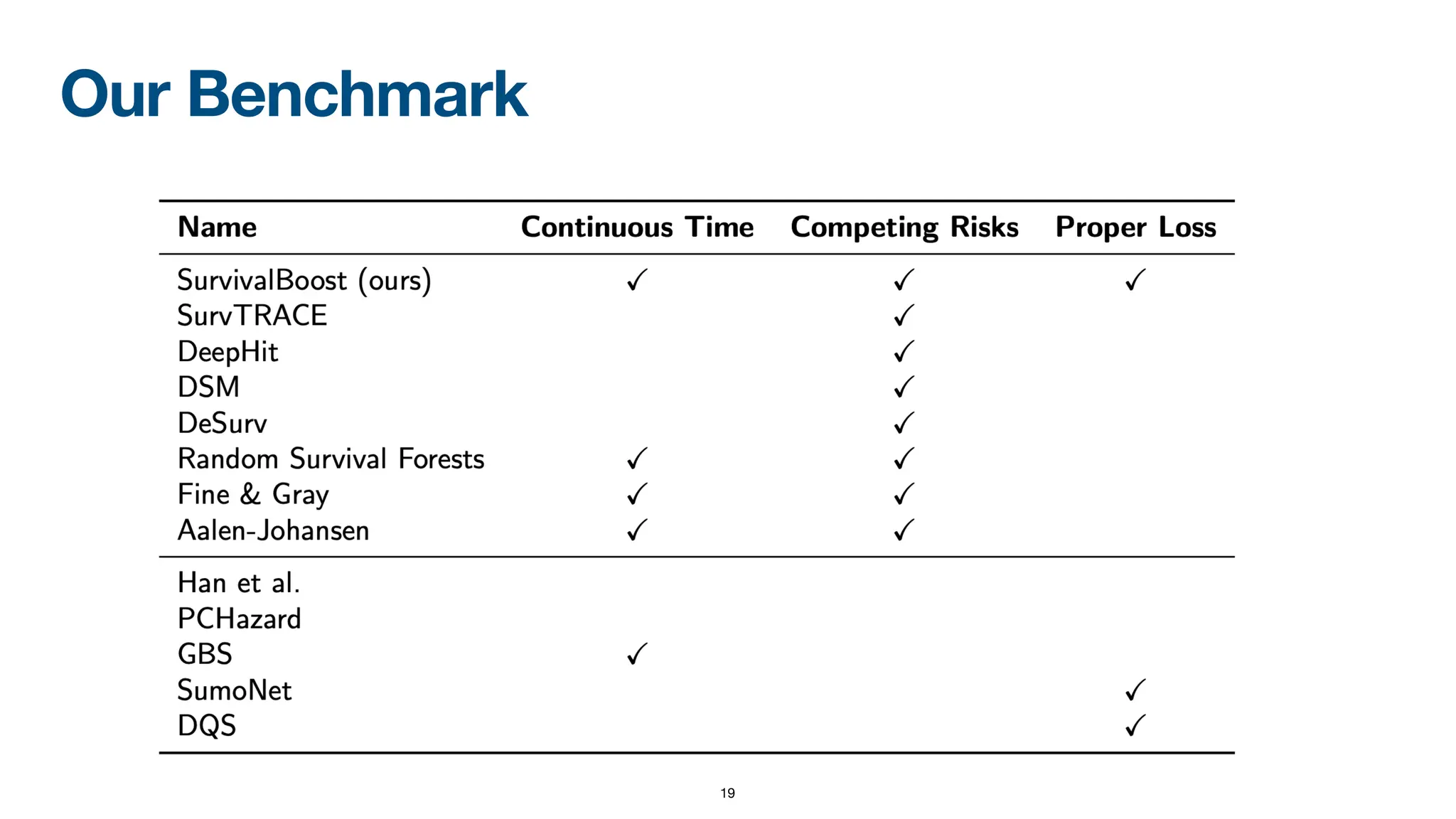
Our Benchmark
19
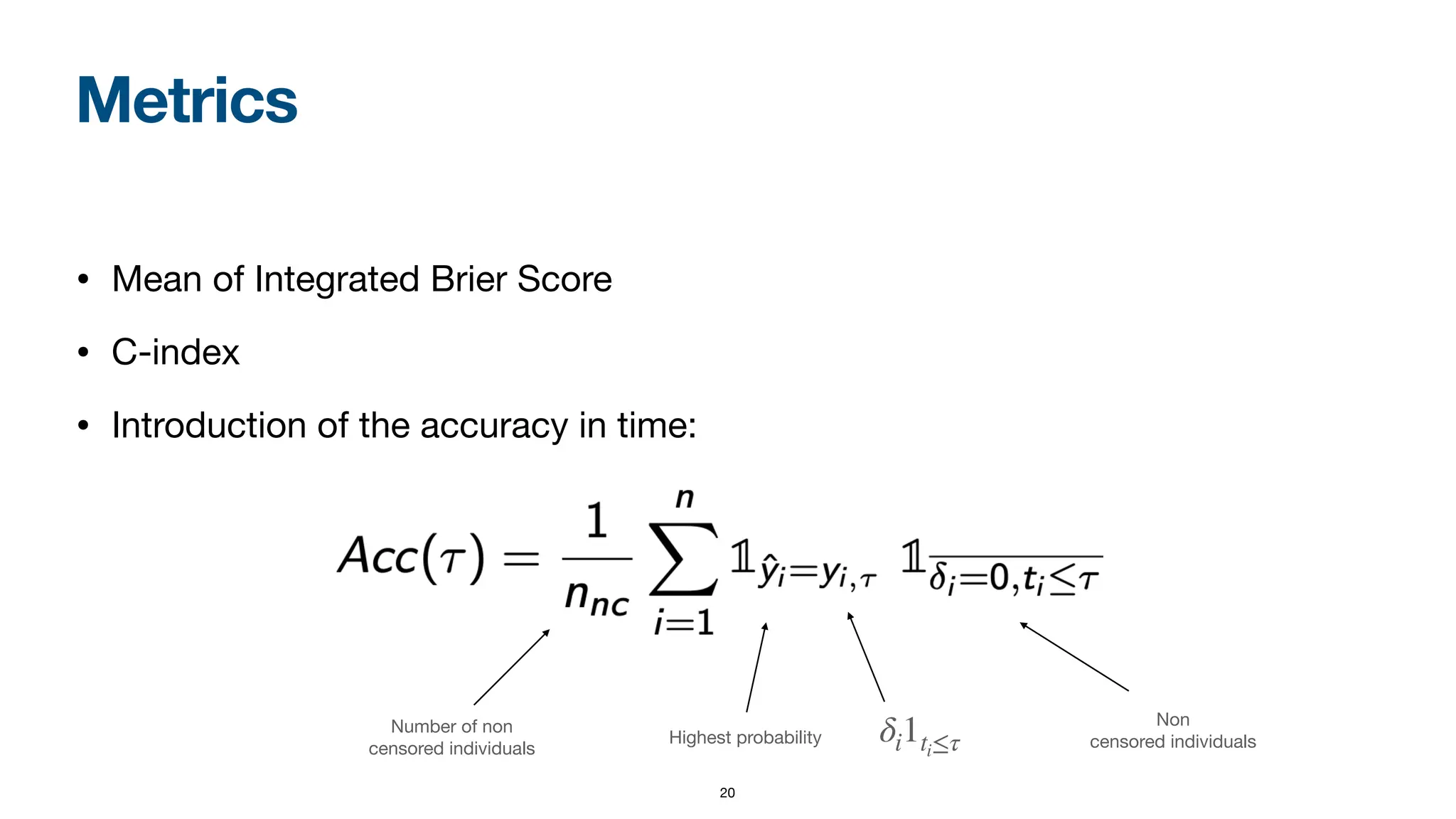
Metrics
• Mean of Integrated Brier Score
• C-index
• Introduction of the accuracy in time:
20
δi1ti≤τ
Highest probability
Number of non
censored individuals
Non
censored individuals
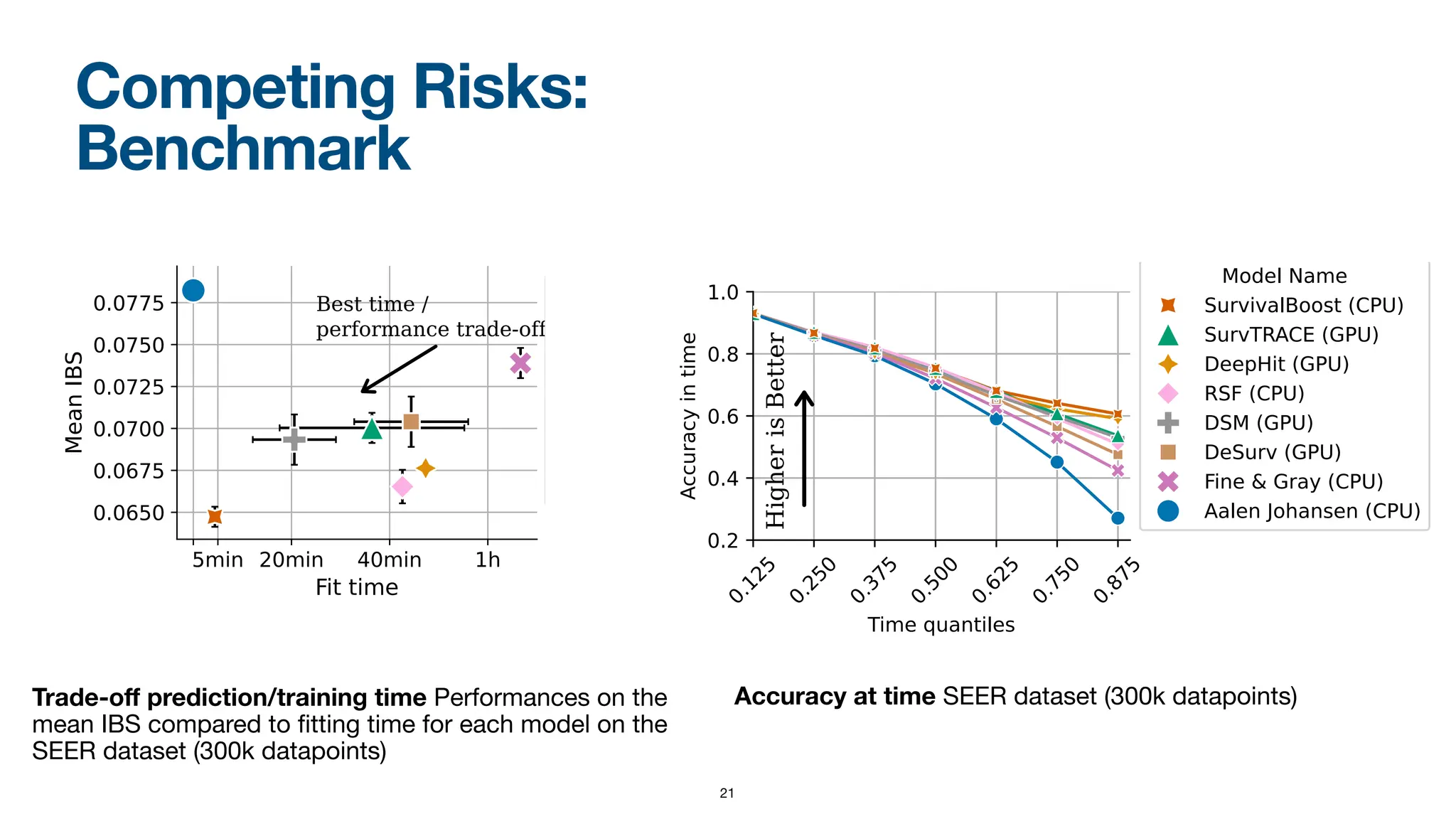
Competing Risks:
Benchmark
Trade-o
ff
prediction/training time Performances on the
mean IBS compared to
fi
tting time for each model on the
SEER dataset (300k datapoints)
Accuracy at time SEER dataset (300k datapoints)
21
Survival Analysis:
Benchmark
Trade-o
ff
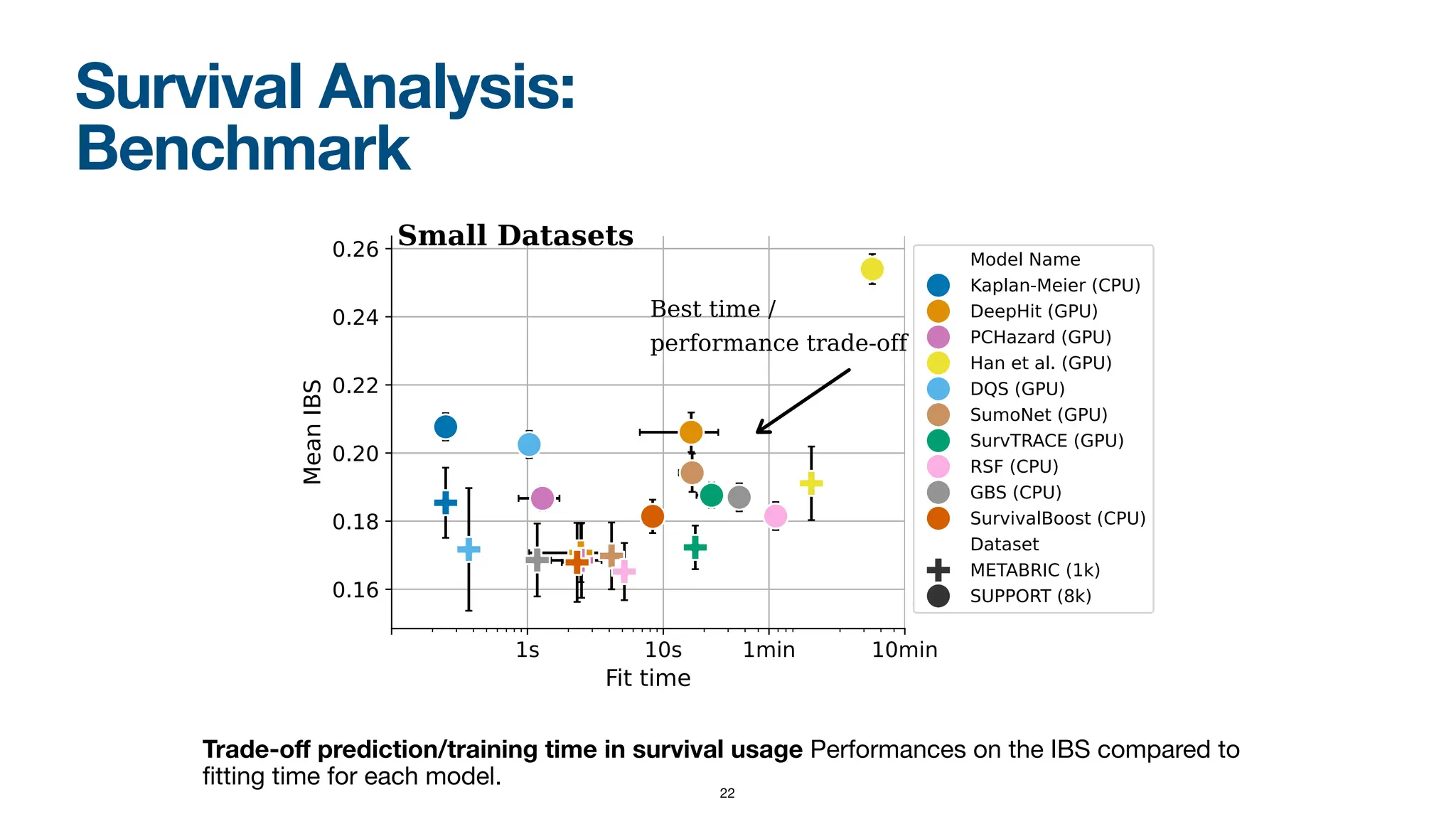
prediction/training time in survival usage Performances on the IBS compared to
fi
tting time for each model.
22
Survival Analysis:
Scalability
Trade-o
ff
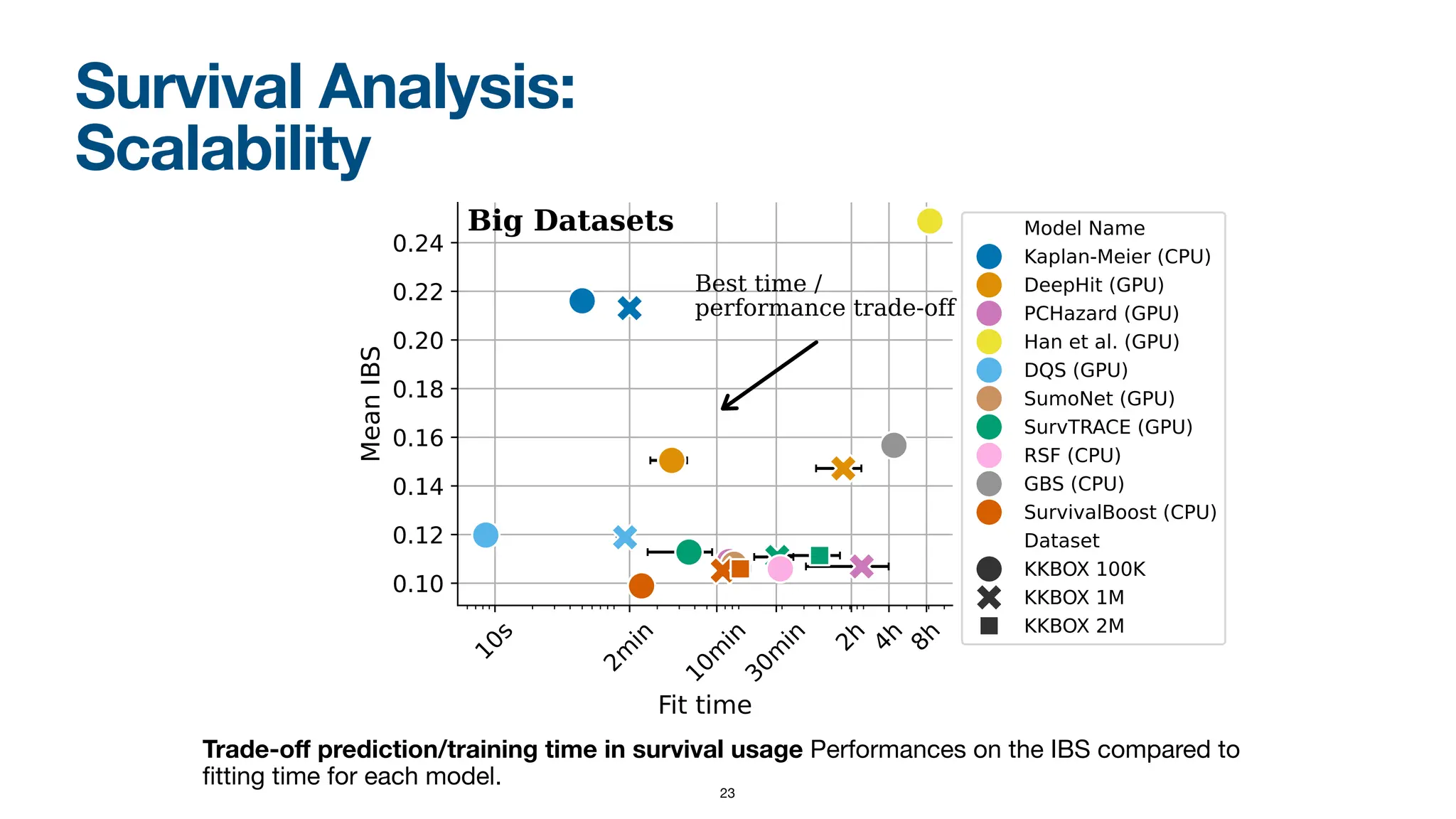
prediction/training time in survival usage Performances on the IBS compared to
fi
tting time for each model.
23
Python Library
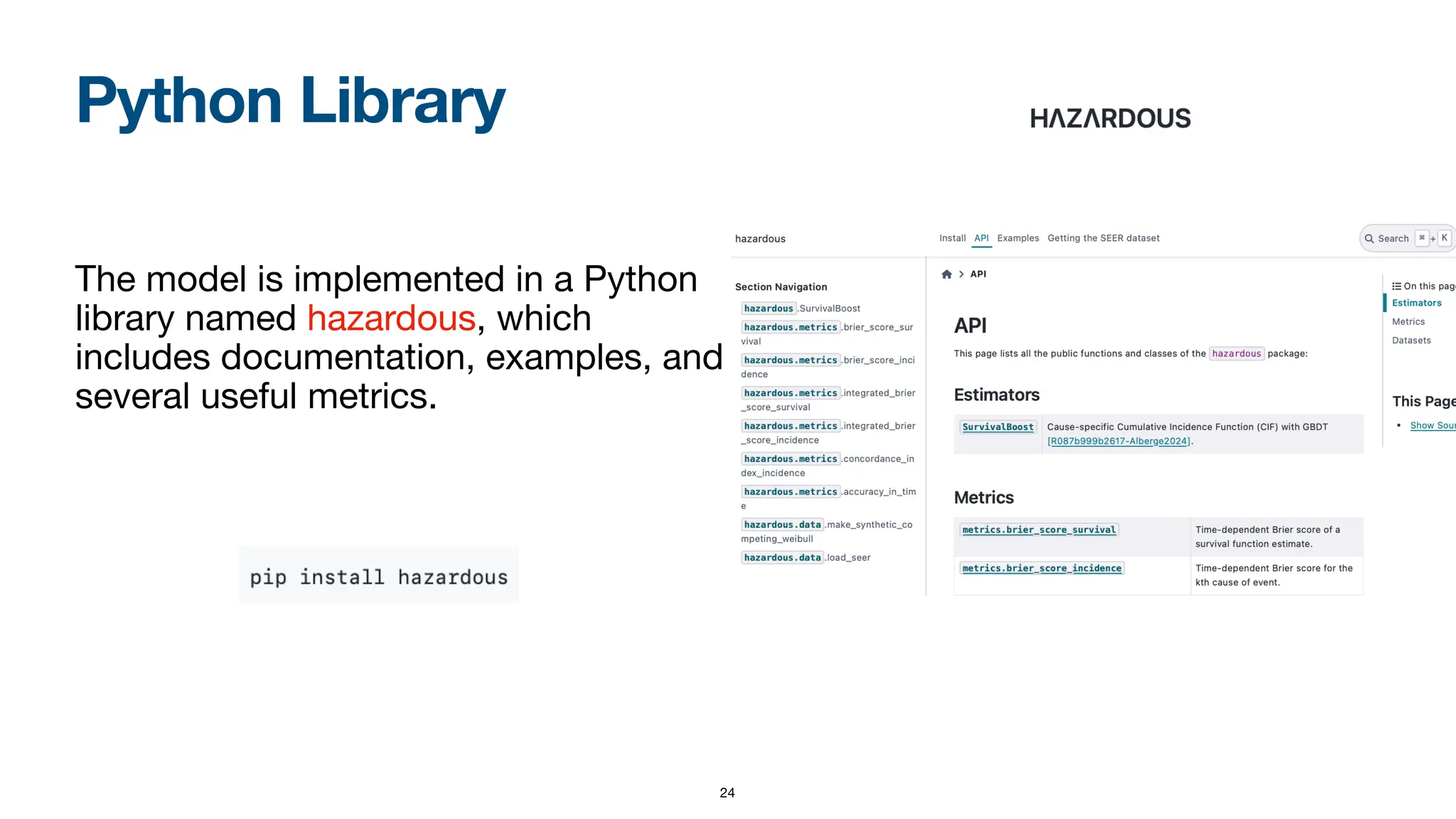
The model is implemented in a Python
library named hazardous, which
includes documentation, examples, and
several useful metrics.
24
Conclusion
• A plug-in Proper Scoring Rule for competing risks and survival analysis.
• An implementation with Gradient Boosting Trees due to the presence of
categorical data.
• Outstanding performances in benchmarks in the competing risks and the survival
analysis setting
25
Future work
Submitted - Under review
We try to answer:
• What is the calibration in the competing risks setting?
• How to measure it?
• How to recalibrate any given method?
Tristan Haugomat
26

Survival Models: Proper Scoring Rule and Stochastic Optimization with Competing Risks, by Julie Alberge

  • 1.
    12/06/2025 Survival Models: Proper ScoringRule and Stochastic Optimization for Competing Risks Julie Alberge PhD student under the supervision of Judith Abécassis and Gaël Varoquaux 1
  • 2.
    Collaborators Vincent Maladière OlivierGrisel Judith Abécassis Gaël Varoquaux 2
  • 3.
    What is survivalanalysis? 3
  • 4.
    Right-censored time-to-event data Censoredpatients: patients who didn’t experience the event during the observation study. Goal: Predict the CDF of their death for each patient in time. 4
  • 5.
    Survival Analysis Notations: : Timeof event of interest. : Censoring time. : Observed time. The event that occurred. Hyp: Non-informative censoring: Cumulative Incidence Function: Survival Function: T* ∈ ℝ+ C T = min(T*, C) Δ ∈ {0,1} T* C|X F*(ζ|x) = ℙ(T* ≤ ζ|X = x) S*(ζ|x) = ℙ(T* > ζ|X = x) Any given time 5
  • 6.
    How to dealwith the censoring distribution? Inverse Propensity Censoring Weighting (IPCW) • Compute the probability of being censored • Weight samples by inverse probability Time horizon Less observed outcomes More weight per person (increasing censoring) Many observed outcomes Less weight per person -> Learn and evaluate 6
  • 7.
  • 8.
    Integrated Brier Score •Proper Scoring Rule • “How close to the real probabilities are our estimates?” Lower is better 8 BS(t) = 1 n n ∑ i=1 𝕀 (yi ≤ t ∧ δi = 1) (0 − ̂ S(t|xi))2 ̂ G(yi) + 𝕀 (yi > t) (1 − ̂ S(t|xi))2 ̂ G(t)
  • 9.
    C-index Assess the rankingpower of the models. Commonly used by practitioners. T* i ≤ T* j ⟶ S(τ|xi) < S(τ|xj) 9
  • 10.
  • 11.
    Competing risks setting Whenthere is only one event of interest (predict the death, recovery, etc.) —> Survival Analysis When there are multiple events (such as the cause of death, etc.). —> Competing Risks Setting 11
  • 12.
    Competing Risks Setting Notations: :Time of the fi rst event of interest. : Censoring time. : Observed time. K: Number of events of interest. The event that occurred. Hyp: Non-informative censoring: kth Cumulative Incidence Function: T* ∈ ℝ+ C T = min(T*, C) Δ ∈ {0,1,...,K} T* C|X F* k (τ|x) = ℙ(T* ≤ τ ∩ Δ* = k|X = x) Any given time 12 Buckets Buckets Perfect calibratio Model's CR D-calibratio Event 1 Aggregate results to obta the D-CR calibration Computation of the probability of the event at the true time event Other event observed Event K observed CIFs probability CIFs probability Event K Event 1 ... ...
  • 13.
  • 14.
    What do wewant to achieve? • Handles competing risks (limited results available). • Predict the fi rst event for each patient correctly. • Good trade-o ff between predictions and fi tting time. • A model that handles tabular data well. 14
  • 15.
    Survival Models: Proper ScoringRule and Stochastic Optimization for Competing Risks Published in AISTATS 2025 15
  • 16.
    Proper scoring rule •A scoring rule evaluates a distribution over an observation and gives a corresponding score ( , ). • The better the score, the better the model fi ts the observation. Intuition: Optimal proper scoring rule <-> Oracle distribution ℓ 𝒫 Y ℓ 𝒫 Y 16
  • 17.
    Our proper Scoringrule This can be givan to any estimator with stochastic optimization Teaching a model how to survive 17
  • 18.
    SurvivalBoost • Implementation ofthe previous loss using Gradient Boosting Trees. • Using a feedback loop to learn the distribution of . C SurvivalBoost Algorithm: one iteration (Time is sampled uniformly.) 18
  • 19.
  • 20.
    Metrics • Mean ofIntegrated Brier Score • C-index • Introduction of the accuracy in time: 20 δi1ti≤τ Highest probability Number of non censored individuals Non censored individuals
  • 21.
    Competing Risks: Benchmark Trade-o ff prediction/training timePerformances on the mean IBS compared to fi tting time for each model on the SEER dataset (300k datapoints) Accuracy at time SEER dataset (300k datapoints) 21
  • 22.
    Survival Analysis: Benchmark Trade-o ff prediction/training timein survival usage Performances on the IBS compared to fi tting time for each model. 22
  • 23.
    Survival Analysis: Scalability Trade-o ff prediction/training timein survival usage Performances on the IBS compared to fi tting time for each model. 23
  • 24.
    Python Library The modelis implemented in a Python library named hazardous, which includes documentation, examples, and several useful metrics. 24
  • 25.
    Conclusion • A plug-inProper Scoring Rule for competing risks and survival analysis. • An implementation with Gradient Boosting Trees due to the presence of categorical data. • Outstanding performances in benchmarks in the competing risks and the survival analysis setting 25
  • 26.
    Future work Submitted -Under review We try to answer: • What is the calibration in the competing risks setting? • How to measure it? • How to recalibrate any given method? Tristan Haugomat 26