Survey: Optimizing Tone
for Email Customer Support
To help CSS agents understand when to use a friendly, casual tone and when to
keep things serious and formal, Software Advice conducted an online survey
examining what kind of tone people prefer in various email-support situations.
We collected data data to address the following questions:
• What are customers’ general preferences as to tone in email customer service?
• To what degree would a CSS agent’s using the wrong tone at the wrong time
(e.g., casual language in a sensitive situation) damage customer satisfaction?
• Are there are specific textual elements (e.g., emoticons) that most customers
almost always find inappropriately casual or formal in email customer service?
Abstract
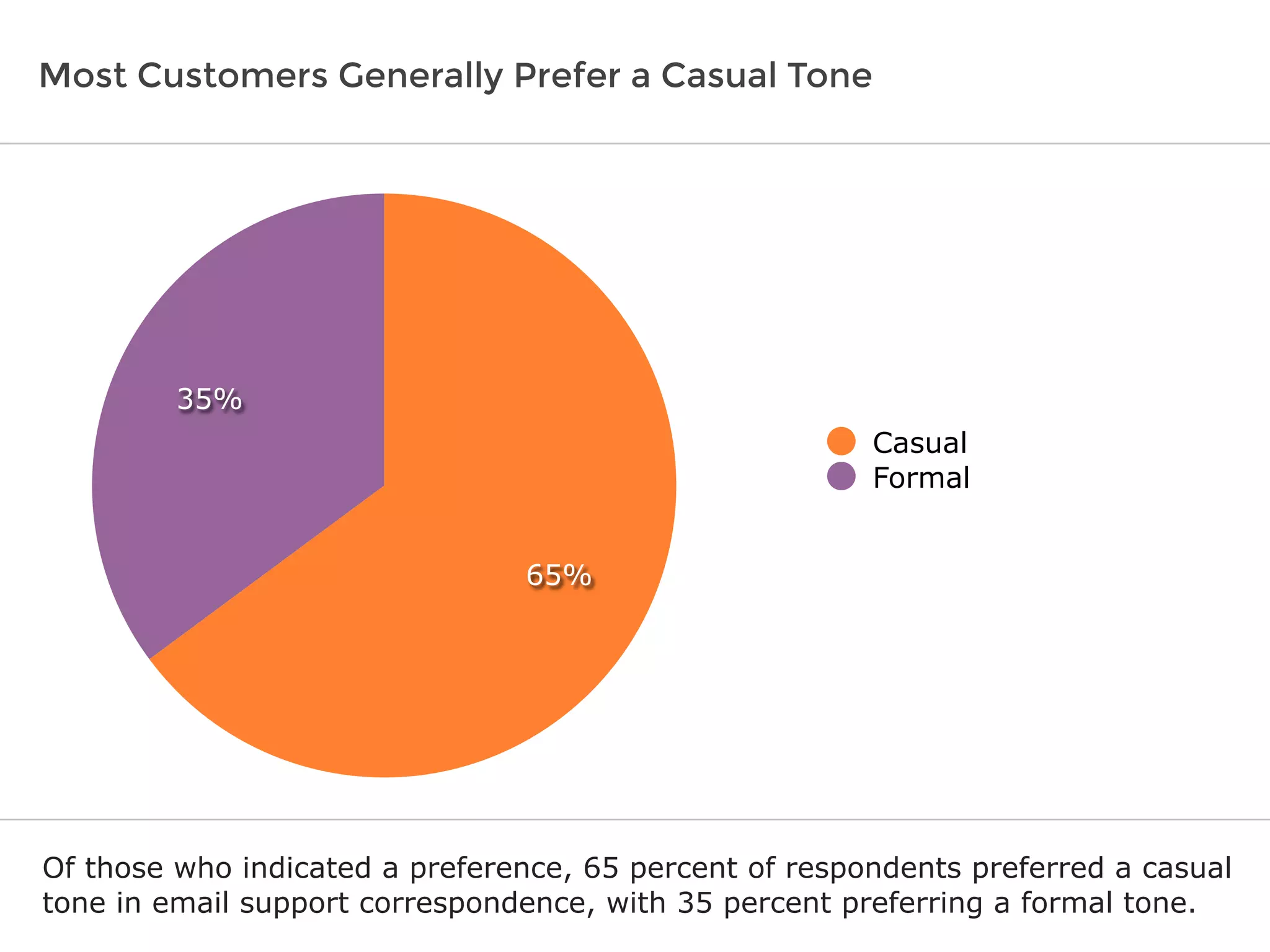
Most Customers Generally Prefer a Casual Tone
Of those who indicated a preference, 65 percent of respondents preferred a casual
tone in email support correspondence, with 35 percent preferring a formal tone.
35%
65%
Casual
Formal
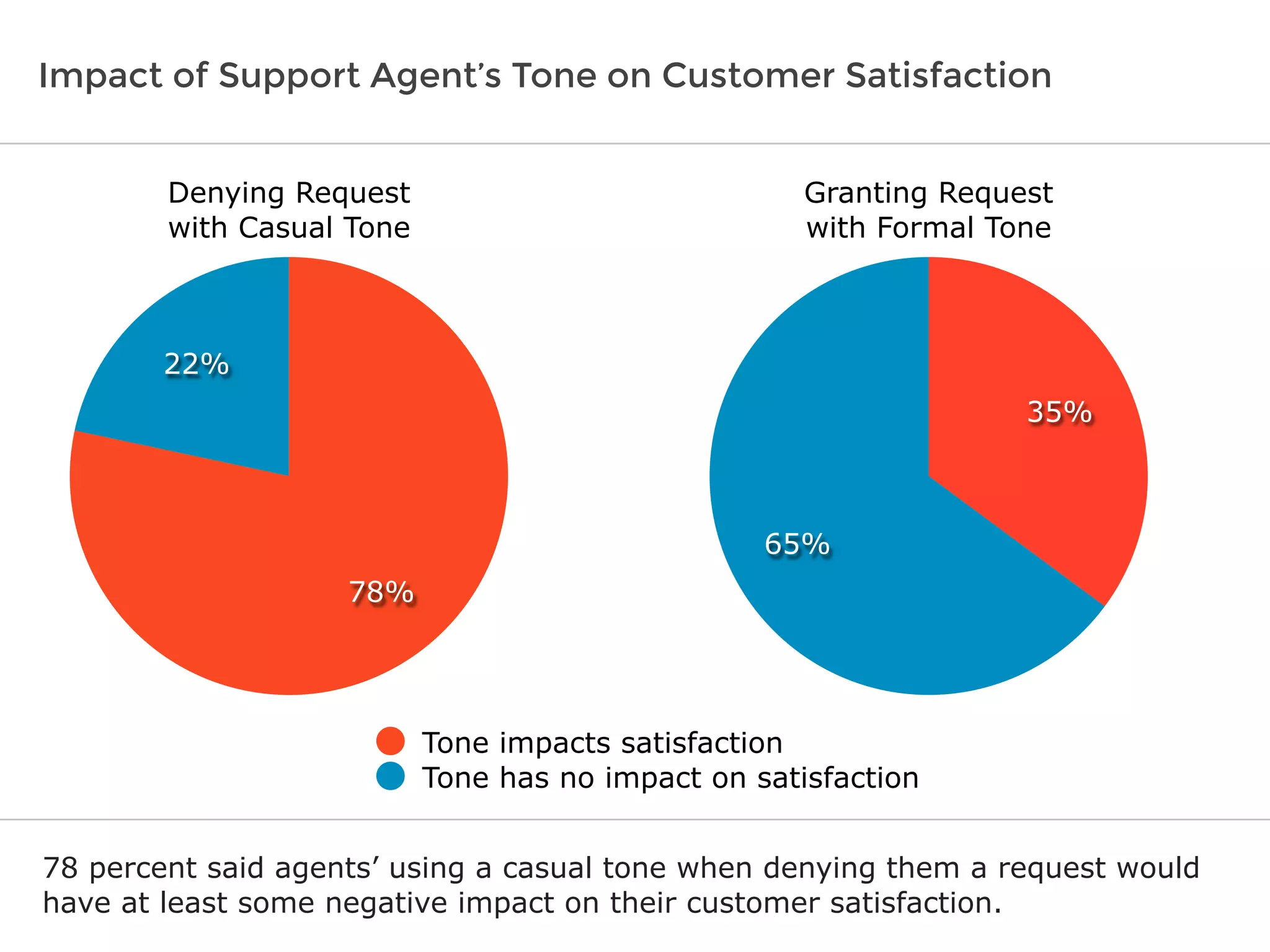
Impact of Support Agent’s Tone on Customer Satisfaction
78 percent said agents’ using a casual tone when denying them a request would
have at least some negative impact on their customer satisfaction.
22%
78%
Tone impacts satisfaction
Tone has no impact on satisfaction
65%
35%
Granting Request
with Formal Tone
Denying Request
with Casual Tone
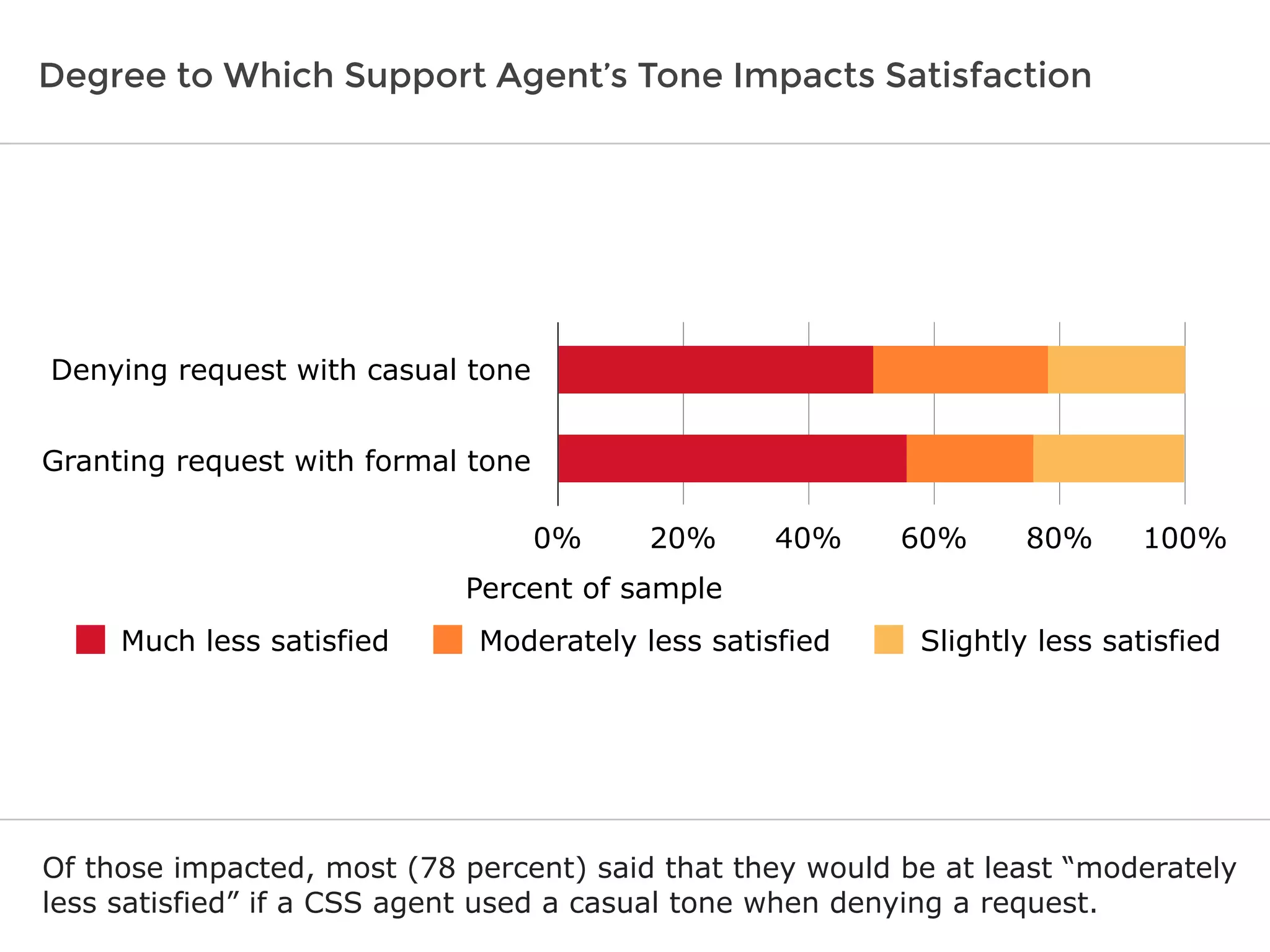
Degree to Which Support Agent’s Tone Impacts Satisfaction
Of those impacted, most (78 percent) said that they would be at least “moderately
less satisfied” if a CSS agent used a casual tone when denying a request.
Percent of sample
Denying request with casual tone
Granting request with formal tone
0% 20% 40% 60% 80% 100%
Much less satisfied Moderately less satisfied Slightly less satisfied
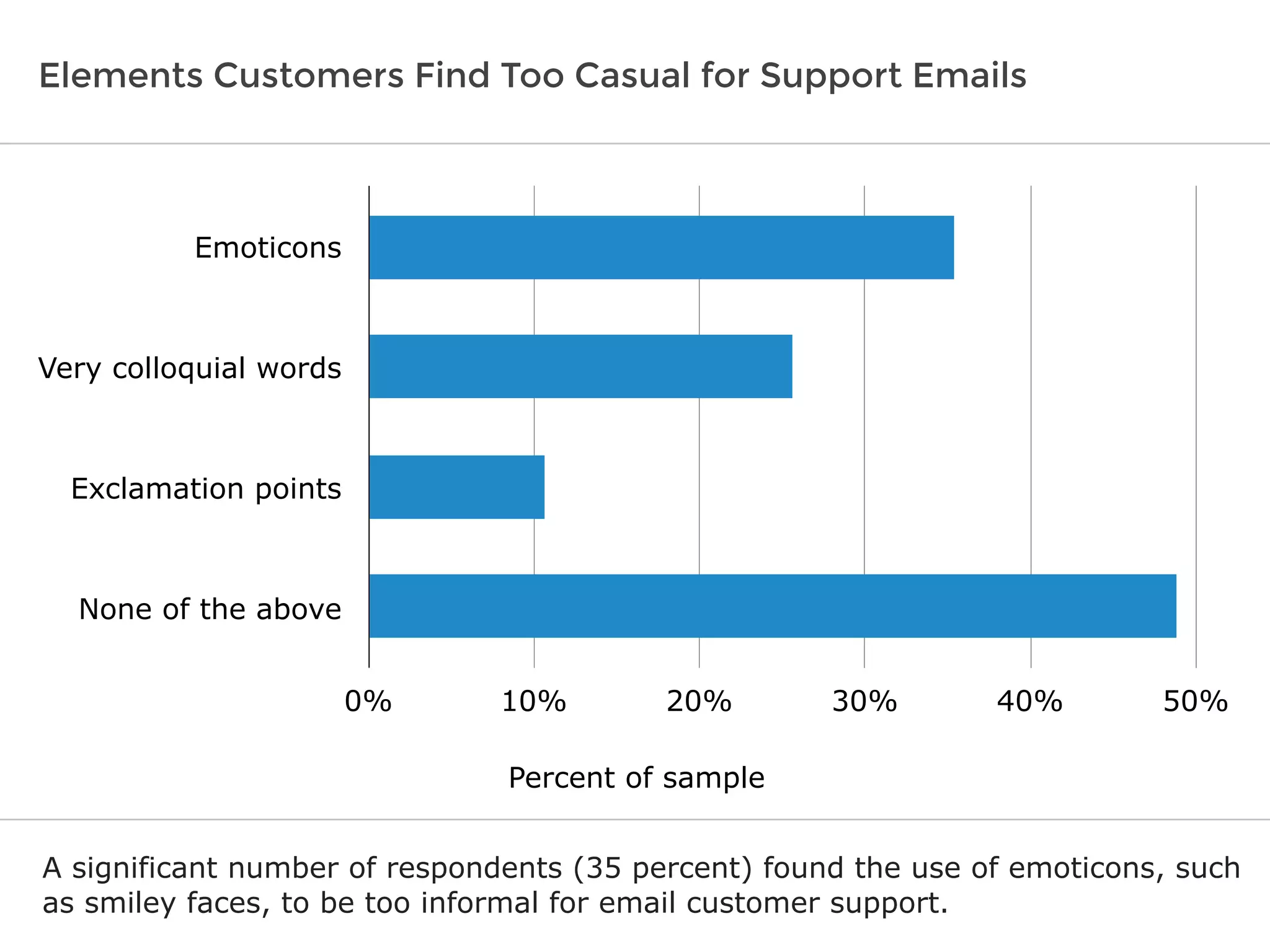
Elements Customers Find Too Casual for Support Emails
A significant number of respondents (35 percent) found the use of emoticons, such
as smiley faces, to be too informal for email customer support.
Emoticons
Very colloquial words
Exclamation points
None of the above
0% 10% 20% 30% 40% 50%
Percent of sample
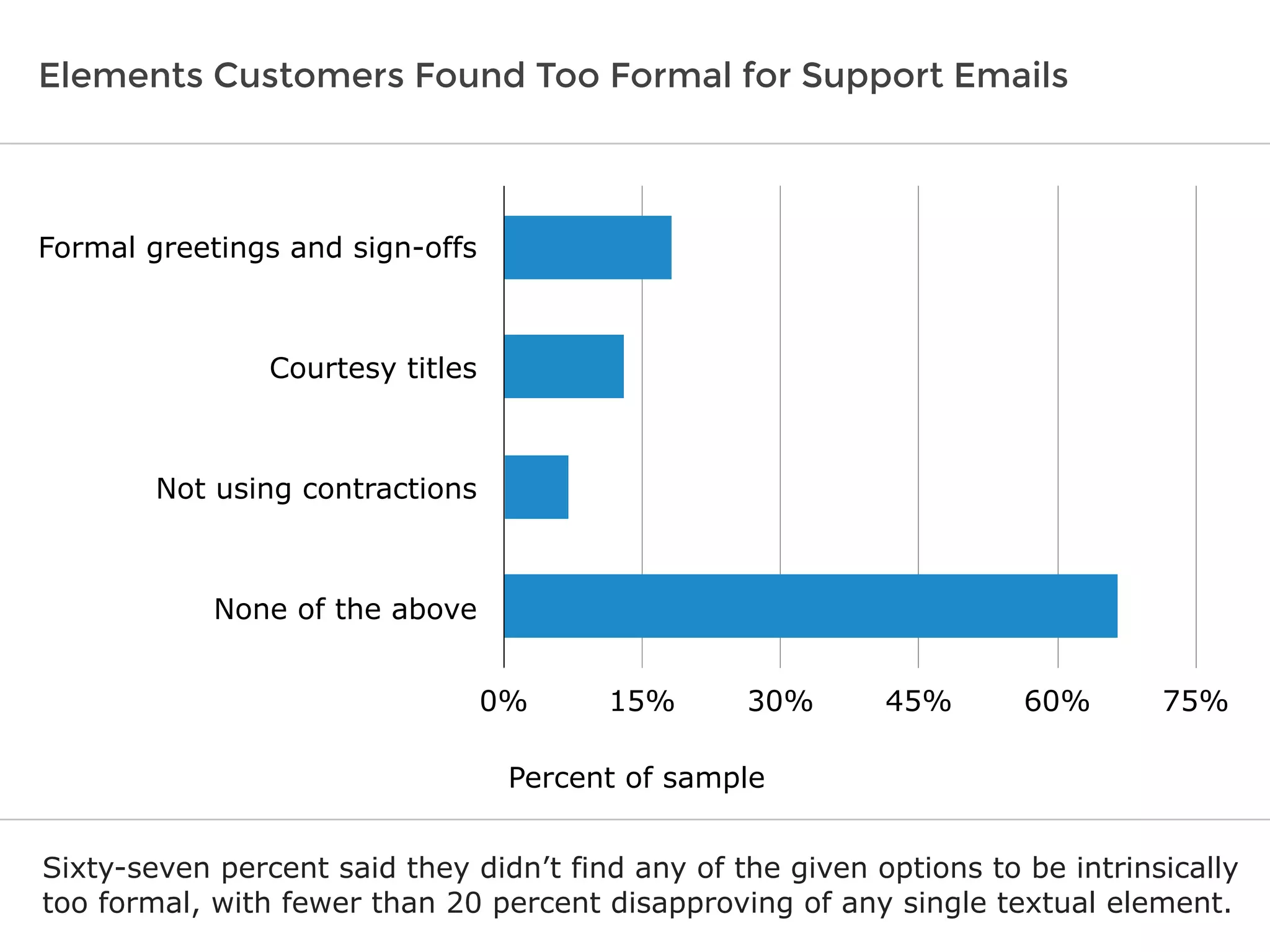
Elements Customers Found Too Formal for Support Emails
Sixty-seven percent said they didn’t find any of the given options to be intrinsically
too formal, with fewer than 20 percent disapproving of any single textual element.
Formal greetings and sign-offs
Courtesy titles
Not using contractions
None of the above
0% 15% 30% 45% 60% 75%
Percent of sample
Software Advice™ is a trusted resource for software buyers. The company's
website, www.softwareadvice.com, provides detailed reviews, comparisons and
research to help organizations choose the right software. Meanwhile, the company’s
team of software analysts provide free telephone consultations to help each
software buyer identify systems that best fit their needs. In the process, Software
Advice connects software buyers and sellers, generating high-quality opportunities
for software vendors.
@SoftwareAdvice /company/software-advice
@SoftwareAdvice/SoftwareAdvice
Read about our findings in more detail.Read Report

Software Advice IndustryView: Optimizing Tone for Email Customer Support

  • 1.
    Survey: Optimizing Tone forEmail Customer Support
  • 2.
    To help CSSagents understand when to use a friendly, casual tone and when to keep things serious and formal, Software Advice conducted an online survey examining what kind of tone people prefer in various email-support situations. We collected data data to address the following questions: • What are customers’ general preferences as to tone in email customer service? • To what degree would a CSS agent’s using the wrong tone at the wrong time (e.g., casual language in a sensitive situation) damage customer satisfaction? • Are there are specific textual elements (e.g., emoticons) that most customers almost always find inappropriately casual or formal in email customer service? Abstract
  • 3.
    Most Customers GenerallyPrefer a Casual Tone Of those who indicated a preference, 65 percent of respondents preferred a casual tone in email support correspondence, with 35 percent preferring a formal tone. 35% 65% Casual Formal
  • 4.
    Impact of SupportAgent’s Tone on Customer Satisfaction 78 percent said agents’ using a casual tone when denying them a request would have at least some negative impact on their customer satisfaction. 22% 78% Tone impacts satisfaction Tone has no impact on satisfaction 65% 35% Granting Request with Formal Tone Denying Request with Casual Tone
  • 5.
    Degree to WhichSupport Agent’s Tone Impacts Satisfaction Of those impacted, most (78 percent) said that they would be at least “moderately less satisfied” if a CSS agent used a casual tone when denying a request. Percent of sample Denying request with casual tone Granting request with formal tone 0% 20% 40% 60% 80% 100% Much less satisfied Moderately less satisfied Slightly less satisfied
  • 6.
    Elements Customers FindToo Casual for Support Emails A significant number of respondents (35 percent) found the use of emoticons, such as smiley faces, to be too informal for email customer support. Emoticons Very colloquial words Exclamation points None of the above 0% 10% 20% 30% 40% 50% Percent of sample
  • 7.
    Elements Customers FoundToo Formal for Support Emails Sixty-seven percent said they didn’t find any of the given options to be intrinsically too formal, with fewer than 20 percent disapproving of any single textual element. Formal greetings and sign-offs Courtesy titles Not using contractions None of the above 0% 15% 30% 45% 60% 75% Percent of sample
  • 8.
    Software Advice™ isa trusted resource for software buyers. The company's website, www.softwareadvice.com, provides detailed reviews, comparisons and research to help organizations choose the right software. Meanwhile, the company’s team of software analysts provide free telephone consultations to help each software buyer identify systems that best fit their needs. In the process, Software Advice connects software buyers and sellers, generating high-quality opportunities for software vendors. @SoftwareAdvice /company/software-advice @SoftwareAdvice/SoftwareAdvice Read about our findings in more detail.Read Report