Planning and Conductof Surgical
Audit
Based on Bailey & Love's Short
Practice of Surgery
2.
Introduction
• Surgical auditis a systematic, critical analysis
of surgical care.
• It improves patient care and outcomes.
• Aims: assess effectiveness, efficiency, and
quality of surgical practice.
3.
Principles of SurgicalAudit
• Regular, systematic process
• Evidence-based practice
• Multidisciplinary involvement
• Confidential and non-punitive
• Focus on improvement
4.
Steps in PlanningSurgical Audit
• Identify the topic/problem
• Define standards and criteria
• Select audit method and design
• Collect baseline data
• Ensure ethical considerations
5.
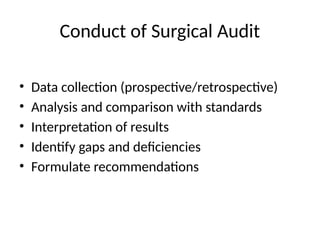
Conduct of SurgicalAudit
• Data collection (prospective/retrospective)
• Analysis and comparison with standards
• Interpretation of results
• Identify gaps and deficiencies
• Formulate recommendations
6.
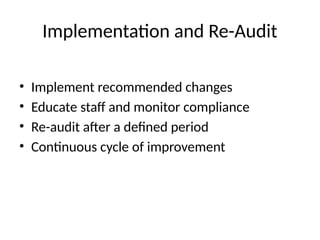
Implementation and Re-Audit
•Implement recommended changes
• Educate staff and monitor compliance
• Re-audit after a defined period
• Continuous cycle of improvement
7.
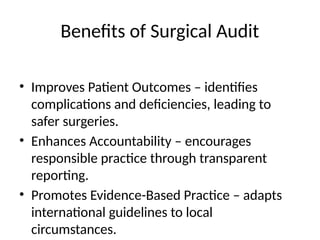
Benefits of SurgicalAudit
• Improves Patient Outcomes – identifies
complications and deficiencies, leading to
safer surgeries.
• Enhances Accountability – encourages
responsible practice through transparent
reporting.
• Promotes Evidence-Based Practice – adapts
international guidelines to local
circumstances.
8.
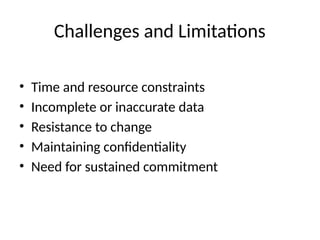
Challenges and Limitations
•Time and resource constraints
• Incomplete or inaccurate data
• Resistance to change
• Maintaining confidentiality
• Need for sustained commitment
9.
Conclusion
• Surgical auditis an essential tool for
maintaining and improving quality of surgical
care.
• Its effectiveness depends on careful planning,
systematic conduct, and commitment to re-
audit.



![ppt on SURGICAL AUDIT [Autosaved].pptx](https://cdn.slidesharecdn.com/ss_thumbnails/surgicalauditautosaved-241217181929-e3ed86a9-thumbnail.jpg?width=640&height=640&fit=bounds)


