Surah
Yaseen, 
v. 
37 ­ 40
37) And a sign
for them is the
night.  We remove
from it [the light
of] day, so they
are [left] in
darkness.
The Sun
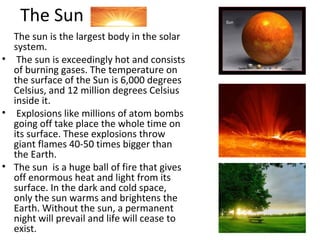
The sun is the largest body in the solar
system.
• The sun is exceedingly hot and consists
of burning gases. The temperature on
the surface of the Sun is 6,000 degrees
Celsius, and 12 million degrees Celsius
inside it.
• Explosions like millions of atom bombs
going off take place the whole time on
its surface. These explosions throw
giant flames 40-50 times bigger than
the Earth.
• The sun is a huge ball of fire that gives
off enormous heat and light from its
surface. In the dark and cold space,
only the sun warms and brightens the
Earth. Without the sun, a permanent
night will prevail and life will cease to
exist.
The Sun
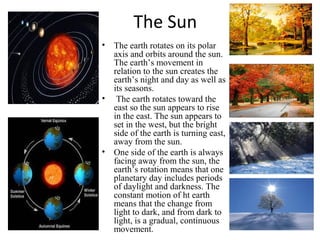
• The earth rotates on its polar
axis and orbits around the sun.
The earth’s movement in
relation to the sun creates the
earth’s night and day as well as
its seasons.
• The earth rotates toward the
east so the sun appears to rise
in the east. The sun appears to
set in the west, but the bright
side of the earth is turning east,
away from the sun.
• One side of the earth is always
facing away from the sun, the
earth’s rotation means that one
planetary day includes periods
of daylight and darkness. The
constant motion of ht earth
means that the change from
light to dark, and from dark to
light, is a gradual, continuous
movement.
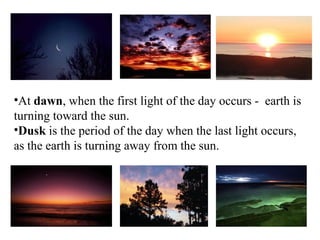
•At dawn, when the first light of the day occurs - earth is
turning toward the sun.
•Dusk is the period of the day when the last light occurs,
as the earth is turning away from the sun.
38) And the sun runs [on
course] toward its stopping
point.  That is the
determination of the
Exalted in Might, the
Knowing.
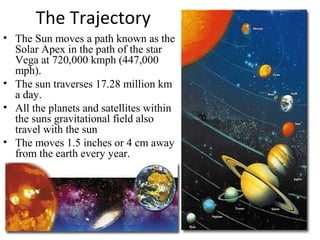
The Trajectory
• The Sun moves a path known as the
Solar Apex in the path of the star
Vega at 720,000 kmph (447,000
mph).
• The sun traverses 17.28 million km
a day.
• All the planets and satellites within
the suns gravitational field also
travel with the sun
• The moves 1.5 inches or 4 cm away
from the earth every year.
39) And the moon –
We have determined
for it phases, until it
returns [appearing]
like the old date stalk.
• Diameter = 3,480 km (one-quarter of
earth’s diameter)
• Distance to the moon from the earth =
384,000 km
• Density = three-fifths that of the earth’s.
• Total Mass = 1.2 percent of the earth’s
mass.
• Gravity = one-sixth the gravity that earth
has.
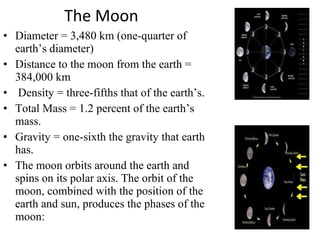
• The moon orbits around the earth and
spins on its polar axis. The orbit of the
moon, combined with the position of the
earth and sun, produces the phases of the
moon:
The Moon
The Moon
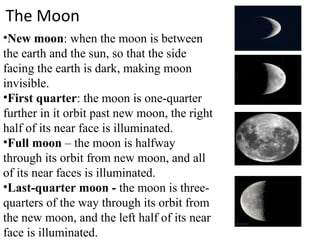
•New moon: when the moon is between
the earth and the sun, so that the side
facing the earth is dark, making moon
invisible.
•First quarter: the moon is one-quarter
further in it orbit past new moon, the right
half of its near face is illuminated.
•Full moon – the moon is halfway
through its orbit from new moon, and all
of its near faces is illuminated.
•Last-quarter moon - the moon is three-
quarters of the way through its orbit from
the new moon, and the left half of its near
face is illuminated.
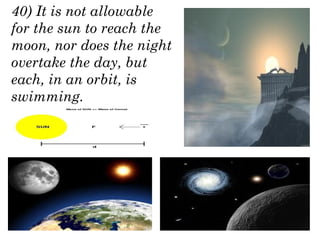
40) It is not allowable
for the sun to reach the
moon, nor does the night
overtake the day, but
each, in an orbit, is
swimming.

Surah yasin(37-40)

  • 1.
  • 2.
    37) And asign for them is the night.  We remove from it [the light of] day, so they are [left] in darkness.
  • 3.
    The Sun The sunis the largest body in the solar system. • The sun is exceedingly hot and consists of burning gases. The temperature on the surface of the Sun is 6,000 degrees Celsius, and 12 million degrees Celsius inside it. • Explosions like millions of atom bombs going off take place the whole time on its surface. These explosions throw giant flames 40-50 times bigger than the Earth. • The sun is a huge ball of fire that gives off enormous heat and light from its surface. In the dark and cold space, only the sun warms and brightens the Earth. Without the sun, a permanent night will prevail and life will cease to exist.
  • 4.
    The Sun • Theearth rotates on its polar axis and orbits around the sun. The earth’s movement in relation to the sun creates the earth’s night and day as well as its seasons. • The earth rotates toward the east so the sun appears to rise in the east. The sun appears to set in the west, but the bright side of the earth is turning east, away from the sun. • One side of the earth is always facing away from the sun, the earth’s rotation means that one planetary day includes periods of daylight and darkness. The constant motion of ht earth means that the change from light to dark, and from dark to light, is a gradual, continuous movement.
  • 5.
    •At dawn, whenthe first light of the day occurs - earth is turning toward the sun. •Dusk is the period of the day when the last light occurs, as the earth is turning away from the sun.
  • 6.
    38) And thesun runs [on course] toward its stopping point.  That is the determination of the Exalted in Might, the Knowing.
  • 7.
    The Trajectory • TheSun moves a path known as the Solar Apex in the path of the star Vega at 720,000 kmph (447,000 mph). • The sun traverses 17.28 million km a day. • All the planets and satellites within the suns gravitational field also travel with the sun • The moves 1.5 inches or 4 cm away from the earth every year.
  • 8.
    39) And themoon – We have determined for it phases, until it returns [appearing] like the old date stalk.
  • 9.
    • Diameter =3,480 km (one-quarter of earth’s diameter) • Distance to the moon from the earth = 384,000 km • Density = three-fifths that of the earth’s. • Total Mass = 1.2 percent of the earth’s mass. • Gravity = one-sixth the gravity that earth has. • The moon orbits around the earth and spins on its polar axis. The orbit of the moon, combined with the position of the earth and sun, produces the phases of the moon: The Moon
  • 10.
    The Moon •New moon:when the moon is between the earth and the sun, so that the side facing the earth is dark, making moon invisible. •First quarter: the moon is one-quarter further in it orbit past new moon, the right half of its near face is illuminated. •Full moon – the moon is halfway through its orbit from new moon, and all of its near faces is illuminated. •Last-quarter moon - the moon is three- quarters of the way through its orbit from the new moon, and the left half of its near face is illuminated.
  • 11.
    40) It isnot allowable for the sun to reach the moon, nor does the night overtake the day, but each, in an orbit, is swimming.