‫الرحمن‬ ‫هللا‬ ‫بسم‬
‫الرحيم‬
Sunflower Seed in the Left
Main Stem Bronchus with
Subcutaneous Emphysema
Prof. Abdulsalam Y Taha
College of Medicine
University of Sulaimani
2022
1
The Case
 A 20-months old infant referred to the Thoracic
Surgery Department because of shortness of
breath (SOB) of 3-days duration. The condition
started with an episode of choking during eating
followed by bouts of cough. The family noticed
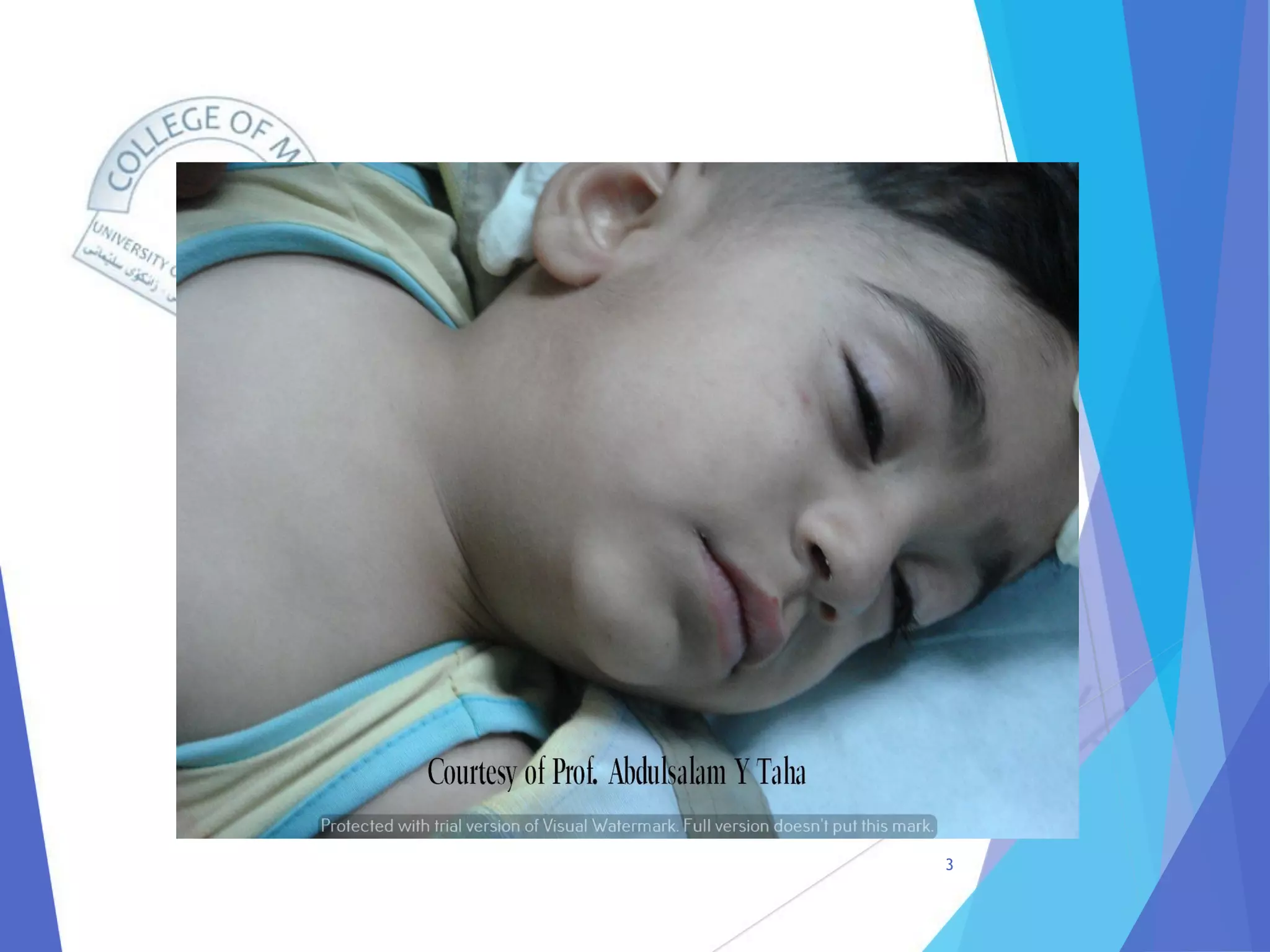
swelling of face, neck and anterior chest
developing over the last 24 hours. On
examination, the child had low-grade fever, mild
SOB and moderate swelling of face and neck.
The swelling was compressible with palpable
crepitus. Chest auscultation revealed reduced
air entry on left side.
2
3
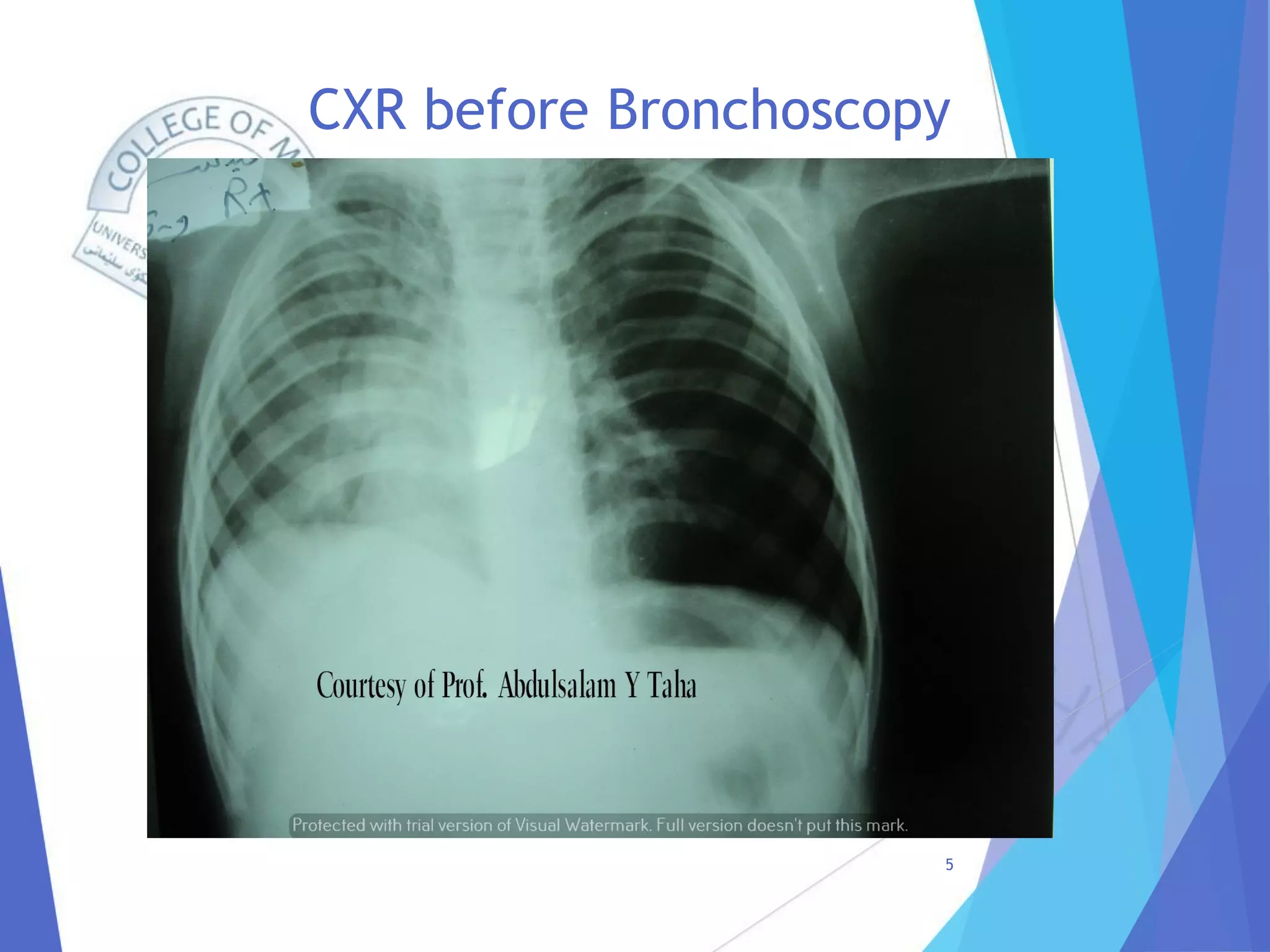
 The chest radiograph showed subcutaneous
(SC) emphysema of neck and
pneumomediastinum. There was
hyperinflation of left lung but no underlying
pneumothorax. The patient was admitted to
the hospital, given injectable antibiotics and
hydrocortisone. The next day, rigid
bronchoscopy was done under general
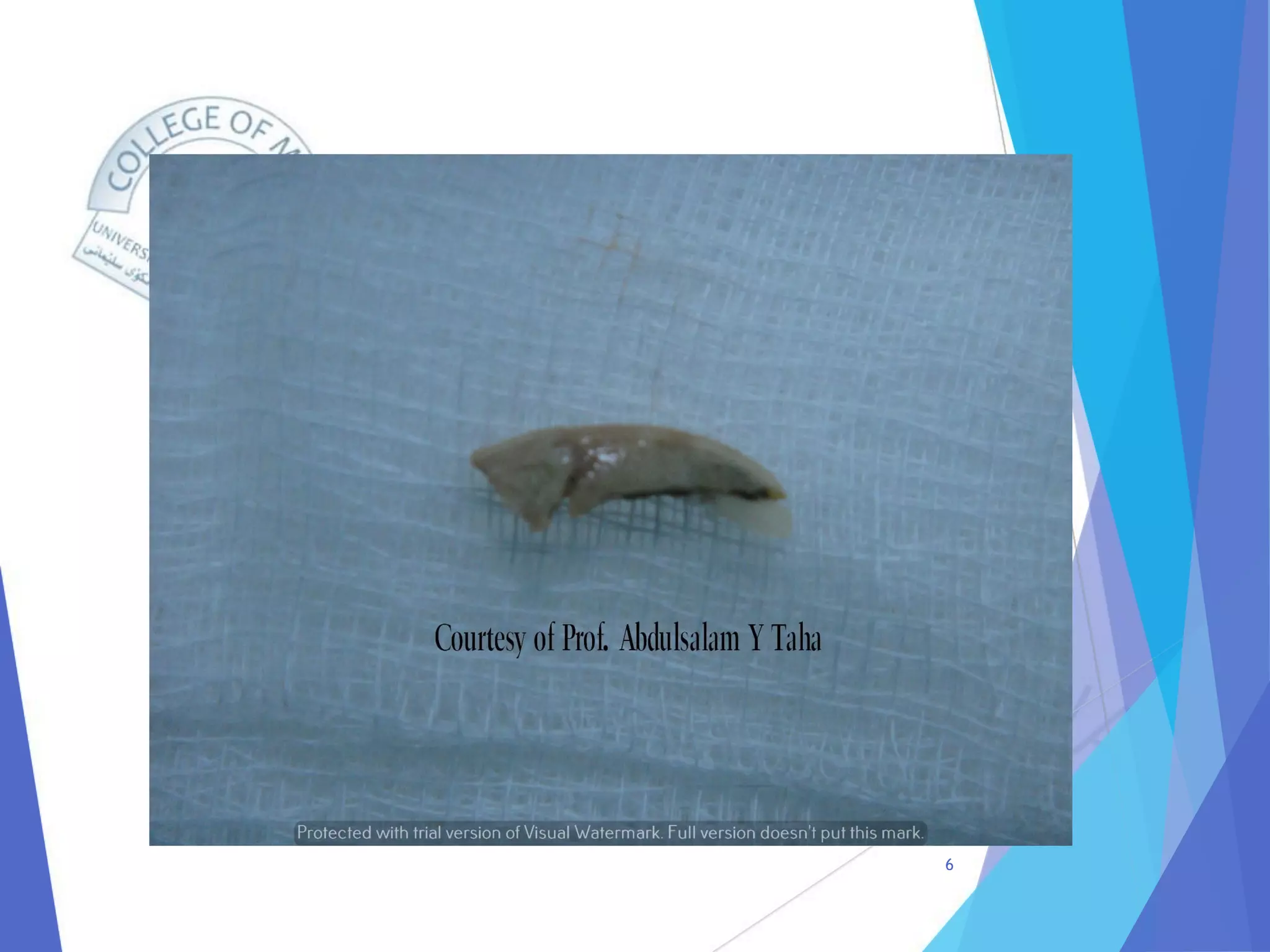
anesthesia (GA). There was a sunflower seed
in left main bronchus; extracted by forceps
followed by slight bleeding from congested
mucosa; irrigated by normal saline. The child
had a smooth recovery.
4
CXR before Bronchoscopy
5
6
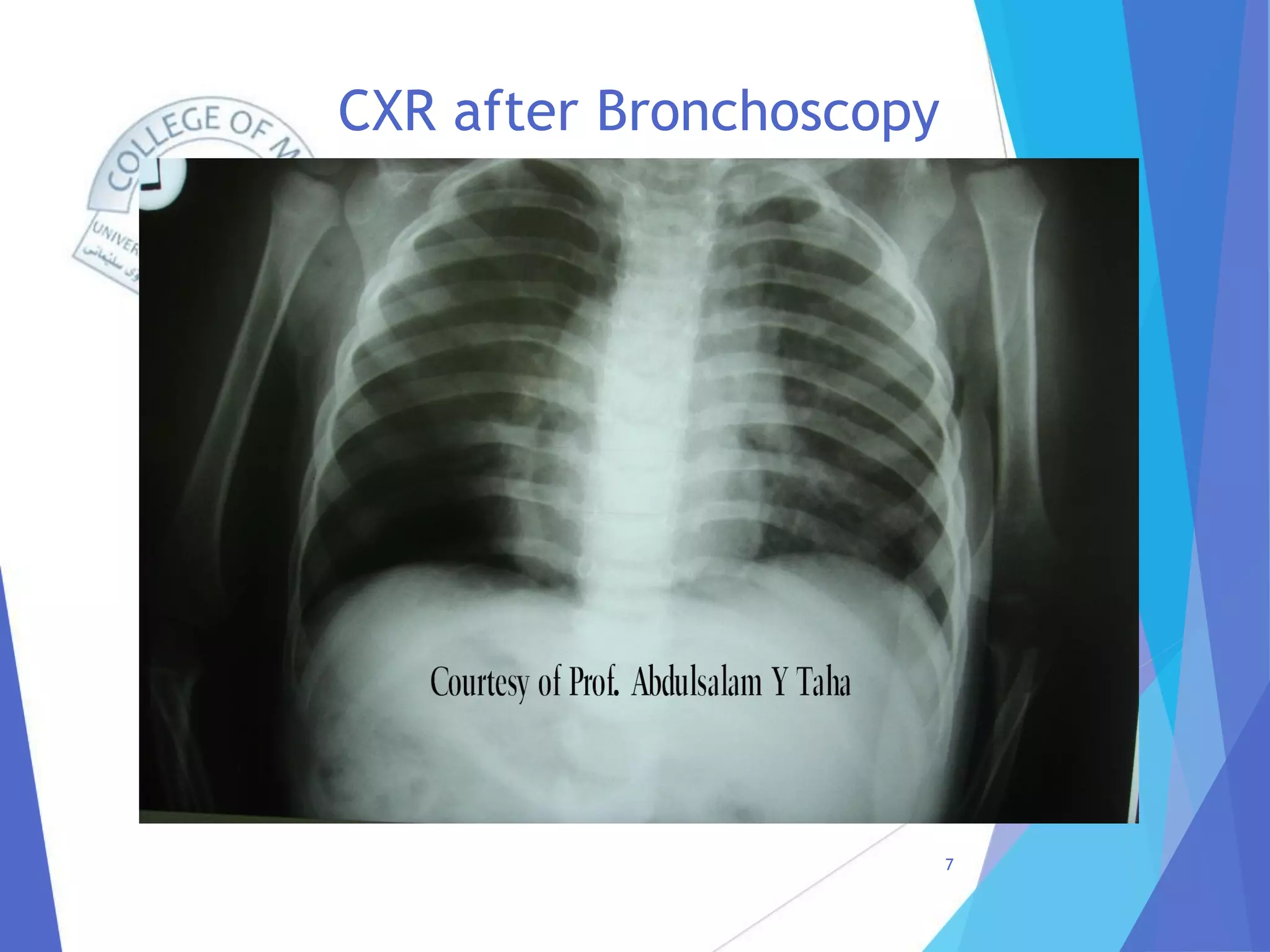
CXR after Bronchoscopy
7
Comment
 SC emphysema occurs secondary to FB
aspiration because of an excessive pressure
gradient at the alveolar level, facilitating extra
alveolar migration of air in the SC tissue. The FB
works as a valve permitting air to enter but not
to leave again. Increasing air pressure in the
pulmonary alveoli causes their rupture, and air
escapes along the large pulmonary vessels to the
mediastinum. From there, the emphysema
extends to the chest, neck and head through the
SC tissue.
8
Comment…
 SC emphysema and pneumomediastinum are rare
presentation of aspirated FBs reported only
sporadically. A high index of suspicion for
tracheobronchial FBs is required in atypical
presentations of acute pediatric respiratory
distress.
 While the presence of air in SC or mediastinal
tissue is not dangerous in itself, prompt
recognition of the underlying cause is essential.
 There was a dramatic improvement in the clinical
picture in this case after removal of the FB
without a need to place a chest tube.
9
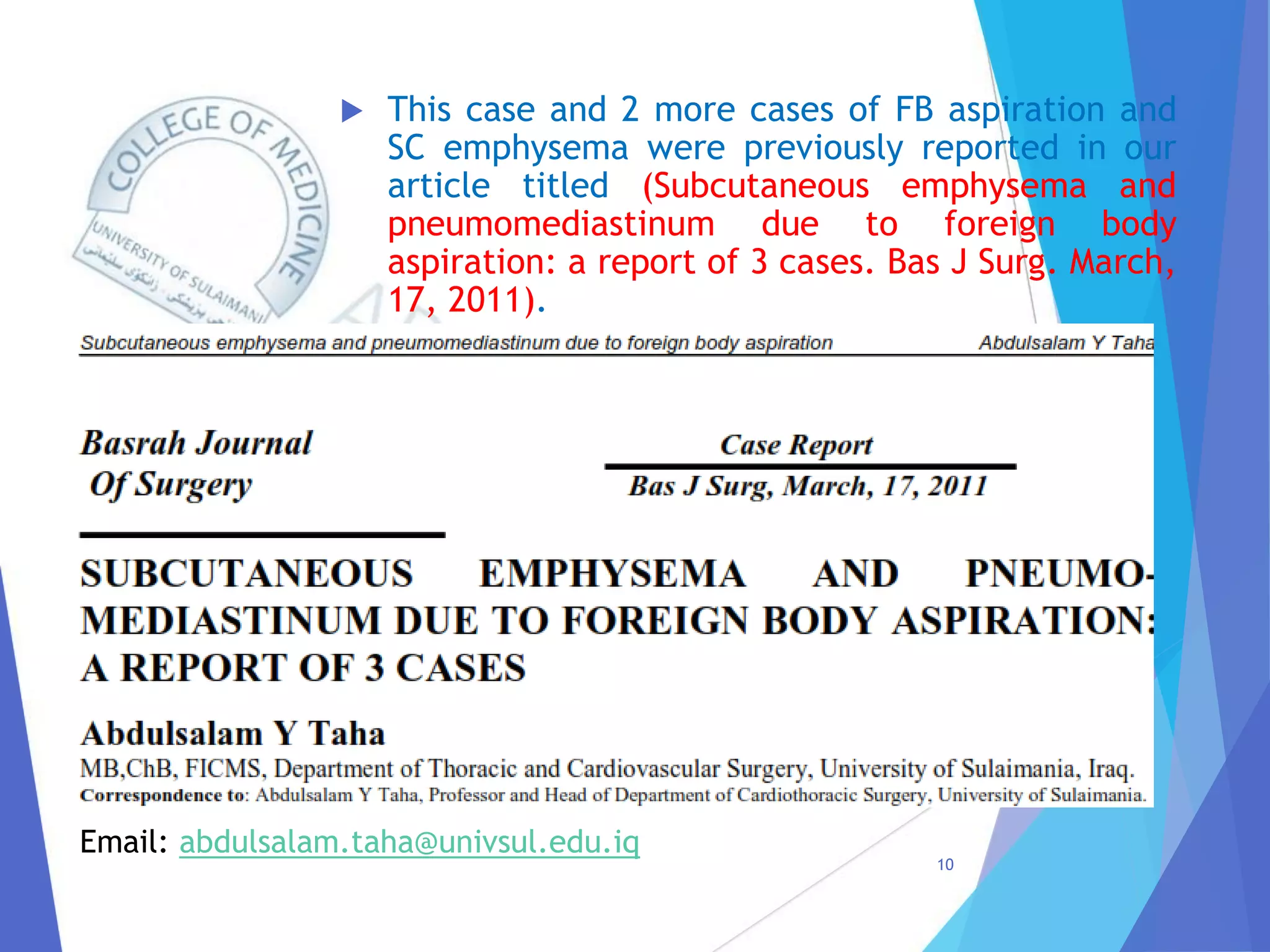
 This case and 2 more cases of FB aspiration and
SC emphysema were previously reported in our
article titled (Subcutaneous emphysema and
pneumomediastinum due to foreign body
aspiration: a report of 3 cases. Bas J Surg. March,
17, 2011).
10
Email: abdulsalam.taha@univsul.edu.iq

Sunflower Seed in the Left Main Stem Bronchus with Subcutaneous Emphysema.pdf

  • 1.
    ‫الرحمن‬ ‫هللا‬ ‫بسم‬ ‫الرحيم‬ SunflowerSeed in the Left Main Stem Bronchus with Subcutaneous Emphysema Prof. Abdulsalam Y Taha College of Medicine University of Sulaimani 2022 1
  • 2.
    The Case  A20-months old infant referred to the Thoracic Surgery Department because of shortness of breath (SOB) of 3-days duration. The condition started with an episode of choking during eating followed by bouts of cough. The family noticed swelling of face, neck and anterior chest developing over the last 24 hours. On examination, the child had low-grade fever, mild SOB and moderate swelling of face and neck. The swelling was compressible with palpable crepitus. Chest auscultation revealed reduced air entry on left side. 2
  • 3.
  • 4.
     The chestradiograph showed subcutaneous (SC) emphysema of neck and pneumomediastinum. There was hyperinflation of left lung but no underlying pneumothorax. The patient was admitted to the hospital, given injectable antibiotics and hydrocortisone. The next day, rigid bronchoscopy was done under general anesthesia (GA). There was a sunflower seed in left main bronchus; extracted by forceps followed by slight bleeding from congested mucosa; irrigated by normal saline. The child had a smooth recovery. 4
  • 5.
  • 6.
  • 7.
  • 8.
    Comment  SC emphysemaoccurs secondary to FB aspiration because of an excessive pressure gradient at the alveolar level, facilitating extra alveolar migration of air in the SC tissue. The FB works as a valve permitting air to enter but not to leave again. Increasing air pressure in the pulmonary alveoli causes their rupture, and air escapes along the large pulmonary vessels to the mediastinum. From there, the emphysema extends to the chest, neck and head through the SC tissue. 8
  • 9.
    Comment…  SC emphysemaand pneumomediastinum are rare presentation of aspirated FBs reported only sporadically. A high index of suspicion for tracheobronchial FBs is required in atypical presentations of acute pediatric respiratory distress.  While the presence of air in SC or mediastinal tissue is not dangerous in itself, prompt recognition of the underlying cause is essential.  There was a dramatic improvement in the clinical picture in this case after removal of the FB without a need to place a chest tube. 9
  • 10.
     This caseand 2 more cases of FB aspiration and SC emphysema were previously reported in our article titled (Subcutaneous emphysema and pneumomediastinum due to foreign body aspiration: a report of 3 cases. Bas J Surg. March, 17, 2011). 10 Email: abdulsalam.taha@univsul.edu.iq