Downloaded 19 times


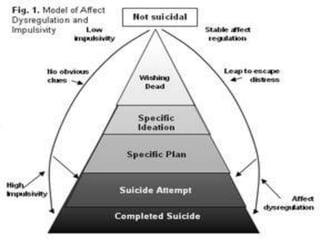
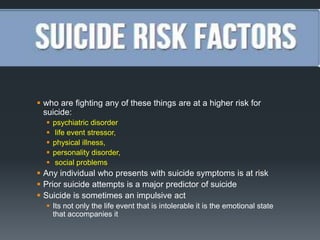
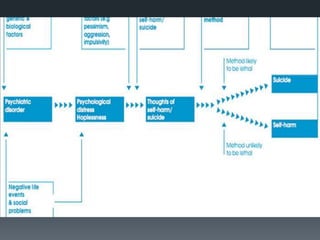


Suicidal patients develop a crisis when they view problems as unsolvable and suicide as the only solution. They feel hopelessness about enduring or solving difficulties and see suicide as relief. Those at higher risk have schemas involving vulnerability and a belief that others are rejecting or have high expectations. It is important to comprehensively assess recent stressors, diagnoses, and feelings of hopelessness. Treatment includes crisis intervention with a focus on identifying high-risk individuals and hospitalization when needed, as well as continuing therapy viewing suicidal behavior as a problem-solving style. Ongoing assessment of suicide risk is crucial.


