Sugar in the primordial soup The formose reaction and the origin of life
Content Life from the Soup Proteins  versus  RNA Prebiotic syntheses of amino acids & nucleobases Prebiotic synthesis of sugars Sugar in space Conclusion
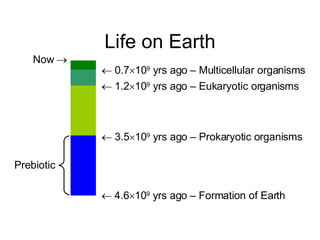
Life on Earth    4.6  10 9  yrs ago  –  Formation of Earth    3.5  10 9  yrs ago  –  Prokaryotic organisms Now      1.2  10 9  yrs ago  –  Eukaryotic organisms    0.7  10 9  yrs ago  –  Multicellular organisms Prebiotic
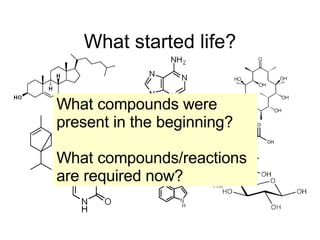
What started life? What compounds were present in the beginning? What compounds/reactions are required now?
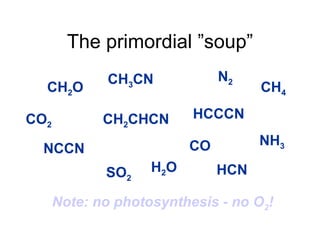
The primordial ”soup” CO 2 N 2 CO SO 2 CH 2 O CH 4 Note: no photosynthesis - no O 2 ! NH 3 HCN CH 3 CN CH 2 CHCN HCCCN NCCN H 2 O
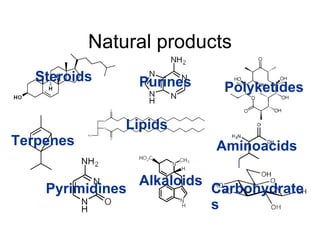
Natural products Aminoacids Steroids Terpenes Lipids Purines Polyketides Carbohydrates Alkaloids Pyrimidines
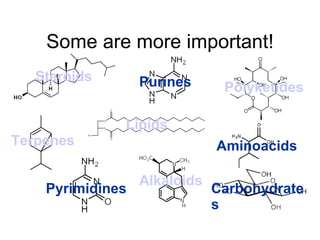
Some are more important! Aminoacids Steroids Terpenes Lipids Purines Polyketides Carbohydrates Alkaloids Pyrimidines
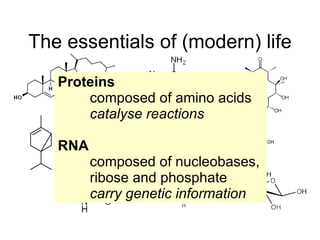
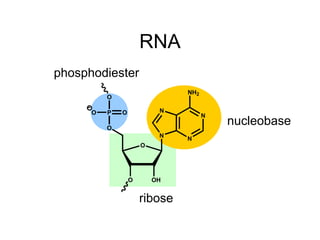
The essentials of (modern) life Proteins composed of amino acids catalyse reactions RNA composed of nucleobases, ribose and phosphate carry genetic information
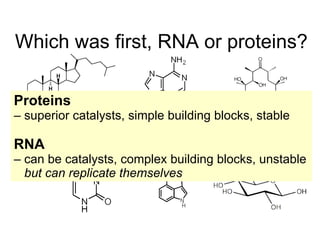
Which was first, RNA or proteins? Proteins –  superior catalysts, simple building blocks, stable RNA –  can be catalysts, complex building blocks, unstable but can replicate themselves
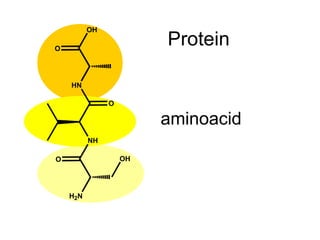
Protein aminoacid
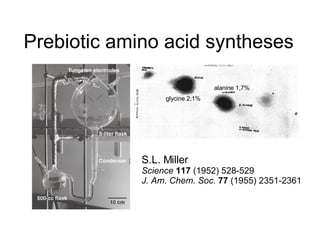
Prebiotic amino acid syntheses S.L. Miller Science   117  (1952) 528-529 J. Am. Chem. Soc.   77  (1955) 2351-2361 glycine 2,1% alanine 1,7%
RNA ribose nucleobase phosphodiester
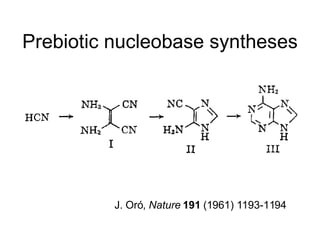
Prebiotic nucleobase syntheses J. Oró,  Nature   191  (1961) 1193-1194
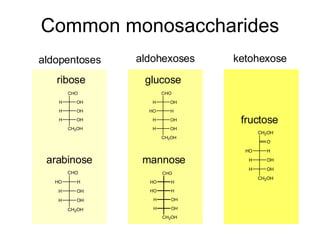
Common monosaccharides   aldopentoses aldohexoses ketohexose glucose mannose ribose arabinose fructose
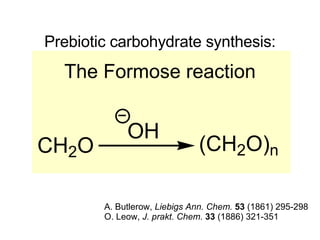
Prebiotic carbohydrate synthesis: The Formose reaction A. Butlerow,  Liebigs Ann. Chem.   53  (1861) 295-298 O. Leow,  J. prakt. Chem.   33  (1886) 321-351
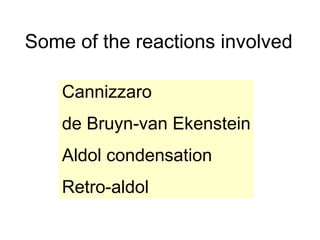
Some of the reactions involved Cannizzaro de Bruyn-van Ekenstein Aldol condensation Retro-aldol
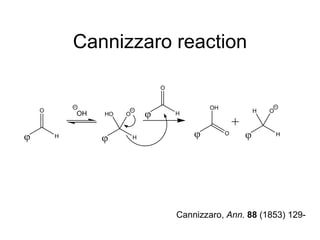
Cannizzaro reaction Cannizzaro,  Ann.   88  (1853) 129-
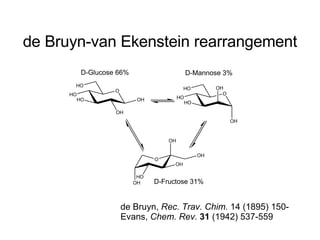
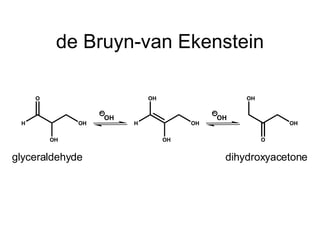
de Bruyn-van Ekenstein rearrangement de Bruyn,  Rec. Trav. Chim.  14 (1895) 150- Evans,  Chem. Rev.   31  (1942) 537-559
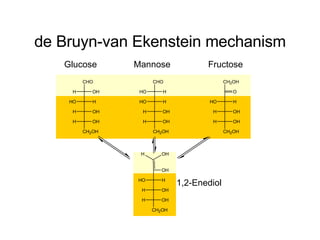
de Bruyn-van Ekenstein mechanism Glucose Mannose Fructose 1,2-Enediol
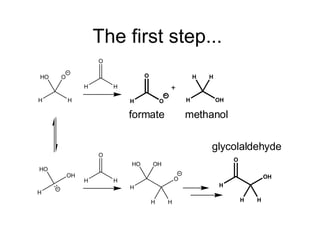
The first step... formate methanol glycolaldehyde
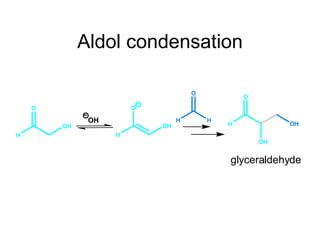
Aldol condensation glyceraldehyde
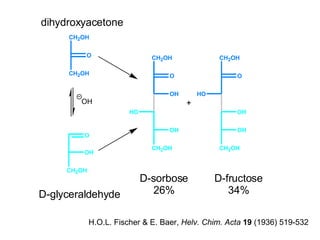
de Bruyn-van Ekenstein glyceraldehyde dihydroxyacetone
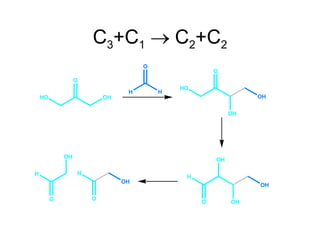
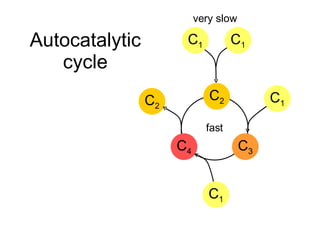
C 3 +C 1     C 2 +C 2
Autocatalytic cycle C 2 C 2 C 3 C 4 C 1 C 1 C 1 C 1 very slow fast
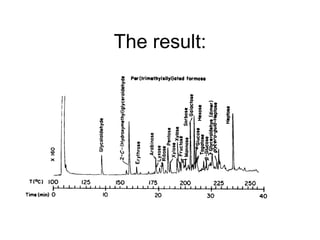
The result:
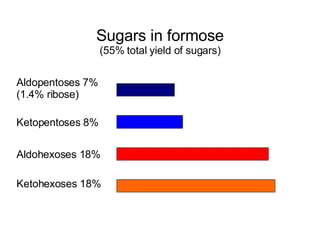
Sugars in formose (55% total yield of sugars) Aldopentoses 7% (1.4% ribose) Aldohexoses 18% Ketopentoses 8% Ketohexoses 18%
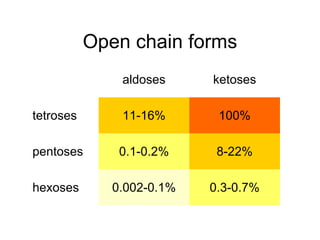
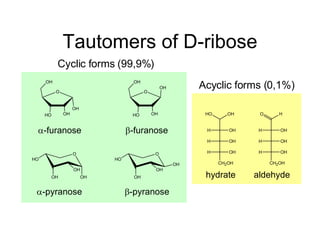
Open chain forms 0.3-0.7% 0.002-0.1% hexoses 8-22% 0.1-0.2% pentoses 100% 11-16% tetroses ketoses aldoses
Tautomers of D-ribose Cyclic forms (99,9%) Acyclic forms (0,1%)  -furanose  -furanose  -pyranose  -pyranose hydrate aldehyde
Problems Much more hexoses than pentoses Very little ribose Racemic mixture of sugars
D-glyceraldehyde dihydroxyacetone D-sorbose 26% D-fructose 34% H.O.L. Fischer & E. Baer,  Helv. Chim. Acta   19  (1936) 519-532
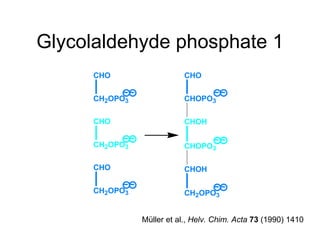
Glycolaldehyde phosphate 1 Müller et al.,  Helv. Chim. Acta   73  (1990) 1410
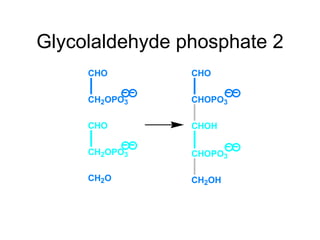
Glycolaldehyde phosphate 2
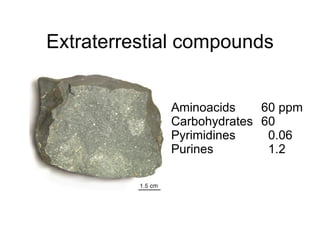
Extraterrestial compounds Aminoacids Carbohydrates Pyrimidines Purines 60 ppm 60 0.06 1.2
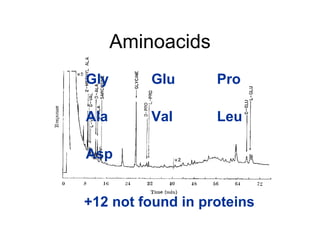
Aminoacids +12 not found in proteins Gly Ala Glu Val Pro Asp Leu
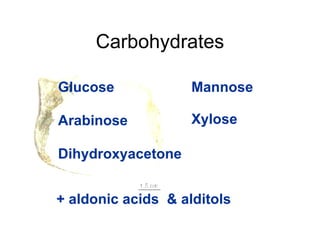
Carbohydrates + aldonic acids  & alditols Mannose Xylose Glucose Arabinose Dihydroxyacetone
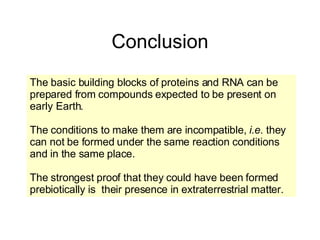
Conclusion The basic building blocks of proteins and RNA can be prepared from compounds expected to be present on early Earth. The conditions to make them are incompatible,  i.e.  they can not be formed under the same reaction conditions and in the same place. The strongest proof that they could have been formed prebiotically is  their presence in extraterrestrial matter.

Sugar in the Primordial Soup

Editor's Notes

  • #2 Title – introduction