Download to read offline

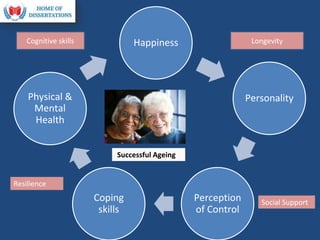



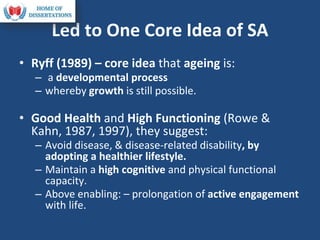


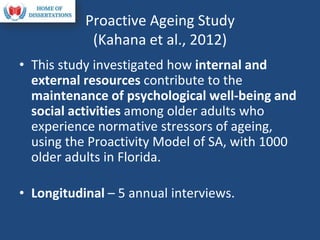


This document provides an overview of the concept of successful aging. It discusses the historical development of the concept and various definitions and models that have been proposed. It describes early biomedical models that defined successful aging primarily based on absence of disease and high physical and cognitive functioning. More recent psychosocial models emphasize adaptation, life satisfaction, social engagement, and personal growth. The document also discusses theories and studies that have expanded the concept to be more inclusive of aging individuals facing illness or limitations through adaptation and use of internal and external resources.


