When you
ask a
question,
what do
you
expect?
We expect...
An answer!
So...
Who are we talking
about?
Or should I say...
What did they do?
Can you find the
difference in these
That's right!!
Those are two types of
questions! One is an object
question and the other is a
subject question.
To start off with, let's
discuss the meaning of both
object and subject
questions.
Object
questions
What did you lose?
Look closely, and tell me
where the subject is. Is there
an object in this question?
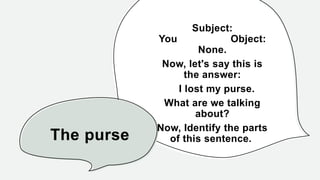
The purse
Subject:
You Object:
None.
Now, let's say this is
the answer:
I lost my purse.
What are we talking
about?
Now, Identify the parts
of this sentence.
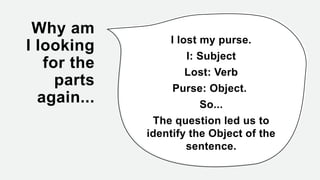
Why am
I looking
for the
parts
again...
I lost my purse.
I: Subject
Lost: Verb
Purse: Object.
So...
The question led us to
identify the Object of the
sentence.
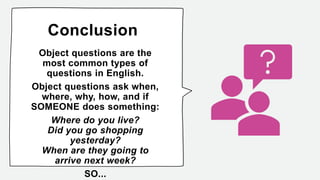
Conclusion
Object questions are the
most common types of
questions in English.
Object questions ask when,
where, why, how, and if
SOMEONE does something:
Where do you live?
Did you go shopping
yesterday?
When are they going to
arrive next week?
SO...
But what
if I know
the
object,
but I
don't
have a
subject?
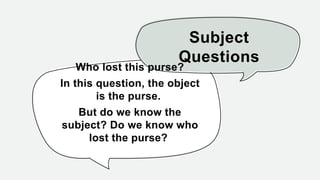
Subject
Questions
Who lost this purse?
In this question, the object
is the purse.
But do we know the
subject? Do we know who
lost the purse?
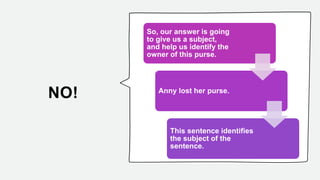
NO!
So, our answer is going
to give us a subject,
and help us identify the
owner of this purse.
Anny lost her purse.
This sentence identifies
the subject of the
sentence.
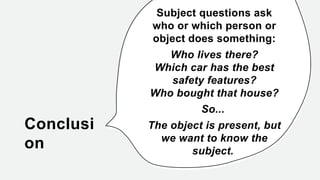
Conclusi
on
Subject questions ask
who or which person or
object does something:
Who lives there?
Which car has the best
safety features?
Who bought that house?
So...
The object is present, but
we want to know the
subject.
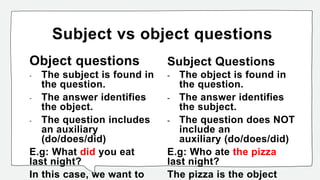
Subject vs object questions
Object questions
- The subject is found in
the question.
- The answer identifies
the object.
- The question includes
an auxiliary
(do/does/did)
E.g: What did you eat
last night?
In this case, we want to
Subject Questions
- The object is found in
the question.
- The answer identifies
the subject.
- The question does NOT
include an
auxiliary (do/does/did)
E.g: Who ate the pizza
last night?
The pizza is the object
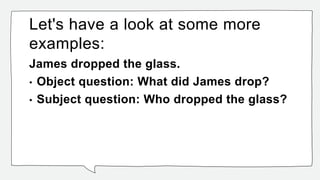
Let's have a look at some more
examples:
James dropped the glass.
• Object question: What did James drop?
• Subject question: Who dropped the glass?
Let's have a look at some more
examples:
We will read the book.
• Object question: What will you
read?
• Subject question: Who will read the
book?
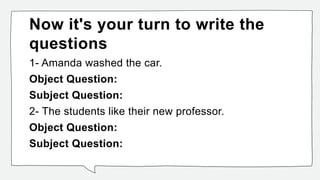
Now it's your turn to write the
questions
1- Amanda washed the car.
Object Question:
Subject Question:
2- The students like their new professor.
Object Question:
Subject Question:

subject and object questions (1).pptx

  • 1.
  • 2.
    We expect... An answer! So... Whoare we talking about? Or should I say... What did they do? Can you find the difference in these
  • 3.
    That's right!! Those aretwo types of questions! One is an object question and the other is a subject question. To start off with, let's discuss the meaning of both object and subject questions.
  • 4.
    Object questions What did youlose? Look closely, and tell me where the subject is. Is there an object in this question?
  • 5.
    The purse Subject: You Object: None. Now,let's say this is the answer: I lost my purse. What are we talking about? Now, Identify the parts of this sentence.
  • 6.
    Why am I looking forthe parts again... I lost my purse. I: Subject Lost: Verb Purse: Object. So... The question led us to identify the Object of the sentence.
  • 7.
    Conclusion Object questions arethe most common types of questions in English. Object questions ask when, where, why, how, and if SOMEONE does something: Where do you live? Did you go shopping yesterday? When are they going to arrive next week? SO...
  • 8.
    But what if Iknow the object, but I don't have a subject?
  • 9.
    Subject Questions Who lost thispurse? In this question, the object is the purse. But do we know the subject? Do we know who lost the purse?
  • 10.
    NO! So, our answeris going to give us a subject, and help us identify the owner of this purse. Anny lost her purse. This sentence identifies the subject of the sentence.
  • 11.
    Conclusi on Subject questions ask whoor which person or object does something: Who lives there? Which car has the best safety features? Who bought that house? So... The object is present, but we want to know the subject.
  • 12.
    Subject vs objectquestions Object questions - The subject is found in the question. - The answer identifies the object. - The question includes an auxiliary (do/does/did) E.g: What did you eat last night? In this case, we want to Subject Questions - The object is found in the question. - The answer identifies the subject. - The question does NOT include an auxiliary (do/does/did) E.g: Who ate the pizza last night? The pizza is the object
  • 13.
    Let's have alook at some more examples: James dropped the glass. • Object question: What did James drop? • Subject question: Who dropped the glass?
  • 14.
    Let's have alook at some more examples: We will read the book. • Object question: What will you read? • Subject question: Who will read the book?
  • 15.
    Now it's yourturn to write the questions 1- Amanda washed the car. Object Question: Subject Question: 2- The students like their new professor. Object Question: Subject Question: