structured agile retrospectives
Enrico Teotti - @agenteo - http://teotti.com
structured agile retrospectives
Enrico Teotti - @agenteo - http://teotti.com
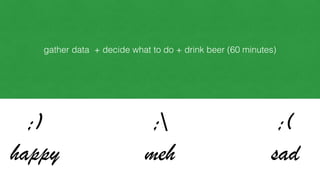
gather data + decide what to do + drink beer (60 minutes)
;)
happy
;(
sad
;
meh
semantic satiation
Semantic satiation (also semantic saturation) is a psychological phenomenon in
which repetition causes a word or phrase to temporarily lose meaning for the listener,
who then perceives the speech as repeated meaningless sounds.
https://en.wikipedia.org/wiki/Semantic_satiation
do what works
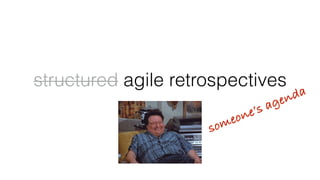
structured agile retrospectives
someone’s agenda
CENSORED
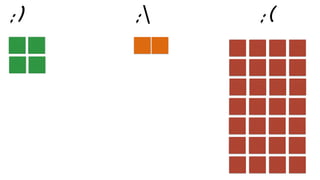
;) ;(;
Action items
Julio
Anna
Luigi
?
structured agile retrospectives
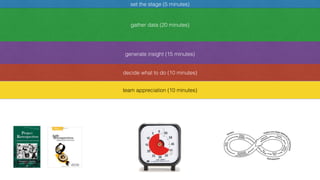
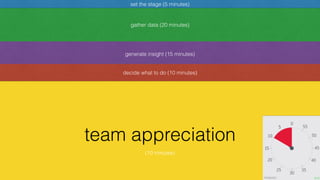
set the stage (5 minutes)
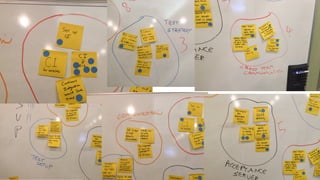
gather data (20 minutes)
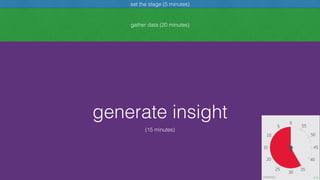
generate insight (15 minutes)
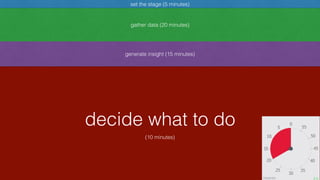
decide what to do (10 minutes)
team appreciation (10 minutes)
setting the stage
(5 minutes)
Kerth’s Prime directive
Regardless of what we discover, we understand and
truly believe that everyone did the best job they could,
given what they knew at the time, their skills and
abilities, the resources available, and the situation at
hand.
Kerth’s Prime directive
Regardless of what we discover, we understand and
truly believe that everyone did the best job they could,
given what they knew at the time, their skills and
abilities, the resources available, and the situation at
hand.
Kerth’s Prime directive
Regardless of what we discover, we understand and
truly believe that everyone did the best job they could,
given what they knew at the time, their skills and
abilities, the resources available, and the situation at
hand.
Kerth’s Prime directive
Regardless of what we discover, we understand and
truly believe that everyone did the best job they could,
given what they knew at the time, their skills and
abilities, the resources available, and the situation at
hand.
Kerth’s Prime directive
Regardless of what we discover, we understand and
truly believe that everyone did the best job they could,
given what they knew at the time, their skills and
abilities, the resources available, and the situation at
hand.
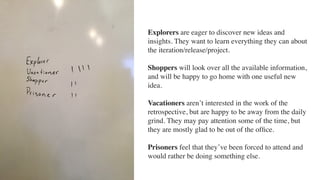
Explorers are eager to discover new ideas and
insights. They want to learn everything they can about
the iteration/release/project. 
Shoppers will look over all the available information,
and will be happy to go home with one useful new
idea. 
Vacationers aren’t interested in the work of the
retrospective, but are happy to be away from the daily
grind. They may pay attention some of the time, but
they are mostly glad to be out of the office. 
Prisoners feel that they’ve been forced to attend and
would rather be doing something else.
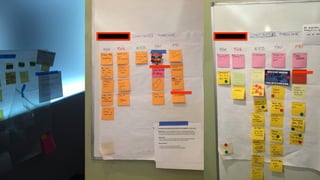
gather data
set the stage (5 minutes)
(20 minutes)
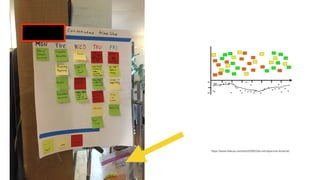
https://www.thekua.com/rant/2006/03/a-retrospective-timeline/
generate insight
set the stage (5 minutes)
gather data (20 minutes)
(15 minutes)
decide what to do
set the stage (5 minutes)
gather data (20 minutes)
generate insight (15 minutes)
(10 minutes)
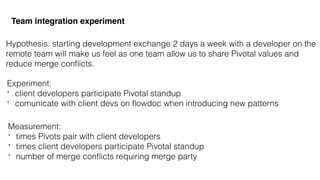
Hypothesis: starting development exchange 2 days a week with a developer on the
remote team will make us feel as one team allow us to share Pivotal values and
reduce merge conflicts.
Team integration experiment
Experiment:
* client developers participate Pivotal standup
* comunicate with client devs on flowdoc when introducing new patterns
Measurement:
* times Pivots pair with client developers
* times client developers participate Pivotal standup
* number of merge conflicts requiring merge party
team appreciation
set the stage (5 minutes)
gather data (20 minutes)
generate insight (15 minutes)
decide what to do (10 minutes)
(10 minutes)
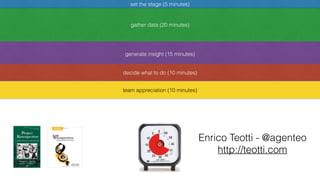
Enrico Teotti - @agenteo
http://teotti.com
set the stage (5 minutes)
gather data (20 minutes)
generate insight (15 minutes)
decide what to do (10 minutes)
team appreciation (10 minutes)

Structured retros

  • 1.
    structured agile retrospectives EnricoTeotti - @agenteo - http://teotti.com
  • 2.
    structured agile retrospectives EnricoTeotti - @agenteo - http://teotti.com
  • 3.
    gather data +decide what to do + drink beer (60 minutes) ;) happy ;( sad ; meh
  • 4.
    semantic satiation Semantic satiation(also semantic saturation) is a psychological phenomenon in which repetition causes a word or phrase to temporarily lose meaning for the listener, who then perceives the speech as repeated meaningless sounds. https://en.wikipedia.org/wiki/Semantic_satiation
  • 7.
  • 8.
  • 10.
  • 12.
  • 13.
  • 14.
  • 15.
    set the stage(5 minutes) gather data (20 minutes) generate insight (15 minutes) decide what to do (10 minutes) team appreciation (10 minutes)
  • 16.
  • 17.
    Kerth’s Prime directive Regardlessof what we discover, we understand and truly believe that everyone did the best job they could, given what they knew at the time, their skills and abilities, the resources available, and the situation at hand.
  • 18.
    Kerth’s Prime directive Regardlessof what we discover, we understand and truly believe that everyone did the best job they could, given what they knew at the time, their skills and abilities, the resources available, and the situation at hand.
  • 19.
    Kerth’s Prime directive Regardlessof what we discover, we understand and truly believe that everyone did the best job they could, given what they knew at the time, their skills and abilities, the resources available, and the situation at hand.
  • 20.
    Kerth’s Prime directive Regardlessof what we discover, we understand and truly believe that everyone did the best job they could, given what they knew at the time, their skills and abilities, the resources available, and the situation at hand.
  • 21.
    Kerth’s Prime directive Regardlessof what we discover, we understand and truly believe that everyone did the best job they could, given what they knew at the time, their skills and abilities, the resources available, and the situation at hand.
  • 22.
    Explorers are eagerto discover new ideas and insights. They want to learn everything they can about the iteration/release/project.  Shoppers will look over all the available information, and will be happy to go home with one useful new idea.  Vacationers aren’t interested in the work of the retrospective, but are happy to be away from the daily grind. They may pay attention some of the time, but they are mostly glad to be out of the office.  Prisoners feel that they’ve been forced to attend and would rather be doing something else.
  • 23.
    gather data set thestage (5 minutes) (20 minutes)
  • 25.
  • 26.
    generate insight set thestage (5 minutes) gather data (20 minutes) (15 minutes)
  • 28.
    decide what todo set the stage (5 minutes) gather data (20 minutes) generate insight (15 minutes) (10 minutes)
  • 29.
    Hypothesis: starting developmentexchange 2 days a week with a developer on the remote team will make us feel as one team allow us to share Pivotal values and reduce merge conflicts. Team integration experiment Experiment: * client developers participate Pivotal standup * comunicate with client devs on flowdoc when introducing new patterns Measurement: * times Pivots pair with client developers * times client developers participate Pivotal standup * number of merge conflicts requiring merge party
  • 32.
    team appreciation set thestage (5 minutes) gather data (20 minutes) generate insight (15 minutes) decide what to do (10 minutes) (10 minutes)
  • 33.
    Enrico Teotti -@agenteo http://teotti.com set the stage (5 minutes) gather data (20 minutes) generate insight (15 minutes) decide what to do (10 minutes) team appreciation (10 minutes)