MANAGEMENT OF STROKE
Dr Daniel Alade
Cedarcrest Hospitals, Abuja
Reviewed by:
Dr Oyakhire – Consultant Neurologist – Cedarceest Hospitals, Abuja
Dr Akinrinmade – Consultant Hematologist – Cedarcrest Hospitals
OUTLINE
• DEFINITIONS
• EPIDEMIOLOGY
• RELEVANT ANATOMY
• CLASSIFICATION OF STROKE
• EVALUATION OF STROKE
• INVESTIGATIONS
• MANAGEMENT
• PROGNOISIS/PITFALLS/COMPLICATIONS
• SPECIAL MENTION
• CLINICAL SCENARIO
• CONCLUSION AND REFERENCE
INTRODUCTION
• “ Apoplexy” was first used by Hippocrates, 2,400
years ago to describe this syndrome.
• In the 17th
century, Jacob Wepfer found that
bleeding in the brain as well as a occlusion of
cerebral blood vessels could cause apoplexy.
• In 1928. Aploplexy was replaced by the term
‟Stroke”.
DEFINITION
• Stroke(CVA) is defined by the World Health
Organization as a clinical syndrome consisting
of ‘rapidly developing clinical signs of focal (at
times global) disturbance of cerebral function,
lasting more than 24 hrs or leading to death
with no apparent cause other than that of
vascular origin’.
• This definition was introduced in 1970 and is
still in use.
• The American Heart Association (AHA) and
American Stroke Association (ASA) define a
stroke as the presence of symptoms or signs
of focal brain dysfunction, or evidence of
acute infarction from neuroimaging or
pathological examination. This definition
includes silent CNS infarctions and
hemorrhages
• Transient ischemic attack is temporary focal
neurological deficit of sudden onset caused by
ischemia of the brain, retina lasting less than 24
hours followed by complete recovery.
• New definition: No objective evidence of acute
infarction in the affected region of brain or
retina; < I hour – ASA/AHA
• Therefore, CT/MRI necessary to increase
diagnostic accuracy.
EPIDEMIOLOGY
• Stroke is the 3rd
leading cause of death Worldwide.
• Leading cause of disability Worldwide.
• Approximately 15 million people suffer stroke/year
• One third die, 1/3 disabled, 1/3 recover.
• The current prevalence of stroke in Nigeria is 1.14 per
1000, while the 30-day case fatality rate is as high as
40%.
• Approx 85% are ischemic.
• M> F; Blacks> Whites>Hispanics.
• About 25% of admissions at Cedarcrest ICU every
month are stroke related
RELEVANT ANATOMY
16
CLASSIFICATION OF STROKE
Stroke
Primary Hemorrhagic
(20% of Strokes)
Primary Ischemic
(80% of Strokes)
Thrombotic
50%
Embolic
30%
Intracerebral
Hemorrhage 15%
Subarachnoid
Hemorrhage 5%
TYPES OF STROKE
TYPES
There two broad categories of stroke; ischemic and
hemorrhagic.
1. Ischemic (commonest); due to vascular occlusion.
Two different classifications exist.
a) Bamford /Oxfordshire classification.
i. Total Anterior Circulation Stroke (TACS).
ii. Partial Anterior Circulation Stroke (PACS).
iii. Posterior Circulation Stroke.
iv. Lacunar Stroke.
CONTD
b) TOAST Classification. (Trial of ORG 10172 in
Acute Stroke Treatment)
i. Large artery atherosclerosis.
‐
ii. Small vessel occlusion .
iii. Cardioembolism .
iv. Stroke of other determined etiology.
v. Stroke of undetermined etiology.
Types of Stroke
85%
Ischemic
15 %
hemorrhagic
PATHOPHYSIOLOGY
PATHOPHYSIOLOGY (Ischemic)
PATHOPHYSIOLOGY (Ischaemic)
• Normal Cerebral Blood Flow (CBF)
-50-55ml/100g/min.
• Threshold for synaptic transmission- 8-
10/100g/min, at or below this level neuronal
death occurs.
• Ischemia leads to lactic acidosis, influx and
efflux of ions that culminate in cell death.
Ischemic
• Ischemia causes cell hypoxia and depletion of
cellular adenosine triphosphate (ATP).
• Without ATP, there is no longer the energy to
maintain ionic gradients across the cell
membrane and cell depolarization.
• Influx of sodium and calcium ions and passive
inflow of water into the cell lead to cytotoxic
edema.
• Ischemic core
– cerebral blood flow of lower than 10 mL/100 g of
tissue/min are referred to collectively as the core.
– These cells are presumed to die within minutes of
stroke onset.
• Ischemic penumbra
– Zones of decreased or marginal perfusion (cerebral
blood flow < 25 mL/100g of tissue/min
– Tissue in the penumbra can remain viable for several
hours because of marginal tissue perfusion
ISCHEMIC STROKE PATHOPHYSIOLOGY
The First Few Hours
Penumbra
Core
Clot in
Artery
“TIME IS BRAIN:
SAVE THE PENUMBRA”
Penumbra is zone of
reversible ischemia around
core of irreversible infarction
—salvageable in first few
hours after
ischemic stroke onset
Penumbra damaged by:
• Hypoperfusion
• Hyperglycemia
• Fever
• Seizure
• Ischemic Cascade
– Cerebral ischemia impairs the normal sodium-calcium
exchange protein also found on cell plasma membranes -
release of neurotransmitters
– calcium influx also activates various degradative enzymes and
generates free radicals, arachidonic acid, and nitric oxide
– dysfunction of the cerebral vasculature, with breakdown of
the blood-brain barrier occurring within 4-6 hours after
infarction.
– specific genes are activated, leading to the formation of
cytokines – inflammation and liquefactive necrosis
• Hemorrhagic transformation
– estimated to occur in 5% of uncomplicated ischemic
strokes, in the absence of fibrinolytic treatment
– reperfusion of ischemically injured tissue, either
from recanalization, collateral blood supply or
disruption of the blood-brain barrier.
– It is more commonly seen following cardioembolic
strokes and is more likely to occur with larger infarct
volumes
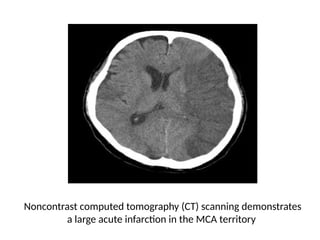
Noncontrast computed tomography (CT) scanning demonstrates
a large acute infarction in the MCA territory
ACA infarction involving the left paramedian frontal and
posterior parietal regions.
PCA distribution infarction involving the right occipital
and inferomedial temporal lobes.
Over time, phagocytic cells remove the necrotic tissue,
leaving a cavity, while astrocytes proliferate around the
periphery to form a scar (gliosis).
Lacunar infarcts are typically no more than 1.5 cm in size and
can occur in the deep gray matter structures, corona radiata,
brainstem, and cerebellum.
Axial diffusion-weighted images demonstrate scattered foci of
high signal in the subcortical and deep white matter bilaterally in
a patient with a known cardiac source for embolization-
Cardioembolic stroke:
Vascular watershed, or border-zone, infarction - in this case the
anterior and posterior middle cerebral artery (MCA) watershed
areas.
Hemorrhagic
• Bleeding occurs directly into the brain parenchyma.
• Leakage from small intracerebral arteries damaged by
chronic hypertension
• Other mechanisms include bleeding diatheses, iatrogenic
anticoagulation, cerebral amyloidosis, and cocaine abuse.
• Charcot bouchard and Berry aneurysm
• Predilection for certain sites in the brain, including the
thalamus, putamen, cerebellum, and brainstem.
• Damaged by pressure produced by the mass effect of the
hematoma.
• A general increase in intracranial pressure may occur.
• Subarachnoid hemorrhage
– SAH results in elevated intracranial pressure and
impairs cerebral autoregulation.
– These effects can occur in combination with acute
vasoconstriction, microvascular platelet
aggregation, and loss of microvascular perfusion,
resulting in profound reduction in blood flow and
cerebral ischemia
CT cerebral angiography showing 9-mm aneurysm at the
junction of the anterior cerebral and posterior communicating
arteries
ETIOLOGY
Hemorrhagic
Risk Factors
• Advanced age
• Hypertension (up to 60% of cases)
• Previous history of stroke
• Alcohol abuse
• Use of illicit drugs (eg, cocaine, other
sympathomimetic drugs)
Causes of hemorrhagic stroke include the following
• Hypertension
• Cerebral amyloidosis
• Coagulopathies, Anticoagulant therapy, Thrombolytic
therapy
• Arterovenous Malformation AVM), aneurysms, and other
vascular malformations (venous and cavernous
angiomas)
• Vasculitis
• Intracranial neoplasm
Aneurysms and subarachnoid hemorrhage
• Aneurysms are focal dilatations of arteries, with the most
frequently encountered intracranial type being the berry
(saccular) aneurysm
• Berry aneurysms are most often isolated lesions whose
formation results from a combination of hemodynamic
stresses and acquired or congenital weakness in the vessel
wall.
• Saccular aneurysms typically occur at vascular bifurcations,
with more than 90% occurring in the anterior circulation
Common locations of Berry aneurysms
• The junction of the anterior communicating
arteries and anterior cerebral arteries—most
commonly, the middle cerebral artery (MCA)
bifurcation
• The supraclinoid internal carotid artery at the
origin of the posterior communicating artery
• The bifurcation of the internal carotid artery
(ICA)
Other cause of intracranial aneurysms
• Autosomal dominant polycystic kidney disease (ADPKD)
• Loeys-Dietz syndrome (LDS)
• Ehlers-Danlos syndrome
• Methylmalonic Acidemia
• Homocystinuria/Homocysteinemia
• Fabry Disease
• MELAS – Mitochondrial Encephalomyopathy, Lactic
Acidosis, Strokelike Episodes
• Blood Dyscrasias
Ischemic
Risk factors
Nonmodifiable risk factors include the following:
• Age
• Race
• Sex
• Ethnicity
• History of migraine headaches
• Fibromuscular dysplasia
• Heredity: Family history of stroke or transient ischemic
attacks (TIAs)
Modifiable risk factors include the following:
• Hypertension (the most important)
• Diabetes mellitus
• Cardiac disease
• Hypercholesterolemia
• Transient ischemic attacks (TIA)
• Carotid stenosis
• Hyperhomocystinemia
• Lifestyle issues: Excessive alcohol intake, tobacco use, illicit drug
• Obesity
• Oral contraceptive use/postmenopausal hormone use
• Sickle cell disease
Genetic, Metabolic and inflammatory mechanisms
• Hyperhomocysteinemia and homocystinuria
– mutations in the 5,10-methylenetetrahydrofolate reductase
(MTHFR) gene
• Amyloid angiopathies
– Mutations in the CST3 gene
• CADASIL- cerebral autosomal dominant arteriopathy
with subcortical infarcts and leukoencephalopathy
– mutations in the NOTCH3 gene
• Metabolic Diseases
EVALUATION OF STROKE
• 1. Determine if symptoms are due to stroke
• 2. Localize site of brain lesion
• 3. Establish the type of stroke
• 4. Ascertain the likely cause
• The clinical assessment (history, general examination,
and neurological examination) remains the cornerstone
of the evaluation.
• The use of a stroke rating scale, preferably the NIHSS, is
recommended
• It has been recommended that patients with acute stroke
<7 days or progressive stroke should be admitted
53
The symptoms of a stroke are dependant on what portion of the
brain is damage.
http://www.pdrhealth.com/patient_education/images/BHG01NE13F01.GIF
CLINICAL FEATURES
Right sided stroke
• Left sided weakness
• Left neglect
• Left visual field defect
• Not aware of deficits
• Head ,eyes, deviate RIGHT
Left sided stroke
• Right sided weakness
• Aphasia
• Right visual field defect
• Head, eyes deviate to LEFT
11/21/2024 55
Pathological: WHO Criteria
C.I C.H
• L.O.C. -ve +ve
• Headache - ve +ve
• Vomiting - ve +ve
• T.I.A. +ve - ve
• Gradual onset +ve -ve
• Activity -ve + ve
• HBP mild /-ve mod/severe
• Bldy csf -ve + ve
EXAMINATION
• A- B- C or C-A-B.
• Vital signs especially Pulse, Blood pressure.
• Neurologic examination geared towards localization.
• GCS, and mental status examination.
• Pupillary and meningeal signs.
• Limb tone, power and reflexes.
• Special stroke scales –NIHSS (National Institutes of
Health Stroke Scale)
INVESTIGATIONS
• full blood count, serum electrolytes, renal function tests,
cardiac enzymes, and coagulation studies
• Blood sugar is mandatory to exclude hypoglycemia or
diagnose diabetes mellitus
• Full blood count to detect Polycythaemia,ESR for
endocarditis,
• clotting studies for Hypercoagulable States
• An electrocardiogram (ECG) : arrhythmias and myocardial
infarction. Baseline ECG is recommended in all patients with
stroke(AHA/ASA Guidelines)
• Echocardiography : valve disease and intra-cardiac clot
NEUROIMAGING
• Brain CT scan: CT is sensitive to the intracranial blood and
is readily available.
Normal early CT therefore rules out haemorrhagic stroke. CT
Scan changes in ischemic stroke may take several days to
develop.
• MRI: MRI is better at detecting posterior fossa lesions
especially in posterior circulation stroke such as Pons or
cerebellum
• It is also recommended that all patients with transient
neurologic symptoms have a neuroimaging within 24 hours
or as soon as possible.
NIHSS
• NIHSS: National Institutes of Health Stroke Scale is widely
used to assess neurological deficits in stroke patients in a
structured manner.
• It provides a general measure of neurologic deficits using 11
items to produce a score of 0 to 42.
• Higher scores predict a larger lesion size, greater stroke
severity, and worsened short- and long-term outcomes.
• All patients should have the ‘NIHSS’ calculated, as it is a
widely accepted measure of stroke severity.
• Generally, this should be performed after initial stabilization
and neuroimaging.
MANAGEMENT – Baseline
11/21/2024 63
PHASES OF CONTEMPORARY MANAGEMENT
OF STROKE
Phases Period from onset Activities Prefered location
1Acute (emergency)
care:
hyperacute / acute
1st
-7th
day a)Assessment
b)Early supportive
care
Hospital
2 Early sub-
acute(supportive)
care
2nd
-4th
week a)prevention and
treatment of
complications
Hospital
3 Late sub-
acute(maintanance)
care
2nd
-6th
month a)Rehabilitation
b)Psychological
support
c)Prevent recurrence
Hospital/Community
4.Long-term (chronic)
care
7th
month onwards a)Rehabilitation
b)Psychological
support
c)Social support
d)Prevent recurrence
Community
EARLY SUPPORTIVE CARE
• 25 % of patients may have neurological worsening
during first 24-48 hours.
• The use of stroke unit is recommended to improve
general management.
• Nurse in slight head-up tilt to improve venous
drainage from the head region.
• continuous monitoring of neurological deficit for
deterioration, including the level of consciousness,
which may herald impending herniation.
EARLY SUPPORTIVE CARE
• Continuous cardiac monitoring, if indicated,
particularly if risk factors for coronary heart disease
are present.
• Do not feed orally if patient is unconscious or drowsy.
Swallowing test should be done in conscious patients
before oral feeding and feed in the semi-recumbent
position (450) – ensure correct consistency of food.
• Early mobilization of less severely affected patients
• Early physiotherapy should be initiated
AIRWAY AND VENTILATION
• Airway – Foreign Bodies, dentures, tongue
• Patients who exhibit a decreasing level of
consciousness or signs of brain stem dysfunction are
candidates for elective intubation .
• Indications for intubation
- hypoxia (pO2 <60 mm Hg or PCO2 >50 mm Hg) - risk of
aspiration with or without impairment of arterial
oxygenation
• elective tracheostomy should be performed after 2
weeks for prolonged coma or pulmonary complications
SUPPLEMENTAL OXYGEN
• Adequate tissue oxygenation is important to
prevent further brain injury
• Current American Stroke Association
recommendations call for supplemental
oxygen to be given as needed to maintain an
oxygen saturation of more than 95% by pulse
Oximetry.
VOLUME STATUS
• Hypovolaemia has been associated with worse
outcome and increased mortality in acute
ischemic stroke.
• Isotonic saline, i.e. "normal" or 0.9%, should be
used for volume repletion and maintenance,
typically 3 litres per day is given.
• Do not give hypotonic solution, eg 5% Dextrose
in water, as it may worsen cerebral oedema.
TEMPERATURE
• FEVER in the setting of acute stroke is associated with
poor outcome possibly due to
• 1. increased metabolic demands
• 2.enhanced release of neurotransmitters
• 3.increased free radical production
• Lowering acutely elevated body temperature might
improve the prognosis in stroke patients .Antipyretic
agents like acetaminophen and coolIng devices might
be used .
• Relevant antibiotics might also be used.
TEMPERATURE
• Fever worsens outcome:
• for every 1°C rise in temp, risk of poor
outcome doubles (Reith, Lancet 1996)
• Greatest effect in the first 24 hours
• Brain temp is generally higher than core
• Treat aggressively with acetaminophen
GLYCAEMIC CONTROL
Hyperglycemia may augment brain injury by several mechanisms
including
• increased tissue acidosis from anaerobic metabolism
• free radical generation
• increased blood brain barrier permeability.
• Aggressive Glycaemic control utilizing a continuous insulin,
potassium, and glucose infusion(GKI) is feasible.
• For patients with blood glucose >200 mg/dl, 6 units of insulin hrly
can be given until blood sugar is <120 mg/ dl.
• GKI infusion may need to be continued in comatose patients or
those unable to swallow
GLYCAEMIC CONTROL
• HYPOGLYCEMIA- Hypoglycemia can cause focal
neurologic deficits mimicking stroke, and severe
hypoglycemia alone can cause neuronal injury
• Check the blood sugar and rapidly correct low
serum glucose
• Hypoglycemia (blood glucose <60 mg/dL) should
be treated in patients with acute ischemic stroke
• The goal is to achieve normoglycemia.
GLYCAEMIC CONTROL
• Evidence indicates that persistent in-hospital
hyperglycemia during the first 24 hours after
stroke is associated with worse outcomes than
normoglycemia, and thus, it is reasonable to
treat hyperglycemia to achieve blood glucose
levels in a range of 140 to 180 mg/dL and to
closely monitor to prevent hypoglycemia in
patients with acute ischemic stroke.
Ischemic Care
THROMBOLYSIS
• Thrombolysis within 1st 4.5 hrs (3-15% pts)
• rtPA, alteplase; streptokinase.
• Door to needle < 1 hr.
• Patient
- No ICH on CT scan
- BP <180/100 mmHg.
- No bleeding tendency
• Dose - 0.9mg /Kg. (max 90mg)
• - 10% bolus, Rest 60 min by infusion
• Risk - ICH in 6% of patients
• - Reduced morbidity by 30%
ANTIPLATELET AGENTS
• Aspirin –300mg - within 48hrs – reduce risk of
mortality/ disability in ischemic stroke –
AHA/ASA Giudelines
• Other antiplatelets: Abciximab - II B / III A
inhibitor, Cilostazol - phosphodieterase (PDE)
type 3 inhibitor, Dipyridamole
• Antiplatelets contraindicated in haemorrhagic
stroke
Mechanical Thrombectomy
• What if fibrinolysis is contraindicated
• The new guidelines recommend
thrombectomy in eligible patients 6 to 16
hours after a stroke – AHA/ASA – 2018
• Merci Retriever (Concentric Medical,
Mountain View, CA): Corkscrew-shaped device
that captures and engages clots
BLOOD PRESSURE MANAGEMENT
• Reduction of BP in acute stroke phase is
controversial
• BP Should be kept within higher normal limits
since low BP could precipitate perfusion failure
• When treatment is indicated, cautious lowering of
blood pressure by approximately 15 percent during
the first 24 hours after stroke onset is suggested
• Systolic blood pressure > 185 and diastolic > 110 is
a contraindication for thrombolysis
BLOOD PRESSURE MANAGEMENT
Reducing formation
of brain edema
lessening
hemorrhagic
transformation
preventing early
recurrent stroke
BLOOD PRESSURE MANAGEMENT
HOWEVER , aggressive treatment of blood
pressure may reduce the perfusion
pressure to the ischemic areas of the brain
In majority of patients decline in blood
pressure occurs within the first few hours
of stroke even without any treatment
BLOOD PRESSURE MANAGMENT
• Some authorities believe BP should not be actively
lowered in the 1st
10 days after stroke unless MAP >
145 (SBP > 220; DBP>120) - AHA
• Indications for lowering BP:
-dissecting aortic aneurysm
-Myocardial Ischemia or acute myocardial infarction
-Acute pulmonary oedema.
-Rapid decline in renal function.
• Aim: MAP = 130; DBP = 105; (185/105) - charts
BLOOD PRESSURE MANAGEMENT
• Systolic > 220 OR Diastolic 121 to 140: treat with goal of a
10% to 15% reduction in blood pressure using:
1. Labetalol 10 to 20 mg intravenously over 1 to 2 minutes
(may repeat or double every 10 minutes; max dose is 300 mg) or
2. Nicardipine infusion, 5mg/hour, titrate up by 0.25 mg/hour
at 5- to 15-minute intervals, maximum dose 15 mg/hour. When
desired blood pressure is attained, reduce to 3 mg/hour
• If BP not controlled or diastolic BP >140 mm Hg, consider IV
sodium nitroprusside
• use oral agents (captopril, calcium channel blockers)
Hemorrhagic – Care
• 1. A-B-C
• 2. If B.P > 180/110mmHg.
• Control with use of I.V anti-hypertensives that
have short half life and easily titratable e.g
Labetalol, nitroprusside.
• Aim for a Blood pressure of 150/90 mmHg
• 3. Close GCS and vital sign monitoring, and where
availalble an Intra-cranial pressure Monitor.
- If raised ICP suspected-
- Elevate the head of the bed to 30°. Why?
- The head should be midline and not turned to the side.
- Provide analgesia and sedation as needed.
- Antacids are used to prevent gastric ulcers associated
with intracerebral hemorrhage.
- Administer I.V Mannitol or hypertonic saline.
- Neuro-surgical consult especially in the case of an
SAH- for cliping or endovascular coiling.
Mannitol
• Mannitol reduces cerebral edema with the
help of osmotic forces.
• It also decreases blood viscosity, resulting in
reflex vasoconstriction and lowering of
intracranial pressure.
• 1.25 g/kg IV infused over 30-60 minutes; may
repeat q6-8hr
• Nimodipine, a selective calcium channel
blocker, is used after SAH to promote
vasodilation and prevent calcium-dependent
excitotoxicity, which improves outcomes by
reducing the incidence and extent of ischemia
due to cerebral vasospasm. Explain?
• Further care for hemorrhagic CVD are in the
management of complications
Prognosis/Pitfalls/Complicatons
POOR PROGNOSTIC FACTORS IN STROKE
• Accompanying fever
• Hypotension and severe hypertension
• Low oxygen saturation
• Hyperglycaemia and hypoglycemia
• Total anterior circulation stroke (55% dead)
• Pontine Haemorrhage
• Low GCS score
• heart failure
• severity of hemiparesis
COMMON PITFALLS IN MANAGEMENT OF
STROKE
• Aggressive early treatment of blood pressure in
stroke.
• Misdiagnosis of haemorrhagic stroke as
hypertensive encephalopathy.
• Failure of adequate hydration of patients
• Failure to diagnose and treat hypo/hyperglycemia
• Inability to effective diagnose and manage
complications of stroke
PREVENTION AND MANAGEMENT OF
COMPLICATIONS
• Management of complications improves both
short-term and long-term prognosis.
• Complications of stroke can be divided into
General medical and Neurological
complications.
• They can also be divided into Acute(<7 days)
or subacute(>7days) based on time of
occurrence.
11/21/2024 93
TABLE 2: ACUTE AND SUB-ACUTE COMPLICATIONS OF STROKE
Neurological Systemic
ACUTE (<7 days) 1.Cerebral oedema
2.Increased ICP
3.Hydrocephalous
4.Haemorrhagic
transformation
5.Seizures
6.Transtentorial herniation
1.Hypoxia
2.Hypertension
3.Hyperglycemia
4.Aspiration
5.Cardiac arrythmias
6.Inappropriate ADH secretion
SUB-ACUTE (>7 DAYS) 1.Seizures
2. Depression
1.D.V.T & Pulmonary
embolism
2.Bronchopneumonia
3.Urinary tract infections
4.Septicaemia
5.Decubitus ulcers
6.Joint stiffness
ACUTE NEUROLOGIC COMPLICATIONS OF
STROKE
• This is the most common cause of deterioration in
neurologic status in patients hospitalized for stroke.
• The most common neurologic complications
Cerebral edema
-Mass effect and herniation
- Hemorrhagic transformation
- Seizures
-Progressing ischemia (33%)
- Recurrent stroke(11%) (Weimar et al, 2002).
TREATMENT OF RAISED ICP AND
CEREBRAL OEDEMA
• Usually occurs between 3-5 days of stroke
• Clinical features include deteriorating levels of
consciousness, ipsilateral pupillary enlargement, worsening
neurological status
• Patients may also have evidence of cushing’s reflex –
elevated BP with bradycardia.
• Patients with intracerebral haemorrhage and large
hemispheric infarcts are prone to raised intracranial
pressure.
• Brain CT scan may show features of oedema or
hydrocephalus(dilatation of ventricles)
TREATMENT OF RAISED ICP AND
CEREBRAL OEDEMA
• Elevation of head of the bed to 30 degrees
• Pain relief and sedation
• Normothermia
• Hyperventilation
• Administration of osmotic agents like mannitol,
hypertonic saline, glycerol,
• Use of barbiturates
• Surgical treatment like decompressive craniectomy and
placement of a ventricular drain in cases of
hydrocephalus
TREATMENT OF RAISED ICP AND CEREBRAL OEDEMA
Intravenous mannitol is the treatment of choice to lower ICP.
It is administered as an initial bolus of 1 g/kg, followed by infusions of 0.25 to 0.5
g/kg every six hours. The goal of therapy is to achieve plasma hyperosmolality (300
to 310 mosmol/kg) while maintaining an adequate plasma volume..
Barbiturate anesthesia can be used if mannitol fails to lower ICP to an acceptable
range. Barbiturate coma acts by reducing cerebral metabolism, which results in a
lowering of cerebral blood flow and thus decreases ICP . Continuous
electroencephalogram monitoring is suggested
The ICP lowering effect of hyperventilation to a PaCO2 of 25 to 30 mmHg is dramatic
and rapid. However, the effect only lasts for minutes to a few hours.
Hemorrhagic transformation
• occurs in about 40%.
• Occurs in first 2 weeks.
• 10% of patients worsen.
• Increased risk with antithrombotics, anticoagulants, and
thrombolytic therapy.
• Size (>1/3rd) of the vascular territory and elderly are
more prone for hemorrhagic transformation.
• Managed conservatively with short-term
discontinuation of antithrombotic agents and careful
control of arterial blood pressure.
Seizures
• Protect patient from injury during ictus
• Maintain airway
• Benzodiazepines:
– lorazepam (1-2 mg IV)
– diazepam (5-10 mg IV)
– IV levetiracetam – keppra 500 mg IV/PO q12hr
• Phenytoin:
– 15 mg/kg loading dose, at 25-50 mg/min infusion with
cardiac monitor for long- term control
• Recent studies are considdering prophylaxis
SURGICAL MANAGEMENT
• For Ischemic stroke:
A) endovascular interventions: angioplasty and stenting,
mechanical clot disruption, clot extraction
B)carotid endartectomy
C) External Carotid/Internal Carotid bypass surgery
• For ICH: Surgical evacuation of haematoma
• For Subarachnoid haemorrhage: Clipping and coiling of aneurysm
• Surgical decompression of cerebellar haematoma
• Decompressive craniectomy for cerebral oedema
• Ventricular drainage: pts with intra ventricular haemorrhage and
acute hydrocephalus.
SURGICAL TREATMENT
• Surgical removal of hemorrhage with cerebellar
decompression should be performed for patients with
cerebellar hemorrhages greater than 3 cm in diameter who
are deteriorating, or who have brainstem compression
and/or hydrocephalus due to ventricular obstruction
• For patients with supratentorial ICH, current guidelines
suggest consideration of standard craniotomy only for those
who have lobar clots >30 mL within 1 cm of the surface.
• Mortality at 30 days in general compared with conservative
management is not different.
DVT PROPHYLAXIS
• Tight fitting knee-high or thigh-high antiembolic
stockings reduce venous stasis in the leg.
• Pneumatic compression devices can be applied to
the lower extremities of nonambulatory patients.
• The use of low-intensity anticoagulation for DVT
prophylaxis is recommended for all immobilized
patients with stroke. (Adams et al, 2007).
DVT PROPHYLAXIS
• Early mobilization
• Subcutaneous unfractionated heparin
• Low-molecular-weight heparins.
• In patients with primary intracerebral
hemorrhage, initiation of anticoagulation for DVT
prophylaxis is often delayed for 3 to 4 days.
• patients with embolic infarction should not be
treated with heparin or with any form of
anticoagulant in the first 30 days.
Malnutrition and aspiration
• Malnutrition and aspiration:
- A preserved gag reflex may not indicate safety with
swallowing.
-Swallowing evaluation should be performed in all
patients with dysarthria, aphasia, or facial, buccal, or
lingual weakness. The Gugging Swallowing Screen (The
GUSS Test)
-Inability to swallow safely should precipitate early
placement of a naso-gastric tube in order to assure
gastrointestinal access for nutrition and medications.
INFECTIONS
• Urinary tract infection:
this is common as a result of catheterization. Frequent
urine culture and antibiotic treatment is required. To
avoid pseudomonas infection, acidify urine by giving
patient 2.4 g of vitamin C daily.
• Some specialists favour the use of parenteral Vitamin
C for this purpose
• If possible the placement of indwelling bladder
catheters should be avoided because of associated
risk of UTI
Special Mention
Blood Dyscrasias and Stroke
Hematologic Risk Factors in Stroke
• APC resistance and factor V Leiden
• Deficiency of thrombin antagonists
• Prothrombin gene mutation
• Hereditary abnormalities of fibrinolysis
• Erythrocyte disorders
• Acquired disorders associated with abnormal platelet function
• Hyperhomocystinemia
• Autoantibody syndromes
• Elevated factor VIII level
Stroke in the Young
• For children with arterial stroke due to a confirmed
cardioembolic source or hypercoagulable state initial
anticoagulation treatment is preferable
• Aspirin (3 to 5 mg/kg per day) should be given if there is
a contraindication to anticoagulation.
• For children with arterial ischemic stroke related to
vasculopathy, lacunar disease, or cryptogenic etiology,
treatment with aspirin (3 to 5 mg/kg per day) rather
than anticoagulation is preferable.
• Immunosuppression may be indicated for confirmed
inflammatory vasculitis
• For children with acute ischemic stroke resulting from
sickle cell disease, treatment generally includes urgent
intravenous hydration with normal saline and
transfusion to reduce the hemoglobin S fraction to ≤30
percent of total hemoglobin.
• For children with large "malignant" middle cerebral
artery associated with mass effect, midline shift, and
deterioration of consciousness, decompressive
hemicraniectomy is suggested
• Patients who have moyamoya syndrome may be
candidate for surgical revascularization
Pregnancy and Stroke
• Hypertensive disorders of pregnancy
• Diabetes, valvular heart disease,
hypercoagulable disorders, lupus, tobacco use
and smoking, migraines
• Hyperemesis gravidarum, anemia, PPH,
infection, age >35 years
• MRI Brain without contrast is safe and can be done at
any gestational age.
• Tissue plasminogen activator is the drug of choice in
first 4.5 hours after ischemic stroke
• tPA does not cross placenta
• Aspirin- daily low dose aspirin (75 mg/day) is
recommended in pregnant women with moderate-
high risk for developing pre-eclampsia (to be started
between 12-28 weeks of gestation). Safe in first
trimester
Clinical Scenario
• A 46-year-old woman comes to the emergency
department due to sudden-onset, severe occipital
headache and nausea. The patient has a history of
hypertension and cigarette smoking. Physical examination
shows mild disorientation but no focal weakness, sensory
loss, or cranial nerve abnormalities.
• Noncontrast CT scan of the head reveals diffuse
hyperdensity in the subarachnoid space. CT angiography
reveals a ruptured anterior communicating artery
aneurysm. The patient undergoes endovascular coiling of
the aneurysm.
• Four days later, there is sudden deterioration in her
level of consciousness and new, right-sided hemiparesis
is observed.
• Repeat CT scan shows no significant changes.
• What is the most likely cause of this patient's
neurological deterioration?
Options– Arterial thrombosis, Embolism, Rebleeding,
Hydrocephalus, Vasospasm, Vascular malformation
Correct answer?
References
• Journals – AHA/NIHSS
• Medscape
• Clinical Scenario and Photographs from
Uworld series
• Springer healthcare pathology
• Other references were mentioned in
presentation

Stroke Presentation - Dr Daniel Alade.pptx

  • 1.
    MANAGEMENT OF STROKE DrDaniel Alade Cedarcrest Hospitals, Abuja Reviewed by: Dr Oyakhire – Consultant Neurologist – Cedarceest Hospitals, Abuja Dr Akinrinmade – Consultant Hematologist – Cedarcrest Hospitals
  • 2.
    OUTLINE • DEFINITIONS • EPIDEMIOLOGY •RELEVANT ANATOMY • CLASSIFICATION OF STROKE • EVALUATION OF STROKE • INVESTIGATIONS • MANAGEMENT • PROGNOISIS/PITFALLS/COMPLICATIONS • SPECIAL MENTION • CLINICAL SCENARIO • CONCLUSION AND REFERENCE
  • 3.
    INTRODUCTION • “ Apoplexy”was first used by Hippocrates, 2,400 years ago to describe this syndrome. • In the 17th century, Jacob Wepfer found that bleeding in the brain as well as a occlusion of cerebral blood vessels could cause apoplexy. • In 1928. Aploplexy was replaced by the term ‟Stroke”.
  • 4.
    DEFINITION • Stroke(CVA) isdefined by the World Health Organization as a clinical syndrome consisting of ‘rapidly developing clinical signs of focal (at times global) disturbance of cerebral function, lasting more than 24 hrs or leading to death with no apparent cause other than that of vascular origin’. • This definition was introduced in 1970 and is still in use.
  • 5.
    • The AmericanHeart Association (AHA) and American Stroke Association (ASA) define a stroke as the presence of symptoms or signs of focal brain dysfunction, or evidence of acute infarction from neuroimaging or pathological examination. This definition includes silent CNS infarctions and hemorrhages
  • 6.
    • Transient ischemicattack is temporary focal neurological deficit of sudden onset caused by ischemia of the brain, retina lasting less than 24 hours followed by complete recovery. • New definition: No objective evidence of acute infarction in the affected region of brain or retina; < I hour – ASA/AHA • Therefore, CT/MRI necessary to increase diagnostic accuracy.
  • 7.
    EPIDEMIOLOGY • Stroke isthe 3rd leading cause of death Worldwide. • Leading cause of disability Worldwide. • Approximately 15 million people suffer stroke/year • One third die, 1/3 disabled, 1/3 recover. • The current prevalence of stroke in Nigeria is 1.14 per 1000, while the 30-day case fatality rate is as high as 40%. • Approx 85% are ischemic. • M> F; Blacks> Whites>Hispanics. • About 25% of admissions at Cedarcrest ICU every month are stroke related
  • 8.
  • 16.
    16 CLASSIFICATION OF STROKE Stroke PrimaryHemorrhagic (20% of Strokes) Primary Ischemic (80% of Strokes) Thrombotic 50% Embolic 30% Intracerebral Hemorrhage 15% Subarachnoid Hemorrhage 5%
  • 17.
  • 18.
    TYPES There two broadcategories of stroke; ischemic and hemorrhagic. 1. Ischemic (commonest); due to vascular occlusion. Two different classifications exist. a) Bamford /Oxfordshire classification. i. Total Anterior Circulation Stroke (TACS). ii. Partial Anterior Circulation Stroke (PACS). iii. Posterior Circulation Stroke. iv. Lacunar Stroke.
  • 19.
    CONTD b) TOAST Classification.(Trial of ORG 10172 in Acute Stroke Treatment) i. Large artery atherosclerosis. ‐ ii. Small vessel occlusion . iii. Cardioembolism . iv. Stroke of other determined etiology. v. Stroke of undetermined etiology.
  • 20.
  • 21.
  • 22.
  • 23.
    PATHOPHYSIOLOGY (Ischaemic) • NormalCerebral Blood Flow (CBF) -50-55ml/100g/min. • Threshold for synaptic transmission- 8- 10/100g/min, at or below this level neuronal death occurs. • Ischemia leads to lactic acidosis, influx and efflux of ions that culminate in cell death.
  • 24.
    Ischemic • Ischemia causescell hypoxia and depletion of cellular adenosine triphosphate (ATP). • Without ATP, there is no longer the energy to maintain ionic gradients across the cell membrane and cell depolarization. • Influx of sodium and calcium ions and passive inflow of water into the cell lead to cytotoxic edema.
  • 25.
    • Ischemic core –cerebral blood flow of lower than 10 mL/100 g of tissue/min are referred to collectively as the core. – These cells are presumed to die within minutes of stroke onset. • Ischemic penumbra – Zones of decreased or marginal perfusion (cerebral blood flow < 25 mL/100g of tissue/min – Tissue in the penumbra can remain viable for several hours because of marginal tissue perfusion
  • 26.
    ISCHEMIC STROKE PATHOPHYSIOLOGY TheFirst Few Hours Penumbra Core Clot in Artery “TIME IS BRAIN: SAVE THE PENUMBRA” Penumbra is zone of reversible ischemia around core of irreversible infarction —salvageable in first few hours after ischemic stroke onset Penumbra damaged by: • Hypoperfusion • Hyperglycemia • Fever • Seizure
  • 27.
    • Ischemic Cascade –Cerebral ischemia impairs the normal sodium-calcium exchange protein also found on cell plasma membranes - release of neurotransmitters – calcium influx also activates various degradative enzymes and generates free radicals, arachidonic acid, and nitric oxide – dysfunction of the cerebral vasculature, with breakdown of the blood-brain barrier occurring within 4-6 hours after infarction. – specific genes are activated, leading to the formation of cytokines – inflammation and liquefactive necrosis
  • 28.
    • Hemorrhagic transformation –estimated to occur in 5% of uncomplicated ischemic strokes, in the absence of fibrinolytic treatment – reperfusion of ischemically injured tissue, either from recanalization, collateral blood supply or disruption of the blood-brain barrier. – It is more commonly seen following cardioembolic strokes and is more likely to occur with larger infarct volumes
  • 30.
    Noncontrast computed tomography(CT) scanning demonstrates a large acute infarction in the MCA territory
  • 31.
    ACA infarction involvingthe left paramedian frontal and posterior parietal regions.
  • 32.
    PCA distribution infarctioninvolving the right occipital and inferomedial temporal lobes.
  • 33.
    Over time, phagocyticcells remove the necrotic tissue, leaving a cavity, while astrocytes proliferate around the periphery to form a scar (gliosis).
  • 34.
    Lacunar infarcts aretypically no more than 1.5 cm in size and can occur in the deep gray matter structures, corona radiata, brainstem, and cerebellum.
  • 35.
    Axial diffusion-weighted imagesdemonstrate scattered foci of high signal in the subcortical and deep white matter bilaterally in a patient with a known cardiac source for embolization- Cardioembolic stroke:
  • 36.
    Vascular watershed, orborder-zone, infarction - in this case the anterior and posterior middle cerebral artery (MCA) watershed areas.
  • 37.
    Hemorrhagic • Bleeding occursdirectly into the brain parenchyma. • Leakage from small intracerebral arteries damaged by chronic hypertension • Other mechanisms include bleeding diatheses, iatrogenic anticoagulation, cerebral amyloidosis, and cocaine abuse. • Charcot bouchard and Berry aneurysm • Predilection for certain sites in the brain, including the thalamus, putamen, cerebellum, and brainstem. • Damaged by pressure produced by the mass effect of the hematoma. • A general increase in intracranial pressure may occur.
  • 38.
    • Subarachnoid hemorrhage –SAH results in elevated intracranial pressure and impairs cerebral autoregulation. – These effects can occur in combination with acute vasoconstriction, microvascular platelet aggregation, and loss of microvascular perfusion, resulting in profound reduction in blood flow and cerebral ischemia
  • 41.
    CT cerebral angiographyshowing 9-mm aneurysm at the junction of the anterior cerebral and posterior communicating arteries
  • 42.
  • 43.
    Hemorrhagic Risk Factors • Advancedage • Hypertension (up to 60% of cases) • Previous history of stroke • Alcohol abuse • Use of illicit drugs (eg, cocaine, other sympathomimetic drugs)
  • 44.
    Causes of hemorrhagicstroke include the following • Hypertension • Cerebral amyloidosis • Coagulopathies, Anticoagulant therapy, Thrombolytic therapy • Arterovenous Malformation AVM), aneurysms, and other vascular malformations (venous and cavernous angiomas) • Vasculitis • Intracranial neoplasm
  • 45.
    Aneurysms and subarachnoidhemorrhage • Aneurysms are focal dilatations of arteries, with the most frequently encountered intracranial type being the berry (saccular) aneurysm • Berry aneurysms are most often isolated lesions whose formation results from a combination of hemodynamic stresses and acquired or congenital weakness in the vessel wall. • Saccular aneurysms typically occur at vascular bifurcations, with more than 90% occurring in the anterior circulation
  • 46.
    Common locations ofBerry aneurysms • The junction of the anterior communicating arteries and anterior cerebral arteries—most commonly, the middle cerebral artery (MCA) bifurcation • The supraclinoid internal carotid artery at the origin of the posterior communicating artery • The bifurcation of the internal carotid artery (ICA)
  • 48.
    Other cause ofintracranial aneurysms • Autosomal dominant polycystic kidney disease (ADPKD) • Loeys-Dietz syndrome (LDS) • Ehlers-Danlos syndrome • Methylmalonic Acidemia • Homocystinuria/Homocysteinemia • Fabry Disease • MELAS – Mitochondrial Encephalomyopathy, Lactic Acidosis, Strokelike Episodes • Blood Dyscrasias
  • 49.
    Ischemic Risk factors Nonmodifiable riskfactors include the following: • Age • Race • Sex • Ethnicity • History of migraine headaches • Fibromuscular dysplasia • Heredity: Family history of stroke or transient ischemic attacks (TIAs)
  • 50.
    Modifiable risk factorsinclude the following: • Hypertension (the most important) • Diabetes mellitus • Cardiac disease • Hypercholesterolemia • Transient ischemic attacks (TIA) • Carotid stenosis • Hyperhomocystinemia • Lifestyle issues: Excessive alcohol intake, tobacco use, illicit drug • Obesity • Oral contraceptive use/postmenopausal hormone use • Sickle cell disease
  • 51.
    Genetic, Metabolic andinflammatory mechanisms • Hyperhomocysteinemia and homocystinuria – mutations in the 5,10-methylenetetrahydrofolate reductase (MTHFR) gene • Amyloid angiopathies – Mutations in the CST3 gene • CADASIL- cerebral autosomal dominant arteriopathy with subcortical infarcts and leukoencephalopathy – mutations in the NOTCH3 gene • Metabolic Diseases
  • 52.
    EVALUATION OF STROKE •1. Determine if symptoms are due to stroke • 2. Localize site of brain lesion • 3. Establish the type of stroke • 4. Ascertain the likely cause • The clinical assessment (history, general examination, and neurological examination) remains the cornerstone of the evaluation. • The use of a stroke rating scale, preferably the NIHSS, is recommended • It has been recommended that patients with acute stroke <7 days or progressive stroke should be admitted
  • 53.
    53 The symptoms ofa stroke are dependant on what portion of the brain is damage. http://www.pdrhealth.com/patient_education/images/BHG01NE13F01.GIF
  • 54.
    CLINICAL FEATURES Right sidedstroke • Left sided weakness • Left neglect • Left visual field defect • Not aware of deficits • Head ,eyes, deviate RIGHT Left sided stroke • Right sided weakness • Aphasia • Right visual field defect • Head, eyes deviate to LEFT
  • 55.
    11/21/2024 55 Pathological: WHOCriteria C.I C.H • L.O.C. -ve +ve • Headache - ve +ve • Vomiting - ve +ve • T.I.A. +ve - ve • Gradual onset +ve -ve • Activity -ve + ve • HBP mild /-ve mod/severe • Bldy csf -ve + ve
  • 57.
    EXAMINATION • A- B-C or C-A-B. • Vital signs especially Pulse, Blood pressure. • Neurologic examination geared towards localization. • GCS, and mental status examination. • Pupillary and meningeal signs. • Limb tone, power and reflexes. • Special stroke scales –NIHSS (National Institutes of Health Stroke Scale)
  • 58.
    INVESTIGATIONS • full bloodcount, serum electrolytes, renal function tests, cardiac enzymes, and coagulation studies • Blood sugar is mandatory to exclude hypoglycemia or diagnose diabetes mellitus • Full blood count to detect Polycythaemia,ESR for endocarditis, • clotting studies for Hypercoagulable States • An electrocardiogram (ECG) : arrhythmias and myocardial infarction. Baseline ECG is recommended in all patients with stroke(AHA/ASA Guidelines) • Echocardiography : valve disease and intra-cardiac clot
  • 59.
    NEUROIMAGING • Brain CTscan: CT is sensitive to the intracranial blood and is readily available. Normal early CT therefore rules out haemorrhagic stroke. CT Scan changes in ischemic stroke may take several days to develop. • MRI: MRI is better at detecting posterior fossa lesions especially in posterior circulation stroke such as Pons or cerebellum • It is also recommended that all patients with transient neurologic symptoms have a neuroimaging within 24 hours or as soon as possible.
  • 60.
    NIHSS • NIHSS: NationalInstitutes of Health Stroke Scale is widely used to assess neurological deficits in stroke patients in a structured manner. • It provides a general measure of neurologic deficits using 11 items to produce a score of 0 to 42. • Higher scores predict a larger lesion size, greater stroke severity, and worsened short- and long-term outcomes. • All patients should have the ‘NIHSS’ calculated, as it is a widely accepted measure of stroke severity. • Generally, this should be performed after initial stabilization and neuroimaging.
  • 62.
  • 63.
    11/21/2024 63 PHASES OFCONTEMPORARY MANAGEMENT OF STROKE Phases Period from onset Activities Prefered location 1Acute (emergency) care: hyperacute / acute 1st -7th day a)Assessment b)Early supportive care Hospital 2 Early sub- acute(supportive) care 2nd -4th week a)prevention and treatment of complications Hospital 3 Late sub- acute(maintanance) care 2nd -6th month a)Rehabilitation b)Psychological support c)Prevent recurrence Hospital/Community 4.Long-term (chronic) care 7th month onwards a)Rehabilitation b)Psychological support c)Social support d)Prevent recurrence Community
  • 64.
    EARLY SUPPORTIVE CARE •25 % of patients may have neurological worsening during first 24-48 hours. • The use of stroke unit is recommended to improve general management. • Nurse in slight head-up tilt to improve venous drainage from the head region. • continuous monitoring of neurological deficit for deterioration, including the level of consciousness, which may herald impending herniation.
  • 65.
    EARLY SUPPORTIVE CARE •Continuous cardiac monitoring, if indicated, particularly if risk factors for coronary heart disease are present. • Do not feed orally if patient is unconscious or drowsy. Swallowing test should be done in conscious patients before oral feeding and feed in the semi-recumbent position (450) – ensure correct consistency of food. • Early mobilization of less severely affected patients • Early physiotherapy should be initiated
  • 66.
    AIRWAY AND VENTILATION •Airway – Foreign Bodies, dentures, tongue • Patients who exhibit a decreasing level of consciousness or signs of brain stem dysfunction are candidates for elective intubation . • Indications for intubation - hypoxia (pO2 <60 mm Hg or PCO2 >50 mm Hg) - risk of aspiration with or without impairment of arterial oxygenation • elective tracheostomy should be performed after 2 weeks for prolonged coma or pulmonary complications
  • 67.
    SUPPLEMENTAL OXYGEN • Adequatetissue oxygenation is important to prevent further brain injury • Current American Stroke Association recommendations call for supplemental oxygen to be given as needed to maintain an oxygen saturation of more than 95% by pulse Oximetry.
  • 68.
    VOLUME STATUS • Hypovolaemiahas been associated with worse outcome and increased mortality in acute ischemic stroke. • Isotonic saline, i.e. "normal" or 0.9%, should be used for volume repletion and maintenance, typically 3 litres per day is given. • Do not give hypotonic solution, eg 5% Dextrose in water, as it may worsen cerebral oedema.
  • 69.
    TEMPERATURE • FEVER inthe setting of acute stroke is associated with poor outcome possibly due to • 1. increased metabolic demands • 2.enhanced release of neurotransmitters • 3.increased free radical production • Lowering acutely elevated body temperature might improve the prognosis in stroke patients .Antipyretic agents like acetaminophen and coolIng devices might be used . • Relevant antibiotics might also be used.
  • 70.
    TEMPERATURE • Fever worsensoutcome: • for every 1°C rise in temp, risk of poor outcome doubles (Reith, Lancet 1996) • Greatest effect in the first 24 hours • Brain temp is generally higher than core • Treat aggressively with acetaminophen
  • 71.
    GLYCAEMIC CONTROL Hyperglycemia mayaugment brain injury by several mechanisms including • increased tissue acidosis from anaerobic metabolism • free radical generation • increased blood brain barrier permeability. • Aggressive Glycaemic control utilizing a continuous insulin, potassium, and glucose infusion(GKI) is feasible. • For patients with blood glucose >200 mg/dl, 6 units of insulin hrly can be given until blood sugar is <120 mg/ dl. • GKI infusion may need to be continued in comatose patients or those unable to swallow
  • 72.
    GLYCAEMIC CONTROL • HYPOGLYCEMIA-Hypoglycemia can cause focal neurologic deficits mimicking stroke, and severe hypoglycemia alone can cause neuronal injury • Check the blood sugar and rapidly correct low serum glucose • Hypoglycemia (blood glucose <60 mg/dL) should be treated in patients with acute ischemic stroke • The goal is to achieve normoglycemia.
  • 73.
    GLYCAEMIC CONTROL • Evidenceindicates that persistent in-hospital hyperglycemia during the first 24 hours after stroke is associated with worse outcomes than normoglycemia, and thus, it is reasonable to treat hyperglycemia to achieve blood glucose levels in a range of 140 to 180 mg/dL and to closely monitor to prevent hypoglycemia in patients with acute ischemic stroke.
  • 74.
  • 76.
    THROMBOLYSIS • Thrombolysis within1st 4.5 hrs (3-15% pts) • rtPA, alteplase; streptokinase. • Door to needle < 1 hr. • Patient - No ICH on CT scan - BP <180/100 mmHg. - No bleeding tendency • Dose - 0.9mg /Kg. (max 90mg) • - 10% bolus, Rest 60 min by infusion • Risk - ICH in 6% of patients • - Reduced morbidity by 30%
  • 77.
    ANTIPLATELET AGENTS • Aspirin–300mg - within 48hrs – reduce risk of mortality/ disability in ischemic stroke – AHA/ASA Giudelines • Other antiplatelets: Abciximab - II B / III A inhibitor, Cilostazol - phosphodieterase (PDE) type 3 inhibitor, Dipyridamole • Antiplatelets contraindicated in haemorrhagic stroke
  • 78.
    Mechanical Thrombectomy • Whatif fibrinolysis is contraindicated • The new guidelines recommend thrombectomy in eligible patients 6 to 16 hours after a stroke – AHA/ASA – 2018 • Merci Retriever (Concentric Medical, Mountain View, CA): Corkscrew-shaped device that captures and engages clots
  • 79.
    BLOOD PRESSURE MANAGEMENT •Reduction of BP in acute stroke phase is controversial • BP Should be kept within higher normal limits since low BP could precipitate perfusion failure • When treatment is indicated, cautious lowering of blood pressure by approximately 15 percent during the first 24 hours after stroke onset is suggested • Systolic blood pressure > 185 and diastolic > 110 is a contraindication for thrombolysis
  • 80.
    BLOOD PRESSURE MANAGEMENT Reducingformation of brain edema lessening hemorrhagic transformation preventing early recurrent stroke
  • 81.
    BLOOD PRESSURE MANAGEMENT HOWEVER, aggressive treatment of blood pressure may reduce the perfusion pressure to the ischemic areas of the brain In majority of patients decline in blood pressure occurs within the first few hours of stroke even without any treatment
  • 82.
    BLOOD PRESSURE MANAGMENT •Some authorities believe BP should not be actively lowered in the 1st 10 days after stroke unless MAP > 145 (SBP > 220; DBP>120) - AHA • Indications for lowering BP: -dissecting aortic aneurysm -Myocardial Ischemia or acute myocardial infarction -Acute pulmonary oedema. -Rapid decline in renal function. • Aim: MAP = 130; DBP = 105; (185/105) - charts
  • 83.
    BLOOD PRESSURE MANAGEMENT •Systolic > 220 OR Diastolic 121 to 140: treat with goal of a 10% to 15% reduction in blood pressure using: 1. Labetalol 10 to 20 mg intravenously over 1 to 2 minutes (may repeat or double every 10 minutes; max dose is 300 mg) or 2. Nicardipine infusion, 5mg/hour, titrate up by 0.25 mg/hour at 5- to 15-minute intervals, maximum dose 15 mg/hour. When desired blood pressure is attained, reduce to 3 mg/hour • If BP not controlled or diastolic BP >140 mm Hg, consider IV sodium nitroprusside • use oral agents (captopril, calcium channel blockers)
  • 84.
  • 85.
    • 1. A-B-C •2. If B.P > 180/110mmHg. • Control with use of I.V anti-hypertensives that have short half life and easily titratable e.g Labetalol, nitroprusside. • Aim for a Blood pressure of 150/90 mmHg • 3. Close GCS and vital sign monitoring, and where availalble an Intra-cranial pressure Monitor.
  • 86.
    - If raisedICP suspected- - Elevate the head of the bed to 30°. Why? - The head should be midline and not turned to the side. - Provide analgesia and sedation as needed. - Antacids are used to prevent gastric ulcers associated with intracerebral hemorrhage. - Administer I.V Mannitol or hypertonic saline. - Neuro-surgical consult especially in the case of an SAH- for cliping or endovascular coiling.
  • 87.
    Mannitol • Mannitol reducescerebral edema with the help of osmotic forces. • It also decreases blood viscosity, resulting in reflex vasoconstriction and lowering of intracranial pressure. • 1.25 g/kg IV infused over 30-60 minutes; may repeat q6-8hr
  • 88.
    • Nimodipine, aselective calcium channel blocker, is used after SAH to promote vasodilation and prevent calcium-dependent excitotoxicity, which improves outcomes by reducing the incidence and extent of ischemia due to cerebral vasospasm. Explain? • Further care for hemorrhagic CVD are in the management of complications
  • 89.
  • 90.
    POOR PROGNOSTIC FACTORSIN STROKE • Accompanying fever • Hypotension and severe hypertension • Low oxygen saturation • Hyperglycaemia and hypoglycemia • Total anterior circulation stroke (55% dead) • Pontine Haemorrhage • Low GCS score • heart failure • severity of hemiparesis
  • 91.
    COMMON PITFALLS INMANAGEMENT OF STROKE • Aggressive early treatment of blood pressure in stroke. • Misdiagnosis of haemorrhagic stroke as hypertensive encephalopathy. • Failure of adequate hydration of patients • Failure to diagnose and treat hypo/hyperglycemia • Inability to effective diagnose and manage complications of stroke
  • 92.
    PREVENTION AND MANAGEMENTOF COMPLICATIONS • Management of complications improves both short-term and long-term prognosis. • Complications of stroke can be divided into General medical and Neurological complications. • They can also be divided into Acute(<7 days) or subacute(>7days) based on time of occurrence.
  • 93.
    11/21/2024 93 TABLE 2:ACUTE AND SUB-ACUTE COMPLICATIONS OF STROKE Neurological Systemic ACUTE (<7 days) 1.Cerebral oedema 2.Increased ICP 3.Hydrocephalous 4.Haemorrhagic transformation 5.Seizures 6.Transtentorial herniation 1.Hypoxia 2.Hypertension 3.Hyperglycemia 4.Aspiration 5.Cardiac arrythmias 6.Inappropriate ADH secretion SUB-ACUTE (>7 DAYS) 1.Seizures 2. Depression 1.D.V.T & Pulmonary embolism 2.Bronchopneumonia 3.Urinary tract infections 4.Septicaemia 5.Decubitus ulcers 6.Joint stiffness
  • 94.
    ACUTE NEUROLOGIC COMPLICATIONSOF STROKE • This is the most common cause of deterioration in neurologic status in patients hospitalized for stroke. • The most common neurologic complications Cerebral edema -Mass effect and herniation - Hemorrhagic transformation - Seizures -Progressing ischemia (33%) - Recurrent stroke(11%) (Weimar et al, 2002).
  • 95.
    TREATMENT OF RAISEDICP AND CEREBRAL OEDEMA • Usually occurs between 3-5 days of stroke • Clinical features include deteriorating levels of consciousness, ipsilateral pupillary enlargement, worsening neurological status • Patients may also have evidence of cushing’s reflex – elevated BP with bradycardia. • Patients with intracerebral haemorrhage and large hemispheric infarcts are prone to raised intracranial pressure. • Brain CT scan may show features of oedema or hydrocephalus(dilatation of ventricles)
  • 96.
    TREATMENT OF RAISEDICP AND CEREBRAL OEDEMA • Elevation of head of the bed to 30 degrees • Pain relief and sedation • Normothermia • Hyperventilation • Administration of osmotic agents like mannitol, hypertonic saline, glycerol, • Use of barbiturates • Surgical treatment like decompressive craniectomy and placement of a ventricular drain in cases of hydrocephalus
  • 97.
    TREATMENT OF RAISEDICP AND CEREBRAL OEDEMA Intravenous mannitol is the treatment of choice to lower ICP. It is administered as an initial bolus of 1 g/kg, followed by infusions of 0.25 to 0.5 g/kg every six hours. The goal of therapy is to achieve plasma hyperosmolality (300 to 310 mosmol/kg) while maintaining an adequate plasma volume.. Barbiturate anesthesia can be used if mannitol fails to lower ICP to an acceptable range. Barbiturate coma acts by reducing cerebral metabolism, which results in a lowering of cerebral blood flow and thus decreases ICP . Continuous electroencephalogram monitoring is suggested The ICP lowering effect of hyperventilation to a PaCO2 of 25 to 30 mmHg is dramatic and rapid. However, the effect only lasts for minutes to a few hours.
  • 98.
    Hemorrhagic transformation • occursin about 40%. • Occurs in first 2 weeks. • 10% of patients worsen. • Increased risk with antithrombotics, anticoagulants, and thrombolytic therapy. • Size (>1/3rd) of the vascular territory and elderly are more prone for hemorrhagic transformation. • Managed conservatively with short-term discontinuation of antithrombotic agents and careful control of arterial blood pressure.
  • 99.
    Seizures • Protect patientfrom injury during ictus • Maintain airway • Benzodiazepines: – lorazepam (1-2 mg IV) – diazepam (5-10 mg IV) – IV levetiracetam – keppra 500 mg IV/PO q12hr • Phenytoin: – 15 mg/kg loading dose, at 25-50 mg/min infusion with cardiac monitor for long- term control • Recent studies are considdering prophylaxis
  • 100.
    SURGICAL MANAGEMENT • ForIschemic stroke: A) endovascular interventions: angioplasty and stenting, mechanical clot disruption, clot extraction B)carotid endartectomy C) External Carotid/Internal Carotid bypass surgery • For ICH: Surgical evacuation of haematoma • For Subarachnoid haemorrhage: Clipping and coiling of aneurysm • Surgical decompression of cerebellar haematoma • Decompressive craniectomy for cerebral oedema • Ventricular drainage: pts with intra ventricular haemorrhage and acute hydrocephalus.
  • 101.
    SURGICAL TREATMENT • Surgicalremoval of hemorrhage with cerebellar decompression should be performed for patients with cerebellar hemorrhages greater than 3 cm in diameter who are deteriorating, or who have brainstem compression and/or hydrocephalus due to ventricular obstruction • For patients with supratentorial ICH, current guidelines suggest consideration of standard craniotomy only for those who have lobar clots >30 mL within 1 cm of the surface. • Mortality at 30 days in general compared with conservative management is not different.
  • 102.
    DVT PROPHYLAXIS • Tightfitting knee-high or thigh-high antiembolic stockings reduce venous stasis in the leg. • Pneumatic compression devices can be applied to the lower extremities of nonambulatory patients. • The use of low-intensity anticoagulation for DVT prophylaxis is recommended for all immobilized patients with stroke. (Adams et al, 2007).
  • 103.
    DVT PROPHYLAXIS • Earlymobilization • Subcutaneous unfractionated heparin • Low-molecular-weight heparins. • In patients with primary intracerebral hemorrhage, initiation of anticoagulation for DVT prophylaxis is often delayed for 3 to 4 days. • patients with embolic infarction should not be treated with heparin or with any form of anticoagulant in the first 30 days.
  • 104.
    Malnutrition and aspiration •Malnutrition and aspiration: - A preserved gag reflex may not indicate safety with swallowing. -Swallowing evaluation should be performed in all patients with dysarthria, aphasia, or facial, buccal, or lingual weakness. The Gugging Swallowing Screen (The GUSS Test) -Inability to swallow safely should precipitate early placement of a naso-gastric tube in order to assure gastrointestinal access for nutrition and medications.
  • 105.
    INFECTIONS • Urinary tractinfection: this is common as a result of catheterization. Frequent urine culture and antibiotic treatment is required. To avoid pseudomonas infection, acidify urine by giving patient 2.4 g of vitamin C daily. • Some specialists favour the use of parenteral Vitamin C for this purpose • If possible the placement of indwelling bladder catheters should be avoided because of associated risk of UTI
  • 106.
  • 107.
    Blood Dyscrasias andStroke Hematologic Risk Factors in Stroke • APC resistance and factor V Leiden • Deficiency of thrombin antagonists • Prothrombin gene mutation • Hereditary abnormalities of fibrinolysis • Erythrocyte disorders • Acquired disorders associated with abnormal platelet function • Hyperhomocystinemia • Autoantibody syndromes • Elevated factor VIII level
  • 108.
    Stroke in theYoung • For children with arterial stroke due to a confirmed cardioembolic source or hypercoagulable state initial anticoagulation treatment is preferable • Aspirin (3 to 5 mg/kg per day) should be given if there is a contraindication to anticoagulation. • For children with arterial ischemic stroke related to vasculopathy, lacunar disease, or cryptogenic etiology, treatment with aspirin (3 to 5 mg/kg per day) rather than anticoagulation is preferable. • Immunosuppression may be indicated for confirmed inflammatory vasculitis
  • 109.
    • For childrenwith acute ischemic stroke resulting from sickle cell disease, treatment generally includes urgent intravenous hydration with normal saline and transfusion to reduce the hemoglobin S fraction to ≤30 percent of total hemoglobin. • For children with large "malignant" middle cerebral artery associated with mass effect, midline shift, and deterioration of consciousness, decompressive hemicraniectomy is suggested • Patients who have moyamoya syndrome may be candidate for surgical revascularization
  • 110.
    Pregnancy and Stroke •Hypertensive disorders of pregnancy • Diabetes, valvular heart disease, hypercoagulable disorders, lupus, tobacco use and smoking, migraines • Hyperemesis gravidarum, anemia, PPH, infection, age >35 years
  • 111.
    • MRI Brainwithout contrast is safe and can be done at any gestational age. • Tissue plasminogen activator is the drug of choice in first 4.5 hours after ischemic stroke • tPA does not cross placenta • Aspirin- daily low dose aspirin (75 mg/day) is recommended in pregnant women with moderate- high risk for developing pre-eclampsia (to be started between 12-28 weeks of gestation). Safe in first trimester
  • 113.
  • 114.
    • A 46-year-oldwoman comes to the emergency department due to sudden-onset, severe occipital headache and nausea. The patient has a history of hypertension and cigarette smoking. Physical examination shows mild disorientation but no focal weakness, sensory loss, or cranial nerve abnormalities. • Noncontrast CT scan of the head reveals diffuse hyperdensity in the subarachnoid space. CT angiography reveals a ruptured anterior communicating artery aneurysm. The patient undergoes endovascular coiling of the aneurysm.
  • 115.
    • Four dayslater, there is sudden deterioration in her level of consciousness and new, right-sided hemiparesis is observed. • Repeat CT scan shows no significant changes. • What is the most likely cause of this patient's neurological deterioration? Options– Arterial thrombosis, Embolism, Rebleeding, Hydrocephalus, Vasospasm, Vascular malformation Correct answer?
  • 116.
    References • Journals –AHA/NIHSS • Medscape • Clinical Scenario and Photographs from Uworld series • Springer healthcare pathology • Other references were mentioned in presentation

Editor's Notes

  • #53 Once the brain cells die from a lack of oxygen, the part of the body that part of the brain controls is affected through paralysis, language, motor skills, or vision. These symptoms usually persists for stroke survivors making routine daily functions extremely difficult.