Special consideration to the physiological effects of making weight and
performance
   Mixed Martial Arts (MMA)
       Muay Thai
       Wrestling
       Kick Boxing
       Jujitsu
 Currently the fastest
  growing sport in the world
 Fighting entices audiences
  by offering
     Violence
     National pride
     Drama
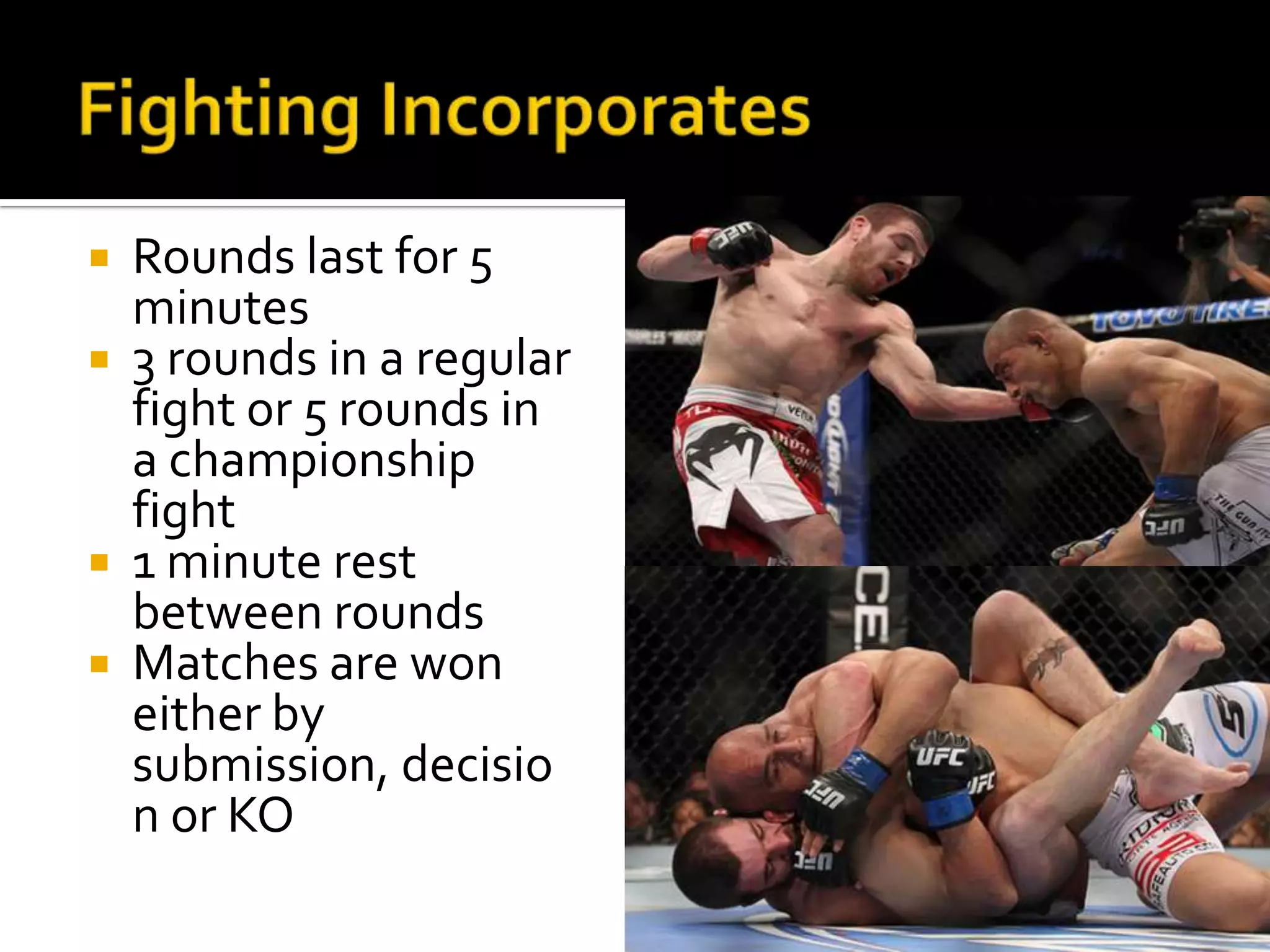
 Rounds last for 5
  minutes
 3 rounds in a regular
  fight or 5 rounds in
  a championship
  fight
 1 minute rest
  between rounds
 Matches are won
  either by
  submission, decisio
  n or KO
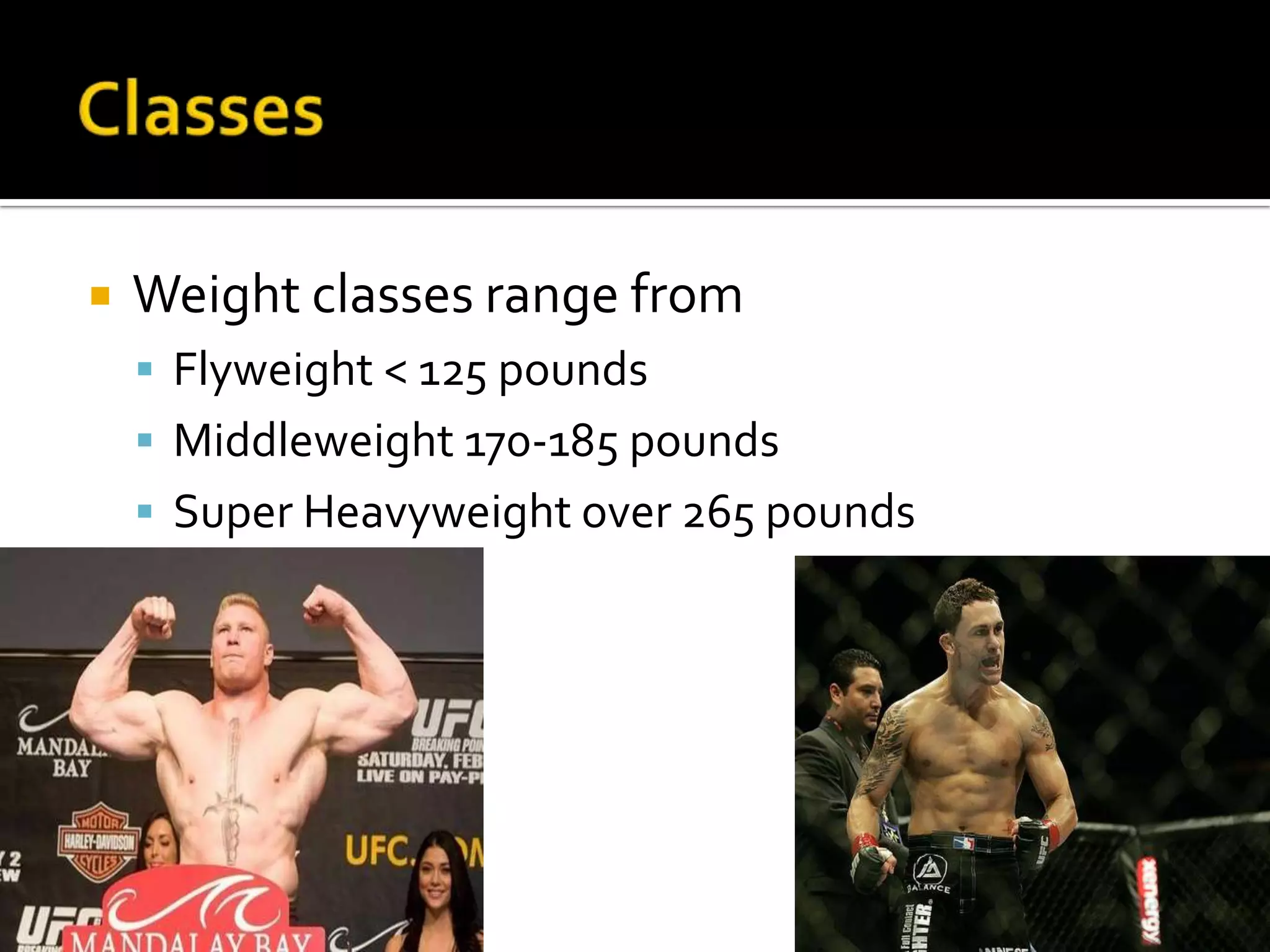
   Weight classes range from
     Flyweight < 125 pounds
     Middleweight 170-185 pounds
     Super Heavyweight over 265 pounds
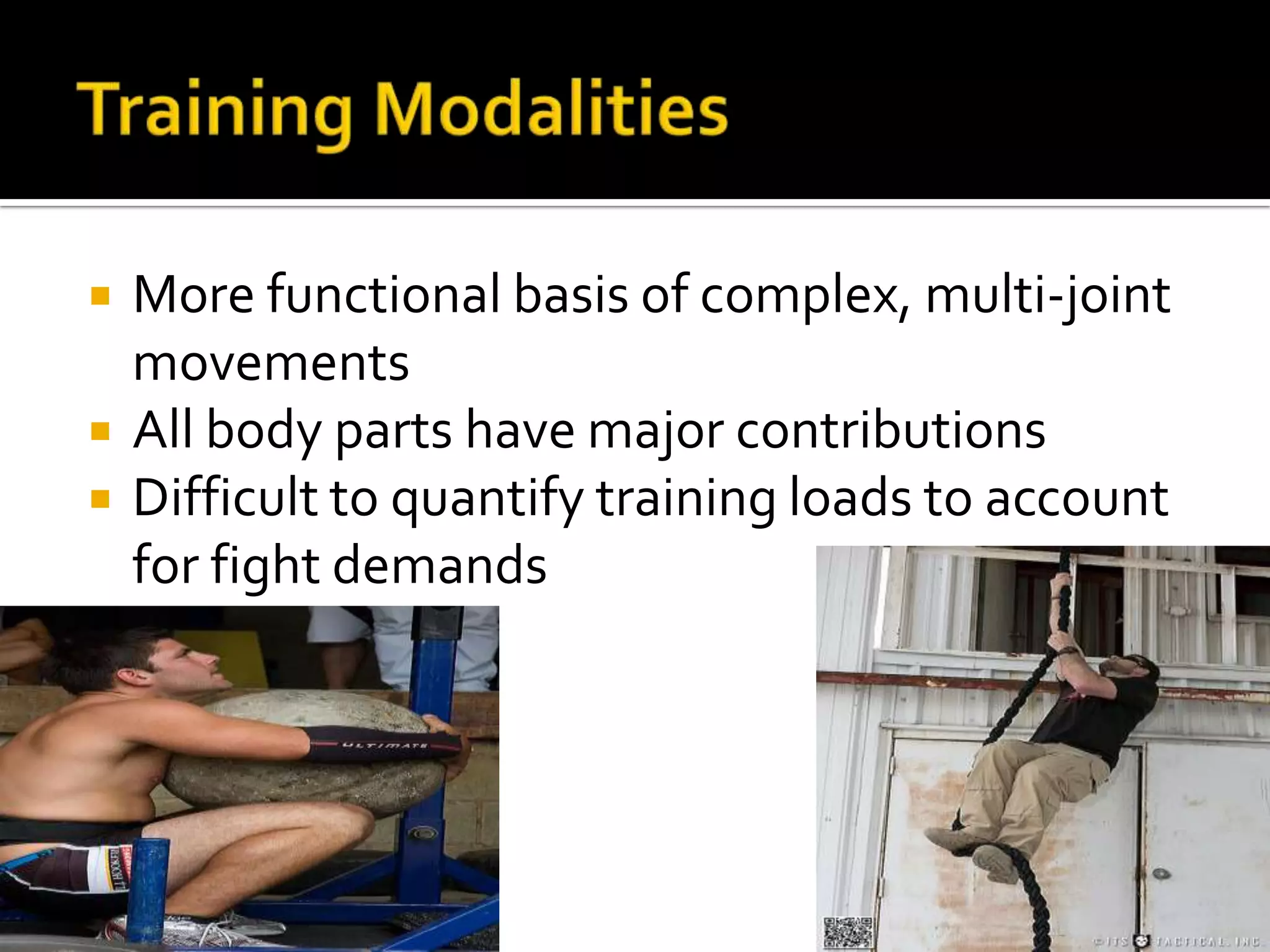
   More functional basis of complex, multi-joint
    movements
   All body parts have major contributions
   Difficult to quantify training loads to account
    for fight demands
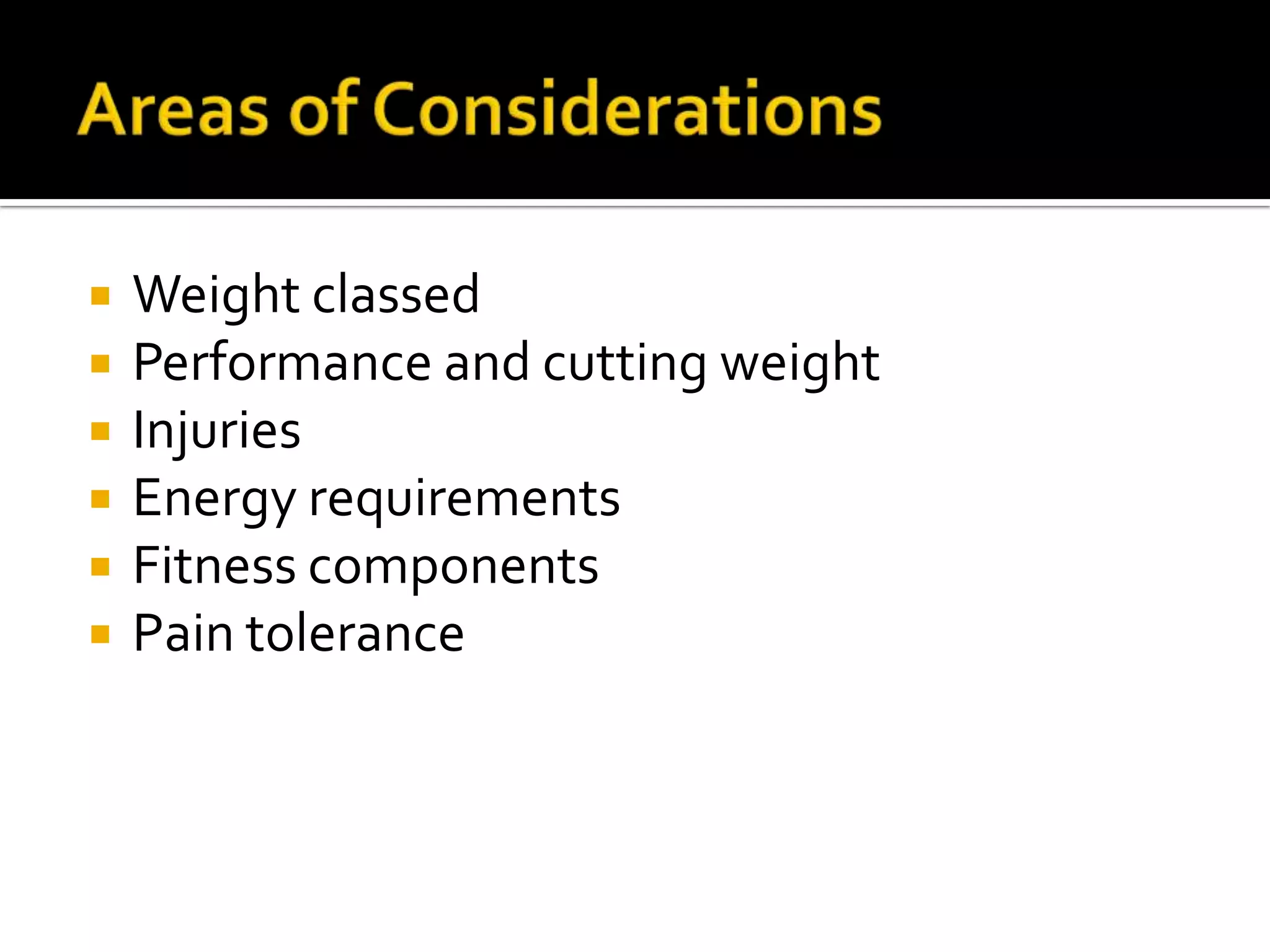
   Weight classed
   Performance and cutting weight
   Injuries
   Energy requirements
   Fitness components
   Pain tolerance
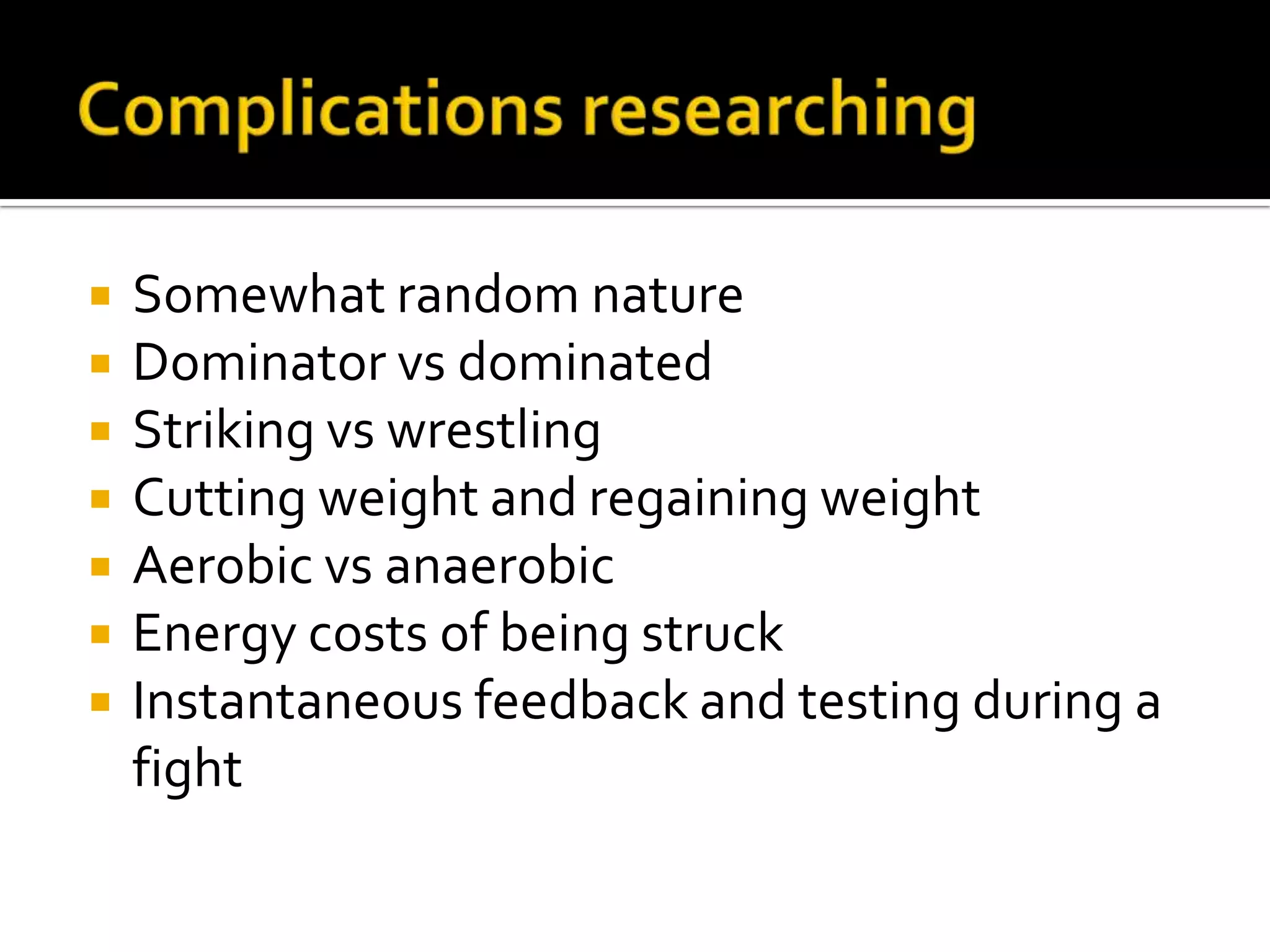
   Somewhat random nature
   Dominator vs dominated
   Striking vs wrestling
   Cutting weight and regaining weight
   Aerobic vs anaerobic
   Energy costs of being struck
   Instantaneous feedback and testing during a
    fight
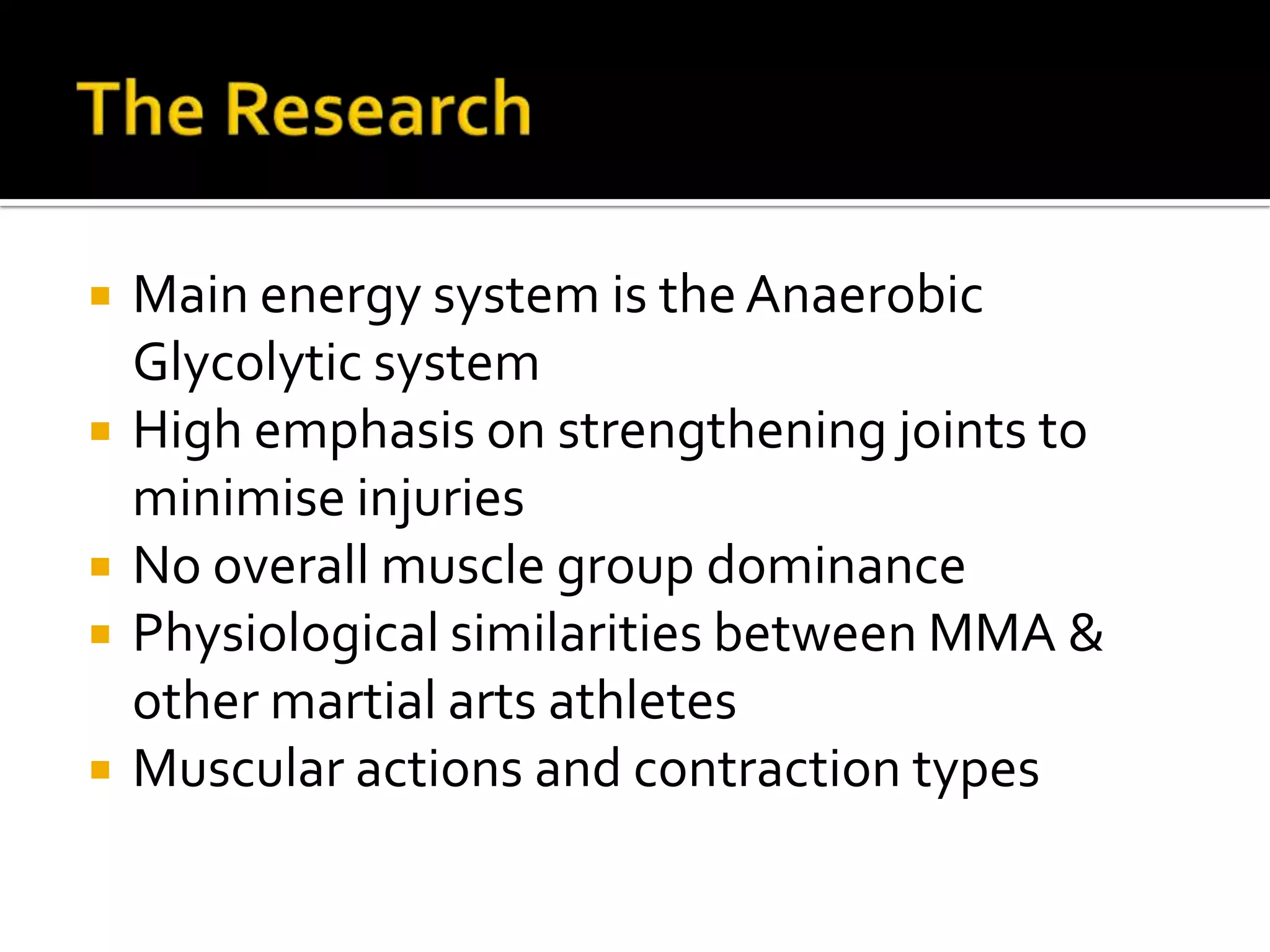
   Main energy system is the Anaerobic
    Glycolytic system
   High emphasis on strengthening joints to
    minimise injuries
   No overall muscle group dominance
   Physiological similarities between MMA &
    other martial arts athletes
   Muscular actions and contraction types
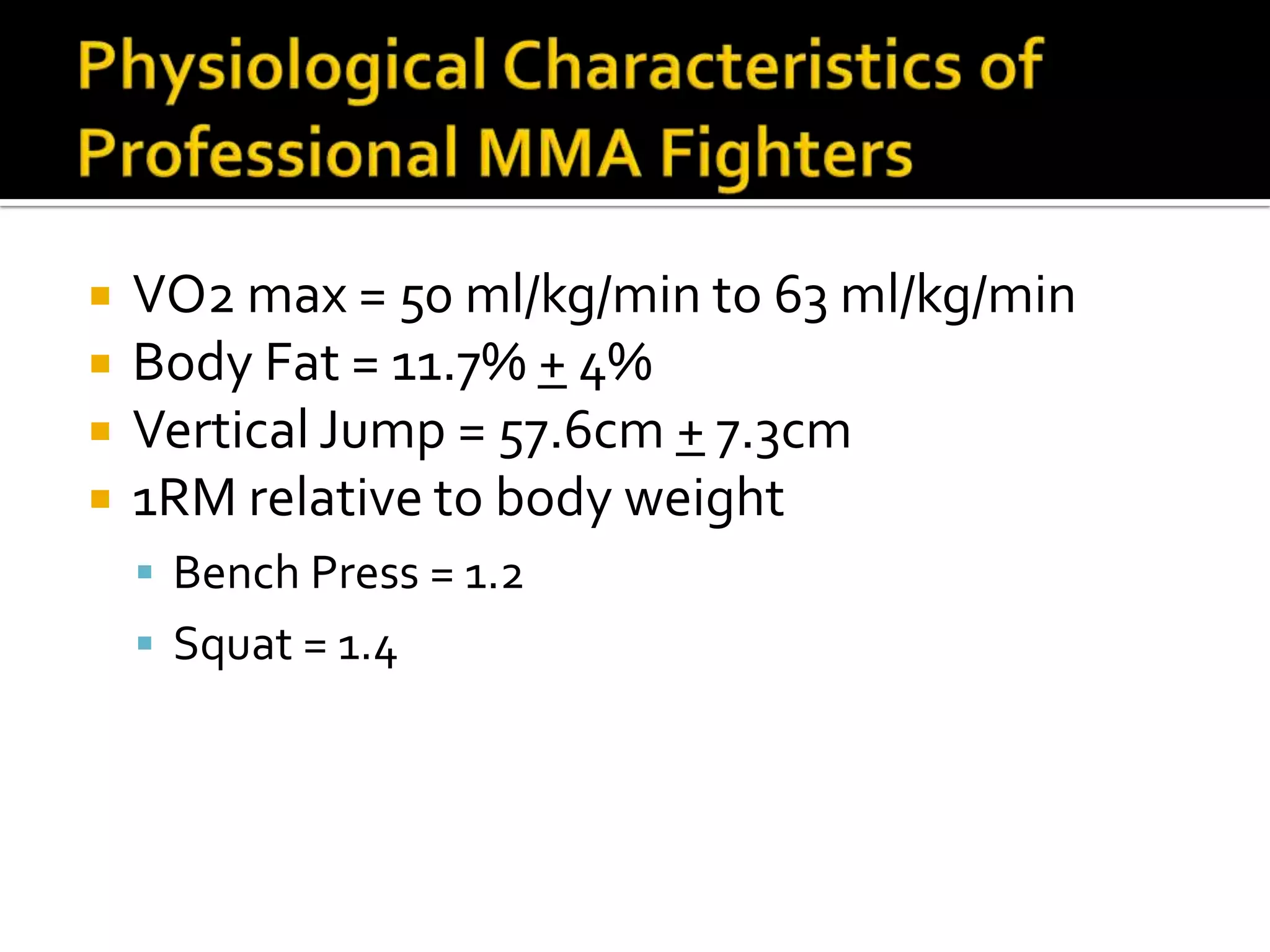
   VO2 max = 50 ml/kg/min to 63 ml/kg/min
   Body Fat = 11.7% + 4%
   Vertical Jump = 57.6cm + 7.3cm
   1RM relative to body weight
     Bench Press = 1.2
     Squat = 1.4
   Small amounts of research
   No universal testing protocol to determine
    fitness
   The effects of making-weight on
    performance
   Optimal ranges and rates to cut weight from
   Talent ID
   Skill Acquisition and Transfer
   MMA is a complex multi-factorial sport
   All muscle groups and energy systems
    contribute to performance
   Training typically involves complex, multi-joint
    movements
   All components of fitness are involved
   Numerous difficulties in research
   Similar physiological characteristics to wrestlers
   Effects of cutting weight on performance highly
    unexplored
   Amtmann, J, 2003, ‘Strength and conditioning for reality fighters’, Journal of
    Strength and Conditioning, vol. 25, no. 2, pp. 67-72.
   Lenetsky, S & Harris, N, 2012, The Mixed Martial Arts Athlete: A Physiological
    Profile, Journal of Strength and Conditioning, vol. 34, no. 1, pp. 32-47.
   Rankin , J, Walberg, J & Craft, L, 1996, ‘Effect of weight loss and refeeding diet
    composition on anaerobic performance in wrestlers’, Medicine & Science in Sports
    & Exercise, vol. 28, no. 10, pp. 1292-1299.
   Seungmo, K, Greenwell, T, Andrews, D, Lee, J & Mahony, D, 2008,‘An analysis of
    spectator motives and media consumption behaviour in an individual combat
    sport: cross-national differences between American and South Korean Mixed
    Martial Arts fans’, Sports Marketing Quarterly, vol. 17, no. 2, pp. 109.
   Trrant, J, 2006, ‘Nutrition for Fighters’, International
    Kickboxer, http://www.recreationmedicalcentre.com.au/files/Nutrition%20for%2
    0fighters.pdf, viewed 13/04/2012.
   Images sourced from www.Flickr.com, Flickr Image Sharing , viewed 12/04/2012.

Strength and Conditioning for MMA

  • 1.
    Special consideration tothe physiological effects of making weight and performance
  • 2.
    Mixed Martial Arts (MMA)  Muay Thai  Wrestling  Kick Boxing  Jujitsu  Currently the fastest growing sport in the world  Fighting entices audiences by offering  Violence  National pride  Drama
  • 3.
     Rounds lastfor 5 minutes  3 rounds in a regular fight or 5 rounds in a championship fight  1 minute rest between rounds  Matches are won either by submission, decisio n or KO
  • 4.
    Weight classes range from  Flyweight < 125 pounds  Middleweight 170-185 pounds  Super Heavyweight over 265 pounds
  • 5.
    More functional basis of complex, multi-joint movements  All body parts have major contributions  Difficult to quantify training loads to account for fight demands
  • 6.
    Weight classed  Performance and cutting weight  Injuries  Energy requirements  Fitness components  Pain tolerance
  • 7.
    Somewhat random nature  Dominator vs dominated  Striking vs wrestling  Cutting weight and regaining weight  Aerobic vs anaerobic  Energy costs of being struck  Instantaneous feedback and testing during a fight
  • 8.
    Main energy system is the Anaerobic Glycolytic system  High emphasis on strengthening joints to minimise injuries  No overall muscle group dominance  Physiological similarities between MMA & other martial arts athletes  Muscular actions and contraction types
  • 9.
    VO2 max = 50 ml/kg/min to 63 ml/kg/min  Body Fat = 11.7% + 4%  Vertical Jump = 57.6cm + 7.3cm  1RM relative to body weight  Bench Press = 1.2  Squat = 1.4
  • 10.
    Small amounts of research  No universal testing protocol to determine fitness  The effects of making-weight on performance  Optimal ranges and rates to cut weight from  Talent ID  Skill Acquisition and Transfer
  • 11.
    MMA is a complex multi-factorial sport  All muscle groups and energy systems contribute to performance  Training typically involves complex, multi-joint movements  All components of fitness are involved  Numerous difficulties in research  Similar physiological characteristics to wrestlers  Effects of cutting weight on performance highly unexplored
  • 12.
    Amtmann, J, 2003, ‘Strength and conditioning for reality fighters’, Journal of Strength and Conditioning, vol. 25, no. 2, pp. 67-72.  Lenetsky, S & Harris, N, 2012, The Mixed Martial Arts Athlete: A Physiological Profile, Journal of Strength and Conditioning, vol. 34, no. 1, pp. 32-47.  Rankin , J, Walberg, J & Craft, L, 1996, ‘Effect of weight loss and refeeding diet composition on anaerobic performance in wrestlers’, Medicine & Science in Sports & Exercise, vol. 28, no. 10, pp. 1292-1299.  Seungmo, K, Greenwell, T, Andrews, D, Lee, J & Mahony, D, 2008,‘An analysis of spectator motives and media consumption behaviour in an individual combat sport: cross-national differences between American and South Korean Mixed Martial Arts fans’, Sports Marketing Quarterly, vol. 17, no. 2, pp. 109.  Trrant, J, 2006, ‘Nutrition for Fighters’, International Kickboxer, http://www.recreationmedicalcentre.com.au/files/Nutrition%20for%2 0fighters.pdf, viewed 13/04/2012.  Images sourced from www.Flickr.com, Flickr Image Sharing , viewed 12/04/2012.