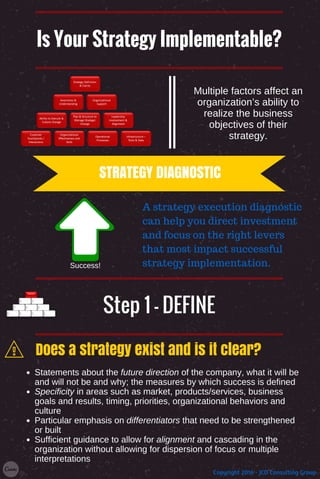
Multiple factors affect an
organization’s ability to
realize the business
objectives of their
strategy.
Is Your Strategy Implementable?
Add a little bit of body text
STRATEGY DIAGNOSTIC
Success!
A strategy execution diagnostic
can help you direct investment
and focus on the right levers
that most impact successful
strategy implementation.
Step 1 - DEFINE
Does a strategy exist and is it clear?
Statements about the future direction of the company, what it will be
and will not be and why; the measures by which success is defined
Specificity in areas such as market, products/services, business
goals and results, timing, priorities, organizational behaviors and
culture
Particular emphasis on differentiators that need to be strengthened
or built
Sufficient guidance to allow for alignment and cascading in the
organization without allowing for dispersion of focus or multiple
interpretations
Copyright 2016 - JCD Consulting Group
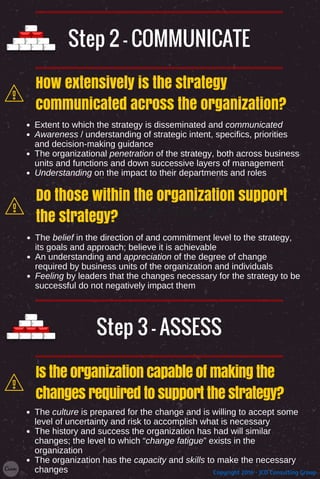
Step 2 - COMMUNICATE
Add a little bit of body text
Step 3 - ASSESS
Is the organization capable of making the
changes required to support the strategy?
The culture is prepared for the change and is willing to accept some
level of uncertainty and risk to accomplish what is necessary
The history and success the organization has had will similar
changes; the level to which “change fatigue” exists in the
organization
The organization has the capacity and skills to make the necessary
changes
How extensively is the strategy
communicated across the organization?
Extent to which the strategy is disseminated and communicated
Awareness / understanding of strategic intent, specifics, priorities
and decision-making guidance
The organizational penetration of the strategy, both across business
units and functions and down successive layers of management
Understanding on the impact to their departments and roles
Do those within the organization support
the strategy?
The belief in the direction of and commitment level to the strategy,
its goals and approach; believe it is achievable
An understanding and appreciation of the degree of change
required by business units of the organization and individuals
Feeling by leaders that the changes necessary for the strategy to be
successful do not negatively impact them
Copyright 2016 - JCD Consulting Group
Add a little bit of body text
Does a plan exist to govern, manage and
coordinate the change across the
organization?
An approach that balances short- and long-term impact initiatives
with fiscal expectations
Individuals or groups are clearly tasked with managing the
transition; they are accountable; and, visible metrics are in place
Adequate resources are in place along with risk tracking,
management and mitigation plans
Do leaders across the organization fully
understand and fulfill their roles as
active sponsors and supporters of the
change?
The belief in and commitment to the intent of the strategy and
incentives to align individual behaviors with the strategic direction
and objectives
An understanding and appreciation of the degree of change
required by both organizational units and individuals
Willingness to reinforce the strategy and its benefits, embrace and
support necessary change, and model appropriate behaviors
Execution success is recognized and rewarded
Copyright 2016 - JCD Consulting Group
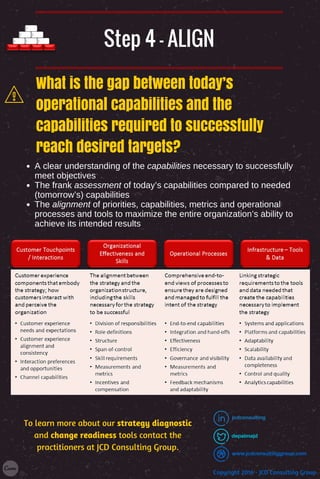
Step 4 - ALIGN
Add a little bit of body text
What is the gap between today’s
operational capabilities and the
capabilities required to successfully
reach desired targets?
A clear understanding of the capabilities necessary to successfully
meet objectives
The frank assessment of today’s capabilities compared to needed
(tomorrow’s) capabilities
The alignment of priorities, capabilities, metrics and operational
processes and tools to maximize the entire organization’s ability to
achieve its intended results
Copyright 2016 - JCD Consulting Group
jcdconsulting
depalmajd
www.jcdconsultinggroup.com
To learn more about our strategy diagnostic
and change readiness tools contact the
practitioners at JCD Consulting Group.

Strategy Diagnostic

  • 1.
    Multiple factors affectan organization’s ability to realize the business objectives of their strategy. Is Your Strategy Implementable? Add a little bit of body text STRATEGY DIAGNOSTIC Success! A strategy execution diagnostic can help you direct investment and focus on the right levers that most impact successful strategy implementation. Step 1 - DEFINE Does a strategy exist and is it clear? Statements about the future direction of the company, what it will be and will not be and why; the measures by which success is defined Specificity in areas such as market, products/services, business goals and results, timing, priorities, organizational behaviors and culture Particular emphasis on differentiators that need to be strengthened or built Sufficient guidance to allow for alignment and cascading in the organization without allowing for dispersion of focus or multiple interpretations Copyright 2016 - JCD Consulting Group
  • 2.
    Step 2 -COMMUNICATE Add a little bit of body text Step 3 - ASSESS Is the organization capable of making the changes required to support the strategy? The culture is prepared for the change and is willing to accept some level of uncertainty and risk to accomplish what is necessary The history and success the organization has had will similar changes; the level to which “change fatigue” exists in the organization The organization has the capacity and skills to make the necessary changes How extensively is the strategy communicated across the organization? Extent to which the strategy is disseminated and communicated Awareness / understanding of strategic intent, specifics, priorities and decision-making guidance The organizational penetration of the strategy, both across business units and functions and down successive layers of management Understanding on the impact to their departments and roles Do those within the organization support the strategy? The belief in the direction of and commitment level to the strategy, its goals and approach; believe it is achievable An understanding and appreciation of the degree of change required by business units of the organization and individuals Feeling by leaders that the changes necessary for the strategy to be successful do not negatively impact them Copyright 2016 - JCD Consulting Group
  • 3.
    Add a littlebit of body text Does a plan exist to govern, manage and coordinate the change across the organization? An approach that balances short- and long-term impact initiatives with fiscal expectations Individuals or groups are clearly tasked with managing the transition; they are accountable; and, visible metrics are in place Adequate resources are in place along with risk tracking, management and mitigation plans Do leaders across the organization fully understand and fulfill their roles as active sponsors and supporters of the change? The belief in and commitment to the intent of the strategy and incentives to align individual behaviors with the strategic direction and objectives An understanding and appreciation of the degree of change required by both organizational units and individuals Willingness to reinforce the strategy and its benefits, embrace and support necessary change, and model appropriate behaviors Execution success is recognized and rewarded Copyright 2016 - JCD Consulting Group
  • 4.
    Step 4 -ALIGN Add a little bit of body text What is the gap between today’s operational capabilities and the capabilities required to successfully reach desired targets? A clear understanding of the capabilities necessary to successfully meet objectives The frank assessment of today’s capabilities compared to needed (tomorrow’s) capabilities The alignment of priorities, capabilities, metrics and operational processes and tools to maximize the entire organization’s ability to achieve its intended results Copyright 2016 - JCD Consulting Group jcdconsulting depalmajd www.jcdconsultinggroup.com To learn more about our strategy diagnostic and change readiness tools contact the practitioners at JCD Consulting Group.