Sexually Transmitted
Infections (Syphilis,
Gonorrhea, Chlamydial
Infections, HSV)
Objectives
Define Syphilis, Gonorrhea, Chlamydial
infections and HSV
Pathogenesis and transmissions
Clinical Manifestations
Diagnosis
Treatment
SYPHILIS
 Most common cause of fetal death in the later moths of pregnancy
 Contagious disease caused by T. pallidum
 Chronic systemic disease
1.8 cases per 100,000 persons in 2015 in the U.S. for primary & secondary syphilis
12.4 per 100,000 live births in 2015 for congenital syphilis
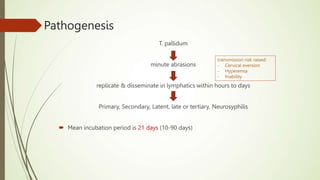
Pathogenesis
T. pallidum
minute abrasions
replicate & disseminate in lymphatics within hours to days
Primary, Secondary, Latent, late or tertiary, Neurosyphilis
 Mean incubation period is 21 days (10-90 days)
transmission risk raised:
- Cervical eversion
- Hyperemia
- friability
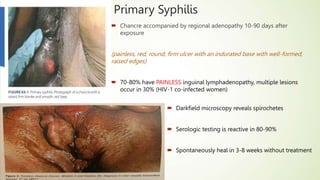
Primary Syphilis
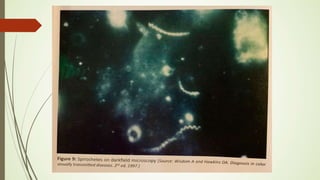
 Darkfield microscopy reveals spirochetes
 Serologic testing is reactive in 80-90%
 Spontaneously heal in 3-8 weeks without treatment
 Chancre accompanied by regional adenopathy 10-90 days after
exposure
(painless, red, round, firm ulcer with an indurated base with well-formed,
raised edges)
 70-80% have PAINLESS inguinal lymphadenopathy, multiple lesions
occur in 30% (HIV-1 co-infected women)
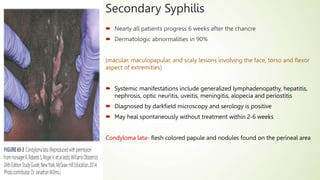
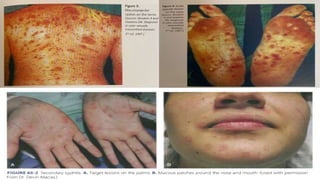
Secondary Syphilis
 Nearly all patients progress 6 weeks after the chancre
 Dermatologic abnormalities in 90%
(macular, maculopapular, and scaly lesions involving the face, torso and flexor
aspect of extremities)
 Systemic manifestations include generalized lymphadenopathy, hepatitis,
nephrosis, optic neuritis, uveitis, meningitis, alopecia and periostitis
 Diagnosed by darkfield microscopy and serology is positive
 May heal spontaneously without treatment within 2-6 weeks
Condyloma lata- flesh colored papule and nodules found on the perineal area
Latent Syphilis
 Untreated lesions of secondary syphilis resolve and patient progresses
 Overt manifestations of the disease are absent
 Diagnosis only made by reactive serologic testing
 Divided into
A. Early- within 12 months
B. Late latent- beyond 12 months, greater risk for developing tertiary or neurosyphilis
 Not infectious by sexual transmission
 Spirochotes may be transplacentally transmitted at any AOG
Late or Tertiary Syphilis
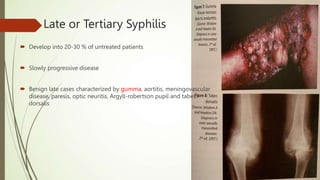
 Develop into 20-30 % of untreated patients
 Slowly progressive disease
 Benign late cases characterized by gumma, aortitis, meningovascular
disease, paresis, optic neuritis, Argyll-robertson pupil and tabes
dorsalis
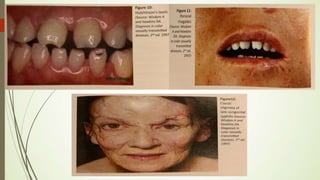
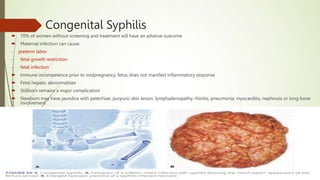
Congenital Syphilis
 70% of women without screening and treatment will have an adverse outcome
 Maternal infection can cause:
- preterm labor
- fetal growth restriction
- fetal infection
 Immune incompetence prior to midpregnancy, fetus does not manifest inflammatory response
 Fetal hepatic abnormalities
 Stillborn remains a major complication
 Newborn may have jaundice with petechiae, purpuric skin lesion, lymphadenopathy, rhinitis, pneumonia, myocarditis, nephrosis or long bone
involvement
Neurosyphilis
 No single testing technique can diagnose
 CFS analysis remains controversial
 CDC recommends that all adults with latent syphilis be evaluated clinically for
tertiary disease
Criteria for performance of CSF analysis:
 Neurologic or ophthalmic signs and symptom
 Evidence of active tertiary syphilis
 Treatment failure
 HIV infection with latent syphilis or syphilis of unknown duration
Diagnosis
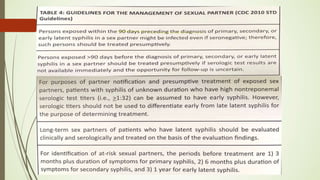
 Clinicians must screen all pregnant women
 Ideally performed at 1st prenatal visit
 In populations with high incidence of prevalence, serologic testing repeated at 3rd trimester
and after delivery
For direct diagnosis of early stage disease from lesions, exudates and body fluids:
A. Dark field microscopy- most accurate method to diagnose syphilis
B. PCR
C. DFA-TP (Direct Fluorescent Antibody Test for T. pallidum)
Diagnosis
 Serologic testing- used for diagnostic and screening purposes
 A. Non-treponemal testing- VDRL or RPR which measures patient’s IgG & IgM antibodies
against cardiolipin which is released from damage host cell
Other acute events that produce cardiolipin:
- Vaccination - IV drug abuse - leprosy
- Febrile illness - SLE - cancer
- Pregnancy - aging
 When there is + non treponemal tests, findings are then quantified and expressed as
TITERS (disease activity)
 Following treatment for primary and secondary syphilis, serologic testing at 3-6mos
confirms 4-fold drop in VDRL and RPR titers (treatment failure and reinfection may lack
expected decline
 The same test is recommended for surveillance
 Serofast- successfully treated patients that exhibit low-level + titers
Diagnosis
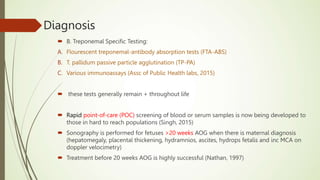
 B. Treponemal Specific Testing:
A. Flourescent treponemal-antibody absorption tests (FTA-ABS)
B. T. pallidum passive particle agglutination (TP-PA)
C. Various immunoassays (Assc of Public Health labs, 2015)
 these tests generally remain + throughout life
 Rapid point-of-care (POC) screening of blood or serum samples is now being developed to
those in hard to reach populations (Singh, 2015)
 Sonography is performed for fetuses >20 weeks AOG when there is maternal diagnosis
(hepatomegaly, placental thickening, hydramnios, ascites, hydrops fetalis and inc MCA on
doppler velocimetry)
 Treatment before 20 weeks AOG is highly successful (Nathan, 1997)
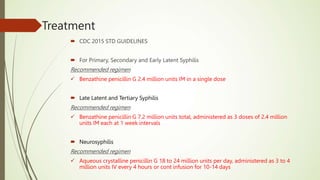
Treatment
 CDC 2015 STD GUIDELINES
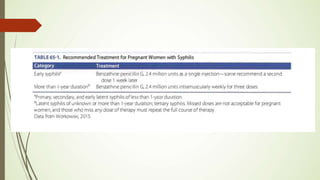
 For Primary, Secondary and Early Latent Syphilis
Recommended regimen
 Benzathine penicillin G 2.4 million units IM in a single dose
 Late Latent and Tertiary Syphilis
Recommended regimen
 Benzathine penicillin G 7.2 million units total, administered as 3 doses of 2.4 million
units IM each at 1 week intervals
 Neurosyphilis
Recommended regimen
 Aqueous crystalline penicillin G 18 to 24 million units per day, administered as 3 to 4
million units IV every 4 hours or cont infusion for 10-14 days
Penicillin Reactions
 Women with allergies should have oral stepwise dose challenge or skin test
to confirm the risk of IgE mediated anaphylaxis
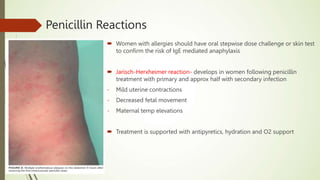
 Jarisch-Herxheimer reaction- develops in women following penicillin
treatment with primary and approx half with secondary infection
- Mild uterine contractions
- Decreased fetal movement
- Maternal temp elevations
 Treatment is supported with antipyretics, hydration and O2 support
Gonorrhea
 Second most common bacterial STI
 Caused by N. gonorrhea
 Has a predilection for the columnar and pseudostratified epithelium and mucous membrane
 Untreated gonococcal cervicitis is assc with septic abortion
- Preterm labor - chorioamnionitis
- PROM - postpartum infection
 Vertical transmission is predominantly due to fetal contact with birth canal
Gonococcal ophthalmia neonatorum- corneal scarring, occular perforation and blindness
Prevalence approximates 0.6% (Blatt, 2012)
WHO estimates 62.6 million new cases of gonorrhea world wide among 15-49yo
 Transmission form male to female in a single sexual encounter is
80-90%
 Incubation period of 3-5 days
 Asymptomatic infection in 80%, urethral colonization is present in
70-90%
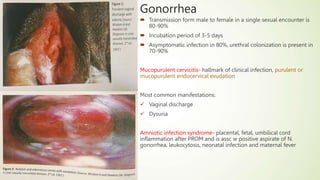
Mucopurulent cervicitis- hallmark of clinical infection, purulent or
mucopurulent endocervical exudation
Most common manifestations:
 Vaginal discharge
 Dysuria
Amniotic infection syndrome- placental, fetal, umbilical cord
inflammation after PROM and is assc w positive aspirate of N.
gonorrhea, leukocytosis, neonatal infection and maternal fever
Gonorrhea
Screening and Treatment
 1st trimester screening in high prevalence areas
 Risk factors:
- </= 25 yo prior to gonorrhea - prostitution - drug abuse - race
- Other STDs - multiple sex partners- inconsistent condom use
 Screening includes:
A. Nucleic Acid Amplification tests (NAATs) – gold standard, available for specific collection from
vagina, endocervix and urine (initial stream)
B. Culture
 CDC 2015 STD Guidelines
Uncomplicated Gonococcal Infection of the Cervix, Urethra and Rectum
Uncomplicated gonococcal pharyngitis, gonococcal conjunctivitis and Disseminated Gonococcal Infection
Recommended Regimens
 Ceftriaxone 250mg IM single dose + Azithromycin 1g orally in single dose OR Doxycycline 100mg orally
BID for 7 days
Alternative regimens if ceftriaxone is not available
Uncomplicated Gonococcal Infection of the Cervix, Urethra and Rectum
Recommended Regimens
 Cefixime 400mg orally in single dose + Azithromycin 1g orally in single dose OR Doxycycline 100mg
orally BID for 7 days
Uncomplicated gonococcal pharyngitis, gonococcal conjunctivitis and Disseminated Gonococcal Infection
 Ceftizoxime 1g IM q8h or Cefotaxime 1g IM q8h + Azithromycin 1g orally in single dose OR Doxycycline
100mg orally BID for 7 days
Screening and Treatment
 Uncomplicated Gonococcal Infection during Pregnancy
 Ceftriaxone 250mg IM + Azithromycin 1g PO
Alternative regimens
 Cefixime 400mg PO single dose + Azithromycin 1g PO
With cephalosporin allergy
 Gentamycin 240mg IM + Azithromycin 2g PO
 Repeat testing is recommended in the 3rd trimester
Screening and Treatment
Chlamydial Infections
 Caused by C. trachomatis
 Most common sexually transmitted bacterial pathogen
 Majority are asymptomatic
 Sexual contact- primary mode of transmission with male-female transmission of 40%
 Age is the most important risk factor
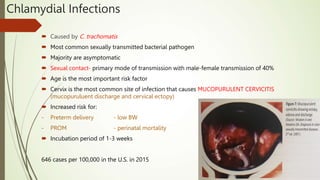
 Cervix is the most common site of infection that causes MUCOPURULENT CERVICITIS
(mucopuruluent discharge and cervical ectopy)
 Increased risk for:
- Preterm delivery - low BW
- PROM - perinatal mortality
 Incubation period of 1-3 weeks
646 cases per 100,000 in the U.S. in 2015
 Delayed postpartum uterine infection characterized by vaginal bleeding/discharge,
low grade fever and uterine tenderness
 Vertical transmission leads to infection in 8 to 44% of neonates (conjunctivitis is the
most common while pneumonia could also develop)
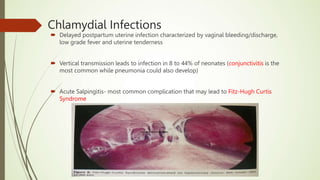
 Acute Salpingitis- most common complication that may lead to Fitz-Hugh Curtis
Syndrome
Chlamydial Infections
 Recommended screening for all women at 1st prenatal visit
 Diagnosis can be made predominantly through:
A. Nucleic Acid Amplification tests (NAATs)
B. Culture
 Treatment:
CDC 2015 STD Guidelines
Recommended regimens
 Azithromycin 1g PO in single dose OR Doxycycline 100mg PO BID x 7days
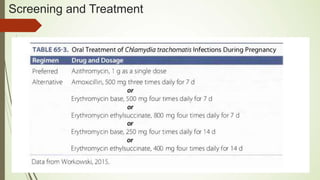
Screening and Treatment
Treatment
 CDC 2015 Guidelines
Recommended regimens
 Azithromycin 1gPO or
 Doxyxycline 100mg PO BID x 7 days
Alternative Regimens
 Erythromycin base 500mg 4x a day for 7 days or
 Erythromycin ethylsuccinate 800mg PO QID x 7 days or
 Ofloxacin 300mg PO OD x 7 days
 Levofloxacin 500mg PO OD x 7 days
Screening and Treatment
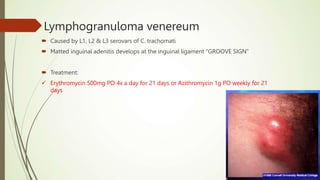
Lymphogranuloma venereum
 Caused by L1, L2 & L3 serovars of C. trachomati
 Matted inguinal adenitis develops at the inguinal ligament “GROOVE SIGN”
 Treatment:
 Erythromycin 500mg PO 4x a day for 21 days or Azithromycin 1g PO weekly for 21
days
Herpes Simplex Virus (HSV)
 Imposes higher risk for fetus than the mother
 Strategies aim to curb the rates for vertical transmission
Adult Disease:
 2 types based on immunologic differences:
A. HSV type 1- most non-genital infections and acquired through childhood
- however more than half of new cases of genital herpes in
adolescents and young adults are caused by this
- inc in oral genital sexual prectices
- acquision has declined through hygiene and living condition
 B. HSV type 2- almost exclusively from the genital tract and transmitted by
sexual contact
 Genital herpes affects 50million adolescents and adults and most women are
unaware of their infection
Herpes Simplex Virus (HSV)
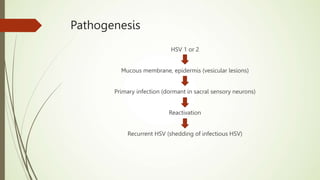
Pathogenesis
HSV 1 or 2
Mucous membrane, epidermis (vesicular lesions)
Primary infection (dormant in sacral sensory neurons)
Reactivation
Recurrent HSV (shedding of infectious HSV)
Vertical transmission
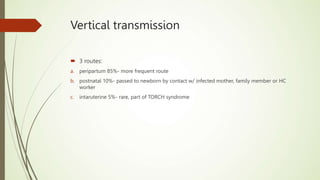
 3 routes:
a. peripartum 85%- more frequent route
b. postnatal 10%- passed to newborn by contact w/ infected mother, family member or HC
worker
c. intaruterine 5%- rare, part of TORCH syndrome
Diagnosis
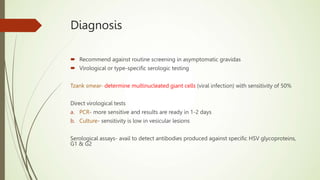
 Recommend against routine screening in asymptomatic gravidas
 Virological or type-specific serologic testing
Tzank smear- determine multinucleated giant cells (viral infection) with sensitivity of 50%
Direct virological tests
a. PCR- more sensitive and results are ready in 1-2 days
b. Culture- sensitivity is low in vesicular lesions
Serological assays- avail to detect antibodies produced against specific HSV glycoproteins,
G1 & G2
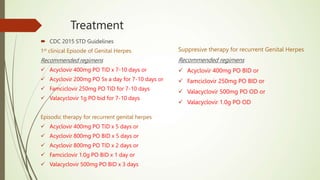
Treatment
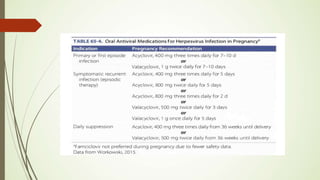
 CDC 2015 STD Guidelines
1st clinical Episode of Genital Herpes
Recommended regimens
 Acyclovir 400mg PO TID x 7-10 days or
 Acyclovir 200mg PO 5x a day for 7-10 days or
 Famciclovir 250mg PO TID for 7-10 days
 Valacyclovir 1g PO bid for 7-10 days
Episodic therapy for recurrent genital herpes
 Acyclovir 400mg PO TID x 5 days or
 Acyclovir 800mg PO BID x 5 days or
 Acyclovir 800mg PO TID x 2 days or
 Famciclovir 1.0g PO BID x 1 day or
 Valacyclovir 500mg PO BID x 3 days
Suppresive therapy for recurrent Genital Herpes
Recommended regimens
 Acyclovir 400mg PO BID or
 Famciclovir 250mg PO BID or
 Valacyclovir 500mg PO OD or
 Valacyclovir 1.0g PO OD
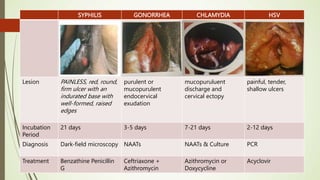
SYPHILIS GONORRHEA CHLAMYDIA HSV
Lesion PAINLESS, red, round,
firm ulcer with an
indurated base with
well-formed, raised
edges
purulent or
mucopurulent
endocervical
exudation
mucopuruluent
discharge and
cervical ectopy
painful, tender,
shallow ulcers
Incubation
Period
21 days 3-5 days 7-21 days 2-12 days
Diagnosis Dark-field microscopy NAATs NAATs & Culture PCR
Treatment Benzathine Penicillin
G
Ceftriaxone +
Azithromycin
Azithromycin or
Doxycycline
Acyclovir
Thank you

STI.ppt

  • 1.
  • 2.
    Objectives Define Syphilis, Gonorrhea,Chlamydial infections and HSV Pathogenesis and transmissions Clinical Manifestations Diagnosis Treatment
  • 3.
    SYPHILIS  Most commoncause of fetal death in the later moths of pregnancy  Contagious disease caused by T. pallidum  Chronic systemic disease 1.8 cases per 100,000 persons in 2015 in the U.S. for primary & secondary syphilis 12.4 per 100,000 live births in 2015 for congenital syphilis
  • 4.
    Pathogenesis T. pallidum minute abrasions replicate& disseminate in lymphatics within hours to days Primary, Secondary, Latent, late or tertiary, Neurosyphilis  Mean incubation period is 21 days (10-90 days) transmission risk raised: - Cervical eversion - Hyperemia - friability
  • 5.
    Primary Syphilis  Darkfieldmicroscopy reveals spirochetes  Serologic testing is reactive in 80-90%  Spontaneously heal in 3-8 weeks without treatment  Chancre accompanied by regional adenopathy 10-90 days after exposure (painless, red, round, firm ulcer with an indurated base with well-formed, raised edges)  70-80% have PAINLESS inguinal lymphadenopathy, multiple lesions occur in 30% (HIV-1 co-infected women)
  • 6.
    Secondary Syphilis  Nearlyall patients progress 6 weeks after the chancre  Dermatologic abnormalities in 90% (macular, maculopapular, and scaly lesions involving the face, torso and flexor aspect of extremities)  Systemic manifestations include generalized lymphadenopathy, hepatitis, nephrosis, optic neuritis, uveitis, meningitis, alopecia and periostitis  Diagnosed by darkfield microscopy and serology is positive  May heal spontaneously without treatment within 2-6 weeks Condyloma lata- flesh colored papule and nodules found on the perineal area
  • 8.
    Latent Syphilis  Untreatedlesions of secondary syphilis resolve and patient progresses  Overt manifestations of the disease are absent  Diagnosis only made by reactive serologic testing  Divided into A. Early- within 12 months B. Late latent- beyond 12 months, greater risk for developing tertiary or neurosyphilis  Not infectious by sexual transmission  Spirochotes may be transplacentally transmitted at any AOG
  • 9.
    Late or TertiarySyphilis  Develop into 20-30 % of untreated patients  Slowly progressive disease  Benign late cases characterized by gumma, aortitis, meningovascular disease, paresis, optic neuritis, Argyll-robertson pupil and tabes dorsalis
  • 11.
    Congenital Syphilis  70%of women without screening and treatment will have an adverse outcome  Maternal infection can cause: - preterm labor - fetal growth restriction - fetal infection  Immune incompetence prior to midpregnancy, fetus does not manifest inflammatory response  Fetal hepatic abnormalities  Stillborn remains a major complication  Newborn may have jaundice with petechiae, purpuric skin lesion, lymphadenopathy, rhinitis, pneumonia, myocarditis, nephrosis or long bone involvement
  • 12.
    Neurosyphilis  No singletesting technique can diagnose  CFS analysis remains controversial  CDC recommends that all adults with latent syphilis be evaluated clinically for tertiary disease Criteria for performance of CSF analysis:  Neurologic or ophthalmic signs and symptom  Evidence of active tertiary syphilis  Treatment failure  HIV infection with latent syphilis or syphilis of unknown duration
  • 13.
    Diagnosis  Clinicians mustscreen all pregnant women  Ideally performed at 1st prenatal visit  In populations with high incidence of prevalence, serologic testing repeated at 3rd trimester and after delivery For direct diagnosis of early stage disease from lesions, exudates and body fluids: A. Dark field microscopy- most accurate method to diagnose syphilis B. PCR C. DFA-TP (Direct Fluorescent Antibody Test for T. pallidum)
  • 15.
    Diagnosis  Serologic testing-used for diagnostic and screening purposes  A. Non-treponemal testing- VDRL or RPR which measures patient’s IgG & IgM antibodies against cardiolipin which is released from damage host cell Other acute events that produce cardiolipin: - Vaccination - IV drug abuse - leprosy - Febrile illness - SLE - cancer - Pregnancy - aging  When there is + non treponemal tests, findings are then quantified and expressed as TITERS (disease activity)  Following treatment for primary and secondary syphilis, serologic testing at 3-6mos confirms 4-fold drop in VDRL and RPR titers (treatment failure and reinfection may lack expected decline  The same test is recommended for surveillance  Serofast- successfully treated patients that exhibit low-level + titers
  • 16.
    Diagnosis  B. TreponemalSpecific Testing: A. Flourescent treponemal-antibody absorption tests (FTA-ABS) B. T. pallidum passive particle agglutination (TP-PA) C. Various immunoassays (Assc of Public Health labs, 2015)  these tests generally remain + throughout life  Rapid point-of-care (POC) screening of blood or serum samples is now being developed to those in hard to reach populations (Singh, 2015)  Sonography is performed for fetuses >20 weeks AOG when there is maternal diagnosis (hepatomegaly, placental thickening, hydramnios, ascites, hydrops fetalis and inc MCA on doppler velocimetry)  Treatment before 20 weeks AOG is highly successful (Nathan, 1997)
  • 17.
    Treatment  CDC 2015STD GUIDELINES  For Primary, Secondary and Early Latent Syphilis Recommended regimen  Benzathine penicillin G 2.4 million units IM in a single dose  Late Latent and Tertiary Syphilis Recommended regimen  Benzathine penicillin G 7.2 million units total, administered as 3 doses of 2.4 million units IM each at 1 week intervals  Neurosyphilis Recommended regimen  Aqueous crystalline penicillin G 18 to 24 million units per day, administered as 3 to 4 million units IV every 4 hours or cont infusion for 10-14 days
  • 20.
    Penicillin Reactions  Womenwith allergies should have oral stepwise dose challenge or skin test to confirm the risk of IgE mediated anaphylaxis  Jarisch-Herxheimer reaction- develops in women following penicillin treatment with primary and approx half with secondary infection - Mild uterine contractions - Decreased fetal movement - Maternal temp elevations  Treatment is supported with antipyretics, hydration and O2 support
  • 21.
    Gonorrhea  Second mostcommon bacterial STI  Caused by N. gonorrhea  Has a predilection for the columnar and pseudostratified epithelium and mucous membrane  Untreated gonococcal cervicitis is assc with septic abortion - Preterm labor - chorioamnionitis - PROM - postpartum infection  Vertical transmission is predominantly due to fetal contact with birth canal Gonococcal ophthalmia neonatorum- corneal scarring, occular perforation and blindness Prevalence approximates 0.6% (Blatt, 2012) WHO estimates 62.6 million new cases of gonorrhea world wide among 15-49yo
  • 22.
     Transmission formmale to female in a single sexual encounter is 80-90%  Incubation period of 3-5 days  Asymptomatic infection in 80%, urethral colonization is present in 70-90% Mucopurulent cervicitis- hallmark of clinical infection, purulent or mucopurulent endocervical exudation Most common manifestations:  Vaginal discharge  Dysuria Amniotic infection syndrome- placental, fetal, umbilical cord inflammation after PROM and is assc w positive aspirate of N. gonorrhea, leukocytosis, neonatal infection and maternal fever Gonorrhea
  • 23.
    Screening and Treatment 1st trimester screening in high prevalence areas  Risk factors: - </= 25 yo prior to gonorrhea - prostitution - drug abuse - race - Other STDs - multiple sex partners- inconsistent condom use  Screening includes: A. Nucleic Acid Amplification tests (NAATs) – gold standard, available for specific collection from vagina, endocervix and urine (initial stream) B. Culture
  • 24.
     CDC 2015STD Guidelines Uncomplicated Gonococcal Infection of the Cervix, Urethra and Rectum Uncomplicated gonococcal pharyngitis, gonococcal conjunctivitis and Disseminated Gonococcal Infection Recommended Regimens  Ceftriaxone 250mg IM single dose + Azithromycin 1g orally in single dose OR Doxycycline 100mg orally BID for 7 days Alternative regimens if ceftriaxone is not available Uncomplicated Gonococcal Infection of the Cervix, Urethra and Rectum Recommended Regimens  Cefixime 400mg orally in single dose + Azithromycin 1g orally in single dose OR Doxycycline 100mg orally BID for 7 days Uncomplicated gonococcal pharyngitis, gonococcal conjunctivitis and Disseminated Gonococcal Infection  Ceftizoxime 1g IM q8h or Cefotaxime 1g IM q8h + Azithromycin 1g orally in single dose OR Doxycycline 100mg orally BID for 7 days Screening and Treatment
  • 25.
     Uncomplicated GonococcalInfection during Pregnancy  Ceftriaxone 250mg IM + Azithromycin 1g PO Alternative regimens  Cefixime 400mg PO single dose + Azithromycin 1g PO With cephalosporin allergy  Gentamycin 240mg IM + Azithromycin 2g PO  Repeat testing is recommended in the 3rd trimester Screening and Treatment
  • 26.
    Chlamydial Infections  Causedby C. trachomatis  Most common sexually transmitted bacterial pathogen  Majority are asymptomatic  Sexual contact- primary mode of transmission with male-female transmission of 40%  Age is the most important risk factor  Cervix is the most common site of infection that causes MUCOPURULENT CERVICITIS (mucopuruluent discharge and cervical ectopy)  Increased risk for: - Preterm delivery - low BW - PROM - perinatal mortality  Incubation period of 1-3 weeks 646 cases per 100,000 in the U.S. in 2015
  • 27.
     Delayed postpartumuterine infection characterized by vaginal bleeding/discharge, low grade fever and uterine tenderness  Vertical transmission leads to infection in 8 to 44% of neonates (conjunctivitis is the most common while pneumonia could also develop)  Acute Salpingitis- most common complication that may lead to Fitz-Hugh Curtis Syndrome Chlamydial Infections
  • 28.
     Recommended screeningfor all women at 1st prenatal visit  Diagnosis can be made predominantly through: A. Nucleic Acid Amplification tests (NAATs) B. Culture  Treatment: CDC 2015 STD Guidelines Recommended regimens  Azithromycin 1g PO in single dose OR Doxycycline 100mg PO BID x 7days Screening and Treatment
  • 29.
    Treatment  CDC 2015Guidelines Recommended regimens  Azithromycin 1gPO or  Doxyxycline 100mg PO BID x 7 days Alternative Regimens  Erythromycin base 500mg 4x a day for 7 days or  Erythromycin ethylsuccinate 800mg PO QID x 7 days or  Ofloxacin 300mg PO OD x 7 days  Levofloxacin 500mg PO OD x 7 days
  • 30.
  • 31.
    Lymphogranuloma venereum  Causedby L1, L2 & L3 serovars of C. trachomati  Matted inguinal adenitis develops at the inguinal ligament “GROOVE SIGN”  Treatment:  Erythromycin 500mg PO 4x a day for 21 days or Azithromycin 1g PO weekly for 21 days
  • 32.
    Herpes Simplex Virus(HSV)  Imposes higher risk for fetus than the mother  Strategies aim to curb the rates for vertical transmission Adult Disease:  2 types based on immunologic differences: A. HSV type 1- most non-genital infections and acquired through childhood - however more than half of new cases of genital herpes in adolescents and young adults are caused by this - inc in oral genital sexual prectices - acquision has declined through hygiene and living condition
  • 33.
     B. HSVtype 2- almost exclusively from the genital tract and transmitted by sexual contact  Genital herpes affects 50million adolescents and adults and most women are unaware of their infection Herpes Simplex Virus (HSV)
  • 35.
    Pathogenesis HSV 1 or2 Mucous membrane, epidermis (vesicular lesions) Primary infection (dormant in sacral sensory neurons) Reactivation Recurrent HSV (shedding of infectious HSV)
  • 36.
    Vertical transmission  3routes: a. peripartum 85%- more frequent route b. postnatal 10%- passed to newborn by contact w/ infected mother, family member or HC worker c. intaruterine 5%- rare, part of TORCH syndrome
  • 37.
    Diagnosis  Recommend againstroutine screening in asymptomatic gravidas  Virological or type-specific serologic testing Tzank smear- determine multinucleated giant cells (viral infection) with sensitivity of 50% Direct virological tests a. PCR- more sensitive and results are ready in 1-2 days b. Culture- sensitivity is low in vesicular lesions Serological assays- avail to detect antibodies produced against specific HSV glycoproteins, G1 & G2
  • 38.
    Treatment  CDC 2015STD Guidelines 1st clinical Episode of Genital Herpes Recommended regimens  Acyclovir 400mg PO TID x 7-10 days or  Acyclovir 200mg PO 5x a day for 7-10 days or  Famciclovir 250mg PO TID for 7-10 days  Valacyclovir 1g PO bid for 7-10 days Episodic therapy for recurrent genital herpes  Acyclovir 400mg PO TID x 5 days or  Acyclovir 800mg PO BID x 5 days or  Acyclovir 800mg PO TID x 2 days or  Famciclovir 1.0g PO BID x 1 day or  Valacyclovir 500mg PO BID x 3 days Suppresive therapy for recurrent Genital Herpes Recommended regimens  Acyclovir 400mg PO BID or  Famciclovir 250mg PO BID or  Valacyclovir 500mg PO OD or  Valacyclovir 1.0g PO OD
  • 40.
    SYPHILIS GONORRHEA CHLAMYDIAHSV Lesion PAINLESS, red, round, firm ulcer with an indurated base with well-formed, raised edges purulent or mucopurulent endocervical exudation mucopuruluent discharge and cervical ectopy painful, tender, shallow ulcers Incubation Period 21 days 3-5 days 7-21 days 2-12 days Diagnosis Dark-field microscopy NAATs NAATs & Culture PCR Treatment Benzathine Penicillin G Ceftriaxone + Azithromycin Azithromycin or Doxycycline Acyclovir
  • 41.

Editor's Notes

  • #4 One of the most impt complications of pregnancy One of the most frequent causes of abortion or premterm labor When left untreated has overt and covert phases (cant be observed) During the late 1950s, inrtroduction of penicillin resulted in dec rates of 1 and 2 syph with a nadir of 4 in 100,000. during 1965-1982 inc in incidence to 14.6 cases per 100,000 due to higher rates among MSM (men having sex w/men) and grad dec to 22% due to AIDS pandemic during 1985 And there was noted 14% increase in incidence bet 2005 and 2006 with iliicit drug use
  • #5 These spirochetes find a portal of entry through breaks in the skin
  • #6 Is diagnosed by its characteristic chancre w/c develops at inoculation sites
  • #10 Argyl rob pupil/protitutes pupil- bilat pupils that reduce in size near an object but don’t constrict when exposed to light Sphirochets invade the CNS by intering the csf
  • #11 Hutchinsons occurs when mother is infected and transmits it to her child in utero, peg shaped teeth at the incisors or molars could be due to syphilitic vasculitis that can damage tooth buds
  • #12 Inflamatorry response w/c is characteristic of the ds w/ the infection, placental villi become thicker and clubbed and lose their arboirization. BV become diminished and results in endarteritis and stromal cell proliferation
  • #13 CSF should include cell count, quanti protein determ and VDRL test CSF is inc uually if it is >5 wnc/mm3 and measures effectiveness of treatment
  • #14 Not widely available and less sensitive to blood samples
  • #16 If one is positive, then the other test is also performed (identifies infection and clarifies disease stage) Venereal disease research lab, rapid plasma reagin Seroconversion can occur as early as 6 weeks, that is why women with early 1 syph cab initially have false + results Titers inc during early syphilis and often exceed levels 1:32 in 2 syphilis Since VDRL titers does not correspond to RPR, consistent use of same test is recommended for
  • #17 Antibodies formed specifically for t. pallidum, these antibodies detected by treponemal assays appear to a few weeks earlier than those with nontrep testing Each test has its limitations may have false-+ and – result In the US, they generally use nontreponemal testing for screening when results are +, treponemal testing is then used for confirmation Some countries immed treat women with +POC but howevere risks overtreating previously cured women who still have residual treponemal antibodies 31% of women diagnosed with syphilis presented with abnormal fetal sono findings @ >/=18 weeks AOG For fetuses with viable aging, antepartum FH monitoring prior to treatment is recommended
  • #18 Syphilis therapy is given to eradicate maternal infection and prevent or treat congenital syphilis Parenteral treatment with pen G is the preferred treatment for all stages of syphilis
  • #19 Highly effective for early maternal infection and there are no proven alternatives to penicillin therapy Erythromycin and azith may be curative for the mother but does not prevent congenital disease because of limited transplacental passage Cephalos may be useful but there are only limited studies Serological testing to detect treatment failures is done at 3-6 mos Titers can be checked monthly in women at higher risk for reinfection
  • #21 Endotoxins like products released by death of the harmful microorg w/in the body during antibiotic treatment. Noted 24h after therapy that resolves in 24-36h
  • #22 G (-) diplococcus found MC in the genital tract
  • #23 Ascending infection usually results to PID and pts who test + for gonorrhea are also screened for chlamydia, syph and HIV AIS manifestation of gonococcal infection in pregnancy
  • #24 Gonococcal infection is a marker for concomitant chlamydial infection, thus when testing is unavailable, presumptive tx for chlamydial therapy is given Rapid POC is also available but has not yet reached sensitivity and specificity of culture or NAATs
  • #25 Ceftri-1 single IM dose provides sustained high bactericidal levels in the blood and is known to be safe and effective curing 99.2 % of uncomplicated urogenital and 98.9% of pharyngeal infections Diss Gon Infx is the MC systemic complication on gonorrhea, manifest as petechial/ pustular skin lesions, arthralgias or septic arthritis (tx is cont for 24-48h after improvement begins at w/c time therapy maybe switched to oral agent guided by antimicrobial suscept
  • #26 Abstain from sexual intercourse 7 days after sexual partners have completed treatment Sexual partners whose last sex was 60 days before onset of s/sx or dx the most recent sex partner should be tested
  • #27 Obligate intracellular bacterium existing in 2 forms: elementary body-infectious particle, reticulate body metabolically active and multiplies by binary fission Infection rates are found in sexually active adolescents Ectopy being friable,edematous and congested Muco Pur Cerv 1. yellow/green mucus on swab 2. >10PMN leukocytes/ oil immersion of GS 3. friability erythema ectopy w/ cut off of =/>30PMNs /1000 field
  • #28 Has not been assc w/ chorioamnionitis or peripartum pelvic infection FHCS or perihepatitis
  • #29 Further suggest in 3rd tri whos is =/<25 and >25 w/ behavioral factors Cultures are more expensive and less sensitive, also cytology, enzyme immunoassays, hybridization w/out amplificatio can be used
  • #31 Sexual partner is a major component of chlamydia, evaluation testing and tx should be done if there was sexual intercourse during the 60 days preceding onset of s/sx Abstain from sex after treatment course, and should be continued until 7 days after single dose regimen or after 7 day completion
  • #32 Groove sign and may become suppurative AKA tropical bubo purple hue
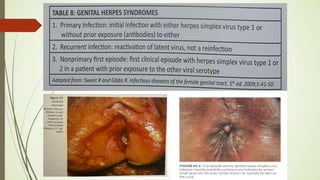
  • #35 Primary lesions last for 20-21 days (vesicular, ulcerative and crusting stages) assc w/ flu like symptoms that develops 3-5 days after sexual contact Vulvar burning and pruritus may precede and vesicles may remain intact for 24-36h evolving into painful, tender, shallow ulcres Main duration of 1 lesions 9-13days, meantime to crusting 9-15 days and complete healing 10-22 days (cultures are + w/ mean of for 8-14days) PAINFUL MULTIPLE VESICULAR
  • #36 Primary infection is self limited, innervating initial infection in skin and latency is a reservior period for reactivation Pts w/ recurrent HSV 2 majority have not been diagnosed to have the condition with mildly or unrecognized infections (transmit to their partners without knowing it)
  • #37 Fetus is exposed to virus shed from cervix or lower genital tract, infected in the skin, eyes and mouth in aprrox 40% of cases, CNS enceph in 30% disseminated infection at other organs at 30% C. toxoplasmosis, other rubella CMV and herpes virus, classically leads to diseases involving skin, CNS and eyes
  • #38 IgG antibodies develop 1-2 weeks after infection and providers should request type specific glycoprotein G based assays when serology is performed (sensivity 90-100%, specif 99-100%)
  • #39 Treatment can be extended if lesions persist more than 10 days