Emma Collins. Year 13 COWA. 
Still image analysis of a horror trailer. 
Paranormal Activity 3 
(Supernatural Horror) 
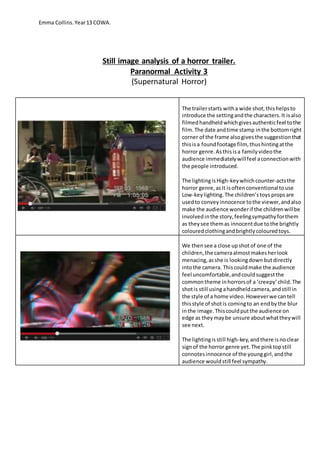
The trailer starts with a wide shot, this helps to 
introduce the setting and the characters. It is also 
filmed handheld which gives authentic feel to the 
film. The date and time stamp in the bottom right 
corner of the frame also gives the suggestion that 
this is a found footage film, thus hinting at the 
horror genre. As this is a family video the 
audience immediately will feel a connection with 
the people introduced. 
The lighting is High-key which counter-acts the 
horror genre, as it is often conventional to use 
Low-key lighting. The children’s toys props are 
used to convey innocence to the viewer, and also 
make the audience wonder if the children will be 
involved in the story, feeling sympathy for them 
as they see them as innocent due to the brightly 
coloured clothing and brightly coloured toys. 
We then see a close up shot of one of the 
children, the camera almost makes her look 
menacing, as she is looking down but directly 
into the camera. This could make the audience 
feel uncomfortable, and could suggest the 
common theme in horrors of a ‘creepy’ child. The 
shot is still using a handheld camera, and still in 
the style of a home video. However we can tell 
this style of shot is coming to an end by the blur 
in the image. This could put the audience on 
edge as they may be unsure about what they will 
see next. 
The lighting is still high-key, and there is no clear 
sign of the horror genre yet. The pink top still 
connotes innocence of the young girl, and the 
audience would still feel sympathy.
Emma Collins. Year 13 COWA. 
This high angled, wide shot helps show us the 
whole room. This makes the audience feel as if 
they are the outsider looking in. The blue tint to 
the shot suggests that this is a night vision 
camera, this sticks to the convention that horror 
is set at night. The props In the room show the 
audience that this is a child’s bedroom. This 
makes the ominous scene seem more shocking as 
the audience will feel dread and worry for the 
infant. 
The lighting is very low-key and creates shadows. 
This helps set the ominous atmosphere of the 
scene. This keeps the audience on edge, and 
makes them react when the women is pulled to 
the ground. 
People who are fans of the films, will also 
recognise this scene from the previous film. 
This low angled shot doesn’t allow the audience 
to see the characters in the shot. This makes the 
audience feel almost left out, and uneasy as they 
will not know what is going on. This is a common 
theme used in horror, it is used to keep the 
audience on edge and unknowing to the story. 
The lighting is High-key which is unusual for a 
horror as it presents the idea of being safe, 
however this could be a clip from the beginning 
of the film before all the action happens. 
However as they are burning a photo and there 
are props such as a cross and candles suggest to 
the audience that a kind of Christian ritual is 
happening e.g. an exorcism ( A conventional 
theme in supernatural horrors) 
This shot seems to follow on from one of the 
previous shots earlier on in the trailer. It keeps 
the high angled shot with the same position from 
before. Using two shots from the same scene in a 
trailer could confuse the audience as they will 
want to know what is going on with the story. 
The lighting is still Low-key, however the lighting 
from the doors has gone creating a chiaroscuro 
effect. This puts the audience on edge as it’s a 
horror convention of something emerging from 
the darkness to frighten the audience. The props 
are the same from the scene which was shown 
earlier on in the trailer. This keeps with 
continuity.
Emma Collins. Year 13 COWA. 
This scene is back to the old handheld home 
video. We can tell this by the recognisable time 
stamp and date. The shot is a mid-shot, however 
due to the light we cannot see this. 
This scene is used to create suspense; the 
extreme Low-key lighting creating chiaroscuro 
keeps the audience on edge and makes them 
think something will jump out on them. The 
torchlight is also a conventional prop in horror 
films; this used makes the audience think that it 
may shine on something to scare them. The red 
camera recording light helps to create realism 
and authenticity. The way the little girl is shining 
the light under her face created the iconic 
chiaroscuro monstrous face of a villain which is 
used in older horror films, such as Hammers 
Dracula for example. 
This scene follows on from the image above. It is 
using the same mid-shot. 
The lighting is still very low-key however some 
natural light is used coming from outside the 
door. This allows the audience to see the figure 
and be shocked by its reveal. It also creates 
suspense for the story as the audience will want 
to know what happens to the girls. 
The use of the regular family home setting, such 
as the bathroom makes the audience feel 
sympathy for the family as these events are 
happening in their home. Something everyone 
could put themselves in their position and relate 
to.

Still image analysis

  • 1.
    Emma Collins. Year13 COWA. Still image analysis of a horror trailer. Paranormal Activity 3 (Supernatural Horror) The trailer starts with a wide shot, this helps to introduce the setting and the characters. It is also filmed handheld which gives authentic feel to the film. The date and time stamp in the bottom right corner of the frame also gives the suggestion that this is a found footage film, thus hinting at the horror genre. As this is a family video the audience immediately will feel a connection with the people introduced. The lighting is High-key which counter-acts the horror genre, as it is often conventional to use Low-key lighting. The children’s toys props are used to convey innocence to the viewer, and also make the audience wonder if the children will be involved in the story, feeling sympathy for them as they see them as innocent due to the brightly coloured clothing and brightly coloured toys. We then see a close up shot of one of the children, the camera almost makes her look menacing, as she is looking down but directly into the camera. This could make the audience feel uncomfortable, and could suggest the common theme in horrors of a ‘creepy’ child. The shot is still using a handheld camera, and still in the style of a home video. However we can tell this style of shot is coming to an end by the blur in the image. This could put the audience on edge as they may be unsure about what they will see next. The lighting is still high-key, and there is no clear sign of the horror genre yet. The pink top still connotes innocence of the young girl, and the audience would still feel sympathy.
  • 2.
    Emma Collins. Year13 COWA. This high angled, wide shot helps show us the whole room. This makes the audience feel as if they are the outsider looking in. The blue tint to the shot suggests that this is a night vision camera, this sticks to the convention that horror is set at night. The props In the room show the audience that this is a child’s bedroom. This makes the ominous scene seem more shocking as the audience will feel dread and worry for the infant. The lighting is very low-key and creates shadows. This helps set the ominous atmosphere of the scene. This keeps the audience on edge, and makes them react when the women is pulled to the ground. People who are fans of the films, will also recognise this scene from the previous film. This low angled shot doesn’t allow the audience to see the characters in the shot. This makes the audience feel almost left out, and uneasy as they will not know what is going on. This is a common theme used in horror, it is used to keep the audience on edge and unknowing to the story. The lighting is High-key which is unusual for a horror as it presents the idea of being safe, however this could be a clip from the beginning of the film before all the action happens. However as they are burning a photo and there are props such as a cross and candles suggest to the audience that a kind of Christian ritual is happening e.g. an exorcism ( A conventional theme in supernatural horrors) This shot seems to follow on from one of the previous shots earlier on in the trailer. It keeps the high angled shot with the same position from before. Using two shots from the same scene in a trailer could confuse the audience as they will want to know what is going on with the story. The lighting is still Low-key, however the lighting from the doors has gone creating a chiaroscuro effect. This puts the audience on edge as it’s a horror convention of something emerging from the darkness to frighten the audience. The props are the same from the scene which was shown earlier on in the trailer. This keeps with continuity.
  • 3.
    Emma Collins. Year13 COWA. This scene is back to the old handheld home video. We can tell this by the recognisable time stamp and date. The shot is a mid-shot, however due to the light we cannot see this. This scene is used to create suspense; the extreme Low-key lighting creating chiaroscuro keeps the audience on edge and makes them think something will jump out on them. The torchlight is also a conventional prop in horror films; this used makes the audience think that it may shine on something to scare them. The red camera recording light helps to create realism and authenticity. The way the little girl is shining the light under her face created the iconic chiaroscuro monstrous face of a villain which is used in older horror films, such as Hammers Dracula for example. This scene follows on from the image above. It is using the same mid-shot. The lighting is still very low-key however some natural light is used coming from outside the door. This allows the audience to see the figure and be shocked by its reveal. It also creates suspense for the story as the audience will want to know what happens to the girls. The use of the regular family home setting, such as the bathroom makes the audience feel sympathy for the family as these events are happening in their home. Something everyone could put themselves in their position and relate to.