Steps to a Balanced Portfolio
Year-end is a great time to take a close look at
your finances. Because volatile markets can
skew the percentage of stocks, bonds and cash
in your portfolio, it’s important to give your
portfolio an annual check-up to make sure your
allocation remains aligned with your situation
and goals.
It’s easy to do in three simple steps:
Step one: Develop a Target Asset
Allocation
Given your individual financial
circumstances and goals, what
percentage of your portfolio
should be dedicated to each
asset class? For example, if you’re
close to retirement, you may want
the majority of your portfolio in income investments
such as cash and bonds, with a smaller percentage in
stocks to protect your portfolio against inflation. If
you’re younger, and can tolerate the fluctuations of
the stock market over time, you may want to put the
majority of your investments in stocks.
Step two: Evaluate your portfolio
Next, determine if your actual
investments match your target
asset allocation. If they do, your
portfolio is in good shape. If
they’re off, consider just how far off they are.
Since making frequent changes to your portfolio
can have tax consequences, you may only want
to alter the asset mix if it’s off by more than five
percentage points.
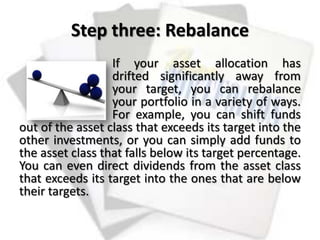
Step three: Rebalance
If your asset allocation has
drifted significantly away from
your target, you can rebalance
your portfolio in a variety of ways.
For example, you can shift funds
out of the asset class that exceeds its target into the
other investments, or you can simply add funds to
the asset class that falls below its target percentage.
You can even direct dividends from the asset class
that exceeds its target into the ones that are below
their targets.
This will bring your portfolio back into balance,
but because of tax implications, it’s important to
talk to your advisor before making any significant
changes to it.
Randy Bett
www.BetterGroupRealEstate.ca

Steps to a balanced portfolio(finished)

  • 1.
    Steps to aBalanced Portfolio
  • 2.
    Year-end is agreat time to take a close look at your finances. Because volatile markets can skew the percentage of stocks, bonds and cash in your portfolio, it’s important to give your portfolio an annual check-up to make sure your allocation remains aligned with your situation and goals.
  • 3.
    It’s easy todo in three simple steps:
  • 4.
    Step one: Developa Target Asset Allocation Given your individual financial circumstances and goals, what percentage of your portfolio should be dedicated to each asset class? For example, if you’re close to retirement, you may want the majority of your portfolio in income investments such as cash and bonds, with a smaller percentage in stocks to protect your portfolio against inflation. If you’re younger, and can tolerate the fluctuations of the stock market over time, you may want to put the majority of your investments in stocks.
  • 5.
    Step two: Evaluateyour portfolio Next, determine if your actual investments match your target asset allocation. If they do, your portfolio is in good shape. If they’re off, consider just how far off they are. Since making frequent changes to your portfolio can have tax consequences, you may only want to alter the asset mix if it’s off by more than five percentage points.
  • 6.
    Step three: Rebalance Ifyour asset allocation has drifted significantly away from your target, you can rebalance your portfolio in a variety of ways. For example, you can shift funds out of the asset class that exceeds its target into the other investments, or you can simply add funds to the asset class that falls below its target percentage. You can even direct dividends from the asset class that exceeds its target into the ones that are below their targets.
  • 7.
    This will bringyour portfolio back into balance, but because of tax implications, it’s important to talk to your advisor before making any significant changes to it.
  • 8.