www.journeypartners.org
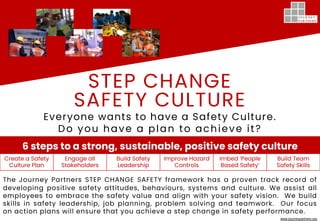
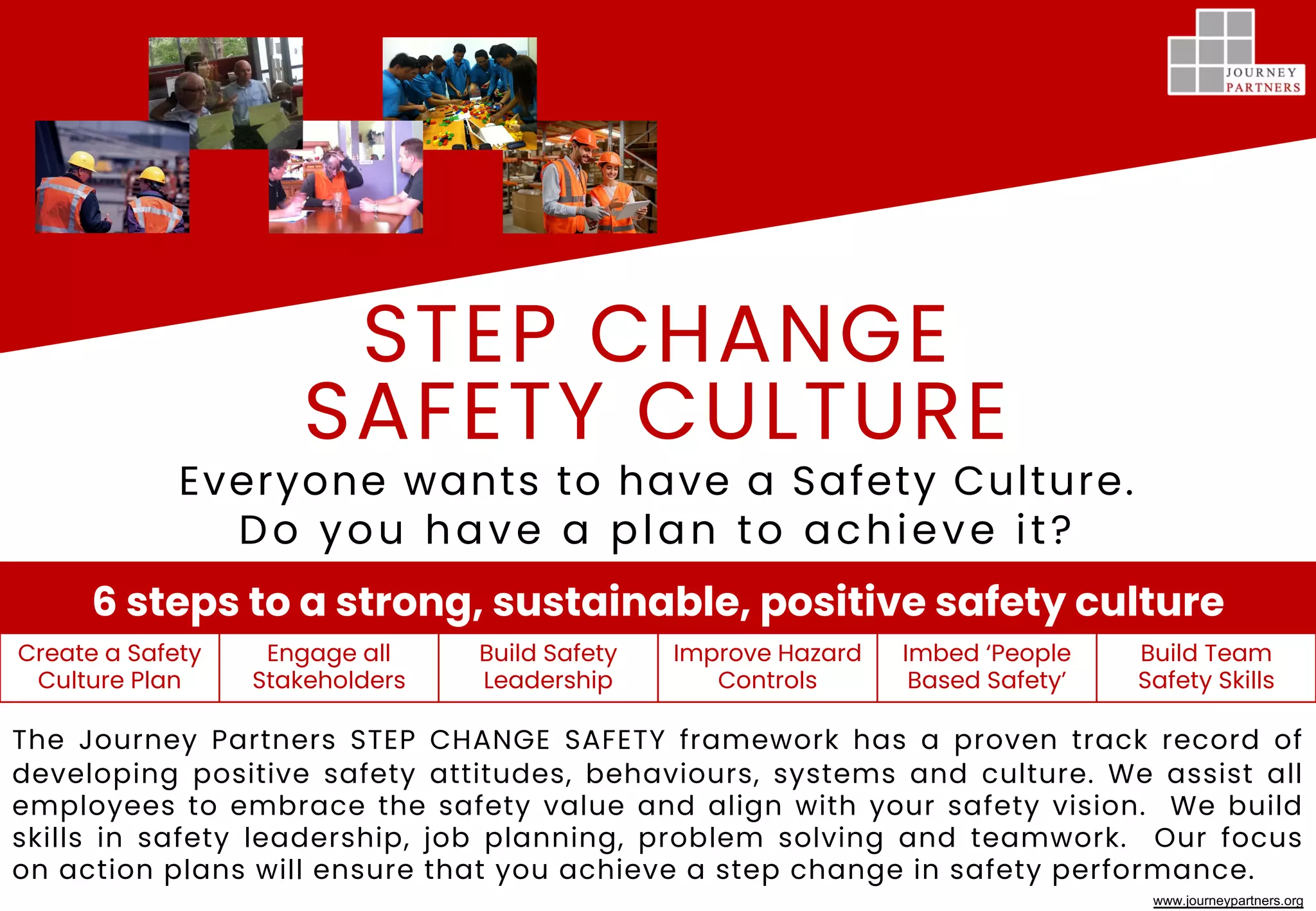
STEP CHANGE
SAFETY CULTURE
Everyone wants to have a Safety Culture.
Do you have a plan to achieve it?
6 steps to a strong, sustainable, positive safety culture
Create a Safety
Culture Plan
Engage all
Stakeholders
Build Safety
Leadership
Improve Hazard
Controls
Imbed ‘People
Based Safety’
Build Team
Safety Skills
The Journey Partners STEP CHANGE SAFETY framework has a proven track record of
developing positive safety attitudes, behaviours, systems and culture. We assist all
employees to embrace the safety value and align with your safety vision. We build
skills in safety leadership, job planning, problem solving and teamwork. Our focus
on action plans will ensure that you achieve a step change in safety performance.
www.journeypartners.org
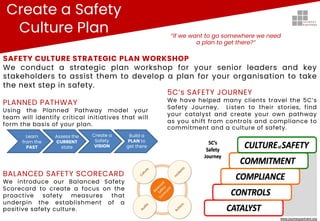
Create a Safety
Culture Plan
Learn
from the
PAST
Assess the
CURRENT
state
Build a
PLAN to
get there
Create a
Safety
VISION
SAFETY CULTURE STRATEGIC PLAN WORKSHOP
We conduct a strategic plan workshop for your senior leaders and key
stakeholders to assist them to develop a plan for your organisation to take
the next step in safety.
PLANNED PATHWAY
Using the Planned Pathway model your
team will identify critical initiatives that will
form the basis of your plan.
BALANCED SAFETY SCORECARD
We introduce our Balanced Safety
Scorecard to create a focus on the
proactive safety measures that
underpin the establishment of a
positive safety culture.
5C’s SAFETY JOURNEY
We have helped many clients travel the 5C’s
Safety Journey. Listen to their stories, find
your catalyst and create your own pathway
as you shift from controls and compliance to
commitment and a culture of safety.
“if we want to go somewhere we need
a plan to get there?”
www.journeypartners.org
Engage all
Stakeholders
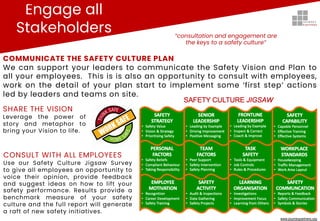
COMMUNICATE THE SAFETY CULTURE PLAN
We can support your leaders to communicate the Safety Vision and Plan to
all your employees. This is is also an opportunity to consult with employees,
work on the detail of your plan start to implement some ‘first step’ actions
led by leaders and teams on site.
SHARE THE VISION
Leverage the power of
story and metaphor to
bring your Vision to life.
CONSULT WITH ALL EMPLOYEES
Use our Safety Culture Jigsaw Survey
to give all employees an opportunity to
voice their opinion, provide feedback
and suggest ideas on how to lift your
safety performance. Results provide a
benchmark measure of your safety
culture and the full report will generate
a raft of new safety initiatives.
SAFETY CULTURE SURVEY
“consultation and engagement are
the keys to a safety culture”
www.journeypartners.org
Build Safety
Leadership
SAFETY LEADERSHIP
Safety starts at the top and is led by example. The STEP CHANGE Safety
Leadership program will transform your leaders and equip them with a set of
skills and safety behaviours that will show your teams that your leaders and
your organisation are serious about safety.
OUR PROGRAM OF WORK
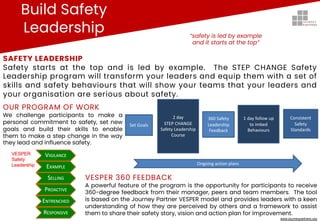
We challenge participants to make a
personal commitment to safety, set new
goals and build their skills to enable
them to make a step change in the way
they lead and influence safety.
VESPER 360 FEEDBACK
A powerful feature of the program is the opportunity for participants to receive
360-degree feedback from their manager, peers and team members. The tool
is based on the Journey Partner VESPER model and provides leaders with a keen
understanding of how they are perceived by others and a framework to assist
them to share their safety story, vision and action plan for improvement.
Ongoing action plans
2 day
STEP CHANGE
Safety Leadership
Course
1 day follow up
to imbed
Behaviours
Set Goals
360 Safety
Leadership
Feedback
Consistent
Safety
Standards
“safety is led by example
and it starts at the top”
www.journeypartners.org
Improve Hazard
Controls
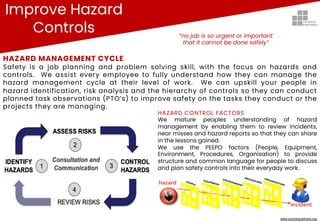
HAZARD MANAGEMENT CYCLE
Safety is a job planning and problem solving skill, with the focus on hazards and
controls. We assist every employee to fully understand how they can manage the
hazard management cycle at their level of work. We can upskill your people in
hazard identification, risk analysis and the hierarchy of controls so they can conduct
planned task observations (PTO’s) to improve safety on the tasks they conduct or the
projects they are managing.
HAZARD CONTROL FACTORS
We mature peoples understanding of hazard
management by enabling them to review incidents,
near misses and hazard reports so that they can share
in the lessons gained.
We use the PEEPO factors (People, Equipment,
Environment, Procedures, Organisation) to provide
structure and common language for people to discuss
and plan safety controls into their everyday work.
“no job is so urgent or important
that it cannot be done safely”
www.journeypartners.org
Imbed ‘People
Based Safety’
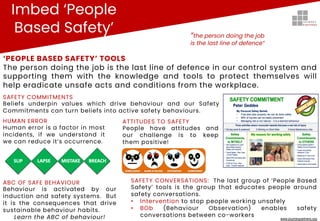
‘PEOPLE BASED SAFETY’ TOOLS
The person doing the job is the last line of defence in our control system and
supporting them with the knowledge and tools to protect themselves will
help eradicate unsafe acts and conditions from the workplace.
SAFETY COMMITMENTS
Beliefs underpin values which drive behaviour and our Safety
Commitments can turn beliefs into active safety behaviours.
HUMAN ERROR
Human error is a factor in most
incidents, if we understand it
we can reduce it’s occurrence.
“the person doing the job
is the last line of defence”
ATTITUDES TO SAFETY
People have attitudes and
our challenge is to keep
them positive!
ABC OF SAFE BEHAVIOUR
Behaviour is activated by our
induction and safety systems. But
it is the consequences that drive
sustainable behaviour habits.
Learn the ABC of behaviour!
SAFETY CONVERSATIONS: The last group of ‘People Based
Safety’ tools is the group that educates people around
safety conversations.
• Intervention to stop people working unsafely
• BOb (Behaviour Observation) enables safety
conversations between co-workers
www.journeypartners.org
Build Team
Safety Skills
THE TEAM ENVIRONMENT
Safety doesn’t always come naturally and there is no such thing as common
sense. Teams, however, possess the power of consultation, group planning,
peer support, coaching and shared decision making. Safety is a learned skill
and the best place to learn it is in a high performance team environment.
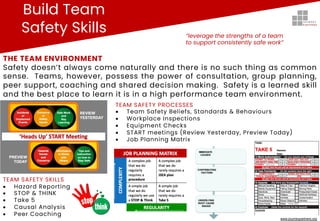
TEAM SAFETY PROCESSES
• Team Safety Beliefs, Standards & Behaviours
• Workplace Inspections
• Equipment Checks
• START meetings (Review Yesterday, Preview Today)
• Job Planning Matrix
“leverage the strengths of a team
to support consistently safe work”
TEAM SAFETY SKILLS
• Hazard Reporting
• STOP & THINK
• Take 5
• Causal Analysis
• Peer Coaching
www.journeypartners.org
Our client
feedback
“our site gained a
50% reduction in
injury rates”
“for me it was a life
changing experience”
“this is the best
safety program I’ve
ever seen”
“real changes in
attitudes &
behaviours”

Step Change Safety Culture Strategy.pdf

  • 1.
    www.journeypartners.org STEP CHANGE SAFETY CULTURE Everyonewants to have a Safety Culture. Do you have a plan to achieve it? 6 steps to a strong, sustainable, positive safety culture Create a Safety Culture Plan Engage all Stakeholders Build Safety Leadership Improve Hazard Controls Imbed ‘People Based Safety’ Build Team Safety Skills The Journey Partners STEP CHANGE SAFETY framework has a proven track record of developing positive safety attitudes, behaviours, systems and culture. We assist all employees to embrace the safety value and align with your safety vision. We build skills in safety leadership, job planning, problem solving and teamwork. Our focus on action plans will ensure that you achieve a step change in safety performance.
  • 2.
    www.journeypartners.org Create a Safety CulturePlan Learn from the PAST Assess the CURRENT state Build a PLAN to get there Create a Safety VISION SAFETY CULTURE STRATEGIC PLAN WORKSHOP We conduct a strategic plan workshop for your senior leaders and key stakeholders to assist them to develop a plan for your organisation to take the next step in safety. PLANNED PATHWAY Using the Planned Pathway model your team will identify critical initiatives that will form the basis of your plan. BALANCED SAFETY SCORECARD We introduce our Balanced Safety Scorecard to create a focus on the proactive safety measures that underpin the establishment of a positive safety culture. 5C’s SAFETY JOURNEY We have helped many clients travel the 5C’s Safety Journey. Listen to their stories, find your catalyst and create your own pathway as you shift from controls and compliance to commitment and a culture of safety. “if we want to go somewhere we need a plan to get there?”
  • 3.
    www.journeypartners.org Engage all Stakeholders COMMUNICATE THESAFETY CULTURE PLAN We can support your leaders to communicate the Safety Vision and Plan to all your employees. This is is also an opportunity to consult with employees, work on the detail of your plan start to implement some ‘first step’ actions led by leaders and teams on site. SHARE THE VISION Leverage the power of story and metaphor to bring your Vision to life. CONSULT WITH ALL EMPLOYEES Use our Safety Culture Jigsaw Survey to give all employees an opportunity to voice their opinion, provide feedback and suggest ideas on how to lift your safety performance. Results provide a benchmark measure of your safety culture and the full report will generate a raft of new safety initiatives. SAFETY CULTURE SURVEY “consultation and engagement are the keys to a safety culture”
  • 4.
    www.journeypartners.org Build Safety Leadership SAFETY LEADERSHIP Safetystarts at the top and is led by example. The STEP CHANGE Safety Leadership program will transform your leaders and equip them with a set of skills and safety behaviours that will show your teams that your leaders and your organisation are serious about safety. OUR PROGRAM OF WORK We challenge participants to make a personal commitment to safety, set new goals and build their skills to enable them to make a step change in the way they lead and influence safety. VESPER 360 FEEDBACK A powerful feature of the program is the opportunity for participants to receive 360-degree feedback from their manager, peers and team members. The tool is based on the Journey Partner VESPER model and provides leaders with a keen understanding of how they are perceived by others and a framework to assist them to share their safety story, vision and action plan for improvement. Ongoing action plans 2 day STEP CHANGE Safety Leadership Course 1 day follow up to imbed Behaviours Set Goals 360 Safety Leadership Feedback Consistent Safety Standards “safety is led by example and it starts at the top”
  • 5.
    www.journeypartners.org Improve Hazard Controls HAZARD MANAGEMENTCYCLE Safety is a job planning and problem solving skill, with the focus on hazards and controls. We assist every employee to fully understand how they can manage the hazard management cycle at their level of work. We can upskill your people in hazard identification, risk analysis and the hierarchy of controls so they can conduct planned task observations (PTO’s) to improve safety on the tasks they conduct or the projects they are managing. HAZARD CONTROL FACTORS We mature peoples understanding of hazard management by enabling them to review incidents, near misses and hazard reports so that they can share in the lessons gained. We use the PEEPO factors (People, Equipment, Environment, Procedures, Organisation) to provide structure and common language for people to discuss and plan safety controls into their everyday work. “no job is so urgent or important that it cannot be done safely”
  • 6.
    www.journeypartners.org Imbed ‘People Based Safety’ ‘PEOPLEBASED SAFETY’ TOOLS The person doing the job is the last line of defence in our control system and supporting them with the knowledge and tools to protect themselves will help eradicate unsafe acts and conditions from the workplace. SAFETY COMMITMENTS Beliefs underpin values which drive behaviour and our Safety Commitments can turn beliefs into active safety behaviours. HUMAN ERROR Human error is a factor in most incidents, if we understand it we can reduce it’s occurrence. “the person doing the job is the last line of defence” ATTITUDES TO SAFETY People have attitudes and our challenge is to keep them positive! ABC OF SAFE BEHAVIOUR Behaviour is activated by our induction and safety systems. But it is the consequences that drive sustainable behaviour habits. Learn the ABC of behaviour! SAFETY CONVERSATIONS: The last group of ‘People Based Safety’ tools is the group that educates people around safety conversations. • Intervention to stop people working unsafely • BOb (Behaviour Observation) enables safety conversations between co-workers
  • 7.
    www.journeypartners.org Build Team Safety Skills THETEAM ENVIRONMENT Safety doesn’t always come naturally and there is no such thing as common sense. Teams, however, possess the power of consultation, group planning, peer support, coaching and shared decision making. Safety is a learned skill and the best place to learn it is in a high performance team environment. TEAM SAFETY PROCESSES • Team Safety Beliefs, Standards & Behaviours • Workplace Inspections • Equipment Checks • START meetings (Review Yesterday, Preview Today) • Job Planning Matrix “leverage the strengths of a team to support consistently safe work” TEAM SAFETY SKILLS • Hazard Reporting • STOP & THINK • Take 5 • Causal Analysis • Peer Coaching
  • 8.
    www.journeypartners.org Our client feedback “our sitegained a 50% reduction in injury rates” “for me it was a life changing experience” “this is the best safety program I’ve ever seen” “real changes in attitudes & behaviours”