Downloaded 175 times
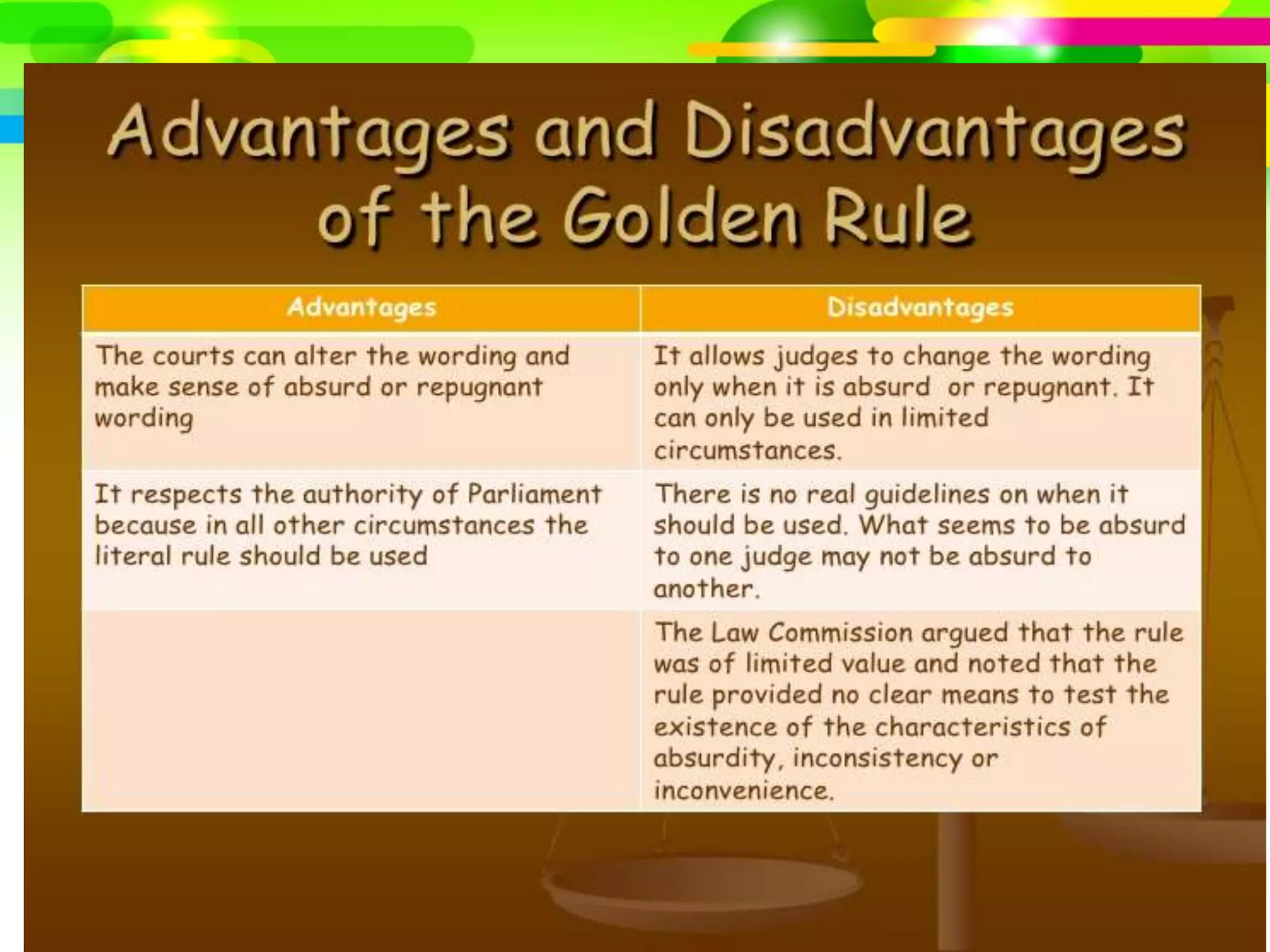

The golden rule of statutory interpretation allows judges to depart from a literal interpretation of a statute if it would produce an absurd result that was clearly unintended by Parliament. Under the golden rule, judges can modify the language used in a statute or give unusual meanings to words to align the interpretation with Parliament's overall intention for the statute. However, the golden rule is still subordinate to the literal interpretation and only applies in cases where the literal meaning would be manifestly absurd or unreasonable. Some criticisms of the golden rule are that it gives judges too much discretion and flexibility to deviate from Parliament's actual wording.


![Strict interpretation [penal]](https://cdn.slidesharecdn.com/ss_thumbnails/strictinterpretationpenal-180908083208-thumbnail.jpg?width=640&height=640&fit=bounds)


