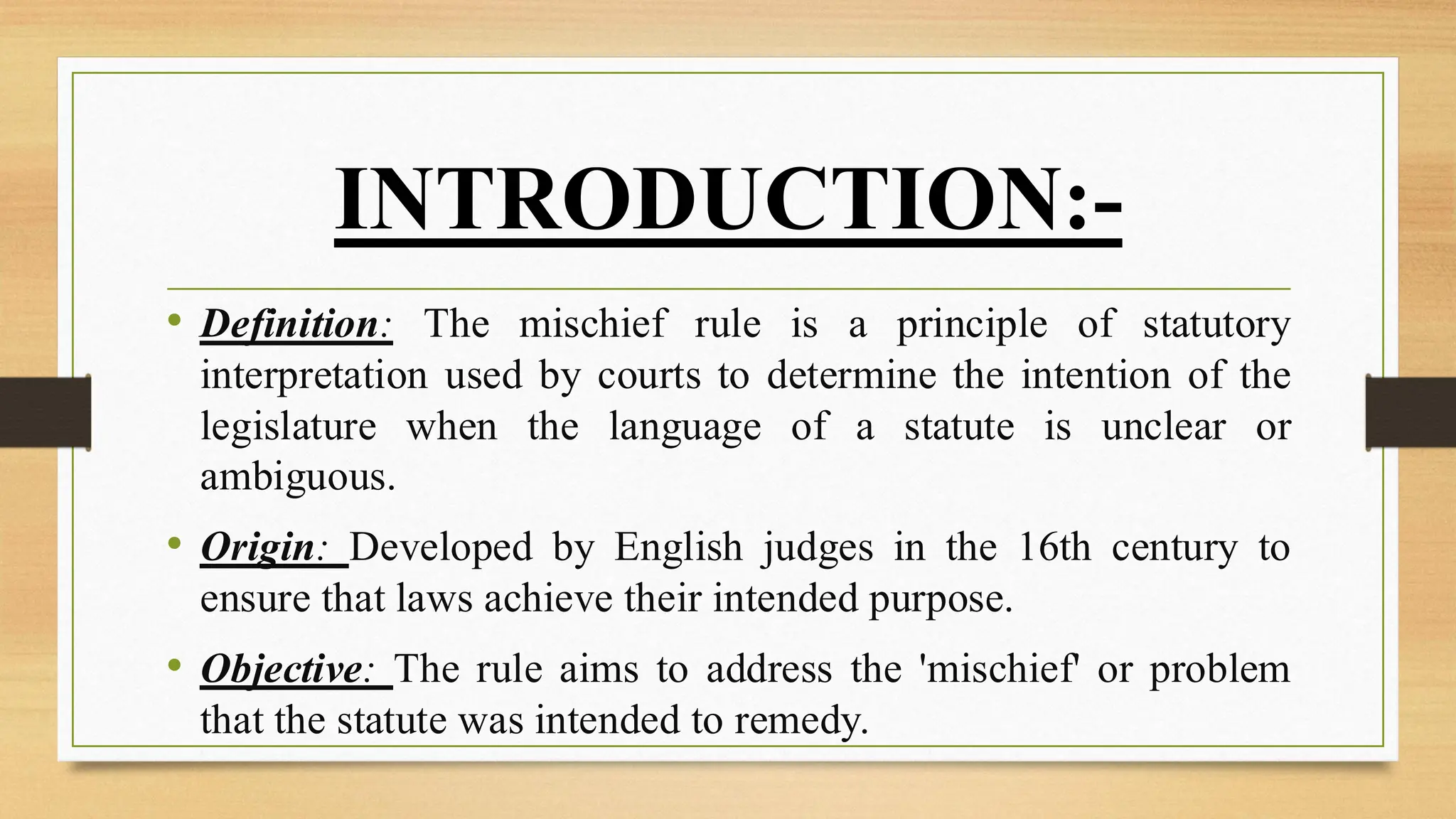
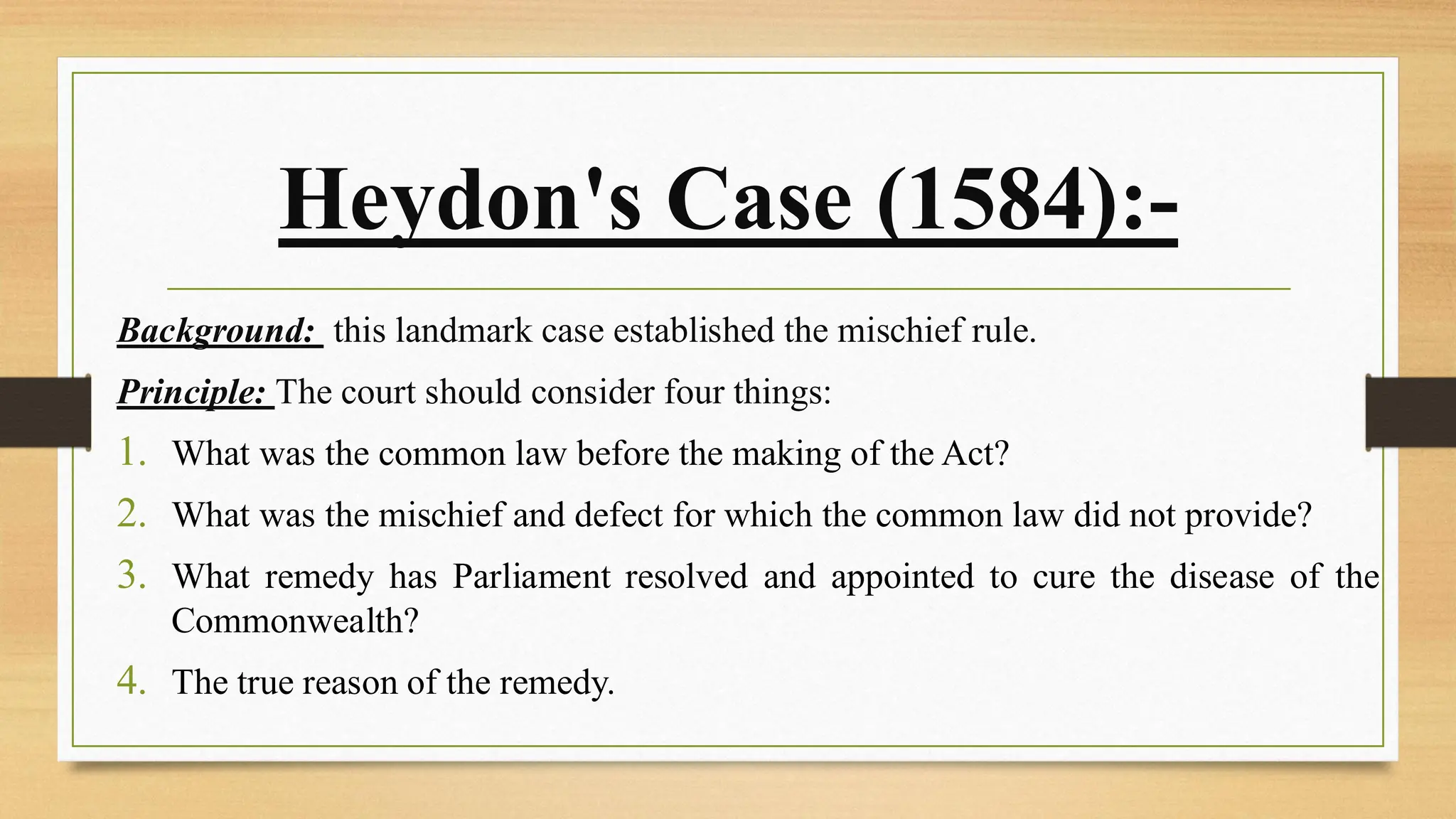
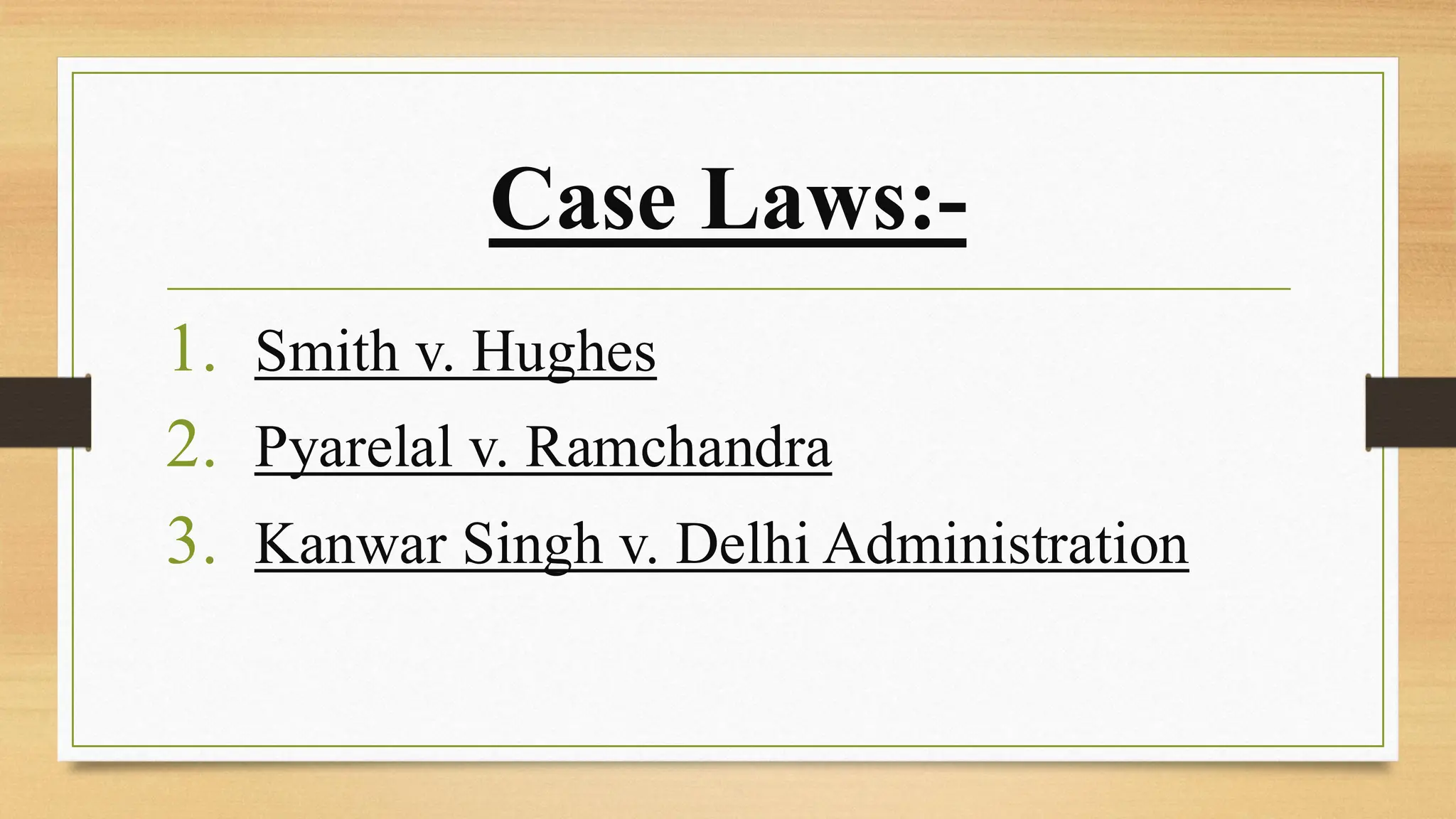
The mischief rule is a principle of statutory interpretation used by courts to clarify legislative intent when statutory language is ambiguous, originating from English judges in the 16th century. Landmark cases such as Heydon's case and modern examples illustrate its application in interpreting statutes beyond their literal meaning to achieve just outcomes. While the rule offers flexibility and aligns judicial interpretations with legislative intent, it faces criticism for its subjectivity and complexity.







![Strict interpretation [penal]](https://cdn.slidesharecdn.com/ss_thumbnails/strictinterpretationpenal-180908083208-thumbnail.jpg?width=640&height=640&fit=bounds)


