Living Breakwaters
SCAPE TEAM
SCAPE / LANDSCAPE ARCHITECTURE
OCEAN AND COASTAL CONSULTANTS
PARSONS BRINCKERHOFF
ARCADIS
SEARC MARINE CONSULTING
NEW YORK HARBOR FOUNDATION
LOT-EK ARCHITECTURE
MFS CONSULTING ENGINEERS
PRUDENT ENGINEERING
REBUILD BY DESIGN
COMPETITION OVERVIEW
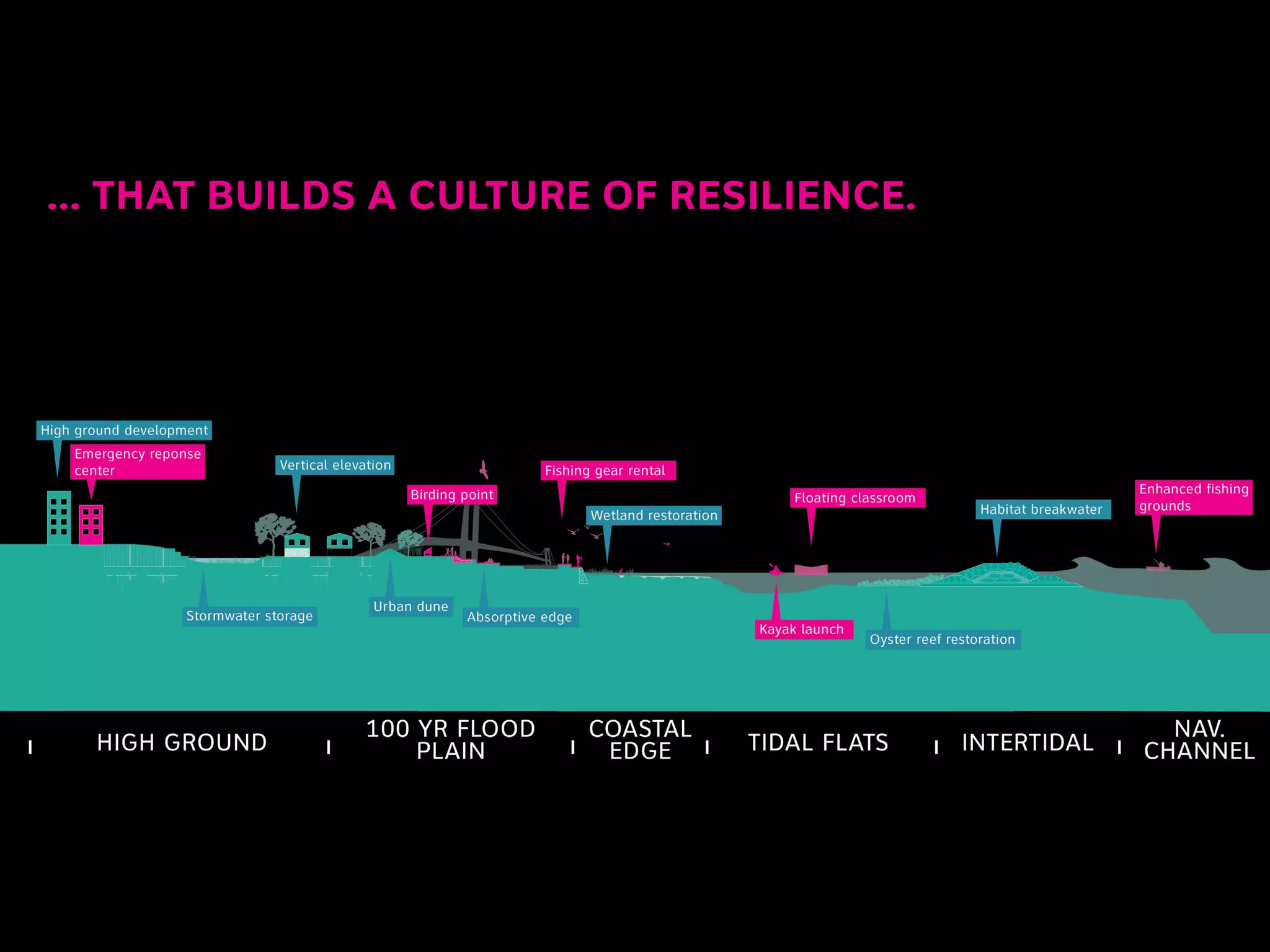
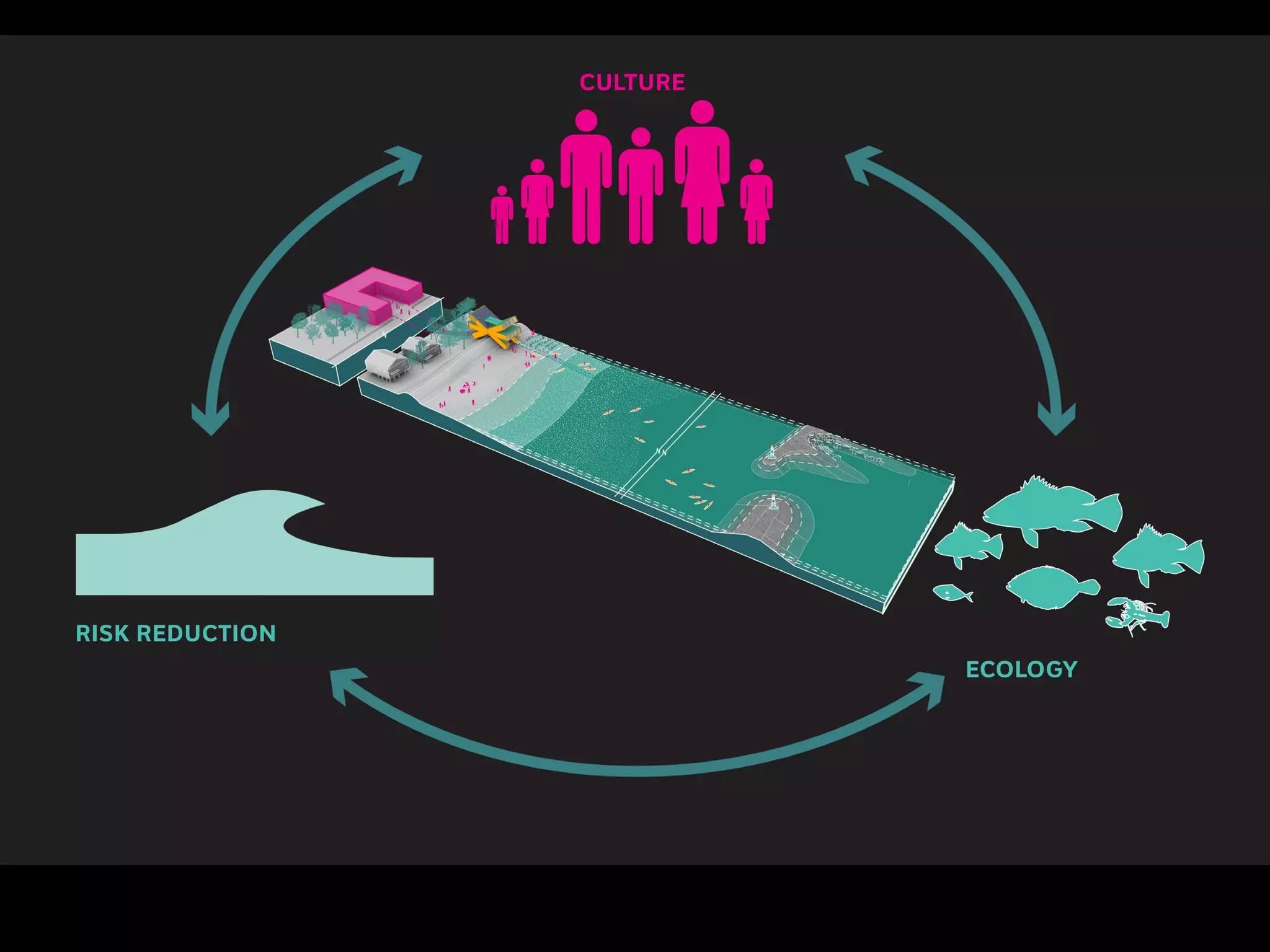
IT IS NOT JUST A LIVING BREAKWATER ...
... IT IS A LAYERED APPROACH ...
... ...
... THAT BUILDS A CULTURE OF RESILIENCE.
RISK REDUCTION
CULTURE
ECOLOGY
BILLION OYSTER PROJECT
WHERE ARE WE NOW?
PROGRESS TOWARDS 30% DESIGN!
WE ARE HERE!
NEW SURVEYS
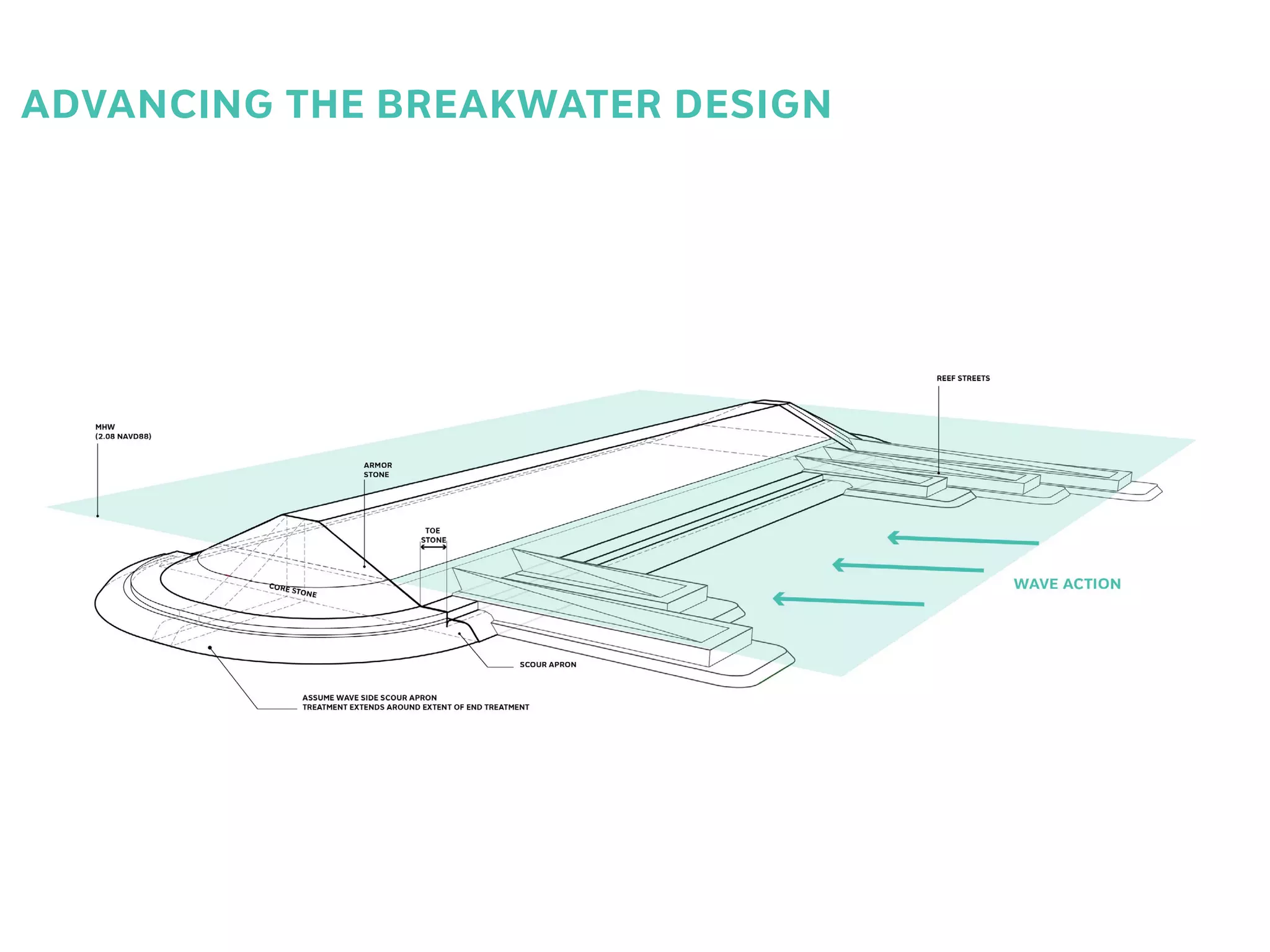
ADVANCING THE BREAKWATER DESIGN
CLCL CL
CL
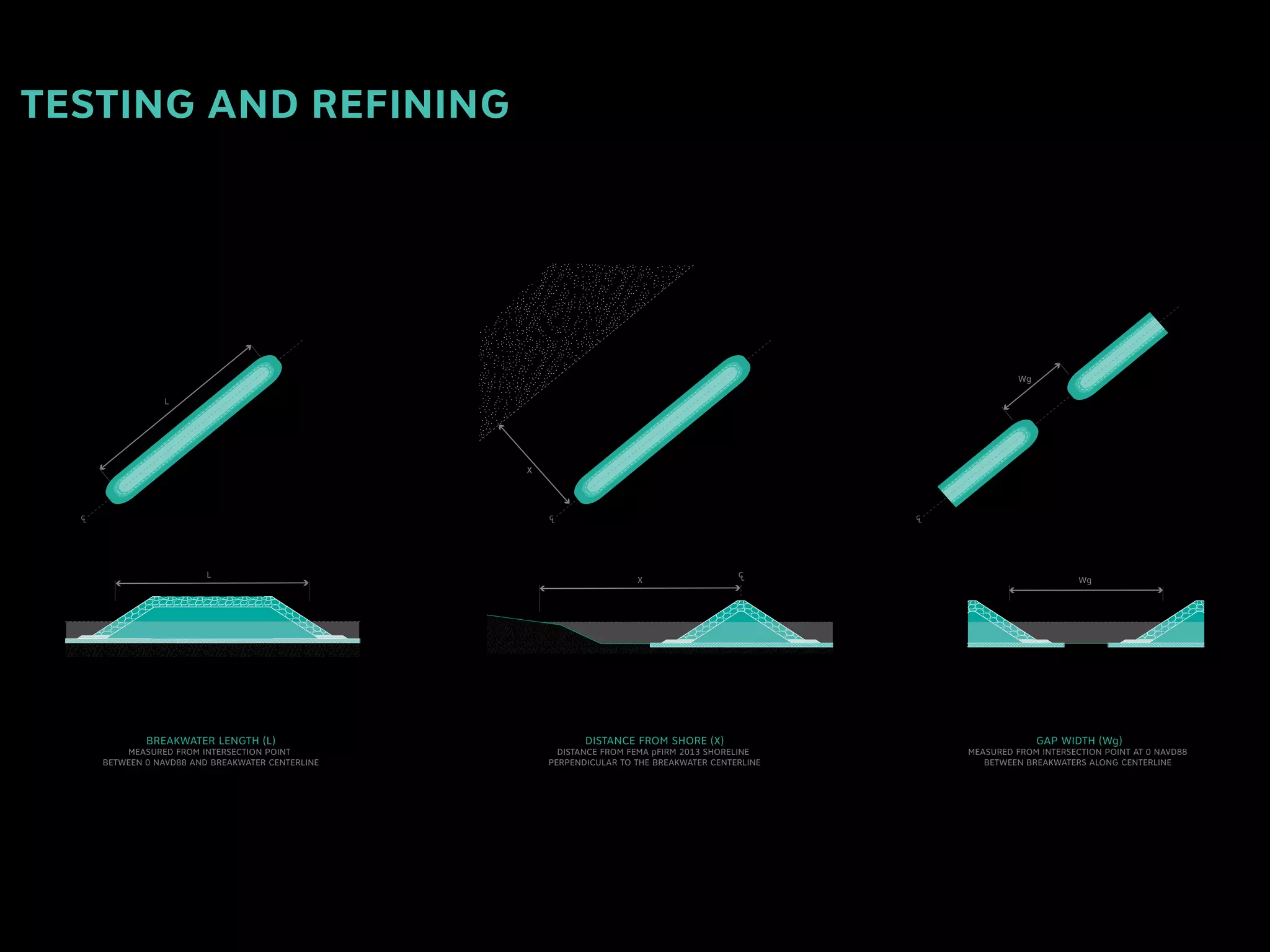
DISTANCE FROM SHORE (X)
DISTANCE FROM FEMA pFIRM 2013 SHORELINE
PERPENDICULAR TO THE BREAKWATER CENTERLINE
GAP WIDTH (Wg)
MEASURED FROM INTERSECTION POINT AT 0 NAVD88
BETWEEN BREAKWATERS ALONG CENTERLINE
BREAKWATER LENGTH (L)
MEASURED FROM INTERSECTION POINT
BETWEEN 0 NAVD88 AND BREAKWATER CENTERLINE
X
L
Wg
WgX
L
TESTING AND REFINING
DESIGN FOR HABITAT
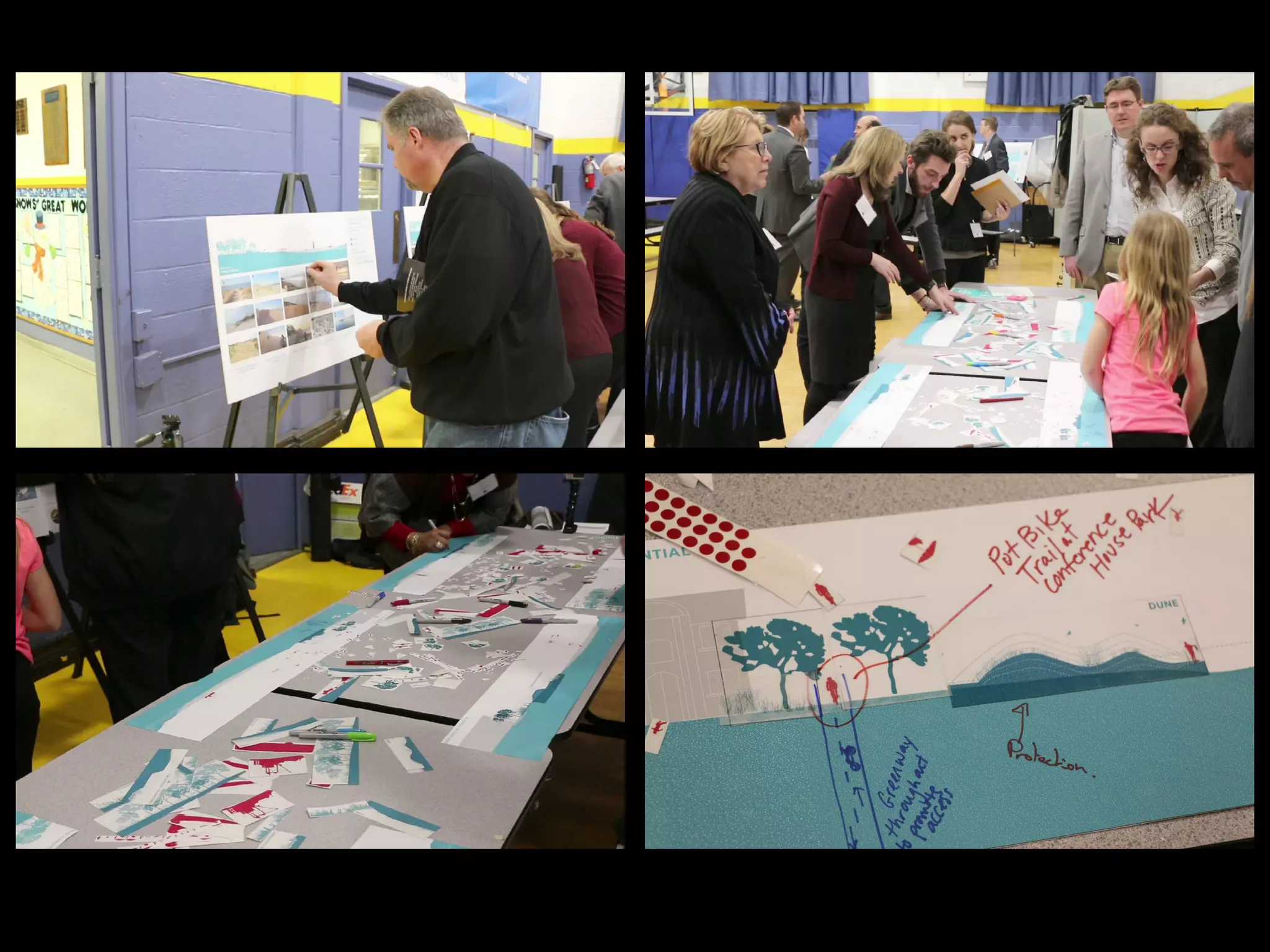
ENGAGING THE
COMMUNITY
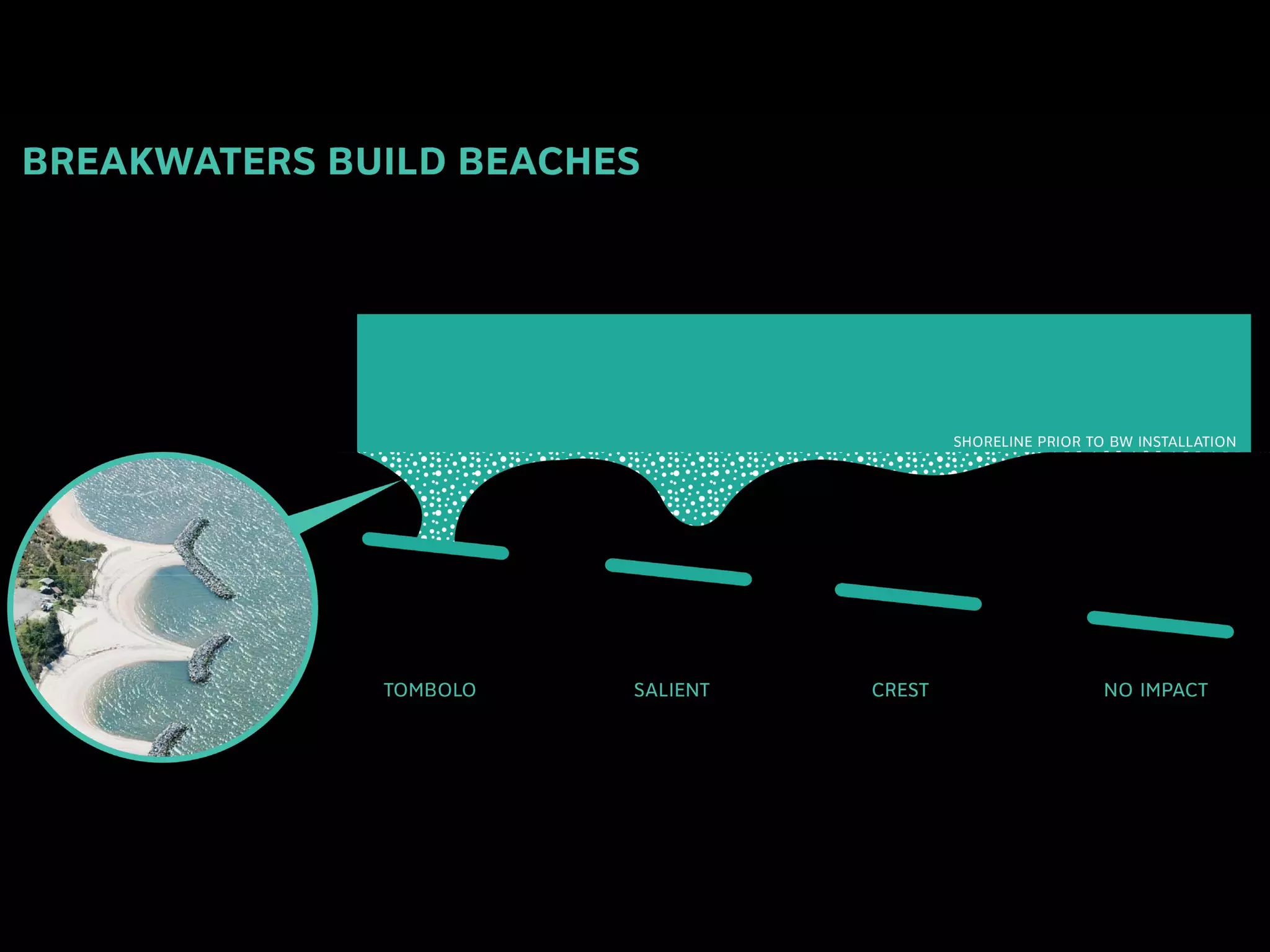
SHORELINE CHANGE : HOW DOES IT WORK ?
LIVING BREAKWATERS SHORELINE WALK
TOTTENVILLE, SI
ROUTE 01 : CONFERENCE HOUSE PARK
1.0 MILE 60 MIN
CROSS-SHORE SEDIMENT TRANSPORT
LONGSHORE SEDIMENT TRANSPORT
One of the risks that the Living
Breakwaters aims to address is
coastal erosion.
EROSION (loss of beach) and
ACCRETION (growth of the beach) is
usually the result of how sediment
moves around the shoreline and
can be influenced by structures on
the shoreline and storm events.
You can see the evidence of
past shoreline change along
the shoreline of Tottenville and
Conference House Park today.
Take this short beach walk to
observe coastal processes at work.
SCAPE TEAM
SCAPE / LANDSCAPE ARCHITECTURE
OCEAN AND COASTAL CONSULTANTS
PARSONS BRINCKERHOFF
ARCADIS
SEARC ECOLOGICAL MARINE
CONSULTING
LOT-EK ARCHITECTURE
MFS CONSULTING ENGINEERS
PRUDENT ENGINEERING
LIVING
BREAKWATERS
The Living Breakwaters project is an
innovative infrastructure project being
led by the Governor’s Office of Storm
Recovery (GOSR). The project is a
system of breakwaters located offshore
of Tottenville, Staten Island with
complimentary onshore strategies to
achieve three primary goals:
RISK REDUCTION by attenuating wave
energy and addressing shoreline erosion
ECOLOGICAL ENHANCEMENT by
increasing the diversity of aquatic
habitats
SOCIAL RESILIENCY through fostering
community education and stewardship
To learn more about the project:
http://stormrecovery.ny.gov/living-breakwaters-tottenville
NEXT STEPS +
PERMITTING
FINAL PROJECT SCOPING DOCUMENT
1 April 1, 2016
Coastal and Social Resiliency Initiatives for Tottenville Shoreline,
Staten Island, NY
Environmental Impact Statement Final Scope of Work
A. INTRODUCTION
On behalf of Grantee the State of New York, the Governor’s Office of Storm Recovery (GOSR),
serving under the auspices of the New York State Homes and Community Renewal’s Housing
Trust Fund Corporation, and acting under authority of the U.S. Department of Housing and
Urban Development’s (HUD) regulations at 24 CFR Part 58, and in cooperation with other
involved, cooperating, interested agencies, will prepare an environmental impact statement (EIS)
to analyze potential impacts of one or more proposed initiatives (Proposed Actions) intended to
enhance coastal and social resiliency along the Tottenville shoreline of the South Shore of Staten
Island, NY. These initiatives include the Living Breakwaters Project (Breakwaters Project) and
Tottenville Shoreline Protection Project (Shoreline Project). While the Living Breakwaters and
Tottenville Shoreline Projects each have independent utility, both projects would be funded
through New York State’s Community Development Block Grant-Disaster Recovery (CDBG-
DR) grant (and will be leveraged—as required by the HUD-sponsored Rebuild By Design
(RBD) process—through additional funding sources) and would be located in the same
geographic region. Additionally, the projects share certain synergies in terms of design, as well
as purpose and need, and combine to create a layered approach to shoreline resilience within the
study area. Thus, there is strong rationale for designing and implementing the Breakwaters and
Shoreline Projects through one integrated planning process to improve coastal resiliency along
Staten Island’s south shoreline. To facilitate a thorough examination of cumulative effects and
synergies between the projects, GOSR has determined that they should be analyzed as part of the
same environmental review. Additionally, in the EIS, the Breakwaters and Shoreline Projects
will be weighed against other alternative actions that may also advance some of the same coastal
resiliency goals and objectives. This analysis will ensure that the actions undertaken will
minimize the potential for adverse environmental impacts, to the extent practicable.
The Draft Scope of Work (Draft Scope) for this project was issued on April 1, 2015. Oral and
written comments were received during the public scoping session held on April 30, 2015.
Written comments were accepted from issuance of the Draft Scope through the public comment
period which ended June 15, 2015. This Final Scope of Work (Final Scope) reflects
modifications due to certain design advancements since the issuance of the Draft Scope as well
as changes made in response to relevant public comments on the Draft Scope (see attached
Response to Comments).
B. PROJECT PURPOSE AND NEED
BACKGROUND
On October 29, 2012, Superstorm Sandy approached New York City with tropical-storm-force
winds. The resultant waves and storm surge battered the city’s coastline, causing 44 deaths in
New York City—23 of which occurred in Staten Island—the destruction of homes and other
Thank You!
for more information
http://stormrecovery.ny.gov/living-breakwaters-tottenville

Staten Island

  • 1.
  • 2.
    SCAPE TEAM SCAPE /LANDSCAPE ARCHITECTURE OCEAN AND COASTAL CONSULTANTS PARSONS BRINCKERHOFF ARCADIS SEARC MARINE CONSULTING NEW YORK HARBOR FOUNDATION LOT-EK ARCHITECTURE MFS CONSULTING ENGINEERS PRUDENT ENGINEERING
  • 3.
  • 7.
    IT IS NOTJUST A LIVING BREAKWATER ...
  • 8.
    ... IT ISA LAYERED APPROACH ... ... ...
  • 9.
    ... THAT BUILDSA CULTURE OF RESILIENCE.
  • 10.
  • 12.
  • 14.
  • 15.
    PROGRESS TOWARDS 30%DESIGN! WE ARE HERE!
  • 16.
  • 19.
  • 21.
    CLCL CL CL DISTANCE FROMSHORE (X) DISTANCE FROM FEMA pFIRM 2013 SHORELINE PERPENDICULAR TO THE BREAKWATER CENTERLINE GAP WIDTH (Wg) MEASURED FROM INTERSECTION POINT AT 0 NAVD88 BETWEEN BREAKWATERS ALONG CENTERLINE BREAKWATER LENGTH (L) MEASURED FROM INTERSECTION POINT BETWEEN 0 NAVD88 AND BREAKWATER CENTERLINE X L Wg WgX L TESTING AND REFINING
  • 22.
  • 23.
  • 26.
    SHORELINE CHANGE :HOW DOES IT WORK ? LIVING BREAKWATERS SHORELINE WALK TOTTENVILLE, SI ROUTE 01 : CONFERENCE HOUSE PARK 1.0 MILE 60 MIN CROSS-SHORE SEDIMENT TRANSPORT LONGSHORE SEDIMENT TRANSPORT One of the risks that the Living Breakwaters aims to address is coastal erosion. EROSION (loss of beach) and ACCRETION (growth of the beach) is usually the result of how sediment moves around the shoreline and can be influenced by structures on the shoreline and storm events. You can see the evidence of past shoreline change along the shoreline of Tottenville and Conference House Park today. Take this short beach walk to observe coastal processes at work. SCAPE TEAM SCAPE / LANDSCAPE ARCHITECTURE OCEAN AND COASTAL CONSULTANTS PARSONS BRINCKERHOFF ARCADIS SEARC ECOLOGICAL MARINE CONSULTING LOT-EK ARCHITECTURE MFS CONSULTING ENGINEERS PRUDENT ENGINEERING LIVING BREAKWATERS The Living Breakwaters project is an innovative infrastructure project being led by the Governor’s Office of Storm Recovery (GOSR). The project is a system of breakwaters located offshore of Tottenville, Staten Island with complimentary onshore strategies to achieve three primary goals: RISK REDUCTION by attenuating wave energy and addressing shoreline erosion ECOLOGICAL ENHANCEMENT by increasing the diversity of aquatic habitats SOCIAL RESILIENCY through fostering community education and stewardship To learn more about the project: http://stormrecovery.ny.gov/living-breakwaters-tottenville
  • 28.
  • 29.
    FINAL PROJECT SCOPINGDOCUMENT 1 April 1, 2016 Coastal and Social Resiliency Initiatives for Tottenville Shoreline, Staten Island, NY Environmental Impact Statement Final Scope of Work A. INTRODUCTION On behalf of Grantee the State of New York, the Governor’s Office of Storm Recovery (GOSR), serving under the auspices of the New York State Homes and Community Renewal’s Housing Trust Fund Corporation, and acting under authority of the U.S. Department of Housing and Urban Development’s (HUD) regulations at 24 CFR Part 58, and in cooperation with other involved, cooperating, interested agencies, will prepare an environmental impact statement (EIS) to analyze potential impacts of one or more proposed initiatives (Proposed Actions) intended to enhance coastal and social resiliency along the Tottenville shoreline of the South Shore of Staten Island, NY. These initiatives include the Living Breakwaters Project (Breakwaters Project) and Tottenville Shoreline Protection Project (Shoreline Project). While the Living Breakwaters and Tottenville Shoreline Projects each have independent utility, both projects would be funded through New York State’s Community Development Block Grant-Disaster Recovery (CDBG- DR) grant (and will be leveraged—as required by the HUD-sponsored Rebuild By Design (RBD) process—through additional funding sources) and would be located in the same geographic region. Additionally, the projects share certain synergies in terms of design, as well as purpose and need, and combine to create a layered approach to shoreline resilience within the study area. Thus, there is strong rationale for designing and implementing the Breakwaters and Shoreline Projects through one integrated planning process to improve coastal resiliency along Staten Island’s south shoreline. To facilitate a thorough examination of cumulative effects and synergies between the projects, GOSR has determined that they should be analyzed as part of the same environmental review. Additionally, in the EIS, the Breakwaters and Shoreline Projects will be weighed against other alternative actions that may also advance some of the same coastal resiliency goals and objectives. This analysis will ensure that the actions undertaken will minimize the potential for adverse environmental impacts, to the extent practicable. The Draft Scope of Work (Draft Scope) for this project was issued on April 1, 2015. Oral and written comments were received during the public scoping session held on April 30, 2015. Written comments were accepted from issuance of the Draft Scope through the public comment period which ended June 15, 2015. This Final Scope of Work (Final Scope) reflects modifications due to certain design advancements since the issuance of the Draft Scope as well as changes made in response to relevant public comments on the Draft Scope (see attached Response to Comments). B. PROJECT PURPOSE AND NEED BACKGROUND On October 29, 2012, Superstorm Sandy approached New York City with tropical-storm-force winds. The resultant waves and storm surge battered the city’s coastline, causing 44 deaths in New York City—23 of which occurred in Staten Island—the destruction of homes and other
  • 30.
    Thank You! for moreinformation http://stormrecovery.ny.gov/living-breakwaters-tottenville