S
Strong association of
socioeconomic status with genetic
ancestry in Latinos: implications for
admixture studies of type 2
diabetes.
J.C Florez et al.
Diabetologia
2009
Presented by Sarah Stansfield & Adam Kirstein
Introduction
 Disproportionate ratio of Latino ancestry and European
ancestry regarding type 2 diabetes
 Adjusted for BMI; or “ abdominal obesity”, Latino
ancestry-people still had a higher risk than European for
developing type 2 diabetes.
 Pima Indians with type 2 have more native ancestry than
their “normoglycaemic” peer populations
 “ a fraction” of Admixed Latinos
 Protective metabolic phenotypes. ( assumedly against type
2)
Introduction
 “Thrifty gene” hypothesis- limiting food resources in the
past have favored alleles that promote efficient bodily
storage of energy reserves…” ( Human evolutionary
genetics glossary)
 Looked at socioeconomic status as a contributor of type
2.
Location:
Colombia
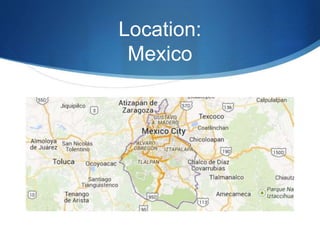
Location:
Mexico
Methods
 Columbia: 499 cases with type 2 diabetes; 197 controls
 Controls: 40+ year olds with no history of diabetes in “first degree
relatives” recruited from centers for care of the elderly
 Mexico: 163 cases with type 2 diabetes; 72 controls
 Controls: 40+ year olds with no history of diabetes in “first degree
relatives” recruited from cases’ spouses, other patients at clinics
Methods
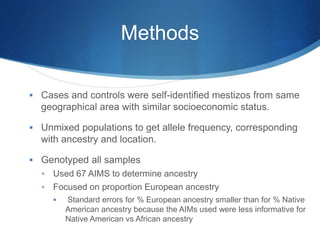
 Cases and controls were self-identified mestizos from same
geographical area with similar socioeconomic status.
 Unmixed populations to get allele frequency, corresponding
with ancestry and location.
 Genotyped all samples
 Used 67 AIMS to determine ancestry
 Focused on proportion European ancestry
 Standard errors for % European ancestry smaller than for % Native
American ancestry because the AIMs used were less informative for
Native American vs African ancestry
Methods:
Socioeconomic status
 Colombia: public utilities records, and property valuation
 Ranked 1-6
 Assigned a participant based on this strata
 Home ownership
 Mexico: Used a standardized interviewing questionnaire
 Monthly income, occupation, etc.
 Ranked lowest to highest
 Assigned participants based on this strata.
Results
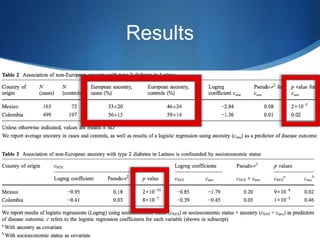
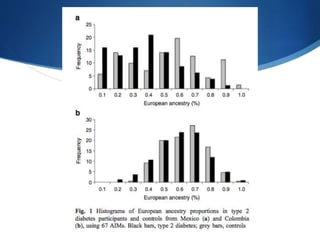
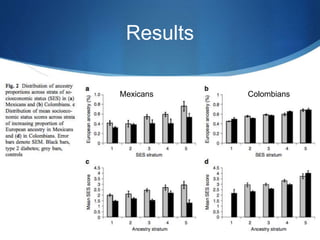
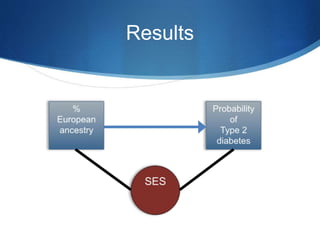
 While there were effects found of % European ancestry
on type-2 diabetes, these were confounded by the effects
socioeconomic status
 Individuals with higher % European ancestry were more
likely to have higher socioeconomic status here
 Makes it difficult to determine which factor contributes
more to type-2 diabetes prevalence
Results
Results
Results
Mexicans Colombians
Results
Discussion
 There is a genetic association between proportion of non-
European ancestry and type-2 diabetes
 But the evidence of this association is highly confounded
by socioeconomic status
 Low socioeconomic status can increase the risk of
diabetes
 It is correlated with Native American ancestry

Stansfield & Kirstein Presentation

  • 1.
    S Strong association of socioeconomicstatus with genetic ancestry in Latinos: implications for admixture studies of type 2 diabetes. J.C Florez et al. Diabetologia 2009 Presented by Sarah Stansfield & Adam Kirstein
  • 2.
    Introduction  Disproportionate ratioof Latino ancestry and European ancestry regarding type 2 diabetes  Adjusted for BMI; or “ abdominal obesity”, Latino ancestry-people still had a higher risk than European for developing type 2 diabetes.  Pima Indians with type 2 have more native ancestry than their “normoglycaemic” peer populations  “ a fraction” of Admixed Latinos  Protective metabolic phenotypes. ( assumedly against type 2)
  • 3.
    Introduction  “Thrifty gene”hypothesis- limiting food resources in the past have favored alleles that promote efficient bodily storage of energy reserves…” ( Human evolutionary genetics glossary)  Looked at socioeconomic status as a contributor of type 2.
  • 4.
  • 5.
  • 6.
    Methods  Columbia: 499cases with type 2 diabetes; 197 controls  Controls: 40+ year olds with no history of diabetes in “first degree relatives” recruited from centers for care of the elderly  Mexico: 163 cases with type 2 diabetes; 72 controls  Controls: 40+ year olds with no history of diabetes in “first degree relatives” recruited from cases’ spouses, other patients at clinics
  • 7.
    Methods  Cases andcontrols were self-identified mestizos from same geographical area with similar socioeconomic status.  Unmixed populations to get allele frequency, corresponding with ancestry and location.  Genotyped all samples  Used 67 AIMS to determine ancestry  Focused on proportion European ancestry  Standard errors for % European ancestry smaller than for % Native American ancestry because the AIMs used were less informative for Native American vs African ancestry
  • 8.
    Methods: Socioeconomic status  Colombia:public utilities records, and property valuation  Ranked 1-6  Assigned a participant based on this strata  Home ownership  Mexico: Used a standardized interviewing questionnaire  Monthly income, occupation, etc.  Ranked lowest to highest  Assigned participants based on this strata.
  • 9.
    Results  While therewere effects found of % European ancestry on type-2 diabetes, these were confounded by the effects socioeconomic status  Individuals with higher % European ancestry were more likely to have higher socioeconomic status here  Makes it difficult to determine which factor contributes more to type-2 diabetes prevalence
  • 10.
  • 11.
  • 12.
  • 13.
  • 14.
    Discussion  There isa genetic association between proportion of non- European ancestry and type-2 diabetes  But the evidence of this association is highly confounded by socioeconomic status  Low socioeconomic status can increase the risk of diabetes  It is correlated with Native American ancestry