THE (OUR)         BEHIND
TECHNOLOGY INTEGRATION
MANOR LAKES P-12
COLLEGE
WHAT DO WE KNOW ABOUT OUR ABOUT OUR
‘     ’ LEARNERS?

 More


 Better equipped to


                  on feedback from peers

 More inclined to


 More orientated to being their own ‘
              ’

                                           Education Trends | Featured
                                           News
John K. Waters—13
                                           December 2011
DOES THAT ALL MEAN?

We
that would utilise the technology,                  , to
cater for our students and meet their needs as learners.

  We understood that todays students would expect
nothing less than the technology that is readily available
                        to them.

       That we needed to adopt the notion of…
                          Learning within a Mobile
                  Technology Context.
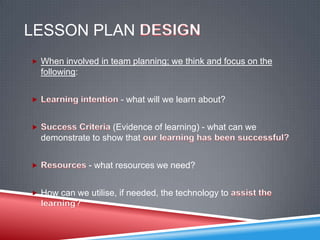
LESSON PLAN
 When involved in team planning; we think and focus on the
  following:


                      - what will we learn about?


                   (Evidence of learning) - what can we
  demonstrate to show that


               - what resources we need?


 How can we utilise, if needed, the technology to
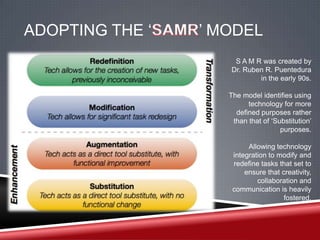
ADOPTING THE ‘   ’ MODEL
                     S A M R was created by
                    Dr. Ruben R. Puentedura
                            in the early 90s.

                    The model identifies using
                          technology for more
                      defined purposes rather
                     than that of ‘Substitution’
                                     purposes.

                          Allowing technology
                     integration to modify and
                     redefine tasks that set to
                         ensure that creativity,
                             collaboration and
                     communication is heavily
                                      fostered.
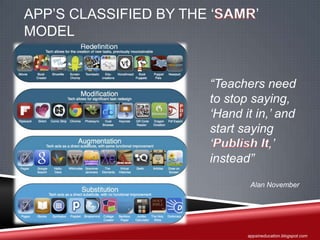
APP’S CLASSIFIED BY THE ‘         ’
MODEL


                        “Teachers need
                        to stop saying,
                        „Hand it in,‟ and
                        start saying
                        „           ,‟
                        instead”
                                Alan November


                               appsineducation.blogspot.com
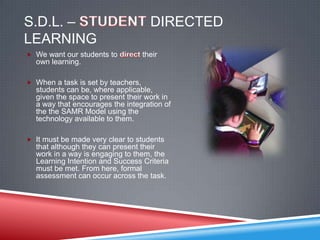
S.D.L. –                              DIRECTED
LEARNING
 We want our students to           their
  own learning.

 When a task is set by teachers,
  students can be, where applicable,
  given the space to present their work in
  a way that encourages the integration of
  the the SAMR Model using the
  technology available to them.

 It must be made very clear to students
  that although they can present their
  work in a way is engaging to them, the
  Learning Intention and Success Criteria
  must be met. From here, formal
  assessment can occur across the task.
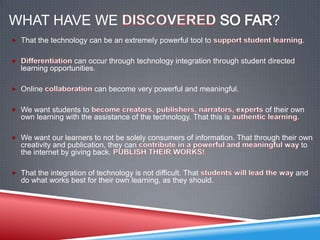
WHAT HAVE WE                                                                 ?
 That the technology can be an extremely powerful tool to                              .

                   can occur through technology integration through student directed
   learning opportunities.

 Online                  can become very powerful and meaningful.

 We want students to                                                      of their own
   own learning with the assistance of the technology. That this is

 We want our learners to not be solely consumers of information. That through their own
   creativity and publication, they can                                                 to
   the internet by giving back.

 That the integration of technology is not difficult. That                            and
   do what works best for their own learning, as they should.

Staff Tech Integration PP

  • 1.
    THE (OUR) BEHIND TECHNOLOGY INTEGRATION MANOR LAKES P-12 COLLEGE
  • 2.
    WHAT DO WEKNOW ABOUT OUR ABOUT OUR ‘ ’ LEARNERS?  More  Better equipped to on feedback from peers  More inclined to  More orientated to being their own ‘ ’ Education Trends | Featured News
John K. Waters—13 December 2011
  • 3.
    DOES THAT ALLMEAN? We that would utilise the technology, , to cater for our students and meet their needs as learners. We understood that todays students would expect nothing less than the technology that is readily available to them. That we needed to adopt the notion of… Learning within a Mobile Technology Context.
  • 4.
    LESSON PLAN  Wheninvolved in team planning; we think and focus on the following: - what will we learn about? (Evidence of learning) - what can we demonstrate to show that - what resources we need?  How can we utilise, if needed, the technology to
  • 5.
    ADOPTING THE ‘ ’ MODEL S A M R was created by Dr. Ruben R. Puentedura in the early 90s. The model identifies using technology for more defined purposes rather than that of ‘Substitution’ purposes. Allowing technology integration to modify and redefine tasks that set to ensure that creativity, collaboration and communication is heavily fostered.
  • 6.
    APP’S CLASSIFIED BYTHE ‘ ’ MODEL “Teachers need to stop saying, „Hand it in,‟ and start saying „ ,‟ instead” Alan November appsineducation.blogspot.com
  • 7.
    S.D.L. – DIRECTED LEARNING  We want our students to their own learning.  When a task is set by teachers, students can be, where applicable, given the space to present their work in a way that encourages the integration of the the SAMR Model using the technology available to them.  It must be made very clear to students that although they can present their work in a way is engaging to them, the Learning Intention and Success Criteria must be met. From here, formal assessment can occur across the task.
  • 8.
    WHAT HAVE WE ?  That the technology can be an extremely powerful tool to . can occur through technology integration through student directed learning opportunities.  Online can become very powerful and meaningful.  We want students to of their own own learning with the assistance of the technology. That this is  We want our learners to not be solely consumers of information. That through their own creativity and publication, they can to the internet by giving back.  That the integration of technology is not difficult. That and do what works best for their own learning, as they should.