Use of Variance Analysis in Business 
Introduction to 
Statistics 
Course code: STA 101 
Section: 02 
Submitted to: 
Mastak Al Amin
Use of Variance Analysis in Business 
Group Members: 
• Please write your name/id 
• Abrar Hassan Saadi 
13104186
What is Variance? 
• The difference between an expected and actual 
result such as between a budget and actual 
expenditure. 
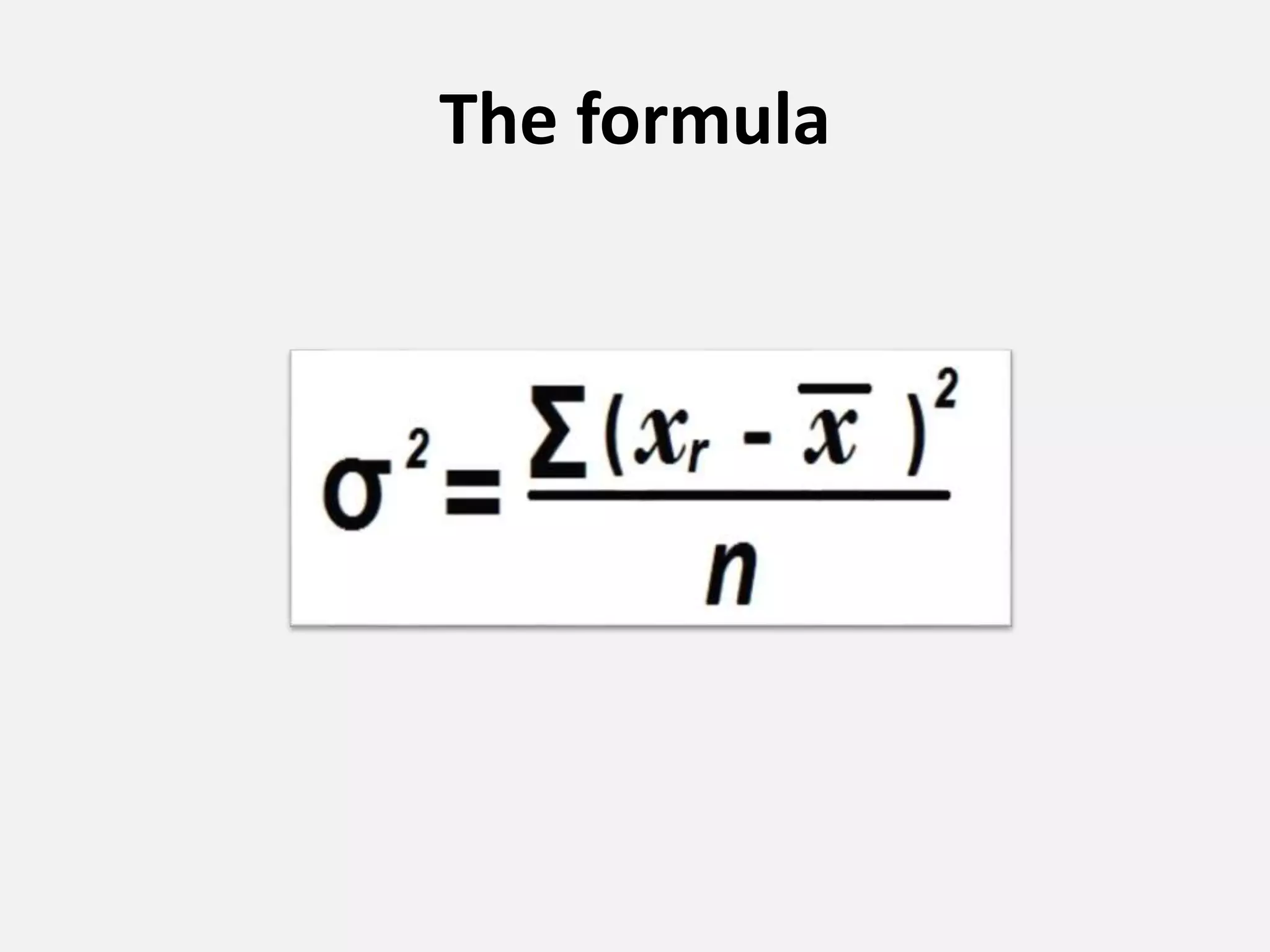
• Statistics: The arithmetic mean of the squares of the 
deviations of all values in a set of numbers from 
their arithmetic mean.
The formula
Variance analysis 
• Variance analysis, in budgeting 
(or management accounting in general), is a 
tool of budgetary control 
• It assists in evaluating performance by means 
of variances between budgeted amount, 
planned amount or standard amount and the 
actual amount incurred/sold. 
• Variance analysis can be carried out for both 
costs and revenues
Use of variance analysis in Business 
• Budget vs. Actual Costs 
– Variance analysis is important to assist with 
managing budgets by controlling budgeted versus 
actual costs. 
– Variances between budgeted and actual costs 
might lead to adjusting business goals, objectives 
or strategies.
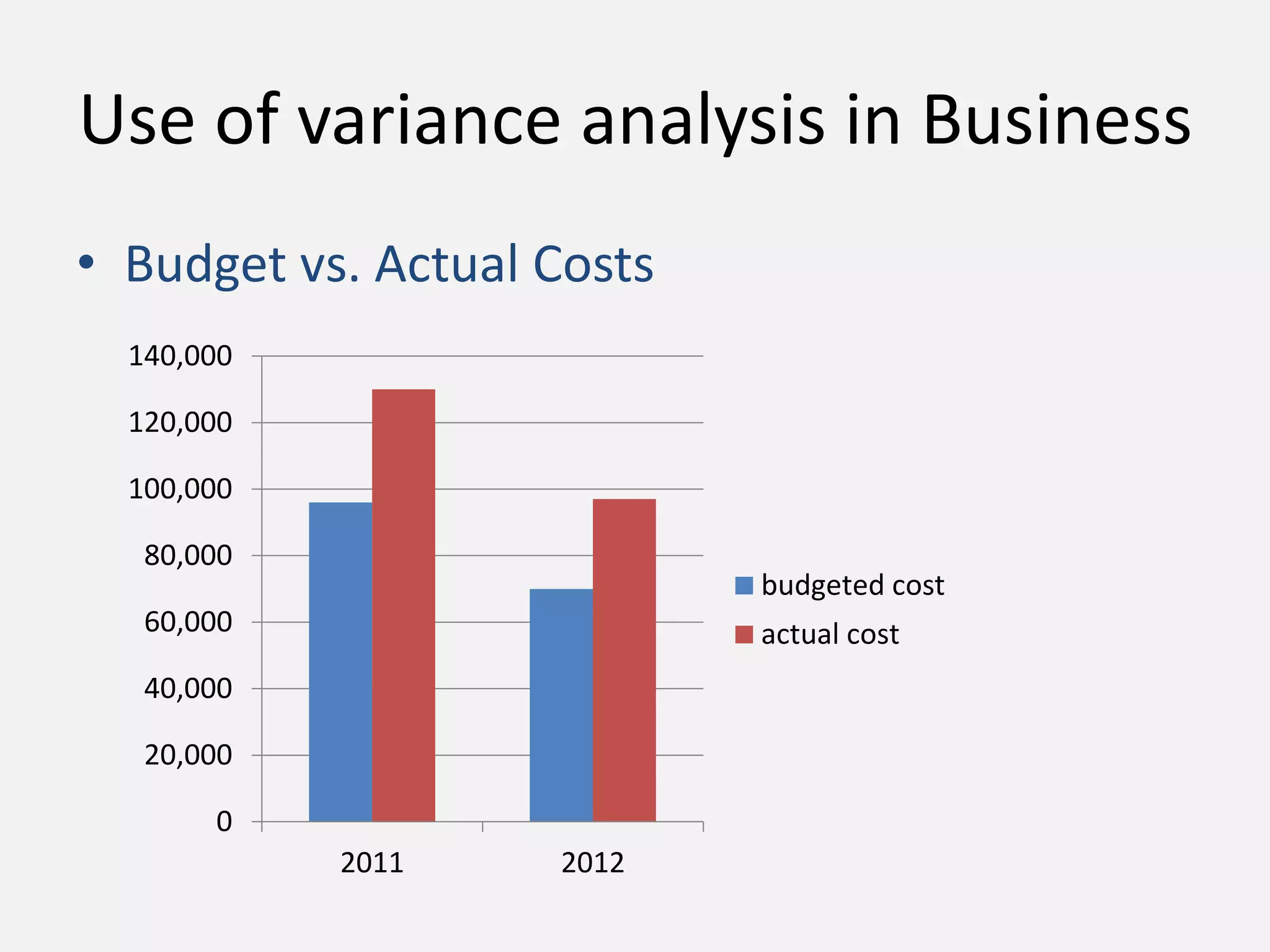
Use of variance analysis in Business 
• Budget vs. Actual Costs 
140,000 
120,000 
100,000 
80,000 
60,000 
40,000 
20,000 
0 
2011 2012 
budgeted cost 
actual cost
Use of variance analysis in Business 
• Forecasting 
– It uses patterns of past business data to construct 
a theory about future performance 
– Being able to mathematically forecast sales helps 
understanding demand
Use of variance analysis in Business 
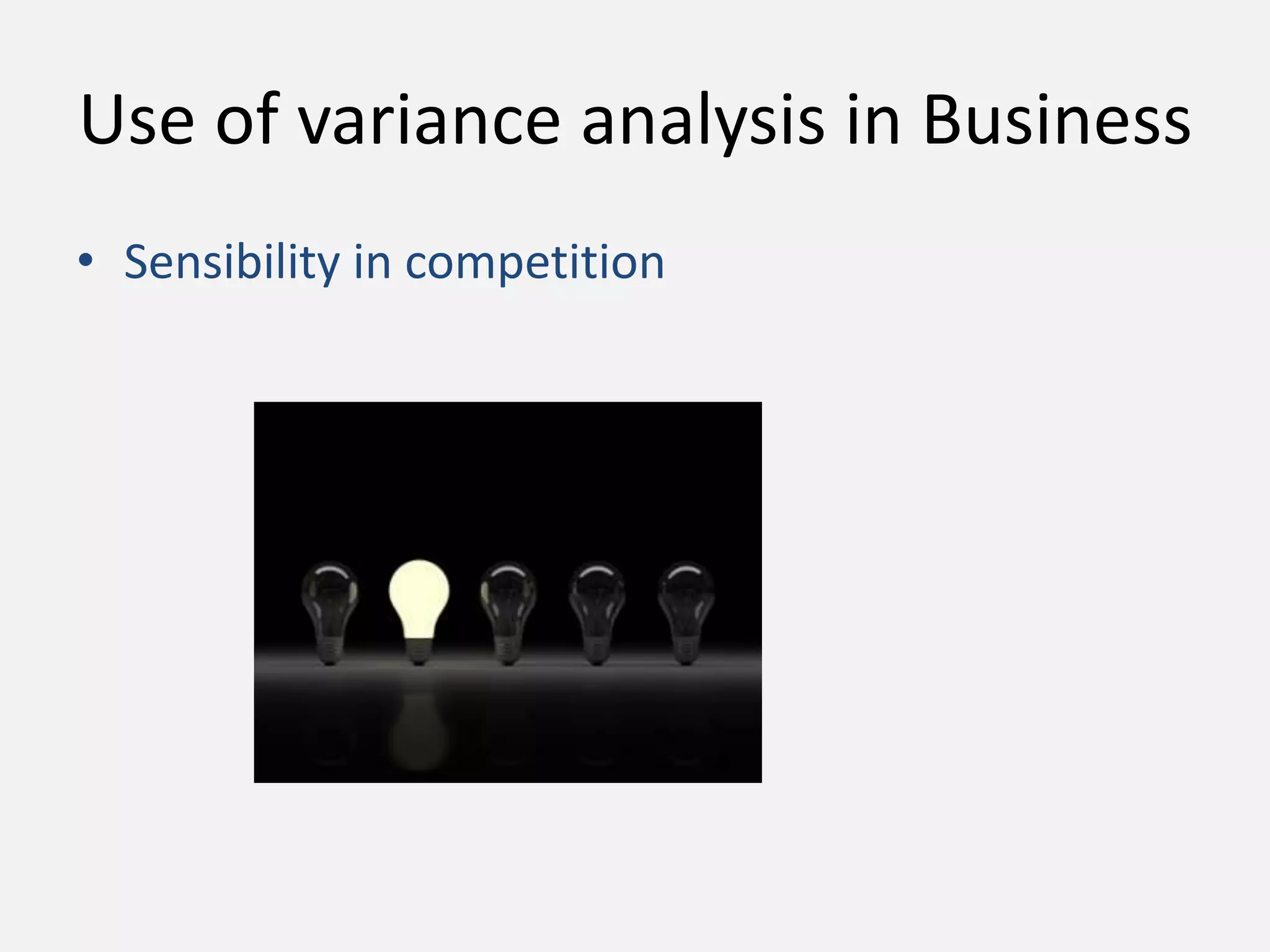
• Sensibility in competition 
-Variance of different metrics in a market helps 
building products more sensibly 
-analysis of variance in market monitoring indicates 
key differences which helps towards achieving 
competitive advantage
Use of variance analysis in Business 
• Sensibility in competition
Thank you

use of Variance analysis

  • 1.
    Use of VarianceAnalysis in Business Introduction to Statistics Course code: STA 101 Section: 02 Submitted to: Mastak Al Amin
  • 2.
    Use of VarianceAnalysis in Business Group Members: • Please write your name/id • Please write your name/id • Please write your name/id • Abrar Hassan Saadi 13104186
  • 3.
    What is Variance? • The difference between an expected and actual result such as between a budget and actual expenditure. • Statistics: The arithmetic mean of the squares of the deviations of all values in a set of numbers from their arithmetic mean.
  • 4.
  • 5.
    Variance analysis •Variance analysis, in budgeting (or management accounting in general), is a tool of budgetary control • It assists in evaluating performance by means of variances between budgeted amount, planned amount or standard amount and the actual amount incurred/sold. • Variance analysis can be carried out for both costs and revenues
  • 6.
    Use of varianceanalysis in Business • Budget vs. Actual Costs – Variance analysis is important to assist with managing budgets by controlling budgeted versus actual costs. – Variances between budgeted and actual costs might lead to adjusting business goals, objectives or strategies.
  • 7.
    Use of varianceanalysis in Business • Budget vs. Actual Costs 140,000 120,000 100,000 80,000 60,000 40,000 20,000 0 2011 2012 budgeted cost actual cost
  • 8.
    Use of varianceanalysis in Business • Forecasting – It uses patterns of past business data to construct a theory about future performance – Being able to mathematically forecast sales helps understanding demand
  • 9.
    Use of varianceanalysis in Business • Sensibility in competition -Variance of different metrics in a market helps building products more sensibly -analysis of variance in market monitoring indicates key differences which helps towards achieving competitive advantage
  • 10.
    Use of varianceanalysis in Business • Sensibility in competition
  • 11.