
St. Patrick’s Day History and Traditions
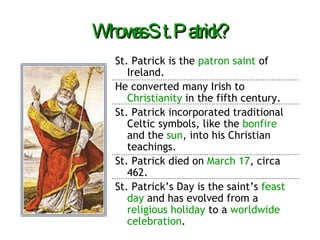
Who was St. Patrick? St. Patrick is the  patron saint  of Ireland. He converted many Irish to  Christianity  in the fifth century. St. Patrick incorporated traditional Celtic symbols, like the  bonfire  and the  sun , into his Christian teachings. St. Patrick died on  March 17 , circa 462. St. Patrick’s Day is the saint’s  feast day  and has evolved from a  religious holiday  to a  worldwide celebration .
St. Patrick’s Day Traditions Christians attend  church in the morning  and  celebrate in the afternoon , although  pubs in Ireland were closed  on March 17 by law until 1995. The  rules of Lent are waived  and revelers traditionally eat  Irish bacon and cabbage . The  first St. Patty’s Day parade  occurred when  Irish soldiers  in the British army  marched through New York City  on March 17, 1762. The  Chicago River  has been  dyed green  every year since 1962.
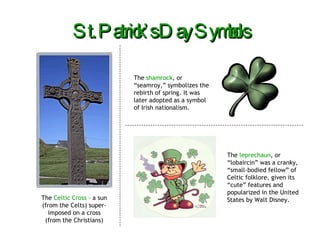
St. Patrick’s Day Symbols The  Celtic Cross  – a sun (from the Celts) super-imposed on a cross (from the Christians) The  shamrock , or “seamroy,” symbolizes the rebirth of spring. It was later adopted as a symbol of Irish nationalism. The  leprechaun , or “lobaircin” was a cranky, “small-bodied fellow” of Celtic folklore, given its “cute” features and popularized in the United States by Walt Disney.
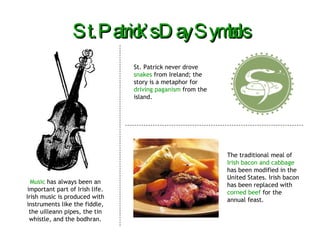
St. Patrick’s Day Symbols Music  has always been an important part of Irish life. Irish music is produced with instruments like the fiddle, the uilleann pipes, the tin whistle, and the bodhran. St. Patrick never drove  snakes  from Ireland; the story is a metaphor for  driving paganism  from the island. The traditional meal of  Irish bacon and cabbage  has been modified in the United States. Irish bacon has been replaced with  corned beef  for the annual feast.
Irish Names There are  34 million  U.S. residents who claim Irish ancestry, second only to German. Some Irish names: Corey  – Gaelic for “ravine” Douglas  – from the Gaelic name  Dubhghlas  (“dark river or blood river”) Brent  – derived from an English place name which meant “hill” in Celtic Bryan  – possibly related to the Old Celtic element  bre  meaning “hill; high, noble” Kevin  – from Old Irish  coem  (“kind, gentle, handsome”) and  gein  (“birth”)
Instructions Print out the slides and cut out on the dotted lines. Also cut out the title on each slide. Arrange the facts however you would like on your bulletin board. Include background information about various Irish names of residents on your floor. Historical information from  www.historychannel.com ; Name information from  www.behindthename.com Images collected from various sources.
Bulletin Board submitted by:  Mike Hillman, Resident Assistant Elizabethtown College

St patricks day

  • 1.
    St. Patrick’s DayHistory and Traditions
  • 2.
    Who was St.Patrick? St. Patrick is the patron saint of Ireland. He converted many Irish to Christianity in the fifth century. St. Patrick incorporated traditional Celtic symbols, like the bonfire and the sun , into his Christian teachings. St. Patrick died on March 17 , circa 462. St. Patrick’s Day is the saint’s feast day and has evolved from a religious holiday to a worldwide celebration .
  • 3.
    St. Patrick’s DayTraditions Christians attend church in the morning and celebrate in the afternoon , although pubs in Ireland were closed on March 17 by law until 1995. The rules of Lent are waived and revelers traditionally eat Irish bacon and cabbage . The first St. Patty’s Day parade occurred when Irish soldiers in the British army marched through New York City on March 17, 1762. The Chicago River has been dyed green every year since 1962.
  • 4.
    St. Patrick’s DaySymbols The Celtic Cross – a sun (from the Celts) super-imposed on a cross (from the Christians) The shamrock , or “seamroy,” symbolizes the rebirth of spring. It was later adopted as a symbol of Irish nationalism. The leprechaun , or “lobaircin” was a cranky, “small-bodied fellow” of Celtic folklore, given its “cute” features and popularized in the United States by Walt Disney.
  • 5.
    St. Patrick’s DaySymbols Music has always been an important part of Irish life. Irish music is produced with instruments like the fiddle, the uilleann pipes, the tin whistle, and the bodhran. St. Patrick never drove snakes from Ireland; the story is a metaphor for driving paganism from the island. The traditional meal of Irish bacon and cabbage has been modified in the United States. Irish bacon has been replaced with corned beef for the annual feast.
  • 6.
    Irish Names Thereare 34 million U.S. residents who claim Irish ancestry, second only to German. Some Irish names: Corey – Gaelic for “ravine” Douglas – from the Gaelic name Dubhghlas (“dark river or blood river”) Brent – derived from an English place name which meant “hill” in Celtic Bryan – possibly related to the Old Celtic element bre meaning “hill; high, noble” Kevin – from Old Irish coem (“kind, gentle, handsome”) and gein (“birth”)
  • 7.
    Instructions Print outthe slides and cut out on the dotted lines. Also cut out the title on each slide. Arrange the facts however you would like on your bulletin board. Include background information about various Irish names of residents on your floor. Historical information from www.historychannel.com ; Name information from www.behindthename.com Images collected from various sources.
  • 8.
    Bulletin Board submittedby: Mike Hillman, Resident Assistant Elizabethtown College