‫ہندو‬‫ی‬‫انگر‬ ‫کے‬‫ی‬‫ز‬‫ی‬‫لسان‬ ‫پر‬‫ی‬‫ات‬‫ی‬‫اثرات‬
‫حسن‬ ‫مقصود‬‫ی‬
‫برق‬ ‫ابوزر‬‫ی‬‫خانہ‬ ‫کتب‬
‫مئ‬‫ی‬6102
‫ہندو‬‫ی‬‫انگر‬ ‫کے‬‫ی‬‫ز‬‫ی‬‫لسان‬ ‫پر‬‫ی‬‫ات‬‫ی‬‫اثرات‬
‫ک‬ ‫لوگوں‬ ‫کے‬ ‫عالقوں‬ ‫مختلف‬‫ی‬‫زبان‬'‫م‬‫ی‬‫ح‬ ‫ں‬‫ی‬‫انگ‬ ‫رت‬‫ی‬‫ز‬
‫لسان‬‫ی‬‫ات‬‫ی‬‫پا‬ ‫کا‬ ‫مماثلتوں‬‫ی‬‫جانا‬ ‫ا‬'‫اتفاق‬‫ی‬‫نہ‬ ‫ہ‬‫ی‬‫سکت‬ ‫ہو‬ ‫ں‬‫ا‬‫۔‬‫اس‬
‫م‬ ‫منظر‬ ‫پس‬ ‫کے‬‫ی‬‫ں‬'‫کس‬‫ی‬‫کوئ‬ ‫پر‬ ‫سطع‬‫ی‬‫ناکوئ‬‫ی‬‫واقعہ‬'
‫معاملہ‬'‫حادثہ‬'‫بات‬‫ی‬‫م‬ ‫وقوع‬ ‫ضرور‬ ‫ناکچھ‬ ‫کچھ‬ ‫ا‬‫ی‬‫آ‬ ‫ں‬‫ی‬‫ہوتا‬ ‫ا‬
‫ہے‬'‫ک‬ ‫اس‬ ‫چاہے‬‫ی‬‫ح‬‫ی‬‫ث‬‫ی‬‫معمول‬ ‫ت‬‫ی‬‫ہ‬‫ی‬‫ک‬‫ی‬‫رہ‬ ‫نہ‬ ‫وں‬‫ی‬‫ہو‬'‫اس‬
‫ہے‬ ‫ہوتا‬ ‫ہوا‬ ‫مرتب‬ ‫ضرور‬ ‫اثر‬ ‫کا‬‫۔‬
‫ا‬‫ی‬‫د‬ ‫ک‬‫ی‬‫س‬‫ی‬‫ی‬‫بد‬ ‫ا‬‫ی‬‫س‬‫ی‬‫شخص‬'‫م‬ ‫بازار‬‫ی‬‫خر‬ ‫کچھ‬ ‫ں‬‫ی‬‫دنے‬'‫کس‬‫ی‬
‫ملنے‬ ‫سے‬‫ی‬‫کس‬ ‫ا‬‫ی‬‫ا‬‫ہے‬ ‫آتا‬ ‫سے‬ ‫کام‬ ‫ور‬‫۔‬‫اس‬ ‫اپنے‬ ‫وہ‬
‫دوران‬ ‫مختصر‬ ‫کے‬ ‫ٹھہراؤ‬‫ی‬‫م‬ ‫ے‬‫ی‬‫ں‬'‫کوئ‬‫ی‬‫اصطالح‬'‫کوئ‬‫ی‬
‫المثل‬ ‫ضرب‬'‫کوئ‬‫ی‬‫محاورہ‬‫ی‬‫کوئ‬ ‫ا‬‫ی‬‫ہے‬ ‫جاتا‬ ‫چھوڑ‬ ‫لفظ‬‫۔‬‫اس‬
‫بوال‬ ‫کا‬'‫ا‬‫ی‬‫م‬ ‫استعمال‬ ‫شخص‬ ‫ک‬‫ی‬‫ہے‬ ‫التا‬ ‫ں‬'‫دوسرا‬ ‫پھر‬'‫ان‬
‫ک‬‫ی‬‫د‬‫ی‬‫د‬ ‫کھا‬‫ی‬‫کھ‬‫ی‬‫م‬‫ی‬‫م‬ ‫مہارت‬ ‫وہ‬ ‫ں‬‫ی‬‫ہے‬ ‫جاتا‬ ‫آ‬ ‫ں‬‫۔‬‫اب‬‫ی‬‫الزم‬ ‫ہ‬
‫نہ‬‫ی‬‫تلفظ‬ ‫اصل‬ ‫وہ‬ ‫کہ‬ ‫ں‬'‫معنوں‬ ‫اصل‬‫ی‬‫کے‬ ‫استعمال‬ ‫اصل‬ ‫پھر‬ ‫ا‬
‫مطابق‬'‫م‬ ‫استعمال‬‫ی‬‫جائے‬ ‫آ‬ ‫ں‬‫۔‬‫اپن‬ ‫وہ‬‫ی‬‫کہ‬ ‫سے‬ ‫اصل‬‫ی‬‫دور‬ ‫ں‬'
‫ہے‬ ‫سکتا‬ ‫جا‬ ‫دور‬ ‫بہت‬ ‫کہ‬ ‫بل‬‫۔‬‫معنو‬‫ی‬‫سے‬ ‫اصل‬ ‫سے‬ ‫اعتبار‬
‫م‬ ‫استعمال‬ ‫برعکس‬‫ی‬‫ہے‬ ‫سکتا‬ ‫آ‬ ‫ں‬‫۔‬‫کئ‬‫ی‬‫معن‬‫ی‬‫استعمال‬ ‫اور‬
‫ہ‬ ‫سکتے‬ ‫آ‬ ‫سامنے‬‫ی‬‫غ‬ ‫کے‬ ‫اس‬ ‫پھر‬ ‫اور‬ ‫ں‬‫ی‬‫گمان‬ ‫کا‬ ‫ہونے‬ ‫ر‬
‫نہ‬ ‫تک‬‫ی‬‫گزرتا‬ ‫ں‬‫۔‬
‫ی‬‫ونان‬‫ی‬‫وں‬‫س‬ ‫کا‬‫ی‬‫اس‬‫ی‬'‫علم‬‫ی‬'‫ادب‬‫ی‬‫ثقافت‬ ‫اور‬‫ی‬‫سے‬ ‫حوالہ‬'‫دن‬‫ی‬‫ا‬
‫م‬ ‫بھر‬‫ی‬‫تھا‬ ‫ٹہکا‬ ‫ں‬‫۔‬‫ک‬ ‫وقتوں‬ ‫آتے‬‫ی‬‫عظ‬‫ی‬‫س‬ ‫م‬‫ی‬‫اس‬‫ی‬'‫عسکر‬‫ی‬
‫قوت‬ ‫مکار‬ ‫اور‬'‫برطان‬‫ی‬‫ک‬ ‫ان‬ ‫ہ‬‫ی‬‫تھ‬ ‫نہ‬ ‫باہر‬ ‫سے‬ ‫دسترس‬‫ی۔‬
‫اس‬‫ی‬‫برصغ‬ ‫طرح‬‫ی‬‫بھ‬ ‫ر‬‫ی‬‫ی‬‫ونان‬‫ی‬‫ز‬ ‫کے‬ ‫وں‬‫ی‬‫رہا‬ ‫اثر‬ ‫ر‬‫۔‬‫ی‬‫کا‬ ‫ونان‬
‫لٹ‬‫ی‬‫اعظم‬ ‫را‬'‫برصغ‬‫ی‬‫بھ‬ ‫پر‬ ‫ر‬‫ی‬‫ہوا‬ ‫حملہ‬‫۔‬‫ی‬‫گ‬ ‫پٹ‬ ‫ہاں‬‫ی‬‫ا‬‫۔‬‫زخم‬‫ی‬
‫ہوا‬‫اور‬‫ی‬‫گ‬ ‫بھاگ‬ ‫کر‬ ‫دبا‬ ‫دم‬ ‫سے‬ ‫ہاں‬‫ی‬‫ا‬‫۔‬‫ا‬‫ی‬‫ک‬‫ی‬‫ونان‬‫ی‬‫قب‬‫ی‬‫لہ‬
‫ی‬‫گ‬ ‫رک‬ ‫ہاں‬‫ی‬‫ا‬‫۔‬‫ک‬‫ی‬‫م‬ ‫الش‬‫ی‬‫ٹھہرا‬ ‫پڑاؤ‬ ‫کا‬ ‫ان‬ ‫ں‬‫۔‬‫ی‬‫ہ‬‫ی‬‫ونان‬‫ی‬‫کئ‬‫ی‬
‫والئ‬‫ی‬‫رہے‬ ‫کرتے‬ ‫حکومت‬ ‫پر‬ ‫توں‬‫۔‬‫اس‬‫ی‬‫ونان‬‫ی‬‫عسکر‬‫ی‬
‫قب‬‫ی‬‫ک‬ ‫لے‬‫ی‬‫نسل‬'‫بھ‬ ‫آج‬‫ی‬'‫ی‬‫سار‬ ‫بہت‬ ‫ہاں‬‫ی‬‫اپن‬‫ی‬‫ی‬‫ونان‬‫ی‬
‫روا‬‫ی‬‫ہے‬ ‫موجود‬ ‫ساتھ‬ ‫کے‬ ‫ات‬‫۔‬
‫برٹن‬ ‫رومن‬:‫بر‬‫ی‬‫طان‬‫ی‬‫ہ‬'‫بر‬‫ی‬‫ٹن‬'‫برطا‬‫ن‬‫ی‬‫ہ‬‫۔‬‫آئ‬‫ی‬‫ل‬‫ی‬‫تھا‬ ‫عالقہ‬ ‫کا‬ ‫نڈ‬'
‫ا‬ ‫رومن‬ ‫کہ‬ ‫جو‬‫ی‬‫ک‬ ‫مپائر‬‫ی‬‫م‬ ‫حکومت‬‫ی‬‫تھا‬ ‫ں‬‫۔‬‫برصغ‬‫ی‬‫رومن‬ ‫ر‬
‫تھا‬ ‫نہ‬ ‫باہر‬ ‫سے‬ ‫شہنشاہت‬‫۔‬‫برصغ‬‫ی‬‫م‬ ‫ر‬‫ی‬‫کے‬ ‫ہونے‬ ‫کے‬ ‫ان‬ ‫ں‬
‫انٹرن‬ ‫اثار‬ ‫سے‬ ‫بہت‬‫ی‬‫ہ‬ ‫سکتے‬ ‫جا‬ ‫تالشے‬ ‫پر‬ ‫ٹ‬‫ی‬‫ں‬‫۔‬‫انگر‬‫ی‬‫ز‬‫ی‬
‫بھ‬ ‫آج‬ ‫الخط‬ ‫رسم‬ ‫کا‬‫ی‬‫ہے‬ ‫رومن‬‫۔‬‫م‬ ‫الخط‬ ‫رسم‬ ‫اس‬‫ی‬‫لکھ‬ ‫ں‬‫ی‬
‫د‬ ‫نام‬ ‫کا‬ ‫اردو‬ ‫رومن‬ ‫کو‬ ‫اردو‬‫ی‬‫جا‬ ‫ا‬‫ہے‬ ‫تا‬‫۔‬
‫برطان‬‫ی‬‫والے‬ ‫ہ‬0581‫پہلے‬ ‫بہت‬ ‫سے‬'‫برصغ‬‫ی‬‫م‬ ‫ر‬‫ی‬‫ہو‬ ‫وارد‬ ‫ں‬
‫گ‬‫ی‬‫تھے‬ ‫ے‬'‫تاہم‬0581‫سے‬0491‫برصغ‬ ‫تک‬‫ی‬‫رہا‬ ‫کا‬ ‫ان‬ ‫ر‬‫۔‬
‫آزاد‬ ‫محسن‬‫ی‬‫ک‬ ‫ہٹلر‬‫ی‬‫عنا‬‫ی‬‫مہربان‬ ‫اور‬ ‫ت‬‫ی‬‫سے‬'‫برطان‬‫ی‬‫کے‬ ‫ہ‬
‫ہاتھ‬'‫ک‬ ‫کمر‬ ‫اور‬ ‫پاؤں‬‫ی‬‫ہڈ‬‫ی‬‫گئ‬ ‫ٹوٹ‬ ‫اں‬‫ی‬‫ک‬ ‫سونے‬ ‫اور‬ ‫ں‬‫ی‬
‫چڑ‬‫ی‬‫ا‬'‫ک‬ ‫اس‬‫ی‬‫م‬ ‫دسترس‬‫ی‬‫رہ‬ ‫نہ‬ ‫ں‬‫ی۔‬‫امر‬ ‫بعد‬ ‫کے‬ ‫اس‬‫ی‬‫ک‬ ‫کہ‬‫ی‬
‫گڈ‬‫ی‬‫چڑھ‬‫ی‬‫چڑھ‬ ‫تک‬ ‫آج‬ ‫اور‬‫ی‬‫ہوئ‬‫ی‬‫ہے‬‫۔‬‫گو‬‫ی‬‫دونوں‬ ‫ا‬
‫ی‬‫ون‬‫ی‬‫ز‬ ‫کے‬ ‫وں‬‫ی‬‫تھے‬ ‫تسلط‬ ‫ر‬'‫روم‬ ‫بعد‬ ‫کے‬ ‫اس‬‫ی‬‫رہے‬ ‫کے‬ ‫وں‬‫۔‬
‫برصغ‬ ‫بعد‬ ‫کے‬ ‫اس‬‫ی‬‫برطان‬ ‫پر‬ ‫ر‬‫ی‬‫اور‬ ‫چال‬ ‫سکا‬ ‫کھوٹا‬ ‫کھرا‬ ‫کا‬ ‫ہ‬
‫امر‬ ‫حضرت‬ ‫اب‬‫ی‬‫ک‬ ‫بہادر‬ ‫کہ‬‫ی‬‫خداوند‬‫ی‬‫ہے‬ ‫دورہ‬ ‫دور‬ ‫کا‬‫۔‬
‫ک‬ ‫اسم‬‫ی‬‫ترک‬‫ی‬‫ل‬ ‫کے‬ ‫ب‬‫ی‬‫ے‬'‫انگر‬‫ی‬‫ز‬‫ی‬‫ی‬‫نہ‬ ‫موجود‬ ‫الحقہ‬ ‫ں‬‫ی‬‫ں‬‫۔‬
‫ی‬‫خالص‬ ‫ہ‬‫برصغ‬‫ی‬‫ہے‬ ‫متعلق‬ ‫سے‬ ‫ر‬‫۔‬‫د‬ ‫مثال‬‫ی‬‫وارکا‬'‫پر‬‫ی‬‫م‬‫ی‬‫کا‬'
‫انوم‬‫ی‬‫کا‬'‫کامول‬‫ی‬‫وغ‬ ‫کا‬‫ی‬‫گو‬ ‫رہ‬‫ی‬‫امر‬ ‫ا‬‫ی‬‫کا‬'‫برصغ‬‫ی‬‫ہے‬ ‫لفظ‬ ‫کا‬ ‫ر‬‫۔‬
‫امبڑ‬ ‫مثال‬‫ی‬‫کا‬.‫کس‬ ‫اگر‬‫ی‬‫ہے‬ ‫نام‬ ‫کا‬ ‫شخص‬'‫برصغ‬ ‫کا‬ ‫اس‬ ‫تو‬‫ی‬‫ر‬
‫کوئ‬ ‫سے‬‫ی‬‫ناکوئ‬‫ی‬‫رشتہ‬'‫گا‬ ‫ہو‬ ‫رہا‬ ‫ضرور‬‫۔‬‫امر‬‫ی‬‫م‬ ‫کہ‬‫ی‬‫بھ‬ ‫ں‬‫ی‬
‫انگر‬‫ی‬‫ز‬‫ی‬‫م‬ ‫استعمال‬ ‫زبان‬‫ی‬‫آت‬ ‫ں‬‫ی‬‫ہے‬‫۔‬
‫ہے‬ ‫ظاہر‬ ‫صاف‬'‫عال‬ ‫ان‬‫لوگ‬ ‫کے‬ ‫قوں‬‫ی‬‫آئے‬ ‫ہاں‬‫۔‬‫عالقوں‬ ‫ان‬
‫سے‬'‫بھ‬ ‫سے‬ ‫حوالہ‬ ‫جس‬‫ی‬‫سہ‬‫ی‬'‫ی‬‫گ‬ ‫لوگ‬ ‫سے‬ ‫ہاں‬‫ی‬‫ے‬‫۔‬
‫ک‬ ‫مزے‬‫ی‬‫بات‬‫ی‬‫بھ‬ ‫آج‬ ‫کہ‬ ‫ہ‬‫ی‬‫ک‬ ‫الکھوں‬‫ی‬‫م‬ ‫تعداد‬‫ی‬‫مغرب‬ ‫ں‬
‫م‬ ‫عالقوں‬ ‫مختلف‬ ‫کے‬‫ی‬‫برصغ‬ ‫ں‬‫ی‬‫لوگ‬ ‫کے‬ ‫ر‬'‫عارض‬‫ی‬‫اور‬
‫ہ‬ ‫رکھتے‬ ‫اقامت‬ ‫مستقل‬‫ی‬‫ں‬‫۔‬‫ی‬‫برصغ‬ ‫کہ‬ ‫کہنا‬ ‫ہ‬‫ی‬‫ہ‬ ‫والے‬ ‫ر‬‫ی‬
‫ہوئے‬ ‫متاثر‬'‫ز‬ ‫سراسر‬‫ی‬‫ادت‬‫ی‬‫گ‬ ‫ہو‬ ‫مترادف‬ ‫کے‬‫ا‬‫۔‬‫کہ‬ ‫ہو‬ ‫حاکم‬
‫محکوم‬'‫ا‬‫ی‬‫وال‬ ‫ک‬‫ی‬‫م‬ ‫ت‬‫ی‬‫سبب‬ ‫کے‬ ‫رکھنے‬ ‫اقامت‬ ‫ں‬'‫ا‬‫ی‬‫ک‬
‫ہ‬ ‫ہوتے‬ ‫متاثر‬ ‫سے‬ ‫دوسرے‬‫ی‬‫ں‬‫۔‬‫ہندو‬‫ی‬'‫ک‬ ‫ہند‬ ‫جوآل‬‫ی‬‫زبان‬
‫ہے‬'‫دن‬ ‫نے‬‫ی‬‫ک‬ ‫ا‬‫ی‬‫کو‬ ‫زبانوں‬ ‫تمام‬'‫لسان‬‫ی‬'‫فکر‬‫ی‬‫اسلوب‬ ‫اور‬‫ی‬
‫ک‬ ‫متاثر‬ ‫سے‬ ‫حوالہ‬‫ی‬‫ا‬.‫اس‬‫ی‬‫طرح‬‫ی‬‫بھ‬ ‫ہ‬‫ی‬‫اپن‬‫ی‬‫لچک‬ ‫بےپناہ‬
‫پذ‬‫ی‬‫ر‬‫ی‬‫باعث‬ ‫کے‬'‫ہوئ‬ ‫متاثر‬ ‫سے‬ ‫ان‬‫ی۔‬‫زبان‬ ‫مختلف‬‫کے‬ ‫وں‬
‫الفاظ‬'‫ذخ‬ ‫کے‬ ‫اس‬‫ی‬‫م‬ ‫رہءاستعمال‬‫ی‬‫ہ‬ ‫داخل‬ ‫ں‬‫ی‬‫ں‬‫۔‬
‫ک‬ ‫کرنے‬ ‫متاثر‬‫ی‬'‫کئ‬‫ی‬‫صورت‬‫ی‬‫سطح‬ ‫اور‬ ‫ں‬‫ی‬‫ہوسکت‬ ‫ں‬‫ی‬‫ہ‬‫ی‬‫ں‬‫۔‬
1
‫ز‬ ‫کلچر‬‫ی‬‫خوات‬ ‫تر‬ ‫ادہ‬‫ی‬‫ز‬ ‫کے‬ ‫ن‬‫ی‬‫ہے‬ ‫رہا‬ ‫اثر‬ ‫ر‬‫۔‬
‫ز‬‫ی‬‫ورات‬'‫لباس‬'‫اطوار‬ ‫کے‬ ‫سنگار‬ ‫بناؤ‬'‫وغ‬ ‫نخرہ‬ ‫و‬ ‫ناز‬‫ی‬‫رہ‬
‫چلن‬ ‫کے‬'‫ا‬‫ی‬‫اخت‬ ‫کے‬ ‫دوسرے‬ ‫ک‬‫ی‬‫کرت‬ ‫ار‬‫ی‬‫ہ‬‫ی‬‫ں‬‫۔‬
‫اخت‬ ‫اصول‬ ‫کے‬ ‫برخواست‬ ‫و‬ ‫نشت‬‫ی‬‫ار‬‫کرت‬‫ی‬‫ہ‬‫ی‬‫ں‬‫۔‬
‫م‬ ‫گو‬ ‫گفت‬‫ی‬‫ں‬'‫ا‬‫ی‬‫ک‬ ‫دوسرے‬ ‫ک‬‫ی‬‫اخت‬ ‫طرز‬‫ی‬‫کرت‬ ‫ار‬‫ی‬‫ہ‬‫ی‬‫ں‬‫۔‬
‫م‬ ‫گھر‬‫ی‬‫ک‬ ‫سامان‬ ‫ں‬‫ی‬‫سجانے‬ ‫اور‬ ‫رکھنے‬ ‫کے‬ ‫اس‬ ‫اور‬ ‫درآمد‬
‫طور‬ ‫کے‬'‫اپنات‬‫ی‬‫ہ‬‫ی‬‫ں‬‫۔‬
‫م‬ ‫امور‬ ‫متعلقہ‬ ‫سے‬ ‫اس‬ ‫اور‬ ‫کچن‬‫ی‬‫ں‬'‫نقال‬‫ی‬‫کرت‬‫ی‬‫ہ‬‫ی‬‫ں‬‫۔‬
‫اش‬‫ی‬‫اپنات‬ ‫پکوان‬ ‫اطوار‬ ‫اور‬ ‫ائے‬‫ی‬‫ہ‬‫ی‬‫ں‬‫۔‬
‫فقط‬‫ی‬‫ہ‬ ‫امور‬ ‫ہ‬‫ی‬‫نہ‬ ‫انجام‬‫ی‬‫پاتے‬ ‫ں‬'‫حوال‬ ‫کے‬ ‫ان‬ ‫کہ‬ ‫بل‬‫سے‬ ‫ہ‬
‫اسما‬'‫صفات‬'‫سابقے‬'‫الحقے‬'‫بھ‬ ‫اسلوب‬‫ی‬‫م‬ ‫گھر‬ ‫اس‬‫ی‬‫ں‬
‫ہ‬ ‫ہوتے‬ ‫منتقل‬‫ی‬‫ں‬‫۔‬
2
‫ک‬ ‫زوروں‬ ‫کم‬‫ی‬‫ہنرمند‬‫ی‬‫ہ‬ ‫پڑتے‬ ‫ڈاکے‬ ‫پر‬ ‫ہنرمندوں‬ ‫اور‬‫ی‬‫ں‬
‫جما‬ ‫قبضہ‬ ‫پر‬ ‫قدرت‬ ‫وسائل‬ ‫کے‬ ‫ان‬‫ی‬‫ہے‬ ‫جاتا‬ ‫ا‬
‫علم‬ ‫کے‬ ‫ان‬‫ی‬‫ادب‬ ‫و‬‫ی‬‫اس‬ ‫ساتھ‬ ‫کے‬ ‫کرنے‬ ‫غارت‬ ‫کو‬ ‫ورثے‬
‫ک‬‫ی‬‫بڑ‬‫ی‬‫بےدرد‬‫ی‬‫ک‬ ‫مار‬ ‫لوٹ‬ ‫سے‬‫ی‬‫جات‬‫ی‬‫ہے‬‫۔‬
‫ت‬ ‫ان‬‫ی‬‫امو‬ ‫نوں‬‫ک‬ ‫ان‬ ‫سے‬ ‫حوالہ‬ ‫کے‬ ‫ر‬‫ی‬‫م‬ ‫زبان‬‫ی‬‫کچھ‬ ‫بہت‬ ‫ں‬
‫بد‬‫ی‬‫س‬‫ی‬‫ہے‬ ‫جاتا‬ ‫ہو‬ ‫داخل‬‫۔‬
3
‫سے‬ ‫انسالک‬ ‫کے‬ ‫معاشرتوں‬ ‫عالوہ‬ ‫کے‬ ‫اس‬
‫معاشرت‬ ‫سے‬ ‫بہت‬‫ی‬‫اطوار‬
‫انسان‬‫ی‬‫رو‬‫ی‬‫ے‬
‫رواج‬ ‫و‬ ‫رسم‬
‫مذہب‬‫ی‬‫نظر‬ ‫اور‬‫ی‬‫ات‬‫ی‬‫اصول‬
‫س‬‫ی‬‫اس‬‫ی‬'‫معاش‬‫ی‬‫ارض‬ ‫اور‬‫ی‬‫ات‬‫ی‬‫طر‬ ‫طور‬‫ی‬‫خصوص‬ ‫اور‬ ‫قے‬‫ی‬‫و‬
‫عموم‬‫ی‬‫چلن‬
‫ا‬‫ی‬‫ہ‬ ‫ہوتے‬ ‫منتقل‬ ‫ہاں‬ ‫کے‬ ‫دوسرے‬ ‫ک‬‫ی‬‫اور‬ ‫ں‬‫صد‬‫ی‬‫سفر‬ ‫کا‬ ‫وں‬
‫ہ‬ ‫کرتے‬‫ی‬‫ں‬‫۔‬‫م‬ ‫وقتوں‬ ‫آتے‬‫ی‬‫ہ‬ ‫جاتے‬ ‫ہو‬ ‫کچھ‬ ‫کے‬ ‫کچھ‬ ‫ں‬‫ی‬‫ں‬'
‫ل‬‫ی‬‫باق‬ ‫کن‬‫ی‬‫ہ‬ ‫رہتے‬‫ی‬‫ں‬‫۔‬‫ک‬ ‫بعض‬‫ی‬'‫بھ‬ ‫بعد‬ ‫سال‬ ‫ہزاروں‬‫ی‬'
‫باق‬ ‫بازگشت‬‫ی‬‫رہت‬‫ی‬‫ہے‬‫۔‬‫ی‬‫نہ‬ ‫باال‬ ‫باال‬ ‫سے‬ ‫زبان‬ ‫امور‬ ‫ہ‬‫ی‬‫ں‬
‫ہوتے‬‫۔‬‫ہے‬ ‫ہوتا‬ ‫استوار‬ ‫رشتہ‬ ‫اٹوٹ‬ ‫سے‬ ‫زبان‬ ‫کا‬ ‫سب‬ ‫ان‬‫۔‬
‫اش‬‫ی‬‫خوردن‬ ‫ائے‬‫ی‬‫اش‬ ‫اور‬‫ی‬‫کپڑے‬ ‫مثال‬ ‫استعمال‬ ‫ائے‬'‫برتن‬
‫وغ‬‫ی‬‫رہ‬
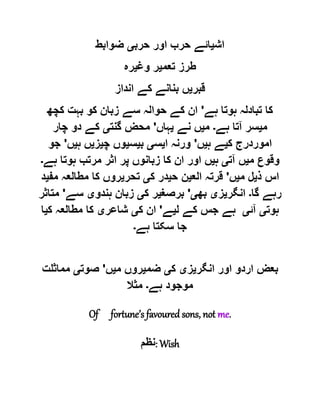
‫اش‬‫ی‬‫حرب‬ ‫اور‬ ‫حرب‬ ‫ائے‬‫ی‬‫ضوابط‬
‫تعم‬ ‫طرز‬‫ی‬‫وغ‬ ‫ر‬‫ی‬‫رہ‬
‫قبر‬‫ی‬‫انداز‬ ‫کے‬ ‫بنانے‬ ‫ں‬
‫ہے‬ ‫ہوتا‬ ‫تبادلہ‬ ‫کا‬'‫کچھ‬ ‫بہت‬ ‫کو‬ ‫زبان‬ ‫سے‬ ‫حوالہ‬ ‫کے‬ ‫ان‬
‫م‬‫ی‬‫ہے‬ ‫آتا‬ ‫سر‬‫۔‬‫م‬‫ی‬‫نے‬ ‫ں‬‫ی‬‫ہاں‬'‫گنت‬ ‫محض‬‫ی‬‫چار‬ ‫دو‬ ‫کے‬
‫ک‬ ‫اموردرج‬‫ی‬‫ہ‬ ‫ے‬‫ی‬‫ں‬'‫ا‬ ‫ورنہ‬‫ی‬‫س‬‫ی‬‫ب‬‫ی‬‫س‬‫ی‬‫چ‬ ‫وں‬‫ی‬‫ز‬‫ی‬‫ہ‬ ‫ں‬‫ی‬‫ں‬'‫جو‬
‫م‬ ‫وقوع‬‫ی‬‫آت‬ ‫ں‬‫ی‬‫ہ‬‫ی‬‫ا‬ ‫پر‬ ‫زبانوں‬ ‫کا‬ ‫ان‬ ‫اور‬ ‫ں‬‫ہے‬ ‫ہوتا‬ ‫مرتب‬ ‫ثر‬‫۔‬
‫ذ‬ ‫اس‬‫ی‬‫م‬ ‫ل‬‫ی‬‫ں‬'‫الع‬ ‫قرتہ‬‫ی‬‫ح‬ ‫ن‬‫ی‬‫ک‬ ‫در‬‫ی‬‫تحر‬‫ی‬‫مف‬ ‫مطالعہ‬ ‫کا‬ ‫روں‬‫ی‬‫د‬
‫گا‬ ‫رہے‬‫۔‬‫انگر‬‫ی‬‫ز‬‫ی‬‫بھ‬‫ی‬'‫برصغ‬‫ی‬‫ک‬ ‫ر‬‫ی‬‫ہندو‬ ‫زبان‬‫ی‬‫سے‬'‫متاثر‬
‫ہوت‬‫ی‬‫آئ‬‫ی‬‫ل‬ ‫کے‬ ‫جس‬ ‫ہے‬‫ی‬‫ے‬'‫ک‬ ‫ان‬‫ی‬‫شاعر‬‫ی‬‫ک‬ ‫مطالعہ‬ ‫کا‬‫ی‬‫ا‬
‫ہے‬ ‫سکتا‬ ‫جا‬‫۔‬
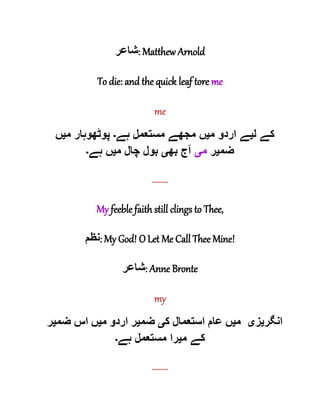
‫انگر‬ ‫اور‬ ‫اردو‬ ‫بعض‬‫ی‬‫ز‬‫ی‬‫ک‬‫ی‬‫ضم‬‫ی‬‫م‬ ‫روں‬‫ی‬‫ں‬'‫صوت‬‫ی‬‫مماثلت‬
‫ہے‬ ‫موجود‬‫۔‬‫مثال‬
Of fortune’s favoured sons, not me.
‫:نظم‬ Wish
‫:شاعر‬ Matthew Arnold
To die: and the quick leaf tore me
me
‫ل‬ ‫کے‬‫ی‬‫م‬ ‫اردو‬ ‫ے‬‫ی‬‫ہے‬ ‫مستعمل‬ ‫مجھے‬ ‫ں‬‫۔‬‫م‬ ‫پوٹھوہار‬‫ی‬‫ں‬
‫ضم‬‫ی‬‫ر‬‫م‬‫ی‬‫بھ‬ ‫آج‬‫ی‬‫م‬ ‫چال‬ ‫بول‬‫ی‬‫ہے‬ ‫ں‬‫۔‬
........
My feeble faith still clings to Thee,
‫:نظم‬ My God! O Let Me Call Thee Mine!
‫:شاعر‬ Anne Bronte
my
‫انگر‬‫ی‬‫ز‬‫ی‬‫م‬‫ی‬‫ک‬ ‫استعمال‬ ‫عام‬ ‫ں‬‫ی‬‫ضم‬‫ی‬‫م‬ ‫اردو‬ ‫ر‬‫ی‬‫ضم‬ ‫اس‬ ‫ں‬‫ی‬‫ر‬
‫م‬ ‫کے‬‫ی‬‫ہے‬ ‫مستعمل‬ ‫را‬‫۔‬
........
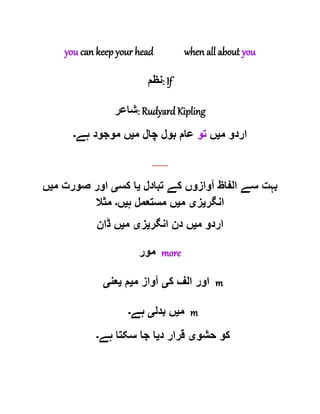
you can keep your head when all about you
‫:نظم‬ If
‫:شاعر‬ Rudyard Kipling
‫م‬ ‫اردو‬‫ی‬‫ں‬‫تو‬‫م‬ ‫چال‬ ‫بول‬ ‫عام‬‫ی‬‫ہے‬ ‫موجود‬ ‫ں‬‫۔‬
........
‫تبادل‬ ‫کے‬ ‫آوازوں‬ ‫الفاظ‬ ‫سے‬ ‫بہت‬‫ی‬‫کس‬ ‫ا‬‫ی‬‫م‬ ‫صورت‬ ‫اور‬‫ی‬‫ں‬
‫انگر‬‫ی‬‫ز‬‫ی‬‫م‬‫ی‬‫ہ‬ ‫مستعمل‬ ‫ں‬‫ی‬‫ں‬‫۔‬‫مثال‬
‫م‬ ‫اردو‬‫ی‬‫انگر‬ ‫دن‬ ‫ں‬‫ی‬‫ز‬‫ی‬‫م‬‫ی‬‫ڈان‬ ‫ں‬
‫مور‬ more
‫ک‬ ‫الف‬ ‫اور‬‫ی‬‫م‬ ‫آواز‬‫ی‬‫م‬‫ی‬‫عن‬‫ی‬ m
‫م‬‫ی‬‫بدل‬ ‫ں‬‫ی‬‫ہے‬‫۔‬ m
‫حشو‬ ‫کو‬‫ی‬‫د‬ ‫قرار‬‫ی‬‫ہے‬ ‫سکتا‬ ‫جا‬ ‫ا‬‫۔‬
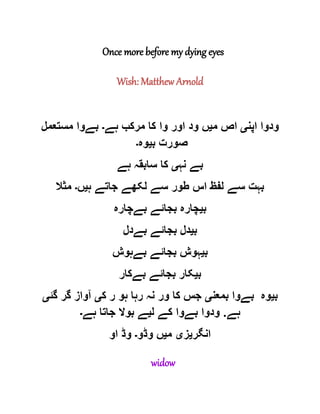
Once more before my dying eyes
Wish: Matthew Arnold
‫اپن‬ ‫ودوا‬‫ی‬‫ا‬‫م‬ ‫ص‬‫ی‬‫ہے‬ ‫مرکب‬ ‫کا‬ ‫وا‬ ‫اور‬ ‫ود‬ ‫ں‬‫۔‬‫مستعمل‬ ‫بےوا‬
‫ب‬ ‫صورت‬‫ی‬‫وہ‬‫۔‬
‫نہ‬ ‫بے‬‫ی‬‫ہے‬ ‫سابقہ‬ ‫کا‬
‫ہ‬ ‫جاتے‬ ‫لکھے‬ ‫سے‬ ‫طور‬ ‫اس‬ ‫لفظ‬ ‫سے‬ ‫بہت‬‫ی‬‫ں‬‫۔‬‫مثال‬
‫ب‬‫ی‬‫بےچارہ‬ ‫بجائے‬ ‫چارہ‬
‫ب‬‫ی‬‫بےدل‬ ‫بجائے‬ ‫دل‬
‫ب‬‫ی‬‫بےہوش‬ ‫بجائے‬ ‫ہوش‬
‫ب‬‫ی‬‫بےکار‬ ‫بجائے‬ ‫کار‬
‫ب‬‫ی‬‫بمعن‬ ‫بےوا‬ ‫وہ‬‫ی‬‫ک‬ ‫ر‬ ‫ہو‬ ‫رہا‬ ‫نہ‬ ‫ور‬ ‫کا‬ ‫جس‬‫ی‬‫گئ‬ ‫گر‬ ‫آواز‬‫ی‬
‫ہے‬.‫ل‬ ‫کے‬ ‫بےوا‬ ‫ودوا‬‫ی‬‫ہے‬ ‫جاتا‬ ‫بوال‬ ‫ے‬‫۔‬
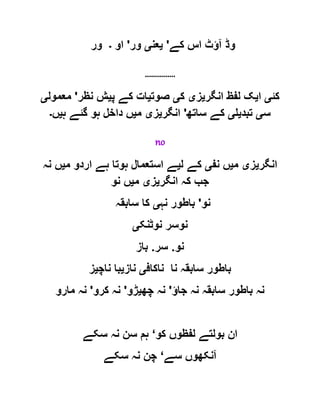
‫انگر‬‫ی‬‫ز‬‫ی‬‫م‬‫ی‬‫وڈو‬ ‫ں‬‫۔‬‫او‬ ‫وڈ‬
widow
‫کے‬ ‫اس‬ ‫آؤٹ‬ ‫وڈ‬'‫ی‬‫عن‬‫ی‬‫ور‬'‫او‬‫۔‬‫ور‬
...............
‫کئ‬‫ی‬‫ا‬‫ی‬‫انگر‬ ‫لفظ‬ ‫ک‬‫ی‬‫ز‬‫ی‬‫ک‬‫ی‬‫صوت‬‫ی‬‫پ‬ ‫کے‬ ‫ات‬‫ی‬‫نظر‬ ‫ش‬'‫معمول‬‫ی‬
‫س‬‫ی‬‫تبد‬‫ی‬‫ل‬‫ی‬‫ساتھ‬ ‫کے‬'‫انگر‬‫ی‬‫ز‬‫ی‬‫م‬‫ی‬‫ہ‬ ‫گئے‬ ‫ہو‬ ‫داخل‬ ‫ں‬‫ی‬‫ں‬‫۔‬
no
‫انگر‬‫ی‬‫ز‬‫ی‬‫م‬‫ی‬‫نف‬ ‫ں‬‫ی‬‫ل‬ ‫کے‬‫ی‬‫م‬ ‫اردو‬ ‫ہے‬ ‫ہوتا‬ ‫استعمال‬ ‫ے‬‫ی‬‫نہ‬ ‫ں‬
‫انگ‬ ‫کہ‬ ‫جب‬‫ر‬‫ی‬‫ز‬‫ی‬‫م‬‫ی‬‫نو‬ ‫ں‬
‫نو‬'‫نہ‬ ‫باطور‬‫ی‬‫سابقہ‬ ‫کا‬
‫نوٹنک‬ ‫نوسر‬‫ی‬
‫نو‬.‫سر‬.‫باز‬
‫ناکاف‬ ‫نا‬ ‫سابقہ‬ ‫باطور‬‫ی‬‫ناز‬‫ی‬‫ناچ‬ ‫با‬‫ی‬‫ز‬
‫جاؤ‬ ‫نہ‬ ‫سابقہ‬ ‫باطور‬ ‫نہ‬'‫چھ‬ ‫نہ‬‫ی‬‫ڑو‬'‫کرو‬ ‫نہ‬'‫مارو‬ ‫نہ‬
‫کو‬ ‫لفظوں‬ ‫بولتے‬ ‫ان‬‘‫سکے‬ ‫نہ‬ ‫سن‬ ‫ہم‬
‫سے‬ ‫آنکھوں‬‘‫سکے‬ ‫نہ‬ ‫چن‬
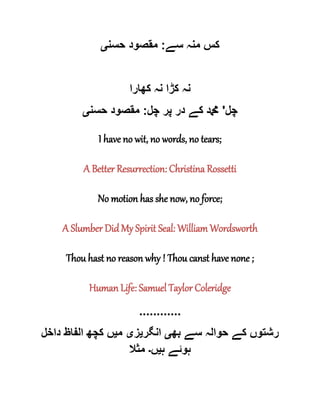
‫سے‬ ‫منہ‬ ‫کس‬:‫حسن‬ ‫مقصود‬‫ی‬
‫کھارا‬ ‫نہ‬ ‫کڑا‬ ‫نہ‬
‫چل‬'‫پر‬ ‫در‬ ‫کے‬ ‫دمحم‬‫چل‬:‫حسن‬ ‫مقصود‬‫ی‬
I have no wit, no words, no tears;
A Better Resurrection: Christina Rossetti
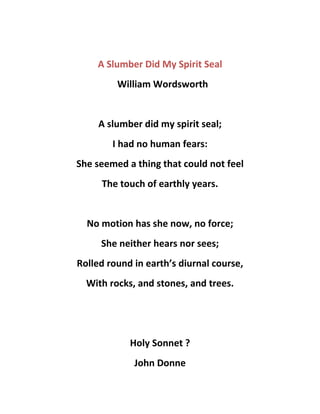
No motion has she now, no force;
A Slumber Did My Spirit Seal: William Wordsworth
Thou hast no reason why ! Thou canst have none ;
Human Life: Samuel Taylor Coleridge
............
‫بھ‬ ‫سے‬ ‫حوالہ‬ ‫کے‬ ‫رشتوں‬‫ی‬‫انگر‬‫ی‬‫ز‬‫ی‬‫م‬‫ی‬‫داخل‬ ‫الفاظ‬ ‫کچھ‬ ‫ں‬
‫ہ‬ ‫ہوئے‬‫ی‬‫ں‬‫۔‬‫مثال‬
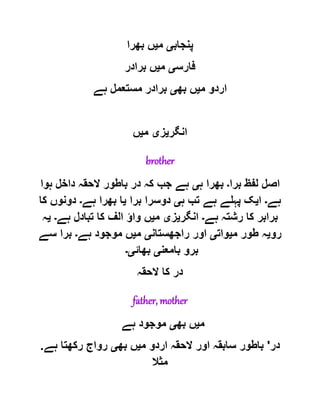
‫پنجاب‬‫ی‬‫م‬‫ی‬‫بھرا‬ ‫ں‬
‫فارس‬‫ی‬‫م‬‫ی‬‫برادر‬ ‫ں‬
‫م‬ ‫اردو‬‫ی‬‫بھ‬ ‫ں‬‫ی‬‫ہے‬ ‫مستعمل‬ ‫برادر‬
‫انگر‬‫ی‬‫ز‬‫ی‬‫م‬‫ی‬‫ں‬
brother
‫برا‬ ‫لفظ‬ ‫اصل‬‫۔‬‫ہ‬ ‫بھرا‬‫ی‬‫ہوا‬ ‫داخل‬ ‫الحقہ‬ ‫باطور‬ ‫در‬ ‫کہ‬ ‫جب‬ ‫ہے‬
‫ہے‬‫۔‬‫ا‬‫ی‬‫ہ‬ ‫تب‬ ‫ہے‬ ‫پہلے‬ ‫ک‬‫ی‬‫برا‬ ‫دوسرا‬‫ی‬‫ب‬ ‫ا‬‫ہے‬ ‫ھرا‬‫۔‬‫کا‬ ‫دونوں‬
‫ہے‬ ‫رشتہ‬ ‫کا‬ ‫برابر‬‫۔‬‫انگر‬‫ی‬‫ز‬‫ی‬‫م‬‫ی‬‫ہے‬ ‫تبادل‬ ‫کا‬ ‫الف‬ ‫واؤ‬ ‫ں‬‫۔‬‫ی‬‫ہ‬
‫رو‬‫ی‬‫م‬ ‫طور‬ ‫ہ‬‫ی‬‫وات‬‫ی‬‫راجھستان‬ ‫اور‬‫ی‬‫م‬‫ی‬‫ہے‬ ‫موجود‬ ‫ں‬‫۔‬‫سے‬ ‫برا‬
‫بامعن‬ ‫برو‬‫ی‬‫بھائ‬‫ی۔‬
‫الحقہ‬ ‫کا‬ ‫در‬
father, mother
‫م‬‫ی‬‫بھ‬ ‫ں‬‫ی‬‫ہے‬ ‫موجود‬
‫در‬'‫م‬ ‫اردو‬ ‫الحقہ‬ ‫اور‬ ‫سابقہ‬ ‫باطور‬‫ی‬‫بھ‬ ‫ں‬‫ی‬‫ہے‬ ‫رکھتا‬ ‫رواج‬.
‫مثال‬
‫درگزر‬'‫درح‬‫ق‬‫ی‬‫قت‬'‫درکنار‬
‫در‬ ‫چا‬ ‫چادر‬
His brother doctor of the soul,
Wish: Matthew Arnold
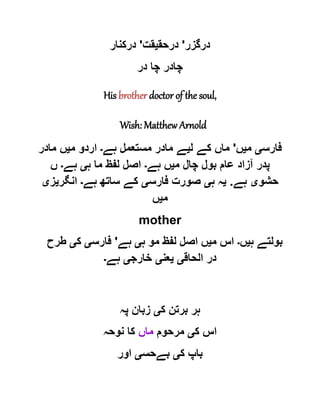
‫فارس‬‫ی‬‫م‬‫ی‬‫ں‬'‫ل‬ ‫کے‬ ‫ماں‬‫ی‬‫ہے‬ ‫مستعمل‬ ‫مادر‬ ‫ے‬‫۔‬‫م‬ ‫اردو‬‫ی‬‫مادر‬ ‫ں‬
‫م‬ ‫چال‬ ‫بول‬ ‫عام‬ ‫آزاد‬ ‫پدر‬‫ی‬‫ہے‬ ‫ں‬‫۔‬‫ہ‬ ‫ما‬ ‫لفظ‬ ‫اصل‬‫ی‬‫ہے‬‫۔‬‫ں‬
‫حشو‬‫ی‬‫ہے‬.‫ی‬‫ہ‬ ‫ہ‬‫ی‬‫فارس‬ ‫صورت‬‫ی‬‫ہے‬ ‫ساتھ‬ ‫کے‬‫۔‬‫انگر‬‫ی‬‫ز‬‫ی‬
‫م‬‫ی‬‫ں‬
mother
‫ہ‬ ‫بولتے‬‫ی‬‫ں‬‫۔‬‫م‬ ‫اس‬‫ی‬‫ں‬‫ہ‬ ‫مو‬ ‫لفظ‬ ‫اصل‬‫ی‬‫ہے‬'‫فارس‬‫ی‬‫ک‬‫ی‬‫طرح‬
‫الحاق‬ ‫در‬‫ی‬‫ی‬‫عن‬‫ی‬‫خارج‬‫ی‬‫ہے‬‫۔‬
‫ک‬ ‫برتن‬ ‫ہر‬‫ی‬‫پہ‬ ‫زبان‬
‫ک‬ ‫اس‬‫ی‬‫مرحوم‬‫ماں‬‫نوحہ‬ ‫کا‬
‫ک‬ ‫باپ‬‫ی‬‫بےحس‬‫ی‬‫اور‬
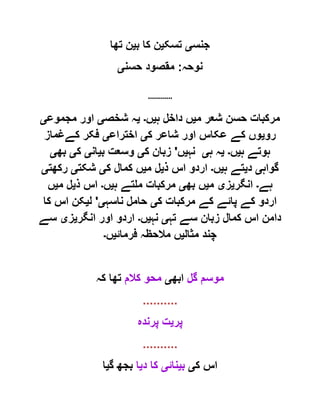
‫جنس‬‫ی‬‫تسک‬‫ی‬‫ب‬ ‫کا‬ ‫ن‬‫ی‬‫تھا‬ ‫ن‬
‫نوحہ‬:‫حسن‬ ‫مقصود‬‫ی‬
............
‫م‬ ‫شعر‬ ‫حسن‬ ‫مرکبات‬‫ی‬‫ہ‬ ‫داخل‬ ‫ں‬‫ی‬‫ں‬‫۔‬‫ی‬‫شخص‬ ‫ہ‬‫ی‬‫مجموع‬ ‫اور‬‫ی‬
‫رو‬‫ی‬‫ک‬ ‫شاعر‬ ‫اور‬ ‫عکاس‬ ‫کے‬ ‫وں‬‫ی‬‫اختراع‬‫ی‬‫ک‬ ‫فکر‬‫ےغماز‬
‫ہ‬ ‫ہوتے‬‫ی‬‫ں‬‫۔‬‫ی‬‫ہ‬ ‫ہ‬‫ی‬‫نہ‬‫ی‬‫ں‬'‫ک‬ ‫زبان‬‫ی‬‫ب‬ ‫وسعت‬‫ی‬‫ان‬‫ی‬‫ک‬‫ی‬‫بھ‬‫ی‬
‫گواہ‬‫ی‬‫د‬‫ی‬‫ہ‬ ‫تے‬‫ی‬‫ں‬‫۔‬‫ذ‬ ‫اس‬ ‫اردو‬‫ی‬‫م‬ ‫ل‬‫ی‬‫ک‬ ‫کمال‬ ‫ں‬‫ی‬‫شکت‬‫ی‬‫رکھت‬‫ی‬
‫ہے‬‫۔‬‫انگر‬‫ی‬‫ز‬‫ی‬‫م‬‫ی‬‫بھ‬ ‫ں‬‫ی‬‫ہ‬ ‫ملتے‬ ‫مرکبات‬‫ی‬‫ں‬‫۔‬‫ذ‬ ‫اس‬‫ی‬‫م‬ ‫ل‬‫ی‬‫ں‬
‫ک‬ ‫مرکبات‬ ‫کے‬ ‫پائے‬ ‫کے‬ ‫اردو‬‫ی‬‫ناسہ‬ ‫حامل‬‫ی‬'‫ل‬‫ی‬‫کا‬ ‫اس‬ ‫کن‬
‫تہ‬ ‫سے‬ ‫زبان‬ ‫کمال‬ ‫اس‬ ‫دامن‬‫ی‬‫نہ‬‫ی‬‫ں‬‫۔‬‫انگر‬ ‫اور‬ ‫اردو‬‫ی‬‫ز‬‫ی‬‫سے‬
‫چن‬‫مثال‬ ‫د‬‫ی‬‫فرمائ‬ ‫مالحظہ‬ ‫ں‬‫ی‬‫ں‬‫۔‬
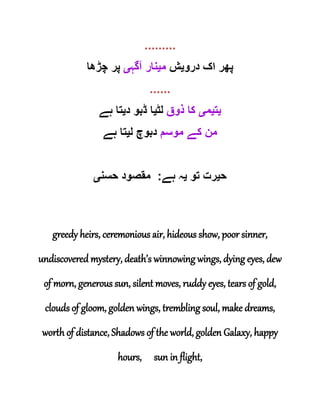
‫گل‬ ‫موسم‬‫ابھ‬‫ی‬‫کالم‬ ‫محو‬‫کہ‬ ‫تھا‬
..........
‫پر‬‫ی‬‫پرندہ‬ ‫ت‬
..........
‫ک‬ ‫اس‬‫ی‬‫ب‬‫ی‬‫نائ‬‫ی‬‫د‬ ‫کا‬‫ی‬‫ا‬‫گ‬ ‫بجھ‬‫ی‬‫ا‬
.........
‫درو‬ ‫اک‬ ‫پھر‬‫ی‬‫ش‬‫م‬‫ی‬‫آگہ‬ ‫نار‬‫ی‬‫چڑھا‬ ‫پر‬
......
‫ی‬‫ت‬‫ی‬‫م‬‫ی‬‫ذوق‬ ‫کا‬‫لٹ‬‫ی‬‫د‬ ‫ڈبو‬ ‫ا‬‫ی‬‫ہے‬ ‫تا‬
‫موسم‬ ‫کے‬ ‫من‬‫ل‬ ‫دبوچ‬‫ی‬‫ہے‬ ‫تا‬
‫ح‬‫ی‬‫تو‬ ‫رت‬‫ی‬‫ہے‬ ‫ہ‬:‫حسن‬ ‫مقصود‬‫ی‬
greedy heirs, ceremonious air, hideous show, poor sinner,
undiscovered mystery, death’s winnowing wings, dying eyes, dew
of morn, generous sun, silent moves, ruddy eyes, tears of gold,
clouds of gloom, golden wings, trembling soul, make dreams,
worth of distance, Shadows of the world, golden Galaxy, happy
hours, sun in flight,
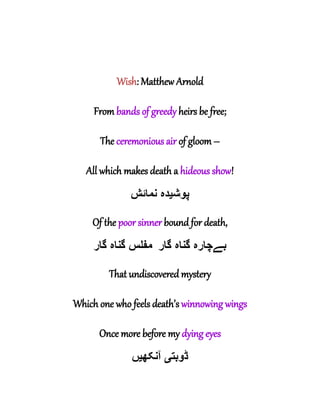
Wish: Matthew Arnold
From bands of greedy heirs be free;
The ceremonious air of gloom –
All which makes death a hideous show!
‫پوش‬‫ی‬‫نمائش‬ ‫دہ‬
Of the poor sinner bound for death,
‫م‬‫گار‬ ‫گناہ‬ ‫فلس‬ ‫گار‬ ‫گناہ‬ ‫بےچارہ‬
That undiscovered mystery
Which one who feels death’s winnowing wings
Once more before my dying eyes
‫ڈوبت‬‫ی‬‫آنکھ‬‫ی‬‫ں‬
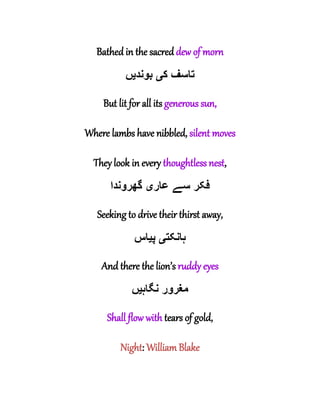
Bathed in the sacred dew of morn
‫ک‬ ‫تاسف‬‫ی‬‫بوند‬‫ی‬‫ں‬
But lit for all its generous sun,
Where lambs have nibbled, silent moves
They look in every thoughtless nest,
‫عار‬ ‫سے‬ ‫فکر‬‫ی‬‫گھروندا‬
Seeking to drive their thirst away,
‫ہانکت‬‫ی‬‫پ‬‫ی‬‫اس‬
And there the lion’s ruddy eyes
‫نگاہ‬ ‫مغرور‬‫ی‬‫ں‬
Shall flow with tears of gold,
Night: William Blake
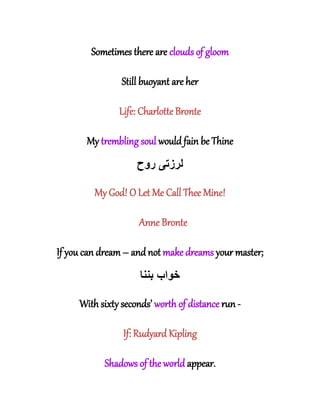
Sometimes there are clouds of gloom
Still buoyant are her
Life: Charlotte Bronte
My trembling soul would fain be Thine
‫لرزت‬‫ی‬‫روح‬
My God! O Let Me Call Thee Mine!
Anne Bronte
If you can dream – and not make dreams your master;
‫بننا‬ ‫خواب‬
With sixty seconds’ worth of distance run -
If: Rudyard Kipling
Shadows of the world appear.
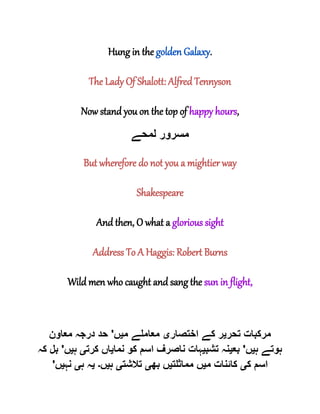
Hung in the golden Galaxy.
The Lady Of Shalott: Alfred Tennyson
Now stand you on the top of happy hours,
‫لمحے‬ ‫مسرور‬
But wherefore do not you a mightier way
Shakespeare
And then, O what a glorious sight
Address To A Haggis: Robert Burns
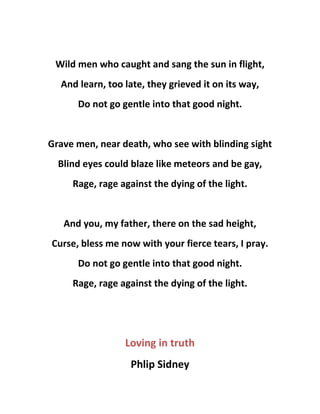
Wild men who caught and sang the sun in flight,
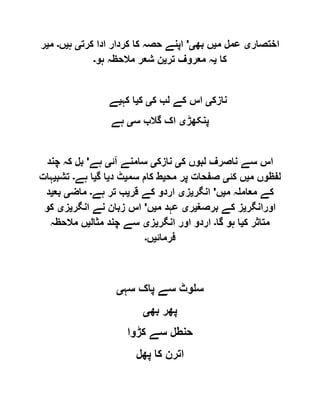
‫تحر‬ ‫مرکبات‬‫ی‬‫اختصار‬ ‫کے‬ ‫ر‬‫ی‬‫م‬ ‫معاملے‬‫ی‬‫ں‬'‫معاون‬ ‫درجہ‬ ‫حد‬
‫ہ‬ ‫ہوتے‬‫ی‬‫ں‬'‫بع‬‫ی‬‫تشب‬ ‫نہ‬‫ی‬‫نما‬ ‫کو‬ ‫اسم‬ ‫ناصرف‬ ‫ہات‬‫ی‬‫کرت‬ ‫اں‬‫ی‬‫ہ‬‫ی‬‫ں‬'‫کہ‬ ‫بل‬
‫ک‬ ‫اسم‬‫ی‬‫م‬ ‫کائنات‬‫ی‬‫مماثلت‬ ‫ں‬‫ی‬‫بھ‬ ‫ں‬‫ی‬‫تالشت‬‫ی‬‫ہ‬‫ی‬‫ں‬‫۔‬‫ی‬‫ہ‬ ‫ہ‬‫ی‬‫نہ‬‫ی‬‫ں‬'
‫اختصار‬‫ی‬‫م‬ ‫عمل‬‫ی‬‫بھ‬ ‫ں‬‫ی‬'‫کا‬ ‫حصہ‬ ‫اپنے‬‫کرت‬ ‫ادا‬ ‫کردار‬‫ی‬‫ہ‬‫ی‬‫ں‬‫۔‬‫م‬‫ی‬‫ر‬
‫کا‬‫ی‬‫تر‬ ‫معروف‬ ‫ہ‬‫ی‬‫ہو‬ ‫مالحظہ‬ ‫شعر‬ ‫ن‬‫۔‬
‫نازک‬‫ی‬‫ک‬ ‫لب‬ ‫کے‬ ‫اس‬‫ی‬‫ک‬‫ی‬‫کہ‬ ‫ا‬‫ی‬‫ے‬
‫پنکھڑ‬‫ی‬‫س‬ ‫گالب‬ ‫اک‬‫ی‬‫ہے‬
‫ک‬ ‫لبوں‬ ‫ناصرف‬ ‫سے‬ ‫اس‬‫ی‬‫نازک‬‫ی‬‫آئ‬ ‫سامنے‬‫ی‬‫ہے‬'‫چند‬ ‫کہ‬ ‫بل‬
‫م‬ ‫لفظوں‬‫ی‬‫کئ‬ ‫ں‬‫ی‬‫مح‬ ‫پر‬ ‫صفحات‬‫ی‬‫سم‬ ‫کام‬ ‫ط‬‫ی‬‫د‬ ‫ٹ‬‫ی‬‫گ‬ ‫ا‬‫ی‬‫ہے‬ ‫ا‬‫۔‬‫تشب‬‫ی‬‫ہات‬
‫م‬ ‫معاملہ‬ ‫کے‬‫ی‬‫ں‬'‫انگر‬‫ی‬‫ز‬‫ی‬‫قر‬ ‫کے‬ ‫اردو‬‫ی‬‫تر‬ ‫ب‬‫ہے‬‫۔‬‫ماض‬‫ی‬‫بع‬‫ی‬‫د‬
‫اورانگر‬‫ی‬‫برصغ‬ ‫کے‬ ‫ز‬‫ی‬‫ر‬‫ی‬‫م‬ ‫عہد‬‫ی‬‫ں‬'‫انگر‬ ‫نے‬ ‫زبان‬ ‫اس‬‫ی‬‫ز‬‫ی‬‫کو‬
‫ک‬ ‫متاثر‬‫ی‬‫گا‬ ‫ہو‬ ‫ا‬‫۔‬‫انگر‬ ‫اور‬ ‫اردو‬‫ی‬‫ز‬‫ی‬‫مثال‬ ‫چند‬ ‫سے‬‫ی‬‫مالحظہ‬ ‫ں‬
‫فرمائ‬‫ی‬‫ں‬‫۔‬
‫سہ‬ ‫پاک‬ ‫سے‬ ‫سلوٹ‬‫ی‬
‫بھ‬ ‫پھر‬‫ی‬
‫کڑوا‬ ‫سے‬ ‫حنطل‬
‫پھل‬ ‫کا‬ ‫اترن‬
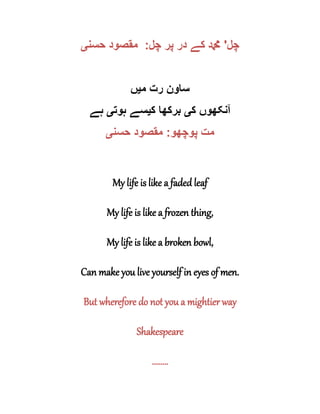
‫چل‬'‫چل‬ ‫پر‬ ‫در‬ ‫کے‬ ‫دمحم‬:‫حسن‬ ‫مقصود‬‫ی‬
‫م‬ ‫رت‬ ‫ساون‬‫ی‬‫ں‬
‫ک‬ ‫آنکھوں‬‫ی‬‫ک‬ ‫برکھا‬‫ی‬‫ہوت‬ ‫سے‬‫ی‬‫ہ‬‫ے‬
‫پوچھو‬ ‫مت‬:‫حسن‬ ‫مقصود‬‫ی‬
My life is like a faded leaf
My life is like a frozen thing,
My life is like a broken bowl,
Can make you live yourself in eyes of men.
But wherefore do not you a mightier way
Shakespeare
........
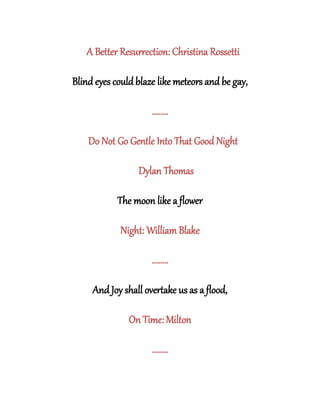
A Better Resurrection: Christina Rossetti
Blind eyes could blaze like meteors and be gay,
........
Do Not Go Gentle Into That Good Night
Dylan Thomas
The moon like a flower
Night: William Blake
........
And Joy shall overtake us as a flood,
On Time: Milton
........
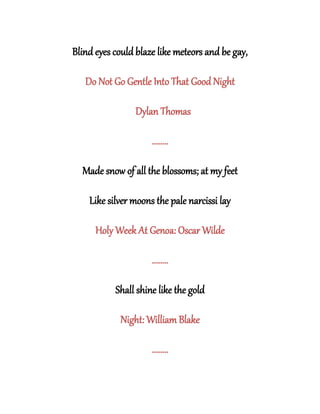
Blind eyes could blaze like meteors and be gay,
Do Not Go Gentle Into That Good Night
Dylan Thomas
........
Made snow of all the blossoms; at my feet
Like silver moons the pale narcissi lay
Holy Week At Genoa: Oscar Wilde
........
Shall shine like the gold
Night: William Blake
........
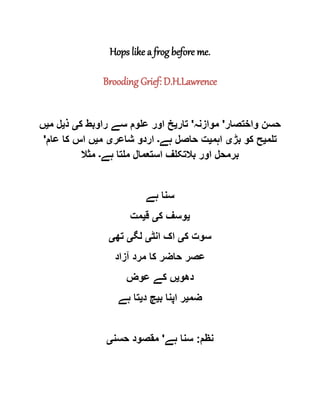
Hops like a frog before me.
Brooding Grief: D.H.Lawrence
‫واختصار‬ ‫حسن‬'‫موازنہ‬'‫تار‬‫ی‬‫ک‬ ‫راوبط‬ ‫سے‬ ‫علوم‬ ‫اور‬ ‫خ‬‫ی‬‫ذ‬‫ی‬‫م‬ ‫ل‬‫ی‬‫ں‬
‫تلم‬‫ی‬‫بڑ‬ ‫کو‬ ‫ح‬‫ی‬‫اہم‬‫ی‬‫ہے‬ ‫حاصل‬ ‫ت‬‫۔‬‫شاعر‬ ‫اردو‬‫ی‬‫م‬‫ی‬‫عام‬ ‫کا‬ ‫اس‬ ‫ں‬'
‫ملتا‬ ‫استعمال‬ ‫بالتکلف‬ ‫اور‬ ‫برمحل‬‫ہے‬‫۔‬‫مثال‬
‫ہے‬ ‫سنا‬
‫ی‬‫ک‬ ‫وسف‬‫ی‬‫ق‬‫ی‬‫مت‬
‫ک‬ ‫سوت‬‫ی‬‫انٹ‬ ‫اک‬‫ی‬‫لگ‬‫ی‬‫تھ‬‫ی‬
‫آزاد‬ ‫مرد‬ ‫کا‬ ‫حاضر‬ ‫عصر‬
‫دھو‬‫ی‬‫عوض‬ ‫کے‬ ‫ں‬
‫ضم‬‫ی‬‫ب‬ ‫اپنا‬ ‫ر‬‫ی‬‫د‬ ‫چ‬‫ی‬‫ہے‬ ‫تا‬
‫نظم‬:‫ہے‬ ‫سنا‬'‫حسن‬ ‫مقصود‬‫ی‬
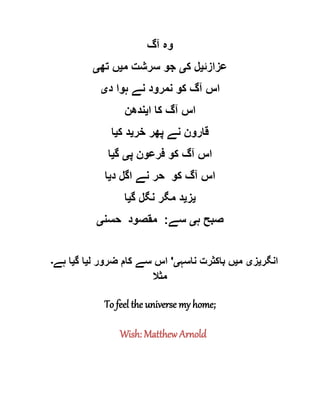
‫آگ‬ ‫وہ‬
‫عزازئ‬‫ی‬‫ک‬ ‫ل‬‫ی‬‫م‬ ‫سرشت‬ ‫جو‬‫ی‬‫تھ‬ ‫ں‬‫ی‬
‫د‬ ‫ہوا‬ ‫نے‬ ‫نمرود‬ ‫کو‬ ‫آگ‬ ‫اس‬‫ی‬
‫ا‬ ‫کا‬ ‫آگ‬ ‫اس‬‫ی‬‫ندھن‬
‫خر‬ ‫پھر‬ ‫نے‬ ‫قارون‬‫ی‬‫ک‬ ‫د‬‫ی‬‫ا‬
‫پ‬ ‫فرعون‬ ‫کو‬ ‫آگ‬ ‫اس‬‫ی‬‫گ‬‫ی‬‫ا‬
‫ا‬‫د‬ ‫اگل‬ ‫نے‬ ‫حر‬ ‫کو‬ ‫آگ‬ ‫س‬‫ی‬‫ا‬
‫ی‬‫ز‬‫ی‬‫گ‬ ‫نگل‬ ‫مگر‬ ‫د‬‫ی‬‫ا‬
‫ہ‬ ‫صبح‬‫ی‬‫سے‬:‫حسن‬ ‫مقصود‬‫ی‬
‫انگر‬‫ی‬‫ز‬‫ی‬‫م‬‫ی‬‫ناسہ‬ ‫باکثرت‬ ‫ں‬‫ی‬'‫ل‬ ‫ضرور‬ ‫کام‬ ‫سے‬ ‫اس‬‫ی‬‫گ‬ ‫ا‬‫ی‬‫ہے‬ ‫ا‬‫۔‬
‫مثال‬
To feel the universe my home;
Wish: Matthew Arnold
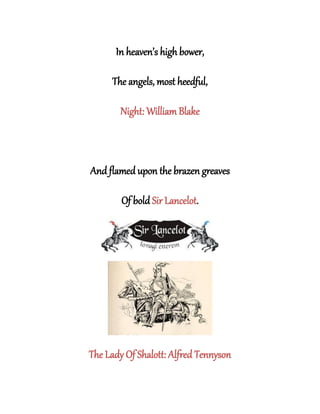
In heaven’s high bower,
The angels, most heedful,
Night: William Blake
And flamed upon the brazen greaves
Of bold Sir Lancelot.
The Lady Of Shalott: Alfred Tennyson
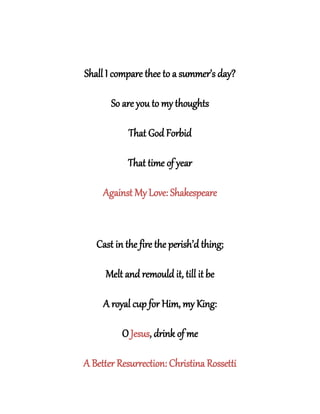
Shall I compare thee to a summer’s day?
So are you to my thoughts
That God Forbid
That time of year
Against My Love: Shakespeare
Cast in the fire the perish’d thing;
Melt and remould it, till it be
A royal cup for Him, my King:
O Jesus, drink of me
A Better Resurrection: Christina Rossetti
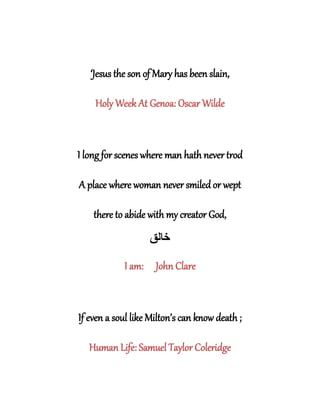
‘Jesus the son of Mary has been slain,
Holy Week At Genoa: Oscar Wilde
I long for scenes where man hath never trod
A place where woman never smiled or wept
there to abide with my creator God,
‫خالق‬
I am: John Clare
If even a soul like Milton’s can know death ;
Human Life: Samuel Taylor Coleridge
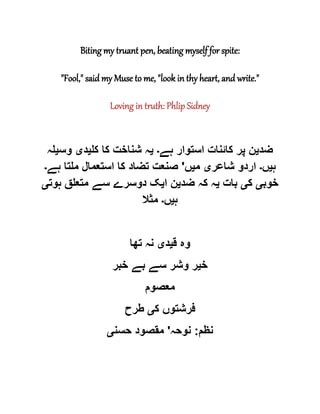
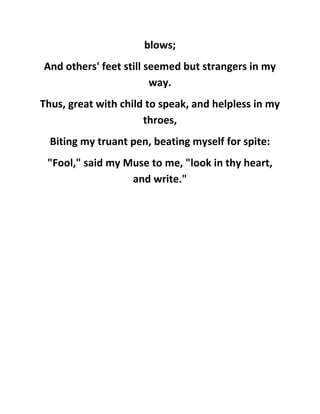
Biting my truant pen, beating myself for spite:
"Fool," said my Muse to me, "look in thy heart, and write."
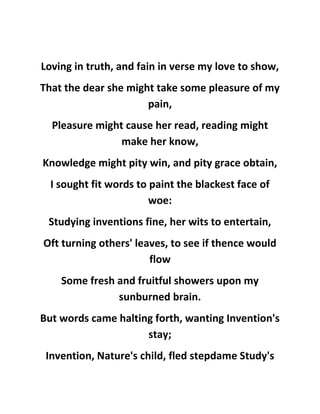
Loving in truth: Phlip Sidney
‫ضد‬‫ی‬‫ہے‬ ‫استوار‬ ‫کائنات‬ ‫پر‬ ‫ن‬‫۔‬‫ی‬‫کل‬ ‫کا‬ ‫شناخت‬ ‫ہ‬‫ی‬‫د‬‫ی‬‫وس‬‫ی‬‫لہ‬
‫ہ‬‫ی‬‫ں‬‫۔‬‫شاعر‬ ‫اردو‬‫ی‬‫م‬‫ی‬‫ں‬'‫ہے‬ ‫ملتا‬ ‫استعمال‬ ‫کا‬ ‫تضاد‬ ‫صنعت‬‫۔‬
‫خوب‬‫ی‬‫ک‬‫ی‬‫بات‬‫ی‬‫ضد‬ ‫کہ‬ ‫ہ‬‫ی‬‫ا‬ ‫ن‬‫ی‬‫ہوت‬ ‫متعلق‬ ‫سے‬ ‫دوسرے‬ ‫ک‬‫ی‬
‫ہ‬‫ی‬‫ں‬‫۔‬‫مثال‬
‫ق‬ ‫وہ‬‫ی‬‫د‬‫ی‬‫تھا‬ ‫نہ‬
‫خ‬‫ی‬‫خبر‬ ‫بے‬ ‫سے‬ ‫وشر‬ ‫ر‬
‫معصوم‬
‫ک‬ ‫فرشتوں‬‫ی‬‫طرح‬
‫نظم‬:‫نوحہ‬'‫حسن‬ ‫مقصود‬‫ی‬
‫ا‬‫ی‬‫ندھن‬
‫د‬‫ی‬‫بہرا‬ ‫سنتا‬ ‫اندھا‬ ‫کھتا‬
‫ک‬ ‫سکنے‬‫ی‬‫کھڑا‬ ‫دور‬ ‫سے‬ ‫منزل‬
‫د‬ ‫ظلم‬‫ی‬‫ہے‬ ‫کھتا‬
‫آہ‬‫ی‬‫ہے‬ ‫سنتا‬ ‫ں‬
‫نہ‬ ‫بولتا‬‫ی‬‫نہ‬ ‫کہتا‬ ‫ں‬‫ی‬‫ں‬
‫گا‬ ‫جائے‬ ‫ضرور‬ ‫جہنم‬
‫نظم‬:‫نوحہ‬'‫حسن‬ ‫مقصود‬‫ی‬
‫کا‬ ‫صنعت‬ ‫اس‬'‫انگر‬‫ی‬‫ز‬‫ی‬‫شاعر‬‫ی‬‫م‬‫ی‬‫بھ‬ ‫ں‬‫ی‬‫اور‬ ‫ہے‬ ‫ملتا‬
‫طر‬ ‫کا‬ ‫استعمال‬‫ی‬‫قطع‬ ‫سے‬ ‫اردو‬ ‫قہ‬‫ی‬‫نہ‬ ‫مختلف‬‫ی‬‫ں‬‫۔‬‫مثال‬ ‫چند‬‫ی‬‫ں‬
‫فرمائ‬ ‫مالحظہ‬‫ی‬‫ں‬
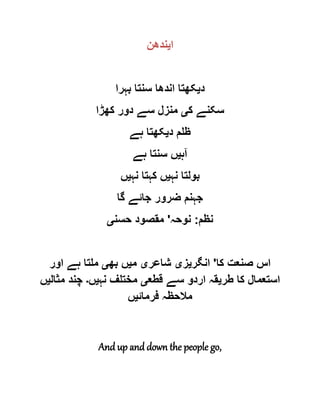
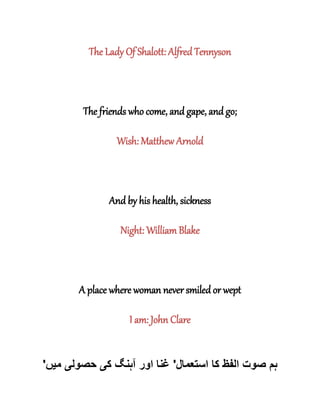
And up and down the people go,
The Lady Of Shalott: Alfred Tennyson
The friends who come, and gape, and go;
Wish: Matthew Arnold
And by his health, sickness
Night: William Blake
A place where woman never smiled or wept
I am: John Clare
‫استعمال‬ ‫کا‬ ‫الفظ‬ ‫صوت‬ ‫ہم‬'‫ک‬ ‫آہنگ‬ ‫اور‬ ‫غنا‬‫ی‬‫حصول‬‫ی‬‫م‬‫ی‬‫ں‬'
‫ہ‬ ‫کرتے‬ ‫ادا‬ ‫کردار‬ ‫اہم‬ ‫بڑا‬‫ی‬‫ں‬‫۔‬‫م‬ ‫غزل‬ ‫اردو‬‫ی‬‫شگفتگ‬ ‫ں‬‫ی‬'
‫شائستگ‬‫ی‬‫وارفتگ‬ ‫اور‬‫ی‬‫اس‬‫ی‬‫ک‬‫ی‬‫ہے‬ ‫منت‬ ‫مرہون‬‫۔‬‫نظم‬‫کے‬
‫بھ‬ ‫نے‬ ‫شعرا‬‫ی‬‫م‬ ‫استعمال‬ ‫تکلف‬ ‫بال‬ ‫کو‬ ‫صنعت‬ ‫اس‬‫ی‬‫رکھا‬ ‫ں‬
‫ہے‬‫۔‬‫مثال‬
‫م‬ ‫شہاب‬ ‫عہد‬‫ی‬‫بےکس‬ ‫بےحجاب‬ ‫ں‬‫ی‬‫بھ‬‫ی‬‫ق‬ ‫عجب‬‫ی‬‫تھ‬ ‫امت‬‫ی۔‬
‫بے‬ ‫بڑھاتے‬ ‫ہاتھ‬ ‫کو‬ ‫اٹھاتےعوضوانے‬ ‫مشقت‬ ‫اٹھتے‬ ‫صبح‬
‫سنتے‬ ‫نقط‬‫۔‬‫سانس‬‫ی‬‫جات‬ ‫اکھڑ‬ ‫ں‬‫ی‬‫ج‬ ‫لب‬ ‫بہ‬ ‫مہر‬ ‫ں‬‫ی‬‫کہ‬ ‫تے‬
‫سانس‬‫ی‬‫باق‬ ‫ں‬‫ی‬‫تھ‬‫ی‬‫ں‬‫۔‬‫ج‬‫ی‬‫ہ‬ ‫تھا‬ ‫تو‬ ‫نا‬‫ی‬‫پ‬ ‫تو‬ ‫لہو‬‫ی‬‫ہ‬ ‫تھا‬ ‫نا‬‫ی۔‬
‫ی‬‫ہ‬ ‫ہ‬‫ی‬‫ف‬‫ی‬‫تھا‬ ‫ہوا‬ ‫صلہ‬:‫حسن‬ ‫مقصود‬‫ی‬
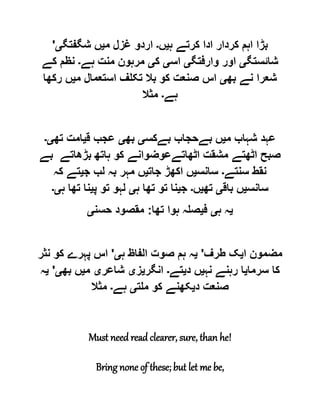
‫ا‬ ‫مضمون‬‫ی‬‫طرف‬ ‫ک‬'‫ی‬‫ہ‬ ‫الفاظ‬ ‫صوت‬ ‫ہم‬ ‫ہ‬‫ی‬'‫نثر‬ ‫کو‬ ‫پہرے‬ ‫اس‬
‫سرما‬ ‫کا‬‫ی‬‫نہ‬ ‫رہنے‬ ‫ا‬‫ی‬‫د‬ ‫ں‬‫ی‬‫تے‬‫۔‬‫انگر‬‫ی‬‫ز‬‫ی‬‫شاعر‬‫ی‬‫م‬‫ی‬‫بھ‬ ‫ں‬‫ی‬'‫ی‬‫ہ‬
‫د‬ ‫صنعت‬‫ی‬‫ملت‬ ‫کو‬ ‫کھنے‬‫ی‬‫ہے‬‫۔‬‫مثال‬
Must need read clearer, sure, than he!
Bring none of these; but let me be,
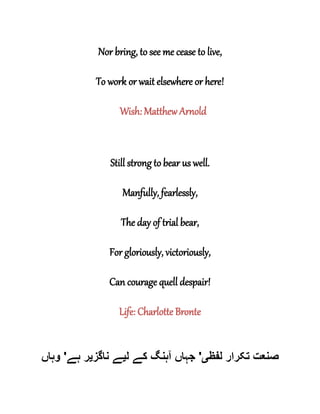
Nor bring, to see me cease to live,
To work or wait elsewhere or here!
Wish: Matthew Arnold
Still strong to bear us well.
Manfully, fearlessly,
The day of trial bear,
For gloriously, victoriously,
Can courage quell despair!
Life: Charlotte Bronte
‫لفظ‬ ‫تکرار‬ ‫صنعت‬‫ی‬'‫آ‬ ‫جہاں‬‫ل‬ ‫کے‬ ‫ہنگ‬‫ی‬‫ناگز‬ ‫ے‬‫ی‬‫ہے‬ ‫ر‬'‫وہاں‬
‫م‬ ‫بات‬‫ی‬‫بنت‬ ‫سبب‬ ‫کا‬ ‫وضاحت‬ ‫اور‬ ‫زور‬ ‫ں‬‫ی‬‫بھ‬‫ی‬‫ہے‬‫۔‬‫م‬ ‫اردو‬‫ی‬‫ں‬
‫ہے‬ ‫ملتا‬ ‫عام‬ ‫استعمال‬ ‫کا‬ ‫صنعت‬ ‫اس‬‫۔‬‫مثال‬
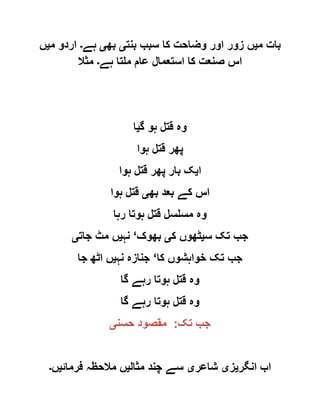
‫گ‬ ‫ہو‬ ‫قتل‬ ‫وہ‬‫ی‬‫ا‬
‫ہوا‬ ‫قتل‬ ‫پھر‬
‫ا‬‫ی‬‫ہوا‬ ‫قتل‬ ‫پھر‬ ‫بار‬ ‫ک‬
‫بھ‬ ‫بعد‬ ‫کے‬ ‫اس‬‫ی‬‫ہوا‬ ‫قتل‬
‫رہا‬ ‫ہوتا‬ ‫قتل‬ ‫مسلسل‬ ‫وہ‬
‫س‬ ‫تک‬ ‫جب‬‫ی‬‫ک‬ ‫ٹھوں‬‫ی‬‫بھوک‬‘‫نہ‬‫ی‬‫جات‬ ‫مٹ‬ ‫ں‬‫ی‬
‫خواہشوں‬ ‫تک‬ ‫جب‬‫کا‬‘‫نہ‬ ‫جنازہ‬‫ی‬‫جا‬ ‫اٹھ‬ ‫ں‬
‫گا‬ ‫رہے‬ ‫ہوتا‬ ‫قتل‬ ‫وہ‬
‫تک‬ ‫جب‬:‫حسن‬ ‫مقصود‬‫ی‬
‫انگر‬ ‫اب‬‫ی‬‫ز‬‫ی‬‫شاعر‬‫ی‬‫مثال‬ ‫چند‬ ‫سے‬‫ی‬‫فرمائ‬ ‫مالحظہ‬ ‫ں‬‫ی‬‫ں‬‫۔‬
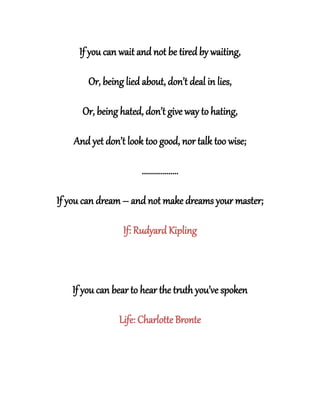
If you can wait and not be tired by waiting,
Or, being lied about, don’t deal in lies,
Or, being hated, don’t give way to hating,
And yet don’t look too good, nor talk too wise;
..................
If you can dream – and not make dreams your master;
If: Rudyard Kipling
If you can bear to hear the truth you’ve spoken
Life: Charlotte Bronte
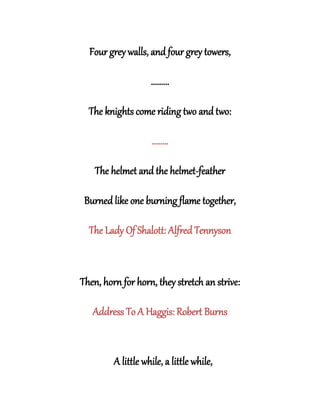
Four grey walls, and four grey towers,
.........
The knights come riding two and two:
........
The helmet and the helmet-feather
Burned like one burning flame together,
The Lady Of Shalott: Alfred Tennyson
Then, horn for horn, they stretch an strive:
Address To A Haggis: Robert Burns
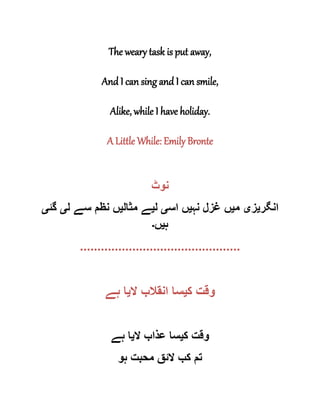
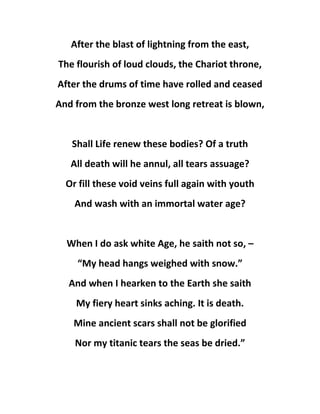
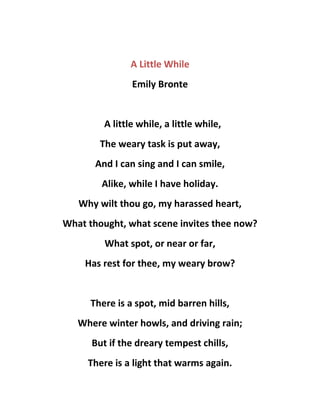
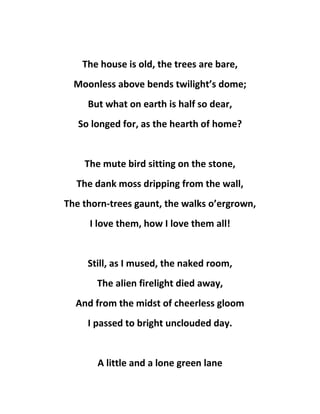
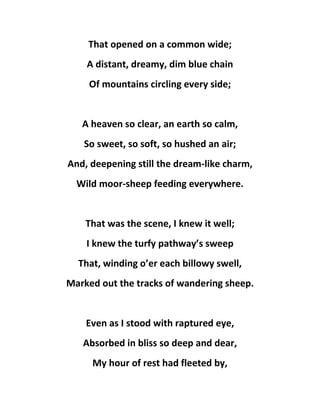
A little while, a little while,
The weary task is put away,
And I can sing and I can smile,
Alike, while I have holiday.
A Little While: Emily Bronte
‫نوٹ‬
‫انگر‬‫ی‬‫ز‬‫ی‬‫م‬‫ی‬‫نہ‬ ‫غزل‬ ‫ں‬‫ی‬‫اس‬ ‫ں‬‫ی‬‫ل‬‫ی‬‫مثال‬ ‫ے‬‫ی‬‫ل‬ ‫سے‬ ‫نظم‬ ‫ں‬‫ی‬‫گئ‬‫ی‬
‫ہ‬‫ی‬‫ں‬‫۔‬
..............................................
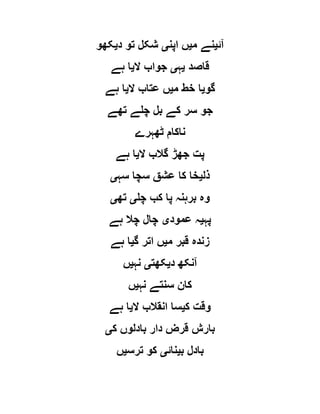
‫ک‬ ‫وقت‬‫ی‬‫سا‬‫ال‬ ‫انقالب‬‫ی‬‫ہے‬ ‫ا‬
‫ک‬ ‫وقت‬‫ی‬‫ال‬ ‫عذاب‬ ‫سا‬‫ی‬‫ہے‬ ‫ا‬
‫ہو‬ ‫محبت‬ ‫الئق‬ ‫کب‬ ‫تم‬
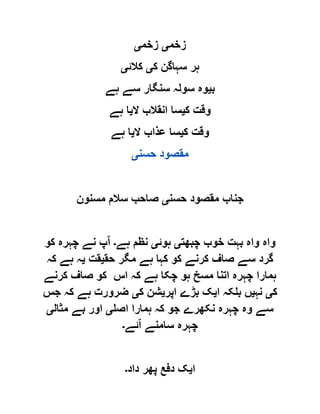
‫آئ‬‫ی‬‫م‬ ‫نے‬‫ی‬‫اپن‬ ‫ں‬‫ی‬‫د‬ ‫تو‬ ‫شکل‬‫ی‬‫کھو‬
‫قاصد‬‫ی‬‫ہ‬‫ی‬‫ال‬ ‫جواب‬‫ی‬‫ہے‬ ‫ا‬
‫گو‬‫ی‬‫م‬ ‫خط‬ ‫ا‬‫ی‬‫ال‬ ‫عتاب‬ ‫ں‬‫ی‬‫ہے‬ ‫ا‬
‫تھے‬ ‫چلے‬ ‫بل‬ ‫کے‬ ‫سر‬ ‫جو‬
‫ٹھہرے‬ ‫ناکام‬
‫ال‬ ‫گالب‬ ‫جھڑ‬ ‫پت‬‫ی‬‫ہے‬ ‫ا‬
‫ذل‬‫ی‬‫سہ‬ ‫سچا‬ ‫عشق‬ ‫کا‬ ‫خا‬‫ی‬
‫چل‬ ‫کب‬ ‫پا‬ ‫برہنہ‬ ‫وہ‬‫ی‬‫تھ‬‫ی‬
‫پہ‬‫ی‬‫عمود‬ ‫ہ‬‫ی‬‫ہے‬ ‫چال‬ ‫چال‬
‫زندہ‬‫م‬ ‫قبر‬‫ی‬‫گ‬ ‫اتر‬ ‫ں‬‫ی‬‫ہے‬ ‫ا‬
‫د‬ ‫آنکھ‬‫ی‬‫کھت‬‫ی‬‫نہ‬‫ی‬‫ں‬
‫نہ‬ ‫سنتے‬ ‫کان‬‫ی‬‫ں‬
‫ک‬ ‫وقت‬‫ی‬‫ال‬ ‫انقالب‬ ‫سا‬‫ی‬‫ہے‬ ‫ا‬
‫ک‬ ‫بادلوں‬ ‫دار‬ ‫قرض‬ ‫بارش‬‫ی‬
‫ب‬ ‫بادل‬‫ی‬‫نائ‬‫ی‬‫ترس‬ ‫کو‬‫ی‬‫ں‬
‫زخم‬‫ی‬‫زخم‬‫ی‬
‫ک‬ ‫سہاگن‬ ‫ہر‬‫ی‬‫کالئ‬‫ی‬
‫ب‬‫ی‬‫ہے‬ ‫سے‬ ‫سنگار‬ ‫سولہ‬ ‫وہ‬
‫ک‬ ‫وقت‬‫ی‬‫ال‬ ‫انقالب‬ ‫سا‬‫ی‬‫ہے‬ ‫ا‬
‫ک‬ ‫وقت‬‫ی‬‫ال‬ ‫عذاب‬ ‫سا‬‫ی‬‫ہے‬ ‫ا‬
‫حسن‬ ‫مقصود‬‫ی‬
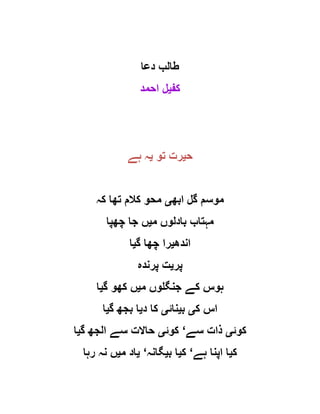
‫حسن‬ ‫مقصود‬ ‫جناب‬‫ی‬‫مسنو‬ ‫سالم‬ ‫صاحب‬‫ن‬
‫چبھت‬ ‫خوب‬ ‫بہت‬ ‫واہ‬ ‫واہ‬‫ی‬‫ہوئ‬‫ی‬‫ہے‬ ‫نظم‬‫۔‬‫ا‬‫کو‬ ‫چہرہ‬ ‫نے‬ ‫پ‬
‫حق‬ ‫مگر‬ ‫ہے‬ ‫کہا‬ ‫کو‬ ‫کرنے‬ ‫صاف‬ ‫سے‬ ‫گرد‬‫ی‬‫قت‬‫ی‬‫کہ‬ ‫ہے‬ ‫ہ‬
‫کرنے‬ ‫صاف‬ ‫کو‬ ‫اس‬ ‫کہ‬ ‫ہے‬ ‫چکا‬ ‫ہو‬ ‫مسخ‬ ‫اتنا‬ ‫چہرہ‬ ‫ہمارا‬
‫ک‬‫ی‬‫نہ‬‫ی‬‫ا‬ ‫بلکہ‬ ‫ں‬‫ی‬‫اپر‬ ‫بڑے‬ ‫ک‬‫ی‬‫ک‬ ‫شن‬‫ی‬‫جس‬ ‫کہ‬ ‫ہے‬ ‫ضرورت‬
‫اصل‬ ‫ہمارا‬ ‫کہ‬ ‫جو‬ ‫نکھرے‬ ‫چہرہ‬ ‫وہ‬ ‫سے‬‫ی‬‫مثال‬ ‫بے‬ ‫اور‬‫ی‬
‫ا‬ ‫سامنے‬ ‫چہرہ‬‫ئے‬‫۔‬
‫ا‬‫ی‬‫داد‬ ‫پھر‬ ‫دفع‬ ‫ک‬‫۔‬
‫دعا‬ ‫طالب‬
‫کف‬‫ی‬‫احمد‬ ‫ل‬
‫ح‬‫ی‬‫تو‬ ‫رت‬‫ی‬‫ہے‬ ‫ہ‬
‫ابھ‬ ‫گل‬ ‫موسم‬‫ی‬‫کہ‬ ‫تھا‬ ‫کالم‬ ‫محو‬
‫م‬ ‫بادلوں‬ ‫مہتاب‬‫ی‬‫چھپا‬ ‫جا‬ ‫ں‬
‫اندھ‬‫ی‬‫گ‬ ‫چھا‬ ‫را‬‫ی‬‫ا‬
‫پر‬‫ی‬‫پرندہ‬ ‫ت‬
‫م‬ ‫جنگلوں‬ ‫کے‬ ‫ہوس‬‫ی‬‫گ‬ ‫کھو‬ ‫ں‬‫ی‬‫ا‬
‫ک‬ ‫اس‬‫ی‬‫ب‬‫ی‬‫نائ‬‫ی‬‫د‬ ‫کا‬‫ی‬‫گ‬ ‫بجھ‬ ‫ا‬‫ی‬‫ا‬
‫کوئ‬‫ی‬‫سے‬ ‫ذات‬‘‫کوئ‬‫ی‬‫گ‬ ‫الجھ‬ ‫سے‬ ‫حاالت‬‫ی‬‫ا‬
‫ک‬‫ی‬‫ہے‬ ‫اپنا‬ ‫ا‬‘‫ک‬‫ی‬‫ب‬ ‫ا‬‫ی‬‫گا‬‫نہ‬‘‫ی‬‫م‬ ‫اد‬‫ی‬‫رہا‬ ‫نہ‬ ‫ں‬
‫کہ‬ ‫تھے‬ ‫کو‬ ‫چھٹنے‬ ‫بادل‬
‫لگا‬ ‫اگلنے‬ ‫لہو‬ ‫افق‬
‫گرے‬ ‫ادھر‬ ‫دو‬ ‫ادھر‬ ‫بم‬ ‫دو‬
‫تو‬ ‫پھر‬
‫ہ‬ ‫دھواں‬ ‫سو‬ ‫ہر‬‫ی‬‫تھا‬ ‫دھواں‬
‫م‬ ‫دھول‬ ‫جب‬ ‫چہرے‬‫ی‬‫تو‬ ‫اٹے‬ ‫ں‬
‫اندھ‬ ‫کا‬ ‫ظلم‬‫ی‬‫گ‬ ‫مچ‬ ‫ر‬‫ی‬‫ا‬
‫درو‬ ‫اک‬ ‫پھر‬‫ی‬‫م‬ ‫ش‬‫ی‬‫آگہ‬ ‫نار‬‫ی‬‫چڑھا‬ ‫پر‬
‫سنو‬ ‫سنو‬ ‫لگا‬ ‫کہنے‬
‫ل‬ ‫سمو‬ ‫سب‬ ‫دامن‬‫ی‬‫ہے‬ ‫تا‬
‫چہرے‬ ‫سے‬ ‫دامن‬ ‫اپنے‬‫کرو‬ ‫صاف‬
‫شا‬‫ی‬‫م‬ ‫تم‬ ‫کہ‬ ‫د‬‫ی‬‫کوئ‬ ‫سے‬ ‫ں‬‫ی‬
‫ابھ‬‫ی‬‫ی‬‫ت‬‫ی‬‫ہو‬ ‫ہوا‬ ‫نہ‬ ‫م‬
‫ی‬‫ت‬‫ی‬‫م‬‫ی‬‫لٹ‬ ‫ذوق‬ ‫کا‬‫ی‬‫د‬ ‫ڈبو‬ ‫ا‬‫ی‬‫ہے‬ ‫تا‬
‫ل‬ ‫دبوچ‬ ‫موسم‬ ‫کے‬ ‫من‬‫ی‬‫ہے‬ ‫تا‬
‫پھٹ‬ ‫سنتا‬ ‫کون‬‫ی‬‫پران‬‫ی‬‫کو‬ ‫آواز‬
‫ح‬‫ی‬‫تو‬ ‫رت‬‫ی‬‫ہے‬ ‫ہ‬
‫ہے‬ ‫انتظار‬ ‫کو‬ ‫سب‬ ‫کا‬ ‫گل‬ ‫موسم‬
‫بھ‬ ‫دامن‬ ‫اپنا‬ ‫سے‬ ‫گرد‬‫ی‬‫ہے‬ ‫بچاتا‬
‫ہے‬ ‫جاتا‬ ‫کہے‬ ‫سے‬ ‫اوروں‬
‫کرو‬ ‫صاف‬ ‫اپنا‬ ‫چہرہ‬‘‫چہ‬‫کرو‬ ‫صاف‬ ‫اپنا‬ ‫رہ‬
‫حسن‬ ‫مقصود‬ ‫جناب‬‫ی‬‫مسنون‬ ‫سالم‬ ‫صاحب‬
‫چبھت‬ ‫خوب‬ ‫بہت‬ ‫واہ‬ ‫واہ‬‫ی‬‫ہوئ‬‫ی‬‫ہے‬ ‫نظم‬‫۔‬‫ا‬‫کو‬ ‫چہرہ‬ ‫نے‬ ‫پ‬
‫حق‬ ‫مگر‬ ‫ہے‬ ‫کہا‬ ‫کو‬ ‫کرنے‬ ‫صاف‬ ‫سے‬ ‫گرد‬‫ی‬‫قت‬‫ی‬‫کہ‬ ‫ہے‬ ‫ہ‬
‫کرنے‬ ‫صاف‬ ‫کو‬ ‫اس‬ ‫کہ‬ ‫ہے‬ ‫چکا‬ ‫ہو‬ ‫مسخ‬ ‫اتنا‬ ‫چہرہ‬ ‫ہمارا‬
‫ک‬‫ی‬‫نہ‬‫ی‬‫ا‬ ‫بلکہ‬ ‫ں‬‫ی‬‫اپر‬ ‫بڑے‬ ‫ک‬‫ی‬‫ک‬ ‫شن‬‫ی‬‫جس‬ ‫کہ‬ ‫ہے‬ ‫ضرورت‬
‫نکھر‬ ‫چہرہ‬ ‫وہ‬ ‫سے‬‫اصل‬ ‫ہمارا‬ ‫کہ‬ ‫جو‬ ‫ے‬‫ی‬‫مثال‬ ‫بے‬ ‫اور‬‫ی‬
‫ا‬ ‫سامنے‬ ‫چہرہ‬‫ئے‬‫۔‬
‫ا‬‫ی‬‫داد‬ ‫پھر‬ ‫دفعہ‬ ‫ک‬‫۔‬
‫دعا‬ ‫طالب‬
‫کف‬‫ی‬‫احمد‬ ‫ل‬
http://www.bazm.urduanjuman.com/index.php?topic=9121.0
‫سے‬ ‫منہ‬ ‫کس‬
‫ہات‬ ‫بھرتے‬ ‫چلم‬‘‫نہ‬ ‫اٹھ‬‫ی‬‫سکتے‬ ‫ں‬
‫ہو‬‫فق‬ ‫پر‬ ‫نٹوں‬‫ی‬‫نے‬ ‫عصر‬ ‫ہ‬
‫د‬ ‫رکھ‬ ‫چپ‬‫ی‬‫ہے‬
‫عظ‬ ‫کتنا‬‫ی‬‫شخص‬ ‫وہ‬ ‫تھا‬ ‫م‬
‫گل‬‫ی‬‫م‬ ‫وں‬‫ی‬‫ں‬
‫رہا‬ ‫بانٹتا‬ ‫لفظ‬ ‫کے‬ ‫رسولوں‬
‫کو‬ ‫لفظوں‬ ‫بولتے‬ ‫ان‬‘‫سکے‬ ‫نہ‬ ‫سن‬ ‫ہم‬
‫سے‬ ‫آنکھوں‬‘‫سکے‬ ‫نہ‬ ‫چن‬
‫م‬ ‫کانوں‬ ‫ہمارے‬‫ی‬‫ں‬‘‫ک‬ ‫جبر‬‫ی‬‫پور‬‫ی‬‫رہ‬ ‫ں‬‫ی‬‫ں‬
‫م‬ ‫آنکھوں‬‫ی‬‫د‬ ‫رکھ‬ ‫پتھر‬ ‫نے‬ ‫خوف‬ ‫ں‬‫ی‬‫ے‬
‫ہ‬ ‫جانتے‬ ‫ہم‬‫ی‬‫ں‬‘‫تھا‬ ‫سچا‬ ‫وہ‬
‫تھا‬ ‫پکا‬ ‫کا‬ ‫قول‬
‫تو‬ ‫مرنا‬‫ہے‬‘‫ہم‬‫ی‬‫ں‬‫ی‬‫رہا‬ ‫نہ‬ ‫اد‬
‫ہ‬ ‫جانتے‬ ‫ہم‬‫ی‬‫ک‬ ‫جو‬ ‫نے‬ ‫اس‬ ‫ں‬‫ی‬‫ا‬
‫ل‬ ‫ہمارے‬‫ی‬‫ک‬ ‫ے‬‫ی‬‫ا‬
‫ج‬‫ی‬‫ل‬ ‫ہمارے‬ ‫تو‬ ‫ا‬‫ی‬‫ج‬ ‫ے‬‫ی‬‫ا‬
‫عج‬ ‫کتنا‬‫ی‬‫تھا‬ ‫ب‬
‫رہا‬ ‫بھرتا‬ ‫دم‬ ‫کا‬ ‫الشوں‬ ‫زندہ‬
‫د‬ ‫ہم‬ ‫ہوا‬ ‫مصلوب‬‫ی‬‫رہے‬ ‫کھتے‬
‫ن‬‫ی‬‫د‬ ‫ہم‬ ‫چڑھا‬ ‫زے‬‫ی‬‫رہے‬ ‫کھتے‬
‫اڑ‬ ‫راکھ‬ ‫جال‬ ‫مرا‬‫ی‬‫د‬ ‫ہم‬‫ی‬‫رہے‬ ‫کھتے‬
‫ہوتا‬ ‫چال‬ ‫تو‬ ‫گام‬ ‫دو‬ ‫پر‬ ‫کہے‬ ‫کے‬ ‫اس‬
‫اب‬ ‫سے‬ ‫منہ‬ ‫کس‬
‫ک‬ ‫اس‬‫ی‬‫راہ‬‫د‬‫ی‬‫ہ‬ ‫کھتے‬‫ی‬‫ں‬
‫تماشائ‬ ‫خاموش‬ ‫ہم‬‫ی‬
‫مظلوم‬‫ی‬‫ہ‬ ‫رچاتے‬ ‫ڈھونگ‬ ‫فقط‬ ‫کا‬ ‫ت‬‫ی‬‫ں‬
‫ج‬ ‫جان‬ ‫بے‬‫ی‬‫م‬ ‫دامن‬ ‫کے‬ ‫ون‬‫ی‬‫ں‬
‫غ‬‫ی‬‫م‬ ‫رن‬ ‫جو‬ ‫کہاں‬ ‫رت‬‫ی‬‫اترے‬ ‫ں‬
‫ی‬‫پھر‬ ‫ا‬
‫ک‬ ‫اس‬ ‫لب‬ ‫پس‬‫ی‬‫ہ‬ ‫مدح‬‫ی‬‫سکے‬ ‫کر‬
‫دن‬ ‫چلو‬‫ی‬‫چار‬ ‫ا‬‫ی‬‫ہ‬‫ی‬‫سہ‬‫ی‬
‫آؤ‬
‫کر‬ ‫دعا‬ ‫لب‬ ‫اندرون‬‫ی‬‫ں‬
‫س‬ ‫مول‬ ‫ان‬‫ی‬‫کہ‬ ‫مدح‬‫ی‬‫ں‬
‫پ‬‫ی‬‫م‬ ‫غام‬‫ی‬‫ترم‬ ‫ں‬‫ی‬‫ک‬ ‫م‬‫ی‬‫ج‬‫ی‬‫ے‬
‫م‬ ‫نبضوں‬ ‫شبنم‬‫ی‬‫ں‬
‫پر‬ ‫پلکوں‬ ‫عشق‬
‫اترے‬ ‫پروانے‬
‫د‬‫ی‬‫اترے‬ ‫جالنے‬ ‫پر‬ ‫جو‬ ‫تھے‬ ‫وانے‬
‫ک‬ ‫لمس‬‫ی‬‫نے‬ ‫حدت‬
‫ک‬ ‫خوشبو‬‫ی‬‫نے‬ ‫شدت‬
‫آئ‬‫ی‬‫س‬ ‫کے‬ ‫ن‬‫ی‬‫رکھا‬ ‫پتھر‬ ‫پر‬ ‫نے‬
‫آنکھ‬ ‫گالب‬‫ی‬‫پتھر‬ ‫ں‬
‫گھر‬ ‫کا‬ ‫خوف‬ ‫رہگزر‬ ‫ہر‬
‫در‬ ‫سوچ‬‫ی‬‫ہوئے‬ ‫برف‬ ‫چے‬
‫بہر‬‫ی‬‫د‬‫ی‬‫پر‬ ‫واروں‬
‫اگے‬ ‫خواب‬ ‫گونگے‬
‫جلے‬ ‫چراغ‬ ‫اندھے‬
‫م‬ ‫نبضوں‬ ‫ئشبنم‬‫ی‬‫ں‬
‫تھا‬ ‫شعلہ‬ ‫کا‬ ‫موت‬
‫م‬ ‫شہر‬‫ی‬‫مچا‬ ‫کہرام‬ ‫ں‬
‫پروانے‬‫د‬ ‫تو‬‫ی‬‫تھے‬ ‫وانے‬
‫اترے‬ ‫جالنے‬ ‫پر‬
‫تک‬ ‫جب‬
‫گ‬ ‫ہو‬ ‫قتل‬ ‫وہ‬‫ی‬‫ا‬
‫ہوا‬ ‫قتل‬ ‫پھر‬
‫ا‬‫ی‬‫ہوا‬ ‫قتل‬ ‫پھر‬ ‫بار‬ ‫ک‬
‫بھ‬ ‫بعد‬ ‫کے‬ ‫اس‬‫ی‬‫ہوا‬ ‫قتل‬
‫رہا‬ ‫ہوتا‬ ‫قتل‬ ‫مسلسل‬ ‫وہ‬
‫س‬ ‫تک‬ ‫جب‬‫ی‬‫ک‬ ‫ٹھوں‬‫ی‬‫بھوک‬‘‫نہ‬‫ی‬‫جات‬ ‫مٹ‬ ‫ں‬‫ی‬
‫کا‬ ‫خواہشوں‬ ‫تک‬ ‫جب‬‘‫نہ‬ ‫جنازہ‬‫ی‬‫جا‬ ‫اٹھ‬ ‫ں‬
‫گا‬ ‫رہے‬ ‫ہوتا‬ ‫قتل‬ ‫وہ‬
‫محترم‬‫ی‬‫حسن‬ ‫ڈاکٹر‬‫ی‬‫صاحب‬:‫عرض‬ ‫آداب‬
‫ک‬ ‫آپ‬‫ی‬‫نثر‬‫ی‬‫پڑھ‬ ‫نظم‬‫ی‬‫مستف‬ ‫اور‬‫ی‬‫ہوا‬ ‫د‬‫۔‬‫نثر‬‫ی‬‫ک‬ ‫نظم‬‫ی‬
‫م‬ ‫ضرورت‬‫ی‬‫ر‬‫ی‬‫م‬ ‫سمجھ‬‫ی‬‫نہ‬ ‫ں‬‫ی‬‫آت‬ ‫ں‬‫ی‬‫ہے‬‫۔‬‫نثر‬‫ی‬‫دراصل‬ ‫نظم‬
‫اچھ‬‫ی‬‫م‬ ‫ٹکڑوں‬ ‫بڑے‬ ‫چھوٹے‬ ‫کو‬ ‫نثر‬‫ی‬‫تقس‬ ‫ں‬‫ی‬‫کا‬ ‫کرنے‬ ‫م‬
‫ہے‬ ‫نام‬ ‫دوسرا‬‫۔‬‫خ‬‫ی‬‫ر‬‫ی‬‫ا‬ ‫ہ‬‫ی‬‫ہے‬ ‫بحث‬ ‫الگ‬ ‫ک‬‫۔‬‫ک‬ ‫آپ‬ ‫کو‬ ‫مجھ‬‫ی‬
‫ی‬‫نثر‬ ‫ہ‬‫ی‬‫اچھ‬ ‫لئے‬ ‫اس‬ ‫نظم‬‫ی‬‫لگ‬‫ی‬‫وقت‬ ‫موضوع‬ ‫کا‬ ‫اس‬ ‫کہ‬
‫ک‬‫ی‬‫ہے‬ ‫پکار‬‫۔‬‫سار‬ ‫طرح‬ ‫جس‬‫ی‬‫دن‬‫ی‬‫م‬ ‫ا‬‫ی‬‫طور‬ ‫خاص‬ ‫اور‬ ‫ں‬
‫دن‬ ‫سے‬‫ی‬‫م‬ ‫اسالم‬ ‫ائے‬‫ی‬‫ں‬:‫س‬‫ی‬‫وڈ‬ ،‫ٹھوں‬‫ی‬‫روں‬:‫ہاتھوں‬ ‫کے‬
‫ہے‬ ‫عبرتناک‬ ‫بہت‬ ‫وہ‬ ‫ہے‬ ‫رہا‬ ‫ہو‬ ‫استحصال‬ ‫کا‬ ‫عوام‬‫۔‬‫افسوس‬
‫م‬ ‫سمجھ‬ ‫عالج‬ ‫کا‬ ‫اس‬ ‫کہ‬‫ی‬‫نہ‬ ‫ں‬‫ی‬‫آتا‬ ‫ں‬‫۔‬‫ا‬‫ی‬‫م‬ ‫دل‬ ‫سوال‬ ‫ک‬‫ی‬‫ں‬
‫ہست‬ ‫وہ‬ ‫تو‬ ‫ہے‬ ‫رہا‬ ‫ہو‬ ‫ظلم‬ ‫قدر‬ ‫اس‬ ‫کہ‬ ‫ہے‬ ‫اٹھتا‬‫ی‬‫ہم‬ ‫کو‬ ‫جس‬
:،‫خدا‬ ،‫ہللا‬‫گاڈ‬ ،‫بھگوان‬:‫ہ‬ ‫کہتے‬‫ی‬‫ک‬ ‫ں‬‫ی‬‫اگر‬ ‫ہے؟‬ ‫خاموش‬ ‫وں‬
‫م‬ ‫ہاتھ‬ ‫کے‬ ‫اس‬ ‫کچھ‬ ‫سب‬‫ی‬‫کرت‬ ‫کچھ‬ ‫وہ‬ ‫پھر‬ ‫تو‬ ‫ہے‬ ‫ں‬‫ی‬‫ک‬‫ی‬‫وں‬
‫نہ‬‫ی‬‫بھ‬ ‫نے‬ ‫آپ‬ ‫ں؟‬‫ی‬‫ہوگا‬ ‫سوچا‬ ‫پر‬ ‫اس‬‫۔‬‫جان‬ ‫مناسب‬‫ی‬‫اس‬ ‫تو‬ ‫ں‬
‫لکھ‬ ‫پر‬‫ی‬‫ں‬‫۔‬‫شکر‬‫ی‬‫ہ‬‫۔‬
‫خادم‬
‫مش‬‫ی‬‫شمس‬ ‫ر‬‫ی‬
http://www.bazm.urduanjuman.com/index.php?topic=8503.0
‫ہ‬ ‫صبح‬‫ی‬‫سے‬
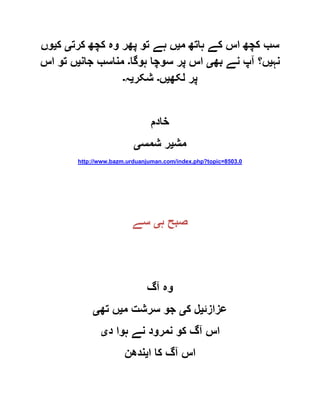
‫آگ‬ ‫وہ‬
‫عزازئ‬‫ی‬‫ک‬ ‫ل‬‫ی‬‫م‬ ‫سرشت‬ ‫جو‬‫ی‬‫تھ‬ ‫ں‬‫ی‬
‫د‬ ‫ہوا‬ ‫نے‬ ‫نمرود‬ ‫کو‬ ‫آگ‬ ‫اس‬‫ی‬
‫ا‬ ‫کا‬ ‫آگ‬ ‫اس‬‫ی‬‫ندھن‬
‫خر‬ ‫پھر‬ ‫نے‬ ‫قارون‬‫ی‬‫ک‬ ‫د‬‫ی‬‫ا‬
‫پ‬ ‫فرعون‬ ‫کو‬ ‫آگ‬ ‫اس‬‫ی‬‫گ‬‫ی‬‫ا‬
‫د‬ ‫اگل‬ ‫نے‬ ‫حر‬ ‫کو‬ ‫آگ‬ ‫اس‬‫ی‬‫ا‬
‫ی‬‫ز‬‫ی‬‫گ‬ ‫نگل‬ ‫مگر‬ ‫د‬‫ی‬‫ا‬
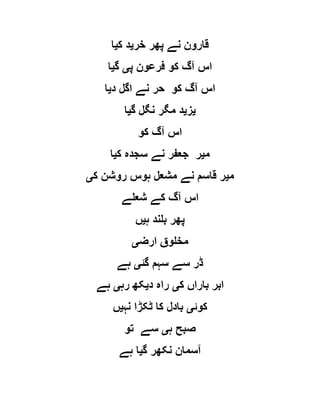
‫کو‬ ‫آگ‬ ‫اس‬
‫م‬‫ی‬‫نے‬ ‫جعفر‬ ‫ر‬‫ک‬ ‫سجدہ‬‫ی‬‫ا‬
‫م‬‫ی‬‫ک‬ ‫روشن‬ ‫ہوس‬ ‫مشعل‬ ‫نے‬ ‫قاسم‬ ‫ر‬‫ی‬
‫شعلے‬ ‫کے‬ ‫آگ‬ ‫اس‬
‫ہ‬ ‫بلند‬ ‫پھر‬‫ی‬‫ں‬
‫ارض‬ ‫مخلوق‬‫ی‬
‫گئ‬ ‫سہم‬ ‫سے‬ ‫ڈر‬‫ی‬‫ہے‬
‫ک‬ ‫باراں‬ ‫ابر‬‫ی‬‫د‬ ‫راہ‬‫ی‬‫رہ‬ ‫کھ‬‫ی‬‫ہے‬
‫کوئ‬‫ی‬‫نہ‬ ‫ٹکڑا‬ ‫کا‬ ‫بادل‬‫ی‬‫ں‬
‫ہ‬ ‫صبح‬‫ی‬‫تو‬ ‫سے‬
‫گ‬ ‫نکھر‬ ‫آسمان‬‫ی‬‫ہے‬ ‫ا‬
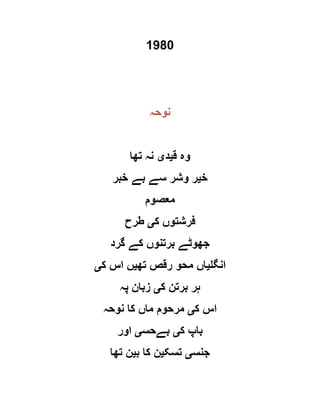
1980
‫نوحہ‬
‫ق‬ ‫وہ‬‫ی‬‫د‬‫ی‬‫تھا‬ ‫نہ‬
‫خ‬‫ی‬‫خبر‬ ‫بے‬ ‫سے‬ ‫وشر‬ ‫ر‬
‫معصوم‬
‫ک‬ ‫فرشتوں‬‫ی‬‫طرح‬
‫برتن‬ ‫جھوٹے‬‫گرد‬ ‫کے‬ ‫وں‬
‫انگل‬‫ی‬‫تھ‬ ‫رقص‬ ‫محو‬ ‫اں‬‫ی‬‫ک‬ ‫اس‬ ‫ں‬‫ی‬
‫ک‬ ‫برتن‬ ‫ہر‬‫ی‬‫پہ‬ ‫زبان‬
‫ک‬ ‫اس‬‫ی‬‫نوحہ‬ ‫کا‬ ‫ماں‬ ‫مرحوم‬
‫ک‬ ‫باپ‬‫ی‬‫بےحس‬‫ی‬‫اور‬
‫جنس‬‫ی‬‫تسک‬‫ی‬‫ب‬ ‫کا‬ ‫ن‬‫ی‬‫تھا‬ ‫ن‬
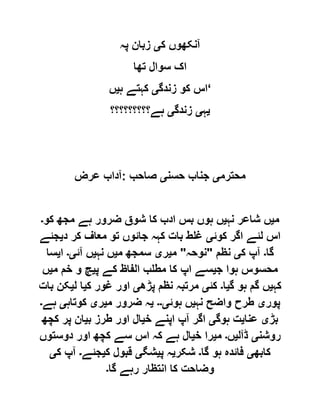
‫ک‬ ‫آنکھوں‬‫ی‬‫پہ‬ ‫زبان‬
‫تھا‬ ‫سوال‬ ‫اک‬
‫زندگ‬ ‫کو‬ ‫اس‬‫ی‬‫ہ‬ ‫کہتے‬‫ی‬‫ں‬ ‘
‫ی‬‫ہ‬‫ی‬‫زندگ‬‫ی‬‫ہے؟؟؟؟؟؟؟؟؟‬
‫محترم‬‫ی‬‫حسن‬ ‫جناب‬‫ی‬‫صاحب‬:‫عرض‬ ‫آداب‬
‫م‬‫ی‬‫نہ‬ ‫شاعر‬ ‫ں‬‫ی‬‫کا‬ ‫ادب‬ ‫بس‬ ‫ہوں‬ ‫ں‬‫کو‬ ‫مجھ‬ ‫ہے‬ ‫ضرور‬ ‫شوق‬‫۔‬
‫کوئ‬ ‫اگر‬ ‫لئے‬ ‫اس‬‫ی‬‫د‬ ‫کر‬ ‫معاف‬ ‫تو‬ ‫جائوں‬ ‫کہہ‬ ‫بات‬ ‫غلط‬‫ی‬‫جئے‬
‫گا‬‫۔‬‫ک‬ ‫آپ‬‫ی‬‫نظم‬"‫نوحہ‬"‫م‬‫ی‬‫ر‬‫ی‬‫م‬ ‫سمجھ‬‫ی‬‫نہ‬ ‫ں‬‫ی‬‫آئ‬ ‫ں‬‫ی۔‬‫ا‬‫ی‬‫سا‬
‫ج‬ ‫ہوا‬ ‫محسوس‬‫ی‬‫پ‬ ‫کے‬ ‫الفاظ‬ ‫مطلب‬ ‫کا‬ ‫اپ‬ ‫سے‬‫ی‬‫م‬ ‫خم‬ ‫و‬ ‫چ‬‫ی‬‫ں‬
‫کہ‬‫ی‬‫گ‬ ‫ہو‬ ‫گم‬ ‫ں‬‫ی‬‫ا‬‫۔‬‫کئ‬‫ی‬‫پڑھ‬ ‫نظم‬ ‫مرتبہ‬‫ی‬‫ک‬ ‫غور‬ ‫اور‬‫ی‬‫ل‬ ‫ا‬‫ی‬‫بات‬ ‫کن‬
‫پور‬‫ی‬‫نہ‬ ‫واضح‬ ‫طرح‬‫ی‬‫ہوئ‬ ‫ں‬‫ی۔۔‬‫ی‬‫ضر‬ ‫ہ‬‫م‬ ‫ور‬‫ی‬‫ر‬‫ی‬‫کوتاہ‬‫ی‬‫ہے‬‫۔‬
‫بڑ‬‫ی‬‫عنا‬‫ی‬‫ہوگ‬ ‫ت‬‫ی‬‫خ‬ ‫اپنے‬ ‫آپ‬ ‫اگر‬‫ی‬‫ب‬ ‫طرز‬ ‫اور‬ ‫ال‬‫ی‬‫کچھ‬ ‫پر‬ ‫ان‬
‫روشن‬‫ی‬‫ڈآل‬‫ی‬‫ں‬‫۔‬‫م‬‫ی‬‫خ‬ ‫را‬‫ی‬‫دوستوں‬ ‫اور‬ ‫کچھ‬ ‫سے‬ ‫اس‬ ‫کہ‬ ‫ہے‬ ‫ال‬
‫کابھ‬‫ی‬‫گا‬ ‫ہو‬ ‫فائدہ‬‫۔‬‫شکر‬‫ی‬‫پ‬ ‫ہ‬‫ی‬‫شگ‬‫ی‬‫ک‬ ‫قبول‬‫ی‬‫جئے‬‫۔‬‫ک‬ ‫آپ‬‫ی‬
‫گا‬ ‫رہے‬ ‫انتظار‬ ‫کا‬ ‫وضاحت‬‫۔‬
‫خادم‬:‫مش‬‫ی‬‫شمس‬ ‫ر‬‫ی‬
‫س‬ ‫محترم‬‫ی‬‫صاحب‬ ‫د‬
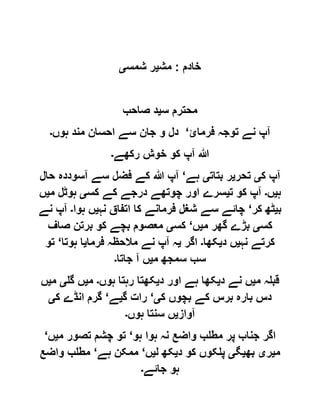
‫فرمائ‬ ‫توجہ‬ ‫نے‬ ‫آپ‬‘‫جان‬ ‫و‬ ‫دل‬‫ہوں‬ ‫مند‬ ‫احسان‬ ‫سے‬‫۔‬
‫رکھے‬ ‫خوش‬ ‫کو‬ ‫آپ‬ ‫ہللا‬‫۔‬
‫ک‬ ‫آپ‬‫ی‬‫تحر‬‫ی‬‫بتات‬ ‫ر‬‫ی‬‫ہے‬‘‫حال‬ ‫آسوددہ‬ ‫سے‬ ‫فضل‬ ‫کے‬ ‫ہللا‬ ‫آپ‬
‫ہ‬‫ی‬‫ں‬‫۔‬‫ت‬ ‫کو‬ ‫آپ‬‫ی‬‫کس‬ ‫کے‬ ‫درجے‬ ‫چوتھے‬ ‫اور‬ ‫سرے‬‫ی‬‫م‬ ‫ہوٹل‬‫ی‬‫ں‬
‫ب‬‫ی‬‫کر‬ ‫ٹھ‬‘‫نہ‬ ‫اتفاق‬ ‫کا‬ ‫فرمانے‬ ‫شغل‬ ‫سے‬ ‫چائے‬‫ی‬‫ہوا‬ ‫ں‬‫۔‬‫نے‬ ‫آپ‬
‫کس‬‫ی‬‫م‬ ‫گھر‬ ‫بڑے‬‫ی‬‫ں‬‘‫کس‬‫ی‬‫صاف‬ ‫برتن‬ ‫کو‬ ‫بچے‬ ‫معصوم‬
‫نہ‬ ‫کرتے‬‫ی‬‫د‬ ‫ں‬‫ی‬‫کھا‬‫۔‬‫اگر‬‫ی‬‫فرما‬ ‫مالحظہ‬ ‫نے‬ ‫آپ‬ ‫ہ‬‫ی‬‫ہوتا‬ ‫ا‬‘‫تو‬
‫م‬ ‫سمجھ‬ ‫سب‬‫ی‬‫جاتا‬ ‫آ‬ ‫ں‬‫۔‬
‫م‬ ‫قبلہ‬‫ی‬‫د‬ ‫نے‬ ‫ں‬‫ی‬‫د‬ ‫اور‬ ‫ہے‬ ‫کھا‬‫ی‬‫ہوں‬ ‫رہتا‬ ‫کھتا‬‫۔‬‫م‬‫ی‬‫گل‬ ‫ں‬‫ی‬‫م‬‫ی‬‫ں‬
‫ک‬ ‫بچوں‬ ‫کے‬ ‫برس‬ ‫بارہ‬ ‫دس‬‫ی‬‘‫گ‬ ‫رات‬‫ی‬‫ے‬‘‫ک‬ ‫انڈے‬ ‫گرم‬‫ی‬
‫آواز‬‫ی‬‫ہوں‬ ‫سنتا‬ ‫ں‬‫۔‬
‫ہو‬ ‫ہوا‬ ‫نہ‬ ‫واضع‬ ‫مطلب‬ ‫پر‬ ‫جناب‬ ‫اگر‬‘‫م‬ ‫تصور‬ ‫چشم‬ ‫تو‬‫ی‬‫ں‬‘
‫م‬‫ی‬‫ر‬‫ی‬‫بھ‬‫ی‬‫گ‬‫ی‬‫د‬ ‫کو‬ ‫پلکوں‬‫ی‬‫ل‬ ‫کھ‬‫ی‬‫ں‬‘‫ہ‬ ‫ممکن‬‫ے‬‘‫واضع‬ ‫مطلب‬
‫جائے‬ ‫ہو‬‫۔‬
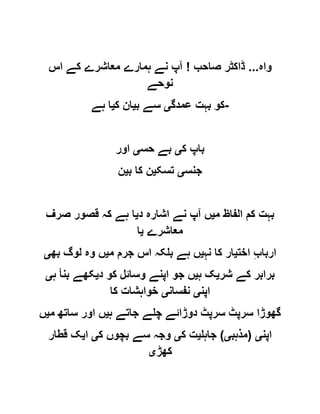
‫واہ‬...‫صاحب‬ ‫ڈاکٹر‬!‫اس‬ ‫کے‬ ‫معاشرے‬ ‫ہمارے‬ ‫نے‬ ‫آپ‬
‫نوحے‬
‫عمدگ‬ ‫بہت‬ ‫کو‬‫ی‬‫ب‬ ‫سے‬‫ی‬‫ک‬ ‫ان‬‫ی‬‫ہے‬ ‫ا‬ -
‫ک‬ ‫باپ‬‫ی‬‫حس‬ ‫بے‬‫ی‬‫اور‬
‫جنس‬‫ی‬‫تسک‬‫ی‬‫ب‬ ‫کا‬ ‫ن‬‫ی‬‫ن‬
‫م‬ ‫الفاظ‬ ‫کم‬ ‫بہت‬‫ی‬‫د‬ ‫اشارہ‬ ‫نے‬ ‫آپ‬ ‫ں‬‫ی‬‫صرف‬ ‫قصور‬ ‫کہ‬ ‫ہے‬ ‫ا‬
‫معاشرے‬‫ی‬‫ا‬
‫اخت‬ ِ‫ب‬‫اربا‬‫ی‬‫نہ‬ ‫کا‬ ‫ار‬‫ی‬‫م‬ ‫جرم‬ ‫اس‬ ‫بلکہ‬ ‫ہے‬ ‫ں‬‫ی‬‫بھ‬ ‫لوگ‬ ‫وہ‬ ‫ں‬‫ی‬
‫برابر‬‫شر‬ ‫کے‬‫ی‬‫ہ‬ ‫ک‬‫ی‬‫د‬ ‫کو‬ ‫وسائل‬ ‫اپنے‬ ‫جو‬ ‫ں‬‫ی‬‫ہ‬ ‫بنأ‬ ‫کھے‬‫ی‬
‫اپن‬‫ی‬‫نفسان‬‫ی‬‫کا‬ ‫خواہشات‬
‫ہ‬ ‫جاتے‬ ‫چلے‬ ‫دوڑائے‬ ‫سرپٹ‬ ‫سرپٹ‬ ‫گھوڑا‬‫ی‬‫م‬ ‫ساتھ‬ ‫اور‬ ‫ں‬‫ی‬‫ں‬
‫اپن‬‫ی‬(‫مذہب‬‫ی‬)‫جاہل‬‫ی‬‫ک‬ ‫ت‬‫ی‬‫ک‬ ‫بچوں‬ ‫سے‬ ‫وجہ‬‫ی‬‫ا‬‫ی‬‫قطار‬ ‫ک‬
‫کھڑ‬‫ی‬
‫د‬ ‫کر‬‫ی‬‫ہ‬ ‫تے‬‫ی‬‫ں‬
‫ف‬‫ی‬‫فاران‬ ‫صل‬‫ی‬
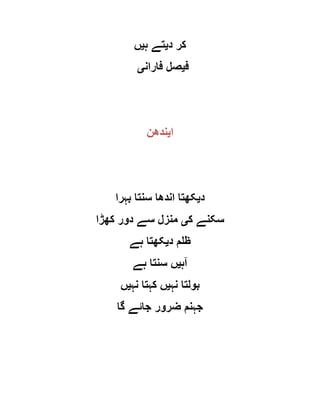
‫ا‬‫ی‬‫ندھن‬
‫د‬‫ی‬‫بہرا‬ ‫سنتا‬ ‫اندھا‬ ‫کھتا‬
‫ک‬ ‫سکنے‬‫ی‬‫کھڑا‬ ‫دور‬ ‫سے‬ ‫منزل‬
‫د‬ ‫ظلم‬‫ی‬‫ہے‬ ‫کھتا‬
‫آہ‬‫ی‬‫ہے‬ ‫سنتا‬ ‫ں‬
‫نہ‬ ‫بولتا‬‫ی‬‫نہ‬ ‫کہتا‬ ‫ں‬‫ی‬‫ں‬
‫گا‬ ‫جائے‬ ‫ضرور‬ ‫جہنم‬
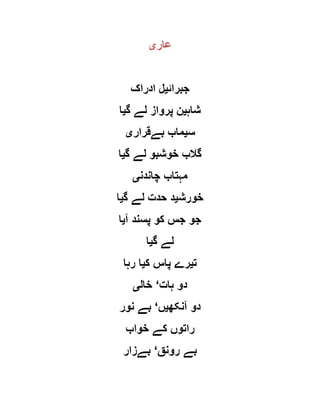
‫عار‬‫ی‬
‫جبرائ‬‫ی‬‫ادراک‬ ‫ل‬
‫شاہ‬‫ی‬‫گ‬ ‫لے‬ ‫پرواز‬ ‫ن‬‫ی‬‫ا‬
‫س‬‫ی‬‫بےقرار‬ ‫ماب‬‫ی‬
‫گ‬ ‫لے‬ ‫خوشبو‬ ‫گالب‬‫ی‬‫ا‬
‫چاندن‬ ‫مہتاب‬‫ی‬
‫خورش‬‫ی‬‫گ‬ ‫لے‬ ‫حدت‬ ‫د‬‫ی‬‫ا‬
‫آ‬ ‫پسند‬ ‫کو‬ ‫جس‬ ‫جو‬‫ی‬‫ا‬
‫گ‬ ‫لے‬‫ی‬‫ا‬
‫ت‬‫ی‬‫ک‬ ‫پاس‬ ‫رے‬‫ی‬‫رہا‬ ‫ا‬
‫ہات‬ ‫دو‬‘‫خال‬‫ی‬
‫آنکھ‬ ‫دو‬‫ی‬‫ں‬‘‫نور‬ ‫بے‬
‫خواب‬ ‫کے‬ ‫راتوں‬
‫رو‬ ‫بے‬‫نق‬‘‫بےزار‬
‫اجالے‬ ‫کے‬ ‫دن‬
‫خاموش‬‘‫اداس‬
‫ہمالہ‬‘‫مٹ‬‫ی‬‫ڈھ‬ ‫کا‬‫ی‬‫ر‬
‫عار‬ ‫سے‬ ‫حرکت‬‫ی‬
‫تو‬‘‫مٹ‬‫ی‬‫ڈھ‬ ‫کا‬‫ی‬‫ر‬
‫عار‬ ‫سے‬ ‫حرکت‬‫ی‬
‫حسن‬ ‫مقصود‬ ‫ڈاکٹر‬ ‫جناب‬ ‫حترم‬ُ‫م‬‫ی‬‫صاحب‬!‫عل‬ ‫اسالم‬‫ی‬‫کم‬
‫ا‬‫ک‬ ‫پ‬‫ی‬‫ا‬ ‫پر‬ ‫نظموں‬‫پہل‬ ‫ج‬‫ی‬‫پڑ‬ ‫نظر‬ ‫بار‬‫ی۔‬‫ِنھ‬‫ا‬ ‫نے‬ ‫ہم‬‫ی‬‫ہت‬ُ‫ب‬ ‫ں‬
‫ہ‬‫ی‬‫انگ‬ ‫کر‬ِ‫ف‬‫ی‬‫انگ‬ ‫ولولہ‬ ‫اور‬ ‫ز‬‫ی‬‫پا‬ ‫ز‬‫ی‬‫ا‬‫۔‬‫ی‬‫ہم‬ ‫نظم‬ ‫ہ‬‫ی‬‫پسن‬ ‫ہت‬ُ‫ب‬ ‫ں‬‫د‬
‫ا‬‫ئ‬‫ی‬‫ہے‬‫۔‬‫ا‬ ‫ہم‬ ‫اگرچہ‬‫م‬ ‫قابلے‬ُ‫م‬ ‫کے‬ ‫لم‬ِ‫ع‬ ‫کے‬ ‫پ‬‫ی‬‫شائ‬ ‫ں‬‫ی‬‫ِسے‬‫ا‬ ‫د‬
‫ہوں‬ ‫پائے‬ ‫نہ‬ ‫سمجھ‬ ‫تک‬ ‫معنوں‬ ‫ن‬ُ‫ا‬‫۔‬‫سمجھے‬ ‫ہم‬ ‫تک‬ ‫جہاں‬
‫ہ‬‫ی‬‫ا‬ ‫ں‬‫م‬ ‫ِس‬‫ا‬ ‫پ‬‫ی‬‫ہ‬ ‫ب‬ِ‫خاط‬ُ‫م‬ ‫سے‬ ‫ِنسان‬‫ا‬ ‫ں‬‫ی‬‫ہ‬ ‫رہے‬ ‫کہہ‬ ‫اور‬ ‫ں‬‫ی‬‫ں‬
‫ک‬ ‫درت‬ُ‫ق‬ ‫صرف‬ ‫ِنسان‬‫ا‬ ‫کہ‬‫ی‬‫ک‬ ‫عطا‬‫ی‬‫ہوئ‬‫ی‬‫چ‬‫ی‬‫ُچھ‬‫ک‬ ‫سے‬ ‫زوں‬
‫ہے‬ ‫کرتا‬ ‫حاصل‬‫۔‬‫چھ‬ ‫ُچھ‬‫ک‬ ‫سب‬ ‫سے‬ ‫ِس‬‫ا‬ ‫اگر‬‫ی‬‫ل‬ ‫ن‬‫ی‬‫جائے‬ ‫ا‬‫تو‬
‫بھ‬ ‫ُچھ‬‫ک‬ ‫پاس‬ ‫اپنے‬ ‫کے‬ ‫ِنسان‬‫ا‬‫ی‬‫نہ‬‫ی‬‫مٹ‬ ‫فقط‬ ،‫ں‬‫ی‬‫ڈھ‬ ‫کا‬‫ی‬‫ہے‬ ‫ر‬‫۔‬
‫ک‬ ‫درت‬ُ‫ق‬ ‫کو‬ ‫ِنسان‬‫ا‬‫ی‬‫تراش‬‫ی‬‫چ‬‫ی‬‫ز‬‫ی‬‫د‬ ‫ُچھ‬‫ک‬ ‫ہت‬ُ‫ب‬ ‫ں‬‫ی‬‫ت‬‫ی‬‫ہ‬‫ی‬‫ل‬ ،‫ں‬‫ی‬‫کن‬
‫نہ‬ ‫ُچھ‬‫ک‬ ‫کو‬ ‫مخلوقات‬ ‫ِن‬‫ا‬ ‫ِنسان‬‫ا‬‫ی‬‫سکتا‬ ‫دے‬ ‫ں‬‫۔‬‫جبرائ‬ ‫البتہ‬‫ی‬‫ل‬
‫وال‬‫ی‬‫نہ‬ ‫سمجھ‬ ‫ہم‬ ‫بات‬‫ی‬‫ہ‬ ‫سکے‬ ‫ں‬‫ی‬‫اپن‬ ‫اور‬ ‫ں‬‫ی‬‫لم‬ِ‫ع‬ ‫کم‬‫ی‬‫پر‬
‫ہ‬ ‫نادم‬‫ی‬‫ں‬‫۔‬
‫م‬ ‫سمجھنے‬ ‫ہم‬ ‫اگر‬‫ی‬‫ُل‬‫ک‬ ‫ں‬‫ی‬‫ی‬‫ا‬‫زو‬ُ‫ج‬‫ی‬‫تو‬ ‫ہوں‬ ‫غلط‬ ‫پر‬ ‫طور‬
‫مہربان‬‫ی‬‫ناچ‬ ‫ِس‬‫ا‬ ‫کر‬ ‫فرما‬‫ی‬‫ک‬ ‫ز‬‫ی‬‫ہوئ‬ ‫نہ‬ ‫خفا‬ ‫پر‬ ‫بات‬‫ی‬‫گا‬ ‫ے‬‫۔‬
‫ہ‬ ‫ِتنا‬‫ا‬ ‫فقط‬ ‫ادراک‬ ‫و‬ ‫لم‬ِ‫ع‬ ‫ہمارا‬‫ی‬‫ہ‬ ‫مجبور‬ ‫ہم‬ ‫پر‬ ‫س‬ ِ‫ج‬ ،‫ہے‬‫ی‬‫ں‬
‫بھ‬ ‫شرمسار‬ ‫اور‬‫ی۔‬
‫ُعا‬‫د‬ ِ‫ب‬‫طال‬
‫و‬‫ی‬‫ب‬‫ی‬‫ج‬‫ی‬
http://www.bazm.urduanjuman.com/index.php?topic=8506.0
‫کھولو‬ ‫دروازہ‬
‫وڈ‬‫ی‬‫ائ‬‫ی‬‫سرطان‬ ‫کا‬
‫بھ‬‫ی‬‫ر‬ ‫کے‬ ‫جے‬‫ی‬‫م‬ ‫شوں‬‫ی‬‫ں‬
‫بھ‬ ‫جب‬‫ی‬‫ہے‬ ‫کرتا‬ ‫گردش‬
‫چارا‬ ‫کا‬ ‫بھوک‬
‫م‬‫ی‬‫تھ‬‫ی‬‫م‬‫ی‬‫ں‬
‫ہے‬ ‫لگتا‬ ‫سا‬ ‫کرونڈ‬
‫ک‬ ‫موڈ‬‫ی‬‫تکڑ‬‫ی‬‫پلڑے‬ ‫کے‬
‫خال‬‫ی‬‫ہ‬ ‫رہتے‬‫ی‬‫ں‬
‫ہونٹ‬ ‫کرتے‬ ‫حرکت‬
‫دنب‬‫ی‬‫سٹ‬‫ی‬‫امر‬ ‫اور‬‫ی‬‫سنڈ‬ ‫کن‬‫ی‬‫سے‬
‫لگت‬ ‫بدتر‬‫ہ‬ ‫ے‬‫ی‬‫ں‬
‫روت‬ ‫پہ‬ ‫قتل‬‫ی‬‫آنکھ‬‫ی‬‫ں‬
‫گال‬ ‫کو‬ ‫قاتل‬‫ی‬‫بکت‬‫ی‬‫آنکھ‬‫ی‬‫ں‬
‫برسات‬ ‫نفرت‬‫ی‬‫آنکھ‬‫ی‬‫ں‬
‫ک‬ ‫بدلے‬‫ی‬‫رکھت‬ ‫بھاونا‬‫ی‬‫آنکھ‬‫ی‬‫ں‬
‫م‬ ‫مسور‬‫ی‬‫لگت‬ ‫کوڑکو‬ ‫ں‬‫ی‬‫ہ‬‫ی‬‫ں‬
‫پر‬ ‫بولوں‬ ‫قاتل‬ ‫کے‬ ‫سچ‬ ‫حق‬
‫عار‬ ‫سے‬ ‫کار‬ ‫جئے‬ ‫جئے‬‫ی‬‫جھ‬‫ی‬‫با‬
‫تال‬‫ی‬‫خال‬ ‫سے‬‫ی‬‫ہاتھ‬
‫ب‬‫ی‬‫نکمے‬ ‫کار‬
‫روڑ‬‫ی‬‫ہ‬ ‫لگتے‬ ‫کچرا‬ ‫کا‬‫ی‬‫ں‬
‫انگل‬‫ی‬‫پر‬ ‫اشارے‬ ‫کے‬
‫لرز‬‫ی‬‫کانپ‬ ‫نہ‬ ‫ں‬‫ی‬‫ں‬
‫ڈ‬‫ھ‬‫ی‬‫ک‬ ‫ٹوں‬‫ی‬‫بھات‬‫ی‬
‫دھرت‬‫ی‬‫چھوڑ‬ ‫نہ‬‫ی‬‫ں‬
‫ا‬‫ی‬‫پاؤں‬ ‫سے‬
‫ہ‬ ‫لگتے‬ ‫وارث‬ ‫کے‬ ‫کرن‬ ‫کنبھ‬‫ی‬‫ں‬
‫کلمے‬ ‫کالے‬ ‫کے‬ ‫ڈپٹ‬ ‫دھونس‬
‫عار‬ ‫سے‬ ‫سننے‬‫ی‬
‫سماع‬‫ی‬‫آلے‬
‫غل‬ ‫راون‬‫ی‬‫ہ‬ ‫لگتے‬ ‫چدا‬ ‫کا‬ ‫ل‬‫ی‬‫ں‬
‫کومل‬ ‫سے‬ ‫پھولوں‬
‫سنتے‬ ‫کہتے‬
‫جذبے‬ ‫ممتا‬
‫ڈوبت‬‫ی‬‫کشت‬‫ی‬‫ہ‬ ‫لگتے‬ ‫ہچکوال‬ ‫کا‬‫ی‬‫ں‬
‫ی‬‫ک‬ ‫ثرب‬‫ی‬‫مٹ‬‫ی‬‫والو‬ ‫مٹنے‬ ‫مر‬ ‫پہ‬
‫کالے‬‫ی‬‫رقان‬
‫ی‬‫پھر‬ ‫ا‬
‫قطر‬‫برر‬‫ی‬‫پہلے‬ ‫سے‬ ‫د‬
‫انجکشن‬ ‫کا‬ ‫نفس‬ ‫کل‬
‫وٹمن‬ ‫کا‬ ‫الہ‬ ‫ال‬
‫الوور‬ ‫حبل‬‫ی‬‫م‬ ‫د‬‫ی‬‫دو‬ ‫رکھ‬ ‫ں‬
‫کلک‬‫ی‬‫ر‬‫ی‬‫قطرے‬ ‫کے‬ ‫فلور‬ ‫ا‬
‫ل‬‫ی‬‫شعاع‬ ‫زر‬‫ی‬‫ں‬
‫بھ‬ ‫کے‬ ‫ان‬‫ی‬‫ک‬ ‫جے‬‫ی‬
‫پ‬‫ی‬‫گلٹ‬ ‫آلودہ‬ ‫پ‬‫ی‬‫تر‬ ‫کا‬‫ی‬‫نہ‬ ‫اق‬‫ی‬‫ہ‬ ‫ں‬‫ی‬‫ں‬
‫کھولو‬ ‫دروازہ‬ ‫کا‬ ‫مندر‬ ‫من‬
‫ک‬ ‫کل‬ ‫آتے‬‫ی‬‫د‬ ‫مت‬ ‫راہ‬‫ی‬‫کھو‬
‫ہے‬ ‫گھر‬ ‫کا‬ ‫اکال‬ ‫کب‬ ‫کل‬ ‫آتا‬
‫حسن‬ ‫مقصود‬ ‫ڈاکٹر‬ ‫محترم‬ ‫جناب‬‫ی‬‫صاحب‬
‫کا‬ ‫آپ‬‫ی‬‫ہ‬ ‫نال‬ ‫کے‬ ‫پڑھن‬ ‫کالم‬ ‫ہ‬‫ی‬‫ج‬ ‫پہ‬ ‫بوہے‬ ‫کے‬ ‫دماغ‬‫ی‬‫نو‬‫ی‬‫ں‬
‫کس‬‫ی‬‫د‬ ‫دستک‬ ‫آکر‬ ‫نے‬‫ی‬‫مار‬ ‫ُسھن‬‫ک‬ ‫بجائے‬ ‫کے‬ ‫نڑ‬‫ی‬‫جا‬ ‫،وجا‬ ‫ا‬
‫ا‬ ‫بڑا‬ ‫کرکے‬ ‫ٹھا‬ ‫کے‬‫ی‬‫آ‬ ‫سواد‬‫ی‬‫ک‬ ، ‫ا‬‫ی‬‫ا‬ ‫ا‬‫ی‬‫ہمار‬ ‫ہے‬ ‫بات‬‫ی‬
‫ا‬ ‫سے‬ ‫طرف‬‫ی‬‫سوہن‬ ‫س‬‫ی‬‫موہن‬ ‫من‬ ‫تے‬‫ی‬‫تحر‬‫ی‬‫ف‬ ‫سے‬ ‫ر‬‫ی‬‫ض‬
‫ی‬‫چوہل‬ ‫واسطے‬ ‫کے‬ ‫فرمانڑ‬ ‫اب‬‫ی‬‫پ‬ ‫داد‬ ‫پرھ‬ ‫پرھ‬ ‫اں‬‫ی‬‫ہےگ‬ ‫ش‬‫ی‬
‫و‬ ‫چاہنے‬ ‫تواڈا‬‫اال‬
‫اسماع‬‫ی‬‫اعجاز‬ ‫ل‬
http://www.bazm.urduanjuman.com/index.php?topic=7988.0
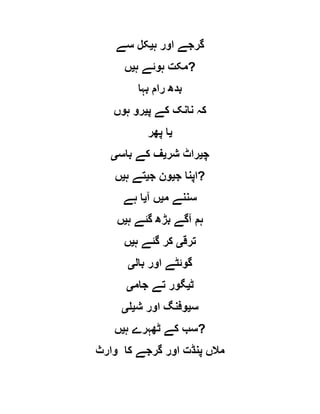
‫م‬ ‫سننے‬‫ی‬‫آ‬ ‫ں‬‫ی‬‫ہے‬ ‫ا‬
‫ہ‬ ‫گئے‬ ‫بڑھ‬ ‫آگے‬ ‫ہم‬‫ی‬‫ں‬
‫ترق‬‫ی‬‫ہ‬ ‫گئے‬ ‫کر‬‫ی‬‫ں‬
‫ہے‬ ‫اٹھتا‬ ‫سے‬ ‫شرق‬ ‫اب‬ ‫سرج‬
‫ب‬ ‫کا‬ ‫مندر‬ ‫کے‬ ‫واشنگٹن‬‫ت‬
‫ہے‬ ‫توڑا‬ ‫نے‬ ‫محمود‬ ‫کس‬
‫منہ‬ ‫کا‬ ‫گھوڑوں‬ ‫کے‬ ‫سکندر‬
‫ب‬ ‫کس‬‫ی‬‫ہے‬ ‫موڑا‬ ‫نے‬ ‫اس‬
‫ک‬ ‫اس‬‫ی‬‫سر‬ ‫کا‬ ‫گردن‬‫ی‬‫ا‬
‫ٹ‬ ‫کس‬‫ی‬‫ہے‬ ‫توڑا‬ ‫نے‬ ‫پو‬
‫ب‬ ‫کا‬ ‫سو‬‫ی‬‫لنس‬
‫ہ‬ ‫سو‬ ‫اب‬‫ی‬‫ہے‬ ‫چڑھتا‬
‫ڈالر‬ ‫اور‬ ‫سٹرلنگ‬ ‫پونڈ‬
‫روپ‬‫ی‬‫ہ‬ ‫ملتے‬ ‫دو‬ ‫کے‬ ‫ے‬‫ی‬‫ں‬
‫م‬ ‫سننے‬‫ی‬‫آ‬ ‫ں‬‫ی‬‫ہے‬ ‫ا‬
‫ہ‬ ‫گئے‬ ‫بڑھ‬ ‫آگے‬ ‫ہم‬‫ی‬‫ں‬
‫ترق‬‫ی‬‫ہ‬ ‫گئے‬ ‫کر‬‫ی‬‫ں‬
‫ب‬‫ی‬‫ہے‬ ‫ملتا‬ ‫ٹک‬ ‫کو‬ ‫وہ‬ '
‫پ‬ ‫وہ‬‫ی‬‫بھر‬ ‫ٹ‬‫کھات‬‫ی‬‫ہے‬
‫گر‬‫ی‬‫ک‬ ‫ب‬‫ی‬‫ب‬‫ی‬‫ٹ‬‫ی‬‫ا‬
‫دہ‬ ‫بن‬‫ی‬‫ج‬
‫ڈول‬ ‫اب‬‫ی‬‫چڑھت‬‫ی‬‫ہے‬ ?
‫ج‬ ‫جو‬‫ی‬‫کرے‬ ‫دان‬ ‫ون‬
‫ک‬ ‫دارو‬‫ی‬‫ش‬ ‫وہ‬‫ی‬‫ش‬‫ی‬
‫م‬ ‫مفت‬ ‫اب‬‫ی‬‫ملت‬ ‫ں‬‫ی‬‫ہے‬ ?
‫م‬ ‫سننے‬‫ی‬‫آ‬ ‫ں‬‫ی‬‫ہے‬ ‫ا‬
‫ہ‬ ‫گئے‬ ‫بڑھ‬ ‫آگے‬ ‫ہم‬‫ی‬‫ں‬
‫ترق‬‫ی‬‫ہ‬ ‫گئے‬ ‫کر‬‫ی‬‫ں‬
‫موس‬‫ی‬‫ع‬ ‫اور‬‫ی‬‫س‬‫ی‬
‫ہ‬ ‫اور‬ ‫گرجے‬‫ی‬‫سے‬ ‫کل‬
‫ہ‬ ‫ہوئے‬ ‫مکت‬‫ی‬‫ں‬ ?
‫بہا‬ ‫رام‬ ‫بدھ‬
‫پ‬ ‫کے‬ ‫نانک‬ ‫کہ‬‫ی‬‫ہوں‬ ‫رو‬
‫ی‬‫پھر‬ ‫ا‬
‫چ‬‫ی‬‫شر‬ ‫راٹ‬‫ی‬‫با‬ ‫کے‬ ‫ف‬‫س‬‫ی‬
‫ج‬ ‫اپنا‬‫ی‬‫ج‬ ‫ون‬‫ی‬‫ہ‬ ‫تے‬‫ی‬‫ں‬ ?
‫م‬ ‫سننے‬‫ی‬‫آ‬ ‫ں‬‫ی‬‫ہے‬ ‫ا‬
‫ہ‬ ‫گئے‬ ‫بڑھ‬ ‫آگے‬ ‫ہم‬‫ی‬‫ں‬
‫ترق‬‫ی‬‫ہ‬ ‫گئے‬ ‫کر‬‫ی‬‫ں‬
‫بال‬ ‫اور‬ ‫گوئٹے‬‫ی‬
‫ٹ‬‫ی‬‫جام‬ ‫تے‬ ‫گور‬‫ی‬
‫س‬‫ی‬‫ش‬ ‫اور‬ ‫وفنگ‬‫ی‬‫ل‬‫ی‬
‫ہ‬ ‫ٹھہرے‬ ‫کے‬ ‫سب‬‫ی‬‫ں‬ ?
‫وارث‬ ‫کا‬ ‫گرجے‬ ‫اور‬ ‫پنڈت‬ ‫مالں‬
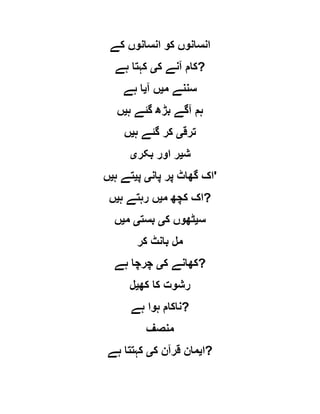
‫کے‬ ‫انسانوں‬ ‫کو‬ ‫انسانوں‬
‫ک‬ ‫آنے‬ ‫کام‬‫ی‬‫ہے‬ ‫کہتا‬ ?
‫م‬ ‫سننے‬‫ی‬‫آ‬ ‫ں‬‫ی‬‫ہے‬ ‫ا‬
‫ہ‬ ‫گئے‬ ‫بڑھ‬ ‫آگے‬ ‫ہم‬‫ی‬‫ں‬
‫ترق‬‫ی‬‫ہ‬ ‫گئے‬ ‫کر‬‫ی‬‫ں‬
‫ش‬‫ی‬‫بکر‬ ‫اور‬ ‫ر‬‫ی‬
‫پان‬ ‫پر‬ ‫گھاٹ‬ ‫اک‬‫ی‬‫پ‬‫ی‬‫ہ‬ ‫تے‬‫ی‬‫ں‬ '
‫م‬ ‫کچھ‬ ‫اک‬‫ی‬‫ہ‬ ‫رہتے‬ ‫ں‬‫ی‬‫ں‬ ?
‫س‬‫ی‬‫ک‬ ‫ٹھوں‬‫ی‬‫بست‬‫ی‬‫م‬‫ی‬‫ں‬
‫کر‬ ‫بانٹ‬ ‫مل‬
‫ک‬ ‫کھانے‬‫ی‬‫ہے‬ ‫چرچا‬ ?
‫کھ‬ ‫کا‬ ‫رشوت‬‫ی‬‫ل‬
‫ہے‬ ‫ہوا‬ ‫?ناکام‬
‫منصف‬
‫ا‬‫ی‬‫ک‬ ‫قرآن‬ ‫مان‬‫ی‬‫ہے‬ ‫کہتتا‬ ?
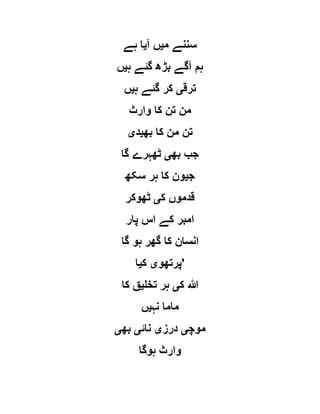
‫م‬ ‫سننے‬‫ی‬‫آ‬ ‫ں‬‫ی‬‫ہے‬ ‫ا‬
‫ہ‬ ‫گئے‬ ‫بڑھ‬ ‫آگے‬ ‫ہم‬‫ی‬‫ں‬
‫ترق‬‫ی‬‫ہ‬ ‫گئے‬ ‫کر‬‫ی‬‫ں‬
‫وارث‬ ‫کا‬ ‫تن‬ ‫من‬
‫بھ‬ ‫کا‬ ‫من‬ ‫تن‬‫ی‬‫د‬‫ی‬
‫بھ‬ ‫جب‬‫ی‬‫ٹھہر‬‫گا‬ ‫ے‬
‫ج‬‫ی‬‫سکھ‬ ‫ہر‬ ‫کا‬ ‫ون‬
‫ک‬ ‫قدموں‬‫ی‬‫ٹھوکر‬
‫پار‬ ‫اس‬ ‫کے‬ ‫امبر‬
‫گا‬ ‫ہو‬ ‫گھر‬ ‫کا‬ ‫انسان‬
‫پرتھو‬‫ی‬‫ک‬‫ی‬‫ا‬ '
‫ک‬ ‫ہللا‬‫ی‬‫تخل‬ ‫ہر‬‫ی‬‫کا‬ ‫ق‬
‫نہ‬ ‫ماما‬‫ی‬‫ں‬
‫موچ‬‫ی‬‫درز‬‫ی‬‫نائ‬‫ی‬‫بھ‬‫ی‬
‫ہوگا‬ ‫وارث‬
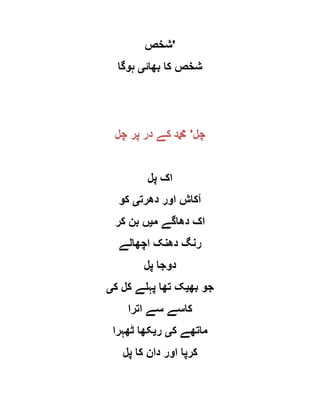
‫'شخص‬
‫بھائ‬ ‫کا‬ ‫شخص‬‫ی‬‫ہوگا‬
‫چل‬'‫چل‬ ‫پر‬ ‫در‬ ‫کے‬ ‫دمحم‬
‫پل‬ ‫اک‬
‫دھرت‬ ‫اور‬ ‫آکاش‬‫ی‬‫کو‬
‫م‬ ‫دھاگے‬ ‫اک‬‫ی‬‫کر‬ ‫بن‬ ‫ں‬
‫اچھالے‬ ‫دھنک‬ ‫رنگ‬
‫پ‬ ‫دوجا‬‫ل‬
‫بھ‬ ‫جو‬‫ی‬‫ک‬ ‫کل‬ ‫پہلے‬ ‫تھا‬ ‫ک‬‫ی‬
‫اترا‬ ‫سے‬ ‫کاسے‬
‫ک‬ ‫ماتھے‬‫ی‬‫ر‬‫ی‬‫ٹھہرا‬ ‫کھا‬
‫پل‬ ‫کا‬ ‫دان‬ ‫اور‬ ‫کرپا‬
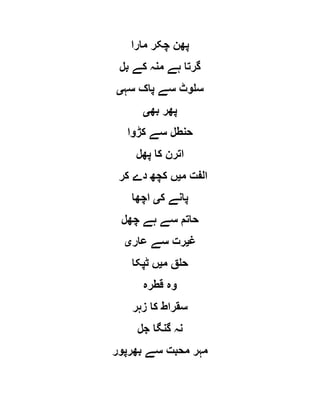
‫مارا‬ ‫چکر‬ ‫پھن‬
‫بل‬ ‫کے‬ ‫منہ‬ ‫ہے‬ ‫گرتا‬
‫سہ‬ ‫پاک‬ ‫سے‬ ‫سلوٹ‬‫ی‬
‫بھ‬ ‫پھر‬‫ی‬
‫کڑوا‬ ‫سے‬ ‫حنطل‬
‫پھل‬ ‫کا‬ ‫اترن‬
‫م‬ ‫الفت‬‫ی‬‫کر‬ ‫دے‬ ‫کچھ‬ ‫ں‬
‫ک‬ ‫پانے‬‫ی‬‫اچھا‬
‫چھل‬ ‫ہے‬ ‫سے‬ ‫حاتم‬
‫غ‬‫ی‬‫عار‬ ‫سے‬ ‫رت‬‫ی‬
‫م‬ ‫حلق‬‫ی‬‫ٹپکا‬ ‫ں‬
‫قطرہ‬ ‫وہ‬
‫زہر‬ ‫کا‬ ‫سقراط‬
‫ن‬‫جل‬ ‫گنگا‬ ‫ہ‬
‫بھرپور‬ ‫سے‬ ‫محبت‬ ‫مہر‬
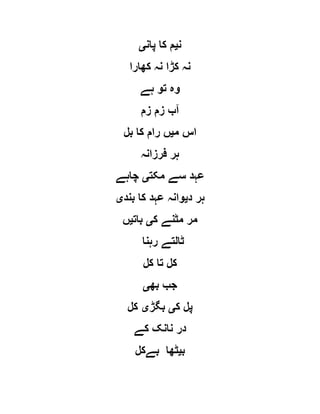
‫ن‬‫ی‬‫پان‬ ‫کا‬ ‫م‬‫ی‬
‫کھارا‬ ‫نہ‬ ‫کڑا‬ ‫نہ‬
‫ہے‬ ‫تو‬ ‫وہ‬
‫زم‬ ‫زم‬ ‫آب‬
‫م‬ ‫اس‬‫ی‬‫بل‬ ‫کا‬ ‫رام‬ ‫ں‬
‫فرزانہ‬ ‫ہر‬
‫مکت‬ ‫سے‬ ‫عہد‬‫ی‬‫چاہے‬
‫د‬ ‫ہر‬‫ی‬‫بند‬ ‫کا‬ ‫عہد‬ ‫وانہ‬‫ی‬
‫ک‬ ‫مٹنے‬ ‫مر‬‫ی‬‫بات‬‫ی‬‫ں‬
‫رہنا‬ ‫ٹالتے‬
‫کل‬ ‫تا‬ ‫کل‬
‫بھ‬ ‫جب‬‫ی‬
‫ک‬ ‫پل‬‫ی‬‫بگڑ‬‫ی‬‫کل‬
‫کے‬ ‫نانک‬ ‫در‬
‫ب‬‫ی‬‫بےکل‬ ‫ٹھا‬
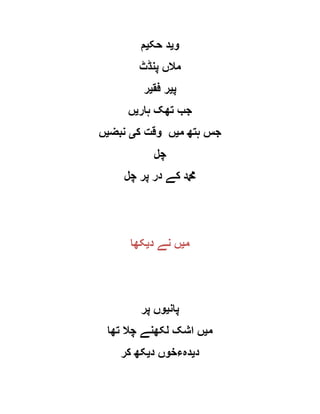
‫و‬‫ی‬‫حک‬ ‫د‬‫ی‬‫م‬
‫پنڈٹ‬ ‫مالں‬
‫پ‬‫ی‬‫فق‬ ‫ر‬‫ی‬‫ر‬
‫تھ‬ ‫جب‬‫ہار‬ ‫ک‬‫ی‬‫ں‬
‫م‬ ‫ہتھ‬ ‫جس‬‫ی‬‫ک‬ ‫وقت‬ ‫ں‬‫ی‬‫نبض‬‫ی‬‫ں‬
‫چل‬
‫چل‬ ‫پر‬ ‫در‬ ‫کے‬ ‫دمحم‬
‫م‬‫ی‬‫د‬ ‫نے‬ ‫ں‬‫ی‬‫کھا‬
‫پان‬‫ی‬‫پر‬ ‫وں‬
‫م‬‫ی‬‫تھا‬ ‫چال‬ ‫لکھنے‬ ‫اشک‬ ‫ں‬
‫د‬‫ی‬‫د‬ ‫دہءخوں‬‫ی‬‫کر‬ ‫کھ‬
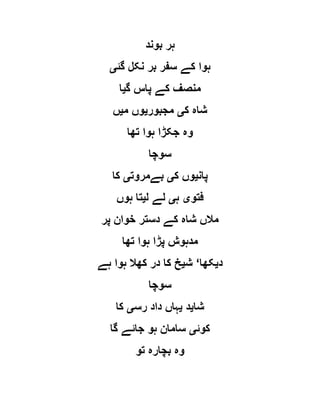
‫بوند‬ ‫ہر‬
‫گئ‬ ‫نکل‬ ‫بر‬ ‫سفر‬ ‫کے‬ ‫ہوا‬‫ی‬
‫گ‬ ‫پاس‬ ‫کے‬ ‫منصف‬‫ی‬‫ا‬
‫ک‬ ‫شاہ‬‫ی‬‫مجبور‬‫ی‬‫م‬ ‫وں‬‫ی‬‫ں‬
‫تھا‬ ‫ہوا‬ ‫جکڑا‬ ‫وہ‬
‫سوچا‬
‫پان‬‫ی‬‫ک‬ ‫وں‬‫ی‬‫بےمروت‬‫ی‬‫کا‬
‫فتو‬‫ی‬‫ہ‬‫ی‬‫ل‬ ‫لے‬‫ی‬‫ہوں‬ ‫تا‬
‫شاہ‬ ‫مالں‬‫پر‬ ‫خوان‬ ‫دستر‬ ‫کے‬
‫تھا‬ ‫ہوا‬ ‫پڑا‬ ‫مدہوش‬
‫د‬‫ی‬‫کھا‬‘‫ش‬‫ی‬‫ہے‬ ‫ہوا‬ ‫کھال‬ ‫در‬ ‫کا‬ ‫خ‬
‫سوچا‬
‫شا‬‫ی‬‫د‬‫ی‬‫رس‬ ‫داد‬ ‫ہاں‬‫ی‬‫کا‬
‫کوئ‬‫ی‬‫گا‬ ‫جائے‬ ‫ہو‬ ‫سامان‬
‫تو‬ ‫بچارہ‬ ‫وہ‬
‫پر‬‫ی‬‫م‬ ‫غول‬ ‫کے‬ ‫وں‬‫ی‬‫تھا‬ ‫ہوا‬ ‫گھرا‬ ‫ں‬
‫ک‬‫ی‬‫جاتا‬ ‫کو‬ ‫کدھر‬ ‫کرتا‬ ‫ا‬
‫کھال‬ ‫دروازہ‬ ‫دل‬
‫م‬ ‫جو‬ ‫خدا‬‫ی‬‫قر‬ ‫رے‬‫ی‬‫تھا‬ ‫ب‬
‫بوال‬
‫عج‬ ‫کتنے‬‫ی‬‫بھ‬ ‫تم‬ ‫ہو‬ ‫ب‬‫ی‬
‫ک‬‫ی‬‫م‬ ‫ا‬‫ی‬‫کاف‬ ‫ں‬‫ی‬‫نہ‬‫ی‬‫ں‬
‫جو‬‫اس‬ ‫کے‬ ‫ہوس‬‫ی‬‫ہو‬ ‫جاتے‬ ‫پاس‬ ‫کے‬ ‫روں‬
‫م‬‫ی‬‫آؤ‬ ‫پاس‬ ‫رے‬
‫جاؤ‬ ‫نہ‬ ‫ادھر‬ ‫ادھر‬
‫م‬‫ی‬‫ر‬‫ی‬‫م‬ ‫آغوش‬‫ی‬‫ں‬
‫گ‬ ‫ملے‬ ‫پناہ‬ ‫کو‬ ‫اشکوں‬ ‫تمہارے‬‫ی‬
‫بوند‬ ‫ہر‬
‫بر‬ ‫فردوس‬ ‫لعل‬ ‫رشک‬‫ی‬‫گ‬ ‫ہو‬ ‫ں‬‫ی‬
‫مر‬ ‫قظرہ‬ ‫اک‬‫ی‬‫ٹپکا‬ ‫سے‬ ‫آنکھ‬
‫م‬‫ی‬‫د‬ ‫نے‬ ‫ں‬‫ی‬‫کھا‬
‫ک‬ ‫والوں‬ ‫شاہ‬ ‫اور‬ ‫شاہ‬‫ی‬‫م‬ ‫گردن‬‫ی‬‫ں‬
‫نص‬ ‫بے‬‫ی‬‫ب‬‫ی‬‫ک‬‫ی‬‫زنج‬‫ی‬‫پڑ‬ ‫ر‬‫ی‬‫ہوئ‬‫ی‬‫تھ‬‫ی‬
‫حسن‬ ‫جناب‬ ‫بندہ‬ ‫مکرم‬‫ی‬‫صاحب‬:‫مسنون‬ ‫سالم‬
‫شاعر‬ ‫آزاد‬‫ی‬‫م‬ ‫پر‬ ‫طور‬ ‫عام‬‫ی‬‫جات‬ ‫گزر‬ ‫سے‬ ‫پر‬ ‫سر‬ ‫رے‬‫ی‬‫ہے‬‫۔‬
‫م‬ ‫تک‬ ‫جب‬‫ی‬‫پچھلے‬ ‫ہوں‬ ‫سلجھاتا‬ ‫بانے‬ ‫تانے‬ ‫کے‬ ‫اس‬ ‫ں‬
‫ک‬ ‫ذہن‬ ‫مصرعے‬ ‫ہوئے‬ ‫پڑھے‬‫ی‬‫م‬ ‫تہوں‬‫ی‬‫کہ‬ ‫ں‬‫ی‬‫جاتے‬ ‫ہو‬ ‫گم‬ ‫ں‬
‫ہ‬‫ی‬‫م‬ ‫اور‬ ‫ں‬‫ی‬‫ک‬ ‫سمجھنے‬ ‫اور‬ ‫پڑھنے‬ ‫نظم‬ ‫پھر‬ ‫ں‬‫ی‬‫م‬ ‫کوشش‬‫ی‬‫ں‬
‫ہوں‬ ‫جاتا‬ ‫ہو‬ ‫گرفتار‬‫۔‬‫ک‬ ‫آپ‬‫ی‬‫م‬ ‫مطالعہ‬ ‫کے‬ ‫نظم‬ ‫اس‬‫ی‬‫ا‬ ‫ں‬‫ی‬‫سا‬
‫ا‬ ‫صرف‬‫ی‬‫م‬ ‫اور‬ ‫ہوا‬ ‫بار‬ ‫ک‬‫ی‬‫ہ‬ ‫جلد‬ ‫ں‬‫ی‬‫پہنچ‬ ‫تک‬ ‫مقصود‬ ‫منزل‬
‫گ‬‫ی‬‫ا‬‫۔‬‫ی‬‫شا‬ ‫ہ‬‫ی‬‫ک‬ ‫آپ‬ ‫کہ‬ ‫ہوا‬ ‫لئے‬ ‫اس‬ ‫د‬‫ی‬‫دلسوز‬ ‫پر‬ ‫نظم‬‫ی‬‫اور‬
‫ک‬ ‫دل‬ ‫خلوص‬‫ی‬‫لگ‬ ‫مہر‬‫ی‬‫ہوئ‬‫ی‬‫ج‬ ‫ہے‬‫ی‬‫اپن‬ ‫آپ‬ ‫سے‬‫ی‬‫ب‬ ‫آپ‬‫ی‬‫ت‬‫ی‬
‫ب‬‫ی‬‫ہوں‬ ‫رہے‬ ‫کر‬ ‫ان‬‫۔‬‫ہوا‬ ‫متاثر‬ ‫کر‬ ‫پڑھ‬ ‫نظم‬‫۔‬‫پ‬ ‫کا‬ ‫نظم‬‫ی‬‫عام‬ ‫غام‬
‫سہ‬‫ی‬‫ل‬‫ی‬‫ہے‬ ‫ضرور‬ ‫اہم‬ ‫کن‬‫۔‬‫دن‬ ‫اہل‬ ‫ہم‬‫ی‬‫اہل‬ ‫تحاشہ‬ ‫بے‬ ‫ا‬‫اقتدار‬
‫ک‬‫ی‬‫ہ‬ ‫بھاگتے‬ ‫جانب‬‫ی‬‫م‬ ‫دو‬ ‫و‬ ‫تگ‬ ‫اس‬ ‫اور‬ ‫ں‬‫ی‬‫جاتے‬ ‫بھول‬ ‫ں‬
‫ہ‬‫ی‬‫د‬ ‫کہ‬ ‫ں‬‫ی‬‫کوئ‬ ‫تو‬ ‫واال‬ ‫نے‬‫ی‬‫ہ‬ ‫اور‬‫ی‬‫ہے‬‫۔‬‫کرے‬ ‫رحم‬ ‫ہللا‬‫۔‬‫ا‬‫ی‬‫سے‬
‫ہ‬‫ی‬‫رہئے‬ ‫لکھتے‬‫۔‬‫فرمائے‬ ‫عطا‬ ‫طاقت‬ ‫اور‬ ‫ہمت‬ ‫کو‬ ‫آپ‬ ‫ہللا‬‫۔‬
‫صالح‬‫ی‬‫توف‬ ‫اور‬ ‫ت‬‫ی‬‫ہ‬ ‫پور‬ ‫بھر‬ ‫اپ‬ ‫تو‬ ‫سے‬ ‫ق‬‫ی‬‫ہ‬ ‫ں‬‫ی۔‬‫باق‬‫ی‬‫راو‬‫ی‬
‫چ‬ ‫سب‬‫ی‬‫ہے‬ ‫بولتا‬ ‫ن‬‫۔‬
‫راز‬ ‫عالم‬ ‫سرور‬"‫سرور‬ "
http://www.bazm.urduanjuman.com/index.php?topic=9132.0
‫سے‬ ‫گھر‬ ‫ہر‬
‫م‬ ‫اجالوں‬ ‫کے‬ ‫دن‬‫ی‬‫ں‬
‫نواز‬ ‫کفر‬ ‫و‬ ‫ساز‬ ‫کفر‬ ‫خداہائے‬
‫پ‬‫ی‬‫ہ‬ ‫تے‬‫ی‬‫لہو‬ ‫کا‬ ‫سچ‬ ‫ں‬
‫ک‬ ‫اجالوں‬ ‫وہ‬ ‫کہ‬‫ی‬‫بست‬‫ی‬‫م‬‫ی‬‫ں‬
‫رہ‬ ‫زندہ‬‫ی‬‫ں‬
‫تمہ‬ ‫اب‬ ‫سے‬ ‫شرق‬‫ی‬‫ں‬
‫کوئ‬‫ی‬‫ب‬ ‫شب‬‫ی‬‫گ‬ ‫ہو‬ ‫کرنا‬ ‫دار‬‫ی‬
‫ہ‬ ‫دکھنے‬ ‫اسے‬ ‫سچ‬ ‫کہ‬‫ی‬‫پائے‬ ‫نہ‬
‫تمہ‬‫ی‬‫بھ‬ ‫ں‬‫ی‬‫تو‬
‫ک‬ ‫اس‬‫ی‬‫کوئ‬‫ی‬‫نہ‬ ‫ضرورت‬ ‫خاص‬‫ی‬‫ں‬
‫ی‬‫پھر‬ ‫ا‬
‫آت‬‫ی‬‫ل‬ ‫کے‬ ‫نسلوں‬‫ی‬‫ہ‬ ‫ے‬‫ی‬‫سہ‬‫ی‬
‫م‬ ‫اجالوں‬ ‫کے‬ ‫دن‬‫ی‬‫ں‬
‫ح‬ ‫روح‬‫ی‬‫ہوگ‬ ‫رکھنا‬ ‫در‬‫ی‬
‫سس‬‫ی‬‫ج‬ ‫کا‬ ‫فس‬‫ی‬‫ون‬
‫ج‬‫ی‬‫نہ‬ ‫ون‬‫ی‬‫ں‬
‫ک‬ ‫سقراط‬‫ی‬‫مرت‬‫ی‬‫و‬
‫مرت‬‫ی‬‫نہ‬ ‫و‬‫ی‬‫ں‬
‫ج‬‫ی‬‫تو‬ ‫ہے‬ ‫نا‬
‫حس‬‫ی‬‫ج‬ ‫کا‬ ‫ن‬‫ی‬‫ج‬ ‫ون‬‫ی‬‫و‬
‫ارتھ‬ ‫جب‬ ‫کہ‬‫ی‬‫اٹھے‬
‫خو‬‫م‬ ‫آنسووں‬ ‫کے‬ ‫ن‬‫ی‬‫ں‬
‫اڑے‬ ‫راکھ‬
‫م‬ ‫آنسووں‬ ‫کے‬ ‫خون‬‫ی‬‫ں‬
‫قلم‬ ‫کا‬ ‫شاعر‬
‫روشن‬‫ی‬‫بکھ‬‫ی‬‫گا‬ ‫رے‬
‫زندگ‬‫ی‬‘‫ک‬ ‫آکاش‬‫ی‬‫گ‬ ‫رہے‬ ‫نہ‬ ‫محتاج‬‫ی‬
‫سورج‬ ‫سے‬ ‫گھر‬ ‫ہر‬ ‫چاند‬ ‫سے‬ ‫گھر‬ ‫ہر‬
‫گا‬ ‫ہو‬ ‫طلوع‬
‫ک‬ ‫غروب‬‫ی‬‫پر‬ ‫پگ‬ ‫ہر‬
‫کہ‬‫ی‬‫کہ‬ ‫سقراط‬ ‫ں‬‫ی‬‫منصور‬ ‫ں‬
‫کہ‬ ‫تو‬‫ی‬‫گا‬ ‫ہو‬ ‫کھڑا‬ ‫سرمد‬ ‫ں‬
‫ح‬‫ی‬‫م‬ ‫برزخ‬ ‫کے‬ ‫ات‬‫ی‬‫ں‬
‫معنو‬ ‫تالش‬‫ی‬‫لمحے‬ ‫سب‬ ‫کے‬ ‫ت‬
‫صد‬‫ی‬‫ا‬‫گئ‬ ‫ڈکار‬ ‫ں‬‫ی‬‫ں‬
‫چ‬‫ی‬‫م‬ ‫تھڑوں‬‫ی‬‫معنو‬ ‫ملبوس‬ ‫ں‬‫ی‬‫سفر‬ ‫کا‬ ‫ت‬
‫سکا‬ ‫نہ‬ ‫چھو‬ ‫کو‬ ‫کنارے‬ ‫اس‬
‫آنسو‬ ‫دو‬ ‫کے‬ ‫تاسف‬
‫کاسہءمحروم‬‫ی‬‫سکے‬ ‫بن‬ ‫نہ‬ ‫مقدر‬ ‫کا‬
‫ک‬‫ی‬‫کشف‬ ‫شب‬ ‫کہ‬ ‫پاتا‬ ‫ہو‬ ‫ا‬
‫ک‬ ‫رانوں‬ ‫دو‬‫ی‬‫م‬ ‫مشقت‬‫ی‬‫گئ‬ ‫کٹ‬ ‫ں‬‫ی‬
‫دھ‬ ‫صبح‬‫ی‬‫ان‬
‫ک‬ ‫نارسا‬ ‫نان‬‫ی‬‫ہوئ‬ ‫نذر‬‫ی‬
‫کہا‬ ‫کا‬ ‫شاعر‬
‫بےحواس‬‫ی‬‫ہوا‬ ‫نوا‬ ‫ہم‬ ‫کا‬
‫گ‬ ‫کے‬ ‫شاہ‬ ‫رفتہ‬ ‫دفتر‬‫ی‬‫ر‬ ‫گاتا‬ ‫ت‬‫ہا‬
‫وس‬‫ی‬‫ب‬‫ی‬‫حکائت‬‫ی‬‫ہوئ‬ ‫بےوقار‬ ‫ں‬‫ی‬‫ں‬
‫سک‬ ‫چڑھ‬ ‫نہ‬ ‫پہ‬ ‫فکر‬ ‫قرطاس‬‫ی‬‫ں‬
‫گو‬‫ی‬‫روا‬ ‫ا‬‫ی‬‫گ‬ ‫اٹھ‬ ‫جنازہ‬ ‫کا‬ ‫ت‬‫ی‬‫ا‬
‫ضم‬‫ی‬‫بھ‬ ‫ر‬‫ی‬‫چاند‬‫ی‬‫م‬‫ی‬‫گ‬ ‫تل‬ ‫ں‬‫ی‬‫ا‬
‫م‬ ‫خواب‬ ‫کے‬ ‫مجذوب‬‫ی‬‫پڑ‬ ‫گرہ‬ ‫ں‬‫ی‬
‫مک‬‫ی‬‫گ‬ ‫پھسل‬ ‫طبلہ‬ ‫سے‬ ‫نغموں‬ ‫کے‬ ‫ش‬‫ی‬‫ا‬
‫درو‬‫ی‬‫ب‬ ‫حواس‬ ‫کے‬ ‫ش‬‫ی‬‫نقطے‬ ‫دار‬
‫ترق‬‫ی‬‫گ‬ ‫نگل‬ ‫ڈرم‬ ‫کا‬‫ی‬‫ا‬
‫بنا‬ ‫اپنا‬ ‫مغرب‬ ‫نہ‬ ‫رہا‬ ‫مشرق‬ ‫نہ‬
‫تک‬ ‫کب‬ ‫آخر‬‫ی‬‫ت‬‫ی‬‫ج‬ ‫م‬‫ی‬‫ون‬
‫ح‬‫ی‬‫م‬ ‫برزخ‬ ‫کے‬ ‫ات‬‫ی‬‫ں‬
‫ل‬ ‫کے‬ ‫شناخت‬‫ی‬‫رہے‬ ‫بھٹکتا‬ ‫ے‬
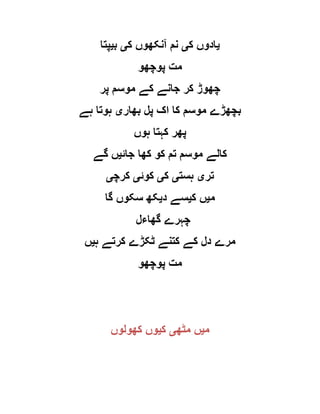
‫پوچھو‬ ‫مت‬
‫ک‬ ‫ترے‬ ‫بن‬‫ی‬‫ج‬ ‫سے‬‫ی‬‫ہوں‬ ‫تا‬
‫پوچھو‬ ‫مت‬
‫اڈ‬‫ی‬‫م‬ ‫موسم‬ ‫ظالم‬ ‫کے‬ ‫کوں‬‫ی‬‫ں‬
‫ک‬ ‫جانا‬ ‫آنا‬ ‫کا‬ ‫سانسوں‬‫ی‬‫ہے‬ ‫ہوتا‬ ‫سے‬
‫پوچھو‬ ‫مت‬
‫م‬ ‫رت‬ ‫ساون‬‫ی‬‫ں‬
‫ک‬ ‫آنکھوں‬‫ی‬‫ک‬ ‫برکھا‬‫ی‬‫ہوت‬ ‫سے‬‫ی‬‫ہے‬
‫پوچھو‬ ‫مت‬
‫غرض‬ ‫خود‬‫ی‬‫ل‬ ‫کا‬‫ی‬‫بھ‬ ‫جب‬ ‫بل‬‫ی‬‫ہے‬ ‫لگتا‬
‫ک‬ ‫راتوں‬‫ی‬‫ن‬‫ی‬‫ند‬‫ی‬‫جا‬ ‫ڈر‬ ‫ں‬‫ت‬‫ی‬‫ہ‬‫ی‬‫ں‬
‫تارے‬ ‫کے‬ ‫آشکوں‬
‫سارے‬ ‫کے‬ ‫سارے‬
‫گنت‬‫ی‬‫م‬‫ی‬‫ہ‬ ‫جاتے‬ ‫پڑ‬ ‫کم‬ ‫ں‬‫ی‬‫ں‬
‫ک‬ ‫آس‬‫ی‬‫کرن‬ ‫کومل‬‫ی‬‫ں‬
‫ی‬‫ک‬ ‫اس‬‫ی‬‫اگن‬‫ی‬‫م‬‫ی‬‫ں‬
‫جلت‬ ‫جب‬‫ی‬‫ہ‬‫ی‬‫ں‬
‫ک‬ ‫روح‬ ‫تب‬‫ی‬‫ارتھ‬‫ی‬‫اٹھت‬‫ی‬‫ہے‬
‫ی‬‫ک‬ ‫ادوں‬‫ی‬‫ک‬ ‫آنکھوں‬ ‫نم‬‫ی‬‫ب‬‫ی‬‫پتا‬
‫پوچھو‬ ‫مت‬
‫پر‬ ‫موسم‬ ‫کے‬ ‫جانے‬ ‫کر‬ ‫چھوڑ‬
‫بھار‬ ‫پل‬ ‫اک‬ ‫کا‬ ‫موسم‬ ‫بچھڑے‬‫ی‬‫ہے‬ ‫ہوتا‬
‫ہوں‬ ‫کہتا‬ ‫پھر‬
‫کھا‬ ‫کو‬ ‫تم‬ ‫موسم‬ ‫کالے‬‫جائ‬‫ی‬‫گے‬ ‫ں‬
‫تر‬‫ی‬‫ہست‬‫ی‬‫ک‬‫ی‬‫کوئ‬‫ی‬‫کرچ‬‫ی‬
‫م‬‫ی‬‫ک‬ ‫ں‬‫ی‬‫د‬ ‫سے‬‫ی‬‫گا‬ ‫سکوں‬ ‫کھ‬
‫گھاءل‬ ‫چہرے‬
‫ہ‬ ‫کرتے‬ ‫ٹکڑے‬ ‫کتنے‬ ‫کے‬ ‫دل‬ ‫مرے‬‫ی‬‫ں‬
‫پوچھو‬ ‫مت‬
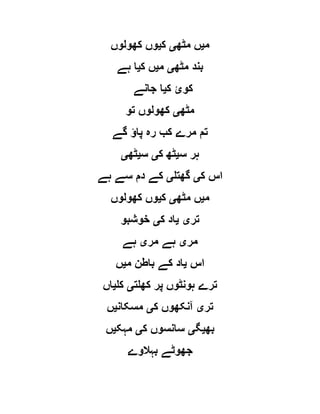
‫م‬‫ی‬‫مٹھ‬ ‫ں‬‫ی‬‫ک‬‫ی‬‫کھولوں‬ ‫وں‬
‫مٹھ‬ ‫بند‬‫ی‬‫م‬‫ی‬‫ک‬ ‫ں‬‫ی‬‫ہے‬ ‫ا‬
‫ک‬ ‫کوئ‬‫ی‬‫جانے‬ ‫ا‬
‫مٹھ‬‫ی‬‫تو‬ ‫کھولوں‬
‫گے‬ ‫پاؤ‬ ‫رہ‬ ‫کب‬ ‫مرے‬ ‫تم‬
‫س‬ ‫ہر‬‫ی‬‫ک‬ ‫ٹھ‬‫ی‬‫س‬‫ی‬‫ٹھ‬‫ی‬
‫ک‬ ‫اس‬‫ی‬‫گھتل‬‫ی‬‫سے‬ ‫دم‬ ‫کے‬‫ہے‬
‫م‬‫ی‬‫مٹھ‬ ‫ں‬‫ی‬‫ک‬‫ی‬‫کھولوں‬ ‫وں‬
‫تر‬‫ی‬‫ی‬‫ک‬ ‫اد‬‫ی‬‫خوشبو‬
‫مر‬‫ی‬‫مر‬ ‫ہے‬‫ی‬‫ہے‬
‫اس‬‫ی‬‫م‬ ‫باطن‬ ‫کے‬ ‫اد‬‫ی‬‫ں‬
‫کھلت‬ ‫پر‬ ‫ہونٹوں‬ ‫ترے‬‫ی‬‫کل‬‫ی‬‫اں‬
‫تر‬‫ی‬‫ک‬ ‫آنکھوں‬‫ی‬‫مسکان‬‫ی‬‫ں‬
‫بھ‬‫ی‬‫گ‬‫ی‬‫ک‬ ‫سانسوں‬‫ی‬‫مہک‬‫ی‬‫ں‬
‫بہالوے‬ ‫جھوٹے‬
‫وعدے‬ ‫موسم‬ ‫بے‬ ‫کچھ‬
‫ک‬ ‫نبھانے‬ ‫ساتھ‬‫ی‬‫قسم‬‫ی‬‫ں‬
‫نوحے‬ ‫کے‬ ‫دکھ‬
‫ک‬ ‫سپنوں‬ ‫شراب‬‫ی‬‫قزاح‬ ‫و‬ ‫قوس‬
‫مر‬‫ی‬‫مر‬ ‫ہے‬‫ی‬‫ہے‬
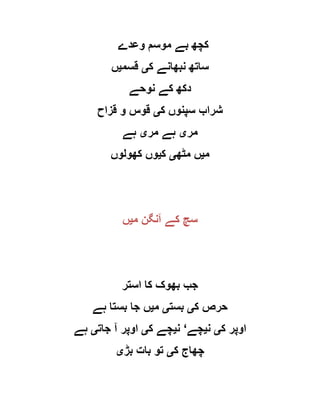
‫م‬‫ی‬‫مٹھ‬ ‫ں‬‫ی‬‫ک‬‫ی‬‫کھولوں‬ ‫وں‬
‫م‬ ‫آنگن‬ ‫کے‬ ‫سچ‬‫ی‬‫ں‬
‫استر‬ ‫کا‬ ‫بھوک‬ ‫جب‬
‫ک‬ ‫حرص‬‫ی‬‫بست‬‫ی‬‫م‬‫ی‬‫ہے‬ ‫بستا‬ ‫جا‬ ‫ں‬
‫ک‬ ‫اوپر‬‫ی‬‫ن‬‫ی‬‫چے‬‘‫ن‬‫ی‬‫ک‬ ‫چے‬‫ی‬‫جات‬ ‫آ‬ ‫اوپر‬‫ی‬‫ہے‬
‫ک‬ ‫چھاج‬‫ی‬‫بڑ‬ ‫بات‬ ‫تو‬‫ی‬
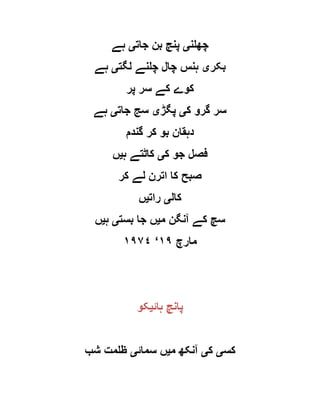
‫چھلن‬‫ی‬‫جات‬ ‫بن‬ ‫پنچ‬‫ی‬‫ہے‬
‫بکر‬‫ی‬‫لگت‬ ‫چلنے‬ ‫چال‬ ‫ہنس‬‫ی‬‫ہے‬
‫پر‬ ‫سر‬ ‫کے‬ ‫کوے‬
‫ک‬ ‫گرو‬ ‫سر‬‫ی‬‫پگڑ‬‫ی‬‫جات‬ ‫سج‬‫ی‬‫ہے‬
‫گندم‬ ‫کر‬ ‫بو‬ ‫دہقان‬
‫ک‬ ‫جو‬ ‫فصل‬‫ی‬‫ہ‬ ‫کاٹتے‬‫ی‬‫ں‬
‫صب‬‫کر‬ ‫لے‬ ‫اترن‬ ‫کا‬ ‫ح‬
‫کال‬‫ی‬‫رات‬‫ی‬‫ں‬
‫م‬ ‫آنگن‬ ‫کے‬ ‫سچ‬‫ی‬‫بست‬ ‫جا‬ ‫ں‬‫ی‬‫ہ‬‫ی‬‫ں‬
‫مارچ‬٩١‘٩١٩١
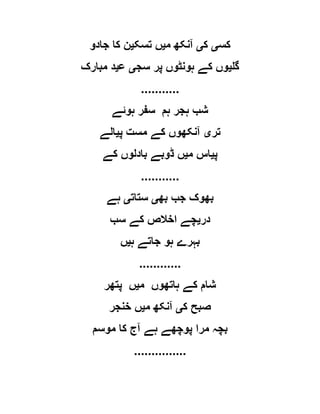
‫ہائ‬ ‫پانچ‬‫ی‬‫کو‬
‫کس‬‫ی‬‫ک‬‫ی‬‫م‬ ‫آنکھ‬‫ی‬‫سمائ‬ ‫ں‬‫ی‬‫شب‬ ‫ظلمت‬
‫کس‬‫ی‬‫ک‬‫ی‬‫م‬ ‫آنکھ‬‫ی‬‫تسک‬ ‫ں‬‫ی‬‫جادو‬ ‫کا‬ ‫ن‬
‫گل‬‫ی‬‫سج‬ ‫پر‬ ‫ہونٹوں‬ ‫کے‬ ‫وں‬‫ی‬‫ع‬‫ی‬‫مبارک‬ ‫د‬
...........
‫ہوئے‬ ‫سفر‬ ‫ہم‬ ‫ہجر‬ ‫شب‬
‫تر‬‫ی‬‫پ‬ ‫مست‬ ‫کے‬ ‫آنکھوں‬‫ی‬‫الے‬
‫پ‬‫ی‬‫م‬ ‫اس‬‫ی‬‫کے‬ ‫بادلوں‬ ‫ڈوبے‬ ‫ں‬
...........
‫بھ‬ ‫جب‬ ‫بھوک‬‫ی‬‫ستات‬‫ی‬‫ہے‬
‫در‬‫ی‬‫سب‬ ‫کے‬ ‫اخالص‬ ‫چے‬
‫ہ‬ ‫جاتے‬ ‫ہو‬ ‫بہرے‬‫ی‬‫ں‬
............
‫م‬ ‫ہاتھوں‬ ‫کے‬ ‫شام‬‫ی‬‫پتھر‬ ‫ں‬
‫ک‬ ‫صبح‬‫ی‬‫م‬ ‫آنکھ‬‫ی‬‫خنجر‬ ‫ں‬
‫موسم‬ ‫کا‬ ‫آج‬ ‫ہے‬ ‫پوچھے‬ ‫مرا‬ ‫بچہ‬
...............
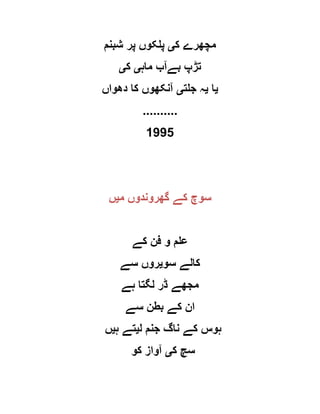
‫ک‬ ‫مچھرے‬‫ی‬‫شبنم‬ ‫پر‬ ‫پلکوں‬
‫ماہ‬ ‫بےآب‬ ‫تڑپ‬‫ی‬‫ک‬‫ی‬
‫ی‬‫ا‬‫ی‬‫جلت‬ ‫ہ‬‫ی‬‫دھواں‬ ‫کا‬ ‫آنکھوں‬
..........
1995
‫م‬ ‫گھروندوں‬ ‫کے‬ ‫سوچ‬‫ی‬‫ں‬
‫کے‬ ‫فن‬ ‫و‬ ‫علم‬
‫سو‬ ‫کالے‬‫ی‬‫سے‬ ‫روں‬
‫ہے‬ ‫لگتا‬ ‫ڈر‬ ‫مجھے‬
‫سے‬ ‫بطن‬ ‫کے‬ ‫ان‬
‫ل‬ ‫جنم‬ ‫ناگ‬ ‫کے‬ ‫ہوس‬‫ی‬‫ہ‬ ‫تے‬‫ی‬‫ں‬
‫ک‬ ‫سچ‬‫ی‬‫کو‬ ‫آواز‬
‫ل‬ ‫ڈس‬ ‫جو‬‫ی‬‫ہ‬ ‫تے‬‫ی‬‫ں‬
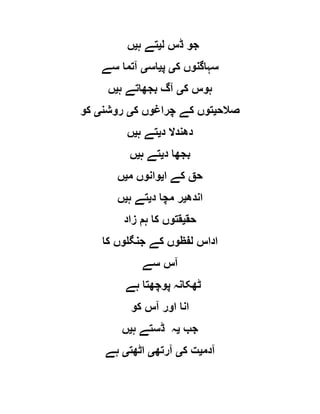
‫ک‬ ‫سہاگنوں‬‫ی‬‫پ‬‫ی‬‫اس‬‫ی‬‫سے‬ ‫آتما‬
‫ک‬ ‫ہوس‬‫ی‬‫ہ‬ ‫بجھاتے‬ ‫آگ‬‫ی‬‫ں‬
‫صالح‬‫ی‬‫ک‬ ‫چراغوں‬ ‫کے‬ ‫توں‬‫ی‬‫روشن‬‫ی‬‫کو‬
‫د‬ ‫دھندال‬‫ی‬‫ہ‬ ‫تے‬‫ی‬‫ں‬
‫د‬ ‫بجھا‬‫ی‬‫ہ‬ ‫تے‬‫ی‬‫ں‬
‫کے‬ ‫حق‬‫ا‬‫ی‬‫م‬ ‫وانوں‬‫ی‬‫ں‬
‫اندھ‬‫ی‬‫د‬ ‫مچا‬ ‫ر‬‫ی‬‫ہ‬ ‫تے‬‫ی‬‫ں‬
‫حق‬‫ی‬‫زاد‬ ‫ہم‬ ‫کا‬ ‫قتوں‬
‫کا‬ ‫جنگلوں‬ ‫کے‬ ‫لفظوں‬ ‫اداس‬
‫سے‬ ‫آس‬
‫ہے‬ ‫پوچھتا‬ ‫ٹھکانہ‬
‫کو‬ ‫آس‬ ‫اور‬ ‫انا‬
‫جب‬‫ی‬‫ہ‬ ‫ڈستے‬ ‫ہ‬‫ی‬‫ں‬
‫آدم‬‫ی‬‫ک‬ ‫ت‬‫ی‬‫آرتھ‬‫ی‬‫اٹھت‬‫ی‬‫ہے‬
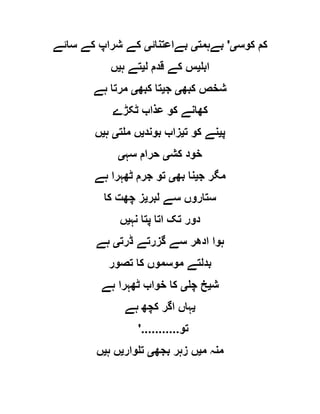
‫کوس‬ ‫کم‬‫ی‬'‫بےہمت‬‫ی‬‫بےاعتنائ‬‫ی‬‫سائے‬ ‫کے‬ ‫شراپ‬ ‫کے‬
‫ابل‬‫ی‬‫ل‬ ‫قدم‬ ‫کے‬ ‫س‬‫ی‬‫ہ‬ ‫تے‬‫ی‬‫ں‬
‫کبھ‬ ‫شخص‬‫ی‬‫ج‬‫ی‬‫کبھ‬ ‫تا‬‫ی‬‫ہے‬ ‫مرتا‬
‫عذاب‬ ‫کو‬ ‫کھانے‬‫ٹکڑے‬
‫پ‬‫ی‬‫ت‬ ‫کو‬ ‫نے‬‫ی‬‫بوند‬ ‫زاب‬‫ی‬‫ملت‬ ‫ں‬‫ی‬‫ہ‬‫ی‬‫ں‬
‫کش‬ ‫خود‬‫ی‬‫سہ‬ ‫حرام‬‫ی‬
‫ج‬ ‫مگر‬‫ی‬‫بھ‬ ‫نا‬‫ی‬‫ہے‬ ‫ٹھہرا‬ ‫جرم‬ ‫تو‬
‫لبر‬ ‫سے‬ ‫ستاروں‬‫ی‬‫کا‬ ‫چھت‬ ‫ز‬
‫نہ‬ ‫پتا‬ ‫اتا‬ ‫تک‬ ‫دور‬‫ی‬‫ں‬
‫ڈرت‬ ‫گزرتے‬ ‫سے‬ ‫ادھر‬ ‫ہوا‬‫ی‬‫ہے‬
‫تصور‬ ‫کا‬ ‫موسموں‬ ‫بدلتے‬
‫ش‬‫ی‬‫چل‬ ‫خ‬‫ی‬‫ہے‬ ‫ٹھہرا‬ ‫خواب‬ ‫کا‬
‫ی‬‫ہے‬ ‫کچھ‬ ‫اگر‬ ‫ہاں‬
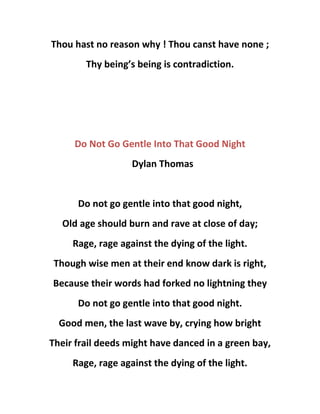
'...........‫تو‬
‫م‬ ‫منہ‬‫ی‬‫بجھ‬ ‫زہر‬ ‫ں‬‫ی‬‫تلوار‬‫ی‬‫ہ‬ ‫ں‬‫ی‬‫ں‬
‫پ‬‫ی‬‫گھر‬ ‫کا‬ ‫سوچ‬ ‫ٹ‬
‫بھ‬ ‫ہات‬‫ی‬‫ہ‬ ‫ہوئے‬ ‫کٹورا‬ ‫کا‬ ‫ک‬‫ی‬‫ں‬
‫بدن‬ ‫کانچ‬ ‫کے‬ ‫بچوں‬
‫سے‬ ‫بھوک‬
‫کبھ‬‫ی‬‫ن‬‫ی‬‫کبھ‬ ‫لے‬‫ی‬‫پ‬‫ی‬‫ہ‬ ‫پڑتے‬ ‫لے‬‫ی‬‫ں‬
! ‫بص‬ ‫صبح‬ ‫اے‬‫ی‬‫رت‬
‫ہ‬ ‫تو‬‫ی‬‫آ‬ ‫لوٹ‬
‫پہرے‬ ‫کے‬ ‫ناگوں‬ ‫کہ‬
‫سے‬ ‫زخموں‬ ‫کرب‬
‫لہو‬ ‫برف‬ ‫رستا‬
‫د‬ ‫نہ‬ ‫تو‬‫ی‬‫گا‬ ‫سکوں‬ ‫کھ‬
‫ک‬ ‫اجالوں‬ ‫کے‬ ‫سچ‬‫ی‬‫حس‬‫ی‬‫تمنا‬ ‫ن‬
‫گ‬ ‫دے‬ ‫نہ‬ ‫مرنے‬ ‫مجھے‬‫ی‬
‫م‬ ‫اور‬‫ی‬‫ں‬
‫تم‬ ‫بےوضو‬ ‫اس‬‫سہارے‬ ‫کے‬ ‫نا‬
‫گا‬ ‫سکوں‬ ‫سوچ‬ ‫تو‬ ‫کچھ‬
‫م‬ ‫گھروندوں‬ ‫کے‬ ‫سوچ‬‫ی‬‫ں‬
‫ز‬‫ی‬‫ہ‬ ‫بستے‬ ‫موسم‬ ‫سارے‬ ‫کے‬ ‫ست‬‫ی‬‫ں‬
‫قاض‬‫ی‬‫حسن‬ ‫جرار‬‫ی‬
1974
‫قسمت‬ ‫بد‬‫ی‬
‫شاعر‬:‫ف‬‫ی‬‫س‬ ‫نگ‬‫ی‬‫ف‬ ‫و‬‫ی‬‫مترجم‬ ‫نگ‬:‫حسن‬ ‫مقصود‬‫ی‬
‫م‬‫ی‬‫قسمت‬ ‫بد‬ ‫ں‬‫ی‬‫تھا‬ ‫کو‬ ‫لکھنے‬ ‫نظم‬ ‫اک‬ ‫پہ‬
‫مر‬‫ی‬‫پڑے‬ ‫چھلک‬ ‫آنسو‬ ‫سے‬ ‫آنکھوں‬
‫گ‬ ‫بھر‬ ‫کاغذ‬‫ی‬‫ا‬
‫م‬ ‫اور‬‫ی‬‫ن‬ ‫قلم‬ ‫نے‬ ‫ں‬‫ی‬‫د‬ ‫رکھ‬ ‫چے‬‫ی‬‫ا‬
‫ک‬‫ی‬‫کاغذ‬ ‫تر‬ ‫سے‬ ‫اشکوں‬ ‫ا‬
‫تھا؟‬ ‫سکتا‬ ‫دکھا‬ ‫کو‬ ‫لوگوں‬
‫پاتے‬ ‫سمجھ‬ ‫وہ‬
‫ی‬‫ہ‬‫ی‬‫قسمت‬ ‫بد‬ ‫تو‬‫ی‬‫ہے‬
‫حسن‬ ‫مقصود‬ ‫ڈاکٹر‬‫ی‬‫عل‬ ‫السالم‬ ‫صاحب‬‫ی‬‫کم‬
‫بہتر‬‫ی‬‫بہتر‬ ‫کا‬ ‫نظم‬ ‫ن‬‫ی‬‫ترجمہ‬ ‫ن‬‫۔۔۔۔۔‬‫ی‬‫ہ‬‫ی‬‫بدقسمت‬ ‫تو‬‫ی‬‫ہے‬‫۔‬‫ک‬‫ی‬‫ا‬
‫کہنے‬‫۔‬
‫ا‬‫ک‬ ‫پ‬‫ی‬‫تحر‬ ‫تمام‬‫ی‬‫ر‬‫ی‬‫جنھ‬ ‫ں‬‫ی‬‫م‬ ‫ں‬‫ی‬‫ک‬ ‫کمال‬ ‫پڑھا‬ ‫نے‬ ‫ں‬‫ی‬‫ہ‬‫ی‬‫ں‬
‫صاحب‬‫۔‬‫معلومات‬‫ی‬‫تار‬ ،‫ی‬‫خ‬‫ی‬،‫شاہکار‬‫خوب‬ ‫بہت‬‫۔‬
‫ا‬ ‫ہللا‬‫مز‬ ‫پ‬‫ی‬‫توف‬ ‫د‬‫ی‬‫دے‬ ‫ق‬‫۔‬
‫دعا‬ ِ‫ب‬‫طال‬
‫کف‬‫ی‬‫احمد‬ ‫ل‬
http://www.bazm.urduanjuman.com/index.php?topic=10128.0
‫ی‬‫ہ‬ ‫ہ‬‫ی‬‫ف‬‫ی‬‫تھا‬ ‫ہوا‬ ‫صلہ‬
‫م‬ ‫شہاب‬ ‫عہد‬‫ی‬‫بےکس‬ ‫بےحجاب‬ ‫ں‬‫ی‬‫بھ‬‫ی‬‫ق‬ ‫عجب‬‫ی‬‫تھ‬ ‫امت‬‫ی۔‬‫صبح‬
‫سنتے‬ ‫نقط‬ ‫بے‬ ‫بڑھاتے‬ ‫ہاتھ‬ ‫کو‬ ‫اٹھاتےعوضوانے‬ ‫مشقت‬ ‫اٹھتے‬‫۔‬
‫سانس‬‫ی‬‫جات‬ ‫اکھڑ‬ ‫ں‬‫ی‬‫ج‬ ‫لب‬ ‫بہ‬ ‫مہر‬ ‫ں‬‫ی‬‫سانس‬ ‫کہ‬ ‫تے‬‫ی‬‫باق‬ ‫ں‬‫ی‬‫تھ‬‫ی‬‫ں‬‫۔‬‫ج‬‫ی‬‫نا‬
‫ہ‬ ‫تھا‬ ‫تو‬‫ی‬‫پ‬ ‫تو‬ ‫لہو‬‫ی‬‫ہ‬ ‫تھا‬ ‫نا‬‫ی۔‬
‫ا‬ ‫ادھر‬‫ی‬‫م‬ ‫ونوں‬‫ی‬‫آزاد‬ ‫ں‬‫ی‬‫ک‬‫ی‬‫صدائ‬‫ی‬‫رہ‬ ‫گونج‬ ‫ں‬‫ی‬‫تھ‬‫ی‬‫گل‬ ‫ادھر‬ ‫ں‬‫ی‬‫وں‬
‫م‬‫ی‬‫تھا‬ ‫بہرا‬ ‫شاہ‬ ‫کہ‬ ‫تھا‬ ‫پہرا‬ ‫کا‬ ‫خوف‬ ‫ں‬‫۔‬‫گل‬ ‫والے‬ ‫شاہ‬‫ی‬‫م‬ ‫وں‬‫ی‬‫ں‬
‫کرپان‬ ‫بےچنت‬‫ی‬‫ل‬ ‫ں‬‫ی‬‫تھے‬ ‫پھرتے‬ ‫ے‬‫۔‬‫م‬ ‫شکم‬ ‫باندھے‬ ‫ہاتھ‬ ‫نقاہت‬‫ی‬‫ں‬
‫م‬ ‫آنکھوں‬ ‫بھوک‬‫ی‬‫پ‬ ‫ں‬‫ی‬‫ل‬ ‫اس‬‫ی‬‫کھڑ‬ ‫ے‬‫ی‬‫تھ‬‫ی‬‫ک‬ ‫شاہ‬ ‫مگر‬ ‫ہاں‬‫ی‬‫د‬‫ی‬‫کا‬ ‫ا‬
‫تھا‬ ‫باال‬ ‫بول‬‫۔‬
‫شانت‬ ‫پر‬ ‫ہونٹوں‬ ‫کے‬ ‫پنڈت‬‫ی‬‫م‬ ‫بغل‬‫ی‬‫درانت‬ ‫ں‬‫ی‬‫بھ‬ ‫مالں‬‫ی‬‫م‬ ‫من‬‫ی‬‫ں‬
‫تفر‬‫ی‬‫ک‬ ‫امن‬ ‫امن‬ ‫امن‬ ‫بھرے‬ ‫بارود‬ ‫کا‬ ‫ق‬‫ی‬‫تھا‬ ‫رہا‬ ‫جا‬ ‫ے‬‫۔‬
‫پ‬ ‫کہ‬ ‫جب‬ ‫اب‬‫ی‬‫ر‬‫ی‬‫شن‬ ‫پہ‬‫ی‬‫ک‬‫ہے‬ ‫گہرا‬ ‫گھاؤ‬ ‫کا‬ ‫بھوک‬ ‫ہے‬ ‫پہرا‬ ‫ا‬‫۔‬
‫ج‬‫ی‬‫م‬ ‫ب‬‫ی‬‫دمڑ‬ ‫ں‬‫ی‬‫نہ‬‫ی‬‫امبڑ‬ ‫ں‬‫ی‬‫نہ‬‫ی‬‫و‬ ‫کہ‬ ‫ں‬‫ی‬‫حک‬ ‫د‬‫ی‬‫دام‬ ‫کے‬ ‫موں‬
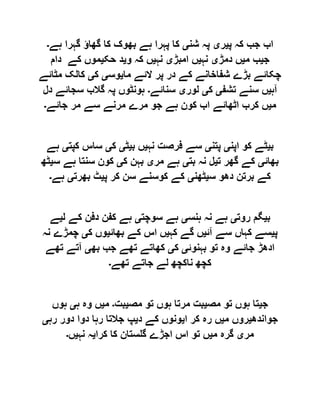
‫ما‬ ‫الئے‬ ‫پر‬ ‫در‬ ‫کے‬ ‫شفاخانے‬ ‫بڑے‬ ‫چکائے‬‫ی‬‫وس‬‫ی‬‫ک‬‫ی‬‫مٹائے‬ ‫کالک‬
‫آہ‬‫ی‬‫تشف‬ ‫سنے‬ ‫ں‬‫ی‬‫ک‬‫ی‬‫لور‬‫ی‬‫سنائے‬‫۔‬‫دل‬ ‫سجائے‬ ‫گالب‬ ‫پہ‬ ‫ہونٹوں‬
‫م‬‫ی‬‫جائے‬ ‫مر‬ ‫سے‬ ‫مرنے‬ ‫مرے‬ ‫جو‬ ‫ہے‬ ‫کون‬ ‫اب‬ ‫اٹھائے‬ ‫کرب‬ ‫ں‬‫۔‬
‫ب‬‫ی‬‫اپن‬ ‫کو‬ ‫ٹے‬‫ی‬‫پتن‬‫ی‬‫نہ‬ ‫فرصت‬ ‫سے‬‫ی‬‫ب‬ ‫ں‬‫ی‬‫ٹ‬‫ی‬‫ک‬‫ی‬‫کپت‬ ‫ساس‬‫ی‬‫ہے‬
‫بھائ‬‫ی‬‫ت‬ ‫گھر‬ ‫کے‬‫ی‬‫بت‬ ‫نہ‬ ‫ل‬‫ی‬‫مر‬ ‫ہے‬‫ی‬‫ک‬ ‫بہن‬‫ی‬‫س‬ ‫ہے‬ ‫سنتا‬ ‫کون‬‫ی‬‫ٹھ‬
‫س‬ ‫دھو‬ ‫برتن‬ ‫کے‬‫ی‬‫ٹھن‬‫ی‬‫پ‬ ‫کر‬ ‫سن‬ ‫کوسنے‬ ‫کے‬‫ی‬‫بھرت‬ ‫ٹ‬‫ی‬‫ہے‬‫۔‬
‫ب‬‫ی‬‫روت‬ ‫گم‬‫ی‬‫ہنس‬ ‫نہ‬ ‫ہے‬‫ی‬‫سوچت‬ ‫ہے‬‫ی‬‫ل‬ ‫کے‬ ‫دفن‬ ‫کفن‬ ‫ہے‬‫ی‬‫ے‬
‫پ‬‫ی‬‫آئ‬ ‫سے‬ ‫کہاں‬ ‫سے‬‫ی‬‫کہ‬ ‫گے‬ ‫ں‬‫ی‬‫بھائ‬ ‫کے‬ ‫اس‬ ‫ں‬‫ی‬‫ک‬ ‫وں‬‫ی‬‫نہ‬ ‫چمڑے‬
‫بہ‬ ‫تو‬ ‫وہ‬ ‫جائے‬ ‫ادھڑ‬‫نوئ‬‫ی‬‫ک‬‫ی‬‫بھ‬ ‫جب‬ ‫تھے‬ ‫کھاتے‬‫ی‬‫تھے‬ ‫آتے‬
‫تھے‬ ‫جاتے‬ ‫لے‬ ‫ناکچھ‬ ‫کچھ‬‫۔‬
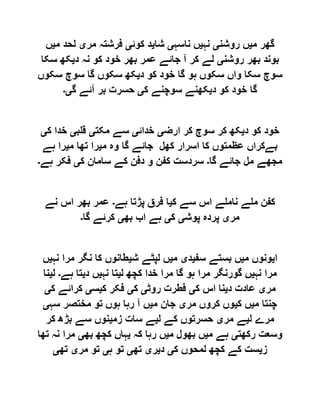
‫ج‬‫ی‬‫مص‬ ‫تو‬ ‫ہوں‬ ‫تا‬‫ی‬‫مص‬ ‫تو‬ ‫ہوں‬ ‫مرتا‬ ‫بت‬‫ی‬‫بت‬‫۔‬‫م‬‫ی‬‫ہ‬ ‫وہ‬ ‫ں‬‫ی‬‫ہوں‬
‫جواندھ‬‫ی‬‫م‬ ‫روں‬‫ی‬‫ا‬ ‫کر‬ ‫رہ‬ ‫ں‬‫ی‬‫د‬ ‫کے‬ ‫ونوں‬‫ی‬‫رہ‬ ‫دور‬ ‫دوا‬ ‫رہا‬ ‫جالتا‬ ‫پ‬‫ی‬
‫مر‬‫ی‬‫م‬ ‫گرہ‬‫ی‬‫کرا‬ ‫کا‬ ‫گلستان‬ ‫اجڑے‬ ‫اس‬ ‫تو‬ ‫ں‬‫ی‬‫نہ‬ ‫ہ‬‫ی‬‫ں‬‫۔‬
‫م‬ ‫گھر‬‫ی‬‫روشن‬ ‫ں‬‫ی‬‫نہ‬‫ی‬‫ناسہ‬ ‫ں‬‫ی‬‫شا‬‫ی‬‫کوئ‬ ‫د‬‫ی‬‫مر‬ ‫فرشتہ‬‫ی‬‫م‬ ‫لحد‬‫ی‬‫ں‬
‫روشن‬ ‫بھر‬ ‫بوند‬‫ی‬‫د‬ ‫نہ‬ ‫کو‬ ‫خود‬ ‫بھر‬ ‫عمر‬ ‫جائے‬ ‫آ‬ ‫کر‬ ‫لے‬‫ی‬‫سکا‬ ‫کھ‬
‫د‬ ‫کو‬ ‫خود‬ ‫گا‬ ‫ہو‬ ‫سکوں‬ ‫واں‬ ‫سکا‬ ‫سوچ‬‫ی‬‫سکوں‬ ‫سوچ‬ ‫گا‬ ‫سکوں‬ ‫کھ‬
‫د‬ ‫کو‬ ‫خود‬ ‫گا‬‫ی‬‫ک‬ ‫سوچنے‬ ‫کھنے‬‫ی‬‫گ‬ ‫آئے‬ ‫بر‬ ‫حسرت‬‫ی۔‬
‫د‬ ‫کو‬ ‫خود‬‫ی‬‫ارض‬ ‫کر‬ ‫سوچ‬ ‫کر‬ ‫کھ‬‫ی‬‫خدائ‬‫ی‬‫مکت‬ ‫سے‬‫ی‬‫قلب‬‫ی‬‫ک‬ ‫خدا‬‫ی‬
‫م‬ ‫وہ‬ ‫گا‬ ‫جائے‬ ‫کھل‬ ‫اسرار‬ ‫کا‬ ‫عظمتوں‬ ‫بےکراں‬‫ی‬‫ر‬‫م‬ ‫تھا‬ ‫ا‬‫ی‬‫ہے‬ ‫را‬
‫گا‬ ‫جائے‬ ‫مل‬ ‫مجھے‬‫۔‬‫ک‬ ‫سامان‬ ‫کے‬ ‫دفن‬ ‫و‬ ‫کفن‬ ‫سردست‬‫ی‬‫ہے‬ ‫فکر‬‫۔‬
‫ک‬ ‫سے‬ ‫اس‬ ‫ناملے‬ ‫ملے‬ ‫کفن‬‫ی‬‫ہے‬ ‫پڑتا‬ ‫فرق‬ ‫ا‬‫۔‬‫نے‬ ‫اس‬ ‫بھر‬ ‫عمر‬
‫مر‬‫ی‬‫پوش‬ ‫پردہ‬‫ی‬‫ک‬‫ی‬‫بھ‬ ‫اب‬ ‫ہے‬‫ی‬‫گا‬ ‫کرئے‬‫۔‬
‫ا‬‫ی‬‫م‬ ‫ونوں‬‫ی‬‫سف‬ ‫بستے‬ ‫ں‬‫ی‬‫د‬‫ی‬‫م‬‫ی‬‫ش‬ ‫لپٹے‬ ‫ں‬‫ی‬‫نہ‬ ‫مرا‬ ‫نگر‬ ‫کا‬ ‫طانوں‬‫ی‬‫ں‬
‫نہ‬ ‫مرا‬‫ی‬‫ل‬ ‫کچھ‬ ‫خدا‬ ‫مرا‬ ‫گا‬ ‫ہو‬ ‫مرا‬ ‫گورنگر‬ ‫ں‬‫ی‬‫تا‬‫نہ‬‫ی‬‫د‬ ‫ں‬‫ی‬‫ہے‬ ‫تا‬‫۔‬‫ل‬‫ی‬‫نا‬
‫مر‬‫ی‬‫د‬ ‫عادت‬‫ی‬‫ک‬ ‫اس‬ ‫نا‬‫ی‬‫روٹ‬ ‫فطرت‬‫ی‬‫ک‬‫ی‬‫ک‬ ‫فکر‬‫ی‬‫س‬‫ی‬‫ک‬ ‫کرائے‬‫ی‬
‫م‬ ‫چنتا‬‫ی‬‫ک‬ ‫ں‬‫ی‬‫مر‬ ‫کروں‬ ‫وں‬‫ی‬‫م‬ ‫جان‬‫ی‬‫سہ‬ ‫مختصر‬ ‫تو‬ ‫ہوں‬ ‫رہا‬ ‫آ‬ ‫ں‬‫ی‬
‫ل‬ ‫مرے‬‫ی‬‫مر‬ ‫ے‬‫ی‬‫ل‬ ‫کے‬ ‫حسرتوں‬‫ی‬‫زم‬ ‫سات‬ ‫ے‬‫ی‬‫کر‬ ‫بڑھ‬ ‫سے‬ ‫نوں‬
‫رکھت‬ ‫وسعت‬‫ی‬‫م‬ ‫ہے‬‫ی‬‫م‬ ‫بھول‬ ‫ں‬‫ی‬‫کہ‬ ‫رہا‬ ‫ں‬‫ی‬‫بھ‬ ‫کچھ‬ ‫ہاں‬‫ی‬‫تھا‬ ‫نہ‬ ‫مرا‬
‫ز‬‫ی‬‫ک‬ ‫لمحوں‬ ‫کچھ‬ ‫کے‬ ‫ست‬‫ی‬‫د‬‫ی‬‫ر‬‫ی‬‫ت‬‫ھ‬‫ی‬‫ہ‬ ‫تو‬‫ی‬‫مر‬ ‫تو‬‫ی‬‫تھ‬‫ی‬
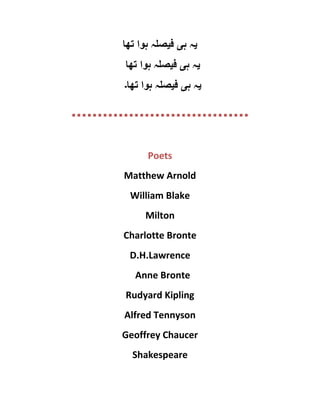
‫ی‬‫ہ‬ ‫ہ‬‫ی‬‫ف‬‫ی‬‫تھا‬ ‫ہوا‬ ‫صلہ‬
‫ی‬‫ہ‬ ‫ہ‬‫ی‬‫ف‬‫ی‬‫تھا‬ ‫ہوا‬ ‫صلہ‬‫۔‬
..................................
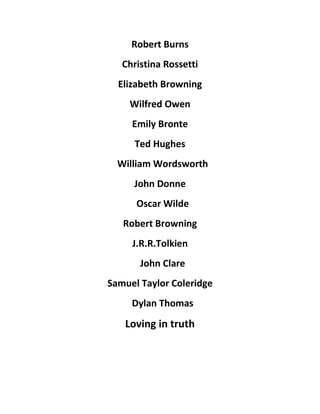
Poets
Matthew Arnold
William Blake
Milton
Charlotte Bronte
D.H.Lawrence
Anne Bronte
Rudyard Kipling
Alfred Tennyson
Geoffrey Chaucer
Shakespeare
Robert Burns
Christina Rossetti
Elizabeth Browning
Wilfred Owen
Emily Bronte
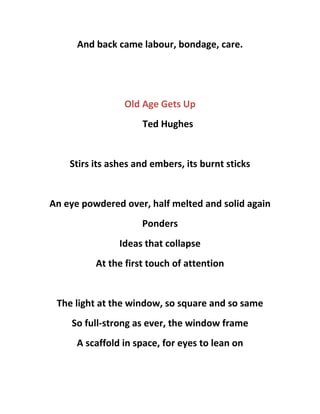
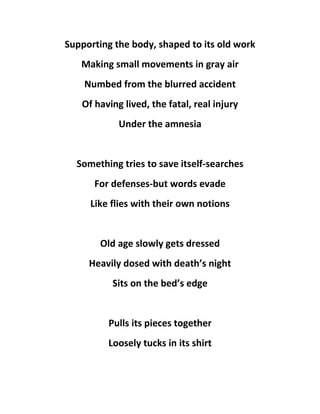
Ted Hughes
William Wordsworth
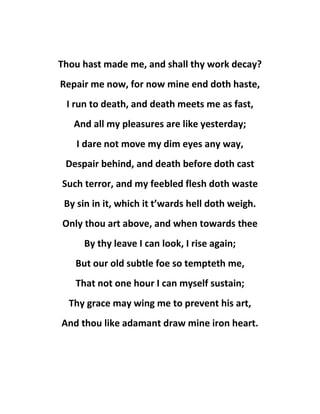
John Donne
Oscar Wilde
Robert Browning
J.R.R.Tolkien
John Clare
Samuel Taylor Coleridge
Dylan Thomas
Loving in truth
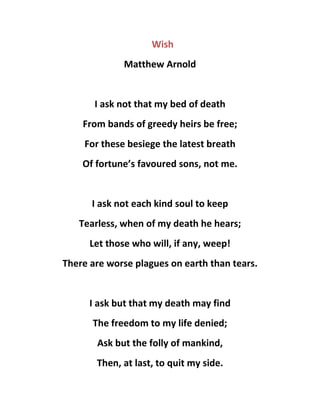
Wish
Matthew Arnold
I ask not that my bed of death
From bands of greedy heirs be free;
For these besiege the latest breath
Of fortune’s favoured sons, not me.
I ask not each kind soul to keep
Tearless, when of my death he hears;
Let those who will, if any, weep!
There are worse plagues on earth than tears.
I ask but that my death may find
The freedom to my life denied;
Ask but the folly of mankind,
Then, at last, to quit my side.
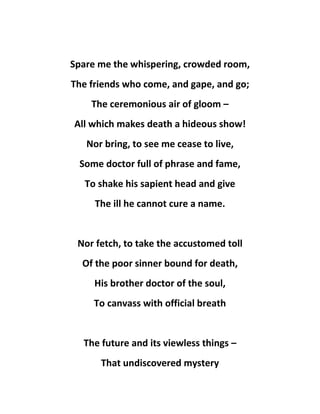
Spare me the whispering, crowded room,
The friends who come, and gape, and go;
The ceremonious air of gloom –
All which makes death a hideous show!
Nor bring, to see me cease to live,
Some doctor full of phrase and fame,
To shake his sapient head and give
The ill he cannot cure a name.
Nor fetch, to take the accustomed toll
Of the poor sinner bound for death,
His brother doctor of the soul,
To canvass with official breath
The future and its viewless things –
That undiscovered mystery
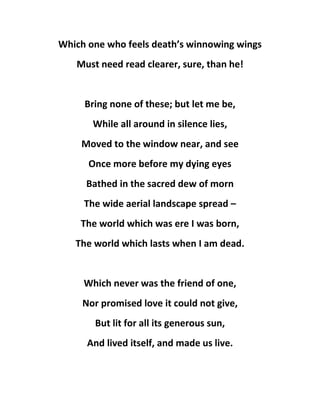
Which one who feels death’s winnowing wings
Must need read clearer, sure, than he!
Bring none of these; but let me be,
While all around in silence lies,
Moved to the window near, and see
Once more before my dying eyes
Bathed in the sacred dew of morn
The wide aerial landscape spread –
The world which was ere I was born,
The world which lasts when I am dead.
Which never was the friend of one,
Nor promised love it could not give,
But lit for all its generous sun,
And lived itself, and made us live.
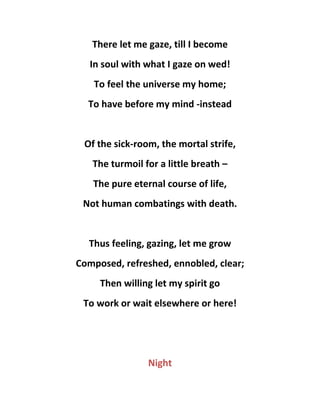
There let me gaze, till I become
In soul with what I gaze on wed!
To feel the universe my home;
To have before my mind -instead
Of the sick-room, the mortal strife,
The turmoil for a little breath –
The pure eternal course of life,
Not human combatings with death.
Thus feeling, gazing, let me grow
Composed, refreshed, ennobled, clear;
Then willing let my spirit go
To work or wait elsewhere or here!
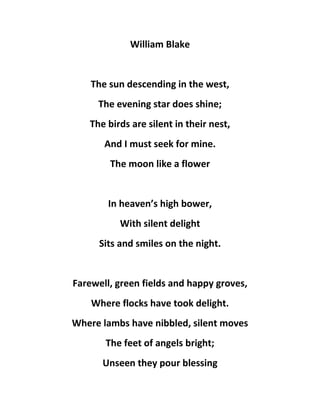
Night
William Blake
The sun descending in the west,
The evening star does shine;
The birds are silent in their nest,
And I must seek for mine.
The moon like a flower
In heaven’s high bower,
With silent delight
Sits and smiles on the night.
Farewell, green fields and happy groves,
Where flocks have took delight.
Where lambs have nibbled, silent moves
The feet of angels bright;
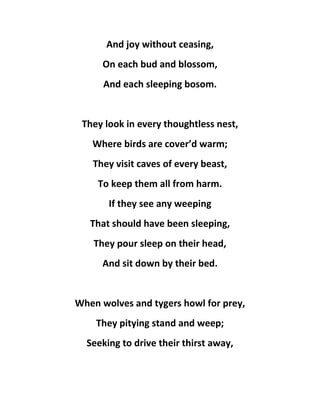
Unseen they pour blessing
And joy without ceasing,
On each bud and blossom,
And each sleeping bosom.
They look in every thoughtless nest,
Where birds are cover’d warm;
They visit caves of every beast,
To keep them all from harm.
If they see any weeping
That should have been sleeping,
They pour sleep on their head,
And sit down by their bed.
When wolves and tygers howl for prey,
They pitying stand and weep;
Seeking to drive their thirst away,
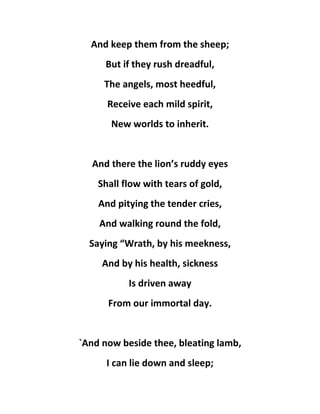
And keep them from the sheep;
But if they rush dreadful,
The angels, most heedful,
Receive each mild spirit,
New worlds to inherit.
And there the lion’s ruddy eyes
Shall flow with tears of gold,
And pitying the tender cries,
And walking round the fold,
Saying “Wrath, by his meekness,
And by his health, sickness
Is driven away
From our immortal day.
`And now beside thee, bleating lamb,
I can lie down and sleep;
Or think on him who bore thy name,
Graze after thee and weep.
For, wash’d in life’s river,
My bright mane for ever
Shall shine like the gold
As I guard o’er the fold.”
On Time
Milton
FLy envious Time, till thou run out thy race,
Call on the lazy leaden-stepping hours,
Whose speed is but the heavy Plummets pace;
And glut thy self with what thy womb devours,
Which is no more then what is false and vain, [ 5 ]
And meerly mortal dross;
So little is our loss,
So little is thy gain.
For when as each thing bad thou hast entomb’d,
And last of all, thy greedy self consum’d, [ 10 ]
Then long Eternity shall greet our bliss
With an individual kiss;
And Joy shall overtake us as a flood,
When every thing that is sincerely good
And perfectly divine, [ 15 ]
With Truth, and Peace, and Love shall ever shine
About the supreme Throne
Of him, t’ whose happy-making sight alone,
When once our heav’nly-guided soul shall clime,
Then all this Earthy grosnes quit,
Life
Charlotte Bronte
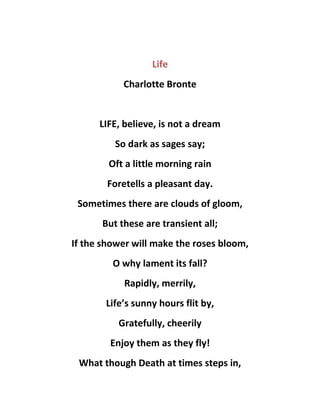
LIFE, believe, is not a dream
So dark as sages say;
Oft a little morning rain
Foretells a pleasant day.
Sometimes there are clouds of gloom,
But these are transient all;
If the shower will make the roses bloom,
O why lament its fall?
Rapidly, merrily,
Life’s sunny hours flit by,
Gratefully, cheerily
Enjoy them as they fly!
What though Death at times steps in,
And calls our Best away?
What though sorrow seems to win,
O’er hope, a heavy sway?
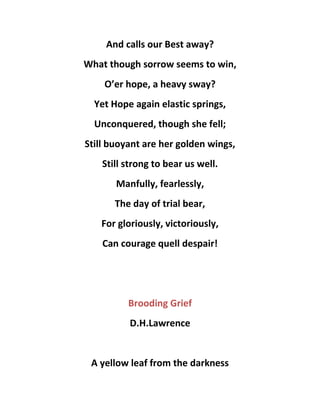
Yet Hope again elastic springs,
Unconquered, though she fell;
Still buoyant are her golden wings,
Still strong to bear us well.
Manfully, fearlessly,
The day of trial bear,
For gloriously, victoriously,
Can courage quell despair!
Brooding Grief
D.H.Lawrence
A yellow leaf from the darkness
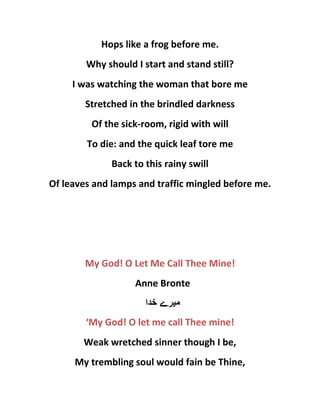
Hops like a frog before me.
Why should I start and stand still?
I was watching the woman that bore me
Stretched in the brindled darkness
Of the sick-room, rigid with will
To die: and the quick leaf tore me
Back to this rainy swill
Of leaves and lamps and traffic mingled before me.
My God! O Let Me Call Thee Mine!
Anne Bronte
‫م‬‫ی‬‫خدا‬ ‫رے‬
‘My God! O let me call Thee mine!
Weak wretched sinner though I be,
My trembling soul would fain be Thine,
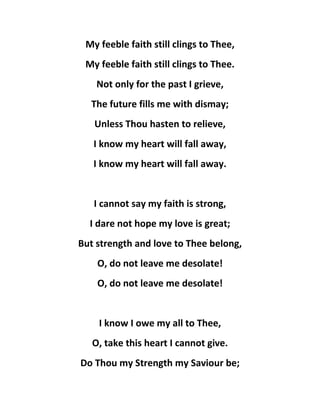
My feeble faith still clings to Thee,
My feeble faith still clings to Thee.
Not only for the past I grieve,
The future fills me with dismay;
Unless Thou hasten to relieve,
I know my heart will fall away,
I know my heart will fall away.
I cannot say my faith is strong,
I dare not hope my love is great;
But strength and love to Thee belong,
O, do not leave me desolate!
I know I owe my all to Thee,
O, take this heart I cannot give.
Do Thou my Strength my Saviour be;
And make me to Thy glory live!
If
Rudyard Kipling
If you can keep your head when all about you
Are losing theirs and blaming it on you;
If you can trust yourself when all men doubt you,
But make allowance for their doubting too;
If you can wait and not be tired by waiting,
Or, being lied about, don’t deal in lies,
Or, being hated, don’t give way to hating,
And yet don’t look too good, nor talk too wise;
If you can dream – and not make dreams your master;
If you can think – and not make thoughts your aim;
If you can meet with triumph and disaster
And treat those two imposters just the same;
If you can bear to hear the truth you’ve spoken
Twisted by knaves to make a trap for fools,
Or watch the things you gave your life to broken,
And stoop and build ‘em up with wornout tools;
If you can make one heap of all your winnings
And risk it on one turn of pitch-and-toss,
And lose, and start again at your beginnings
And never breath a word about your loss;
If you can force your heart and nerve and sinew
To serve your turn long after they are gone,
And so hold on when there is nothing in you
Except the Will which says to them: “Hold on”;
If you can talk with crowds and keep your virtue,
Or walk with kings – nor lose the common touch;
If neither foes nor loving friends can hurt you;
If all men count with you, but none too much;
If you can fill the unforgiving minute
With sixty seconds’ worth of distance run -
Yours is the Earth and everything that’s in it,
And – which is more – you’ll be a Man my son!
The Lady Of Shalott
Alfred Tennyson
On either side the river lie
Long fields of barley and of rye,
That clothe the wold and meet the sky;
And through the field the road runs by
To many-towered Camelot;
And up and down the people go,
Gazing where the lilies blow
Round an island there below,
The island of Shalott.
Willows whiten, aspens quiver,
Little breezes dusk and shiver
Through the wave that runs for ever
By the island in the river
Flowing down to Camelot.
Four grey walls, and four grey towers,
Overlook a space of flowers,
And the silent isle imbowers
The Lady of Shalott.
By the margin, willow-veiled,
Slide the heavy barges trailed
By slow horses; and unhailed
The shallop flitteth silken-sailed
Skimming down to Camelot:
But who hath seen her wave her hand?
Or at the casement seen her stand?
Or is she known in all the land,
The Lady of Shalott?
Only reapers, reaping early
In among the bearded barley,
Hear a song that echoes cheerly
From the river winding clearly,
Down to towered Camelot:
And by the moon the reaper weary,
Piling sheaves in uplands airy,
Listening, whispers “‘Tis the fairy
Lady of Shalott.”
Part II
There she weaves by night and day
A magic web with colours gay.
She has heard a whisper say,
A curse is on her if she stay
To look down to Camelot.
She knows not what the curse may be,
And so she weaveth steadily,
And little other care hath she,
The Lady of Shalott.
And moving through a mirror clear
That hangs before her all the year,
Shadows of the world appear.
There she sees the highway near
Winding down to Camelot:
There the river eddy whirls,
And there the surly village-churls,
And the red cloaks of market girls,
Pass onward from Shalott.
Sometimes a troop of damsels glad,
An abbot on an ambling pad,
Sometimes a curly shepherd-lad,
Or long-haired page in crimson clad,
Goes by to towered Camelot;
And sometimes through the mirror blue
The knights come riding two and two:
She hath no loyal knight and true,
The Lady of Shalott.
But in her web she still delights
To weave the mirror’s magic sights,
For often through the silent nights
A funeral, with plumes and lights
And music, went to Camelot:
Or when the moon was overhead,
Came two young lovers lately wed;
“I am half sick of shadows,” said
The Lady of Shalott.
Part III
A bow-shot from her bower-eaves,
He rode between the barley-sheaves,
The sun came dazzling through the leaves,
And flamed upon the brazen greaves
Of bold Sir Lancelot.
A red-cross knight for ever kneeled
To a lady in his shield,
That sparkled on the yellow field,
Beside remote Shalott.
The gemmy bridle glittered free,
Like to some branch of stars we see
Hung in the golden Galaxy.
The bridle bells rang merrily
As he rode down to Camelot:
And from his blazoned baldric slung
A mighty silver bugle hung,
And as he rode his armour rung,
Beside remote Shalott.
All in the blue unclouded weather
Thick-jewelled shone the saddle-leather,
The helmet and the helmet-feather
Burned like one burning flame together,
As he rode down to Camelot.
As often through the purple night,
Below the starry clusters bright,
Some bearded meteor, trailing light,
Moves over still Shalott.
His broad clear brow in sunlight glowed;
On burnished hooves his war-horse trode;
From underneath his helmet flowed
His coal-black curls as on he rode,
As he rode down to Camelot.
From the bank and from the river
He flashed into the crystal mirror,
“Tirra lirra,” by the river
Sang Sir Lancelot.
She left the web, she left the loom,
She made three paces through the room,
She saw the water-lily bloom,
She saw the helmet and the plume,
She looked down to Camelot.
Out flew the web and floated wide;
The mirror cracked from side to side;
“The curse is come upon me,” cried
The Lady of Shalott.
Part IV
In the stormy east-wind straining,
The pale yellow woods were waning,
The broad stream in his banks complaining,
Heavily the low sky raining
Over towered Camelot;
Down she came and found a boat
Beneath a willow left afloat,
And round about the prow she wrote
The Lady of Shalott.
And down the river’s dim expanse,
Like some bold seer in a trance
Seeing all his own mischance,
With a glassy countenance
Did she look to Camelot.
And at the closing of the day
She loosed the chain, and down she lay;
The broad stream bore her far away,
The Lady of Shalott.
Lying, robed in snowy white
That loosely flew to left and right –
The leaves upon her falling light –
Through the noises of the night
She floated down to Camelot:
And as the boat-head wound along
The willowy hills and fields among,
They heard her singing her last song,
The Lady of Shalott.
Heard a carol, mournful, holy,
Chanted loudly, chanted lowly,
Till her blood was frozen slowly,
And her eyes were darkened wholly,
Turned to towered Camelot.
For ere she reached upon the tide
The first house by the water-side,
Singing in her song she died,
The Lady of Shalott.
Under tower and balcony,
By garden-wall and gallery,
A gleaming shape she floated by,
Dead-pale between the houses high,
Silent into Camelot.
Out upon the wharfs they came,
Knight and burgher, lord and dame,
And round the prow they read her name,
The Lady of Shalott.
Who is this? and what is here?
And in the lighted palace near
Died the sound of royal cheer;
And they crossed themselves for fear,
All the knights at Camelot:
But Lancelot mused a little space;
He said, “She has a lovely face;
God in his mercy lend her grace,
The Lady of Shalott.”
................
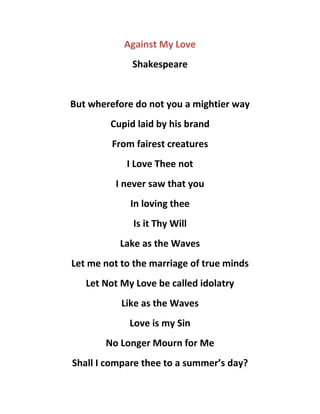
But wherefore do not you a mightier way
Shakespeare
But wherefore do not you a mightier way
Make war upon this bloody tyrant, Time?
And fortify yourself in your decay
With means more blessed than my barren rhyme?
Now stand you on the top of happy hours,
And many maiden gardens yet unset
With virtuous wish would bear your living flowers,
Much liker than your painted counterfeit:
So should the lines of life that life repair,
Which this, Time’s pencil, or my pupil pen,
Neither in inward worth nor outward fair,
Can make you live yourself in eyes of men.
To give away yourself keeps yourself still,
And you must live, drawn by your own sweet skill.
Against My Love
Shakespeare
But wherefore do not you a mightier way
Cupid laid by his brand
From fairest creatures
I Love Thee not
I never saw that you
In loving thee
Is it Thy Will
Lake as the Waves
Let me not to the marriage of true minds
Let Not My Love be called idolatry
Like as the Waves
Love is my Sin
No Longer Mourn for Me
Shall I compare thee to a summer’s day?
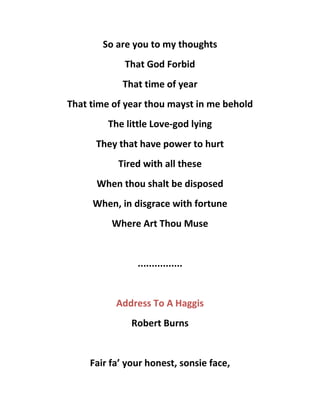
So are you to my thoughts
That God Forbid
That time of year
That time of year thou mayst in me behold
The little Love-god lying
They that have power to hurt
Tired with all these
When thou shalt be disposed
When, in disgrace with fortune
Where Art Thou Muse
................
Address To A Haggis
Robert Burns
Fair fa’ your honest, sonsie face,
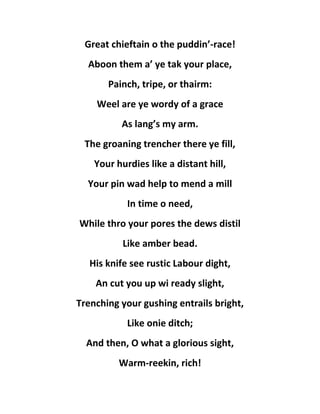
Great chieftain o the puddin’-race!
Aboon them a’ ye tak your place,
Painch, tripe, or thairm:
Weel are ye wordy of a grace
As lang’s my arm.
The groaning trencher there ye fill,
Your hurdies like a distant hill,
Your pin wad help to mend a mill
In time o need,
While thro your pores the dews distil
Like amber bead.
His knife see rustic Labour dight,
An cut you up wi ready slight,
Trenching your gushing entrails bright,
Like onie ditch;
And then, O what a glorious sight,
Warm-reekin, rich!
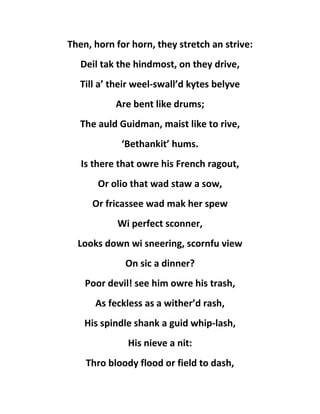
Then, horn for horn, they stretch an strive:
Deil tak the hindmost, on they drive,
Till a’ their weel-swall’d kytes belyve
Are bent like drums;
The auld Guidman, maist like to rive,
‘Bethankit’ hums.
Is there that owre his French ragout,
Or olio that wad staw a sow,
Or fricassee wad mak her spew
Wi perfect sconner,
Looks down wi sneering, scornfu view
On sic a dinner?
Poor devil! see him owre his trash,
As feckless as a wither’d rash,
His spindle shank a guid whip-lash,
His nieve a nit:
Thro bloody flood or field to dash,
O how unfit!
But mark the Rustic, haggis-fed,
The trembling earth resounds his tread,
Clap in his walie nieve a blade,
He’ll make it whissle;
An legs an arms, an heads will sned,
Like taps o thrissle.
Ye Pow’rs, wha mak mankind your care,
And dish them out their bill o fare,
Auld Scotland wants nae skinking ware
That jaups in luggies:
But, if ye wish her gratefu prayer,
Gie her a Haggis!
.................
A Better Resurrection
Christina Rossetti
I have no wit, no words, no tears;
My heart within me like a stone
Is numb’d too much for hopes or fears;
Look right, look left, I dwell alone;
I lift mine eyes, but dimm’d with grief
No everlasting hills I see;
My life is in the falling leaf:
O Jesus, quicken me.
My life is like a faded leaf,
My harvest dwindled to a husk:
Truly my life is void and brief
And tedious in the barren dusk;
My life is like a frozen thing,
No bud nor greenness can I see:
Yet rise it shall–the sap of Spring;
O Jesus, rise in me.
My life is like a broken bowl,
A broken bowl that cannot hold
One drop of water for my soul
Or cordial in the searching cold;
Cast in the fire the perish’d thing;
Melt and remould it, till it be
A royal cup for Him, my King:
O Jesus, drink of me
......................
My Heavy Heart
Elizabeth Browning
I lift my heavy heart up solemnly,
As once Electra her sepulchral urn,
And, looking in thine eyes, I over-turn
The ashes at thy feet. Behold and see
What a great heap of grief lay hid in me,
And how the red wild sparkles dimly burn
Through the ashen greyness. If thy foot in scorn
Could tread them out to darkness utterly,
It might be well perhaps. But if instead
Thou wait beside me for the wind to blow
The grey dust up, . . . those laurels on thine head,
O my Beloved, will not shield thee so,
That none of all the fires shall scorch and shred
The hair beneath. Stand further off then! go!
The End
Wilfred Owen
After the blast of lightning from the east,
The flourish of loud clouds, the Chariot throne,
After the drums of time have rolled and ceased
And from the bronze west long retreat is blown,
Shall Life renew these bodies? Of a truth
All death will he annul, all tears assuage?
Or fill these void veins full again with youth
And wash with an immortal water age?
When I do ask white Age, he saith not so, –
“My head hangs weighed with snow.”
And when I hearken to the Earth she saith
My fiery heart sinks aching. It is death.
Mine ancient scars shall not be glorified
Nor my titanic tears the seas be dried.”
A Little While
Emily Bronte
A little while, a little while,
The weary task is put away,
And I can sing and I can smile,
Alike, while I have holiday.
Why wilt thou go, my harassed heart,
What thought, what scene invites thee now?
What spot, or near or far,
Has rest for thee, my weary brow?
There is a spot, mid barren hills,
Where winter howls, and driving rain;
But if the dreary tempest chills,
There is a light that warms again.
The house is old, the trees are bare,
Moonless above bends twilight’s dome;
But what on earth is half so dear,
So longed for, as the hearth of home?
The mute bird sitting on the stone,
The dank moss dripping from the wall,
The thorn-trees gaunt, the walks o’ergrown,
I love them, how I love them all!
Still, as I mused, the naked room,
The alien firelight died away,
And from the midst of cheerless gloom
I passed to bright unclouded day.
A little and a lone green lane
That opened on a common wide;
A distant, dreamy, dim blue chain
Of mountains circling every side;
A heaven so clear, an earth so calm,
So sweet, so soft, so hushed an air;
And, deepening still the dream-like charm,
Wild moor-sheep feeding everywhere.
That was the scene, I knew it well;
I knew the turfy pathway’s sweep
That, winding o’er each billowy swell,
Marked out the tracks of wandering sheep.
Even as I stood with raptured eye,
Absorbed in bliss so deep and dear,
My hour of rest had fleeted by,
And back came labour, bondage, care.
Old Age Gets Up
Ted Hughes
Stirs its ashes and embers, its burnt sticks
An eye powdered over, half melted and solid again
Ponders
Ideas that collapse
At the first touch of attention
The light at the window, so square and so same
So full-strong as ever, the window frame
A scaffold in space, for eyes to lean on
Supporting the body, shaped to its old work
Making small movements in gray air
Numbed from the blurred accident
Of having lived, the fatal, real injury
Under the amnesia
Something tries to save itself-searches
For defenses-but words evade
Like flies with their own notions
Old age slowly gets dressed
Heavily dosed with death’s night
Sits on the bed’s edge
Pulls its pieces together
Loosely tucks in its shirt
A Slumber Did My Spirit Seal
William Wordsworth
A slumber did my spirit seal;
I had no human fears:
She seemed a thing that could not feel
The touch of earthly years.
No motion has she now, no force;
She neither hears nor sees;
Rolled round in earth’s diurnal course,
With rocks, and stones, and trees.
Holy Sonnet ?
John Donne
Thou hast made me, and shall thy work decay?
Repair me now, for now mine end doth haste,
I run to death, and death meets me as fast,
And all my pleasures are like yesterday;
I dare not move my dim eyes any way,
Despair behind, and death before doth cast
Such terror, and my feebled flesh doth waste
By sin in it, which it t’wards hell doth weigh.
Only thou art above, and when towards thee
By thy leave I can look, I rise again;
But our old subtle foe so tempteth me,
That not one hour I can myself sustain;
Thy grace may wing me to prevent his art,
And thou like adamant draw mine iron heart.
Holy Week At Genoa
Oscar Wilde
I wandered through Scoglietto’s far retreat,
The oranges on each o’erhanging spray
Burned as bright lamps of gold to shame the day;
Some startled bird with fluttering wings and fleet
Made snow of all the blossoms; at my feet
Like silver moons the pale narcissi lay:
And the curved waves that streaked the great green bay
Laughed i’ the sun, and life seemed very sweet.
Outside the young boy-priest passed singing clear,
‘Jesus the son of Mary has been slain,
O come and fill His sepulchre with flowers.’
Ah, God! Ah, God! those dear Hellenic hours
Had drowned all memory of Thy bitter pain,
The Cross, the Crown, the Soldiers and the Spear.
Saul
Chapter 18
Robert Browning
“I believe it! ‘Tis Thou, God, that givest, ’tis I who
receive:
In the first is the last, in thy will is my power to believe.
All ‘s one gift: thou canst grant it moreover, as prompt
to my prayer
As I breathe out this breath, as I open these arms to the
air.
From thy will stream the worlds, life and nature, thy
dread Sabaoth:
I will?–the mere atoms despise me! Why am I not loth
To look that, even that in the face too? Why is it I dare
Think but lightly of such impuissance? What stops my
despair?
This;–’tis not what man Does which exalts him, but
what man Would do!
See the King–I would help him but cannot, the wishes
fall through.
Could I wrestle to raise him from sorrow, grow poor to
enrich,
To fill up his life, starve my own out, I would–knowing
which,
I know that my service is perfect. Oh, speak through me
now!
Would I suffer for him that I love? So wouldst thou–so
wilt thou!
So shall crown thee the topmost, ineffablest, uttermost
crown–
And thy love fill infinitude wholly, nor leave up nor
down
One spot for the creature to stand in! It is by no breath,
Turn of eye, wave of hand, that salvation joins issue
with death!
As thy Love is discovered almighty, almighty be proved
Thy power, that exists with and for it, of being Beloved!
He who did most, shall bear most; the strongest shall
stand the most weak.
‘Tis the weakness in strength, that I cry for! my flesh,
that I seek
In the Godhead! I seek and I find it. O Saul, it shall be
A Face like my face that receives thee; a Man like to me,
Thou shalt love and be loved by, forever: a Hand like
this hand
Shall throw open the gates of new life to thee! See the
Christ stand!”
All That is Gold
J.R.R.Tolkien
All that is gold does not glitter,
Not all those who wander are lost;
The old that is strong does not wither,
Deep roots are not reached by the frost.
From the ashes a fire shall be woken,
A light from the shadows shall spring;
Renewed shall be blade that was broken,
The crownless again shall be king.
I am
John Clare
I am – yet what I am, none cares or knows:
My friends forsake me like a memory lost:
I am the self-consumer of my woes –
They rise and vanish in oblivious host,
Like shadows in love’s frenzied stifled throes
And yet I am, and live-like vapours tost
Into the nothingness of scorn and noise,
Into the living sea of waking dreams,
Where there is neither sense of life or joys,
But the vast shipwreck of my life’s esteem:
Even the dearest that I love the best
Are strange-nay, rather, stranger than the rest.
I long for scenes where man hath never trod
A place where woman never smiled or wept
there to abide with my creator God,
And sleep as I in childhood sweetly slept,
Untroubling and untroubled where I lie
The grass below, above, the vaulted sky.
Human Life
Samuel Taylor Coleridge
If dead, we cease to be ; if total gloom
Swallow up life’s brief flash for aye, we fare
As summer-gusts, of sudden birth and doom,
Whose sound and motion not alone declare,
But are their whole of being ! If the breath
Be Life itself, and not its task and tent,
If even a soul like Milton’s can know death ;
O Man ! thou vessel purposeless, unmeant,
Yet drone-hive strange of phantom purposes !
Surplus of Nature’s dread activity,
Which, as she gazed on some nigh-finished vase,
Retreating slow, with meditative pause,
She formed with restless hands unconsciously.
Blank accident ! nothing’s anomaly !
If rootless thus, thus substanceless thy state,
Go, weigh thy dreams, and be thy hopes, thy fears,
The counter-weights !–Thy laughter and thy tears
Mean but themselves, each fittest to create
And to repay the other ! Why rejoices
Thy heart with hollow joy for hollow good ?
Why cowl thy face beneath the mourner’s hood ?
Why waste thy sighs, and thy lamenting voices,
Image of Image, Ghost of Ghostly Elf,
That such a thing as thou feel’st warm or cold ?
Yet what and whence thy gain, if thou withhold
These costless shadows of thy shadowy self ?
Be sad ! be glad ! be neither ! seek, or shun !
Thou hast no reason why ! Thou canst have none ;
Thy being’s being is contradiction.
Do Not Go Gentle Into That Good Night
Dylan Thomas
Do not go gentle into that good night,
Old age should burn and rave at close of day;
Rage, rage against the dying of the light.
Though wise men at their end know dark is right,
Because their words had forked no lightning they
Do not go gentle into that good night.
Good men, the last wave by, crying how bright
Their frail deeds might have danced in a green bay,
Rage, rage against the dying of the light.
Wild men who caught and sang the sun in flight,
And learn, too late, they grieved it on its way,
Do not go gentle into that good night.
Grave men, near death, who see with blinding sight
Blind eyes could blaze like meteors and be gay,
Rage, rage against the dying of the light.
And you, my father, there on the sad height,
Curse, bless me now with your fierce tears, I pray.
Do not go gentle into that good night.
Rage, rage against the dying of the light.
Loving in truth
Phlip Sidney
Loving in truth, and fain in verse my love to show,
That the dear she might take some pleasure of my
pain,
Pleasure might cause her read, reading might
make her know,
Knowledge might pity win, and pity grace obtain,
I sought fit words to paint the blackest face of
woe:
Studying inventions fine, her wits to entertain,
Oft turning others' leaves, to see if thence would
flow
Some fresh and fruitful showers upon my
sunburned brain.
But words came halting forth, wanting Invention's
stay;
Invention, Nature's child, fled stepdame Study's
blows;
And others' feet still seemed but strangers in my
way.
Thus, great with child to speak, and helpless in my
throes,
Biting my truant pen, beating myself for spite:
"Fool," said my Muse to me, "look in thy heart,
and write."
ہندوی کے انگریزی پر لسانیاتی اثرات

ہندوی کے انگریزی پر لسانیاتی اثرات

  • 2.
    ‫ہندو‬‫ی‬‫انگر‬ ‫کے‬‫ی‬‫ز‬‫ی‬‫لسان‬ ‫پر‬‫ی‬‫ات‬‫ی‬‫اثرات‬ ‫حسن‬‫مقصود‬‫ی‬ ‫برق‬ ‫ابوزر‬‫ی‬‫خانہ‬ ‫کتب‬ ‫مئ‬‫ی‬6102
  • 3.
    ‫ہندو‬‫ی‬‫انگر‬ ‫کے‬‫ی‬‫ز‬‫ی‬‫لسان‬ ‫پر‬‫ی‬‫ات‬‫ی‬‫اثرات‬ ‫ک‬‫لوگوں‬ ‫کے‬ ‫عالقوں‬ ‫مختلف‬‫ی‬‫زبان‬'‫م‬‫ی‬‫ح‬ ‫ں‬‫ی‬‫انگ‬ ‫رت‬‫ی‬‫ز‬ ‫لسان‬‫ی‬‫ات‬‫ی‬‫پا‬ ‫کا‬ ‫مماثلتوں‬‫ی‬‫جانا‬ ‫ا‬'‫اتفاق‬‫ی‬‫نہ‬ ‫ہ‬‫ی‬‫سکت‬ ‫ہو‬ ‫ں‬‫ا‬‫۔‬‫اس‬ ‫م‬ ‫منظر‬ ‫پس‬ ‫کے‬‫ی‬‫ں‬'‫کس‬‫ی‬‫کوئ‬ ‫پر‬ ‫سطع‬‫ی‬‫ناکوئ‬‫ی‬‫واقعہ‬' ‫معاملہ‬'‫حادثہ‬'‫بات‬‫ی‬‫م‬ ‫وقوع‬ ‫ضرور‬ ‫ناکچھ‬ ‫کچھ‬ ‫ا‬‫ی‬‫آ‬ ‫ں‬‫ی‬‫ہوتا‬ ‫ا‬ ‫ہے‬'‫ک‬ ‫اس‬ ‫چاہے‬‫ی‬‫ح‬‫ی‬‫ث‬‫ی‬‫معمول‬ ‫ت‬‫ی‬‫ہ‬‫ی‬‫ک‬‫ی‬‫رہ‬ ‫نہ‬ ‫وں‬‫ی‬‫ہو‬'‫اس‬ ‫ہے‬ ‫ہوتا‬ ‫ہوا‬ ‫مرتب‬ ‫ضرور‬ ‫اثر‬ ‫کا‬‫۔‬ ‫ا‬‫ی‬‫د‬ ‫ک‬‫ی‬‫س‬‫ی‬‫ی‬‫بد‬ ‫ا‬‫ی‬‫س‬‫ی‬‫شخص‬'‫م‬ ‫بازار‬‫ی‬‫خر‬ ‫کچھ‬ ‫ں‬‫ی‬‫دنے‬'‫کس‬‫ی‬ ‫ملنے‬ ‫سے‬‫ی‬‫کس‬ ‫ا‬‫ی‬‫ا‬‫ہے‬ ‫آتا‬ ‫سے‬ ‫کام‬ ‫ور‬‫۔‬‫اس‬ ‫اپنے‬ ‫وہ‬ ‫دوران‬ ‫مختصر‬ ‫کے‬ ‫ٹھہراؤ‬‫ی‬‫م‬ ‫ے‬‫ی‬‫ں‬'‫کوئ‬‫ی‬‫اصطالح‬'‫کوئ‬‫ی‬ ‫المثل‬ ‫ضرب‬'‫کوئ‬‫ی‬‫محاورہ‬‫ی‬‫کوئ‬ ‫ا‬‫ی‬‫ہے‬ ‫جاتا‬ ‫چھوڑ‬ ‫لفظ‬‫۔‬‫اس‬ ‫بوال‬ ‫کا‬'‫ا‬‫ی‬‫م‬ ‫استعمال‬ ‫شخص‬ ‫ک‬‫ی‬‫ہے‬ ‫التا‬ ‫ں‬'‫دوسرا‬ ‫پھر‬'‫ان‬ ‫ک‬‫ی‬‫د‬‫ی‬‫د‬ ‫کھا‬‫ی‬‫کھ‬‫ی‬‫م‬‫ی‬‫م‬ ‫مہارت‬ ‫وہ‬ ‫ں‬‫ی‬‫ہے‬ ‫جاتا‬ ‫آ‬ ‫ں‬‫۔‬‫اب‬‫ی‬‫الزم‬ ‫ہ‬ ‫نہ‬‫ی‬‫تلفظ‬ ‫اصل‬ ‫وہ‬ ‫کہ‬ ‫ں‬'‫معنوں‬ ‫اصل‬‫ی‬‫کے‬ ‫استعمال‬ ‫اصل‬ ‫پھر‬ ‫ا‬ ‫مطابق‬'‫م‬ ‫استعمال‬‫ی‬‫جائے‬ ‫آ‬ ‫ں‬‫۔‬‫اپن‬ ‫وہ‬‫ی‬‫کہ‬ ‫سے‬ ‫اصل‬‫ی‬‫دور‬ ‫ں‬'
  • 4.
    ‫ہے‬ ‫سکتا‬ ‫جا‬‫دور‬ ‫بہت‬ ‫کہ‬ ‫بل‬‫۔‬‫معنو‬‫ی‬‫سے‬ ‫اصل‬ ‫سے‬ ‫اعتبار‬ ‫م‬ ‫استعمال‬ ‫برعکس‬‫ی‬‫ہے‬ ‫سکتا‬ ‫آ‬ ‫ں‬‫۔‬‫کئ‬‫ی‬‫معن‬‫ی‬‫استعمال‬ ‫اور‬ ‫ہ‬ ‫سکتے‬ ‫آ‬ ‫سامنے‬‫ی‬‫غ‬ ‫کے‬ ‫اس‬ ‫پھر‬ ‫اور‬ ‫ں‬‫ی‬‫گمان‬ ‫کا‬ ‫ہونے‬ ‫ر‬ ‫نہ‬ ‫تک‬‫ی‬‫گزرتا‬ ‫ں‬‫۔‬ ‫ی‬‫ونان‬‫ی‬‫وں‬‫س‬ ‫کا‬‫ی‬‫اس‬‫ی‬'‫علم‬‫ی‬'‫ادب‬‫ی‬‫ثقافت‬ ‫اور‬‫ی‬‫سے‬ ‫حوالہ‬'‫دن‬‫ی‬‫ا‬ ‫م‬ ‫بھر‬‫ی‬‫تھا‬ ‫ٹہکا‬ ‫ں‬‫۔‬‫ک‬ ‫وقتوں‬ ‫آتے‬‫ی‬‫عظ‬‫ی‬‫س‬ ‫م‬‫ی‬‫اس‬‫ی‬'‫عسکر‬‫ی‬ ‫قوت‬ ‫مکار‬ ‫اور‬'‫برطان‬‫ی‬‫ک‬ ‫ان‬ ‫ہ‬‫ی‬‫تھ‬ ‫نہ‬ ‫باہر‬ ‫سے‬ ‫دسترس‬‫ی۔‬ ‫اس‬‫ی‬‫برصغ‬ ‫طرح‬‫ی‬‫بھ‬ ‫ر‬‫ی‬‫ی‬‫ونان‬‫ی‬‫ز‬ ‫کے‬ ‫وں‬‫ی‬‫رہا‬ ‫اثر‬ ‫ر‬‫۔‬‫ی‬‫کا‬ ‫ونان‬ ‫لٹ‬‫ی‬‫اعظم‬ ‫را‬'‫برصغ‬‫ی‬‫بھ‬ ‫پر‬ ‫ر‬‫ی‬‫ہوا‬ ‫حملہ‬‫۔‬‫ی‬‫گ‬ ‫پٹ‬ ‫ہاں‬‫ی‬‫ا‬‫۔‬‫زخم‬‫ی‬ ‫ہوا‬‫اور‬‫ی‬‫گ‬ ‫بھاگ‬ ‫کر‬ ‫دبا‬ ‫دم‬ ‫سے‬ ‫ہاں‬‫ی‬‫ا‬‫۔‬‫ا‬‫ی‬‫ک‬‫ی‬‫ونان‬‫ی‬‫قب‬‫ی‬‫لہ‬ ‫ی‬‫گ‬ ‫رک‬ ‫ہاں‬‫ی‬‫ا‬‫۔‬‫ک‬‫ی‬‫م‬ ‫الش‬‫ی‬‫ٹھہرا‬ ‫پڑاؤ‬ ‫کا‬ ‫ان‬ ‫ں‬‫۔‬‫ی‬‫ہ‬‫ی‬‫ونان‬‫ی‬‫کئ‬‫ی‬ ‫والئ‬‫ی‬‫رہے‬ ‫کرتے‬ ‫حکومت‬ ‫پر‬ ‫توں‬‫۔‬‫اس‬‫ی‬‫ونان‬‫ی‬‫عسکر‬‫ی‬ ‫قب‬‫ی‬‫ک‬ ‫لے‬‫ی‬‫نسل‬'‫بھ‬ ‫آج‬‫ی‬'‫ی‬‫سار‬ ‫بہت‬ ‫ہاں‬‫ی‬‫اپن‬‫ی‬‫ی‬‫ونان‬‫ی‬ ‫روا‬‫ی‬‫ہے‬ ‫موجود‬ ‫ساتھ‬ ‫کے‬ ‫ات‬‫۔‬ ‫برٹن‬ ‫رومن‬:‫بر‬‫ی‬‫طان‬‫ی‬‫ہ‬'‫بر‬‫ی‬‫ٹن‬'‫برطا‬‫ن‬‫ی‬‫ہ‬‫۔‬‫آئ‬‫ی‬‫ل‬‫ی‬‫تھا‬ ‫عالقہ‬ ‫کا‬ ‫نڈ‬' ‫ا‬ ‫رومن‬ ‫کہ‬ ‫جو‬‫ی‬‫ک‬ ‫مپائر‬‫ی‬‫م‬ ‫حکومت‬‫ی‬‫تھا‬ ‫ں‬‫۔‬‫برصغ‬‫ی‬‫رومن‬ ‫ر‬ ‫تھا‬ ‫نہ‬ ‫باہر‬ ‫سے‬ ‫شہنشاہت‬‫۔‬‫برصغ‬‫ی‬‫م‬ ‫ر‬‫ی‬‫کے‬ ‫ہونے‬ ‫کے‬ ‫ان‬ ‫ں‬
  • 5.
    ‫انٹرن‬ ‫اثار‬ ‫سے‬‫بہت‬‫ی‬‫ہ‬ ‫سکتے‬ ‫جا‬ ‫تالشے‬ ‫پر‬ ‫ٹ‬‫ی‬‫ں‬‫۔‬‫انگر‬‫ی‬‫ز‬‫ی‬ ‫بھ‬ ‫آج‬ ‫الخط‬ ‫رسم‬ ‫کا‬‫ی‬‫ہے‬ ‫رومن‬‫۔‬‫م‬ ‫الخط‬ ‫رسم‬ ‫اس‬‫ی‬‫لکھ‬ ‫ں‬‫ی‬ ‫د‬ ‫نام‬ ‫کا‬ ‫اردو‬ ‫رومن‬ ‫کو‬ ‫اردو‬‫ی‬‫جا‬ ‫ا‬‫ہے‬ ‫تا‬‫۔‬ ‫برطان‬‫ی‬‫والے‬ ‫ہ‬0581‫پہلے‬ ‫بہت‬ ‫سے‬'‫برصغ‬‫ی‬‫م‬ ‫ر‬‫ی‬‫ہو‬ ‫وارد‬ ‫ں‬ ‫گ‬‫ی‬‫تھے‬ ‫ے‬'‫تاہم‬0581‫سے‬0491‫برصغ‬ ‫تک‬‫ی‬‫رہا‬ ‫کا‬ ‫ان‬ ‫ر‬‫۔‬ ‫آزاد‬ ‫محسن‬‫ی‬‫ک‬ ‫ہٹلر‬‫ی‬‫عنا‬‫ی‬‫مہربان‬ ‫اور‬ ‫ت‬‫ی‬‫سے‬'‫برطان‬‫ی‬‫کے‬ ‫ہ‬ ‫ہاتھ‬'‫ک‬ ‫کمر‬ ‫اور‬ ‫پاؤں‬‫ی‬‫ہڈ‬‫ی‬‫گئ‬ ‫ٹوٹ‬ ‫اں‬‫ی‬‫ک‬ ‫سونے‬ ‫اور‬ ‫ں‬‫ی‬ ‫چڑ‬‫ی‬‫ا‬'‫ک‬ ‫اس‬‫ی‬‫م‬ ‫دسترس‬‫ی‬‫رہ‬ ‫نہ‬ ‫ں‬‫ی۔‬‫امر‬ ‫بعد‬ ‫کے‬ ‫اس‬‫ی‬‫ک‬ ‫کہ‬‫ی‬ ‫گڈ‬‫ی‬‫چڑھ‬‫ی‬‫چڑھ‬ ‫تک‬ ‫آج‬ ‫اور‬‫ی‬‫ہوئ‬‫ی‬‫ہے‬‫۔‬‫گو‬‫ی‬‫دونوں‬ ‫ا‬ ‫ی‬‫ون‬‫ی‬‫ز‬ ‫کے‬ ‫وں‬‫ی‬‫تھے‬ ‫تسلط‬ ‫ر‬'‫روم‬ ‫بعد‬ ‫کے‬ ‫اس‬‫ی‬‫رہے‬ ‫کے‬ ‫وں‬‫۔‬ ‫برصغ‬ ‫بعد‬ ‫کے‬ ‫اس‬‫ی‬‫برطان‬ ‫پر‬ ‫ر‬‫ی‬‫اور‬ ‫چال‬ ‫سکا‬ ‫کھوٹا‬ ‫کھرا‬ ‫کا‬ ‫ہ‬ ‫امر‬ ‫حضرت‬ ‫اب‬‫ی‬‫ک‬ ‫بہادر‬ ‫کہ‬‫ی‬‫خداوند‬‫ی‬‫ہے‬ ‫دورہ‬ ‫دور‬ ‫کا‬‫۔‬ ‫ک‬ ‫اسم‬‫ی‬‫ترک‬‫ی‬‫ل‬ ‫کے‬ ‫ب‬‫ی‬‫ے‬'‫انگر‬‫ی‬‫ز‬‫ی‬‫ی‬‫نہ‬ ‫موجود‬ ‫الحقہ‬ ‫ں‬‫ی‬‫ں‬‫۔‬ ‫ی‬‫خالص‬ ‫ہ‬‫برصغ‬‫ی‬‫ہے‬ ‫متعلق‬ ‫سے‬ ‫ر‬‫۔‬‫د‬ ‫مثال‬‫ی‬‫وارکا‬'‫پر‬‫ی‬‫م‬‫ی‬‫کا‬' ‫انوم‬‫ی‬‫کا‬'‫کامول‬‫ی‬‫وغ‬ ‫کا‬‫ی‬‫گو‬ ‫رہ‬‫ی‬‫امر‬ ‫ا‬‫ی‬‫کا‬'‫برصغ‬‫ی‬‫ہے‬ ‫لفظ‬ ‫کا‬ ‫ر‬‫۔‬ ‫امبڑ‬ ‫مثال‬‫ی‬‫کا‬.‫کس‬ ‫اگر‬‫ی‬‫ہے‬ ‫نام‬ ‫کا‬ ‫شخص‬'‫برصغ‬ ‫کا‬ ‫اس‬ ‫تو‬‫ی‬‫ر‬ ‫کوئ‬ ‫سے‬‫ی‬‫ناکوئ‬‫ی‬‫رشتہ‬'‫گا‬ ‫ہو‬ ‫رہا‬ ‫ضرور‬‫۔‬‫امر‬‫ی‬‫م‬ ‫کہ‬‫ی‬‫بھ‬ ‫ں‬‫ی‬
  • 6.
    ‫انگر‬‫ی‬‫ز‬‫ی‬‫م‬ ‫استعمال‬ ‫زبان‬‫ی‬‫آت‬‫ں‬‫ی‬‫ہے‬‫۔‬ ‫ہے‬ ‫ظاہر‬ ‫صاف‬'‫عال‬ ‫ان‬‫لوگ‬ ‫کے‬ ‫قوں‬‫ی‬‫آئے‬ ‫ہاں‬‫۔‬‫عالقوں‬ ‫ان‬ ‫سے‬'‫بھ‬ ‫سے‬ ‫حوالہ‬ ‫جس‬‫ی‬‫سہ‬‫ی‬'‫ی‬‫گ‬ ‫لوگ‬ ‫سے‬ ‫ہاں‬‫ی‬‫ے‬‫۔‬ ‫ک‬ ‫مزے‬‫ی‬‫بات‬‫ی‬‫بھ‬ ‫آج‬ ‫کہ‬ ‫ہ‬‫ی‬‫ک‬ ‫الکھوں‬‫ی‬‫م‬ ‫تعداد‬‫ی‬‫مغرب‬ ‫ں‬ ‫م‬ ‫عالقوں‬ ‫مختلف‬ ‫کے‬‫ی‬‫برصغ‬ ‫ں‬‫ی‬‫لوگ‬ ‫کے‬ ‫ر‬'‫عارض‬‫ی‬‫اور‬ ‫ہ‬ ‫رکھتے‬ ‫اقامت‬ ‫مستقل‬‫ی‬‫ں‬‫۔‬‫ی‬‫برصغ‬ ‫کہ‬ ‫کہنا‬ ‫ہ‬‫ی‬‫ہ‬ ‫والے‬ ‫ر‬‫ی‬ ‫ہوئے‬ ‫متاثر‬'‫ز‬ ‫سراسر‬‫ی‬‫ادت‬‫ی‬‫گ‬ ‫ہو‬ ‫مترادف‬ ‫کے‬‫ا‬‫۔‬‫کہ‬ ‫ہو‬ ‫حاکم‬ ‫محکوم‬'‫ا‬‫ی‬‫وال‬ ‫ک‬‫ی‬‫م‬ ‫ت‬‫ی‬‫سبب‬ ‫کے‬ ‫رکھنے‬ ‫اقامت‬ ‫ں‬'‫ا‬‫ی‬‫ک‬ ‫ہ‬ ‫ہوتے‬ ‫متاثر‬ ‫سے‬ ‫دوسرے‬‫ی‬‫ں‬‫۔‬‫ہندو‬‫ی‬'‫ک‬ ‫ہند‬ ‫جوآل‬‫ی‬‫زبان‬ ‫ہے‬'‫دن‬ ‫نے‬‫ی‬‫ک‬ ‫ا‬‫ی‬‫کو‬ ‫زبانوں‬ ‫تمام‬'‫لسان‬‫ی‬'‫فکر‬‫ی‬‫اسلوب‬ ‫اور‬‫ی‬ ‫ک‬ ‫متاثر‬ ‫سے‬ ‫حوالہ‬‫ی‬‫ا‬.‫اس‬‫ی‬‫طرح‬‫ی‬‫بھ‬ ‫ہ‬‫ی‬‫اپن‬‫ی‬‫لچک‬ ‫بےپناہ‬ ‫پذ‬‫ی‬‫ر‬‫ی‬‫باعث‬ ‫کے‬'‫ہوئ‬ ‫متاثر‬ ‫سے‬ ‫ان‬‫ی۔‬‫زبان‬ ‫مختلف‬‫کے‬ ‫وں‬ ‫الفاظ‬'‫ذخ‬ ‫کے‬ ‫اس‬‫ی‬‫م‬ ‫رہءاستعمال‬‫ی‬‫ہ‬ ‫داخل‬ ‫ں‬‫ی‬‫ں‬‫۔‬ ‫ک‬ ‫کرنے‬ ‫متاثر‬‫ی‬'‫کئ‬‫ی‬‫صورت‬‫ی‬‫سطح‬ ‫اور‬ ‫ں‬‫ی‬‫ہوسکت‬ ‫ں‬‫ی‬‫ہ‬‫ی‬‫ں‬‫۔‬ 1 ‫ز‬ ‫کلچر‬‫ی‬‫خوات‬ ‫تر‬ ‫ادہ‬‫ی‬‫ز‬ ‫کے‬ ‫ن‬‫ی‬‫ہے‬ ‫رہا‬ ‫اثر‬ ‫ر‬‫۔‬
  • 7.
    ‫ز‬‫ی‬‫ورات‬'‫لباس‬'‫اطوار‬ ‫کے‬ ‫سنگار‬‫بناؤ‬'‫وغ‬ ‫نخرہ‬ ‫و‬ ‫ناز‬‫ی‬‫رہ‬ ‫چلن‬ ‫کے‬'‫ا‬‫ی‬‫اخت‬ ‫کے‬ ‫دوسرے‬ ‫ک‬‫ی‬‫کرت‬ ‫ار‬‫ی‬‫ہ‬‫ی‬‫ں‬‫۔‬ ‫اخت‬ ‫اصول‬ ‫کے‬ ‫برخواست‬ ‫و‬ ‫نشت‬‫ی‬‫ار‬‫کرت‬‫ی‬‫ہ‬‫ی‬‫ں‬‫۔‬ ‫م‬ ‫گو‬ ‫گفت‬‫ی‬‫ں‬'‫ا‬‫ی‬‫ک‬ ‫دوسرے‬ ‫ک‬‫ی‬‫اخت‬ ‫طرز‬‫ی‬‫کرت‬ ‫ار‬‫ی‬‫ہ‬‫ی‬‫ں‬‫۔‬ ‫م‬ ‫گھر‬‫ی‬‫ک‬ ‫سامان‬ ‫ں‬‫ی‬‫سجانے‬ ‫اور‬ ‫رکھنے‬ ‫کے‬ ‫اس‬ ‫اور‬ ‫درآمد‬ ‫طور‬ ‫کے‬'‫اپنات‬‫ی‬‫ہ‬‫ی‬‫ں‬‫۔‬ ‫م‬ ‫امور‬ ‫متعلقہ‬ ‫سے‬ ‫اس‬ ‫اور‬ ‫کچن‬‫ی‬‫ں‬'‫نقال‬‫ی‬‫کرت‬‫ی‬‫ہ‬‫ی‬‫ں‬‫۔‬ ‫اش‬‫ی‬‫اپنات‬ ‫پکوان‬ ‫اطوار‬ ‫اور‬ ‫ائے‬‫ی‬‫ہ‬‫ی‬‫ں‬‫۔‬ ‫فقط‬‫ی‬‫ہ‬ ‫امور‬ ‫ہ‬‫ی‬‫نہ‬ ‫انجام‬‫ی‬‫پاتے‬ ‫ں‬'‫حوال‬ ‫کے‬ ‫ان‬ ‫کہ‬ ‫بل‬‫سے‬ ‫ہ‬ ‫اسما‬'‫صفات‬'‫سابقے‬'‫الحقے‬'‫بھ‬ ‫اسلوب‬‫ی‬‫م‬ ‫گھر‬ ‫اس‬‫ی‬‫ں‬ ‫ہ‬ ‫ہوتے‬ ‫منتقل‬‫ی‬‫ں‬‫۔‬ 2 ‫ک‬ ‫زوروں‬ ‫کم‬‫ی‬‫ہنرمند‬‫ی‬‫ہ‬ ‫پڑتے‬ ‫ڈاکے‬ ‫پر‬ ‫ہنرمندوں‬ ‫اور‬‫ی‬‫ں‬ ‫جما‬ ‫قبضہ‬ ‫پر‬ ‫قدرت‬ ‫وسائل‬ ‫کے‬ ‫ان‬‫ی‬‫ہے‬ ‫جاتا‬ ‫ا‬ ‫علم‬ ‫کے‬ ‫ان‬‫ی‬‫ادب‬ ‫و‬‫ی‬‫اس‬ ‫ساتھ‬ ‫کے‬ ‫کرنے‬ ‫غارت‬ ‫کو‬ ‫ورثے‬ ‫ک‬‫ی‬‫بڑ‬‫ی‬‫بےدرد‬‫ی‬‫ک‬ ‫مار‬ ‫لوٹ‬ ‫سے‬‫ی‬‫جات‬‫ی‬‫ہے‬‫۔‬ ‫ت‬ ‫ان‬‫ی‬‫امو‬ ‫نوں‬‫ک‬ ‫ان‬ ‫سے‬ ‫حوالہ‬ ‫کے‬ ‫ر‬‫ی‬‫م‬ ‫زبان‬‫ی‬‫کچھ‬ ‫بہت‬ ‫ں‬
  • 8.
    ‫بد‬‫ی‬‫س‬‫ی‬‫ہے‬ ‫جاتا‬ ‫ہو‬‫داخل‬‫۔‬ 3 ‫سے‬ ‫انسالک‬ ‫کے‬ ‫معاشرتوں‬ ‫عالوہ‬ ‫کے‬ ‫اس‬ ‫معاشرت‬ ‫سے‬ ‫بہت‬‫ی‬‫اطوار‬ ‫انسان‬‫ی‬‫رو‬‫ی‬‫ے‬ ‫رواج‬ ‫و‬ ‫رسم‬ ‫مذہب‬‫ی‬‫نظر‬ ‫اور‬‫ی‬‫ات‬‫ی‬‫اصول‬ ‫س‬‫ی‬‫اس‬‫ی‬'‫معاش‬‫ی‬‫ارض‬ ‫اور‬‫ی‬‫ات‬‫ی‬‫طر‬ ‫طور‬‫ی‬‫خصوص‬ ‫اور‬ ‫قے‬‫ی‬‫و‬ ‫عموم‬‫ی‬‫چلن‬ ‫ا‬‫ی‬‫ہ‬ ‫ہوتے‬ ‫منتقل‬ ‫ہاں‬ ‫کے‬ ‫دوسرے‬ ‫ک‬‫ی‬‫اور‬ ‫ں‬‫صد‬‫ی‬‫سفر‬ ‫کا‬ ‫وں‬ ‫ہ‬ ‫کرتے‬‫ی‬‫ں‬‫۔‬‫م‬ ‫وقتوں‬ ‫آتے‬‫ی‬‫ہ‬ ‫جاتے‬ ‫ہو‬ ‫کچھ‬ ‫کے‬ ‫کچھ‬ ‫ں‬‫ی‬‫ں‬' ‫ل‬‫ی‬‫باق‬ ‫کن‬‫ی‬‫ہ‬ ‫رہتے‬‫ی‬‫ں‬‫۔‬‫ک‬ ‫بعض‬‫ی‬'‫بھ‬ ‫بعد‬ ‫سال‬ ‫ہزاروں‬‫ی‬' ‫باق‬ ‫بازگشت‬‫ی‬‫رہت‬‫ی‬‫ہے‬‫۔‬‫ی‬‫نہ‬ ‫باال‬ ‫باال‬ ‫سے‬ ‫زبان‬ ‫امور‬ ‫ہ‬‫ی‬‫ں‬ ‫ہوتے‬‫۔‬‫ہے‬ ‫ہوتا‬ ‫استوار‬ ‫رشتہ‬ ‫اٹوٹ‬ ‫سے‬ ‫زبان‬ ‫کا‬ ‫سب‬ ‫ان‬‫۔‬ ‫اش‬‫ی‬‫خوردن‬ ‫ائے‬‫ی‬‫اش‬ ‫اور‬‫ی‬‫کپڑے‬ ‫مثال‬ ‫استعمال‬ ‫ائے‬'‫برتن‬ ‫وغ‬‫ی‬‫رہ‬
  • 9.
    ‫اش‬‫ی‬‫حرب‬ ‫اور‬ ‫حرب‬‫ائے‬‫ی‬‫ضوابط‬ ‫تعم‬ ‫طرز‬‫ی‬‫وغ‬ ‫ر‬‫ی‬‫رہ‬ ‫قبر‬‫ی‬‫انداز‬ ‫کے‬ ‫بنانے‬ ‫ں‬ ‫ہے‬ ‫ہوتا‬ ‫تبادلہ‬ ‫کا‬'‫کچھ‬ ‫بہت‬ ‫کو‬ ‫زبان‬ ‫سے‬ ‫حوالہ‬ ‫کے‬ ‫ان‬ ‫م‬‫ی‬‫ہے‬ ‫آتا‬ ‫سر‬‫۔‬‫م‬‫ی‬‫نے‬ ‫ں‬‫ی‬‫ہاں‬'‫گنت‬ ‫محض‬‫ی‬‫چار‬ ‫دو‬ ‫کے‬ ‫ک‬ ‫اموردرج‬‫ی‬‫ہ‬ ‫ے‬‫ی‬‫ں‬'‫ا‬ ‫ورنہ‬‫ی‬‫س‬‫ی‬‫ب‬‫ی‬‫س‬‫ی‬‫چ‬ ‫وں‬‫ی‬‫ز‬‫ی‬‫ہ‬ ‫ں‬‫ی‬‫ں‬'‫جو‬ ‫م‬ ‫وقوع‬‫ی‬‫آت‬ ‫ں‬‫ی‬‫ہ‬‫ی‬‫ا‬ ‫پر‬ ‫زبانوں‬ ‫کا‬ ‫ان‬ ‫اور‬ ‫ں‬‫ہے‬ ‫ہوتا‬ ‫مرتب‬ ‫ثر‬‫۔‬ ‫ذ‬ ‫اس‬‫ی‬‫م‬ ‫ل‬‫ی‬‫ں‬'‫الع‬ ‫قرتہ‬‫ی‬‫ح‬ ‫ن‬‫ی‬‫ک‬ ‫در‬‫ی‬‫تحر‬‫ی‬‫مف‬ ‫مطالعہ‬ ‫کا‬ ‫روں‬‫ی‬‫د‬ ‫گا‬ ‫رہے‬‫۔‬‫انگر‬‫ی‬‫ز‬‫ی‬‫بھ‬‫ی‬'‫برصغ‬‫ی‬‫ک‬ ‫ر‬‫ی‬‫ہندو‬ ‫زبان‬‫ی‬‫سے‬'‫متاثر‬ ‫ہوت‬‫ی‬‫آئ‬‫ی‬‫ل‬ ‫کے‬ ‫جس‬ ‫ہے‬‫ی‬‫ے‬'‫ک‬ ‫ان‬‫ی‬‫شاعر‬‫ی‬‫ک‬ ‫مطالعہ‬ ‫کا‬‫ی‬‫ا‬ ‫ہے‬ ‫سکتا‬ ‫جا‬‫۔‬ ‫انگر‬ ‫اور‬ ‫اردو‬ ‫بعض‬‫ی‬‫ز‬‫ی‬‫ک‬‫ی‬‫ضم‬‫ی‬‫م‬ ‫روں‬‫ی‬‫ں‬'‫صوت‬‫ی‬‫مماثلت‬ ‫ہے‬ ‫موجود‬‫۔‬‫مثال‬ Of fortune’s favoured sons, not me. ‫:نظم‬ Wish
  • 10.
    ‫:شاعر‬ Matthew Arnold Todie: and the quick leaf tore me me ‫ل‬ ‫کے‬‫ی‬‫م‬ ‫اردو‬ ‫ے‬‫ی‬‫ہے‬ ‫مستعمل‬ ‫مجھے‬ ‫ں‬‫۔‬‫م‬ ‫پوٹھوہار‬‫ی‬‫ں‬ ‫ضم‬‫ی‬‫ر‬‫م‬‫ی‬‫بھ‬ ‫آج‬‫ی‬‫م‬ ‫چال‬ ‫بول‬‫ی‬‫ہے‬ ‫ں‬‫۔‬ ........ My feeble faith still clings to Thee, ‫:نظم‬ My God! O Let Me Call Thee Mine! ‫:شاعر‬ Anne Bronte my ‫انگر‬‫ی‬‫ز‬‫ی‬‫م‬‫ی‬‫ک‬ ‫استعمال‬ ‫عام‬ ‫ں‬‫ی‬‫ضم‬‫ی‬‫م‬ ‫اردو‬ ‫ر‬‫ی‬‫ضم‬ ‫اس‬ ‫ں‬‫ی‬‫ر‬ ‫م‬ ‫کے‬‫ی‬‫ہے‬ ‫مستعمل‬ ‫را‬‫۔‬ ........
  • 11.
    you can keepyour head when all about you ‫:نظم‬ If ‫:شاعر‬ Rudyard Kipling ‫م‬ ‫اردو‬‫ی‬‫ں‬‫تو‬‫م‬ ‫چال‬ ‫بول‬ ‫عام‬‫ی‬‫ہے‬ ‫موجود‬ ‫ں‬‫۔‬ ........ ‫تبادل‬ ‫کے‬ ‫آوازوں‬ ‫الفاظ‬ ‫سے‬ ‫بہت‬‫ی‬‫کس‬ ‫ا‬‫ی‬‫م‬ ‫صورت‬ ‫اور‬‫ی‬‫ں‬ ‫انگر‬‫ی‬‫ز‬‫ی‬‫م‬‫ی‬‫ہ‬ ‫مستعمل‬ ‫ں‬‫ی‬‫ں‬‫۔‬‫مثال‬ ‫م‬ ‫اردو‬‫ی‬‫انگر‬ ‫دن‬ ‫ں‬‫ی‬‫ز‬‫ی‬‫م‬‫ی‬‫ڈان‬ ‫ں‬ ‫مور‬ more ‫ک‬ ‫الف‬ ‫اور‬‫ی‬‫م‬ ‫آواز‬‫ی‬‫م‬‫ی‬‫عن‬‫ی‬ m ‫م‬‫ی‬‫بدل‬ ‫ں‬‫ی‬‫ہے‬‫۔‬ m ‫حشو‬ ‫کو‬‫ی‬‫د‬ ‫قرار‬‫ی‬‫ہے‬ ‫سکتا‬ ‫جا‬ ‫ا‬‫۔‬
  • 12.
    Once more beforemy dying eyes Wish: Matthew Arnold ‫اپن‬ ‫ودوا‬‫ی‬‫ا‬‫م‬ ‫ص‬‫ی‬‫ہے‬ ‫مرکب‬ ‫کا‬ ‫وا‬ ‫اور‬ ‫ود‬ ‫ں‬‫۔‬‫مستعمل‬ ‫بےوا‬ ‫ب‬ ‫صورت‬‫ی‬‫وہ‬‫۔‬ ‫نہ‬ ‫بے‬‫ی‬‫ہے‬ ‫سابقہ‬ ‫کا‬ ‫ہ‬ ‫جاتے‬ ‫لکھے‬ ‫سے‬ ‫طور‬ ‫اس‬ ‫لفظ‬ ‫سے‬ ‫بہت‬‫ی‬‫ں‬‫۔‬‫مثال‬ ‫ب‬‫ی‬‫بےچارہ‬ ‫بجائے‬ ‫چارہ‬ ‫ب‬‫ی‬‫بےدل‬ ‫بجائے‬ ‫دل‬ ‫ب‬‫ی‬‫بےہوش‬ ‫بجائے‬ ‫ہوش‬ ‫ب‬‫ی‬‫بےکار‬ ‫بجائے‬ ‫کار‬ ‫ب‬‫ی‬‫بمعن‬ ‫بےوا‬ ‫وہ‬‫ی‬‫ک‬ ‫ر‬ ‫ہو‬ ‫رہا‬ ‫نہ‬ ‫ور‬ ‫کا‬ ‫جس‬‫ی‬‫گئ‬ ‫گر‬ ‫آواز‬‫ی‬ ‫ہے‬.‫ل‬ ‫کے‬ ‫بےوا‬ ‫ودوا‬‫ی‬‫ہے‬ ‫جاتا‬ ‫بوال‬ ‫ے‬‫۔‬ ‫انگر‬‫ی‬‫ز‬‫ی‬‫م‬‫ی‬‫وڈو‬ ‫ں‬‫۔‬‫او‬ ‫وڈ‬ widow
  • 13.
    ‫کے‬ ‫اس‬ ‫آؤٹ‬‫وڈ‬'‫ی‬‫عن‬‫ی‬‫ور‬'‫او‬‫۔‬‫ور‬ ............... ‫کئ‬‫ی‬‫ا‬‫ی‬‫انگر‬ ‫لفظ‬ ‫ک‬‫ی‬‫ز‬‫ی‬‫ک‬‫ی‬‫صوت‬‫ی‬‫پ‬ ‫کے‬ ‫ات‬‫ی‬‫نظر‬ ‫ش‬'‫معمول‬‫ی‬ ‫س‬‫ی‬‫تبد‬‫ی‬‫ل‬‫ی‬‫ساتھ‬ ‫کے‬'‫انگر‬‫ی‬‫ز‬‫ی‬‫م‬‫ی‬‫ہ‬ ‫گئے‬ ‫ہو‬ ‫داخل‬ ‫ں‬‫ی‬‫ں‬‫۔‬ no ‫انگر‬‫ی‬‫ز‬‫ی‬‫م‬‫ی‬‫نف‬ ‫ں‬‫ی‬‫ل‬ ‫کے‬‫ی‬‫م‬ ‫اردو‬ ‫ہے‬ ‫ہوتا‬ ‫استعمال‬ ‫ے‬‫ی‬‫نہ‬ ‫ں‬ ‫انگ‬ ‫کہ‬ ‫جب‬‫ر‬‫ی‬‫ز‬‫ی‬‫م‬‫ی‬‫نو‬ ‫ں‬ ‫نو‬'‫نہ‬ ‫باطور‬‫ی‬‫سابقہ‬ ‫کا‬ ‫نوٹنک‬ ‫نوسر‬‫ی‬ ‫نو‬.‫سر‬.‫باز‬ ‫ناکاف‬ ‫نا‬ ‫سابقہ‬ ‫باطور‬‫ی‬‫ناز‬‫ی‬‫ناچ‬ ‫با‬‫ی‬‫ز‬ ‫جاؤ‬ ‫نہ‬ ‫سابقہ‬ ‫باطور‬ ‫نہ‬'‫چھ‬ ‫نہ‬‫ی‬‫ڑو‬'‫کرو‬ ‫نہ‬'‫مارو‬ ‫نہ‬ ‫کو‬ ‫لفظوں‬ ‫بولتے‬ ‫ان‬‘‫سکے‬ ‫نہ‬ ‫سن‬ ‫ہم‬ ‫سے‬ ‫آنکھوں‬‘‫سکے‬ ‫نہ‬ ‫چن‬
  • 14.
    ‫سے‬ ‫منہ‬ ‫کس‬:‫حسن‬‫مقصود‬‫ی‬ ‫کھارا‬ ‫نہ‬ ‫کڑا‬ ‫نہ‬ ‫چل‬'‫پر‬ ‫در‬ ‫کے‬ ‫دمحم‬‫چل‬:‫حسن‬ ‫مقصود‬‫ی‬ I have no wit, no words, no tears; A Better Resurrection: Christina Rossetti No motion has she now, no force; A Slumber Did My Spirit Seal: William Wordsworth Thou hast no reason why ! Thou canst have none ; Human Life: Samuel Taylor Coleridge ............ ‫بھ‬ ‫سے‬ ‫حوالہ‬ ‫کے‬ ‫رشتوں‬‫ی‬‫انگر‬‫ی‬‫ز‬‫ی‬‫م‬‫ی‬‫داخل‬ ‫الفاظ‬ ‫کچھ‬ ‫ں‬ ‫ہ‬ ‫ہوئے‬‫ی‬‫ں‬‫۔‬‫مثال‬
  • 15.
    ‫پنجاب‬‫ی‬‫م‬‫ی‬‫بھرا‬ ‫ں‬ ‫فارس‬‫ی‬‫م‬‫ی‬‫برادر‬ ‫ں‬ ‫م‬‫اردو‬‫ی‬‫بھ‬ ‫ں‬‫ی‬‫ہے‬ ‫مستعمل‬ ‫برادر‬ ‫انگر‬‫ی‬‫ز‬‫ی‬‫م‬‫ی‬‫ں‬ brother ‫برا‬ ‫لفظ‬ ‫اصل‬‫۔‬‫ہ‬ ‫بھرا‬‫ی‬‫ہوا‬ ‫داخل‬ ‫الحقہ‬ ‫باطور‬ ‫در‬ ‫کہ‬ ‫جب‬ ‫ہے‬ ‫ہے‬‫۔‬‫ا‬‫ی‬‫ہ‬ ‫تب‬ ‫ہے‬ ‫پہلے‬ ‫ک‬‫ی‬‫برا‬ ‫دوسرا‬‫ی‬‫ب‬ ‫ا‬‫ہے‬ ‫ھرا‬‫۔‬‫کا‬ ‫دونوں‬ ‫ہے‬ ‫رشتہ‬ ‫کا‬ ‫برابر‬‫۔‬‫انگر‬‫ی‬‫ز‬‫ی‬‫م‬‫ی‬‫ہے‬ ‫تبادل‬ ‫کا‬ ‫الف‬ ‫واؤ‬ ‫ں‬‫۔‬‫ی‬‫ہ‬ ‫رو‬‫ی‬‫م‬ ‫طور‬ ‫ہ‬‫ی‬‫وات‬‫ی‬‫راجھستان‬ ‫اور‬‫ی‬‫م‬‫ی‬‫ہے‬ ‫موجود‬ ‫ں‬‫۔‬‫سے‬ ‫برا‬ ‫بامعن‬ ‫برو‬‫ی‬‫بھائ‬‫ی۔‬ ‫الحقہ‬ ‫کا‬ ‫در‬ father, mother ‫م‬‫ی‬‫بھ‬ ‫ں‬‫ی‬‫ہے‬ ‫موجود‬ ‫در‬'‫م‬ ‫اردو‬ ‫الحقہ‬ ‫اور‬ ‫سابقہ‬ ‫باطور‬‫ی‬‫بھ‬ ‫ں‬‫ی‬‫ہے‬ ‫رکھتا‬ ‫رواج‬. ‫مثال‬
  • 16.
    ‫درگزر‬'‫درح‬‫ق‬‫ی‬‫قت‬'‫درکنار‬ ‫در‬ ‫چا‬ ‫چادر‬ Hisbrother doctor of the soul, Wish: Matthew Arnold ‫فارس‬‫ی‬‫م‬‫ی‬‫ں‬'‫ل‬ ‫کے‬ ‫ماں‬‫ی‬‫ہے‬ ‫مستعمل‬ ‫مادر‬ ‫ے‬‫۔‬‫م‬ ‫اردو‬‫ی‬‫مادر‬ ‫ں‬ ‫م‬ ‫چال‬ ‫بول‬ ‫عام‬ ‫آزاد‬ ‫پدر‬‫ی‬‫ہے‬ ‫ں‬‫۔‬‫ہ‬ ‫ما‬ ‫لفظ‬ ‫اصل‬‫ی‬‫ہے‬‫۔‬‫ں‬ ‫حشو‬‫ی‬‫ہے‬.‫ی‬‫ہ‬ ‫ہ‬‫ی‬‫فارس‬ ‫صورت‬‫ی‬‫ہے‬ ‫ساتھ‬ ‫کے‬‫۔‬‫انگر‬‫ی‬‫ز‬‫ی‬ ‫م‬‫ی‬‫ں‬ mother ‫ہ‬ ‫بولتے‬‫ی‬‫ں‬‫۔‬‫م‬ ‫اس‬‫ی‬‫ں‬‫ہ‬ ‫مو‬ ‫لفظ‬ ‫اصل‬‫ی‬‫ہے‬'‫فارس‬‫ی‬‫ک‬‫ی‬‫طرح‬ ‫الحاق‬ ‫در‬‫ی‬‫ی‬‫عن‬‫ی‬‫خارج‬‫ی‬‫ہے‬‫۔‬ ‫ک‬ ‫برتن‬ ‫ہر‬‫ی‬‫پہ‬ ‫زبان‬ ‫ک‬ ‫اس‬‫ی‬‫مرحوم‬‫ماں‬‫نوحہ‬ ‫کا‬ ‫ک‬ ‫باپ‬‫ی‬‫بےحس‬‫ی‬‫اور‬
  • 17.
    ‫جنس‬‫ی‬‫تسک‬‫ی‬‫ب‬ ‫کا‬ ‫ن‬‫ی‬‫تھا‬‫ن‬ ‫نوحہ‬:‫حسن‬ ‫مقصود‬‫ی‬ ............ ‫م‬ ‫شعر‬ ‫حسن‬ ‫مرکبات‬‫ی‬‫ہ‬ ‫داخل‬ ‫ں‬‫ی‬‫ں‬‫۔‬‫ی‬‫شخص‬ ‫ہ‬‫ی‬‫مجموع‬ ‫اور‬‫ی‬ ‫رو‬‫ی‬‫ک‬ ‫شاعر‬ ‫اور‬ ‫عکاس‬ ‫کے‬ ‫وں‬‫ی‬‫اختراع‬‫ی‬‫ک‬ ‫فکر‬‫ےغماز‬ ‫ہ‬ ‫ہوتے‬‫ی‬‫ں‬‫۔‬‫ی‬‫ہ‬ ‫ہ‬‫ی‬‫نہ‬‫ی‬‫ں‬'‫ک‬ ‫زبان‬‫ی‬‫ب‬ ‫وسعت‬‫ی‬‫ان‬‫ی‬‫ک‬‫ی‬‫بھ‬‫ی‬ ‫گواہ‬‫ی‬‫د‬‫ی‬‫ہ‬ ‫تے‬‫ی‬‫ں‬‫۔‬‫ذ‬ ‫اس‬ ‫اردو‬‫ی‬‫م‬ ‫ل‬‫ی‬‫ک‬ ‫کمال‬ ‫ں‬‫ی‬‫شکت‬‫ی‬‫رکھت‬‫ی‬ ‫ہے‬‫۔‬‫انگر‬‫ی‬‫ز‬‫ی‬‫م‬‫ی‬‫بھ‬ ‫ں‬‫ی‬‫ہ‬ ‫ملتے‬ ‫مرکبات‬‫ی‬‫ں‬‫۔‬‫ذ‬ ‫اس‬‫ی‬‫م‬ ‫ل‬‫ی‬‫ں‬ ‫ک‬ ‫مرکبات‬ ‫کے‬ ‫پائے‬ ‫کے‬ ‫اردو‬‫ی‬‫ناسہ‬ ‫حامل‬‫ی‬'‫ل‬‫ی‬‫کا‬ ‫اس‬ ‫کن‬ ‫تہ‬ ‫سے‬ ‫زبان‬ ‫کمال‬ ‫اس‬ ‫دامن‬‫ی‬‫نہ‬‫ی‬‫ں‬‫۔‬‫انگر‬ ‫اور‬ ‫اردو‬‫ی‬‫ز‬‫ی‬‫سے‬ ‫چن‬‫مثال‬ ‫د‬‫ی‬‫فرمائ‬ ‫مالحظہ‬ ‫ں‬‫ی‬‫ں‬‫۔‬ ‫گل‬ ‫موسم‬‫ابھ‬‫ی‬‫کالم‬ ‫محو‬‫کہ‬ ‫تھا‬ .......... ‫پر‬‫ی‬‫پرندہ‬ ‫ت‬ .......... ‫ک‬ ‫اس‬‫ی‬‫ب‬‫ی‬‫نائ‬‫ی‬‫د‬ ‫کا‬‫ی‬‫ا‬‫گ‬ ‫بجھ‬‫ی‬‫ا‬
  • 18.
    ......... ‫درو‬ ‫اک‬ ‫پھر‬‫ی‬‫ش‬‫م‬‫ی‬‫آگہ‬‫نار‬‫ی‬‫چڑھا‬ ‫پر‬ ...... ‫ی‬‫ت‬‫ی‬‫م‬‫ی‬‫ذوق‬ ‫کا‬‫لٹ‬‫ی‬‫د‬ ‫ڈبو‬ ‫ا‬‫ی‬‫ہے‬ ‫تا‬ ‫موسم‬ ‫کے‬ ‫من‬‫ل‬ ‫دبوچ‬‫ی‬‫ہے‬ ‫تا‬ ‫ح‬‫ی‬‫تو‬ ‫رت‬‫ی‬‫ہے‬ ‫ہ‬:‫حسن‬ ‫مقصود‬‫ی‬ greedy heirs, ceremonious air, hideous show, poor sinner, undiscovered mystery, death’s winnowing wings, dying eyes, dew of morn, generous sun, silent moves, ruddy eyes, tears of gold, clouds of gloom, golden wings, trembling soul, make dreams, worth of distance, Shadows of the world, golden Galaxy, happy hours, sun in flight,
  • 19.
    Wish: Matthew Arnold Frombands of greedy heirs be free; The ceremonious air of gloom – All which makes death a hideous show! ‫پوش‬‫ی‬‫نمائش‬ ‫دہ‬ Of the poor sinner bound for death, ‫م‬‫گار‬ ‫گناہ‬ ‫فلس‬ ‫گار‬ ‫گناہ‬ ‫بےچارہ‬ That undiscovered mystery Which one who feels death’s winnowing wings Once more before my dying eyes ‫ڈوبت‬‫ی‬‫آنکھ‬‫ی‬‫ں‬
  • 20.
    Bathed in thesacred dew of morn ‫ک‬ ‫تاسف‬‫ی‬‫بوند‬‫ی‬‫ں‬ But lit for all its generous sun, Where lambs have nibbled, silent moves They look in every thoughtless nest, ‫عار‬ ‫سے‬ ‫فکر‬‫ی‬‫گھروندا‬ Seeking to drive their thirst away, ‫ہانکت‬‫ی‬‫پ‬‫ی‬‫اس‬ And there the lion’s ruddy eyes ‫نگاہ‬ ‫مغرور‬‫ی‬‫ں‬ Shall flow with tears of gold, Night: William Blake
  • 21.
    Sometimes there areclouds of gloom Still buoyant are her Life: Charlotte Bronte My trembling soul would fain be Thine ‫لرزت‬‫ی‬‫روح‬ My God! O Let Me Call Thee Mine! Anne Bronte If you can dream – and not make dreams your master; ‫بننا‬ ‫خواب‬ With sixty seconds’ worth of distance run - If: Rudyard Kipling Shadows of the world appear.
  • 22.
    Hung in thegolden Galaxy. The Lady Of Shalott: Alfred Tennyson Now stand you on the top of happy hours, ‫لمحے‬ ‫مسرور‬ But wherefore do not you a mightier way Shakespeare And then, O what a glorious sight Address To A Haggis: Robert Burns Wild men who caught and sang the sun in flight, ‫تحر‬ ‫مرکبات‬‫ی‬‫اختصار‬ ‫کے‬ ‫ر‬‫ی‬‫م‬ ‫معاملے‬‫ی‬‫ں‬'‫معاون‬ ‫درجہ‬ ‫حد‬ ‫ہ‬ ‫ہوتے‬‫ی‬‫ں‬'‫بع‬‫ی‬‫تشب‬ ‫نہ‬‫ی‬‫نما‬ ‫کو‬ ‫اسم‬ ‫ناصرف‬ ‫ہات‬‫ی‬‫کرت‬ ‫اں‬‫ی‬‫ہ‬‫ی‬‫ں‬'‫کہ‬ ‫بل‬ ‫ک‬ ‫اسم‬‫ی‬‫م‬ ‫کائنات‬‫ی‬‫مماثلت‬ ‫ں‬‫ی‬‫بھ‬ ‫ں‬‫ی‬‫تالشت‬‫ی‬‫ہ‬‫ی‬‫ں‬‫۔‬‫ی‬‫ہ‬ ‫ہ‬‫ی‬‫نہ‬‫ی‬‫ں‬'
  • 23.
    ‫اختصار‬‫ی‬‫م‬ ‫عمل‬‫ی‬‫بھ‬ ‫ں‬‫ی‬'‫کا‬‫حصہ‬ ‫اپنے‬‫کرت‬ ‫ادا‬ ‫کردار‬‫ی‬‫ہ‬‫ی‬‫ں‬‫۔‬‫م‬‫ی‬‫ر‬ ‫کا‬‫ی‬‫تر‬ ‫معروف‬ ‫ہ‬‫ی‬‫ہو‬ ‫مالحظہ‬ ‫شعر‬ ‫ن‬‫۔‬ ‫نازک‬‫ی‬‫ک‬ ‫لب‬ ‫کے‬ ‫اس‬‫ی‬‫ک‬‫ی‬‫کہ‬ ‫ا‬‫ی‬‫ے‬ ‫پنکھڑ‬‫ی‬‫س‬ ‫گالب‬ ‫اک‬‫ی‬‫ہے‬ ‫ک‬ ‫لبوں‬ ‫ناصرف‬ ‫سے‬ ‫اس‬‫ی‬‫نازک‬‫ی‬‫آئ‬ ‫سامنے‬‫ی‬‫ہے‬'‫چند‬ ‫کہ‬ ‫بل‬ ‫م‬ ‫لفظوں‬‫ی‬‫کئ‬ ‫ں‬‫ی‬‫مح‬ ‫پر‬ ‫صفحات‬‫ی‬‫سم‬ ‫کام‬ ‫ط‬‫ی‬‫د‬ ‫ٹ‬‫ی‬‫گ‬ ‫ا‬‫ی‬‫ہے‬ ‫ا‬‫۔‬‫تشب‬‫ی‬‫ہات‬ ‫م‬ ‫معاملہ‬ ‫کے‬‫ی‬‫ں‬'‫انگر‬‫ی‬‫ز‬‫ی‬‫قر‬ ‫کے‬ ‫اردو‬‫ی‬‫تر‬ ‫ب‬‫ہے‬‫۔‬‫ماض‬‫ی‬‫بع‬‫ی‬‫د‬ ‫اورانگر‬‫ی‬‫برصغ‬ ‫کے‬ ‫ز‬‫ی‬‫ر‬‫ی‬‫م‬ ‫عہد‬‫ی‬‫ں‬'‫انگر‬ ‫نے‬ ‫زبان‬ ‫اس‬‫ی‬‫ز‬‫ی‬‫کو‬ ‫ک‬ ‫متاثر‬‫ی‬‫گا‬ ‫ہو‬ ‫ا‬‫۔‬‫انگر‬ ‫اور‬ ‫اردو‬‫ی‬‫ز‬‫ی‬‫مثال‬ ‫چند‬ ‫سے‬‫ی‬‫مالحظہ‬ ‫ں‬ ‫فرمائ‬‫ی‬‫ں‬‫۔‬ ‫سہ‬ ‫پاک‬ ‫سے‬ ‫سلوٹ‬‫ی‬ ‫بھ‬ ‫پھر‬‫ی‬ ‫کڑوا‬ ‫سے‬ ‫حنطل‬ ‫پھل‬ ‫کا‬ ‫اترن‬
  • 24.
    ‫چل‬'‫چل‬ ‫پر‬ ‫در‬‫کے‬ ‫دمحم‬:‫حسن‬ ‫مقصود‬‫ی‬ ‫م‬ ‫رت‬ ‫ساون‬‫ی‬‫ں‬ ‫ک‬ ‫آنکھوں‬‫ی‬‫ک‬ ‫برکھا‬‫ی‬‫ہوت‬ ‫سے‬‫ی‬‫ہ‬‫ے‬ ‫پوچھو‬ ‫مت‬:‫حسن‬ ‫مقصود‬‫ی‬ My life is like a faded leaf My life is like a frozen thing, My life is like a broken bowl, Can make you live yourself in eyes of men. But wherefore do not you a mightier way Shakespeare ........
  • 25.
    A Better Resurrection:Christina Rossetti Blind eyes could blaze like meteors and be gay, ........ Do Not Go Gentle Into That Good Night Dylan Thomas The moon like a flower Night: William Blake ........ And Joy shall overtake us as a flood, On Time: Milton ........
  • 26.
    Blind eyes couldblaze like meteors and be gay, Do Not Go Gentle Into That Good Night Dylan Thomas ........ Made snow of all the blossoms; at my feet Like silver moons the pale narcissi lay Holy Week At Genoa: Oscar Wilde ........ Shall shine like the gold Night: William Blake ........
  • 27.
    Hops like afrog before me. Brooding Grief: D.H.Lawrence ‫واختصار‬ ‫حسن‬'‫موازنہ‬'‫تار‬‫ی‬‫ک‬ ‫راوبط‬ ‫سے‬ ‫علوم‬ ‫اور‬ ‫خ‬‫ی‬‫ذ‬‫ی‬‫م‬ ‫ل‬‫ی‬‫ں‬ ‫تلم‬‫ی‬‫بڑ‬ ‫کو‬ ‫ح‬‫ی‬‫اہم‬‫ی‬‫ہے‬ ‫حاصل‬ ‫ت‬‫۔‬‫شاعر‬ ‫اردو‬‫ی‬‫م‬‫ی‬‫عام‬ ‫کا‬ ‫اس‬ ‫ں‬' ‫ملتا‬ ‫استعمال‬ ‫بالتکلف‬ ‫اور‬ ‫برمحل‬‫ہے‬‫۔‬‫مثال‬ ‫ہے‬ ‫سنا‬ ‫ی‬‫ک‬ ‫وسف‬‫ی‬‫ق‬‫ی‬‫مت‬ ‫ک‬ ‫سوت‬‫ی‬‫انٹ‬ ‫اک‬‫ی‬‫لگ‬‫ی‬‫تھ‬‫ی‬ ‫آزاد‬ ‫مرد‬ ‫کا‬ ‫حاضر‬ ‫عصر‬ ‫دھو‬‫ی‬‫عوض‬ ‫کے‬ ‫ں‬ ‫ضم‬‫ی‬‫ب‬ ‫اپنا‬ ‫ر‬‫ی‬‫د‬ ‫چ‬‫ی‬‫ہے‬ ‫تا‬ ‫نظم‬:‫ہے‬ ‫سنا‬'‫حسن‬ ‫مقصود‬‫ی‬
  • 28.
    ‫آگ‬ ‫وہ‬ ‫عزازئ‬‫ی‬‫ک‬ ‫ل‬‫ی‬‫م‬‫سرشت‬ ‫جو‬‫ی‬‫تھ‬ ‫ں‬‫ی‬ ‫د‬ ‫ہوا‬ ‫نے‬ ‫نمرود‬ ‫کو‬ ‫آگ‬ ‫اس‬‫ی‬ ‫ا‬ ‫کا‬ ‫آگ‬ ‫اس‬‫ی‬‫ندھن‬ ‫خر‬ ‫پھر‬ ‫نے‬ ‫قارون‬‫ی‬‫ک‬ ‫د‬‫ی‬‫ا‬ ‫پ‬ ‫فرعون‬ ‫کو‬ ‫آگ‬ ‫اس‬‫ی‬‫گ‬‫ی‬‫ا‬ ‫ا‬‫د‬ ‫اگل‬ ‫نے‬ ‫حر‬ ‫کو‬ ‫آگ‬ ‫س‬‫ی‬‫ا‬ ‫ی‬‫ز‬‫ی‬‫گ‬ ‫نگل‬ ‫مگر‬ ‫د‬‫ی‬‫ا‬ ‫ہ‬ ‫صبح‬‫ی‬‫سے‬:‫حسن‬ ‫مقصود‬‫ی‬ ‫انگر‬‫ی‬‫ز‬‫ی‬‫م‬‫ی‬‫ناسہ‬ ‫باکثرت‬ ‫ں‬‫ی‬'‫ل‬ ‫ضرور‬ ‫کام‬ ‫سے‬ ‫اس‬‫ی‬‫گ‬ ‫ا‬‫ی‬‫ہے‬ ‫ا‬‫۔‬ ‫مثال‬ To feel the universe my home; Wish: Matthew Arnold
  • 29.
    In heaven’s highbower, The angels, most heedful, Night: William Blake And flamed upon the brazen greaves Of bold Sir Lancelot. The Lady Of Shalott: Alfred Tennyson
  • 30.
    Shall I comparethee to a summer’s day? So are you to my thoughts That God Forbid That time of year Against My Love: Shakespeare Cast in the fire the perish’d thing; Melt and remould it, till it be A royal cup for Him, my King: O Jesus, drink of me A Better Resurrection: Christina Rossetti
  • 31.
    ‘Jesus the sonof Mary has been slain, Holy Week At Genoa: Oscar Wilde I long for scenes where man hath never trod A place where woman never smiled or wept there to abide with my creator God, ‫خالق‬ I am: John Clare If even a soul like Milton’s can know death ; Human Life: Samuel Taylor Coleridge
  • 32.
    Biting my truantpen, beating myself for spite: "Fool," said my Muse to me, "look in thy heart, and write." Loving in truth: Phlip Sidney ‫ضد‬‫ی‬‫ہے‬ ‫استوار‬ ‫کائنات‬ ‫پر‬ ‫ن‬‫۔‬‫ی‬‫کل‬ ‫کا‬ ‫شناخت‬ ‫ہ‬‫ی‬‫د‬‫ی‬‫وس‬‫ی‬‫لہ‬ ‫ہ‬‫ی‬‫ں‬‫۔‬‫شاعر‬ ‫اردو‬‫ی‬‫م‬‫ی‬‫ں‬'‫ہے‬ ‫ملتا‬ ‫استعمال‬ ‫کا‬ ‫تضاد‬ ‫صنعت‬‫۔‬ ‫خوب‬‫ی‬‫ک‬‫ی‬‫بات‬‫ی‬‫ضد‬ ‫کہ‬ ‫ہ‬‫ی‬‫ا‬ ‫ن‬‫ی‬‫ہوت‬ ‫متعلق‬ ‫سے‬ ‫دوسرے‬ ‫ک‬‫ی‬ ‫ہ‬‫ی‬‫ں‬‫۔‬‫مثال‬ ‫ق‬ ‫وہ‬‫ی‬‫د‬‫ی‬‫تھا‬ ‫نہ‬ ‫خ‬‫ی‬‫خبر‬ ‫بے‬ ‫سے‬ ‫وشر‬ ‫ر‬ ‫معصوم‬ ‫ک‬ ‫فرشتوں‬‫ی‬‫طرح‬ ‫نظم‬:‫نوحہ‬'‫حسن‬ ‫مقصود‬‫ی‬
  • 33.
    ‫ا‬‫ی‬‫ندھن‬ ‫د‬‫ی‬‫بہرا‬ ‫سنتا‬ ‫اندھا‬‫کھتا‬ ‫ک‬ ‫سکنے‬‫ی‬‫کھڑا‬ ‫دور‬ ‫سے‬ ‫منزل‬ ‫د‬ ‫ظلم‬‫ی‬‫ہے‬ ‫کھتا‬ ‫آہ‬‫ی‬‫ہے‬ ‫سنتا‬ ‫ں‬ ‫نہ‬ ‫بولتا‬‫ی‬‫نہ‬ ‫کہتا‬ ‫ں‬‫ی‬‫ں‬ ‫گا‬ ‫جائے‬ ‫ضرور‬ ‫جہنم‬ ‫نظم‬:‫نوحہ‬'‫حسن‬ ‫مقصود‬‫ی‬ ‫کا‬ ‫صنعت‬ ‫اس‬'‫انگر‬‫ی‬‫ز‬‫ی‬‫شاعر‬‫ی‬‫م‬‫ی‬‫بھ‬ ‫ں‬‫ی‬‫اور‬ ‫ہے‬ ‫ملتا‬ ‫طر‬ ‫کا‬ ‫استعمال‬‫ی‬‫قطع‬ ‫سے‬ ‫اردو‬ ‫قہ‬‫ی‬‫نہ‬ ‫مختلف‬‫ی‬‫ں‬‫۔‬‫مثال‬ ‫چند‬‫ی‬‫ں‬ ‫فرمائ‬ ‫مالحظہ‬‫ی‬‫ں‬ And up and down the people go,
  • 34.
    The Lady OfShalott: Alfred Tennyson The friends who come, and gape, and go; Wish: Matthew Arnold And by his health, sickness Night: William Blake A place where woman never smiled or wept I am: John Clare ‫استعمال‬ ‫کا‬ ‫الفظ‬ ‫صوت‬ ‫ہم‬'‫ک‬ ‫آہنگ‬ ‫اور‬ ‫غنا‬‫ی‬‫حصول‬‫ی‬‫م‬‫ی‬‫ں‬'
  • 35.
    ‫ہ‬ ‫کرتے‬ ‫ادا‬‫کردار‬ ‫اہم‬ ‫بڑا‬‫ی‬‫ں‬‫۔‬‫م‬ ‫غزل‬ ‫اردو‬‫ی‬‫شگفتگ‬ ‫ں‬‫ی‬' ‫شائستگ‬‫ی‬‫وارفتگ‬ ‫اور‬‫ی‬‫اس‬‫ی‬‫ک‬‫ی‬‫ہے‬ ‫منت‬ ‫مرہون‬‫۔‬‫نظم‬‫کے‬ ‫بھ‬ ‫نے‬ ‫شعرا‬‫ی‬‫م‬ ‫استعمال‬ ‫تکلف‬ ‫بال‬ ‫کو‬ ‫صنعت‬ ‫اس‬‫ی‬‫رکھا‬ ‫ں‬ ‫ہے‬‫۔‬‫مثال‬ ‫م‬ ‫شہاب‬ ‫عہد‬‫ی‬‫بےکس‬ ‫بےحجاب‬ ‫ں‬‫ی‬‫بھ‬‫ی‬‫ق‬ ‫عجب‬‫ی‬‫تھ‬ ‫امت‬‫ی۔‬ ‫بے‬ ‫بڑھاتے‬ ‫ہاتھ‬ ‫کو‬ ‫اٹھاتےعوضوانے‬ ‫مشقت‬ ‫اٹھتے‬ ‫صبح‬ ‫سنتے‬ ‫نقط‬‫۔‬‫سانس‬‫ی‬‫جات‬ ‫اکھڑ‬ ‫ں‬‫ی‬‫ج‬ ‫لب‬ ‫بہ‬ ‫مہر‬ ‫ں‬‫ی‬‫کہ‬ ‫تے‬ ‫سانس‬‫ی‬‫باق‬ ‫ں‬‫ی‬‫تھ‬‫ی‬‫ں‬‫۔‬‫ج‬‫ی‬‫ہ‬ ‫تھا‬ ‫تو‬ ‫نا‬‫ی‬‫پ‬ ‫تو‬ ‫لہو‬‫ی‬‫ہ‬ ‫تھا‬ ‫نا‬‫ی۔‬ ‫ی‬‫ہ‬ ‫ہ‬‫ی‬‫ف‬‫ی‬‫تھا‬ ‫ہوا‬ ‫صلہ‬:‫حسن‬ ‫مقصود‬‫ی‬ ‫ا‬ ‫مضمون‬‫ی‬‫طرف‬ ‫ک‬'‫ی‬‫ہ‬ ‫الفاظ‬ ‫صوت‬ ‫ہم‬ ‫ہ‬‫ی‬'‫نثر‬ ‫کو‬ ‫پہرے‬ ‫اس‬ ‫سرما‬ ‫کا‬‫ی‬‫نہ‬ ‫رہنے‬ ‫ا‬‫ی‬‫د‬ ‫ں‬‫ی‬‫تے‬‫۔‬‫انگر‬‫ی‬‫ز‬‫ی‬‫شاعر‬‫ی‬‫م‬‫ی‬‫بھ‬ ‫ں‬‫ی‬'‫ی‬‫ہ‬ ‫د‬ ‫صنعت‬‫ی‬‫ملت‬ ‫کو‬ ‫کھنے‬‫ی‬‫ہے‬‫۔‬‫مثال‬ Must need read clearer, sure, than he! Bring none of these; but let me be,
  • 36.
    Nor bring, tosee me cease to live, To work or wait elsewhere or here! Wish: Matthew Arnold Still strong to bear us well. Manfully, fearlessly, The day of trial bear, For gloriously, victoriously, Can courage quell despair! Life: Charlotte Bronte ‫لفظ‬ ‫تکرار‬ ‫صنعت‬‫ی‬'‫آ‬ ‫جہاں‬‫ل‬ ‫کے‬ ‫ہنگ‬‫ی‬‫ناگز‬ ‫ے‬‫ی‬‫ہے‬ ‫ر‬'‫وہاں‬
  • 37.
    ‫م‬ ‫بات‬‫ی‬‫بنت‬ ‫سبب‬‫کا‬ ‫وضاحت‬ ‫اور‬ ‫زور‬ ‫ں‬‫ی‬‫بھ‬‫ی‬‫ہے‬‫۔‬‫م‬ ‫اردو‬‫ی‬‫ں‬ ‫ہے‬ ‫ملتا‬ ‫عام‬ ‫استعمال‬ ‫کا‬ ‫صنعت‬ ‫اس‬‫۔‬‫مثال‬ ‫گ‬ ‫ہو‬ ‫قتل‬ ‫وہ‬‫ی‬‫ا‬ ‫ہوا‬ ‫قتل‬ ‫پھر‬ ‫ا‬‫ی‬‫ہوا‬ ‫قتل‬ ‫پھر‬ ‫بار‬ ‫ک‬ ‫بھ‬ ‫بعد‬ ‫کے‬ ‫اس‬‫ی‬‫ہوا‬ ‫قتل‬ ‫رہا‬ ‫ہوتا‬ ‫قتل‬ ‫مسلسل‬ ‫وہ‬ ‫س‬ ‫تک‬ ‫جب‬‫ی‬‫ک‬ ‫ٹھوں‬‫ی‬‫بھوک‬‘‫نہ‬‫ی‬‫جات‬ ‫مٹ‬ ‫ں‬‫ی‬ ‫خواہشوں‬ ‫تک‬ ‫جب‬‫کا‬‘‫نہ‬ ‫جنازہ‬‫ی‬‫جا‬ ‫اٹھ‬ ‫ں‬ ‫گا‬ ‫رہے‬ ‫ہوتا‬ ‫قتل‬ ‫وہ‬ ‫گا‬ ‫رہے‬ ‫ہوتا‬ ‫قتل‬ ‫وہ‬ ‫تک‬ ‫جب‬:‫حسن‬ ‫مقصود‬‫ی‬ ‫انگر‬ ‫اب‬‫ی‬‫ز‬‫ی‬‫شاعر‬‫ی‬‫مثال‬ ‫چند‬ ‫سے‬‫ی‬‫فرمائ‬ ‫مالحظہ‬ ‫ں‬‫ی‬‫ں‬‫۔‬
  • 38.
    If you canwait and not be tired by waiting, Or, being lied about, don’t deal in lies, Or, being hated, don’t give way to hating, And yet don’t look too good, nor talk too wise; .................. If you can dream – and not make dreams your master; If: Rudyard Kipling If you can bear to hear the truth you’ve spoken Life: Charlotte Bronte
  • 39.
    Four grey walls,and four grey towers, ......... The knights come riding two and two: ........ The helmet and the helmet-feather Burned like one burning flame together, The Lady Of Shalott: Alfred Tennyson Then, horn for horn, they stretch an strive: Address To A Haggis: Robert Burns A little while, a little while,
  • 40.
    The weary taskis put away, And I can sing and I can smile, Alike, while I have holiday. A Little While: Emily Bronte ‫نوٹ‬ ‫انگر‬‫ی‬‫ز‬‫ی‬‫م‬‫ی‬‫نہ‬ ‫غزل‬ ‫ں‬‫ی‬‫اس‬ ‫ں‬‫ی‬‫ل‬‫ی‬‫مثال‬ ‫ے‬‫ی‬‫ل‬ ‫سے‬ ‫نظم‬ ‫ں‬‫ی‬‫گئ‬‫ی‬ ‫ہ‬‫ی‬‫ں‬‫۔‬ .............................................. ‫ک‬ ‫وقت‬‫ی‬‫سا‬‫ال‬ ‫انقالب‬‫ی‬‫ہے‬ ‫ا‬ ‫ک‬ ‫وقت‬‫ی‬‫ال‬ ‫عذاب‬ ‫سا‬‫ی‬‫ہے‬ ‫ا‬ ‫ہو‬ ‫محبت‬ ‫الئق‬ ‫کب‬ ‫تم‬
  • 41.
    ‫آئ‬‫ی‬‫م‬ ‫نے‬‫ی‬‫اپن‬ ‫ں‬‫ی‬‫د‬‫تو‬ ‫شکل‬‫ی‬‫کھو‬ ‫قاصد‬‫ی‬‫ہ‬‫ی‬‫ال‬ ‫جواب‬‫ی‬‫ہے‬ ‫ا‬ ‫گو‬‫ی‬‫م‬ ‫خط‬ ‫ا‬‫ی‬‫ال‬ ‫عتاب‬ ‫ں‬‫ی‬‫ہے‬ ‫ا‬ ‫تھے‬ ‫چلے‬ ‫بل‬ ‫کے‬ ‫سر‬ ‫جو‬ ‫ٹھہرے‬ ‫ناکام‬ ‫ال‬ ‫گالب‬ ‫جھڑ‬ ‫پت‬‫ی‬‫ہے‬ ‫ا‬ ‫ذل‬‫ی‬‫سہ‬ ‫سچا‬ ‫عشق‬ ‫کا‬ ‫خا‬‫ی‬ ‫چل‬ ‫کب‬ ‫پا‬ ‫برہنہ‬ ‫وہ‬‫ی‬‫تھ‬‫ی‬ ‫پہ‬‫ی‬‫عمود‬ ‫ہ‬‫ی‬‫ہے‬ ‫چال‬ ‫چال‬ ‫زندہ‬‫م‬ ‫قبر‬‫ی‬‫گ‬ ‫اتر‬ ‫ں‬‫ی‬‫ہے‬ ‫ا‬ ‫د‬ ‫آنکھ‬‫ی‬‫کھت‬‫ی‬‫نہ‬‫ی‬‫ں‬ ‫نہ‬ ‫سنتے‬ ‫کان‬‫ی‬‫ں‬ ‫ک‬ ‫وقت‬‫ی‬‫ال‬ ‫انقالب‬ ‫سا‬‫ی‬‫ہے‬ ‫ا‬ ‫ک‬ ‫بادلوں‬ ‫دار‬ ‫قرض‬ ‫بارش‬‫ی‬ ‫ب‬ ‫بادل‬‫ی‬‫نائ‬‫ی‬‫ترس‬ ‫کو‬‫ی‬‫ں‬
  • 42.
    ‫زخم‬‫ی‬‫زخم‬‫ی‬ ‫ک‬ ‫سہاگن‬ ‫ہر‬‫ی‬‫کالئ‬‫ی‬ ‫ب‬‫ی‬‫ہے‬‫سے‬ ‫سنگار‬ ‫سولہ‬ ‫وہ‬ ‫ک‬ ‫وقت‬‫ی‬‫ال‬ ‫انقالب‬ ‫سا‬‫ی‬‫ہے‬ ‫ا‬ ‫ک‬ ‫وقت‬‫ی‬‫ال‬ ‫عذاب‬ ‫سا‬‫ی‬‫ہے‬ ‫ا‬ ‫حسن‬ ‫مقصود‬‫ی‬ ‫حسن‬ ‫مقصود‬ ‫جناب‬‫ی‬‫مسنو‬ ‫سالم‬ ‫صاحب‬‫ن‬ ‫چبھت‬ ‫خوب‬ ‫بہت‬ ‫واہ‬ ‫واہ‬‫ی‬‫ہوئ‬‫ی‬‫ہے‬ ‫نظم‬‫۔‬‫ا‬‫کو‬ ‫چہرہ‬ ‫نے‬ ‫پ‬ ‫حق‬ ‫مگر‬ ‫ہے‬ ‫کہا‬ ‫کو‬ ‫کرنے‬ ‫صاف‬ ‫سے‬ ‫گرد‬‫ی‬‫قت‬‫ی‬‫کہ‬ ‫ہے‬ ‫ہ‬ ‫کرنے‬ ‫صاف‬ ‫کو‬ ‫اس‬ ‫کہ‬ ‫ہے‬ ‫چکا‬ ‫ہو‬ ‫مسخ‬ ‫اتنا‬ ‫چہرہ‬ ‫ہمارا‬ ‫ک‬‫ی‬‫نہ‬‫ی‬‫ا‬ ‫بلکہ‬ ‫ں‬‫ی‬‫اپر‬ ‫بڑے‬ ‫ک‬‫ی‬‫ک‬ ‫شن‬‫ی‬‫جس‬ ‫کہ‬ ‫ہے‬ ‫ضرورت‬ ‫اصل‬ ‫ہمارا‬ ‫کہ‬ ‫جو‬ ‫نکھرے‬ ‫چہرہ‬ ‫وہ‬ ‫سے‬‫ی‬‫مثال‬ ‫بے‬ ‫اور‬‫ی‬ ‫ا‬ ‫سامنے‬ ‫چہرہ‬‫ئے‬‫۔‬ ‫ا‬‫ی‬‫داد‬ ‫پھر‬ ‫دفع‬ ‫ک‬‫۔‬
  • 43.
    ‫دعا‬ ‫طالب‬ ‫کف‬‫ی‬‫احمد‬ ‫ل‬ ‫ح‬‫ی‬‫تو‬‫رت‬‫ی‬‫ہے‬ ‫ہ‬ ‫ابھ‬ ‫گل‬ ‫موسم‬‫ی‬‫کہ‬ ‫تھا‬ ‫کالم‬ ‫محو‬ ‫م‬ ‫بادلوں‬ ‫مہتاب‬‫ی‬‫چھپا‬ ‫جا‬ ‫ں‬ ‫اندھ‬‫ی‬‫گ‬ ‫چھا‬ ‫را‬‫ی‬‫ا‬ ‫پر‬‫ی‬‫پرندہ‬ ‫ت‬ ‫م‬ ‫جنگلوں‬ ‫کے‬ ‫ہوس‬‫ی‬‫گ‬ ‫کھو‬ ‫ں‬‫ی‬‫ا‬ ‫ک‬ ‫اس‬‫ی‬‫ب‬‫ی‬‫نائ‬‫ی‬‫د‬ ‫کا‬‫ی‬‫گ‬ ‫بجھ‬ ‫ا‬‫ی‬‫ا‬ ‫کوئ‬‫ی‬‫سے‬ ‫ذات‬‘‫کوئ‬‫ی‬‫گ‬ ‫الجھ‬ ‫سے‬ ‫حاالت‬‫ی‬‫ا‬ ‫ک‬‫ی‬‫ہے‬ ‫اپنا‬ ‫ا‬‘‫ک‬‫ی‬‫ب‬ ‫ا‬‫ی‬‫گا‬‫نہ‬‘‫ی‬‫م‬ ‫اد‬‫ی‬‫رہا‬ ‫نہ‬ ‫ں‬
  • 44.
    ‫کہ‬ ‫تھے‬ ‫کو‬‫چھٹنے‬ ‫بادل‬ ‫لگا‬ ‫اگلنے‬ ‫لہو‬ ‫افق‬ ‫گرے‬ ‫ادھر‬ ‫دو‬ ‫ادھر‬ ‫بم‬ ‫دو‬ ‫تو‬ ‫پھر‬ ‫ہ‬ ‫دھواں‬ ‫سو‬ ‫ہر‬‫ی‬‫تھا‬ ‫دھواں‬ ‫م‬ ‫دھول‬ ‫جب‬ ‫چہرے‬‫ی‬‫تو‬ ‫اٹے‬ ‫ں‬ ‫اندھ‬ ‫کا‬ ‫ظلم‬‫ی‬‫گ‬ ‫مچ‬ ‫ر‬‫ی‬‫ا‬ ‫درو‬ ‫اک‬ ‫پھر‬‫ی‬‫م‬ ‫ش‬‫ی‬‫آگہ‬ ‫نار‬‫ی‬‫چڑھا‬ ‫پر‬ ‫سنو‬ ‫سنو‬ ‫لگا‬ ‫کہنے‬ ‫ل‬ ‫سمو‬ ‫سب‬ ‫دامن‬‫ی‬‫ہے‬ ‫تا‬ ‫چہرے‬ ‫سے‬ ‫دامن‬ ‫اپنے‬‫کرو‬ ‫صاف‬ ‫شا‬‫ی‬‫م‬ ‫تم‬ ‫کہ‬ ‫د‬‫ی‬‫کوئ‬ ‫سے‬ ‫ں‬‫ی‬ ‫ابھ‬‫ی‬‫ی‬‫ت‬‫ی‬‫ہو‬ ‫ہوا‬ ‫نہ‬ ‫م‬ ‫ی‬‫ت‬‫ی‬‫م‬‫ی‬‫لٹ‬ ‫ذوق‬ ‫کا‬‫ی‬‫د‬ ‫ڈبو‬ ‫ا‬‫ی‬‫ہے‬ ‫تا‬ ‫ل‬ ‫دبوچ‬ ‫موسم‬ ‫کے‬ ‫من‬‫ی‬‫ہے‬ ‫تا‬
  • 45.
    ‫پھٹ‬ ‫سنتا‬ ‫کون‬‫ی‬‫پران‬‫ی‬‫کو‬‫آواز‬ ‫ح‬‫ی‬‫تو‬ ‫رت‬‫ی‬‫ہے‬ ‫ہ‬ ‫ہے‬ ‫انتظار‬ ‫کو‬ ‫سب‬ ‫کا‬ ‫گل‬ ‫موسم‬ ‫بھ‬ ‫دامن‬ ‫اپنا‬ ‫سے‬ ‫گرد‬‫ی‬‫ہے‬ ‫بچاتا‬ ‫ہے‬ ‫جاتا‬ ‫کہے‬ ‫سے‬ ‫اوروں‬ ‫کرو‬ ‫صاف‬ ‫اپنا‬ ‫چہرہ‬‘‫چہ‬‫کرو‬ ‫صاف‬ ‫اپنا‬ ‫رہ‬ ‫حسن‬ ‫مقصود‬ ‫جناب‬‫ی‬‫مسنون‬ ‫سالم‬ ‫صاحب‬ ‫چبھت‬ ‫خوب‬ ‫بہت‬ ‫واہ‬ ‫واہ‬‫ی‬‫ہوئ‬‫ی‬‫ہے‬ ‫نظم‬‫۔‬‫ا‬‫کو‬ ‫چہرہ‬ ‫نے‬ ‫پ‬ ‫حق‬ ‫مگر‬ ‫ہے‬ ‫کہا‬ ‫کو‬ ‫کرنے‬ ‫صاف‬ ‫سے‬ ‫گرد‬‫ی‬‫قت‬‫ی‬‫کہ‬ ‫ہے‬ ‫ہ‬ ‫کرنے‬ ‫صاف‬ ‫کو‬ ‫اس‬ ‫کہ‬ ‫ہے‬ ‫چکا‬ ‫ہو‬ ‫مسخ‬ ‫اتنا‬ ‫چہرہ‬ ‫ہمارا‬ ‫ک‬‫ی‬‫نہ‬‫ی‬‫ا‬ ‫بلکہ‬ ‫ں‬‫ی‬‫اپر‬ ‫بڑے‬ ‫ک‬‫ی‬‫ک‬ ‫شن‬‫ی‬‫جس‬ ‫کہ‬ ‫ہے‬ ‫ضرورت‬ ‫نکھر‬ ‫چہرہ‬ ‫وہ‬ ‫سے‬‫اصل‬ ‫ہمارا‬ ‫کہ‬ ‫جو‬ ‫ے‬‫ی‬‫مثال‬ ‫بے‬ ‫اور‬‫ی‬ ‫ا‬ ‫سامنے‬ ‫چہرہ‬‫ئے‬‫۔‬
  • 46.
    ‫ا‬‫ی‬‫داد‬ ‫پھر‬ ‫دفعہ‬‫ک‬‫۔‬ ‫دعا‬ ‫طالب‬ ‫کف‬‫ی‬‫احمد‬ ‫ل‬ http://www.bazm.urduanjuman.com/index.php?topic=9121.0 ‫سے‬ ‫منہ‬ ‫کس‬ ‫ہات‬ ‫بھرتے‬ ‫چلم‬‘‫نہ‬ ‫اٹھ‬‫ی‬‫سکتے‬ ‫ں‬ ‫ہو‬‫فق‬ ‫پر‬ ‫نٹوں‬‫ی‬‫نے‬ ‫عصر‬ ‫ہ‬ ‫د‬ ‫رکھ‬ ‫چپ‬‫ی‬‫ہے‬ ‫عظ‬ ‫کتنا‬‫ی‬‫شخص‬ ‫وہ‬ ‫تھا‬ ‫م‬ ‫گل‬‫ی‬‫م‬ ‫وں‬‫ی‬‫ں‬ ‫رہا‬ ‫بانٹتا‬ ‫لفظ‬ ‫کے‬ ‫رسولوں‬
  • 47.
    ‫کو‬ ‫لفظوں‬ ‫بولتے‬‫ان‬‘‫سکے‬ ‫نہ‬ ‫سن‬ ‫ہم‬ ‫سے‬ ‫آنکھوں‬‘‫سکے‬ ‫نہ‬ ‫چن‬ ‫م‬ ‫کانوں‬ ‫ہمارے‬‫ی‬‫ں‬‘‫ک‬ ‫جبر‬‫ی‬‫پور‬‫ی‬‫رہ‬ ‫ں‬‫ی‬‫ں‬ ‫م‬ ‫آنکھوں‬‫ی‬‫د‬ ‫رکھ‬ ‫پتھر‬ ‫نے‬ ‫خوف‬ ‫ں‬‫ی‬‫ے‬ ‫ہ‬ ‫جانتے‬ ‫ہم‬‫ی‬‫ں‬‘‫تھا‬ ‫سچا‬ ‫وہ‬ ‫تھا‬ ‫پکا‬ ‫کا‬ ‫قول‬ ‫تو‬ ‫مرنا‬‫ہے‬‘‫ہم‬‫ی‬‫ں‬‫ی‬‫رہا‬ ‫نہ‬ ‫اد‬ ‫ہ‬ ‫جانتے‬ ‫ہم‬‫ی‬‫ک‬ ‫جو‬ ‫نے‬ ‫اس‬ ‫ں‬‫ی‬‫ا‬ ‫ل‬ ‫ہمارے‬‫ی‬‫ک‬ ‫ے‬‫ی‬‫ا‬ ‫ج‬‫ی‬‫ل‬ ‫ہمارے‬ ‫تو‬ ‫ا‬‫ی‬‫ج‬ ‫ے‬‫ی‬‫ا‬ ‫عج‬ ‫کتنا‬‫ی‬‫تھا‬ ‫ب‬ ‫رہا‬ ‫بھرتا‬ ‫دم‬ ‫کا‬ ‫الشوں‬ ‫زندہ‬ ‫د‬ ‫ہم‬ ‫ہوا‬ ‫مصلوب‬‫ی‬‫رہے‬ ‫کھتے‬ ‫ن‬‫ی‬‫د‬ ‫ہم‬ ‫چڑھا‬ ‫زے‬‫ی‬‫رہے‬ ‫کھتے‬ ‫اڑ‬ ‫راکھ‬ ‫جال‬ ‫مرا‬‫ی‬‫د‬ ‫ہم‬‫ی‬‫رہے‬ ‫کھتے‬
  • 48.
    ‫ہوتا‬ ‫چال‬ ‫تو‬‫گام‬ ‫دو‬ ‫پر‬ ‫کہے‬ ‫کے‬ ‫اس‬ ‫اب‬ ‫سے‬ ‫منہ‬ ‫کس‬ ‫ک‬ ‫اس‬‫ی‬‫راہ‬‫د‬‫ی‬‫ہ‬ ‫کھتے‬‫ی‬‫ں‬ ‫تماشائ‬ ‫خاموش‬ ‫ہم‬‫ی‬ ‫مظلوم‬‫ی‬‫ہ‬ ‫رچاتے‬ ‫ڈھونگ‬ ‫فقط‬ ‫کا‬ ‫ت‬‫ی‬‫ں‬ ‫ج‬ ‫جان‬ ‫بے‬‫ی‬‫م‬ ‫دامن‬ ‫کے‬ ‫ون‬‫ی‬‫ں‬ ‫غ‬‫ی‬‫م‬ ‫رن‬ ‫جو‬ ‫کہاں‬ ‫رت‬‫ی‬‫اترے‬ ‫ں‬ ‫ی‬‫پھر‬ ‫ا‬ ‫ک‬ ‫اس‬ ‫لب‬ ‫پس‬‫ی‬‫ہ‬ ‫مدح‬‫ی‬‫سکے‬ ‫کر‬ ‫دن‬ ‫چلو‬‫ی‬‫چار‬ ‫ا‬‫ی‬‫ہ‬‫ی‬‫سہ‬‫ی‬ ‫آؤ‬ ‫کر‬ ‫دعا‬ ‫لب‬ ‫اندرون‬‫ی‬‫ں‬ ‫س‬ ‫مول‬ ‫ان‬‫ی‬‫کہ‬ ‫مدح‬‫ی‬‫ں‬ ‫پ‬‫ی‬‫م‬ ‫غام‬‫ی‬‫ترم‬ ‫ں‬‫ی‬‫ک‬ ‫م‬‫ی‬‫ج‬‫ی‬‫ے‬
  • 49.
    ‫م‬ ‫نبضوں‬ ‫شبنم‬‫ی‬‫ں‬ ‫پر‬‫پلکوں‬ ‫عشق‬ ‫اترے‬ ‫پروانے‬ ‫د‬‫ی‬‫اترے‬ ‫جالنے‬ ‫پر‬ ‫جو‬ ‫تھے‬ ‫وانے‬ ‫ک‬ ‫لمس‬‫ی‬‫نے‬ ‫حدت‬ ‫ک‬ ‫خوشبو‬‫ی‬‫نے‬ ‫شدت‬ ‫آئ‬‫ی‬‫س‬ ‫کے‬ ‫ن‬‫ی‬‫رکھا‬ ‫پتھر‬ ‫پر‬ ‫نے‬ ‫آنکھ‬ ‫گالب‬‫ی‬‫پتھر‬ ‫ں‬ ‫گھر‬ ‫کا‬ ‫خوف‬ ‫رہگزر‬ ‫ہر‬ ‫در‬ ‫سوچ‬‫ی‬‫ہوئے‬ ‫برف‬ ‫چے‬ ‫بہر‬‫ی‬‫د‬‫ی‬‫پر‬ ‫واروں‬ ‫اگے‬ ‫خواب‬ ‫گونگے‬
  • 50.
    ‫جلے‬ ‫چراغ‬ ‫اندھے‬ ‫م‬‫نبضوں‬ ‫ئشبنم‬‫ی‬‫ں‬ ‫تھا‬ ‫شعلہ‬ ‫کا‬ ‫موت‬ ‫م‬ ‫شہر‬‫ی‬‫مچا‬ ‫کہرام‬ ‫ں‬ ‫پروانے‬‫د‬ ‫تو‬‫ی‬‫تھے‬ ‫وانے‬ ‫اترے‬ ‫جالنے‬ ‫پر‬ ‫تک‬ ‫جب‬ ‫گ‬ ‫ہو‬ ‫قتل‬ ‫وہ‬‫ی‬‫ا‬ ‫ہوا‬ ‫قتل‬ ‫پھر‬ ‫ا‬‫ی‬‫ہوا‬ ‫قتل‬ ‫پھر‬ ‫بار‬ ‫ک‬ ‫بھ‬ ‫بعد‬ ‫کے‬ ‫اس‬‫ی‬‫ہوا‬ ‫قتل‬ ‫رہا‬ ‫ہوتا‬ ‫قتل‬ ‫مسلسل‬ ‫وہ‬
  • 51.
    ‫س‬ ‫تک‬ ‫جب‬‫ی‬‫ک‬‫ٹھوں‬‫ی‬‫بھوک‬‘‫نہ‬‫ی‬‫جات‬ ‫مٹ‬ ‫ں‬‫ی‬ ‫کا‬ ‫خواہشوں‬ ‫تک‬ ‫جب‬‘‫نہ‬ ‫جنازہ‬‫ی‬‫جا‬ ‫اٹھ‬ ‫ں‬ ‫گا‬ ‫رہے‬ ‫ہوتا‬ ‫قتل‬ ‫وہ‬ ‫گا‬ ‫رہے‬ ‫ہوتا‬ ‫قتل‬ ‫وہ‬ ‫محترم‬‫ی‬‫حسن‬ ‫ڈاکٹر‬‫ی‬‫صاحب‬:‫عرض‬ ‫آداب‬ ‫ک‬ ‫آپ‬‫ی‬‫نثر‬‫ی‬‫پڑھ‬ ‫نظم‬‫ی‬‫مستف‬ ‫اور‬‫ی‬‫ہوا‬ ‫د‬‫۔‬‫نثر‬‫ی‬‫ک‬ ‫نظم‬‫ی‬ ‫م‬ ‫ضرورت‬‫ی‬‫ر‬‫ی‬‫م‬ ‫سمجھ‬‫ی‬‫نہ‬ ‫ں‬‫ی‬‫آت‬ ‫ں‬‫ی‬‫ہے‬‫۔‬‫نثر‬‫ی‬‫دراصل‬ ‫نظم‬ ‫اچھ‬‫ی‬‫م‬ ‫ٹکڑوں‬ ‫بڑے‬ ‫چھوٹے‬ ‫کو‬ ‫نثر‬‫ی‬‫تقس‬ ‫ں‬‫ی‬‫کا‬ ‫کرنے‬ ‫م‬ ‫ہے‬ ‫نام‬ ‫دوسرا‬‫۔‬‫خ‬‫ی‬‫ر‬‫ی‬‫ا‬ ‫ہ‬‫ی‬‫ہے‬ ‫بحث‬ ‫الگ‬ ‫ک‬‫۔‬‫ک‬ ‫آپ‬ ‫کو‬ ‫مجھ‬‫ی‬ ‫ی‬‫نثر‬ ‫ہ‬‫ی‬‫اچھ‬ ‫لئے‬ ‫اس‬ ‫نظم‬‫ی‬‫لگ‬‫ی‬‫وقت‬ ‫موضوع‬ ‫کا‬ ‫اس‬ ‫کہ‬ ‫ک‬‫ی‬‫ہے‬ ‫پکار‬‫۔‬‫سار‬ ‫طرح‬ ‫جس‬‫ی‬‫دن‬‫ی‬‫م‬ ‫ا‬‫ی‬‫طور‬ ‫خاص‬ ‫اور‬ ‫ں‬ ‫دن‬ ‫سے‬‫ی‬‫م‬ ‫اسالم‬ ‫ائے‬‫ی‬‫ں‬:‫س‬‫ی‬‫وڈ‬ ،‫ٹھوں‬‫ی‬‫روں‬:‫ہاتھوں‬ ‫کے‬ ‫ہے‬ ‫عبرتناک‬ ‫بہت‬ ‫وہ‬ ‫ہے‬ ‫رہا‬ ‫ہو‬ ‫استحصال‬ ‫کا‬ ‫عوام‬‫۔‬‫افسوس‬ ‫م‬ ‫سمجھ‬ ‫عالج‬ ‫کا‬ ‫اس‬ ‫کہ‬‫ی‬‫نہ‬ ‫ں‬‫ی‬‫آتا‬ ‫ں‬‫۔‬‫ا‬‫ی‬‫م‬ ‫دل‬ ‫سوال‬ ‫ک‬‫ی‬‫ں‬ ‫ہست‬ ‫وہ‬ ‫تو‬ ‫ہے‬ ‫رہا‬ ‫ہو‬ ‫ظلم‬ ‫قدر‬ ‫اس‬ ‫کہ‬ ‫ہے‬ ‫اٹھتا‬‫ی‬‫ہم‬ ‫کو‬ ‫جس‬ :،‫خدا‬ ،‫ہللا‬‫گاڈ‬ ،‫بھگوان‬:‫ہ‬ ‫کہتے‬‫ی‬‫ک‬ ‫ں‬‫ی‬‫اگر‬ ‫ہے؟‬ ‫خاموش‬ ‫وں‬
  • 52.
    ‫م‬ ‫ہاتھ‬ ‫کے‬‫اس‬ ‫کچھ‬ ‫سب‬‫ی‬‫کرت‬ ‫کچھ‬ ‫وہ‬ ‫پھر‬ ‫تو‬ ‫ہے‬ ‫ں‬‫ی‬‫ک‬‫ی‬‫وں‬ ‫نہ‬‫ی‬‫بھ‬ ‫نے‬ ‫آپ‬ ‫ں؟‬‫ی‬‫ہوگا‬ ‫سوچا‬ ‫پر‬ ‫اس‬‫۔‬‫جان‬ ‫مناسب‬‫ی‬‫اس‬ ‫تو‬ ‫ں‬ ‫لکھ‬ ‫پر‬‫ی‬‫ں‬‫۔‬‫شکر‬‫ی‬‫ہ‬‫۔‬ ‫خادم‬ ‫مش‬‫ی‬‫شمس‬ ‫ر‬‫ی‬ http://www.bazm.urduanjuman.com/index.php?topic=8503.0 ‫ہ‬ ‫صبح‬‫ی‬‫سے‬ ‫آگ‬ ‫وہ‬ ‫عزازئ‬‫ی‬‫ک‬ ‫ل‬‫ی‬‫م‬ ‫سرشت‬ ‫جو‬‫ی‬‫تھ‬ ‫ں‬‫ی‬ ‫د‬ ‫ہوا‬ ‫نے‬ ‫نمرود‬ ‫کو‬ ‫آگ‬ ‫اس‬‫ی‬ ‫ا‬ ‫کا‬ ‫آگ‬ ‫اس‬‫ی‬‫ندھن‬
  • 53.
    ‫خر‬ ‫پھر‬ ‫نے‬‫قارون‬‫ی‬‫ک‬ ‫د‬‫ی‬‫ا‬ ‫پ‬ ‫فرعون‬ ‫کو‬ ‫آگ‬ ‫اس‬‫ی‬‫گ‬‫ی‬‫ا‬ ‫د‬ ‫اگل‬ ‫نے‬ ‫حر‬ ‫کو‬ ‫آگ‬ ‫اس‬‫ی‬‫ا‬ ‫ی‬‫ز‬‫ی‬‫گ‬ ‫نگل‬ ‫مگر‬ ‫د‬‫ی‬‫ا‬ ‫کو‬ ‫آگ‬ ‫اس‬ ‫م‬‫ی‬‫نے‬ ‫جعفر‬ ‫ر‬‫ک‬ ‫سجدہ‬‫ی‬‫ا‬ ‫م‬‫ی‬‫ک‬ ‫روشن‬ ‫ہوس‬ ‫مشعل‬ ‫نے‬ ‫قاسم‬ ‫ر‬‫ی‬ ‫شعلے‬ ‫کے‬ ‫آگ‬ ‫اس‬ ‫ہ‬ ‫بلند‬ ‫پھر‬‫ی‬‫ں‬ ‫ارض‬ ‫مخلوق‬‫ی‬ ‫گئ‬ ‫سہم‬ ‫سے‬ ‫ڈر‬‫ی‬‫ہے‬ ‫ک‬ ‫باراں‬ ‫ابر‬‫ی‬‫د‬ ‫راہ‬‫ی‬‫رہ‬ ‫کھ‬‫ی‬‫ہے‬ ‫کوئ‬‫ی‬‫نہ‬ ‫ٹکڑا‬ ‫کا‬ ‫بادل‬‫ی‬‫ں‬ ‫ہ‬ ‫صبح‬‫ی‬‫تو‬ ‫سے‬ ‫گ‬ ‫نکھر‬ ‫آسمان‬‫ی‬‫ہے‬ ‫ا‬
  • 54.
    1980 ‫نوحہ‬ ‫ق‬ ‫وہ‬‫ی‬‫د‬‫ی‬‫تھا‬ ‫نہ‬ ‫خ‬‫ی‬‫خبر‬‫بے‬ ‫سے‬ ‫وشر‬ ‫ر‬ ‫معصوم‬ ‫ک‬ ‫فرشتوں‬‫ی‬‫طرح‬ ‫برتن‬ ‫جھوٹے‬‫گرد‬ ‫کے‬ ‫وں‬ ‫انگل‬‫ی‬‫تھ‬ ‫رقص‬ ‫محو‬ ‫اں‬‫ی‬‫ک‬ ‫اس‬ ‫ں‬‫ی‬ ‫ک‬ ‫برتن‬ ‫ہر‬‫ی‬‫پہ‬ ‫زبان‬ ‫ک‬ ‫اس‬‫ی‬‫نوحہ‬ ‫کا‬ ‫ماں‬ ‫مرحوم‬ ‫ک‬ ‫باپ‬‫ی‬‫بےحس‬‫ی‬‫اور‬ ‫جنس‬‫ی‬‫تسک‬‫ی‬‫ب‬ ‫کا‬ ‫ن‬‫ی‬‫تھا‬ ‫ن‬
  • 55.
    ‫ک‬ ‫آنکھوں‬‫ی‬‫پہ‬ ‫زبان‬ ‫تھا‬‫سوال‬ ‫اک‬ ‫زندگ‬ ‫کو‬ ‫اس‬‫ی‬‫ہ‬ ‫کہتے‬‫ی‬‫ں‬ ‘ ‫ی‬‫ہ‬‫ی‬‫زندگ‬‫ی‬‫ہے؟؟؟؟؟؟؟؟؟‬ ‫محترم‬‫ی‬‫حسن‬ ‫جناب‬‫ی‬‫صاحب‬:‫عرض‬ ‫آداب‬ ‫م‬‫ی‬‫نہ‬ ‫شاعر‬ ‫ں‬‫ی‬‫کا‬ ‫ادب‬ ‫بس‬ ‫ہوں‬ ‫ں‬‫کو‬ ‫مجھ‬ ‫ہے‬ ‫ضرور‬ ‫شوق‬‫۔‬ ‫کوئ‬ ‫اگر‬ ‫لئے‬ ‫اس‬‫ی‬‫د‬ ‫کر‬ ‫معاف‬ ‫تو‬ ‫جائوں‬ ‫کہہ‬ ‫بات‬ ‫غلط‬‫ی‬‫جئے‬ ‫گا‬‫۔‬‫ک‬ ‫آپ‬‫ی‬‫نظم‬"‫نوحہ‬"‫م‬‫ی‬‫ر‬‫ی‬‫م‬ ‫سمجھ‬‫ی‬‫نہ‬ ‫ں‬‫ی‬‫آئ‬ ‫ں‬‫ی۔‬‫ا‬‫ی‬‫سا‬ ‫ج‬ ‫ہوا‬ ‫محسوس‬‫ی‬‫پ‬ ‫کے‬ ‫الفاظ‬ ‫مطلب‬ ‫کا‬ ‫اپ‬ ‫سے‬‫ی‬‫م‬ ‫خم‬ ‫و‬ ‫چ‬‫ی‬‫ں‬ ‫کہ‬‫ی‬‫گ‬ ‫ہو‬ ‫گم‬ ‫ں‬‫ی‬‫ا‬‫۔‬‫کئ‬‫ی‬‫پڑھ‬ ‫نظم‬ ‫مرتبہ‬‫ی‬‫ک‬ ‫غور‬ ‫اور‬‫ی‬‫ل‬ ‫ا‬‫ی‬‫بات‬ ‫کن‬ ‫پور‬‫ی‬‫نہ‬ ‫واضح‬ ‫طرح‬‫ی‬‫ہوئ‬ ‫ں‬‫ی۔۔‬‫ی‬‫ضر‬ ‫ہ‬‫م‬ ‫ور‬‫ی‬‫ر‬‫ی‬‫کوتاہ‬‫ی‬‫ہے‬‫۔‬ ‫بڑ‬‫ی‬‫عنا‬‫ی‬‫ہوگ‬ ‫ت‬‫ی‬‫خ‬ ‫اپنے‬ ‫آپ‬ ‫اگر‬‫ی‬‫ب‬ ‫طرز‬ ‫اور‬ ‫ال‬‫ی‬‫کچھ‬ ‫پر‬ ‫ان‬ ‫روشن‬‫ی‬‫ڈآل‬‫ی‬‫ں‬‫۔‬‫م‬‫ی‬‫خ‬ ‫را‬‫ی‬‫دوستوں‬ ‫اور‬ ‫کچھ‬ ‫سے‬ ‫اس‬ ‫کہ‬ ‫ہے‬ ‫ال‬ ‫کابھ‬‫ی‬‫گا‬ ‫ہو‬ ‫فائدہ‬‫۔‬‫شکر‬‫ی‬‫پ‬ ‫ہ‬‫ی‬‫شگ‬‫ی‬‫ک‬ ‫قبول‬‫ی‬‫جئے‬‫۔‬‫ک‬ ‫آپ‬‫ی‬ ‫گا‬ ‫رہے‬ ‫انتظار‬ ‫کا‬ ‫وضاحت‬‫۔‬
  • 56.
    ‫خادم‬:‫مش‬‫ی‬‫شمس‬ ‫ر‬‫ی‬ ‫س‬ ‫محترم‬‫ی‬‫صاحب‬‫د‬ ‫فرمائ‬ ‫توجہ‬ ‫نے‬ ‫آپ‬‘‫جان‬ ‫و‬ ‫دل‬‫ہوں‬ ‫مند‬ ‫احسان‬ ‫سے‬‫۔‬ ‫رکھے‬ ‫خوش‬ ‫کو‬ ‫آپ‬ ‫ہللا‬‫۔‬ ‫ک‬ ‫آپ‬‫ی‬‫تحر‬‫ی‬‫بتات‬ ‫ر‬‫ی‬‫ہے‬‘‫حال‬ ‫آسوددہ‬ ‫سے‬ ‫فضل‬ ‫کے‬ ‫ہللا‬ ‫آپ‬ ‫ہ‬‫ی‬‫ں‬‫۔‬‫ت‬ ‫کو‬ ‫آپ‬‫ی‬‫کس‬ ‫کے‬ ‫درجے‬ ‫چوتھے‬ ‫اور‬ ‫سرے‬‫ی‬‫م‬ ‫ہوٹل‬‫ی‬‫ں‬ ‫ب‬‫ی‬‫کر‬ ‫ٹھ‬‘‫نہ‬ ‫اتفاق‬ ‫کا‬ ‫فرمانے‬ ‫شغل‬ ‫سے‬ ‫چائے‬‫ی‬‫ہوا‬ ‫ں‬‫۔‬‫نے‬ ‫آپ‬ ‫کس‬‫ی‬‫م‬ ‫گھر‬ ‫بڑے‬‫ی‬‫ں‬‘‫کس‬‫ی‬‫صاف‬ ‫برتن‬ ‫کو‬ ‫بچے‬ ‫معصوم‬ ‫نہ‬ ‫کرتے‬‫ی‬‫د‬ ‫ں‬‫ی‬‫کھا‬‫۔‬‫اگر‬‫ی‬‫فرما‬ ‫مالحظہ‬ ‫نے‬ ‫آپ‬ ‫ہ‬‫ی‬‫ہوتا‬ ‫ا‬‘‫تو‬ ‫م‬ ‫سمجھ‬ ‫سب‬‫ی‬‫جاتا‬ ‫آ‬ ‫ں‬‫۔‬ ‫م‬ ‫قبلہ‬‫ی‬‫د‬ ‫نے‬ ‫ں‬‫ی‬‫د‬ ‫اور‬ ‫ہے‬ ‫کھا‬‫ی‬‫ہوں‬ ‫رہتا‬ ‫کھتا‬‫۔‬‫م‬‫ی‬‫گل‬ ‫ں‬‫ی‬‫م‬‫ی‬‫ں‬ ‫ک‬ ‫بچوں‬ ‫کے‬ ‫برس‬ ‫بارہ‬ ‫دس‬‫ی‬‘‫گ‬ ‫رات‬‫ی‬‫ے‬‘‫ک‬ ‫انڈے‬ ‫گرم‬‫ی‬ ‫آواز‬‫ی‬‫ہوں‬ ‫سنتا‬ ‫ں‬‫۔‬ ‫ہو‬ ‫ہوا‬ ‫نہ‬ ‫واضع‬ ‫مطلب‬ ‫پر‬ ‫جناب‬ ‫اگر‬‘‫م‬ ‫تصور‬ ‫چشم‬ ‫تو‬‫ی‬‫ں‬‘ ‫م‬‫ی‬‫ر‬‫ی‬‫بھ‬‫ی‬‫گ‬‫ی‬‫د‬ ‫کو‬ ‫پلکوں‬‫ی‬‫ل‬ ‫کھ‬‫ی‬‫ں‬‘‫ہ‬ ‫ممکن‬‫ے‬‘‫واضع‬ ‫مطلب‬ ‫جائے‬ ‫ہو‬‫۔‬
  • 57.
    ‫واہ‬...‫صاحب‬ ‫ڈاکٹر‬!‫اس‬ ‫کے‬‫معاشرے‬ ‫ہمارے‬ ‫نے‬ ‫آپ‬ ‫نوحے‬ ‫عمدگ‬ ‫بہت‬ ‫کو‬‫ی‬‫ب‬ ‫سے‬‫ی‬‫ک‬ ‫ان‬‫ی‬‫ہے‬ ‫ا‬ - ‫ک‬ ‫باپ‬‫ی‬‫حس‬ ‫بے‬‫ی‬‫اور‬ ‫جنس‬‫ی‬‫تسک‬‫ی‬‫ب‬ ‫کا‬ ‫ن‬‫ی‬‫ن‬ ‫م‬ ‫الفاظ‬ ‫کم‬ ‫بہت‬‫ی‬‫د‬ ‫اشارہ‬ ‫نے‬ ‫آپ‬ ‫ں‬‫ی‬‫صرف‬ ‫قصور‬ ‫کہ‬ ‫ہے‬ ‫ا‬ ‫معاشرے‬‫ی‬‫ا‬ ‫اخت‬ ِ‫ب‬‫اربا‬‫ی‬‫نہ‬ ‫کا‬ ‫ار‬‫ی‬‫م‬ ‫جرم‬ ‫اس‬ ‫بلکہ‬ ‫ہے‬ ‫ں‬‫ی‬‫بھ‬ ‫لوگ‬ ‫وہ‬ ‫ں‬‫ی‬ ‫برابر‬‫شر‬ ‫کے‬‫ی‬‫ہ‬ ‫ک‬‫ی‬‫د‬ ‫کو‬ ‫وسائل‬ ‫اپنے‬ ‫جو‬ ‫ں‬‫ی‬‫ہ‬ ‫بنأ‬ ‫کھے‬‫ی‬ ‫اپن‬‫ی‬‫نفسان‬‫ی‬‫کا‬ ‫خواہشات‬ ‫ہ‬ ‫جاتے‬ ‫چلے‬ ‫دوڑائے‬ ‫سرپٹ‬ ‫سرپٹ‬ ‫گھوڑا‬‫ی‬‫م‬ ‫ساتھ‬ ‫اور‬ ‫ں‬‫ی‬‫ں‬ ‫اپن‬‫ی‬(‫مذہب‬‫ی‬)‫جاہل‬‫ی‬‫ک‬ ‫ت‬‫ی‬‫ک‬ ‫بچوں‬ ‫سے‬ ‫وجہ‬‫ی‬‫ا‬‫ی‬‫قطار‬ ‫ک‬ ‫کھڑ‬‫ی‬
  • 58.
    ‫د‬ ‫کر‬‫ی‬‫ہ‬ ‫تے‬‫ی‬‫ں‬ ‫ف‬‫ی‬‫فاران‬‫صل‬‫ی‬ ‫ا‬‫ی‬‫ندھن‬ ‫د‬‫ی‬‫بہرا‬ ‫سنتا‬ ‫اندھا‬ ‫کھتا‬ ‫ک‬ ‫سکنے‬‫ی‬‫کھڑا‬ ‫دور‬ ‫سے‬ ‫منزل‬ ‫د‬ ‫ظلم‬‫ی‬‫ہے‬ ‫کھتا‬ ‫آہ‬‫ی‬‫ہے‬ ‫سنتا‬ ‫ں‬ ‫نہ‬ ‫بولتا‬‫ی‬‫نہ‬ ‫کہتا‬ ‫ں‬‫ی‬‫ں‬ ‫گا‬ ‫جائے‬ ‫ضرور‬ ‫جہنم‬
  • 59.
    ‫عار‬‫ی‬ ‫جبرائ‬‫ی‬‫ادراک‬ ‫ل‬ ‫شاہ‬‫ی‬‫گ‬ ‫لے‬‫پرواز‬ ‫ن‬‫ی‬‫ا‬ ‫س‬‫ی‬‫بےقرار‬ ‫ماب‬‫ی‬ ‫گ‬ ‫لے‬ ‫خوشبو‬ ‫گالب‬‫ی‬‫ا‬ ‫چاندن‬ ‫مہتاب‬‫ی‬ ‫خورش‬‫ی‬‫گ‬ ‫لے‬ ‫حدت‬ ‫د‬‫ی‬‫ا‬ ‫آ‬ ‫پسند‬ ‫کو‬ ‫جس‬ ‫جو‬‫ی‬‫ا‬ ‫گ‬ ‫لے‬‫ی‬‫ا‬ ‫ت‬‫ی‬‫ک‬ ‫پاس‬ ‫رے‬‫ی‬‫رہا‬ ‫ا‬ ‫ہات‬ ‫دو‬‘‫خال‬‫ی‬ ‫آنکھ‬ ‫دو‬‫ی‬‫ں‬‘‫نور‬ ‫بے‬ ‫خواب‬ ‫کے‬ ‫راتوں‬ ‫رو‬ ‫بے‬‫نق‬‘‫بےزار‬
  • 60.
    ‫اجالے‬ ‫کے‬ ‫دن‬ ‫خاموش‬‘‫اداس‬ ‫ہمالہ‬‘‫مٹ‬‫ی‬‫ڈھ‬‫کا‬‫ی‬‫ر‬ ‫عار‬ ‫سے‬ ‫حرکت‬‫ی‬ ‫تو‬‘‫مٹ‬‫ی‬‫ڈھ‬ ‫کا‬‫ی‬‫ر‬ ‫عار‬ ‫سے‬ ‫حرکت‬‫ی‬ ‫حسن‬ ‫مقصود‬ ‫ڈاکٹر‬ ‫جناب‬ ‫حترم‬ُ‫م‬‫ی‬‫صاحب‬!‫عل‬ ‫اسالم‬‫ی‬‫کم‬ ‫ا‬‫ک‬ ‫پ‬‫ی‬‫ا‬ ‫پر‬ ‫نظموں‬‫پہل‬ ‫ج‬‫ی‬‫پڑ‬ ‫نظر‬ ‫بار‬‫ی۔‬‫ِنھ‬‫ا‬ ‫نے‬ ‫ہم‬‫ی‬‫ہت‬ُ‫ب‬ ‫ں‬ ‫ہ‬‫ی‬‫انگ‬ ‫کر‬ِ‫ف‬‫ی‬‫انگ‬ ‫ولولہ‬ ‫اور‬ ‫ز‬‫ی‬‫پا‬ ‫ز‬‫ی‬‫ا‬‫۔‬‫ی‬‫ہم‬ ‫نظم‬ ‫ہ‬‫ی‬‫پسن‬ ‫ہت‬ُ‫ب‬ ‫ں‬‫د‬ ‫ا‬‫ئ‬‫ی‬‫ہے‬‫۔‬‫ا‬ ‫ہم‬ ‫اگرچہ‬‫م‬ ‫قابلے‬ُ‫م‬ ‫کے‬ ‫لم‬ِ‫ع‬ ‫کے‬ ‫پ‬‫ی‬‫شائ‬ ‫ں‬‫ی‬‫ِسے‬‫ا‬ ‫د‬ ‫ہوں‬ ‫پائے‬ ‫نہ‬ ‫سمجھ‬ ‫تک‬ ‫معنوں‬ ‫ن‬ُ‫ا‬‫۔‬‫سمجھے‬ ‫ہم‬ ‫تک‬ ‫جہاں‬ ‫ہ‬‫ی‬‫ا‬ ‫ں‬‫م‬ ‫ِس‬‫ا‬ ‫پ‬‫ی‬‫ہ‬ ‫ب‬ِ‫خاط‬ُ‫م‬ ‫سے‬ ‫ِنسان‬‫ا‬ ‫ں‬‫ی‬‫ہ‬ ‫رہے‬ ‫کہہ‬ ‫اور‬ ‫ں‬‫ی‬‫ں‬ ‫ک‬ ‫درت‬ُ‫ق‬ ‫صرف‬ ‫ِنسان‬‫ا‬ ‫کہ‬‫ی‬‫ک‬ ‫عطا‬‫ی‬‫ہوئ‬‫ی‬‫چ‬‫ی‬‫ُچھ‬‫ک‬ ‫سے‬ ‫زوں‬ ‫ہے‬ ‫کرتا‬ ‫حاصل‬‫۔‬‫چھ‬ ‫ُچھ‬‫ک‬ ‫سب‬ ‫سے‬ ‫ِس‬‫ا‬ ‫اگر‬‫ی‬‫ل‬ ‫ن‬‫ی‬‫جائے‬ ‫ا‬‫تو‬ ‫بھ‬ ‫ُچھ‬‫ک‬ ‫پاس‬ ‫اپنے‬ ‫کے‬ ‫ِنسان‬‫ا‬‫ی‬‫نہ‬‫ی‬‫مٹ‬ ‫فقط‬ ،‫ں‬‫ی‬‫ڈھ‬ ‫کا‬‫ی‬‫ہے‬ ‫ر‬‫۔‬
  • 61.
    ‫ک‬ ‫درت‬ُ‫ق‬ ‫کو‬‫ِنسان‬‫ا‬‫ی‬‫تراش‬‫ی‬‫چ‬‫ی‬‫ز‬‫ی‬‫د‬ ‫ُچھ‬‫ک‬ ‫ہت‬ُ‫ب‬ ‫ں‬‫ی‬‫ت‬‫ی‬‫ہ‬‫ی‬‫ل‬ ،‫ں‬‫ی‬‫کن‬ ‫نہ‬ ‫ُچھ‬‫ک‬ ‫کو‬ ‫مخلوقات‬ ‫ِن‬‫ا‬ ‫ِنسان‬‫ا‬‫ی‬‫سکتا‬ ‫دے‬ ‫ں‬‫۔‬‫جبرائ‬ ‫البتہ‬‫ی‬‫ل‬ ‫وال‬‫ی‬‫نہ‬ ‫سمجھ‬ ‫ہم‬ ‫بات‬‫ی‬‫ہ‬ ‫سکے‬ ‫ں‬‫ی‬‫اپن‬ ‫اور‬ ‫ں‬‫ی‬‫لم‬ِ‫ع‬ ‫کم‬‫ی‬‫پر‬ ‫ہ‬ ‫نادم‬‫ی‬‫ں‬‫۔‬ ‫م‬ ‫سمجھنے‬ ‫ہم‬ ‫اگر‬‫ی‬‫ُل‬‫ک‬ ‫ں‬‫ی‬‫ی‬‫ا‬‫زو‬ُ‫ج‬‫ی‬‫تو‬ ‫ہوں‬ ‫غلط‬ ‫پر‬ ‫طور‬ ‫مہربان‬‫ی‬‫ناچ‬ ‫ِس‬‫ا‬ ‫کر‬ ‫فرما‬‫ی‬‫ک‬ ‫ز‬‫ی‬‫ہوئ‬ ‫نہ‬ ‫خفا‬ ‫پر‬ ‫بات‬‫ی‬‫گا‬ ‫ے‬‫۔‬ ‫ہ‬ ‫ِتنا‬‫ا‬ ‫فقط‬ ‫ادراک‬ ‫و‬ ‫لم‬ِ‫ع‬ ‫ہمارا‬‫ی‬‫ہ‬ ‫مجبور‬ ‫ہم‬ ‫پر‬ ‫س‬ ِ‫ج‬ ،‫ہے‬‫ی‬‫ں‬ ‫بھ‬ ‫شرمسار‬ ‫اور‬‫ی۔‬ ‫ُعا‬‫د‬ ِ‫ب‬‫طال‬ ‫و‬‫ی‬‫ب‬‫ی‬‫ج‬‫ی‬ http://www.bazm.urduanjuman.com/index.php?topic=8506.0 ‫کھولو‬ ‫دروازہ‬
  • 62.
    ‫وڈ‬‫ی‬‫ائ‬‫ی‬‫سرطان‬ ‫کا‬ ‫بھ‬‫ی‬‫ر‬ ‫کے‬‫جے‬‫ی‬‫م‬ ‫شوں‬‫ی‬‫ں‬ ‫بھ‬ ‫جب‬‫ی‬‫ہے‬ ‫کرتا‬ ‫گردش‬ ‫چارا‬ ‫کا‬ ‫بھوک‬ ‫م‬‫ی‬‫تھ‬‫ی‬‫م‬‫ی‬‫ں‬ ‫ہے‬ ‫لگتا‬ ‫سا‬ ‫کرونڈ‬ ‫ک‬ ‫موڈ‬‫ی‬‫تکڑ‬‫ی‬‫پلڑے‬ ‫کے‬ ‫خال‬‫ی‬‫ہ‬ ‫رہتے‬‫ی‬‫ں‬ ‫ہونٹ‬ ‫کرتے‬ ‫حرکت‬ ‫دنب‬‫ی‬‫سٹ‬‫ی‬‫امر‬ ‫اور‬‫ی‬‫سنڈ‬ ‫کن‬‫ی‬‫سے‬ ‫لگت‬ ‫بدتر‬‫ہ‬ ‫ے‬‫ی‬‫ں‬ ‫روت‬ ‫پہ‬ ‫قتل‬‫ی‬‫آنکھ‬‫ی‬‫ں‬ ‫گال‬ ‫کو‬ ‫قاتل‬‫ی‬‫بکت‬‫ی‬‫آنکھ‬‫ی‬‫ں‬ ‫برسات‬ ‫نفرت‬‫ی‬‫آنکھ‬‫ی‬‫ں‬ ‫ک‬ ‫بدلے‬‫ی‬‫رکھت‬ ‫بھاونا‬‫ی‬‫آنکھ‬‫ی‬‫ں‬
  • 63.
    ‫م‬ ‫مسور‬‫ی‬‫لگت‬ ‫کوڑکو‬‫ں‬‫ی‬‫ہ‬‫ی‬‫ں‬ ‫پر‬ ‫بولوں‬ ‫قاتل‬ ‫کے‬ ‫سچ‬ ‫حق‬ ‫عار‬ ‫سے‬ ‫کار‬ ‫جئے‬ ‫جئے‬‫ی‬‫جھ‬‫ی‬‫با‬ ‫تال‬‫ی‬‫خال‬ ‫سے‬‫ی‬‫ہاتھ‬ ‫ب‬‫ی‬‫نکمے‬ ‫کار‬ ‫روڑ‬‫ی‬‫ہ‬ ‫لگتے‬ ‫کچرا‬ ‫کا‬‫ی‬‫ں‬ ‫انگل‬‫ی‬‫پر‬ ‫اشارے‬ ‫کے‬ ‫لرز‬‫ی‬‫کانپ‬ ‫نہ‬ ‫ں‬‫ی‬‫ں‬ ‫ڈ‬‫ھ‬‫ی‬‫ک‬ ‫ٹوں‬‫ی‬‫بھات‬‫ی‬ ‫دھرت‬‫ی‬‫چھوڑ‬ ‫نہ‬‫ی‬‫ں‬ ‫ا‬‫ی‬‫پاؤں‬ ‫سے‬ ‫ہ‬ ‫لگتے‬ ‫وارث‬ ‫کے‬ ‫کرن‬ ‫کنبھ‬‫ی‬‫ں‬ ‫کلمے‬ ‫کالے‬ ‫کے‬ ‫ڈپٹ‬ ‫دھونس‬ ‫عار‬ ‫سے‬ ‫سننے‬‫ی‬ ‫سماع‬‫ی‬‫آلے‬
  • 64.
    ‫غل‬ ‫راون‬‫ی‬‫ہ‬ ‫لگتے‬‫چدا‬ ‫کا‬ ‫ل‬‫ی‬‫ں‬ ‫کومل‬ ‫سے‬ ‫پھولوں‬ ‫سنتے‬ ‫کہتے‬ ‫جذبے‬ ‫ممتا‬ ‫ڈوبت‬‫ی‬‫کشت‬‫ی‬‫ہ‬ ‫لگتے‬ ‫ہچکوال‬ ‫کا‬‫ی‬‫ں‬ ‫ی‬‫ک‬ ‫ثرب‬‫ی‬‫مٹ‬‫ی‬‫والو‬ ‫مٹنے‬ ‫مر‬ ‫پہ‬ ‫کالے‬‫ی‬‫رقان‬ ‫ی‬‫پھر‬ ‫ا‬ ‫قطر‬‫برر‬‫ی‬‫پہلے‬ ‫سے‬ ‫د‬ ‫انجکشن‬ ‫کا‬ ‫نفس‬ ‫کل‬ ‫وٹمن‬ ‫کا‬ ‫الہ‬ ‫ال‬ ‫الوور‬ ‫حبل‬‫ی‬‫م‬ ‫د‬‫ی‬‫دو‬ ‫رکھ‬ ‫ں‬ ‫کلک‬‫ی‬‫ر‬‫ی‬‫قطرے‬ ‫کے‬ ‫فلور‬ ‫ا‬ ‫ل‬‫ی‬‫شعاع‬ ‫زر‬‫ی‬‫ں‬ ‫بھ‬ ‫کے‬ ‫ان‬‫ی‬‫ک‬ ‫جے‬‫ی‬
  • 65.
    ‫پ‬‫ی‬‫گلٹ‬ ‫آلودہ‬ ‫پ‬‫ی‬‫تر‬‫کا‬‫ی‬‫نہ‬ ‫اق‬‫ی‬‫ہ‬ ‫ں‬‫ی‬‫ں‬ ‫کھولو‬ ‫دروازہ‬ ‫کا‬ ‫مندر‬ ‫من‬ ‫ک‬ ‫کل‬ ‫آتے‬‫ی‬‫د‬ ‫مت‬ ‫راہ‬‫ی‬‫کھو‬ ‫ہے‬ ‫گھر‬ ‫کا‬ ‫اکال‬ ‫کب‬ ‫کل‬ ‫آتا‬ ‫حسن‬ ‫مقصود‬ ‫ڈاکٹر‬ ‫محترم‬ ‫جناب‬‫ی‬‫صاحب‬ ‫کا‬ ‫آپ‬‫ی‬‫ہ‬ ‫نال‬ ‫کے‬ ‫پڑھن‬ ‫کالم‬ ‫ہ‬‫ی‬‫ج‬ ‫پہ‬ ‫بوہے‬ ‫کے‬ ‫دماغ‬‫ی‬‫نو‬‫ی‬‫ں‬ ‫کس‬‫ی‬‫د‬ ‫دستک‬ ‫آکر‬ ‫نے‬‫ی‬‫مار‬ ‫ُسھن‬‫ک‬ ‫بجائے‬ ‫کے‬ ‫نڑ‬‫ی‬‫جا‬ ‫،وجا‬ ‫ا‬ ‫ا‬ ‫بڑا‬ ‫کرکے‬ ‫ٹھا‬ ‫کے‬‫ی‬‫آ‬ ‫سواد‬‫ی‬‫ک‬ ، ‫ا‬‫ی‬‫ا‬ ‫ا‬‫ی‬‫ہمار‬ ‫ہے‬ ‫بات‬‫ی‬ ‫ا‬ ‫سے‬ ‫طرف‬‫ی‬‫سوہن‬ ‫س‬‫ی‬‫موہن‬ ‫من‬ ‫تے‬‫ی‬‫تحر‬‫ی‬‫ف‬ ‫سے‬ ‫ر‬‫ی‬‫ض‬ ‫ی‬‫چوہل‬ ‫واسطے‬ ‫کے‬ ‫فرمانڑ‬ ‫اب‬‫ی‬‫پ‬ ‫داد‬ ‫پرھ‬ ‫پرھ‬ ‫اں‬‫ی‬‫ہےگ‬ ‫ش‬‫ی‬ ‫و‬ ‫چاہنے‬ ‫تواڈا‬‫اال‬ ‫اسماع‬‫ی‬‫اعجاز‬ ‫ل‬ http://www.bazm.urduanjuman.com/index.php?topic=7988.0 ‫م‬ ‫سننے‬‫ی‬‫آ‬ ‫ں‬‫ی‬‫ہے‬ ‫ا‬
  • 66.
    ‫م‬ ‫سننے‬‫ی‬‫آ‬ ‫ں‬‫ی‬‫ہے‬‫ا‬ ‫ہ‬ ‫گئے‬ ‫بڑھ‬ ‫آگے‬ ‫ہم‬‫ی‬‫ں‬ ‫ترق‬‫ی‬‫ہ‬ ‫گئے‬ ‫کر‬‫ی‬‫ں‬ ‫ہے‬ ‫اٹھتا‬ ‫سے‬ ‫شرق‬ ‫اب‬ ‫سرج‬ ‫ب‬ ‫کا‬ ‫مندر‬ ‫کے‬ ‫واشنگٹن‬‫ت‬ ‫ہے‬ ‫توڑا‬ ‫نے‬ ‫محمود‬ ‫کس‬ ‫منہ‬ ‫کا‬ ‫گھوڑوں‬ ‫کے‬ ‫سکندر‬ ‫ب‬ ‫کس‬‫ی‬‫ہے‬ ‫موڑا‬ ‫نے‬ ‫اس‬ ‫ک‬ ‫اس‬‫ی‬‫سر‬ ‫کا‬ ‫گردن‬‫ی‬‫ا‬ ‫ٹ‬ ‫کس‬‫ی‬‫ہے‬ ‫توڑا‬ ‫نے‬ ‫پو‬ ‫ب‬ ‫کا‬ ‫سو‬‫ی‬‫لنس‬ ‫ہ‬ ‫سو‬ ‫اب‬‫ی‬‫ہے‬ ‫چڑھتا‬ ‫ڈالر‬ ‫اور‬ ‫سٹرلنگ‬ ‫پونڈ‬ ‫روپ‬‫ی‬‫ہ‬ ‫ملتے‬ ‫دو‬ ‫کے‬ ‫ے‬‫ی‬‫ں‬
  • 67.
    ‫م‬ ‫سننے‬‫ی‬‫آ‬ ‫ں‬‫ی‬‫ہے‬‫ا‬ ‫ہ‬ ‫گئے‬ ‫بڑھ‬ ‫آگے‬ ‫ہم‬‫ی‬‫ں‬ ‫ترق‬‫ی‬‫ہ‬ ‫گئے‬ ‫کر‬‫ی‬‫ں‬ ‫ب‬‫ی‬‫ہے‬ ‫ملتا‬ ‫ٹک‬ ‫کو‬ ‫وہ‬ ' ‫پ‬ ‫وہ‬‫ی‬‫بھر‬ ‫ٹ‬‫کھات‬‫ی‬‫ہے‬ ‫گر‬‫ی‬‫ک‬ ‫ب‬‫ی‬‫ب‬‫ی‬‫ٹ‬‫ی‬‫ا‬ ‫دہ‬ ‫بن‬‫ی‬‫ج‬ ‫ڈول‬ ‫اب‬‫ی‬‫چڑھت‬‫ی‬‫ہے‬ ? ‫ج‬ ‫جو‬‫ی‬‫کرے‬ ‫دان‬ ‫ون‬ ‫ک‬ ‫دارو‬‫ی‬‫ش‬ ‫وہ‬‫ی‬‫ش‬‫ی‬ ‫م‬ ‫مفت‬ ‫اب‬‫ی‬‫ملت‬ ‫ں‬‫ی‬‫ہے‬ ? ‫م‬ ‫سننے‬‫ی‬‫آ‬ ‫ں‬‫ی‬‫ہے‬ ‫ا‬ ‫ہ‬ ‫گئے‬ ‫بڑھ‬ ‫آگے‬ ‫ہم‬‫ی‬‫ں‬ ‫ترق‬‫ی‬‫ہ‬ ‫گئے‬ ‫کر‬‫ی‬‫ں‬ ‫موس‬‫ی‬‫ع‬ ‫اور‬‫ی‬‫س‬‫ی‬
  • 68.
    ‫ہ‬ ‫اور‬ ‫گرجے‬‫ی‬‫سے‬‫کل‬ ‫ہ‬ ‫ہوئے‬ ‫مکت‬‫ی‬‫ں‬ ? ‫بہا‬ ‫رام‬ ‫بدھ‬ ‫پ‬ ‫کے‬ ‫نانک‬ ‫کہ‬‫ی‬‫ہوں‬ ‫رو‬ ‫ی‬‫پھر‬ ‫ا‬ ‫چ‬‫ی‬‫شر‬ ‫راٹ‬‫ی‬‫با‬ ‫کے‬ ‫ف‬‫س‬‫ی‬ ‫ج‬ ‫اپنا‬‫ی‬‫ج‬ ‫ون‬‫ی‬‫ہ‬ ‫تے‬‫ی‬‫ں‬ ? ‫م‬ ‫سننے‬‫ی‬‫آ‬ ‫ں‬‫ی‬‫ہے‬ ‫ا‬ ‫ہ‬ ‫گئے‬ ‫بڑھ‬ ‫آگے‬ ‫ہم‬‫ی‬‫ں‬ ‫ترق‬‫ی‬‫ہ‬ ‫گئے‬ ‫کر‬‫ی‬‫ں‬ ‫بال‬ ‫اور‬ ‫گوئٹے‬‫ی‬ ‫ٹ‬‫ی‬‫جام‬ ‫تے‬ ‫گور‬‫ی‬ ‫س‬‫ی‬‫ش‬ ‫اور‬ ‫وفنگ‬‫ی‬‫ل‬‫ی‬ ‫ہ‬ ‫ٹھہرے‬ ‫کے‬ ‫سب‬‫ی‬‫ں‬ ? ‫وارث‬ ‫کا‬ ‫گرجے‬ ‫اور‬ ‫پنڈت‬ ‫مالں‬
  • 69.
    ‫کے‬ ‫انسانوں‬ ‫کو‬‫انسانوں‬ ‫ک‬ ‫آنے‬ ‫کام‬‫ی‬‫ہے‬ ‫کہتا‬ ? ‫م‬ ‫سننے‬‫ی‬‫آ‬ ‫ں‬‫ی‬‫ہے‬ ‫ا‬ ‫ہ‬ ‫گئے‬ ‫بڑھ‬ ‫آگے‬ ‫ہم‬‫ی‬‫ں‬ ‫ترق‬‫ی‬‫ہ‬ ‫گئے‬ ‫کر‬‫ی‬‫ں‬ ‫ش‬‫ی‬‫بکر‬ ‫اور‬ ‫ر‬‫ی‬ ‫پان‬ ‫پر‬ ‫گھاٹ‬ ‫اک‬‫ی‬‫پ‬‫ی‬‫ہ‬ ‫تے‬‫ی‬‫ں‬ ' ‫م‬ ‫کچھ‬ ‫اک‬‫ی‬‫ہ‬ ‫رہتے‬ ‫ں‬‫ی‬‫ں‬ ? ‫س‬‫ی‬‫ک‬ ‫ٹھوں‬‫ی‬‫بست‬‫ی‬‫م‬‫ی‬‫ں‬ ‫کر‬ ‫بانٹ‬ ‫مل‬ ‫ک‬ ‫کھانے‬‫ی‬‫ہے‬ ‫چرچا‬ ? ‫کھ‬ ‫کا‬ ‫رشوت‬‫ی‬‫ل‬ ‫ہے‬ ‫ہوا‬ ‫?ناکام‬ ‫منصف‬ ‫ا‬‫ی‬‫ک‬ ‫قرآن‬ ‫مان‬‫ی‬‫ہے‬ ‫کہتتا‬ ?
  • 70.
    ‫م‬ ‫سننے‬‫ی‬‫آ‬ ‫ں‬‫ی‬‫ہے‬‫ا‬ ‫ہ‬ ‫گئے‬ ‫بڑھ‬ ‫آگے‬ ‫ہم‬‫ی‬‫ں‬ ‫ترق‬‫ی‬‫ہ‬ ‫گئے‬ ‫کر‬‫ی‬‫ں‬ ‫وارث‬ ‫کا‬ ‫تن‬ ‫من‬ ‫بھ‬ ‫کا‬ ‫من‬ ‫تن‬‫ی‬‫د‬‫ی‬ ‫بھ‬ ‫جب‬‫ی‬‫ٹھہر‬‫گا‬ ‫ے‬ ‫ج‬‫ی‬‫سکھ‬ ‫ہر‬ ‫کا‬ ‫ون‬ ‫ک‬ ‫قدموں‬‫ی‬‫ٹھوکر‬ ‫پار‬ ‫اس‬ ‫کے‬ ‫امبر‬ ‫گا‬ ‫ہو‬ ‫گھر‬ ‫کا‬ ‫انسان‬ ‫پرتھو‬‫ی‬‫ک‬‫ی‬‫ا‬ ' ‫ک‬ ‫ہللا‬‫ی‬‫تخل‬ ‫ہر‬‫ی‬‫کا‬ ‫ق‬ ‫نہ‬ ‫ماما‬‫ی‬‫ں‬ ‫موچ‬‫ی‬‫درز‬‫ی‬‫نائ‬‫ی‬‫بھ‬‫ی‬ ‫ہوگا‬ ‫وارث‬
  • 71.
    ‫'شخص‬ ‫بھائ‬ ‫کا‬ ‫شخص‬‫ی‬‫ہوگا‬ ‫چل‬'‫چل‬‫پر‬ ‫در‬ ‫کے‬ ‫دمحم‬ ‫پل‬ ‫اک‬ ‫دھرت‬ ‫اور‬ ‫آکاش‬‫ی‬‫کو‬ ‫م‬ ‫دھاگے‬ ‫اک‬‫ی‬‫کر‬ ‫بن‬ ‫ں‬ ‫اچھالے‬ ‫دھنک‬ ‫رنگ‬ ‫پ‬ ‫دوجا‬‫ل‬ ‫بھ‬ ‫جو‬‫ی‬‫ک‬ ‫کل‬ ‫پہلے‬ ‫تھا‬ ‫ک‬‫ی‬ ‫اترا‬ ‫سے‬ ‫کاسے‬ ‫ک‬ ‫ماتھے‬‫ی‬‫ر‬‫ی‬‫ٹھہرا‬ ‫کھا‬ ‫پل‬ ‫کا‬ ‫دان‬ ‫اور‬ ‫کرپا‬
  • 72.
    ‫مارا‬ ‫چکر‬ ‫پھن‬ ‫بل‬‫کے‬ ‫منہ‬ ‫ہے‬ ‫گرتا‬ ‫سہ‬ ‫پاک‬ ‫سے‬ ‫سلوٹ‬‫ی‬ ‫بھ‬ ‫پھر‬‫ی‬ ‫کڑوا‬ ‫سے‬ ‫حنطل‬ ‫پھل‬ ‫کا‬ ‫اترن‬ ‫م‬ ‫الفت‬‫ی‬‫کر‬ ‫دے‬ ‫کچھ‬ ‫ں‬ ‫ک‬ ‫پانے‬‫ی‬‫اچھا‬ ‫چھل‬ ‫ہے‬ ‫سے‬ ‫حاتم‬ ‫غ‬‫ی‬‫عار‬ ‫سے‬ ‫رت‬‫ی‬ ‫م‬ ‫حلق‬‫ی‬‫ٹپکا‬ ‫ں‬ ‫قطرہ‬ ‫وہ‬ ‫زہر‬ ‫کا‬ ‫سقراط‬ ‫ن‬‫جل‬ ‫گنگا‬ ‫ہ‬ ‫بھرپور‬ ‫سے‬ ‫محبت‬ ‫مہر‬
  • 73.
    ‫ن‬‫ی‬‫پان‬ ‫کا‬ ‫م‬‫ی‬ ‫کھارا‬‫نہ‬ ‫کڑا‬ ‫نہ‬ ‫ہے‬ ‫تو‬ ‫وہ‬ ‫زم‬ ‫زم‬ ‫آب‬ ‫م‬ ‫اس‬‫ی‬‫بل‬ ‫کا‬ ‫رام‬ ‫ں‬ ‫فرزانہ‬ ‫ہر‬ ‫مکت‬ ‫سے‬ ‫عہد‬‫ی‬‫چاہے‬ ‫د‬ ‫ہر‬‫ی‬‫بند‬ ‫کا‬ ‫عہد‬ ‫وانہ‬‫ی‬ ‫ک‬ ‫مٹنے‬ ‫مر‬‫ی‬‫بات‬‫ی‬‫ں‬ ‫رہنا‬ ‫ٹالتے‬ ‫کل‬ ‫تا‬ ‫کل‬ ‫بھ‬ ‫جب‬‫ی‬ ‫ک‬ ‫پل‬‫ی‬‫بگڑ‬‫ی‬‫کل‬ ‫کے‬ ‫نانک‬ ‫در‬ ‫ب‬‫ی‬‫بےکل‬ ‫ٹھا‬
  • 74.
    ‫و‬‫ی‬‫حک‬ ‫د‬‫ی‬‫م‬ ‫پنڈٹ‬ ‫مالں‬ ‫پ‬‫ی‬‫فق‬‫ر‬‫ی‬‫ر‬ ‫تھ‬ ‫جب‬‫ہار‬ ‫ک‬‫ی‬‫ں‬ ‫م‬ ‫ہتھ‬ ‫جس‬‫ی‬‫ک‬ ‫وقت‬ ‫ں‬‫ی‬‫نبض‬‫ی‬‫ں‬ ‫چل‬ ‫چل‬ ‫پر‬ ‫در‬ ‫کے‬ ‫دمحم‬ ‫م‬‫ی‬‫د‬ ‫نے‬ ‫ں‬‫ی‬‫کھا‬ ‫پان‬‫ی‬‫پر‬ ‫وں‬ ‫م‬‫ی‬‫تھا‬ ‫چال‬ ‫لکھنے‬ ‫اشک‬ ‫ں‬ ‫د‬‫ی‬‫د‬ ‫دہءخوں‬‫ی‬‫کر‬ ‫کھ‬
  • 75.
    ‫بوند‬ ‫ہر‬ ‫گئ‬ ‫نکل‬‫بر‬ ‫سفر‬ ‫کے‬ ‫ہوا‬‫ی‬ ‫گ‬ ‫پاس‬ ‫کے‬ ‫منصف‬‫ی‬‫ا‬ ‫ک‬ ‫شاہ‬‫ی‬‫مجبور‬‫ی‬‫م‬ ‫وں‬‫ی‬‫ں‬ ‫تھا‬ ‫ہوا‬ ‫جکڑا‬ ‫وہ‬ ‫سوچا‬ ‫پان‬‫ی‬‫ک‬ ‫وں‬‫ی‬‫بےمروت‬‫ی‬‫کا‬ ‫فتو‬‫ی‬‫ہ‬‫ی‬‫ل‬ ‫لے‬‫ی‬‫ہوں‬ ‫تا‬ ‫شاہ‬ ‫مالں‬‫پر‬ ‫خوان‬ ‫دستر‬ ‫کے‬ ‫تھا‬ ‫ہوا‬ ‫پڑا‬ ‫مدہوش‬ ‫د‬‫ی‬‫کھا‬‘‫ش‬‫ی‬‫ہے‬ ‫ہوا‬ ‫کھال‬ ‫در‬ ‫کا‬ ‫خ‬ ‫سوچا‬ ‫شا‬‫ی‬‫د‬‫ی‬‫رس‬ ‫داد‬ ‫ہاں‬‫ی‬‫کا‬ ‫کوئ‬‫ی‬‫گا‬ ‫جائے‬ ‫ہو‬ ‫سامان‬ ‫تو‬ ‫بچارہ‬ ‫وہ‬
  • 76.
    ‫پر‬‫ی‬‫م‬ ‫غول‬ ‫کے‬‫وں‬‫ی‬‫تھا‬ ‫ہوا‬ ‫گھرا‬ ‫ں‬ ‫ک‬‫ی‬‫جاتا‬ ‫کو‬ ‫کدھر‬ ‫کرتا‬ ‫ا‬ ‫کھال‬ ‫دروازہ‬ ‫دل‬ ‫م‬ ‫جو‬ ‫خدا‬‫ی‬‫قر‬ ‫رے‬‫ی‬‫تھا‬ ‫ب‬ ‫بوال‬ ‫عج‬ ‫کتنے‬‫ی‬‫بھ‬ ‫تم‬ ‫ہو‬ ‫ب‬‫ی‬ ‫ک‬‫ی‬‫م‬ ‫ا‬‫ی‬‫کاف‬ ‫ں‬‫ی‬‫نہ‬‫ی‬‫ں‬ ‫جو‬‫اس‬ ‫کے‬ ‫ہوس‬‫ی‬‫ہو‬ ‫جاتے‬ ‫پاس‬ ‫کے‬ ‫روں‬ ‫م‬‫ی‬‫آؤ‬ ‫پاس‬ ‫رے‬ ‫جاؤ‬ ‫نہ‬ ‫ادھر‬ ‫ادھر‬ ‫م‬‫ی‬‫ر‬‫ی‬‫م‬ ‫آغوش‬‫ی‬‫ں‬ ‫گ‬ ‫ملے‬ ‫پناہ‬ ‫کو‬ ‫اشکوں‬ ‫تمہارے‬‫ی‬ ‫بوند‬ ‫ہر‬ ‫بر‬ ‫فردوس‬ ‫لعل‬ ‫رشک‬‫ی‬‫گ‬ ‫ہو‬ ‫ں‬‫ی‬ ‫مر‬ ‫قظرہ‬ ‫اک‬‫ی‬‫ٹپکا‬ ‫سے‬ ‫آنکھ‬
  • 77.
    ‫م‬‫ی‬‫د‬ ‫نے‬ ‫ں‬‫ی‬‫کھا‬ ‫ک‬‫والوں‬ ‫شاہ‬ ‫اور‬ ‫شاہ‬‫ی‬‫م‬ ‫گردن‬‫ی‬‫ں‬ ‫نص‬ ‫بے‬‫ی‬‫ب‬‫ی‬‫ک‬‫ی‬‫زنج‬‫ی‬‫پڑ‬ ‫ر‬‫ی‬‫ہوئ‬‫ی‬‫تھ‬‫ی‬ ‫حسن‬ ‫جناب‬ ‫بندہ‬ ‫مکرم‬‫ی‬‫صاحب‬:‫مسنون‬ ‫سالم‬ ‫شاعر‬ ‫آزاد‬‫ی‬‫م‬ ‫پر‬ ‫طور‬ ‫عام‬‫ی‬‫جات‬ ‫گزر‬ ‫سے‬ ‫پر‬ ‫سر‬ ‫رے‬‫ی‬‫ہے‬‫۔‬ ‫م‬ ‫تک‬ ‫جب‬‫ی‬‫پچھلے‬ ‫ہوں‬ ‫سلجھاتا‬ ‫بانے‬ ‫تانے‬ ‫کے‬ ‫اس‬ ‫ں‬ ‫ک‬ ‫ذہن‬ ‫مصرعے‬ ‫ہوئے‬ ‫پڑھے‬‫ی‬‫م‬ ‫تہوں‬‫ی‬‫کہ‬ ‫ں‬‫ی‬‫جاتے‬ ‫ہو‬ ‫گم‬ ‫ں‬ ‫ہ‬‫ی‬‫م‬ ‫اور‬ ‫ں‬‫ی‬‫ک‬ ‫سمجھنے‬ ‫اور‬ ‫پڑھنے‬ ‫نظم‬ ‫پھر‬ ‫ں‬‫ی‬‫م‬ ‫کوشش‬‫ی‬‫ں‬ ‫ہوں‬ ‫جاتا‬ ‫ہو‬ ‫گرفتار‬‫۔‬‫ک‬ ‫آپ‬‫ی‬‫م‬ ‫مطالعہ‬ ‫کے‬ ‫نظم‬ ‫اس‬‫ی‬‫ا‬ ‫ں‬‫ی‬‫سا‬ ‫ا‬ ‫صرف‬‫ی‬‫م‬ ‫اور‬ ‫ہوا‬ ‫بار‬ ‫ک‬‫ی‬‫ہ‬ ‫جلد‬ ‫ں‬‫ی‬‫پہنچ‬ ‫تک‬ ‫مقصود‬ ‫منزل‬ ‫گ‬‫ی‬‫ا‬‫۔‬‫ی‬‫شا‬ ‫ہ‬‫ی‬‫ک‬ ‫آپ‬ ‫کہ‬ ‫ہوا‬ ‫لئے‬ ‫اس‬ ‫د‬‫ی‬‫دلسوز‬ ‫پر‬ ‫نظم‬‫ی‬‫اور‬ ‫ک‬ ‫دل‬ ‫خلوص‬‫ی‬‫لگ‬ ‫مہر‬‫ی‬‫ہوئ‬‫ی‬‫ج‬ ‫ہے‬‫ی‬‫اپن‬ ‫آپ‬ ‫سے‬‫ی‬‫ب‬ ‫آپ‬‫ی‬‫ت‬‫ی‬ ‫ب‬‫ی‬‫ہوں‬ ‫رہے‬ ‫کر‬ ‫ان‬‫۔‬‫ہوا‬ ‫متاثر‬ ‫کر‬ ‫پڑھ‬ ‫نظم‬‫۔‬‫پ‬ ‫کا‬ ‫نظم‬‫ی‬‫عام‬ ‫غام‬ ‫سہ‬‫ی‬‫ل‬‫ی‬‫ہے‬ ‫ضرور‬ ‫اہم‬ ‫کن‬‫۔‬‫دن‬ ‫اہل‬ ‫ہم‬‫ی‬‫اہل‬ ‫تحاشہ‬ ‫بے‬ ‫ا‬‫اقتدار‬ ‫ک‬‫ی‬‫ہ‬ ‫بھاگتے‬ ‫جانب‬‫ی‬‫م‬ ‫دو‬ ‫و‬ ‫تگ‬ ‫اس‬ ‫اور‬ ‫ں‬‫ی‬‫جاتے‬ ‫بھول‬ ‫ں‬ ‫ہ‬‫ی‬‫د‬ ‫کہ‬ ‫ں‬‫ی‬‫کوئ‬ ‫تو‬ ‫واال‬ ‫نے‬‫ی‬‫ہ‬ ‫اور‬‫ی‬‫ہے‬‫۔‬‫کرے‬ ‫رحم‬ ‫ہللا‬‫۔‬‫ا‬‫ی‬‫سے‬
  • 78.
    ‫ہ‬‫ی‬‫رہئے‬ ‫لکھتے‬‫۔‬‫فرمائے‬ ‫عطا‬‫طاقت‬ ‫اور‬ ‫ہمت‬ ‫کو‬ ‫آپ‬ ‫ہللا‬‫۔‬ ‫صالح‬‫ی‬‫توف‬ ‫اور‬ ‫ت‬‫ی‬‫ہ‬ ‫پور‬ ‫بھر‬ ‫اپ‬ ‫تو‬ ‫سے‬ ‫ق‬‫ی‬‫ہ‬ ‫ں‬‫ی۔‬‫باق‬‫ی‬‫راو‬‫ی‬ ‫چ‬ ‫سب‬‫ی‬‫ہے‬ ‫بولتا‬ ‫ن‬‫۔‬ ‫راز‬ ‫عالم‬ ‫سرور‬"‫سرور‬ " http://www.bazm.urduanjuman.com/index.php?topic=9132.0 ‫سے‬ ‫گھر‬ ‫ہر‬ ‫م‬ ‫اجالوں‬ ‫کے‬ ‫دن‬‫ی‬‫ں‬ ‫نواز‬ ‫کفر‬ ‫و‬ ‫ساز‬ ‫کفر‬ ‫خداہائے‬ ‫پ‬‫ی‬‫ہ‬ ‫تے‬‫ی‬‫لہو‬ ‫کا‬ ‫سچ‬ ‫ں‬ ‫ک‬ ‫اجالوں‬ ‫وہ‬ ‫کہ‬‫ی‬‫بست‬‫ی‬‫م‬‫ی‬‫ں‬ ‫رہ‬ ‫زندہ‬‫ی‬‫ں‬ ‫تمہ‬ ‫اب‬ ‫سے‬ ‫شرق‬‫ی‬‫ں‬ ‫کوئ‬‫ی‬‫ب‬ ‫شب‬‫ی‬‫گ‬ ‫ہو‬ ‫کرنا‬ ‫دار‬‫ی‬
  • 79.
    ‫ہ‬ ‫دکھنے‬ ‫اسے‬‫سچ‬ ‫کہ‬‫ی‬‫پائے‬ ‫نہ‬ ‫تمہ‬‫ی‬‫بھ‬ ‫ں‬‫ی‬‫تو‬ ‫ک‬ ‫اس‬‫ی‬‫کوئ‬‫ی‬‫نہ‬ ‫ضرورت‬ ‫خاص‬‫ی‬‫ں‬ ‫ی‬‫پھر‬ ‫ا‬ ‫آت‬‫ی‬‫ل‬ ‫کے‬ ‫نسلوں‬‫ی‬‫ہ‬ ‫ے‬‫ی‬‫سہ‬‫ی‬ ‫م‬ ‫اجالوں‬ ‫کے‬ ‫دن‬‫ی‬‫ں‬ ‫ح‬ ‫روح‬‫ی‬‫ہوگ‬ ‫رکھنا‬ ‫در‬‫ی‬ ‫سس‬‫ی‬‫ج‬ ‫کا‬ ‫فس‬‫ی‬‫ون‬ ‫ج‬‫ی‬‫نہ‬ ‫ون‬‫ی‬‫ں‬ ‫ک‬ ‫سقراط‬‫ی‬‫مرت‬‫ی‬‫و‬ ‫مرت‬‫ی‬‫نہ‬ ‫و‬‫ی‬‫ں‬ ‫ج‬‫ی‬‫تو‬ ‫ہے‬ ‫نا‬ ‫حس‬‫ی‬‫ج‬ ‫کا‬ ‫ن‬‫ی‬‫ج‬ ‫ون‬‫ی‬‫و‬ ‫ارتھ‬ ‫جب‬ ‫کہ‬‫ی‬‫اٹھے‬ ‫خو‬‫م‬ ‫آنسووں‬ ‫کے‬ ‫ن‬‫ی‬‫ں‬
  • 80.
    ‫اڑے‬ ‫راکھ‬ ‫م‬ ‫آنسووں‬‫کے‬ ‫خون‬‫ی‬‫ں‬ ‫قلم‬ ‫کا‬ ‫شاعر‬ ‫روشن‬‫ی‬‫بکھ‬‫ی‬‫گا‬ ‫رے‬ ‫زندگ‬‫ی‬‘‫ک‬ ‫آکاش‬‫ی‬‫گ‬ ‫رہے‬ ‫نہ‬ ‫محتاج‬‫ی‬ ‫سورج‬ ‫سے‬ ‫گھر‬ ‫ہر‬ ‫چاند‬ ‫سے‬ ‫گھر‬ ‫ہر‬ ‫گا‬ ‫ہو‬ ‫طلوع‬ ‫ک‬ ‫غروب‬‫ی‬‫پر‬ ‫پگ‬ ‫ہر‬ ‫کہ‬‫ی‬‫کہ‬ ‫سقراط‬ ‫ں‬‫ی‬‫منصور‬ ‫ں‬ ‫کہ‬ ‫تو‬‫ی‬‫گا‬ ‫ہو‬ ‫کھڑا‬ ‫سرمد‬ ‫ں‬ ‫ح‬‫ی‬‫م‬ ‫برزخ‬ ‫کے‬ ‫ات‬‫ی‬‫ں‬ ‫معنو‬ ‫تالش‬‫ی‬‫لمحے‬ ‫سب‬ ‫کے‬ ‫ت‬
  • 81.
    ‫صد‬‫ی‬‫ا‬‫گئ‬ ‫ڈکار‬ ‫ں‬‫ی‬‫ں‬ ‫چ‬‫ی‬‫م‬‫تھڑوں‬‫ی‬‫معنو‬ ‫ملبوس‬ ‫ں‬‫ی‬‫سفر‬ ‫کا‬ ‫ت‬ ‫سکا‬ ‫نہ‬ ‫چھو‬ ‫کو‬ ‫کنارے‬ ‫اس‬ ‫آنسو‬ ‫دو‬ ‫کے‬ ‫تاسف‬ ‫کاسہءمحروم‬‫ی‬‫سکے‬ ‫بن‬ ‫نہ‬ ‫مقدر‬ ‫کا‬ ‫ک‬‫ی‬‫کشف‬ ‫شب‬ ‫کہ‬ ‫پاتا‬ ‫ہو‬ ‫ا‬ ‫ک‬ ‫رانوں‬ ‫دو‬‫ی‬‫م‬ ‫مشقت‬‫ی‬‫گئ‬ ‫کٹ‬ ‫ں‬‫ی‬ ‫دھ‬ ‫صبح‬‫ی‬‫ان‬ ‫ک‬ ‫نارسا‬ ‫نان‬‫ی‬‫ہوئ‬ ‫نذر‬‫ی‬ ‫کہا‬ ‫کا‬ ‫شاعر‬ ‫بےحواس‬‫ی‬‫ہوا‬ ‫نوا‬ ‫ہم‬ ‫کا‬ ‫گ‬ ‫کے‬ ‫شاہ‬ ‫رفتہ‬ ‫دفتر‬‫ی‬‫ر‬ ‫گاتا‬ ‫ت‬‫ہا‬ ‫وس‬‫ی‬‫ب‬‫ی‬‫حکائت‬‫ی‬‫ہوئ‬ ‫بےوقار‬ ‫ں‬‫ی‬‫ں‬ ‫سک‬ ‫چڑھ‬ ‫نہ‬ ‫پہ‬ ‫فکر‬ ‫قرطاس‬‫ی‬‫ں‬ ‫گو‬‫ی‬‫روا‬ ‫ا‬‫ی‬‫گ‬ ‫اٹھ‬ ‫جنازہ‬ ‫کا‬ ‫ت‬‫ی‬‫ا‬
  • 82.
    ‫ضم‬‫ی‬‫بھ‬ ‫ر‬‫ی‬‫چاند‬‫ی‬‫م‬‫ی‬‫گ‬ ‫تل‬‫ں‬‫ی‬‫ا‬ ‫م‬ ‫خواب‬ ‫کے‬ ‫مجذوب‬‫ی‬‫پڑ‬ ‫گرہ‬ ‫ں‬‫ی‬ ‫مک‬‫ی‬‫گ‬ ‫پھسل‬ ‫طبلہ‬ ‫سے‬ ‫نغموں‬ ‫کے‬ ‫ش‬‫ی‬‫ا‬ ‫درو‬‫ی‬‫ب‬ ‫حواس‬ ‫کے‬ ‫ش‬‫ی‬‫نقطے‬ ‫دار‬ ‫ترق‬‫ی‬‫گ‬ ‫نگل‬ ‫ڈرم‬ ‫کا‬‫ی‬‫ا‬ ‫بنا‬ ‫اپنا‬ ‫مغرب‬ ‫نہ‬ ‫رہا‬ ‫مشرق‬ ‫نہ‬ ‫تک‬ ‫کب‬ ‫آخر‬‫ی‬‫ت‬‫ی‬‫ج‬ ‫م‬‫ی‬‫ون‬ ‫ح‬‫ی‬‫م‬ ‫برزخ‬ ‫کے‬ ‫ات‬‫ی‬‫ں‬ ‫ل‬ ‫کے‬ ‫شناخت‬‫ی‬‫رہے‬ ‫بھٹکتا‬ ‫ے‬ ‫پوچھو‬ ‫مت‬ ‫ک‬ ‫ترے‬ ‫بن‬‫ی‬‫ج‬ ‫سے‬‫ی‬‫ہوں‬ ‫تا‬ ‫پوچھو‬ ‫مت‬
  • 83.
    ‫اڈ‬‫ی‬‫م‬ ‫موسم‬ ‫ظالم‬‫کے‬ ‫کوں‬‫ی‬‫ں‬ ‫ک‬ ‫جانا‬ ‫آنا‬ ‫کا‬ ‫سانسوں‬‫ی‬‫ہے‬ ‫ہوتا‬ ‫سے‬ ‫پوچھو‬ ‫مت‬ ‫م‬ ‫رت‬ ‫ساون‬‫ی‬‫ں‬ ‫ک‬ ‫آنکھوں‬‫ی‬‫ک‬ ‫برکھا‬‫ی‬‫ہوت‬ ‫سے‬‫ی‬‫ہے‬ ‫پوچھو‬ ‫مت‬ ‫غرض‬ ‫خود‬‫ی‬‫ل‬ ‫کا‬‫ی‬‫بھ‬ ‫جب‬ ‫بل‬‫ی‬‫ہے‬ ‫لگتا‬ ‫ک‬ ‫راتوں‬‫ی‬‫ن‬‫ی‬‫ند‬‫ی‬‫جا‬ ‫ڈر‬ ‫ں‬‫ت‬‫ی‬‫ہ‬‫ی‬‫ں‬ ‫تارے‬ ‫کے‬ ‫آشکوں‬ ‫سارے‬ ‫کے‬ ‫سارے‬ ‫گنت‬‫ی‬‫م‬‫ی‬‫ہ‬ ‫جاتے‬ ‫پڑ‬ ‫کم‬ ‫ں‬‫ی‬‫ں‬ ‫ک‬ ‫آس‬‫ی‬‫کرن‬ ‫کومل‬‫ی‬‫ں‬ ‫ی‬‫ک‬ ‫اس‬‫ی‬‫اگن‬‫ی‬‫م‬‫ی‬‫ں‬ ‫جلت‬ ‫جب‬‫ی‬‫ہ‬‫ی‬‫ں‬ ‫ک‬ ‫روح‬ ‫تب‬‫ی‬‫ارتھ‬‫ی‬‫اٹھت‬‫ی‬‫ہے‬
  • 84.
    ‫ی‬‫ک‬ ‫ادوں‬‫ی‬‫ک‬ ‫آنکھوں‬‫نم‬‫ی‬‫ب‬‫ی‬‫پتا‬ ‫پوچھو‬ ‫مت‬ ‫پر‬ ‫موسم‬ ‫کے‬ ‫جانے‬ ‫کر‬ ‫چھوڑ‬ ‫بھار‬ ‫پل‬ ‫اک‬ ‫کا‬ ‫موسم‬ ‫بچھڑے‬‫ی‬‫ہے‬ ‫ہوتا‬ ‫ہوں‬ ‫کہتا‬ ‫پھر‬ ‫کھا‬ ‫کو‬ ‫تم‬ ‫موسم‬ ‫کالے‬‫جائ‬‫ی‬‫گے‬ ‫ں‬ ‫تر‬‫ی‬‫ہست‬‫ی‬‫ک‬‫ی‬‫کوئ‬‫ی‬‫کرچ‬‫ی‬ ‫م‬‫ی‬‫ک‬ ‫ں‬‫ی‬‫د‬ ‫سے‬‫ی‬‫گا‬ ‫سکوں‬ ‫کھ‬ ‫گھاءل‬ ‫چہرے‬ ‫ہ‬ ‫کرتے‬ ‫ٹکڑے‬ ‫کتنے‬ ‫کے‬ ‫دل‬ ‫مرے‬‫ی‬‫ں‬ ‫پوچھو‬ ‫مت‬ ‫م‬‫ی‬‫مٹھ‬ ‫ں‬‫ی‬‫ک‬‫ی‬‫کھولوں‬ ‫وں‬
  • 85.
    ‫م‬‫ی‬‫مٹھ‬ ‫ں‬‫ی‬‫ک‬‫ی‬‫کھولوں‬ ‫وں‬ ‫مٹھ‬‫بند‬‫ی‬‫م‬‫ی‬‫ک‬ ‫ں‬‫ی‬‫ہے‬ ‫ا‬ ‫ک‬ ‫کوئ‬‫ی‬‫جانے‬ ‫ا‬ ‫مٹھ‬‫ی‬‫تو‬ ‫کھولوں‬ ‫گے‬ ‫پاؤ‬ ‫رہ‬ ‫کب‬ ‫مرے‬ ‫تم‬ ‫س‬ ‫ہر‬‫ی‬‫ک‬ ‫ٹھ‬‫ی‬‫س‬‫ی‬‫ٹھ‬‫ی‬ ‫ک‬ ‫اس‬‫ی‬‫گھتل‬‫ی‬‫سے‬ ‫دم‬ ‫کے‬‫ہے‬ ‫م‬‫ی‬‫مٹھ‬ ‫ں‬‫ی‬‫ک‬‫ی‬‫کھولوں‬ ‫وں‬ ‫تر‬‫ی‬‫ی‬‫ک‬ ‫اد‬‫ی‬‫خوشبو‬ ‫مر‬‫ی‬‫مر‬ ‫ہے‬‫ی‬‫ہے‬ ‫اس‬‫ی‬‫م‬ ‫باطن‬ ‫کے‬ ‫اد‬‫ی‬‫ں‬ ‫کھلت‬ ‫پر‬ ‫ہونٹوں‬ ‫ترے‬‫ی‬‫کل‬‫ی‬‫اں‬ ‫تر‬‫ی‬‫ک‬ ‫آنکھوں‬‫ی‬‫مسکان‬‫ی‬‫ں‬ ‫بھ‬‫ی‬‫گ‬‫ی‬‫ک‬ ‫سانسوں‬‫ی‬‫مہک‬‫ی‬‫ں‬ ‫بہالوے‬ ‫جھوٹے‬
  • 86.
    ‫وعدے‬ ‫موسم‬ ‫بے‬‫کچھ‬ ‫ک‬ ‫نبھانے‬ ‫ساتھ‬‫ی‬‫قسم‬‫ی‬‫ں‬ ‫نوحے‬ ‫کے‬ ‫دکھ‬ ‫ک‬ ‫سپنوں‬ ‫شراب‬‫ی‬‫قزاح‬ ‫و‬ ‫قوس‬ ‫مر‬‫ی‬‫مر‬ ‫ہے‬‫ی‬‫ہے‬ ‫م‬‫ی‬‫مٹھ‬ ‫ں‬‫ی‬‫ک‬‫ی‬‫کھولوں‬ ‫وں‬ ‫م‬ ‫آنگن‬ ‫کے‬ ‫سچ‬‫ی‬‫ں‬ ‫استر‬ ‫کا‬ ‫بھوک‬ ‫جب‬ ‫ک‬ ‫حرص‬‫ی‬‫بست‬‫ی‬‫م‬‫ی‬‫ہے‬ ‫بستا‬ ‫جا‬ ‫ں‬ ‫ک‬ ‫اوپر‬‫ی‬‫ن‬‫ی‬‫چے‬‘‫ن‬‫ی‬‫ک‬ ‫چے‬‫ی‬‫جات‬ ‫آ‬ ‫اوپر‬‫ی‬‫ہے‬ ‫ک‬ ‫چھاج‬‫ی‬‫بڑ‬ ‫بات‬ ‫تو‬‫ی‬
  • 87.
    ‫چھلن‬‫ی‬‫جات‬ ‫بن‬ ‫پنچ‬‫ی‬‫ہے‬ ‫بکر‬‫ی‬‫لگت‬‫چلنے‬ ‫چال‬ ‫ہنس‬‫ی‬‫ہے‬ ‫پر‬ ‫سر‬ ‫کے‬ ‫کوے‬ ‫ک‬ ‫گرو‬ ‫سر‬‫ی‬‫پگڑ‬‫ی‬‫جات‬ ‫سج‬‫ی‬‫ہے‬ ‫گندم‬ ‫کر‬ ‫بو‬ ‫دہقان‬ ‫ک‬ ‫جو‬ ‫فصل‬‫ی‬‫ہ‬ ‫کاٹتے‬‫ی‬‫ں‬ ‫صب‬‫کر‬ ‫لے‬ ‫اترن‬ ‫کا‬ ‫ح‬ ‫کال‬‫ی‬‫رات‬‫ی‬‫ں‬ ‫م‬ ‫آنگن‬ ‫کے‬ ‫سچ‬‫ی‬‫بست‬ ‫جا‬ ‫ں‬‫ی‬‫ہ‬‫ی‬‫ں‬ ‫مارچ‬٩١‘٩١٩١ ‫ہائ‬ ‫پانچ‬‫ی‬‫کو‬ ‫کس‬‫ی‬‫ک‬‫ی‬‫م‬ ‫آنکھ‬‫ی‬‫سمائ‬ ‫ں‬‫ی‬‫شب‬ ‫ظلمت‬
  • 88.
    ‫کس‬‫ی‬‫ک‬‫ی‬‫م‬ ‫آنکھ‬‫ی‬‫تسک‬ ‫ں‬‫ی‬‫جادو‬‫کا‬ ‫ن‬ ‫گل‬‫ی‬‫سج‬ ‫پر‬ ‫ہونٹوں‬ ‫کے‬ ‫وں‬‫ی‬‫ع‬‫ی‬‫مبارک‬ ‫د‬ ........... ‫ہوئے‬ ‫سفر‬ ‫ہم‬ ‫ہجر‬ ‫شب‬ ‫تر‬‫ی‬‫پ‬ ‫مست‬ ‫کے‬ ‫آنکھوں‬‫ی‬‫الے‬ ‫پ‬‫ی‬‫م‬ ‫اس‬‫ی‬‫کے‬ ‫بادلوں‬ ‫ڈوبے‬ ‫ں‬ ........... ‫بھ‬ ‫جب‬ ‫بھوک‬‫ی‬‫ستات‬‫ی‬‫ہے‬ ‫در‬‫ی‬‫سب‬ ‫کے‬ ‫اخالص‬ ‫چے‬ ‫ہ‬ ‫جاتے‬ ‫ہو‬ ‫بہرے‬‫ی‬‫ں‬ ............ ‫م‬ ‫ہاتھوں‬ ‫کے‬ ‫شام‬‫ی‬‫پتھر‬ ‫ں‬ ‫ک‬ ‫صبح‬‫ی‬‫م‬ ‫آنکھ‬‫ی‬‫خنجر‬ ‫ں‬ ‫موسم‬ ‫کا‬ ‫آج‬ ‫ہے‬ ‫پوچھے‬ ‫مرا‬ ‫بچہ‬ ...............
  • 89.
    ‫ک‬ ‫مچھرے‬‫ی‬‫شبنم‬ ‫پر‬‫پلکوں‬ ‫ماہ‬ ‫بےآب‬ ‫تڑپ‬‫ی‬‫ک‬‫ی‬ ‫ی‬‫ا‬‫ی‬‫جلت‬ ‫ہ‬‫ی‬‫دھواں‬ ‫کا‬ ‫آنکھوں‬ .......... 1995 ‫م‬ ‫گھروندوں‬ ‫کے‬ ‫سوچ‬‫ی‬‫ں‬ ‫کے‬ ‫فن‬ ‫و‬ ‫علم‬ ‫سو‬ ‫کالے‬‫ی‬‫سے‬ ‫روں‬ ‫ہے‬ ‫لگتا‬ ‫ڈر‬ ‫مجھے‬ ‫سے‬ ‫بطن‬ ‫کے‬ ‫ان‬ ‫ل‬ ‫جنم‬ ‫ناگ‬ ‫کے‬ ‫ہوس‬‫ی‬‫ہ‬ ‫تے‬‫ی‬‫ں‬ ‫ک‬ ‫سچ‬‫ی‬‫کو‬ ‫آواز‬
  • 90.
    ‫ل‬ ‫ڈس‬ ‫جو‬‫ی‬‫ہ‬‫تے‬‫ی‬‫ں‬ ‫ک‬ ‫سہاگنوں‬‫ی‬‫پ‬‫ی‬‫اس‬‫ی‬‫سے‬ ‫آتما‬ ‫ک‬ ‫ہوس‬‫ی‬‫ہ‬ ‫بجھاتے‬ ‫آگ‬‫ی‬‫ں‬ ‫صالح‬‫ی‬‫ک‬ ‫چراغوں‬ ‫کے‬ ‫توں‬‫ی‬‫روشن‬‫ی‬‫کو‬ ‫د‬ ‫دھندال‬‫ی‬‫ہ‬ ‫تے‬‫ی‬‫ں‬ ‫د‬ ‫بجھا‬‫ی‬‫ہ‬ ‫تے‬‫ی‬‫ں‬ ‫کے‬ ‫حق‬‫ا‬‫ی‬‫م‬ ‫وانوں‬‫ی‬‫ں‬ ‫اندھ‬‫ی‬‫د‬ ‫مچا‬ ‫ر‬‫ی‬‫ہ‬ ‫تے‬‫ی‬‫ں‬ ‫حق‬‫ی‬‫زاد‬ ‫ہم‬ ‫کا‬ ‫قتوں‬ ‫کا‬ ‫جنگلوں‬ ‫کے‬ ‫لفظوں‬ ‫اداس‬ ‫سے‬ ‫آس‬ ‫ہے‬ ‫پوچھتا‬ ‫ٹھکانہ‬ ‫کو‬ ‫آس‬ ‫اور‬ ‫انا‬ ‫جب‬‫ی‬‫ہ‬ ‫ڈستے‬ ‫ہ‬‫ی‬‫ں‬ ‫آدم‬‫ی‬‫ک‬ ‫ت‬‫ی‬‫آرتھ‬‫ی‬‫اٹھت‬‫ی‬‫ہے‬
  • 91.
    ‫کوس‬ ‫کم‬‫ی‬'‫بےہمت‬‫ی‬‫بےاعتنائ‬‫ی‬‫سائے‬ ‫کے‬‫شراپ‬ ‫کے‬ ‫ابل‬‫ی‬‫ل‬ ‫قدم‬ ‫کے‬ ‫س‬‫ی‬‫ہ‬ ‫تے‬‫ی‬‫ں‬ ‫کبھ‬ ‫شخص‬‫ی‬‫ج‬‫ی‬‫کبھ‬ ‫تا‬‫ی‬‫ہے‬ ‫مرتا‬ ‫عذاب‬ ‫کو‬ ‫کھانے‬‫ٹکڑے‬ ‫پ‬‫ی‬‫ت‬ ‫کو‬ ‫نے‬‫ی‬‫بوند‬ ‫زاب‬‫ی‬‫ملت‬ ‫ں‬‫ی‬‫ہ‬‫ی‬‫ں‬ ‫کش‬ ‫خود‬‫ی‬‫سہ‬ ‫حرام‬‫ی‬ ‫ج‬ ‫مگر‬‫ی‬‫بھ‬ ‫نا‬‫ی‬‫ہے‬ ‫ٹھہرا‬ ‫جرم‬ ‫تو‬ ‫لبر‬ ‫سے‬ ‫ستاروں‬‫ی‬‫کا‬ ‫چھت‬ ‫ز‬ ‫نہ‬ ‫پتا‬ ‫اتا‬ ‫تک‬ ‫دور‬‫ی‬‫ں‬ ‫ڈرت‬ ‫گزرتے‬ ‫سے‬ ‫ادھر‬ ‫ہوا‬‫ی‬‫ہے‬ ‫تصور‬ ‫کا‬ ‫موسموں‬ ‫بدلتے‬ ‫ش‬‫ی‬‫چل‬ ‫خ‬‫ی‬‫ہے‬ ‫ٹھہرا‬ ‫خواب‬ ‫کا‬ ‫ی‬‫ہے‬ ‫کچھ‬ ‫اگر‬ ‫ہاں‬ '...........‫تو‬ ‫م‬ ‫منہ‬‫ی‬‫بجھ‬ ‫زہر‬ ‫ں‬‫ی‬‫تلوار‬‫ی‬‫ہ‬ ‫ں‬‫ی‬‫ں‬
  • 92.
    ‫پ‬‫ی‬‫گھر‬ ‫کا‬ ‫سوچ‬‫ٹ‬ ‫بھ‬ ‫ہات‬‫ی‬‫ہ‬ ‫ہوئے‬ ‫کٹورا‬ ‫کا‬ ‫ک‬‫ی‬‫ں‬ ‫بدن‬ ‫کانچ‬ ‫کے‬ ‫بچوں‬ ‫سے‬ ‫بھوک‬ ‫کبھ‬‫ی‬‫ن‬‫ی‬‫کبھ‬ ‫لے‬‫ی‬‫پ‬‫ی‬‫ہ‬ ‫پڑتے‬ ‫لے‬‫ی‬‫ں‬ ! ‫بص‬ ‫صبح‬ ‫اے‬‫ی‬‫رت‬ ‫ہ‬ ‫تو‬‫ی‬‫آ‬ ‫لوٹ‬ ‫پہرے‬ ‫کے‬ ‫ناگوں‬ ‫کہ‬ ‫سے‬ ‫زخموں‬ ‫کرب‬ ‫لہو‬ ‫برف‬ ‫رستا‬ ‫د‬ ‫نہ‬ ‫تو‬‫ی‬‫گا‬ ‫سکوں‬ ‫کھ‬ ‫ک‬ ‫اجالوں‬ ‫کے‬ ‫سچ‬‫ی‬‫حس‬‫ی‬‫تمنا‬ ‫ن‬ ‫گ‬ ‫دے‬ ‫نہ‬ ‫مرنے‬ ‫مجھے‬‫ی‬ ‫م‬ ‫اور‬‫ی‬‫ں‬ ‫تم‬ ‫بےوضو‬ ‫اس‬‫سہارے‬ ‫کے‬ ‫نا‬
  • 93.
    ‫گا‬ ‫سکوں‬ ‫سوچ‬‫تو‬ ‫کچھ‬ ‫م‬ ‫گھروندوں‬ ‫کے‬ ‫سوچ‬‫ی‬‫ں‬ ‫ز‬‫ی‬‫ہ‬ ‫بستے‬ ‫موسم‬ ‫سارے‬ ‫کے‬ ‫ست‬‫ی‬‫ں‬ ‫قاض‬‫ی‬‫حسن‬ ‫جرار‬‫ی‬ 1974 ‫قسمت‬ ‫بد‬‫ی‬ ‫شاعر‬:‫ف‬‫ی‬‫س‬ ‫نگ‬‫ی‬‫ف‬ ‫و‬‫ی‬‫مترجم‬ ‫نگ‬:‫حسن‬ ‫مقصود‬‫ی‬ ‫م‬‫ی‬‫قسمت‬ ‫بد‬ ‫ں‬‫ی‬‫تھا‬ ‫کو‬ ‫لکھنے‬ ‫نظم‬ ‫اک‬ ‫پہ‬ ‫مر‬‫ی‬‫پڑے‬ ‫چھلک‬ ‫آنسو‬ ‫سے‬ ‫آنکھوں‬
  • 94.
    ‫گ‬ ‫بھر‬ ‫کاغذ‬‫ی‬‫ا‬ ‫م‬‫اور‬‫ی‬‫ن‬ ‫قلم‬ ‫نے‬ ‫ں‬‫ی‬‫د‬ ‫رکھ‬ ‫چے‬‫ی‬‫ا‬ ‫ک‬‫ی‬‫کاغذ‬ ‫تر‬ ‫سے‬ ‫اشکوں‬ ‫ا‬ ‫تھا؟‬ ‫سکتا‬ ‫دکھا‬ ‫کو‬ ‫لوگوں‬ ‫پاتے‬ ‫سمجھ‬ ‫وہ‬ ‫ی‬‫ہ‬‫ی‬‫قسمت‬ ‫بد‬ ‫تو‬‫ی‬‫ہے‬ ‫حسن‬ ‫مقصود‬ ‫ڈاکٹر‬‫ی‬‫عل‬ ‫السالم‬ ‫صاحب‬‫ی‬‫کم‬ ‫بہتر‬‫ی‬‫بہتر‬ ‫کا‬ ‫نظم‬ ‫ن‬‫ی‬‫ترجمہ‬ ‫ن‬‫۔۔۔۔۔‬‫ی‬‫ہ‬‫ی‬‫بدقسمت‬ ‫تو‬‫ی‬‫ہے‬‫۔‬‫ک‬‫ی‬‫ا‬ ‫کہنے‬‫۔‬ ‫ا‬‫ک‬ ‫پ‬‫ی‬‫تحر‬ ‫تمام‬‫ی‬‫ر‬‫ی‬‫جنھ‬ ‫ں‬‫ی‬‫م‬ ‫ں‬‫ی‬‫ک‬ ‫کمال‬ ‫پڑھا‬ ‫نے‬ ‫ں‬‫ی‬‫ہ‬‫ی‬‫ں‬ ‫صاحب‬‫۔‬‫معلومات‬‫ی‬‫تار‬ ،‫ی‬‫خ‬‫ی‬،‫شاہکار‬‫خوب‬ ‫بہت‬‫۔‬ ‫ا‬ ‫ہللا‬‫مز‬ ‫پ‬‫ی‬‫توف‬ ‫د‬‫ی‬‫دے‬ ‫ق‬‫۔‬ ‫دعا‬ ِ‫ب‬‫طال‬ ‫کف‬‫ی‬‫احمد‬ ‫ل‬ http://www.bazm.urduanjuman.com/index.php?topic=10128.0
  • 95.
    ‫ی‬‫ہ‬ ‫ہ‬‫ی‬‫ف‬‫ی‬‫تھا‬ ‫ہوا‬‫صلہ‬ ‫م‬ ‫شہاب‬ ‫عہد‬‫ی‬‫بےکس‬ ‫بےحجاب‬ ‫ں‬‫ی‬‫بھ‬‫ی‬‫ق‬ ‫عجب‬‫ی‬‫تھ‬ ‫امت‬‫ی۔‬‫صبح‬ ‫سنتے‬ ‫نقط‬ ‫بے‬ ‫بڑھاتے‬ ‫ہاتھ‬ ‫کو‬ ‫اٹھاتےعوضوانے‬ ‫مشقت‬ ‫اٹھتے‬‫۔‬ ‫سانس‬‫ی‬‫جات‬ ‫اکھڑ‬ ‫ں‬‫ی‬‫ج‬ ‫لب‬ ‫بہ‬ ‫مہر‬ ‫ں‬‫ی‬‫سانس‬ ‫کہ‬ ‫تے‬‫ی‬‫باق‬ ‫ں‬‫ی‬‫تھ‬‫ی‬‫ں‬‫۔‬‫ج‬‫ی‬‫نا‬ ‫ہ‬ ‫تھا‬ ‫تو‬‫ی‬‫پ‬ ‫تو‬ ‫لہو‬‫ی‬‫ہ‬ ‫تھا‬ ‫نا‬‫ی۔‬ ‫ا‬ ‫ادھر‬‫ی‬‫م‬ ‫ونوں‬‫ی‬‫آزاد‬ ‫ں‬‫ی‬‫ک‬‫ی‬‫صدائ‬‫ی‬‫رہ‬ ‫گونج‬ ‫ں‬‫ی‬‫تھ‬‫ی‬‫گل‬ ‫ادھر‬ ‫ں‬‫ی‬‫وں‬ ‫م‬‫ی‬‫تھا‬ ‫بہرا‬ ‫شاہ‬ ‫کہ‬ ‫تھا‬ ‫پہرا‬ ‫کا‬ ‫خوف‬ ‫ں‬‫۔‬‫گل‬ ‫والے‬ ‫شاہ‬‫ی‬‫م‬ ‫وں‬‫ی‬‫ں‬ ‫کرپان‬ ‫بےچنت‬‫ی‬‫ل‬ ‫ں‬‫ی‬‫تھے‬ ‫پھرتے‬ ‫ے‬‫۔‬‫م‬ ‫شکم‬ ‫باندھے‬ ‫ہاتھ‬ ‫نقاہت‬‫ی‬‫ں‬ ‫م‬ ‫آنکھوں‬ ‫بھوک‬‫ی‬‫پ‬ ‫ں‬‫ی‬‫ل‬ ‫اس‬‫ی‬‫کھڑ‬ ‫ے‬‫ی‬‫تھ‬‫ی‬‫ک‬ ‫شاہ‬ ‫مگر‬ ‫ہاں‬‫ی‬‫د‬‫ی‬‫کا‬ ‫ا‬ ‫تھا‬ ‫باال‬ ‫بول‬‫۔‬ ‫شانت‬ ‫پر‬ ‫ہونٹوں‬ ‫کے‬ ‫پنڈت‬‫ی‬‫م‬ ‫بغل‬‫ی‬‫درانت‬ ‫ں‬‫ی‬‫بھ‬ ‫مالں‬‫ی‬‫م‬ ‫من‬‫ی‬‫ں‬ ‫تفر‬‫ی‬‫ک‬ ‫امن‬ ‫امن‬ ‫امن‬ ‫بھرے‬ ‫بارود‬ ‫کا‬ ‫ق‬‫ی‬‫تھا‬ ‫رہا‬ ‫جا‬ ‫ے‬‫۔‬
  • 96.
    ‫پ‬ ‫کہ‬ ‫جب‬‫اب‬‫ی‬‫ر‬‫ی‬‫شن‬ ‫پہ‬‫ی‬‫ک‬‫ہے‬ ‫گہرا‬ ‫گھاؤ‬ ‫کا‬ ‫بھوک‬ ‫ہے‬ ‫پہرا‬ ‫ا‬‫۔‬ ‫ج‬‫ی‬‫م‬ ‫ب‬‫ی‬‫دمڑ‬ ‫ں‬‫ی‬‫نہ‬‫ی‬‫امبڑ‬ ‫ں‬‫ی‬‫نہ‬‫ی‬‫و‬ ‫کہ‬ ‫ں‬‫ی‬‫حک‬ ‫د‬‫ی‬‫دام‬ ‫کے‬ ‫موں‬ ‫ما‬ ‫الئے‬ ‫پر‬ ‫در‬ ‫کے‬ ‫شفاخانے‬ ‫بڑے‬ ‫چکائے‬‫ی‬‫وس‬‫ی‬‫ک‬‫ی‬‫مٹائے‬ ‫کالک‬ ‫آہ‬‫ی‬‫تشف‬ ‫سنے‬ ‫ں‬‫ی‬‫ک‬‫ی‬‫لور‬‫ی‬‫سنائے‬‫۔‬‫دل‬ ‫سجائے‬ ‫گالب‬ ‫پہ‬ ‫ہونٹوں‬ ‫م‬‫ی‬‫جائے‬ ‫مر‬ ‫سے‬ ‫مرنے‬ ‫مرے‬ ‫جو‬ ‫ہے‬ ‫کون‬ ‫اب‬ ‫اٹھائے‬ ‫کرب‬ ‫ں‬‫۔‬ ‫ب‬‫ی‬‫اپن‬ ‫کو‬ ‫ٹے‬‫ی‬‫پتن‬‫ی‬‫نہ‬ ‫فرصت‬ ‫سے‬‫ی‬‫ب‬ ‫ں‬‫ی‬‫ٹ‬‫ی‬‫ک‬‫ی‬‫کپت‬ ‫ساس‬‫ی‬‫ہے‬ ‫بھائ‬‫ی‬‫ت‬ ‫گھر‬ ‫کے‬‫ی‬‫بت‬ ‫نہ‬ ‫ل‬‫ی‬‫مر‬ ‫ہے‬‫ی‬‫ک‬ ‫بہن‬‫ی‬‫س‬ ‫ہے‬ ‫سنتا‬ ‫کون‬‫ی‬‫ٹھ‬ ‫س‬ ‫دھو‬ ‫برتن‬ ‫کے‬‫ی‬‫ٹھن‬‫ی‬‫پ‬ ‫کر‬ ‫سن‬ ‫کوسنے‬ ‫کے‬‫ی‬‫بھرت‬ ‫ٹ‬‫ی‬‫ہے‬‫۔‬ ‫ب‬‫ی‬‫روت‬ ‫گم‬‫ی‬‫ہنس‬ ‫نہ‬ ‫ہے‬‫ی‬‫سوچت‬ ‫ہے‬‫ی‬‫ل‬ ‫کے‬ ‫دفن‬ ‫کفن‬ ‫ہے‬‫ی‬‫ے‬ ‫پ‬‫ی‬‫آئ‬ ‫سے‬ ‫کہاں‬ ‫سے‬‫ی‬‫کہ‬ ‫گے‬ ‫ں‬‫ی‬‫بھائ‬ ‫کے‬ ‫اس‬ ‫ں‬‫ی‬‫ک‬ ‫وں‬‫ی‬‫نہ‬ ‫چمڑے‬ ‫بہ‬ ‫تو‬ ‫وہ‬ ‫جائے‬ ‫ادھڑ‬‫نوئ‬‫ی‬‫ک‬‫ی‬‫بھ‬ ‫جب‬ ‫تھے‬ ‫کھاتے‬‫ی‬‫تھے‬ ‫آتے‬ ‫تھے‬ ‫جاتے‬ ‫لے‬ ‫ناکچھ‬ ‫کچھ‬‫۔‬ ‫ج‬‫ی‬‫مص‬ ‫تو‬ ‫ہوں‬ ‫تا‬‫ی‬‫مص‬ ‫تو‬ ‫ہوں‬ ‫مرتا‬ ‫بت‬‫ی‬‫بت‬‫۔‬‫م‬‫ی‬‫ہ‬ ‫وہ‬ ‫ں‬‫ی‬‫ہوں‬ ‫جواندھ‬‫ی‬‫م‬ ‫روں‬‫ی‬‫ا‬ ‫کر‬ ‫رہ‬ ‫ں‬‫ی‬‫د‬ ‫کے‬ ‫ونوں‬‫ی‬‫رہ‬ ‫دور‬ ‫دوا‬ ‫رہا‬ ‫جالتا‬ ‫پ‬‫ی‬ ‫مر‬‫ی‬‫م‬ ‫گرہ‬‫ی‬‫کرا‬ ‫کا‬ ‫گلستان‬ ‫اجڑے‬ ‫اس‬ ‫تو‬ ‫ں‬‫ی‬‫نہ‬ ‫ہ‬‫ی‬‫ں‬‫۔‬
  • 97.
    ‫م‬ ‫گھر‬‫ی‬‫روشن‬ ‫ں‬‫ی‬‫نہ‬‫ی‬‫ناسہ‬‫ں‬‫ی‬‫شا‬‫ی‬‫کوئ‬ ‫د‬‫ی‬‫مر‬ ‫فرشتہ‬‫ی‬‫م‬ ‫لحد‬‫ی‬‫ں‬ ‫روشن‬ ‫بھر‬ ‫بوند‬‫ی‬‫د‬ ‫نہ‬ ‫کو‬ ‫خود‬ ‫بھر‬ ‫عمر‬ ‫جائے‬ ‫آ‬ ‫کر‬ ‫لے‬‫ی‬‫سکا‬ ‫کھ‬ ‫د‬ ‫کو‬ ‫خود‬ ‫گا‬ ‫ہو‬ ‫سکوں‬ ‫واں‬ ‫سکا‬ ‫سوچ‬‫ی‬‫سکوں‬ ‫سوچ‬ ‫گا‬ ‫سکوں‬ ‫کھ‬ ‫د‬ ‫کو‬ ‫خود‬ ‫گا‬‫ی‬‫ک‬ ‫سوچنے‬ ‫کھنے‬‫ی‬‫گ‬ ‫آئے‬ ‫بر‬ ‫حسرت‬‫ی۔‬ ‫د‬ ‫کو‬ ‫خود‬‫ی‬‫ارض‬ ‫کر‬ ‫سوچ‬ ‫کر‬ ‫کھ‬‫ی‬‫خدائ‬‫ی‬‫مکت‬ ‫سے‬‫ی‬‫قلب‬‫ی‬‫ک‬ ‫خدا‬‫ی‬ ‫م‬ ‫وہ‬ ‫گا‬ ‫جائے‬ ‫کھل‬ ‫اسرار‬ ‫کا‬ ‫عظمتوں‬ ‫بےکراں‬‫ی‬‫ر‬‫م‬ ‫تھا‬ ‫ا‬‫ی‬‫ہے‬ ‫را‬ ‫گا‬ ‫جائے‬ ‫مل‬ ‫مجھے‬‫۔‬‫ک‬ ‫سامان‬ ‫کے‬ ‫دفن‬ ‫و‬ ‫کفن‬ ‫سردست‬‫ی‬‫ہے‬ ‫فکر‬‫۔‬ ‫ک‬ ‫سے‬ ‫اس‬ ‫ناملے‬ ‫ملے‬ ‫کفن‬‫ی‬‫ہے‬ ‫پڑتا‬ ‫فرق‬ ‫ا‬‫۔‬‫نے‬ ‫اس‬ ‫بھر‬ ‫عمر‬ ‫مر‬‫ی‬‫پوش‬ ‫پردہ‬‫ی‬‫ک‬‫ی‬‫بھ‬ ‫اب‬ ‫ہے‬‫ی‬‫گا‬ ‫کرئے‬‫۔‬ ‫ا‬‫ی‬‫م‬ ‫ونوں‬‫ی‬‫سف‬ ‫بستے‬ ‫ں‬‫ی‬‫د‬‫ی‬‫م‬‫ی‬‫ش‬ ‫لپٹے‬ ‫ں‬‫ی‬‫نہ‬ ‫مرا‬ ‫نگر‬ ‫کا‬ ‫طانوں‬‫ی‬‫ں‬ ‫نہ‬ ‫مرا‬‫ی‬‫ل‬ ‫کچھ‬ ‫خدا‬ ‫مرا‬ ‫گا‬ ‫ہو‬ ‫مرا‬ ‫گورنگر‬ ‫ں‬‫ی‬‫تا‬‫نہ‬‫ی‬‫د‬ ‫ں‬‫ی‬‫ہے‬ ‫تا‬‫۔‬‫ل‬‫ی‬‫نا‬ ‫مر‬‫ی‬‫د‬ ‫عادت‬‫ی‬‫ک‬ ‫اس‬ ‫نا‬‫ی‬‫روٹ‬ ‫فطرت‬‫ی‬‫ک‬‫ی‬‫ک‬ ‫فکر‬‫ی‬‫س‬‫ی‬‫ک‬ ‫کرائے‬‫ی‬ ‫م‬ ‫چنتا‬‫ی‬‫ک‬ ‫ں‬‫ی‬‫مر‬ ‫کروں‬ ‫وں‬‫ی‬‫م‬ ‫جان‬‫ی‬‫سہ‬ ‫مختصر‬ ‫تو‬ ‫ہوں‬ ‫رہا‬ ‫آ‬ ‫ں‬‫ی‬ ‫ل‬ ‫مرے‬‫ی‬‫مر‬ ‫ے‬‫ی‬‫ل‬ ‫کے‬ ‫حسرتوں‬‫ی‬‫زم‬ ‫سات‬ ‫ے‬‫ی‬‫کر‬ ‫بڑھ‬ ‫سے‬ ‫نوں‬ ‫رکھت‬ ‫وسعت‬‫ی‬‫م‬ ‫ہے‬‫ی‬‫م‬ ‫بھول‬ ‫ں‬‫ی‬‫کہ‬ ‫رہا‬ ‫ں‬‫ی‬‫بھ‬ ‫کچھ‬ ‫ہاں‬‫ی‬‫تھا‬ ‫نہ‬ ‫مرا‬ ‫ز‬‫ی‬‫ک‬ ‫لمحوں‬ ‫کچھ‬ ‫کے‬ ‫ست‬‫ی‬‫د‬‫ی‬‫ر‬‫ی‬‫ت‬‫ھ‬‫ی‬‫ہ‬ ‫تو‬‫ی‬‫مر‬ ‫تو‬‫ی‬‫تھ‬‫ی‬
  • 98.
    ‫ی‬‫ہ‬ ‫ہ‬‫ی‬‫ف‬‫ی‬‫تھا‬ ‫ہوا‬‫صلہ‬ ‫ی‬‫ہ‬ ‫ہ‬‫ی‬‫ف‬‫ی‬‫تھا‬ ‫ہوا‬ ‫صلہ‬ ‫ی‬‫ہ‬ ‫ہ‬‫ی‬‫ف‬‫ی‬‫تھا‬ ‫ہوا‬ ‫صلہ‬‫۔‬ .................................. Poets Matthew Arnold William Blake Milton Charlotte Bronte D.H.Lawrence Anne Bronte Rudyard Kipling Alfred Tennyson Geoffrey Chaucer Shakespeare
  • 99.
    Robert Burns Christina Rossetti ElizabethBrowning Wilfred Owen Emily Bronte Ted Hughes William Wordsworth John Donne Oscar Wilde Robert Browning J.R.R.Tolkien John Clare Samuel Taylor Coleridge Dylan Thomas Loving in truth
  • 100.
    Wish Matthew Arnold I asknot that my bed of death From bands of greedy heirs be free; For these besiege the latest breath Of fortune’s favoured sons, not me. I ask not each kind soul to keep Tearless, when of my death he hears; Let those who will, if any, weep! There are worse plagues on earth than tears. I ask but that my death may find The freedom to my life denied; Ask but the folly of mankind, Then, at last, to quit my side.
  • 101.
    Spare me thewhispering, crowded room, The friends who come, and gape, and go; The ceremonious air of gloom – All which makes death a hideous show! Nor bring, to see me cease to live, Some doctor full of phrase and fame, To shake his sapient head and give The ill he cannot cure a name. Nor fetch, to take the accustomed toll Of the poor sinner bound for death, His brother doctor of the soul, To canvass with official breath The future and its viewless things – That undiscovered mystery
  • 102.
    Which one whofeels death’s winnowing wings Must need read clearer, sure, than he! Bring none of these; but let me be, While all around in silence lies, Moved to the window near, and see Once more before my dying eyes Bathed in the sacred dew of morn The wide aerial landscape spread – The world which was ere I was born, The world which lasts when I am dead. Which never was the friend of one, Nor promised love it could not give, But lit for all its generous sun, And lived itself, and made us live.
  • 103.
    There let megaze, till I become In soul with what I gaze on wed! To feel the universe my home; To have before my mind -instead Of the sick-room, the mortal strife, The turmoil for a little breath – The pure eternal course of life, Not human combatings with death. Thus feeling, gazing, let me grow Composed, refreshed, ennobled, clear; Then willing let my spirit go To work or wait elsewhere or here! Night
  • 104.
    William Blake The sundescending in the west, The evening star does shine; The birds are silent in their nest, And I must seek for mine. The moon like a flower In heaven’s high bower, With silent delight Sits and smiles on the night. Farewell, green fields and happy groves, Where flocks have took delight. Where lambs have nibbled, silent moves The feet of angels bright; Unseen they pour blessing
  • 105.
    And joy withoutceasing, On each bud and blossom, And each sleeping bosom. They look in every thoughtless nest, Where birds are cover’d warm; They visit caves of every beast, To keep them all from harm. If they see any weeping That should have been sleeping, They pour sleep on their head, And sit down by their bed. When wolves and tygers howl for prey, They pitying stand and weep; Seeking to drive their thirst away,
  • 106.
    And keep themfrom the sheep; But if they rush dreadful, The angels, most heedful, Receive each mild spirit, New worlds to inherit. And there the lion’s ruddy eyes Shall flow with tears of gold, And pitying the tender cries, And walking round the fold, Saying “Wrath, by his meekness, And by his health, sickness Is driven away From our immortal day. `And now beside thee, bleating lamb, I can lie down and sleep;
  • 107.
    Or think onhim who bore thy name, Graze after thee and weep. For, wash’d in life’s river, My bright mane for ever Shall shine like the gold As I guard o’er the fold.” On Time Milton FLy envious Time, till thou run out thy race, Call on the lazy leaden-stepping hours, Whose speed is but the heavy Plummets pace; And glut thy self with what thy womb devours, Which is no more then what is false and vain, [ 5 ] And meerly mortal dross;
  • 108.
    So little isour loss, So little is thy gain. For when as each thing bad thou hast entomb’d, And last of all, thy greedy self consum’d, [ 10 ] Then long Eternity shall greet our bliss With an individual kiss; And Joy shall overtake us as a flood, When every thing that is sincerely good And perfectly divine, [ 15 ] With Truth, and Peace, and Love shall ever shine About the supreme Throne Of him, t’ whose happy-making sight alone, When once our heav’nly-guided soul shall clime, Then all this Earthy grosnes quit,
  • 109.
    Life Charlotte Bronte LIFE, believe,is not a dream So dark as sages say; Oft a little morning rain Foretells a pleasant day. Sometimes there are clouds of gloom, But these are transient all; If the shower will make the roses bloom, O why lament its fall? Rapidly, merrily, Life’s sunny hours flit by, Gratefully, cheerily Enjoy them as they fly! What though Death at times steps in,
  • 110.
    And calls ourBest away? What though sorrow seems to win, O’er hope, a heavy sway? Yet Hope again elastic springs, Unconquered, though she fell; Still buoyant are her golden wings, Still strong to bear us well. Manfully, fearlessly, The day of trial bear, For gloriously, victoriously, Can courage quell despair! Brooding Grief D.H.Lawrence A yellow leaf from the darkness
  • 111.
    Hops like afrog before me. Why should I start and stand still? I was watching the woman that bore me Stretched in the brindled darkness Of the sick-room, rigid with will To die: and the quick leaf tore me Back to this rainy swill Of leaves and lamps and traffic mingled before me. My God! O Let Me Call Thee Mine! Anne Bronte ‫م‬‫ی‬‫خدا‬ ‫رے‬ ‘My God! O let me call Thee mine! Weak wretched sinner though I be, My trembling soul would fain be Thine,
  • 112.
    My feeble faithstill clings to Thee, My feeble faith still clings to Thee. Not only for the past I grieve, The future fills me with dismay; Unless Thou hasten to relieve, I know my heart will fall away, I know my heart will fall away. I cannot say my faith is strong, I dare not hope my love is great; But strength and love to Thee belong, O, do not leave me desolate! O, do not leave me desolate! I know I owe my all to Thee, O, take this heart I cannot give. Do Thou my Strength my Saviour be;
  • 113.
    And make meto Thy glory live! And make me to Thy glory live! If Rudyard Kipling If you can keep your head when all about you Are losing theirs and blaming it on you; If you can trust yourself when all men doubt you, But make allowance for their doubting too; If you can wait and not be tired by waiting, Or, being lied about, don’t deal in lies, Or, being hated, don’t give way to hating, And yet don’t look too good, nor talk too wise; If you can dream – and not make dreams your master;
  • 114.
    If you canthink – and not make thoughts your aim; If you can meet with triumph and disaster And treat those two imposters just the same; If you can bear to hear the truth you’ve spoken Twisted by knaves to make a trap for fools, Or watch the things you gave your life to broken, And stoop and build ‘em up with wornout tools; If you can make one heap of all your winnings And risk it on one turn of pitch-and-toss, And lose, and start again at your beginnings And never breath a word about your loss; If you can force your heart and nerve and sinew To serve your turn long after they are gone, And so hold on when there is nothing in you Except the Will which says to them: “Hold on”;
  • 115.
    If you cantalk with crowds and keep your virtue, Or walk with kings – nor lose the common touch; If neither foes nor loving friends can hurt you; If all men count with you, but none too much; If you can fill the unforgiving minute With sixty seconds’ worth of distance run - Yours is the Earth and everything that’s in it, And – which is more – you’ll be a Man my son! The Lady Of Shalott Alfred Tennyson On either side the river lie Long fields of barley and of rye, That clothe the wold and meet the sky;
  • 116.
    And through thefield the road runs by To many-towered Camelot; And up and down the people go, Gazing where the lilies blow Round an island there below, The island of Shalott. Willows whiten, aspens quiver, Little breezes dusk and shiver Through the wave that runs for ever By the island in the river Flowing down to Camelot. Four grey walls, and four grey towers, Overlook a space of flowers, And the silent isle imbowers The Lady of Shalott.
  • 117.
    By the margin,willow-veiled, Slide the heavy barges trailed By slow horses; and unhailed The shallop flitteth silken-sailed Skimming down to Camelot: But who hath seen her wave her hand? Or at the casement seen her stand? Or is she known in all the land, The Lady of Shalott? Only reapers, reaping early In among the bearded barley, Hear a song that echoes cheerly From the river winding clearly, Down to towered Camelot: And by the moon the reaper weary, Piling sheaves in uplands airy,
  • 118.
    Listening, whispers “‘Tisthe fairy Lady of Shalott.” Part II There she weaves by night and day A magic web with colours gay. She has heard a whisper say, A curse is on her if she stay To look down to Camelot. She knows not what the curse may be, And so she weaveth steadily, And little other care hath she, The Lady of Shalott. And moving through a mirror clear That hangs before her all the year,
  • 119.
    Shadows of theworld appear. There she sees the highway near Winding down to Camelot: There the river eddy whirls, And there the surly village-churls, And the red cloaks of market girls, Pass onward from Shalott. Sometimes a troop of damsels glad, An abbot on an ambling pad, Sometimes a curly shepherd-lad, Or long-haired page in crimson clad, Goes by to towered Camelot; And sometimes through the mirror blue The knights come riding two and two: She hath no loyal knight and true, The Lady of Shalott.
  • 120.
    But in herweb she still delights To weave the mirror’s magic sights, For often through the silent nights A funeral, with plumes and lights And music, went to Camelot: Or when the moon was overhead, Came two young lovers lately wed; “I am half sick of shadows,” said The Lady of Shalott. Part III A bow-shot from her bower-eaves, He rode between the barley-sheaves, The sun came dazzling through the leaves, And flamed upon the brazen greaves
  • 121.
    Of bold SirLancelot. A red-cross knight for ever kneeled To a lady in his shield, That sparkled on the yellow field, Beside remote Shalott. The gemmy bridle glittered free, Like to some branch of stars we see Hung in the golden Galaxy. The bridle bells rang merrily As he rode down to Camelot:
  • 122.
    And from hisblazoned baldric slung A mighty silver bugle hung, And as he rode his armour rung, Beside remote Shalott. All in the blue unclouded weather Thick-jewelled shone the saddle-leather, The helmet and the helmet-feather Burned like one burning flame together, As he rode down to Camelot. As often through the purple night, Below the starry clusters bright, Some bearded meteor, trailing light, Moves over still Shalott. His broad clear brow in sunlight glowed; On burnished hooves his war-horse trode;
  • 123.
    From underneath hishelmet flowed His coal-black curls as on he rode, As he rode down to Camelot. From the bank and from the river He flashed into the crystal mirror, “Tirra lirra,” by the river Sang Sir Lancelot. She left the web, she left the loom, She made three paces through the room, She saw the water-lily bloom, She saw the helmet and the plume, She looked down to Camelot. Out flew the web and floated wide; The mirror cracked from side to side; “The curse is come upon me,” cried The Lady of Shalott.
  • 124.
    Part IV In thestormy east-wind straining, The pale yellow woods were waning, The broad stream in his banks complaining, Heavily the low sky raining Over towered Camelot; Down she came and found a boat Beneath a willow left afloat, And round about the prow she wrote The Lady of Shalott. And down the river’s dim expanse, Like some bold seer in a trance Seeing all his own mischance, With a glassy countenance
  • 125.
    Did she lookto Camelot. And at the closing of the day She loosed the chain, and down she lay; The broad stream bore her far away, The Lady of Shalott. Lying, robed in snowy white That loosely flew to left and right – The leaves upon her falling light – Through the noises of the night She floated down to Camelot: And as the boat-head wound along The willowy hills and fields among, They heard her singing her last song, The Lady of Shalott. Heard a carol, mournful, holy,
  • 126.
    Chanted loudly, chantedlowly, Till her blood was frozen slowly, And her eyes were darkened wholly, Turned to towered Camelot. For ere she reached upon the tide The first house by the water-side, Singing in her song she died, The Lady of Shalott. Under tower and balcony, By garden-wall and gallery, A gleaming shape she floated by, Dead-pale between the houses high, Silent into Camelot. Out upon the wharfs they came, Knight and burgher, lord and dame, And round the prow they read her name,
  • 127.
    The Lady ofShalott. Who is this? and what is here? And in the lighted palace near Died the sound of royal cheer; And they crossed themselves for fear, All the knights at Camelot: But Lancelot mused a little space; He said, “She has a lovely face; God in his mercy lend her grace, The Lady of Shalott.” ................ But wherefore do not you a mightier way Shakespeare
  • 128.
    But wherefore donot you a mightier way Make war upon this bloody tyrant, Time? And fortify yourself in your decay With means more blessed than my barren rhyme? Now stand you on the top of happy hours, And many maiden gardens yet unset With virtuous wish would bear your living flowers, Much liker than your painted counterfeit: So should the lines of life that life repair, Which this, Time’s pencil, or my pupil pen, Neither in inward worth nor outward fair, Can make you live yourself in eyes of men. To give away yourself keeps yourself still, And you must live, drawn by your own sweet skill.
  • 129.
    Against My Love Shakespeare Butwherefore do not you a mightier way Cupid laid by his brand From fairest creatures I Love Thee not I never saw that you In loving thee Is it Thy Will Lake as the Waves Let me not to the marriage of true minds Let Not My Love be called idolatry Like as the Waves Love is my Sin No Longer Mourn for Me Shall I compare thee to a summer’s day?
  • 130.
    So are youto my thoughts That God Forbid That time of year That time of year thou mayst in me behold The little Love-god lying They that have power to hurt Tired with all these When thou shalt be disposed When, in disgrace with fortune Where Art Thou Muse ................ Address To A Haggis Robert Burns Fair fa’ your honest, sonsie face,
  • 131.
    Great chieftain othe puddin’-race! Aboon them a’ ye tak your place, Painch, tripe, or thairm: Weel are ye wordy of a grace As lang’s my arm. The groaning trencher there ye fill, Your hurdies like a distant hill, Your pin wad help to mend a mill In time o need, While thro your pores the dews distil Like amber bead. His knife see rustic Labour dight, An cut you up wi ready slight, Trenching your gushing entrails bright, Like onie ditch; And then, O what a glorious sight, Warm-reekin, rich!
  • 132.
    Then, horn forhorn, they stretch an strive: Deil tak the hindmost, on they drive, Till a’ their weel-swall’d kytes belyve Are bent like drums; The auld Guidman, maist like to rive, ‘Bethankit’ hums. Is there that owre his French ragout, Or olio that wad staw a sow, Or fricassee wad mak her spew Wi perfect sconner, Looks down wi sneering, scornfu view On sic a dinner? Poor devil! see him owre his trash, As feckless as a wither’d rash, His spindle shank a guid whip-lash, His nieve a nit: Thro bloody flood or field to dash,
  • 133.
    O how unfit! Butmark the Rustic, haggis-fed, The trembling earth resounds his tread, Clap in his walie nieve a blade, He’ll make it whissle; An legs an arms, an heads will sned, Like taps o thrissle. Ye Pow’rs, wha mak mankind your care, And dish them out their bill o fare, Auld Scotland wants nae skinking ware That jaups in luggies: But, if ye wish her gratefu prayer, Gie her a Haggis! ................. A Better Resurrection
  • 134.
    Christina Rossetti I haveno wit, no words, no tears; My heart within me like a stone Is numb’d too much for hopes or fears; Look right, look left, I dwell alone; I lift mine eyes, but dimm’d with grief No everlasting hills I see; My life is in the falling leaf: O Jesus, quicken me. My life is like a faded leaf, My harvest dwindled to a husk: Truly my life is void and brief And tedious in the barren dusk; My life is like a frozen thing, No bud nor greenness can I see: Yet rise it shall–the sap of Spring;
  • 135.
    O Jesus, risein me. My life is like a broken bowl, A broken bowl that cannot hold One drop of water for my soul Or cordial in the searching cold; Cast in the fire the perish’d thing; Melt and remould it, till it be A royal cup for Him, my King: O Jesus, drink of me ...................... My Heavy Heart Elizabeth Browning I lift my heavy heart up solemnly, As once Electra her sepulchral urn,
  • 136.
    And, looking inthine eyes, I over-turn The ashes at thy feet. Behold and see What a great heap of grief lay hid in me, And how the red wild sparkles dimly burn Through the ashen greyness. If thy foot in scorn Could tread them out to darkness utterly, It might be well perhaps. But if instead Thou wait beside me for the wind to blow The grey dust up, . . . those laurels on thine head, O my Beloved, will not shield thee so, That none of all the fires shall scorch and shred The hair beneath. Stand further off then! go! The End Wilfred Owen
  • 137.
    After the blastof lightning from the east, The flourish of loud clouds, the Chariot throne, After the drums of time have rolled and ceased And from the bronze west long retreat is blown, Shall Life renew these bodies? Of a truth All death will he annul, all tears assuage? Or fill these void veins full again with youth And wash with an immortal water age? When I do ask white Age, he saith not so, – “My head hangs weighed with snow.” And when I hearken to the Earth she saith My fiery heart sinks aching. It is death. Mine ancient scars shall not be glorified Nor my titanic tears the seas be dried.”
  • 138.
    A Little While EmilyBronte A little while, a little while, The weary task is put away, And I can sing and I can smile, Alike, while I have holiday. Why wilt thou go, my harassed heart, What thought, what scene invites thee now? What spot, or near or far, Has rest for thee, my weary brow? There is a spot, mid barren hills, Where winter howls, and driving rain; But if the dreary tempest chills, There is a light that warms again.
  • 139.
    The house isold, the trees are bare, Moonless above bends twilight’s dome; But what on earth is half so dear, So longed for, as the hearth of home? The mute bird sitting on the stone, The dank moss dripping from the wall, The thorn-trees gaunt, the walks o’ergrown, I love them, how I love them all! Still, as I mused, the naked room, The alien firelight died away, And from the midst of cheerless gloom I passed to bright unclouded day. A little and a lone green lane
  • 140.
    That opened ona common wide; A distant, dreamy, dim blue chain Of mountains circling every side; A heaven so clear, an earth so calm, So sweet, so soft, so hushed an air; And, deepening still the dream-like charm, Wild moor-sheep feeding everywhere. That was the scene, I knew it well; I knew the turfy pathway’s sweep That, winding o’er each billowy swell, Marked out the tracks of wandering sheep. Even as I stood with raptured eye, Absorbed in bliss so deep and dear, My hour of rest had fleeted by,
  • 141.
    And back camelabour, bondage, care. Old Age Gets Up Ted Hughes Stirs its ashes and embers, its burnt sticks An eye powdered over, half melted and solid again Ponders Ideas that collapse At the first touch of attention The light at the window, so square and so same So full-strong as ever, the window frame A scaffold in space, for eyes to lean on
  • 142.
    Supporting the body,shaped to its old work Making small movements in gray air Numbed from the blurred accident Of having lived, the fatal, real injury Under the amnesia Something tries to save itself-searches For defenses-but words evade Like flies with their own notions Old age slowly gets dressed Heavily dosed with death’s night Sits on the bed’s edge Pulls its pieces together Loosely tucks in its shirt
  • 143.
    A Slumber DidMy Spirit Seal William Wordsworth A slumber did my spirit seal; I had no human fears: She seemed a thing that could not feel The touch of earthly years. No motion has she now, no force; She neither hears nor sees; Rolled round in earth’s diurnal course, With rocks, and stones, and trees. Holy Sonnet ? John Donne
  • 144.
    Thou hast mademe, and shall thy work decay? Repair me now, for now mine end doth haste, I run to death, and death meets me as fast, And all my pleasures are like yesterday; I dare not move my dim eyes any way, Despair behind, and death before doth cast Such terror, and my feebled flesh doth waste By sin in it, which it t’wards hell doth weigh. Only thou art above, and when towards thee By thy leave I can look, I rise again; But our old subtle foe so tempteth me, That not one hour I can myself sustain; Thy grace may wing me to prevent his art, And thou like adamant draw mine iron heart.
  • 145.
    Holy Week AtGenoa Oscar Wilde I wandered through Scoglietto’s far retreat, The oranges on each o’erhanging spray Burned as bright lamps of gold to shame the day; Some startled bird with fluttering wings and fleet Made snow of all the blossoms; at my feet Like silver moons the pale narcissi lay: And the curved waves that streaked the great green bay Laughed i’ the sun, and life seemed very sweet. Outside the young boy-priest passed singing clear, ‘Jesus the son of Mary has been slain, O come and fill His sepulchre with flowers.’ Ah, God! Ah, God! those dear Hellenic hours Had drowned all memory of Thy bitter pain,
  • 146.
    The Cross, theCrown, the Soldiers and the Spear. Saul Chapter 18 Robert Browning “I believe it! ‘Tis Thou, God, that givest, ’tis I who receive: In the first is the last, in thy will is my power to believe. All ‘s one gift: thou canst grant it moreover, as prompt to my prayer As I breathe out this breath, as I open these arms to the air. From thy will stream the worlds, life and nature, thy dread Sabaoth: I will?–the mere atoms despise me! Why am I not loth
  • 147.
    To look that,even that in the face too? Why is it I dare Think but lightly of such impuissance? What stops my despair? This;–’tis not what man Does which exalts him, but what man Would do! See the King–I would help him but cannot, the wishes fall through. Could I wrestle to raise him from sorrow, grow poor to enrich, To fill up his life, starve my own out, I would–knowing which, I know that my service is perfect. Oh, speak through me now! Would I suffer for him that I love? So wouldst thou–so wilt thou! So shall crown thee the topmost, ineffablest, uttermost crown– And thy love fill infinitude wholly, nor leave up nor down
  • 148.
    One spot forthe creature to stand in! It is by no breath, Turn of eye, wave of hand, that salvation joins issue with death! As thy Love is discovered almighty, almighty be proved Thy power, that exists with and for it, of being Beloved! He who did most, shall bear most; the strongest shall stand the most weak. ‘Tis the weakness in strength, that I cry for! my flesh, that I seek In the Godhead! I seek and I find it. O Saul, it shall be A Face like my face that receives thee; a Man like to me, Thou shalt love and be loved by, forever: a Hand like this hand Shall throw open the gates of new life to thee! See the Christ stand!” All That is Gold
  • 149.
    J.R.R.Tolkien All that isgold does not glitter, Not all those who wander are lost; The old that is strong does not wither, Deep roots are not reached by the frost. From the ashes a fire shall be woken, A light from the shadows shall spring; Renewed shall be blade that was broken, The crownless again shall be king. I am John Clare I am – yet what I am, none cares or knows: My friends forsake me like a memory lost:
  • 150.
    I am theself-consumer of my woes – They rise and vanish in oblivious host, Like shadows in love’s frenzied stifled throes And yet I am, and live-like vapours tost Into the nothingness of scorn and noise, Into the living sea of waking dreams, Where there is neither sense of life or joys, But the vast shipwreck of my life’s esteem: Even the dearest that I love the best Are strange-nay, rather, stranger than the rest. I long for scenes where man hath never trod A place where woman never smiled or wept there to abide with my creator God, And sleep as I in childhood sweetly slept, Untroubling and untroubled where I lie
  • 151.
    The grass below,above, the vaulted sky. Human Life Samuel Taylor Coleridge If dead, we cease to be ; if total gloom Swallow up life’s brief flash for aye, we fare As summer-gusts, of sudden birth and doom, Whose sound and motion not alone declare, But are their whole of being ! If the breath Be Life itself, and not its task and tent, If even a soul like Milton’s can know death ; O Man ! thou vessel purposeless, unmeant, Yet drone-hive strange of phantom purposes ! Surplus of Nature’s dread activity,
  • 152.
    Which, as shegazed on some nigh-finished vase, Retreating slow, with meditative pause, She formed with restless hands unconsciously. Blank accident ! nothing’s anomaly ! If rootless thus, thus substanceless thy state, Go, weigh thy dreams, and be thy hopes, thy fears, The counter-weights !–Thy laughter and thy tears Mean but themselves, each fittest to create And to repay the other ! Why rejoices Thy heart with hollow joy for hollow good ? Why cowl thy face beneath the mourner’s hood ? Why waste thy sighs, and thy lamenting voices, Image of Image, Ghost of Ghostly Elf, That such a thing as thou feel’st warm or cold ? Yet what and whence thy gain, if thou withhold These costless shadows of thy shadowy self ? Be sad ! be glad ! be neither ! seek, or shun !
  • 153.
    Thou hast noreason why ! Thou canst have none ; Thy being’s being is contradiction. Do Not Go Gentle Into That Good Night Dylan Thomas Do not go gentle into that good night, Old age should burn and rave at close of day; Rage, rage against the dying of the light. Though wise men at their end know dark is right, Because their words had forked no lightning they Do not go gentle into that good night. Good men, the last wave by, crying how bright Their frail deeds might have danced in a green bay, Rage, rage against the dying of the light.
  • 154.
    Wild men whocaught and sang the sun in flight, And learn, too late, they grieved it on its way, Do not go gentle into that good night. Grave men, near death, who see with blinding sight Blind eyes could blaze like meteors and be gay, Rage, rage against the dying of the light. And you, my father, there on the sad height, Curse, bless me now with your fierce tears, I pray. Do not go gentle into that good night. Rage, rage against the dying of the light. Loving in truth Phlip Sidney
  • 155.
    Loving in truth,and fain in verse my love to show, That the dear she might take some pleasure of my pain, Pleasure might cause her read, reading might make her know, Knowledge might pity win, and pity grace obtain, I sought fit words to paint the blackest face of woe: Studying inventions fine, her wits to entertain, Oft turning others' leaves, to see if thence would flow Some fresh and fruitful showers upon my sunburned brain. But words came halting forth, wanting Invention's stay; Invention, Nature's child, fled stepdame Study's
  • 156.
    blows; And others' feetstill seemed but strangers in my way. Thus, great with child to speak, and helpless in my throes, Biting my truant pen, beating myself for spite: "Fool," said my Muse to me, "look in thy heart, and write."