“Finding different strategies in ST and TT”
Source Text: The Crow Eaters
Target Text: Jungle Wala Sahib
(Bapsi Sidhwa)
Sr No. ST TT Strategy
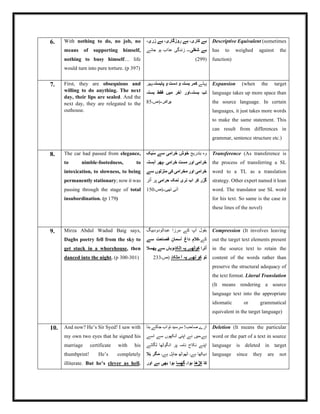
1. The car had passed from elegance,
to nimble-footedness, to
intoxication, to slowness, to being
permanently stationary; now it was
passing through the stage of total
insubordination. (p 179)
‫بتدریج‬ ‫وہ‬
‫بک‬ُ‫س‬ ‫سے‬ ‫خرامی‬ ‫خوش‬
‫آہستہ‬ ‫پھر‬، ‫خرامی‬ ‫مست‬ ‫اور‬ ‫خرامی‬
‫سے‬ ‫منزلوں‬ ‫کی‬ ‫مخرامی‬ ‫اور‬ ‫خرامی‬
‫حرامی‬ ‫نمک‬ ‫نری‬ ‫اب‬ ‫کر‬ ‫گزر‬
‫تر‬ُ‫ا‬ ‫پر‬
‫آئی‬
‫تھی۔‬
‫۔(ص۔‬
150
Transference (As transference is
the process of transferring a SL
word to a TL as a translation
strategy. Other expert named it loan
word. The translator use SL word
for his text. So, same is the case in
these lines of the novel)
2. It’s as though his trip becomes an
odyssey of assignations — not just
from country to country and city to
city, but from house to house, door
to door, and alley to alley. The
traveler crosses paths with women
every day, and he remains
unsatisfied until each woman has
crawled onto his lap and so meets her
comeuppance. (p 311)
‫گویا‬
‫دیس‬ ‫دیس‬
‫اور‬
‫شہر‬ ‫شہر‬
‫ہی‬
" ‫بلکہ‬، ‫نہیں‬
‫بخانہ‬ ‫خانہ‬
"
‫دربدر‬
،
‫کوچہ‬
‫ُو‬‫ک‬ ‫بہ‬ ‫ُو‬‫ک‬،‫کوچہ‬ ‫بہ‬
‫جنسی‬ ‫سفر‬ ‫کا‬ ‫ان‬ "
( ‫کی‬ ‫فتوحات‬
odyssey
‫جاتا‬ ‫)بن‬
‫ہر‬ ‫روز‬ ‫ہر‬ ‫مسافر‬ ‫میں‬ ‫جس‬،‫ہے‬
‫کاٹے‬ ‫راستہ‬ ‫کا‬ ‫اس‬ ‫کوجو‬ ‫عورت‬
‫تک۔‬ ‫کردار‬ )‫کیفر(بد‬
‫اپنی‬ ‫۔یعنی‬
‫لیتا‬ ‫دم‬ ‫کر‬ ‫تک۔۔پہنچا‬ ‫آغوش‬
‫ہے۔‬
‫(ص۔‬
239
Condensation (It deals with the
simplification and fragmentation
(changing the syntactic features).
The strategy will produce a more
reader-friendly text for viewers by
doing reformulation of syntactical
feature of ST. The translation,
therefore, will not be done in a
word by-word method as it in
essentially meant to convey
maximum information yet using
minimum linguistic means. As you
can see in these lines of the novel)
3. The assistant sub inspector was
dealing with two arrested for public
indecency: the one was a married
woman [shadi-shuda], and the other
was done for [shudah], meaning,
someone of no standing. The head
‫الزام‬ ‫کے‬ ‫کنار‬ ‫و‬ ‫پربوس‬ ‫عام‬ ‫شارع‬
‫کیا‬ ‫گرفتار‬ ‫کو‬ ‫عورتوں‬ ‫دو‬ ‫جن‬ ‫میں‬
‫ایس‬ ‫اے‬ ‫کو‬ ‫ایک‬ ‫سے‬ ‫میں‬ ‫ان‬،‫تھا‬ ‫گیا‬
‫آئی‬
‫شدہ‬ ‫شادی‬
‫کو‬ ‫دوسری‬ ‫اور‬
‫شدہ‬ ‫محض‬
‫رہا‬ ‫بتا‬ ‫گزری‬ ‫گئی‬ ‫یعنی‬
‫خود‬ ‫کانسٹیبل‬ ‫تھا۔ہیڈ‬
‫یافتہ‬ ‫انعام‬
Transposition (transposition is the
process where parts of the speech
change their sequence when they
are translated. It is in a sense a shift
of word class)
constable won some awards [inam-
yaftah]; he read aloud the last will
and testament ofa deceased man
[vafat-yaftah]. (p.200)
‫کسی‬،‫تھا‬
‫یافتہ‬ ‫وفات‬
‫نزعی‬ ٕ‫بیان‬ ‫کا‬
(‫تھا۔‬ ‫رہا‬ ‫سنا‬ ‫کر‬ ‫پڑھ‬
165
Borrowing (Borrowing is a
translation technique that involves
using the same word or expression
in original text in the target text.
The word or expression borrowed
is usually written in italics. This is
about reproducing an expression in
the original text as is)
4. The story goes that Qibla’s great-
great-grandfather used to recount the
following story: ‘I came in a state of
dire want. I was an embarrassment
to the human race, to my
ancestors, and to my country. I
came with my head exposed to the
heavens, my feet exposed to the
earth, my rump exposed to my
horse’s back, and my sword drawn
and held in my bare hand. I vaulted
over the stripped and crushed
Khyber Mountains and arrived
India.’ Although Qibla told the story
with great pride, it actually showed
that the old man had had only horse’s
tail to cover his ass. (p. 28-29)
‫کے‬ ‫ان‬ ‫مطابق‬ ‫کے‬ ‫قول‬ ‫کے‬ ‫قبلہ‬
‫تھے‬ ‫کرتے‬ ‫کہا‬ ‫جان‬ ‫ابا‬ ‫کے‬ ‫پردادہ‬
‫یہ‬ ‫میں‬ ‫علم‬ ‫کے‬ ‫سروسامانی‬ ‫"بے‬ ‫کہ‬
‫ننگ‬
،‫خالئق‬
‫ننگ‬
‫اسالف‬
‫ننگ‬ ،
‫وطن۔۔‬
‫ننگ‬
،‫سر‬
‫ننگ‬
‫گھوڑے‬ ،‫پیر‬
‫کی‬
‫ننگی‬
،‫پر‬ ‫پیٹھ‬
‫ننگی‬
‫ہاتھ‬ ‫تلوار‬
‫سنگالخ‬ ‫کے‬ ‫خیبر‬ ‫۔۔۔۔‬ ‫لیے‬ ‫میں‬
‫ننگے‬
‫پھالنگتا‬ ‫کو‬ ‫پہاڑوں‬
‫وارد‬ ،
‫فخریہ‬ ‫وہ‬ ‫تصویر‬ ‫جو‬ ‫۔‬ "‫ہوا‬ ‫ہندوستان‬
‫ظاہر‬ ‫یہی‬ ‫تو‬ ‫سے‬ ‫اس‬ ‫تھے‬ ‫کھینچتے‬
‫کے‬ ‫بزرگوار‬ ‫وقت‬ ‫اس‬ ‫کہ‬ ‫تھا‬ ‫ہوتا‬
‫کی‬ ‫گھوڑے‬ ‫لیے‬ ‫کے‬ ‫پوشی‬ ‫ستر‬ ‫پاس‬
‫نہ‬ ‫کچھ‬ ‫اور‬ ‫سوا‬ ‫کے‬ ‫دم‬
‫تھا۔(ص۔‬
48
‫۔‬
49
)
Expansion (when the target
language takes up more space than
the source language. In certain
languages, it just takes more words
to make the same statement. This
can result from differences in
grammar, sentence structure etc.)
Domestication (In which a
transparent, fluent style is adopted
to minimize the strangeness of the
foreign text for target language
readers)
Adaptation (The use of a
recognized equivalent between two
situations. Adaptations, also known
as “Free Translations” are when the
translator substitutes cultural
realities or scenarios for which
there is no reference in the target
language)
5. I sat silently listening to the patter-
patter of the rain of bygone years. (p
55)
‫ہم‬ ‫پر‬ ‫نازکموقعوں‬ ‫ایسے‬ ‫چنانچہ‬
‫خرگوش‬ ‫بلکہ‬ ‫گوش‬ ‫تن‬ ‫ہمہ‬ ،‫خاموش‬
‫سنتے‬ ‫ٹپ‬ ‫ٹپا‬ ‫کی‬ ‫اولتی‬ ‫بنے‬
‫رہتے۔‬
‫۔(ص۔‬
66
Reduction (the translator
encounters many words which
convey the meaning of a phrase in
the original text, so s/he deletes one
of the few word)
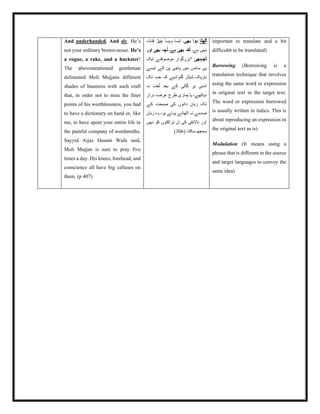
6. With nothing to do, no job, no
means of supporting himself,
nothing to busy himself… life
would turn into pure torture. (p 397)
،‫زری‬ ‫بے‬ ،‫روزگاری‬ ‫بے‬ ،‫کاری‬ ‫بے‬
‫شغلی‬ ‫بے‬
‫جائے‬ ‫ہو‬ ‫عذاب‬ ‫زندگی‬ ‫۔۔۔‬
(299)
Descriptive Equivalent (sometimes
has to weighed against the
function)
7. First, they are obsequious and
willing to do anything. The next
day, their lips are sealed. And the
next day, they are relegated to the
outhouse.
‫پہلے‬
‫پابستہ‬ ‫و‬ ‫دست‬ ‫و‬ ‫بستہ‬ ‫کمر‬
‫۔پھر‬
‫بستہ‬ ‫فقط‬ ‫میں‬ ‫آخر‬ ‫بستہ۔اور‬ ‫لب‬
‫برادر‬
‫۔‬
‫۔(ص۔‬
85
Expansion (when the target
language takes up more space than
the source language. In certain
languages, it just takes more words
to make the same statement. This
can result from differences in
grammar, sentence structure etc.)
8. The car had passed from elegance,
to nimble-footedness, to
intoxication, to slowness, to being
permanently stationary; now it was
passing through the stage of total
insubordination. (p 179)
‫بتدریج‬ ‫وہ‬
‫بک‬ُ‫س‬ ‫سے‬ ‫خرامی‬ ‫خوش‬
‫آہستہ‬ ‫پھر‬، ‫خرامی‬ ‫مست‬ ‫اور‬ ‫خرامی‬
‫سے‬ ‫منزلوں‬ ‫کی‬ ‫مخرامی‬ ‫اور‬ ‫خرامی‬
‫حرامی‬ ‫نمک‬ ‫نری‬ ‫اب‬ ‫کر‬ ‫گزر‬
‫تر‬ُ‫ا‬ ‫پر‬
‫تھی۔‬ ‫آئی‬
‫۔(ص۔‬
150
Transference (As transference is
the process of transferring a SL
word to a TL as a translation
strategy. Other expert named it loan
word. The translator use SL word
for his text. So same is the case in
these lines of the novel)
9. Mirza Abdul Wadud Baig says,
Daghs poetry fell from the sky to
get stuck in a whorehouse, then
danced into the night. (p 300-301)
‫عبدالودودبیگ‬ ‫مرزا‬ ‫کے‬ ‫آپ‬ ‫بقول‬
،‫کے‬
‫سے‬ ‫فصاحت‬ ٕ‫آسمان‬ ‫داغ‬ ٕ‫کالم‬
‫ترا‬ُ‫ا‬
‫اٹکا‬ ‫پہ‬ ‫کوٹھے‬
‫پھسال‬ ‫سے‬ ‫۔وہاں‬
‫تو‬
‫مٹکا۔‬ ‫آ‬ ‫پہ‬ ‫لھے‬ ‫کو‬
‫(ص۔‬
233
Compression (It involves leaving
out the target text elements present
in the source text to retain the
content of the words rather than
preserve the structural adequacy of
the text format. Literal Translation
(It means rendering a source
language text into the appropriate
idiomatic or grammatical
equivalent in the target language)
10. And now? He’s Sir Syed! I saw with
my own two eyes that he signed his
marriage certificate with his
thumbprint! He’s completely
illiterate. But he’s clever as hell.
‫بنا‬ ‫جاکے‬ ‫تواب‬ ‫سرسید‬ !‫صاحب‬ ‫ارے‬
‫اسے‬ ‫سے‬ ‫آنکھوں‬ ‫اپنی‬ ‫نے‬ ‫ہے۔میں‬
‫لگاتے‬ ‫انگوٹھا‬ ‫پر‬ ‫نامہ‬ ‫نکاح‬ ‫اپنے‬
‫ہے۔‬ ‫جاہل‬ ‫ٹھوٹھ‬ ‫ہے۔‬ ‫دیکھا‬
‫َال‬‫ب‬ ‫مگر‬
‫کا‬
‫کڑھا‬
‫ہوا۔‬
‫سا‬ِ‫گھ‬
‫اور‬ ‫ہے‬ ‫بھی‬ ‫ہوا‬
Deletion (It means the particular
word or the part of a text in source
language is deleted in target
language since they are not
And underhanded. And sly. He’s
not your ordinary brown-noser. He’s
a rogue, a rake, and a huckster!
The abovementioned gentleman
delineated Moli Mujjans different
shades of baseness with such craft
that, in order not to miss the finer
points of his worthlessness, you had
to have a dictionary on hand or, like
me, to have spent your entire life in
the painful company of wordsmiths.
Sayyid Aijaz Husain Wafa said,
Moli Mujjan is sure to pray five
times a day. His knees, forehead, and
conscience all have big calluses on
them. (p 407)
‫ھٹا‬ُ‫گ‬
‫بھی‬ ‫ہوا‬
‫قنات‬ ‫چپڑ‬ ‫ویسا‬ ‫ایسا‬ ‫۔‬
‫ہے۔‬ ‫نہیں‬
‫اور‬ ‫بھی‬ ‫چہ‬ُ‫ل‬ ‫ہے۔‬ ‫بھی‬ ‫قہ‬ُ‫ل‬
‫چہبھی‬ُ‫ٹ‬
‫"بزرگوار‬
‫ایک‬ ‫موصوفنے‬
‫ایسے‬ ‫کے‬ ‫پن‬ ‫پاجی‬ ‫میں‬ ‫سانس‬ ‫ہی‬
‫تک‬ ‫جب‬ ‫کہ‬ ‫گنوادیے‬ ‫شیڈز‬ ‫باریک‬
‫نہ‬ ‫غت‬ُ‫ل‬ ‫بعد‬ ‫کے‬ ‫گالی‬ ‫ہر‬ ‫آدمی‬
‫دراز‬ ‫عرصۂ‬ ‫طرح‬ ‫ہماری‬ ‫یا‬ ،‫دیکھے‬
‫کے‬ ‫صبحت‬ ‫کی‬ ‫دانوں‬ ‫زبان‬ ‫تک‬
‫زبان‬ ‫وہ‬ ،‫ہو‬ ‫ہوئے‬ ‫اٹھائے‬ ‫نہ‬ ‫صدمے‬
‫نہیں‬ ‫کو‬ ‫نزاکتوں‬ ‫ان‬ ‫کی‬ ‫ناالئقی‬ ‫اور‬
( ‫سکتا۔‬ ‫سمجھ‬
306
)
important to translate and a bit
difficult6 to be translated)
Borrowing (Borrowing is a
translation technique that involves
using the same word or expression
in original text in the target text.
The word or expression borrowed
is usually written in italics. This is
about reproducing an expression in
the original text as is)
Modulation (It means using a
phrase that is different in the source
and target languages to convey the
same idea)

Finding strategies in ST and TT

  • 1.
    “Finding different strategiesin ST and TT” Source Text: The Crow Eaters Target Text: Jungle Wala Sahib (Bapsi Sidhwa) Sr No. ST TT Strategy 1. The car had passed from elegance, to nimble-footedness, to intoxication, to slowness, to being permanently stationary; now it was passing through the stage of total insubordination. (p 179) ‫بتدریج‬ ‫وہ‬ ‫بک‬ُ‫س‬ ‫سے‬ ‫خرامی‬ ‫خوش‬ ‫آہستہ‬ ‫پھر‬، ‫خرامی‬ ‫مست‬ ‫اور‬ ‫خرامی‬ ‫سے‬ ‫منزلوں‬ ‫کی‬ ‫مخرامی‬ ‫اور‬ ‫خرامی‬ ‫حرامی‬ ‫نمک‬ ‫نری‬ ‫اب‬ ‫کر‬ ‫گزر‬ ‫تر‬ُ‫ا‬ ‫پر‬ ‫آئی‬ ‫تھی۔‬ ‫۔(ص۔‬ 150 Transference (As transference is the process of transferring a SL word to a TL as a translation strategy. Other expert named it loan word. The translator use SL word for his text. So, same is the case in these lines of the novel) 2. It’s as though his trip becomes an odyssey of assignations — not just from country to country and city to city, but from house to house, door to door, and alley to alley. The traveler crosses paths with women every day, and he remains unsatisfied until each woman has crawled onto his lap and so meets her comeuppance. (p 311) ‫گویا‬ ‫دیس‬ ‫دیس‬ ‫اور‬ ‫شہر‬ ‫شہر‬ ‫ہی‬ " ‫بلکہ‬، ‫نہیں‬ ‫بخانہ‬ ‫خانہ‬ " ‫دربدر‬ ، ‫کوچہ‬ ‫ُو‬‫ک‬ ‫بہ‬ ‫ُو‬‫ک‬،‫کوچہ‬ ‫بہ‬ ‫جنسی‬ ‫سفر‬ ‫کا‬ ‫ان‬ " ( ‫کی‬ ‫فتوحات‬ odyssey ‫جاتا‬ ‫)بن‬ ‫ہر‬ ‫روز‬ ‫ہر‬ ‫مسافر‬ ‫میں‬ ‫جس‬،‫ہے‬ ‫کاٹے‬ ‫راستہ‬ ‫کا‬ ‫اس‬ ‫کوجو‬ ‫عورت‬ ‫تک۔‬ ‫کردار‬ )‫کیفر(بد‬ ‫اپنی‬ ‫۔یعنی‬ ‫لیتا‬ ‫دم‬ ‫کر‬ ‫تک۔۔پہنچا‬ ‫آغوش‬ ‫ہے۔‬ ‫(ص۔‬ 239 Condensation (It deals with the simplification and fragmentation (changing the syntactic features). The strategy will produce a more reader-friendly text for viewers by doing reformulation of syntactical feature of ST. The translation, therefore, will not be done in a word by-word method as it in essentially meant to convey maximum information yet using minimum linguistic means. As you can see in these lines of the novel) 3. The assistant sub inspector was dealing with two arrested for public indecency: the one was a married woman [shadi-shuda], and the other was done for [shudah], meaning, someone of no standing. The head ‫الزام‬ ‫کے‬ ‫کنار‬ ‫و‬ ‫پربوس‬ ‫عام‬ ‫شارع‬ ‫کیا‬ ‫گرفتار‬ ‫کو‬ ‫عورتوں‬ ‫دو‬ ‫جن‬ ‫میں‬ ‫ایس‬ ‫اے‬ ‫کو‬ ‫ایک‬ ‫سے‬ ‫میں‬ ‫ان‬،‫تھا‬ ‫گیا‬ ‫آئی‬ ‫شدہ‬ ‫شادی‬ ‫کو‬ ‫دوسری‬ ‫اور‬ ‫شدہ‬ ‫محض‬ ‫رہا‬ ‫بتا‬ ‫گزری‬ ‫گئی‬ ‫یعنی‬ ‫خود‬ ‫کانسٹیبل‬ ‫تھا۔ہیڈ‬ ‫یافتہ‬ ‫انعام‬ Transposition (transposition is the process where parts of the speech change their sequence when they are translated. It is in a sense a shift of word class)
  • 2.
    constable won someawards [inam- yaftah]; he read aloud the last will and testament ofa deceased man [vafat-yaftah]. (p.200) ‫کسی‬،‫تھا‬ ‫یافتہ‬ ‫وفات‬ ‫نزعی‬ ٕ‫بیان‬ ‫کا‬ (‫تھا۔‬ ‫رہا‬ ‫سنا‬ ‫کر‬ ‫پڑھ‬ 165 Borrowing (Borrowing is a translation technique that involves using the same word or expression in original text in the target text. The word or expression borrowed is usually written in italics. This is about reproducing an expression in the original text as is) 4. The story goes that Qibla’s great- great-grandfather used to recount the following story: ‘I came in a state of dire want. I was an embarrassment to the human race, to my ancestors, and to my country. I came with my head exposed to the heavens, my feet exposed to the earth, my rump exposed to my horse’s back, and my sword drawn and held in my bare hand. I vaulted over the stripped and crushed Khyber Mountains and arrived India.’ Although Qibla told the story with great pride, it actually showed that the old man had had only horse’s tail to cover his ass. (p. 28-29) ‫کے‬ ‫ان‬ ‫مطابق‬ ‫کے‬ ‫قول‬ ‫کے‬ ‫قبلہ‬ ‫تھے‬ ‫کرتے‬ ‫کہا‬ ‫جان‬ ‫ابا‬ ‫کے‬ ‫پردادہ‬ ‫یہ‬ ‫میں‬ ‫علم‬ ‫کے‬ ‫سروسامانی‬ ‫"بے‬ ‫کہ‬ ‫ننگ‬ ،‫خالئق‬ ‫ننگ‬ ‫اسالف‬ ‫ننگ‬ ، ‫وطن۔۔‬ ‫ننگ‬ ،‫سر‬ ‫ننگ‬ ‫گھوڑے‬ ،‫پیر‬ ‫کی‬ ‫ننگی‬ ،‫پر‬ ‫پیٹھ‬ ‫ننگی‬ ‫ہاتھ‬ ‫تلوار‬ ‫سنگالخ‬ ‫کے‬ ‫خیبر‬ ‫۔۔۔۔‬ ‫لیے‬ ‫میں‬ ‫ننگے‬ ‫پھالنگتا‬ ‫کو‬ ‫پہاڑوں‬ ‫وارد‬ ، ‫فخریہ‬ ‫وہ‬ ‫تصویر‬ ‫جو‬ ‫۔‬ "‫ہوا‬ ‫ہندوستان‬ ‫ظاہر‬ ‫یہی‬ ‫تو‬ ‫سے‬ ‫اس‬ ‫تھے‬ ‫کھینچتے‬ ‫کے‬ ‫بزرگوار‬ ‫وقت‬ ‫اس‬ ‫کہ‬ ‫تھا‬ ‫ہوتا‬ ‫کی‬ ‫گھوڑے‬ ‫لیے‬ ‫کے‬ ‫پوشی‬ ‫ستر‬ ‫پاس‬ ‫نہ‬ ‫کچھ‬ ‫اور‬ ‫سوا‬ ‫کے‬ ‫دم‬ ‫تھا۔(ص۔‬ 48 ‫۔‬ 49 ) Expansion (when the target language takes up more space than the source language. In certain languages, it just takes more words to make the same statement. This can result from differences in grammar, sentence structure etc.) Domestication (In which a transparent, fluent style is adopted to minimize the strangeness of the foreign text for target language readers) Adaptation (The use of a recognized equivalent between two situations. Adaptations, also known as “Free Translations” are when the translator substitutes cultural realities or scenarios for which there is no reference in the target language) 5. I sat silently listening to the patter- patter of the rain of bygone years. (p 55) ‫ہم‬ ‫پر‬ ‫نازکموقعوں‬ ‫ایسے‬ ‫چنانچہ‬ ‫خرگوش‬ ‫بلکہ‬ ‫گوش‬ ‫تن‬ ‫ہمہ‬ ،‫خاموش‬ ‫سنتے‬ ‫ٹپ‬ ‫ٹپا‬ ‫کی‬ ‫اولتی‬ ‫بنے‬ ‫رہتے۔‬ ‫۔(ص۔‬ 66 Reduction (the translator encounters many words which convey the meaning of a phrase in the original text, so s/he deletes one of the few word)
  • 3.
    6. With nothingto do, no job, no means of supporting himself, nothing to busy himself… life would turn into pure torture. (p 397) ،‫زری‬ ‫بے‬ ،‫روزگاری‬ ‫بے‬ ،‫کاری‬ ‫بے‬ ‫شغلی‬ ‫بے‬ ‫جائے‬ ‫ہو‬ ‫عذاب‬ ‫زندگی‬ ‫۔۔۔‬ (299) Descriptive Equivalent (sometimes has to weighed against the function) 7. First, they are obsequious and willing to do anything. The next day, their lips are sealed. And the next day, they are relegated to the outhouse. ‫پہلے‬ ‫پابستہ‬ ‫و‬ ‫دست‬ ‫و‬ ‫بستہ‬ ‫کمر‬ ‫۔پھر‬ ‫بستہ‬ ‫فقط‬ ‫میں‬ ‫آخر‬ ‫بستہ۔اور‬ ‫لب‬ ‫برادر‬ ‫۔‬ ‫۔(ص۔‬ 85 Expansion (when the target language takes up more space than the source language. In certain languages, it just takes more words to make the same statement. This can result from differences in grammar, sentence structure etc.) 8. The car had passed from elegance, to nimble-footedness, to intoxication, to slowness, to being permanently stationary; now it was passing through the stage of total insubordination. (p 179) ‫بتدریج‬ ‫وہ‬ ‫بک‬ُ‫س‬ ‫سے‬ ‫خرامی‬ ‫خوش‬ ‫آہستہ‬ ‫پھر‬، ‫خرامی‬ ‫مست‬ ‫اور‬ ‫خرامی‬ ‫سے‬ ‫منزلوں‬ ‫کی‬ ‫مخرامی‬ ‫اور‬ ‫خرامی‬ ‫حرامی‬ ‫نمک‬ ‫نری‬ ‫اب‬ ‫کر‬ ‫گزر‬ ‫تر‬ُ‫ا‬ ‫پر‬ ‫تھی۔‬ ‫آئی‬ ‫۔(ص۔‬ 150 Transference (As transference is the process of transferring a SL word to a TL as a translation strategy. Other expert named it loan word. The translator use SL word for his text. So same is the case in these lines of the novel) 9. Mirza Abdul Wadud Baig says, Daghs poetry fell from the sky to get stuck in a whorehouse, then danced into the night. (p 300-301) ‫عبدالودودبیگ‬ ‫مرزا‬ ‫کے‬ ‫آپ‬ ‫بقول‬ ،‫کے‬ ‫سے‬ ‫فصاحت‬ ٕ‫آسمان‬ ‫داغ‬ ٕ‫کالم‬ ‫ترا‬ُ‫ا‬ ‫اٹکا‬ ‫پہ‬ ‫کوٹھے‬ ‫پھسال‬ ‫سے‬ ‫۔وہاں‬ ‫تو‬ ‫مٹکا۔‬ ‫آ‬ ‫پہ‬ ‫لھے‬ ‫کو‬ ‫(ص۔‬ 233 Compression (It involves leaving out the target text elements present in the source text to retain the content of the words rather than preserve the structural adequacy of the text format. Literal Translation (It means rendering a source language text into the appropriate idiomatic or grammatical equivalent in the target language) 10. And now? He’s Sir Syed! I saw with my own two eyes that he signed his marriage certificate with his thumbprint! He’s completely illiterate. But he’s clever as hell. ‫بنا‬ ‫جاکے‬ ‫تواب‬ ‫سرسید‬ !‫صاحب‬ ‫ارے‬ ‫اسے‬ ‫سے‬ ‫آنکھوں‬ ‫اپنی‬ ‫نے‬ ‫ہے۔میں‬ ‫لگاتے‬ ‫انگوٹھا‬ ‫پر‬ ‫نامہ‬ ‫نکاح‬ ‫اپنے‬ ‫ہے۔‬ ‫جاہل‬ ‫ٹھوٹھ‬ ‫ہے۔‬ ‫دیکھا‬ ‫َال‬‫ب‬ ‫مگر‬ ‫کا‬ ‫کڑھا‬ ‫ہوا۔‬ ‫سا‬ِ‫گھ‬ ‫اور‬ ‫ہے‬ ‫بھی‬ ‫ہوا‬ Deletion (It means the particular word or the part of a text in source language is deleted in target language since they are not
  • 4.
    And underhanded. Andsly. He’s not your ordinary brown-noser. He’s a rogue, a rake, and a huckster! The abovementioned gentleman delineated Moli Mujjans different shades of baseness with such craft that, in order not to miss the finer points of his worthlessness, you had to have a dictionary on hand or, like me, to have spent your entire life in the painful company of wordsmiths. Sayyid Aijaz Husain Wafa said, Moli Mujjan is sure to pray five times a day. His knees, forehead, and conscience all have big calluses on them. (p 407) ‫ھٹا‬ُ‫گ‬ ‫بھی‬ ‫ہوا‬ ‫قنات‬ ‫چپڑ‬ ‫ویسا‬ ‫ایسا‬ ‫۔‬ ‫ہے۔‬ ‫نہیں‬ ‫اور‬ ‫بھی‬ ‫چہ‬ُ‫ل‬ ‫ہے۔‬ ‫بھی‬ ‫قہ‬ُ‫ل‬ ‫چہبھی‬ُ‫ٹ‬ ‫"بزرگوار‬ ‫ایک‬ ‫موصوفنے‬ ‫ایسے‬ ‫کے‬ ‫پن‬ ‫پاجی‬ ‫میں‬ ‫سانس‬ ‫ہی‬ ‫تک‬ ‫جب‬ ‫کہ‬ ‫گنوادیے‬ ‫شیڈز‬ ‫باریک‬ ‫نہ‬ ‫غت‬ُ‫ل‬ ‫بعد‬ ‫کے‬ ‫گالی‬ ‫ہر‬ ‫آدمی‬ ‫دراز‬ ‫عرصۂ‬ ‫طرح‬ ‫ہماری‬ ‫یا‬ ،‫دیکھے‬ ‫کے‬ ‫صبحت‬ ‫کی‬ ‫دانوں‬ ‫زبان‬ ‫تک‬ ‫زبان‬ ‫وہ‬ ،‫ہو‬ ‫ہوئے‬ ‫اٹھائے‬ ‫نہ‬ ‫صدمے‬ ‫نہیں‬ ‫کو‬ ‫نزاکتوں‬ ‫ان‬ ‫کی‬ ‫ناالئقی‬ ‫اور‬ ( ‫سکتا۔‬ ‫سمجھ‬ 306 ) important to translate and a bit difficult6 to be translated) Borrowing (Borrowing is a translation technique that involves using the same word or expression in original text in the target text. The word or expression borrowed is usually written in italics. This is about reproducing an expression in the original text as is) Modulation (It means using a phrase that is different in the source and target languages to convey the same idea)