Downloaded 15 times


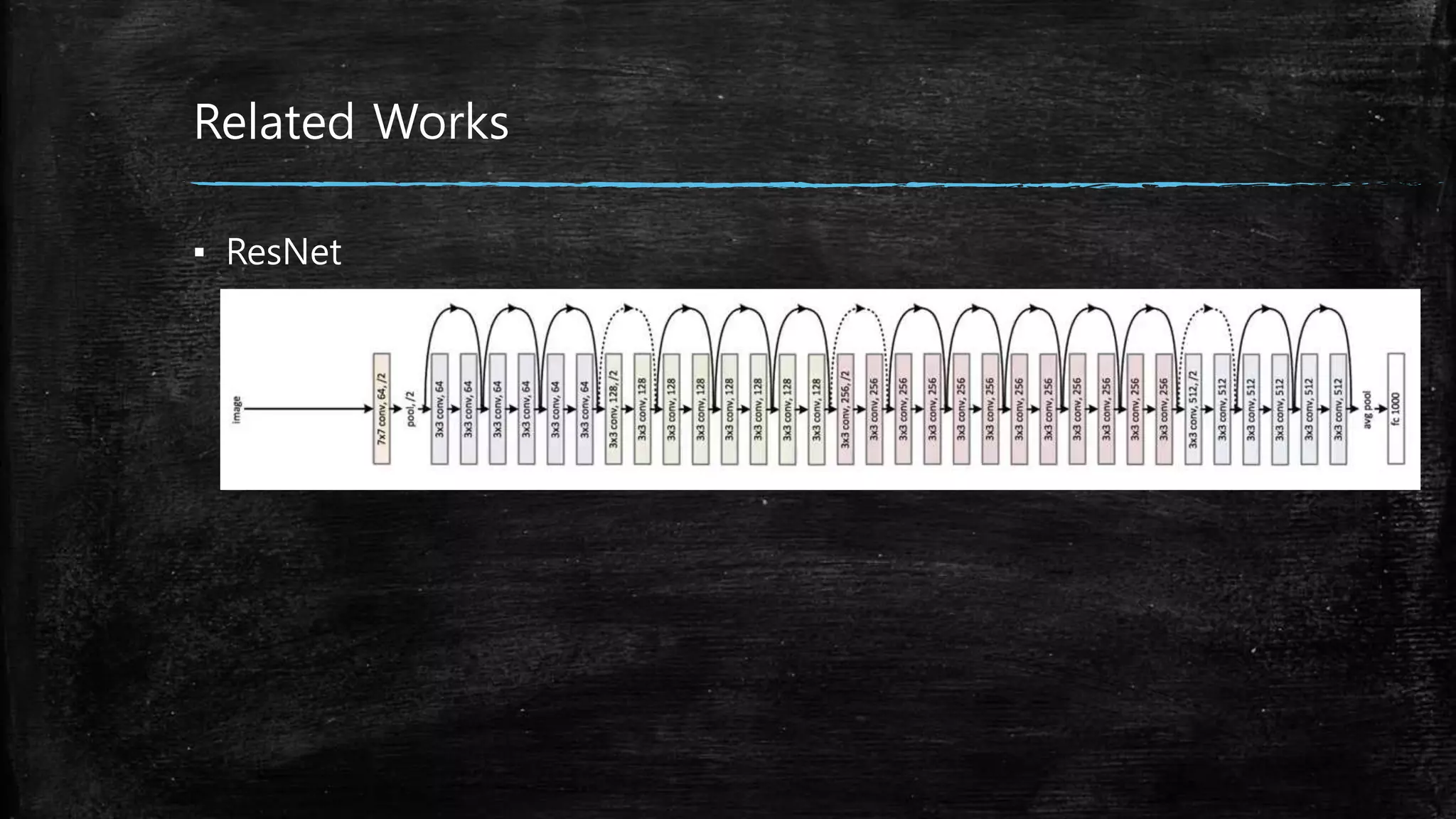

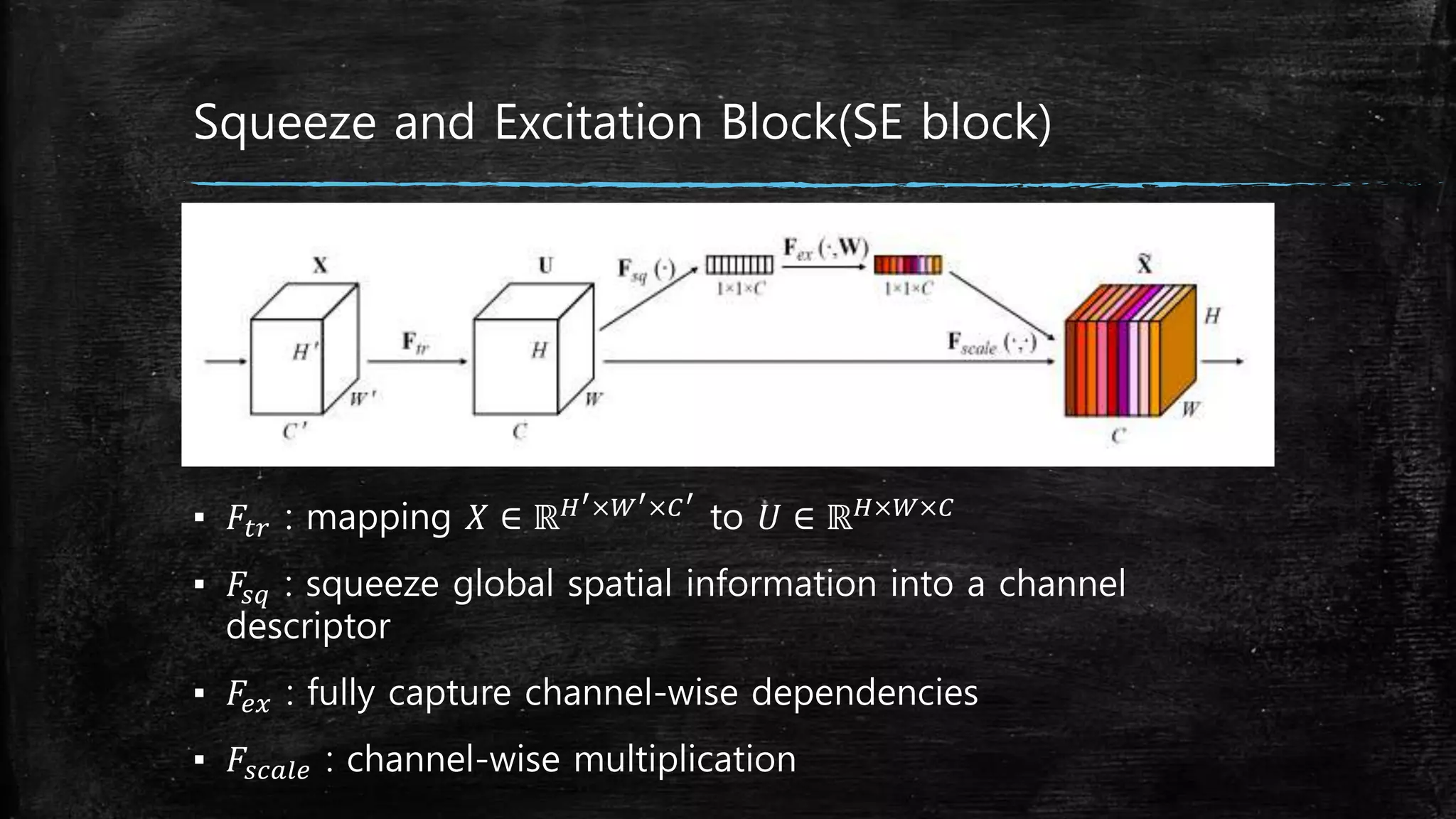


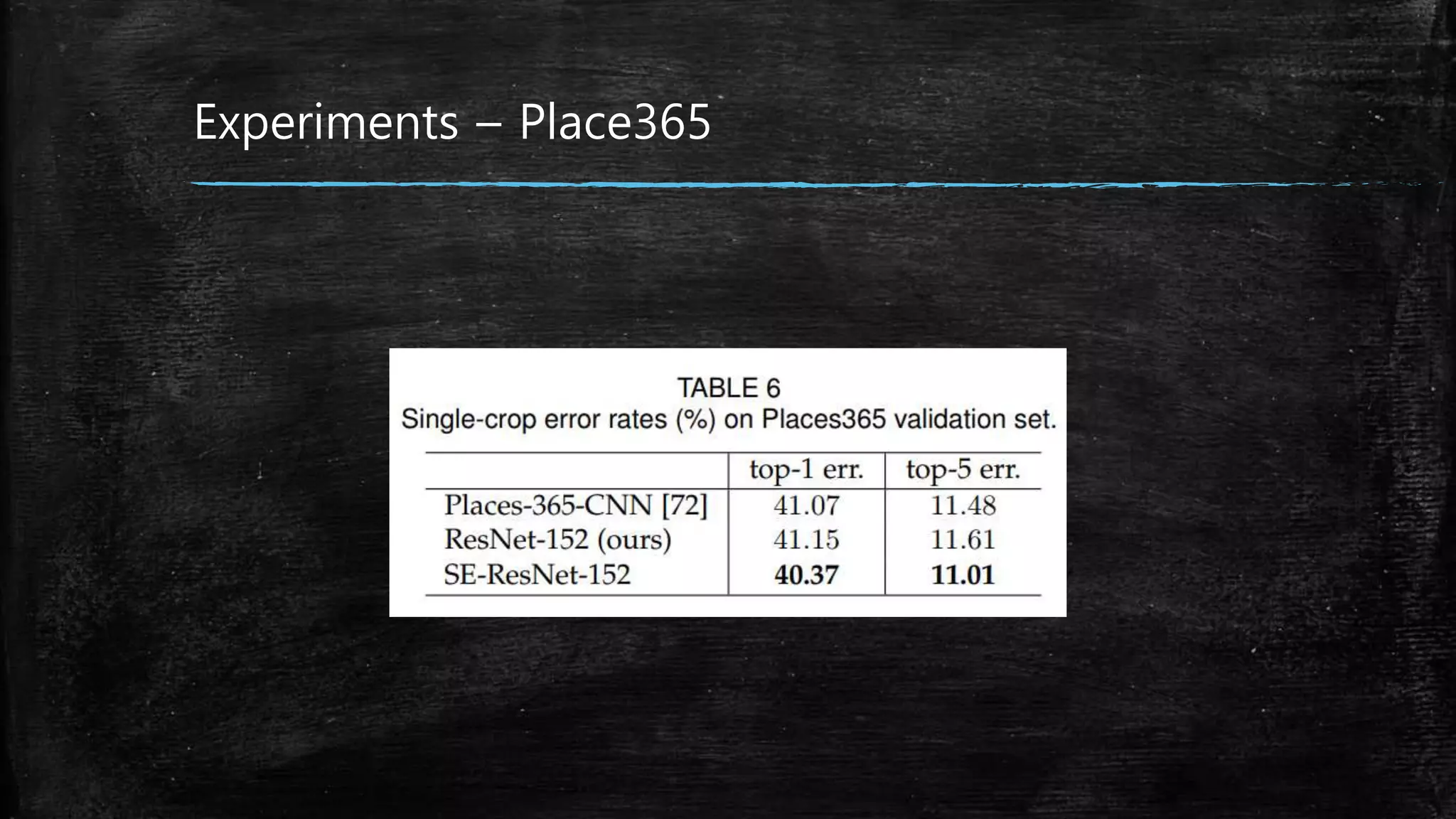

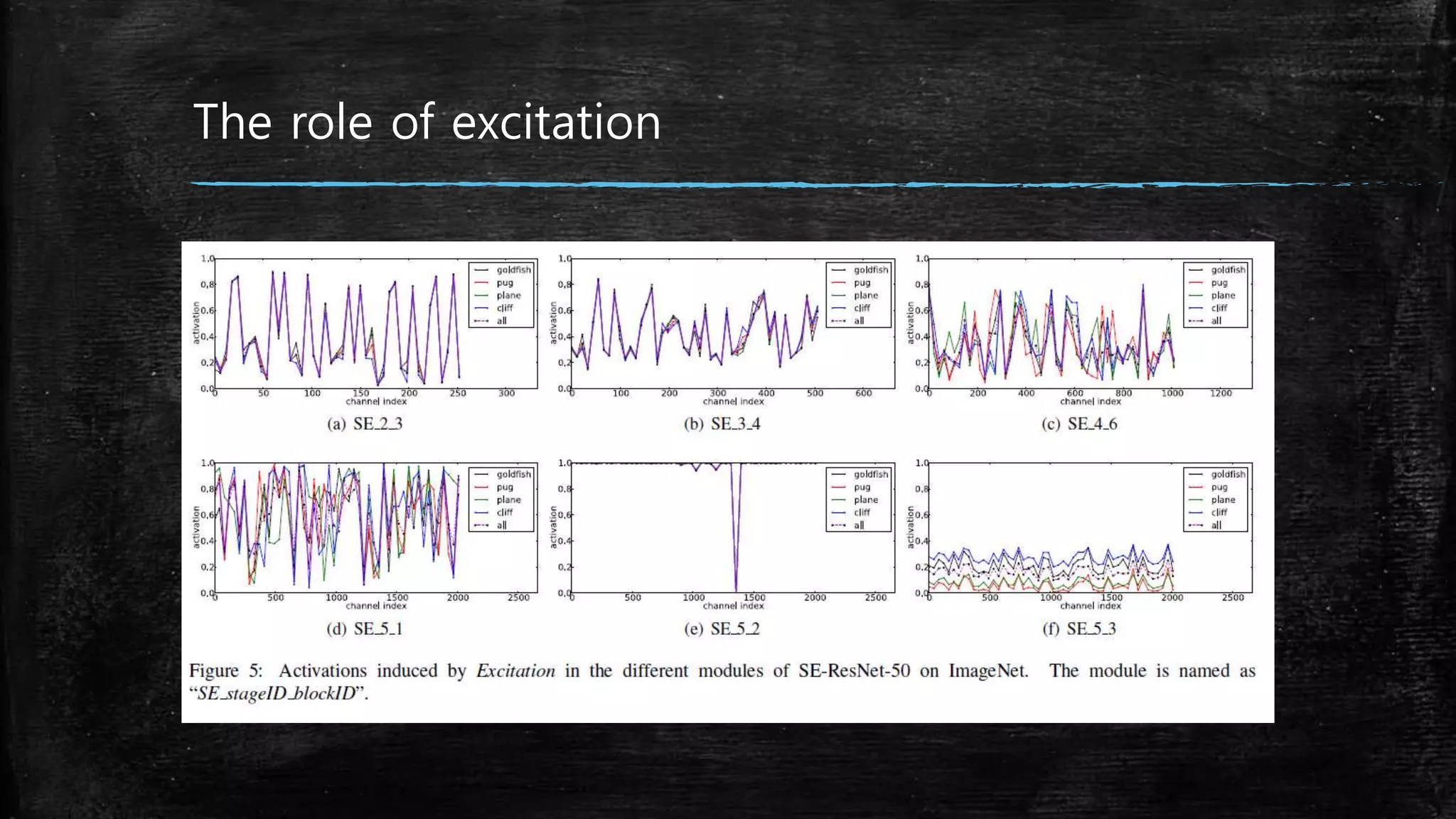

This document discusses squeeze and excitation networks which aim to improve convolutional neural network representations by modeling interdependencies between channels. It introduces the squeeze and excitation block which squeezes global spatial information into channel descriptors using global average pooling, then captures channel dependencies through a gating mechanism to emphasize informative features. The block can be inserted into networks like VGGNet, ResNet, and Inception to boost performance on tasks like ImageNet classification, scene recognition, and object detection.


![[2021 HAI Kaggle Study] Week2 project1 cv](https://cdn.slidesharecdn.com/ss_thumbnails/week2project1cv-210426171057-thumbnail.jpg?width=640&height=640&fit=bounds)
![[2021 HAI Kaggle Study] Week1 kaggle basic](https://cdn.slidesharecdn.com/ss_thumbnails/week1kagglebasic-210318015809-thumbnail.jpg?width=640&height=640&fit=bounds)

![[2021 HAI Kaggle Study] Week5 project2 nlp](https://cdn.slidesharecdn.com/ss_thumbnails/week2project2nlp-210512122828-thumbnail.jpg?width=640&height=640&fit=bounds)


