SQL Server Back to
Basics: Sicurezza
Gianluca Hotz
Chi sono?
• Gianluca Hotz | @glhotz | ghotz@ugiss.org
• Consulente indipendente
• 20+ anni su SQL Server (dalla 4.21 nel 1996)
• Modellazione e sviluppo database, dimensionamento e amministrazione
database server, aggiornamenti e migrazioni, performance tuning
• Community
• 20+ anni Microsoft MVP SQL Server/Data Platform (dal 1998)
• VMware Experts SQL Server
• Fondatore e presidente UGISS (PASS Chapter)
• Co-organizzatore DAMAG Meetup Community
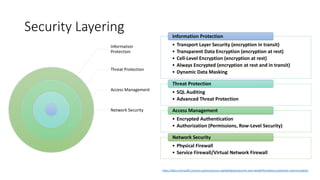
Security Layering
Information
Protection
Threat Protection
Access Management
Network Security
• Transport Layer Security (encryption in transit)
• Transparent Data Encryption (encryption at rest)
• Cell-Level Encryption (encryption at rest)
• Always Encrypted (encryption at rest and in transit)
• Dynamic Data Masking
Information Protection
• SQL Auditing
• Advanced Threat Protection
Threat Protection
• Encrypted Authentication
• Authorization (Permissions, Row-Level Security)
Access Management
• Physical Firewall
• Service Firewall/Virtual Network Firewall
Network Security
https://docs.microsoft.com/en-us/azure/azure-sql/database/security-overview#information-protection-and-encryption
Livello di autenticazione
• Server login
• Controllo degli accessi e permessi a livello di istanza
• Database User
• Controllo degli accessi e permessi a livello di singolo database
• Ambiti riconducibili a livelli server e/o database
• SQL Server Replication, SQL Server Agent Jobs
• Impersonificazione e funzionalità specifiche
• Database Mirroring, Availability Groups
• «Extensibility Framework»
• Identità per Linked Server, Polybase
• «Bulk Insert» da «Azure Blob Storage»
Modalità di autenticazione
• Nativa SQL Server
• Utente e hash password mantenuti in SQL Server
• Integrata con Active Directory
• Utilizza protocollo NTLM o Kerberos
• Supporto Azure Active Directory
• Supporto Active Directory Universal Authentication
• Multi-factor Authentication (es. via telefono)
• Supportata solo con SSMS a partire dalla versione 17+
Autorizzazioni
• Permessi granulari
• GRANT cosa può fare ON su che oggetto TO chi
• Ereditarietà gerarchia di oggetti
• Assegnazione (GRANT), negazione (DENY), revocare (REVOKE)
• Row Level Security
• Ruoli a livello di server e database
• Es. sysadmin, dbcreator, db_datareader, db_datawriter
• Specifici per alcune funzionalità (database msdb)
• Principio guida: minor privilegio!
• Possibile elevare temporaneamente
• Impersonation
• Stored Procedure (in generale moduli T-SQL firmati)
Demo
• Autenticazione
• Autorizzazioni e permessi
«Row-Level Security»
Due
L’utente (es. l’infermiera) seleziona dalla tabella dei pazienti.
Tre
Security Policy riscrive in maniera trasparente la query applicando il predicato.
Database Policy Manager
CREATE FUNCTION dbo.fn_securitypredicate(@wing int)
RETURNS TABLE WITH SCHEMABINDING AS
return SELECT 1 as [fn_securitypredicate_result] FROM
StaffDuties d INNER JOIN Employees e
ON (d.EmpId = e.EmpId)
WHERE e.UserSID = SUSER_SID() AND @wing = d.Wing;
CREATE SECURITY POLICY dbo.SecPol
ADD FILTER PREDICATE dbo.fn_securitypredicate(Wing) ON Patients
WITH (STATE = ON)
Filter
Predicate:
INNER
JOIN…
Security
Policy
Application
Patients
Uno
Il gestore delle Policy crea un predicato per filtrare e una Policy di sicurezza in T-SQL, vincolando il
predicato alla tabelle dei pazienti.
Nurse
SELECT * FROM Patients
SEMIJOIN APPLY dbo.fn_securitypredicate(patients.Wing);
SELECT Patients.* FROM Patients,
StaffDuties d INNER JOIN Employees e ON (d.EmpId = e.EmpId)
WHERE e.UserSID = SUSER_SID() AND Patients.wing = d.Wing;
DEMO
• Row Level Security
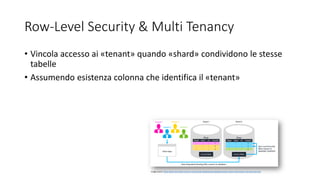
Row-Level Security & Multi Tenancy
• Vincola accesso ai «tenant» quando «shard» condividono le stesse
tabelle
• Assumendo esistenza colonna che identifica il «tenant»
Image source: https://docs.microsoft.com/en-us/azure/sql-database/sql-database-elastic-tools-multi-tenant-row-level-security
Q&A
ghotz@ugiss.org
Q&A

SQL Server Back to Basics: Sicurezza

  • 1.
    SQL Server Backto Basics: Sicurezza Gianluca Hotz
  • 2.
    Chi sono? • GianlucaHotz | @glhotz | ghotz@ugiss.org • Consulente indipendente • 20+ anni su SQL Server (dalla 4.21 nel 1996) • Modellazione e sviluppo database, dimensionamento e amministrazione database server, aggiornamenti e migrazioni, performance tuning • Community • 20+ anni Microsoft MVP SQL Server/Data Platform (dal 1998) • VMware Experts SQL Server • Fondatore e presidente UGISS (PASS Chapter) • Co-organizzatore DAMAG Meetup Community
  • 3.
    Security Layering Information Protection Threat Protection AccessManagement Network Security • Transport Layer Security (encryption in transit) • Transparent Data Encryption (encryption at rest) • Cell-Level Encryption (encryption at rest) • Always Encrypted (encryption at rest and in transit) • Dynamic Data Masking Information Protection • SQL Auditing • Advanced Threat Protection Threat Protection • Encrypted Authentication • Authorization (Permissions, Row-Level Security) Access Management • Physical Firewall • Service Firewall/Virtual Network Firewall Network Security https://docs.microsoft.com/en-us/azure/azure-sql/database/security-overview#information-protection-and-encryption
  • 4.
    Livello di autenticazione •Server login • Controllo degli accessi e permessi a livello di istanza • Database User • Controllo degli accessi e permessi a livello di singolo database • Ambiti riconducibili a livelli server e/o database • SQL Server Replication, SQL Server Agent Jobs • Impersonificazione e funzionalità specifiche • Database Mirroring, Availability Groups • «Extensibility Framework» • Identità per Linked Server, Polybase • «Bulk Insert» da «Azure Blob Storage»
  • 5.
    Modalità di autenticazione •Nativa SQL Server • Utente e hash password mantenuti in SQL Server • Integrata con Active Directory • Utilizza protocollo NTLM o Kerberos • Supporto Azure Active Directory • Supporto Active Directory Universal Authentication • Multi-factor Authentication (es. via telefono) • Supportata solo con SSMS a partire dalla versione 17+
  • 6.
    Autorizzazioni • Permessi granulari •GRANT cosa può fare ON su che oggetto TO chi • Ereditarietà gerarchia di oggetti • Assegnazione (GRANT), negazione (DENY), revocare (REVOKE) • Row Level Security • Ruoli a livello di server e database • Es. sysadmin, dbcreator, db_datareader, db_datawriter • Specifici per alcune funzionalità (database msdb) • Principio guida: minor privilegio! • Possibile elevare temporaneamente • Impersonation • Stored Procedure (in generale moduli T-SQL firmati)
  • 7.
  • 8.
    «Row-Level Security» Due L’utente (es.l’infermiera) seleziona dalla tabella dei pazienti. Tre Security Policy riscrive in maniera trasparente la query applicando il predicato. Database Policy Manager CREATE FUNCTION dbo.fn_securitypredicate(@wing int) RETURNS TABLE WITH SCHEMABINDING AS return SELECT 1 as [fn_securitypredicate_result] FROM StaffDuties d INNER JOIN Employees e ON (d.EmpId = e.EmpId) WHERE e.UserSID = SUSER_SID() AND @wing = d.Wing; CREATE SECURITY POLICY dbo.SecPol ADD FILTER PREDICATE dbo.fn_securitypredicate(Wing) ON Patients WITH (STATE = ON) Filter Predicate: INNER JOIN… Security Policy Application Patients Uno Il gestore delle Policy crea un predicato per filtrare e una Policy di sicurezza in T-SQL, vincolando il predicato alla tabelle dei pazienti. Nurse SELECT * FROM Patients SELECT * FROM Patients SEMIJOIN APPLY dbo.fn_securitypredicate(patients.Wing); SELECT Patients.* FROM Patients, StaffDuties d INNER JOIN Employees e ON (d.EmpId = e.EmpId) WHERE e.UserSID = SUSER_SID() AND Patients.wing = d.Wing;
  • 9.
  • 10.
    Row-Level Security &Multi Tenancy • Vincola accesso ai «tenant» quando «shard» condividono le stesse tabelle • Assumendo esistenza colonna che identifica il «tenant» Image source: https://docs.microsoft.com/en-us/azure/sql-database/sql-database-elastic-tools-multi-tenant-row-level-security
  • 11.
  • 12.