Spy/Thriller Genre audience profile
By Matt Gallagher
Class, age, Gender, ethnicity
• Class: Middle class
• Age: Common age range is 15-50 as most big spy films are certified as 15 (suitable only for
viewers over the age of 15.) However, within the spy genre films have been release to target
children and adolescents in earlier years. E.g. Spy Kids, Alex Rider series.
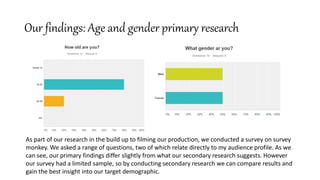
• Gender: Our primary research would suggest that there are a 50/50 split of male and female
viewers, however extensive secondary research identifies that the males are more likely to view
films from the spy genre.
• Ethnicity: Spy films are often aimed at all ethnicities. However they can vary depending on the
region in which the film is set. i.e. James Bond targeted for British audience whereas Mission
Impossible potentially aimed more at American audiences. Ethnicity could also change due to the
certified age of a film, as a higher age could mean discrimination and racism are featured in the
film.
Uses and gratifications theory
• The uses and gratifications theory is the idea that the audience watch a certain media, in order to
be satisfied by what they see.
• Uses and gratifications is especially closely linked to the spy/thriller genre. The reason spy films
are produced, is to provide the audience with an overall thrilling, adrenaline fuelled experience.
Ultimately this is what the demographic require from this genre and film in order to be satisfied.
The codes and conventions of the spy genre help to achieve the satisfaction of the audience,
examples of spy/thriller genre conventions are;
 Male protagonist- masculine representation
 Female character who needs saving by male protagonist- male gaze theory/common female representation
 Protagonist is always at a disadvantage at the start, antagonist appears to in control
 Suspense, action, violence, cars are all elements of many current and modern spy/thriller films
Two step flow theory
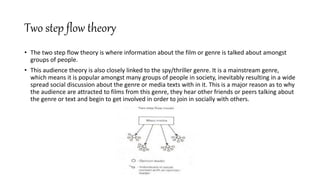
• The two step flow theory is where information about the film or genre is talked about amongst
groups of people.
• This audience theory is also closely linked to the spy/thriller genre. It is a mainstream genre,
which means it is popular amongst many groups of people in society, inevitably resulting in a wide
spread social discussion about the genre or media texts with in it. This is a major reason as to why
the audience are attracted to films from this genre, they hear other friends or peers talking about
the genre or text and begin to get involved in order to join in socially with others.
Our findings: Age and gender primary research
As part of our research in the build up to filming our production, we conducted a survey on survey
monkey. We asked a range of questions, two of which relate directly to my audience profile. As we
can see, our primary findings differ slightly from what our secondary research suggests. However
our survey had a limited sample, so by conducting secondary research we can compare results and
gain the best insight into our target demographic.

Spy genre audience profile

  • 1.
    Spy/Thriller Genre audienceprofile By Matt Gallagher
  • 2.
    Class, age, Gender,ethnicity • Class: Middle class • Age: Common age range is 15-50 as most big spy films are certified as 15 (suitable only for viewers over the age of 15.) However, within the spy genre films have been release to target children and adolescents in earlier years. E.g. Spy Kids, Alex Rider series. • Gender: Our primary research would suggest that there are a 50/50 split of male and female viewers, however extensive secondary research identifies that the males are more likely to view films from the spy genre. • Ethnicity: Spy films are often aimed at all ethnicities. However they can vary depending on the region in which the film is set. i.e. James Bond targeted for British audience whereas Mission Impossible potentially aimed more at American audiences. Ethnicity could also change due to the certified age of a film, as a higher age could mean discrimination and racism are featured in the film.
  • 3.
    Uses and gratificationstheory • The uses and gratifications theory is the idea that the audience watch a certain media, in order to be satisfied by what they see. • Uses and gratifications is especially closely linked to the spy/thriller genre. The reason spy films are produced, is to provide the audience with an overall thrilling, adrenaline fuelled experience. Ultimately this is what the demographic require from this genre and film in order to be satisfied. The codes and conventions of the spy genre help to achieve the satisfaction of the audience, examples of spy/thriller genre conventions are;  Male protagonist- masculine representation  Female character who needs saving by male protagonist- male gaze theory/common female representation  Protagonist is always at a disadvantage at the start, antagonist appears to in control  Suspense, action, violence, cars are all elements of many current and modern spy/thriller films
  • 4.
    Two step flowtheory • The two step flow theory is where information about the film or genre is talked about amongst groups of people. • This audience theory is also closely linked to the spy/thriller genre. It is a mainstream genre, which means it is popular amongst many groups of people in society, inevitably resulting in a wide spread social discussion about the genre or media texts with in it. This is a major reason as to why the audience are attracted to films from this genre, they hear other friends or peers talking about the genre or text and begin to get involved in order to join in socially with others.
  • 5.
    Our findings: Ageand gender primary research As part of our research in the build up to filming our production, we conducted a survey on survey monkey. We asked a range of questions, two of which relate directly to my audience profile. As we can see, our primary findings differ slightly from what our secondary research suggests. However our survey had a limited sample, so by conducting secondary research we can compare results and gain the best insight into our target demographic.