Downloaded 334 times


![Operational Intelligence Across the Enterprise
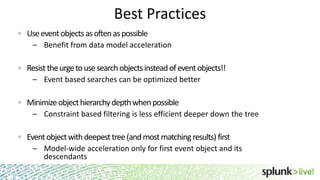
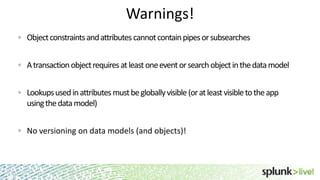
[10/11/12
18:57:04
000000b0
UTC]
Raw
Data
IT professional
Create and share data models
Accelerate data models and custom
searches with the analytics store
Create reports with pivot
Analytics
Store
Developer
Leverage data models to
abstract data
Leverage pivot in custom apps
Data
Model
Pivot
Analyst
Create reports using pivot based on
data models created by IT](https://image.slidesharecdn.com/splunklivepowerpointdatamodels101-140306165151-phpapp01/85/SplunkLive-Data-Models-101-5-320.jpg)


![Hurdles
index=main source=*/banner_access* uri_path=/js/*/*/login/* guid=* useragent!=*KTXN* useragent!=*GomezAgent* clientip!=206.80.3.67
clientip!=198.144.207.62 clientip!=97.65.63.66 clientip!=175.45.37.78 clientip!=209.119.210.194 clientip!=212.36.37.138 clientip!=204.156.84.0/24
clientip!=216.221.226.0/24 clientip!=207.87.200.162 | rex field=uri_path "/js/(?<t>[^/]*)/(?<v>[^/]*)/login/(?<l>[^/]*)” | eval license = case(l LIKE "prod%" AND
t="pro", "enterprise", l LIKE "trial%" AND t="pro", "trial", t="free", "free”) | rex field=v "^(?<vers>d.d)” | bin span=1d _time as day | stats values(vers) as vers
min(day) as min_day min(eval(if(vers=="5.0", _time, null()))) as min_day_50 dc(day) as days values(license) as license by guid | eval type =
if(match(vers,"4.*"), "upgrade", "not upgrade") + "/" + if(days > 1, "repeat", "not repeat")| search license=enterprise | eval _time = min_day_50| timechart
count by type| streamstats sum(*) as *
•
Simple searches easy… Multi-stage munging/reporting is hard!
•
Need to understand data’s structure to construct search
•
Non-technical users may not have data source domain knowledge
•
Splunk admins do not have end-user search context](https://image.slidesharecdn.com/splunklivepowerpointdatamodels101-140306165151-phpapp01/85/SplunkLive-Data-Models-101-14-320.jpg)


![Using the Splunk Search Language
Pivot Search String
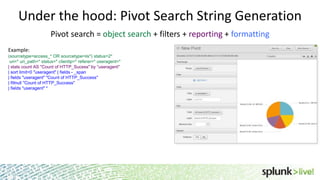
| pivot <modelname> <objectID> [statsfns, rowsplit, colsplit, filters, …]
Example:
| pivot WebIntelligence HTTP_Request count(HTTP_Request) AS "Count of HTTP_Request" SPLITROW status
AS "status" SORT 0 status
Behind the scenes:
sourcetype=access_* OR sourcetype=iis* uri=* uri_path=* status=* clientip=* referer=* useragent=*
| stats count AS "Count of HTTP_Request" by "status"
| sort limit=0 "status" | fields - _span
| fields "status", "Count of HTTP_Request"
| fillnull "Count of HTTP_Request"
| fields "status" *](https://image.slidesharecdn.com/splunklivepowerpointdatamodels101-140306165151-phpapp01/85/SplunkLive-Data-Models-101-38-320.jpg)
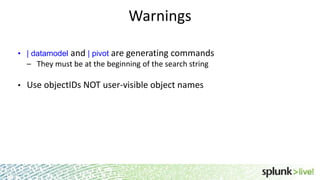
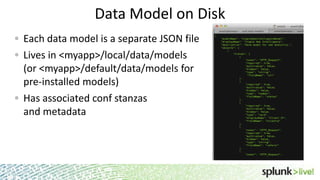
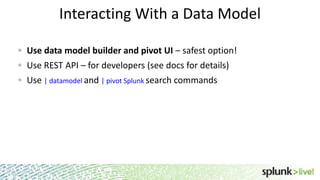
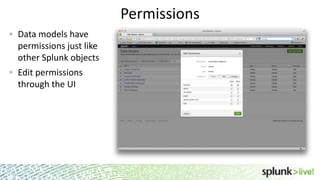
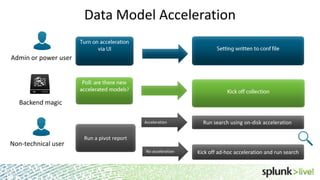
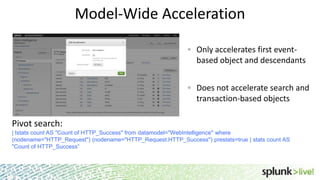
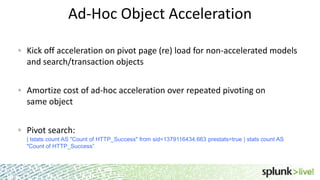


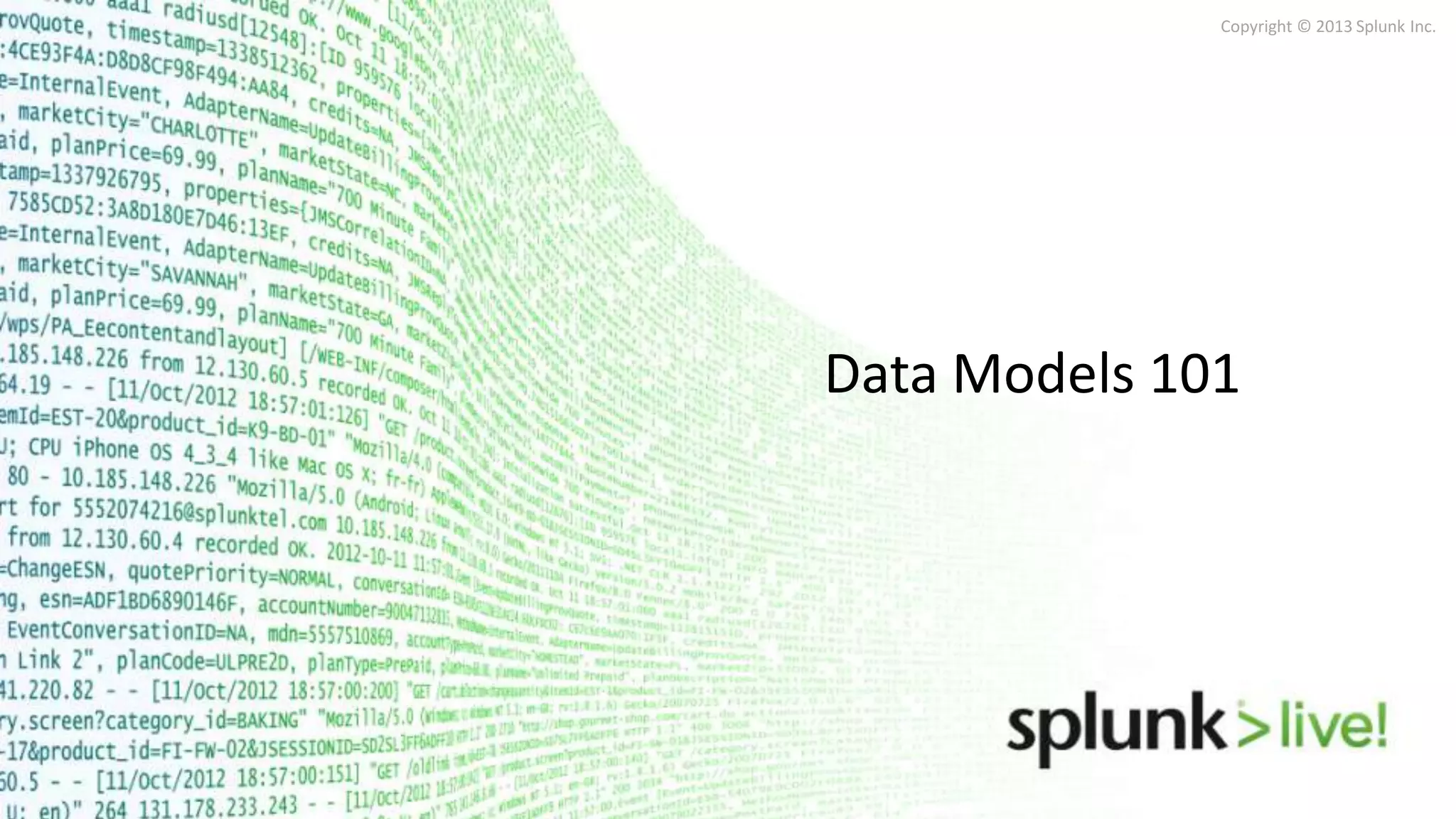
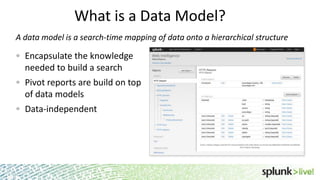
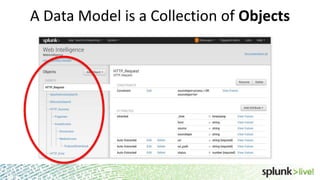
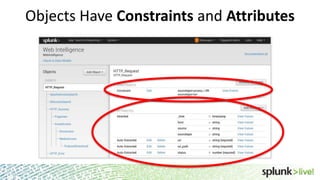
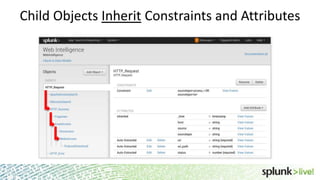
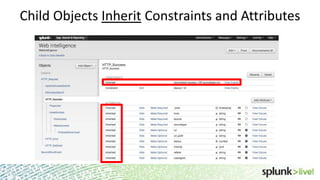
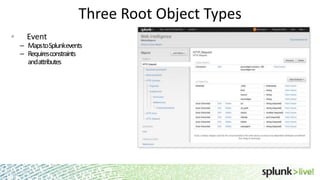
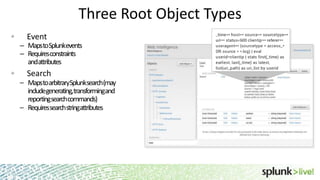
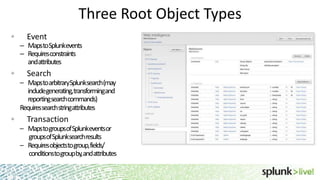
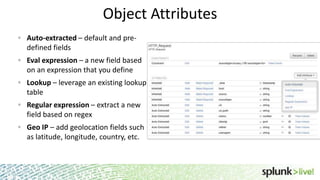
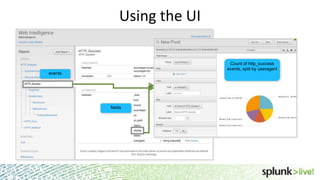
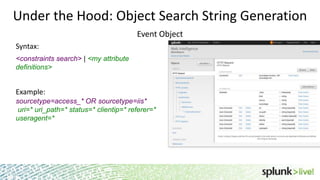
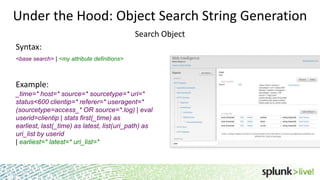
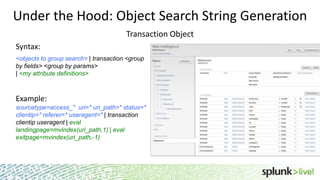
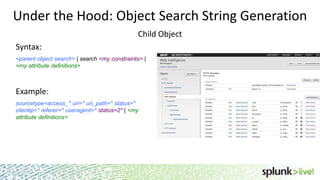
This document provides an overview of data models in Splunk: - A data model maps raw machine data onto a hierarchical structure to encapsulate domain knowledge and enable non-technical users to interact with data via pivot reports. - There are three root object types: events, searches, and transactions. Objects have constraints, attributes, and inherit properties from parent objects. - Data models are built using the UI or REST API. Pivot reports leverage data models by generating optimized search strings from the model. - Data model acceleration improves performance of pivot reports by pre-computing searches on disk. Only the first event object and descendants are accelerated by default.


