Spiral Model
 The exact number of loops of the spiral is not fixed
and can vary from project to project.
 Each loop of the spiral is called a phase of the
software process.
 The exact number of phases through which the
product is developed can be varied by the project
manager depending upon the project risks.
 A prominent feature of the spiral model is handling
unforeseen risks that can show up much after the
project has started.
Risk handling in spiral model
 A risk is essentially any adverse circumstance that
might hamper the successful completion of a software
project.
 As an example, consider a project for which a risk can
be that data access from a remote database might be
too slow to be acceptable by the customer.
 Caching scheme / Faster communication scheme.
1 Phases of the Spiral Model
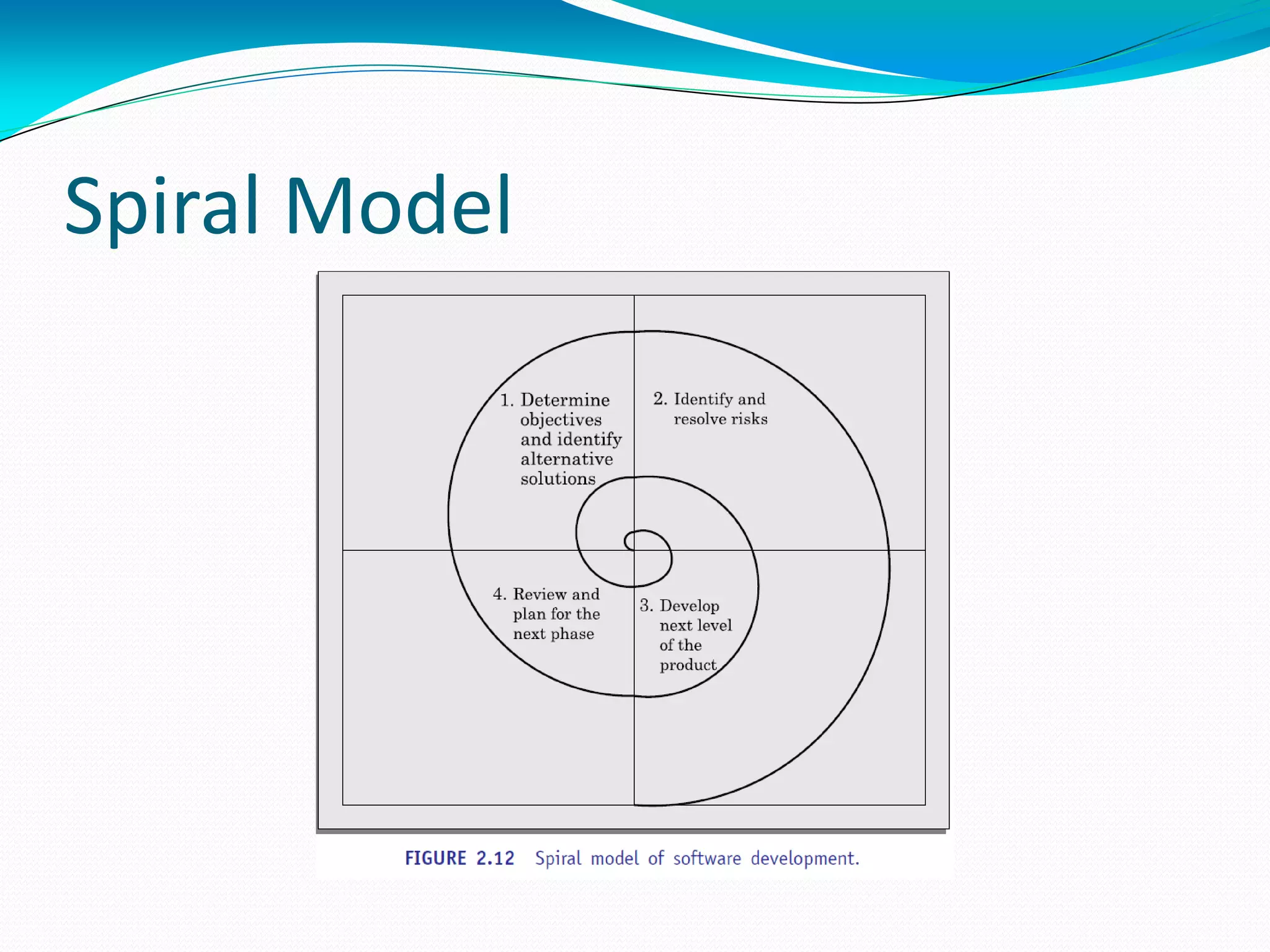
 Each phase in this model is split into four sectors (or
quadrants) as shown in Figure 2.12.
 Quadrant 1: The objectives are investigated,
elaborated, and analysed.
 Quadrant 2: The alternative solutions are
evaluated to select the best possible solution.
 To be able to do this, the solutions are evaluated by
developing an appropriate prototype.
 Quadrant 3: Developing and verifying the next level
of the software.
 Quadrant 4: Reviewing the results of the stages
traversed so far.
Advantages/pros and disadvantages/cons
of the spiral model
 Disadvantages:
 1. For developers – complex model to follow
 2. Counterproductive to use.
 3. Not very suitable for use in the development of
outsourced projects.
 Advantages:
 1. Much more powerful than the prototyping model.
Spiral model as a meta model
 The spiral model incorporates the systematic step-wise
approach of the waterfall model.
 The spiral model uses the approach of the prototyping
model.

A COMPARISON OF DIFFERENT LIFE CYCLE
MODELS
 The classical waterfall model can be considered as the
basic model and all other life cycle models as
embellishments of this model.
 Iterative waterfall – feedback paths. / widely used /
only for well-understood problems. not suitable for
development of very large projects.
 The prototyping model user requirements or the
underlying technical aspects are not well understood.
 All the risks can be identified before the project starts.
 User interface part of projects.
 The evolutionary large problems which can be
decomposed into a set of modules for incremental
development and delivery.
 object-oriented development projects
 The spiral model is considered a meta model and
encompasses all other life cycle models.
Selecting an Appropriate Life Cycle
Model for a Project
 1. Characteristics of the software to be developed:
 For small services projects, the agile model is favoured.
 For product and embedded software development,
the iterative waterfall model can be preferred.
 An evolutionary model is a suitable model for object-
oriented development projects.
 2. Characteristics of the development team:
 3. Characteristics of the customer:

Spiral Model.pdf

  • 1.
  • 2.
     The exactnumber of loops of the spiral is not fixed and can vary from project to project.  Each loop of the spiral is called a phase of the software process.  The exact number of phases through which the product is developed can be varied by the project manager depending upon the project risks.  A prominent feature of the spiral model is handling unforeseen risks that can show up much after the project has started.
  • 3.
    Risk handling inspiral model  A risk is essentially any adverse circumstance that might hamper the successful completion of a software project.  As an example, consider a project for which a risk can be that data access from a remote database might be too slow to be acceptable by the customer.  Caching scheme / Faster communication scheme.
  • 4.
    1 Phases ofthe Spiral Model  Each phase in this model is split into four sectors (or quadrants) as shown in Figure 2.12.  Quadrant 1: The objectives are investigated, elaborated, and analysed.  Quadrant 2: The alternative solutions are evaluated to select the best possible solution.  To be able to do this, the solutions are evaluated by developing an appropriate prototype.
  • 5.
     Quadrant 3:Developing and verifying the next level of the software.  Quadrant 4: Reviewing the results of the stages traversed so far.
  • 6.
    Advantages/pros and disadvantages/cons ofthe spiral model  Disadvantages:  1. For developers – complex model to follow  2. Counterproductive to use.  3. Not very suitable for use in the development of outsourced projects.  Advantages:  1. Much more powerful than the prototyping model.
  • 8.
    Spiral model asa meta model  The spiral model incorporates the systematic step-wise approach of the waterfall model.  The spiral model uses the approach of the prototyping model. 
  • 9.
    A COMPARISON OFDIFFERENT LIFE CYCLE MODELS  The classical waterfall model can be considered as the basic model and all other life cycle models as embellishments of this model.  Iterative waterfall – feedback paths. / widely used / only for well-understood problems. not suitable for development of very large projects.  The prototyping model user requirements or the underlying technical aspects are not well understood.  All the risks can be identified before the project starts.  User interface part of projects.
  • 10.
     The evolutionarylarge problems which can be decomposed into a set of modules for incremental development and delivery.  object-oriented development projects  The spiral model is considered a meta model and encompasses all other life cycle models.
  • 11.
    Selecting an AppropriateLife Cycle Model for a Project  1. Characteristics of the software to be developed:  For small services projects, the agile model is favoured.  For product and embedded software development, the iterative waterfall model can be preferred.  An evolutionary model is a suitable model for object- oriented development projects.  2. Characteristics of the development team:  3. Characteristics of the customer: