Project Management Education &
Implementation
Session 7: April 5, 2019
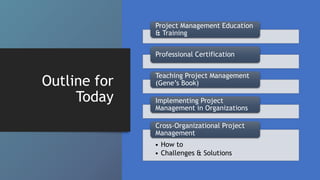
Outline for
Today
Project Management Education
& Training
Professional Certification
Teaching Project Management
(Gene’s Book)
Implementing Project
Management in Organizations
• How to
• Challenges & Solutions
Cross-Organizational Project
Management
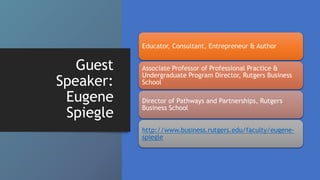
Guest
Speaker:
Eugene
Spiegle
Educator, Consultant, Entrepreneur & Author
Associate Professor of Professional Practice &
Undergraduate Program Director, Rutgers Business
School
Director of Pathways and Partnerships, Rutgers
Business School
http://www.business.rutgers.edu/faculty/eugene-
spiegle
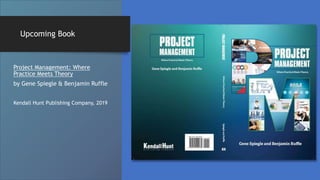
Upcoming Book
Project Management: Where
Practice Meets Theory
by Gene Spiegle & Benjamin Ruffle
Kendall Hunt Publishing Company, 2019
Project Management Education & Training
• Individual Training
• Business schools
• Professional organizations like American Management Association
• Online courses
• Other
• Training Teams (In-House or other)
• Ongoing consulting & support
• Implementation
• Project consultation
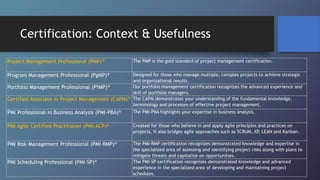
Certification: Context & Usefulness
Project Management Professional (PMP)® The PMP is the gold standard of project management certification.
Program Management Professional (PgMP)® Designed for those who manage multiple, complex projects to achieve strategic
and organizational results.
Portfolio Management Professional (PfMP)® Our portfolio management certification recognizes the advanced experience and
skill of portfolio managers.
Certified Associate in Project Management (CAPM)® The CAPM demonstrates your understanding of the fundamental knowledge,
terminology and processes of effective project management.
PMI Professional in Business Analysis (PMI-PBA)® The PMI-PBA highlights your expertise in business analysis.
PMI Agile Certified Practitioner (PMI-ACP)® Created for those who believe in and apply agile principles and practices on
projects. It also bridges agile approaches such as SCRUM, XP, LEAN and Kanban.
PMI Risk Management Professional (PMI-RMP)® The PMI-RMP certification recognizes demonstrated knowledge and expertise in
the specialized area of assessing and identifying project risks along with plans to
mitigate threats and capitalize on opportunities.
PMI Scheduling Professional (PMI-SP)® The PMI-SP certification recognizes demonstrated knowledge and advanced
experience in the specialized area of developing and maintaining project
schedules.
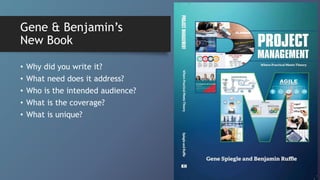
Gene & Benjamin’s
New Book
• Why did you write it?
• What need does it address?
• Who is the intended audience?
• What is the coverage?
• What is unique?
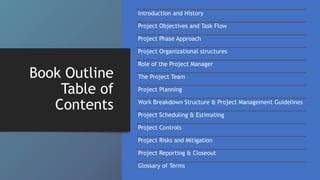
Book Outline
Table of
Contents
Introduction and History
Project Objectives and Task Flow
Project Phase Approach
Project Organizational structures
Role of the Project Manager
The Project Team
Project Planning
Work Breakdown Structure & Project Management Guidelines
Project Scheduling & Estimating
Project Controls
Project Risks and Mitigation
Project Reporting & Closeout
Glossary of Terms
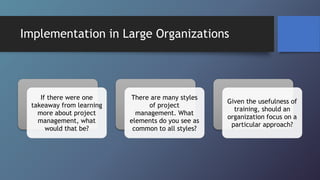
Implementation in Large Organizations
If there were one
takeaway from learning
more about project
management, what
would that be?
There are many styles
of project
management. What
elements do you see as
common to all styles?
Given the usefulness of
training, should an
organization focus on a
particular approach?
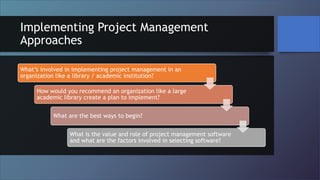
Implementing Project Management
Approaches
What’s involved in implementing project management in an
organization like a library / academic institution?
How would you recommend an organization like a large
academic library create a plan to implement?
What are the best ways to begin?
What is the value and role of project management software
and what are the factors involved in selecting software?
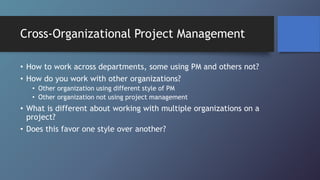
Cross-Organizational Project Management
• How to work across departments, some using PM and others not?
• How do you work with other organizations?
• Other organization using different style of PM
• Other organization not using project management
• What is different about working with multiple organizations on a
project?
• Does this favor one style over another?
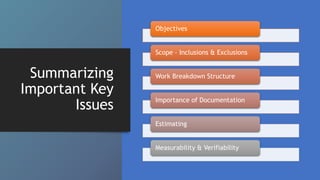
Summarizing
Important Key
Issues
Objectives
Scope – Inclusions & Exclusions
Work Breakdown Structure
Importance of Documentation
Estimating
Measurability & Verifiability
Questions and Close
Eugene Spiegle
Rutgers Business School
espiegle@business.rutgers.edu
Thank you! End of Session 7
Gene Spiegle
espiegle@business.rutgers.edu

Spiegle "Project Management Education & Implementation"

  • 1.
    Project Management Education& Implementation Session 7: April 5, 2019
  • 2.
    Outline for Today Project ManagementEducation & Training Professional Certification Teaching Project Management (Gene’s Book) Implementing Project Management in Organizations • How to • Challenges & Solutions Cross-Organizational Project Management
  • 3.
    Guest Speaker: Eugene Spiegle Educator, Consultant, Entrepreneur& Author Associate Professor of Professional Practice & Undergraduate Program Director, Rutgers Business School Director of Pathways and Partnerships, Rutgers Business School http://www.business.rutgers.edu/faculty/eugene- spiegle
  • 4.
    Upcoming Book Project Management:Where Practice Meets Theory by Gene Spiegle & Benjamin Ruffle Kendall Hunt Publishing Company, 2019
  • 5.
    Project Management Education& Training • Individual Training • Business schools • Professional organizations like American Management Association • Online courses • Other • Training Teams (In-House or other) • Ongoing consulting & support • Implementation • Project consultation
  • 6.
    Certification: Context &Usefulness Project Management Professional (PMP)® The PMP is the gold standard of project management certification. Program Management Professional (PgMP)® Designed for those who manage multiple, complex projects to achieve strategic and organizational results. Portfolio Management Professional (PfMP)® Our portfolio management certification recognizes the advanced experience and skill of portfolio managers. Certified Associate in Project Management (CAPM)® The CAPM demonstrates your understanding of the fundamental knowledge, terminology and processes of effective project management. PMI Professional in Business Analysis (PMI-PBA)® The PMI-PBA highlights your expertise in business analysis. PMI Agile Certified Practitioner (PMI-ACP)® Created for those who believe in and apply agile principles and practices on projects. It also bridges agile approaches such as SCRUM, XP, LEAN and Kanban. PMI Risk Management Professional (PMI-RMP)® The PMI-RMP certification recognizes demonstrated knowledge and expertise in the specialized area of assessing and identifying project risks along with plans to mitigate threats and capitalize on opportunities. PMI Scheduling Professional (PMI-SP)® The PMI-SP certification recognizes demonstrated knowledge and advanced experience in the specialized area of developing and maintaining project schedules.
  • 7.
    Gene & Benjamin’s NewBook • Why did you write it? • What need does it address? • Who is the intended audience? • What is the coverage? • What is unique?
  • 8.
    Book Outline Table of Contents Introductionand History Project Objectives and Task Flow Project Phase Approach Project Organizational structures Role of the Project Manager The Project Team Project Planning Work Breakdown Structure & Project Management Guidelines Project Scheduling & Estimating Project Controls Project Risks and Mitigation Project Reporting & Closeout Glossary of Terms
  • 9.
    Implementation in LargeOrganizations If there were one takeaway from learning more about project management, what would that be? There are many styles of project management. What elements do you see as common to all styles? Given the usefulness of training, should an organization focus on a particular approach?
  • 10.
    Implementing Project Management Approaches What’sinvolved in implementing project management in an organization like a library / academic institution? How would you recommend an organization like a large academic library create a plan to implement? What are the best ways to begin? What is the value and role of project management software and what are the factors involved in selecting software?
  • 11.
    Cross-Organizational Project Management •How to work across departments, some using PM and others not? • How do you work with other organizations? • Other organization using different style of PM • Other organization not using project management • What is different about working with multiple organizations on a project? • Does this favor one style over another?
  • 12.
    Summarizing Important Key Issues Objectives Scope –Inclusions & Exclusions Work Breakdown Structure Importance of Documentation Estimating Measurability & Verifiability
  • 13.
    Questions and Close EugeneSpiegle Rutgers Business School espiegle@business.rutgers.edu
  • 14.
    Thank you! Endof Session 7 Gene Spiegle espiegle@business.rutgers.edu