“ Just Enough”  Project Management David Lipper, PMP & CSM Stan Lipper, PMP
Traditional approach One enterprise-wide methodology is chosen for the company All project teams are required to provide a minimum set of documents All teams are required to have a minimum number of status meetings All teams must have representation from certain groups within the organization All documents must be stored in the same repository
Advantages of Traditional approach Communication is standard Documentation is standard  Approach is standard All documents are stored in the same place
Disadvantages of Traditional Approach Not all projects are the same By definition projects are unique, yet companies enforce standards that inhibit uniqueness It is hard to make a one size fits all methodology when exceptions happen most of the time Projects retrofit information into document standards that  sometimes make them useless Sometimes different tools require different storage methods (blogs, ms documents, wikis, diagrams) Project sometimes take longer because of the methodology chosen Too much or too little buy-in from the business  Too much or too little documentation Too much or too little prototyping
“Just Enough” IS Applying the right style to achieve scope, time, cost, and quality goals Choices of methodologies, tools, techniques Right-sizing the methodology chosen Best fit on a project level A communication plan at the project level that achieves success
“Just Enough” is NOT A trimmed down version of a methodology Minimum amount of effort all PMs should perform A way to save money on project management A way to avoid process  Controlled chaos
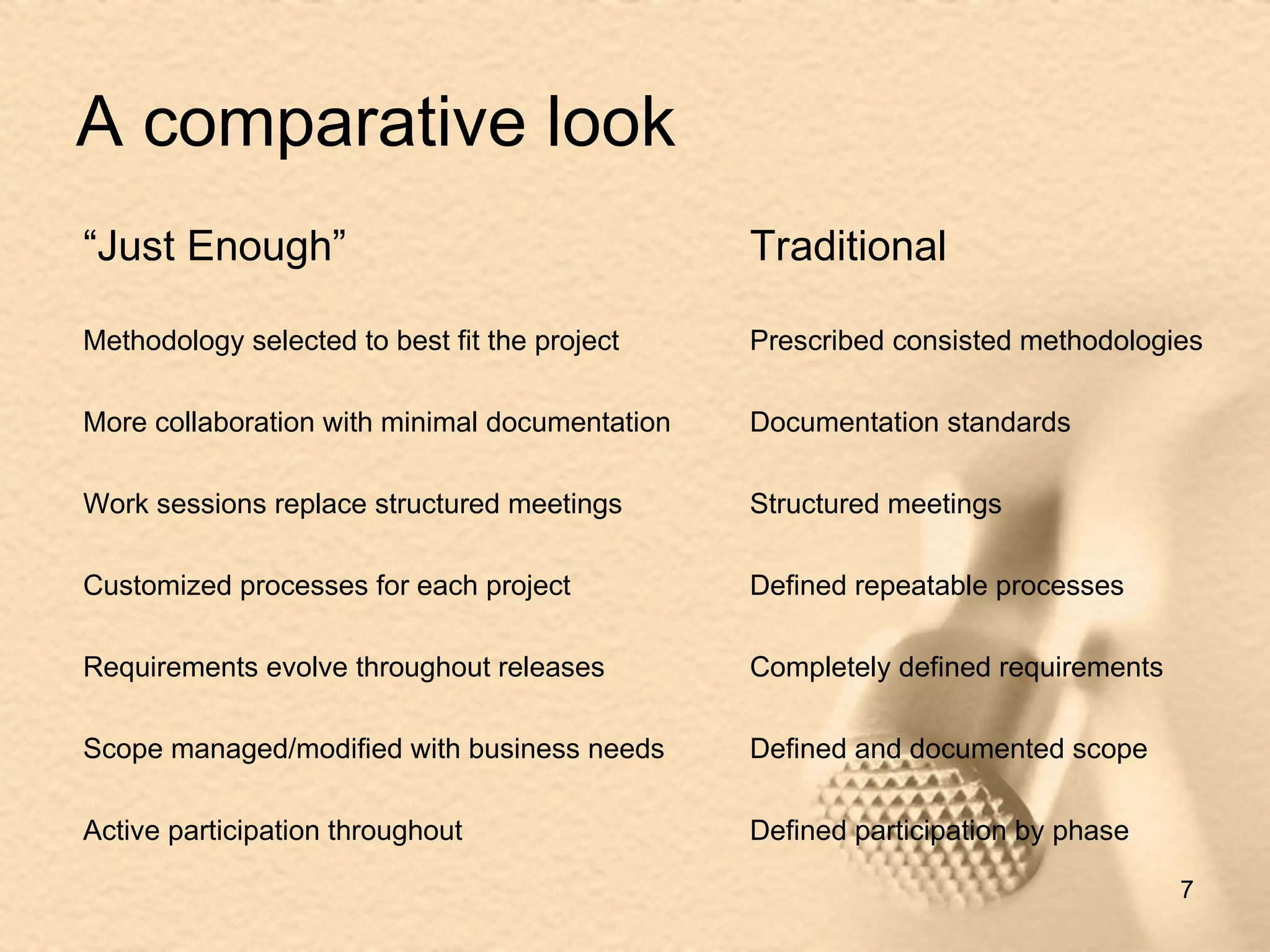
A comparative look Traditional Prescribed consisted methodologies  Documentation standards Structured meetings Defined repeatable processes Completely defined requirements Defined and documented scope Defined participation by phase “ Just Enough” Methodology selected to best fit the project More collaboration with minimal documentation Work sessions replace structured meetings Customized processes for each project Requirements evolve throughout releases  Scope managed/modified with business needs Active participation throughout
Picking the right methodology If the goals are clear, the requirements are set,  the project is complex and there is no way to deliver some functionality early, then go waterfall…you can’t deliver half a house If there is ambiguity and a changing environment and you need to add value quickly…then apply Agile.  Deliver a row boat…then add an engine…then add a cabin If the business is risk tolerant, the tech team is very savvy, and the deliverable time is more important than enterprise standards…then apply Extreme
“ Just enough” project management Develop a complete understanding of various methodologies Establish a PM Framework that is separate from the development methodology Assess the project to determine the right methodology Set project boundaries not methodologies Architect the development and PM approach for each project Use a hammer to hit a nail but use a wrench to tighten a screw…use the right tool for the job
Setting boundaries not methodologies Yes You must produce a plan for how the project will be managed. That plan will describe the documents needed Establish a communication plan to define the most effective communications for a specific project Define which groups will participate and the nature of the participation will be defined in the planning phase No You must produce these documents… You must have weekly status meetings You must have representation from certain groups within the organization
Methodology choices PMBOK Setting a standard language for projects Waterfall A methodology where the product is delivered at the end Agile A methodology which produces product deliverables in fixed sprints and works well in ambiguous environments Extreme A methodology to just get it done…with limited documentation
One size doesn’t fit all The waterfall methodology problem  -- A project to deliver a CD writer that creates FDA documents took 16 months  because of the documentation…the actual work was less than a month The Agile Methodology problem  – Some infrastructure projects only have one deliverable but they get retrofitted into agile and don’t take advantage of interim product deliverables The extreme methodology problem  – A very complex project is jump-started by the development team and they never produce what the business needed because they never documented the requirements
A Project Management Framework Covers all of the phases of the PM Life-Cycle Contains forms, checklists, sample processes, templates, and tutorials The framework should be flexible (for any type of project) and scalable (for any size of project)
Working with “Just Enough” Depending on the nature of the development project: Select the best development methodology Architect a PM approach that: Adheres to the PM framework Contains enough to control the project with minimal overhead Customized to best fit the characteristics of the project
Conclusion “ Just Enough” models the project not the organization Doing “Just Enough” will minimize the project management overhead “ Just Enough” is a new way to look at your portfolio of projects Having different methods for solving problems keep employees engaged

Just Enough PM

  • 1.
    “ Just Enough” Project Management David Lipper, PMP & CSM Stan Lipper, PMP
  • 2.
    Traditional approach Oneenterprise-wide methodology is chosen for the company All project teams are required to provide a minimum set of documents All teams are required to have a minimum number of status meetings All teams must have representation from certain groups within the organization All documents must be stored in the same repository
  • 3.
    Advantages of Traditionalapproach Communication is standard Documentation is standard Approach is standard All documents are stored in the same place
  • 4.
    Disadvantages of TraditionalApproach Not all projects are the same By definition projects are unique, yet companies enforce standards that inhibit uniqueness It is hard to make a one size fits all methodology when exceptions happen most of the time Projects retrofit information into document standards that sometimes make them useless Sometimes different tools require different storage methods (blogs, ms documents, wikis, diagrams) Project sometimes take longer because of the methodology chosen Too much or too little buy-in from the business Too much or too little documentation Too much or too little prototyping
  • 5.
    “Just Enough” ISApplying the right style to achieve scope, time, cost, and quality goals Choices of methodologies, tools, techniques Right-sizing the methodology chosen Best fit on a project level A communication plan at the project level that achieves success
  • 6.
    “Just Enough” isNOT A trimmed down version of a methodology Minimum amount of effort all PMs should perform A way to save money on project management A way to avoid process Controlled chaos
  • 7.
    A comparative lookTraditional Prescribed consisted methodologies Documentation standards Structured meetings Defined repeatable processes Completely defined requirements Defined and documented scope Defined participation by phase “ Just Enough” Methodology selected to best fit the project More collaboration with minimal documentation Work sessions replace structured meetings Customized processes for each project Requirements evolve throughout releases Scope managed/modified with business needs Active participation throughout
  • 8.
    Picking the rightmethodology If the goals are clear, the requirements are set, the project is complex and there is no way to deliver some functionality early, then go waterfall…you can’t deliver half a house If there is ambiguity and a changing environment and you need to add value quickly…then apply Agile. Deliver a row boat…then add an engine…then add a cabin If the business is risk tolerant, the tech team is very savvy, and the deliverable time is more important than enterprise standards…then apply Extreme
  • 9.
    “ Just enough”project management Develop a complete understanding of various methodologies Establish a PM Framework that is separate from the development methodology Assess the project to determine the right methodology Set project boundaries not methodologies Architect the development and PM approach for each project Use a hammer to hit a nail but use a wrench to tighten a screw…use the right tool for the job
  • 10.
    Setting boundaries notmethodologies Yes You must produce a plan for how the project will be managed. That plan will describe the documents needed Establish a communication plan to define the most effective communications for a specific project Define which groups will participate and the nature of the participation will be defined in the planning phase No You must produce these documents… You must have weekly status meetings You must have representation from certain groups within the organization
  • 11.
    Methodology choices PMBOKSetting a standard language for projects Waterfall A methodology where the product is delivered at the end Agile A methodology which produces product deliverables in fixed sprints and works well in ambiguous environments Extreme A methodology to just get it done…with limited documentation
  • 12.
    One size doesn’tfit all The waterfall methodology problem -- A project to deliver a CD writer that creates FDA documents took 16 months because of the documentation…the actual work was less than a month The Agile Methodology problem – Some infrastructure projects only have one deliverable but they get retrofitted into agile and don’t take advantage of interim product deliverables The extreme methodology problem – A very complex project is jump-started by the development team and they never produce what the business needed because they never documented the requirements
  • 13.
    A Project ManagementFramework Covers all of the phases of the PM Life-Cycle Contains forms, checklists, sample processes, templates, and tutorials The framework should be flexible (for any type of project) and scalable (for any size of project)
  • 14.
    Working with “JustEnough” Depending on the nature of the development project: Select the best development methodology Architect a PM approach that: Adheres to the PM framework Contains enough to control the project with minimal overhead Customized to best fit the characteristics of the project
  • 15.
    Conclusion “ JustEnough” models the project not the organization Doing “Just Enough” will minimize the project management overhead “ Just Enough” is a new way to look at your portfolio of projects Having different methods for solving problems keep employees engaged