1
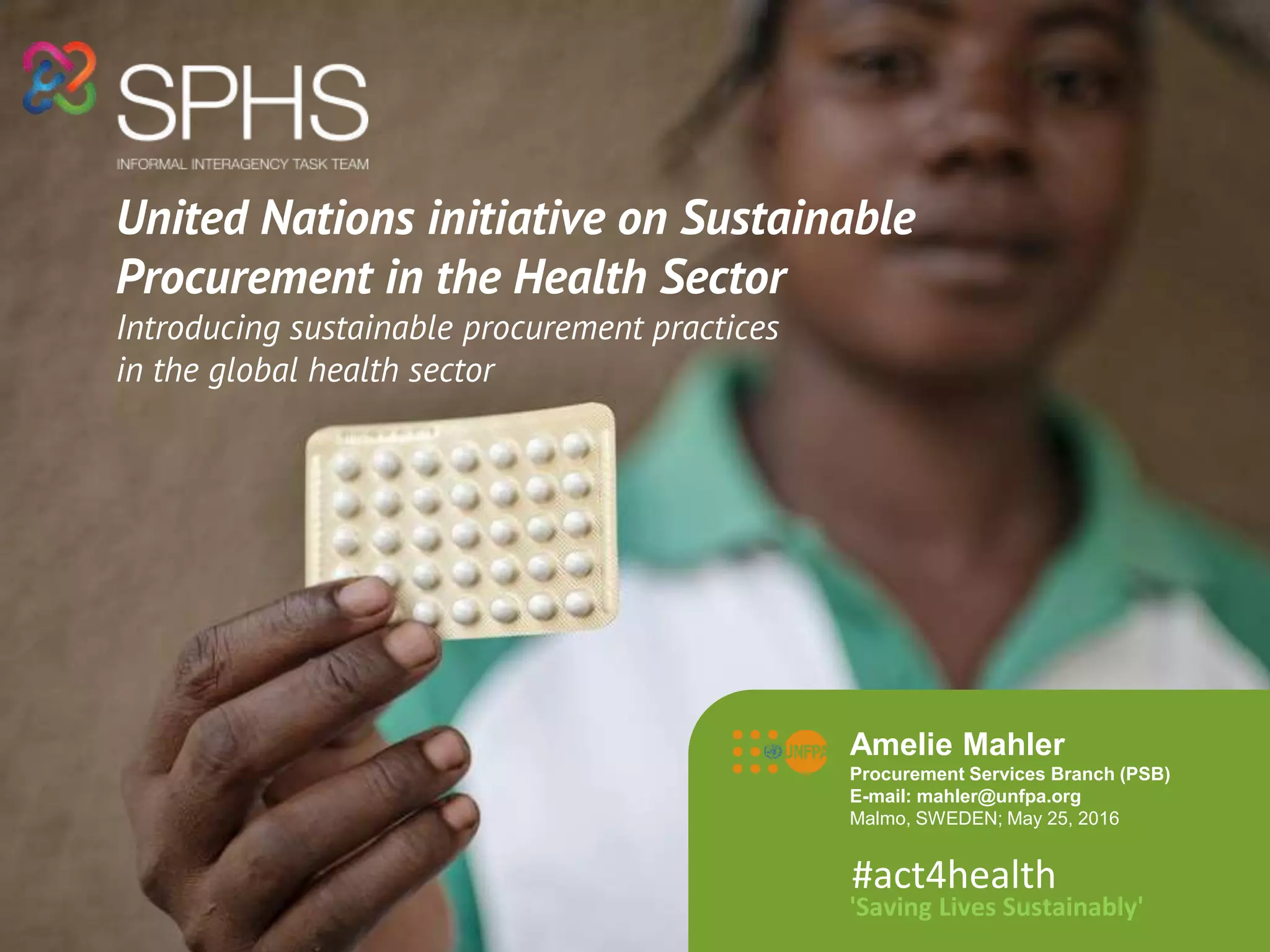
Amelie Mahler
Procurement Services Branch (PSB)
E-mail: mahler@unfpa.org
Malmo, SWEDEN; May 25, 2016
United Nations initiative on Sustainable
Procurement in the Health Sector
Introducing sustainable procurement practices
in the global health sector
'Saving Lives Sustainably'
#act4health
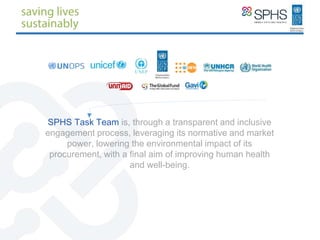
SPHS Task Team is, through a transparent and inclusive
engagement process, leveraging its normative and market
power, lowering the environmental impact of its
procurement, with a final aim of improving human health
and well-being.
INTRODUCTION
We aim to enhance the global partnership for sustainable
development by promoting public procurement practices
that are sustainable.
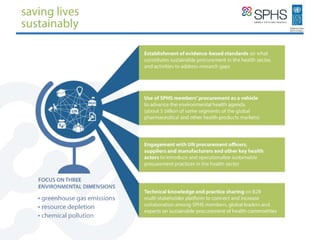
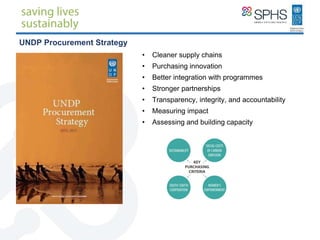
INTRODUCTION • Cleaner supply chains
• Purchasing innovation
• Better integration with programmes
• Stronger partnerships
• Transparency, integrity, and accountability
• Measuring impact
• Assessing and building capacity
UNDP Procurement Strategy
Funding partners:
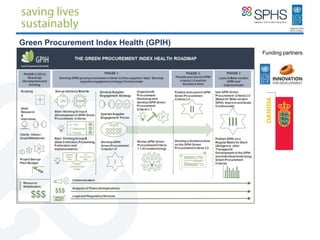
Green Procurement Index Health (GPIH)
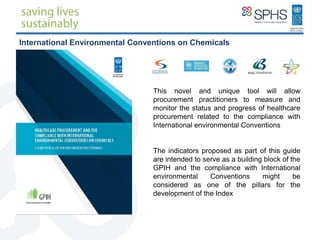
This novel and unique tool will allow
procurement practitioners to measure and
monitor the status and progress of healthcare
procurement related to the compliance with
International environmental Conventions
The indicators proposed as part of this guide
are intended to serve as a building block of the
GPIH and the compliance with International
environmental Conventions might be
considered as one of the pillars for the
development of the Index
International Environmental Conventions on Chemicals
Environmental Questionnaire for Suppliers and Manufacturers
• Based on international standards, Global Compact principles, Global
Reporting indicators and existing and well accepted environmental
scorecards and questionnaires from other national and international
organizations
• International consultation with feedback from more than 15 technical
experts from the SPHS network list
• Development of environmental profiles of suppliers and of green
procurement criteria that will be used for the further development of
the GPIH
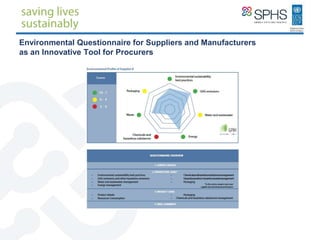
Environmental Questionnaire for Suppliers and Manufacturers
as an Innovative Tool for Procurers
Sustainable Procurement Practices in the Global Health Aid Market
• Guidance and targets to substitute hazardous products
purchased by the UN for its health programs
• List of key products based on procurement volume and
environmental impact: Antiretrovirals, Rapid Diagnostic Test Kits,
Medical devices (syringes, thermometers, gloves, blood pressure
measuring device and catheters), TB drugs, male condoms,
hormonal implants and healthcare waste technologies
Project partners: Funding partners:
Sustainable Procurement Practices in the Global Health Aid Market
Objectives
• Developing and implementing a guidance
note on an initial priority list of a green
procurement criteria
• Developing a list of products that remove
priority toxic chemicals from production,
products and waste
• Engaging with suppliers and
manufacturers of pharmaceuticals and
medical devices to stimulate the
development of greener products and
manufacturing processes, subsequently
reducing the environmental burden of the
health sector
Outcomes
• Initial priority list of green procurement
criteria and the monitoring of their
implementation
• Recommendations on specifications and
how to evaluate and select healthcare
products based on the established green
procurement criteria
• Assessment of the environmental footprint
from UNDP purchased health care
products based on three environmental
pillars: Carbon Footprint, Toxicity and
Resource Depletion
• Effective phase-in of the green
procurement criteria through a multi-
stakeholder engagement process
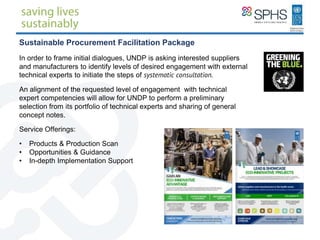
Sustainable Procurement Facilitation Package
In order to frame initial dialogues, UNDP is asking interested suppliers
and manufacturers to identify levels of desired engagement with external
technical experts to initiate the steps of systematic consultation.
An alignment of the requested level of engagement with technical
expert competencies will allow for UNDP to perform a preliminary
selection from its portfolio of technical experts and sharing of general
concept notes.
Service Offerings:
• Products & Production Scan
• Opportunities & Guidance
• In-depth Implementation Support
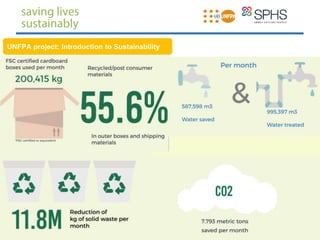
UNFPA project: Introduction to Sustainability
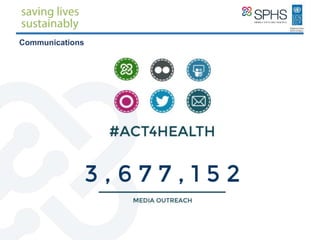
Communications
THANK YOU FOR YOUR
ATTENTION.
20
JOIN THE CONVERSATION
AND FOLLOW US ON:
#act4health
20
Amelie Mahler
Procurement Services Branch (PSB)
E-mail: mahler@unfpa.org
The SPHS Secretariat
info@savinglivesustainably.org
www.savinglivesustainably.org

SPHS at the Malmo Sustainable Procurement Workshop

  • 1.
    1 Amelie Mahler Procurement ServicesBranch (PSB) E-mail: mahler@unfpa.org Malmo, SWEDEN; May 25, 2016 United Nations initiative on Sustainable Procurement in the Health Sector Introducing sustainable procurement practices in the global health sector 'Saving Lives Sustainably' #act4health
  • 2.
    SPHS Task Teamis, through a transparent and inclusive engagement process, leveraging its normative and market power, lowering the environmental impact of its procurement, with a final aim of improving human health and well-being.
  • 3.
    INTRODUCTION We aim toenhance the global partnership for sustainable development by promoting public procurement practices that are sustainable.
  • 8.
    INTRODUCTION • Cleanersupply chains • Purchasing innovation • Better integration with programmes • Stronger partnerships • Transparency, integrity, and accountability • Measuring impact • Assessing and building capacity UNDP Procurement Strategy
  • 9.
  • 10.
    This novel andunique tool will allow procurement practitioners to measure and monitor the status and progress of healthcare procurement related to the compliance with International environmental Conventions The indicators proposed as part of this guide are intended to serve as a building block of the GPIH and the compliance with International environmental Conventions might be considered as one of the pillars for the development of the Index International Environmental Conventions on Chemicals
  • 11.
    Environmental Questionnaire forSuppliers and Manufacturers • Based on international standards, Global Compact principles, Global Reporting indicators and existing and well accepted environmental scorecards and questionnaires from other national and international organizations • International consultation with feedback from more than 15 technical experts from the SPHS network list • Development of environmental profiles of suppliers and of green procurement criteria that will be used for the further development of the GPIH
  • 12.
    Environmental Questionnaire forSuppliers and Manufacturers as an Innovative Tool for Procurers
  • 13.
    Sustainable Procurement Practicesin the Global Health Aid Market • Guidance and targets to substitute hazardous products purchased by the UN for its health programs • List of key products based on procurement volume and environmental impact: Antiretrovirals, Rapid Diagnostic Test Kits, Medical devices (syringes, thermometers, gloves, blood pressure measuring device and catheters), TB drugs, male condoms, hormonal implants and healthcare waste technologies Project partners: Funding partners:
  • 14.
    Sustainable Procurement Practicesin the Global Health Aid Market Objectives • Developing and implementing a guidance note on an initial priority list of a green procurement criteria • Developing a list of products that remove priority toxic chemicals from production, products and waste • Engaging with suppliers and manufacturers of pharmaceuticals and medical devices to stimulate the development of greener products and manufacturing processes, subsequently reducing the environmental burden of the health sector Outcomes • Initial priority list of green procurement criteria and the monitoring of their implementation • Recommendations on specifications and how to evaluate and select healthcare products based on the established green procurement criteria • Assessment of the environmental footprint from UNDP purchased health care products based on three environmental pillars: Carbon Footprint, Toxicity and Resource Depletion • Effective phase-in of the green procurement criteria through a multi- stakeholder engagement process
  • 15.
    Sustainable Procurement FacilitationPackage In order to frame initial dialogues, UNDP is asking interested suppliers and manufacturers to identify levels of desired engagement with external technical experts to initiate the steps of systematic consultation. An alignment of the requested level of engagement with technical expert competencies will allow for UNDP to perform a preliminary selection from its portfolio of technical experts and sharing of general concept notes. Service Offerings: • Products & Production Scan • Opportunities & Guidance • In-depth Implementation Support
  • 16.
    UNFPA project: Introductionto Sustainability
  • 17.
  • 20.
    THANK YOU FORYOUR ATTENTION. 20 JOIN THE CONVERSATION AND FOLLOW US ON: #act4health 20 Amelie Mahler Procurement Services Branch (PSB) E-mail: mahler@unfpa.org The SPHS Secretariat info@savinglivesustainably.org www.savinglivesustainably.org