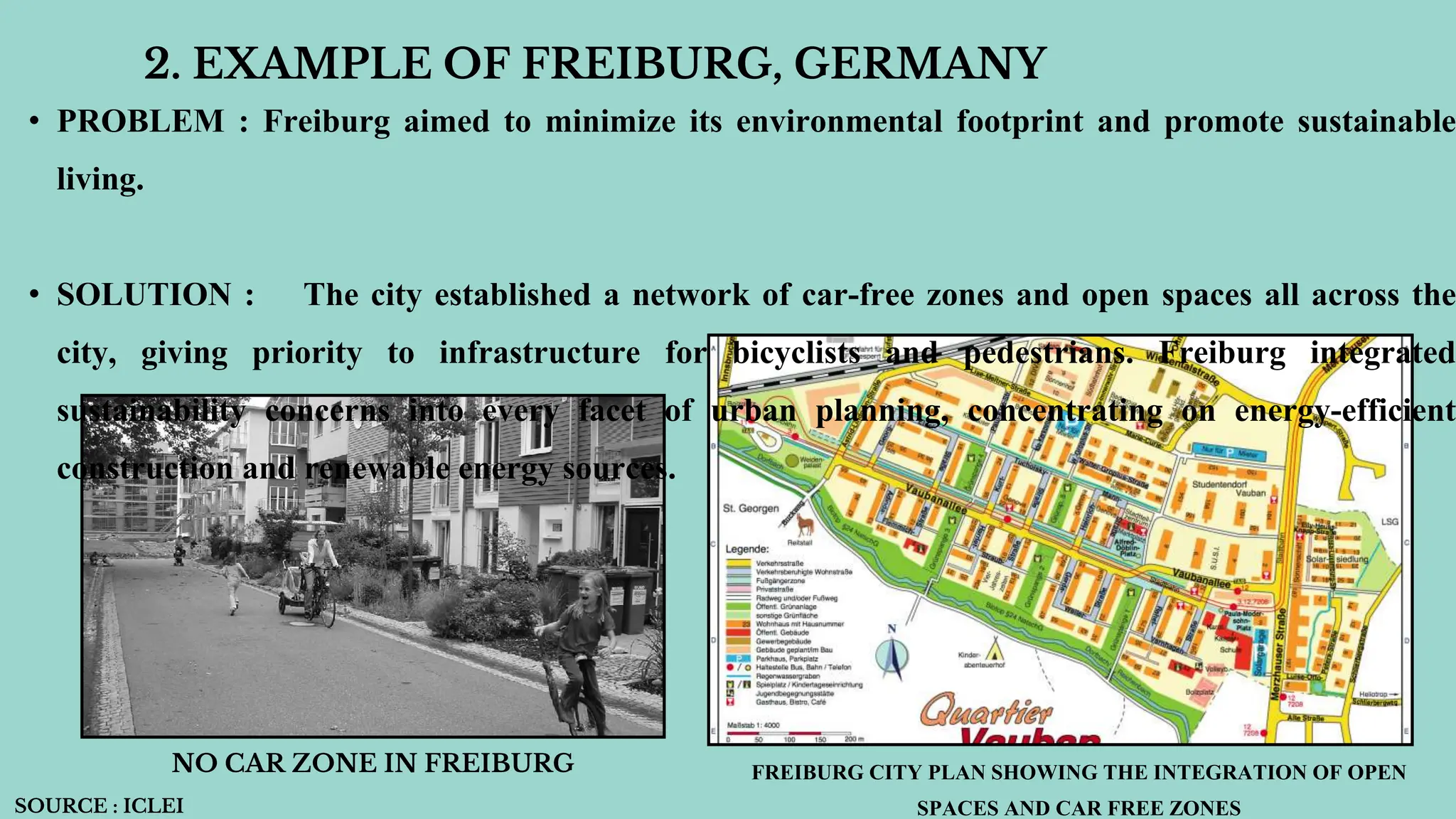
Spatial integration is essential for effective regional development, emphasizing the cooperation of diverse stakeholders and the interaction between various land uses to enhance resource utilization and promote balanced development across urban and rural areas. Successful examples from cities like Medellin, Freiburg, Bhubaneswar, and Ahmedabad highlight innovative solutions to connectivity and sustainability challenges through integrated planning. However, obstacles such as fragmented governance, conflicting interests, financial constraints, and the need for public participation must be addressed to realize the benefits of spatial integration.