Executive MBA Dissertation

“Establishing a Low Cost Sub-Orbital
Space Business in the UK”

Submitted by: Mark Morley, 0262185
Submitted on: 10th February 2006

A Dissertation submitted in part-fulfilment of the requirements for the
Degree of Master of Business Administration of the
University of Warwick

“All the work contained within is my own unaided effort and conforms with the
University’s guidelines on plagiarism”

Warwick Business School – Executive Modular MBA Dissertation – 0262185

1
Acknowledgements
This dissertation is dedicated to Melanie Carleton-Mills who has provided me with a constant
source of inspiration and support throughout the writing of this dissertation.

Warwick Business School – Executive Modular MBA Dissertation – 0262185

2
Abstract
The purpose of this project is to look at the viability of establishing a low cost sub-orbital
space business in the UK.

In recent years, most space rocket launches have been conducted by government funded
space agencies around the world. These agencies command multi billion dollar budgets to
develop space related equipment and launch services.

The high cost of accessing these

launch services restricts the amount of research that can be conducted by the scientific and
university communities. Sub-orbital launch services such as Sounding Rockets provide an
ideal low cost, flexible launch platform however a dedicated launch service for UK universities
does not currently exist.

In recent years, a few high net worth individuals have paid significant amounts of money to fly
aboard Russian space craft. These individuals, or Space Tourists, have ignited the general
public’s interest in the future potential of the space tourism industry. Once again, high costs
and limited launch services will restrict growth of this industry unless a number of nongovernment funded commercial space companies are established and are able to compete in
this new and exciting industry sector.

This project will undertake research to establish whether a low cost UK space business can
be established to address these two market requirements, namely a service for launching
scientific based payloads into sub-orbital space and a launch service to meet the needs of the
emerging space tourism market.

The aim will be to see if this low cost venture can be established without the need for
government funding.

Warwick Business School – Executive Modular MBA Dissertation – 0262185

3
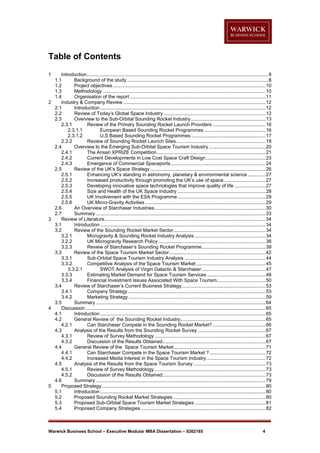
Table of Contents
1

2

3

4

5

Introduction ...................................................................................................................................... 8
1.1
Background of the study ........................................................................................................ 8
1.2
Project objectives ................................................................................................................. 10
1.3
Methodology ........................................................................................................................ 10
1.4
Organisation of the report .................................................................................................... 11
Industry & Company Review ......................................................................................................... 12
2.1
Introduction .......................................................................................................................... 12
2.2
Review of Today’s Global Space Industry ........................................................................... 12
2.3
Overview to the Sub-Orbital Sounding Rocket Industry ....................................................... 13
2.3.1
Review of the Primary Sounding Rocket Launch Providers ....................................... 16
2.3.1.1
European Based Sounding Rocket Programmes ............................................. 16
2.3.1.2
U.S Based Sounding Rocket Programmes ....................................................... 17
2.3.2
Review of Sounding Rocket Launch Sites .................................................................. 18
2.4
Overview to the Emerging Sub-Orbital Space Tourism Industry .......................................... 20
2.4.1
The Ansari XPRIZE Competition ................................................................................ 21
2.4.2
Current Developments in Low Cost Space Craft Design ............................................ 23
2.4.3
Emergence of Commercial Spaceports ...................................................................... 24
2.5
Review of the UK’s Space Strategy ..................................................................................... 26
2.5.1
Enhancing UK’s standing in astronomy, planetary & environmental science ............. 27
2.5.2
Increased productivity through promoting the UK’s use of space ............................... 27
2.5.3
Developing innovative space technologies that improve quality of life ....................... 27
2.5.4
Size and Health of the UK Space Industry ................................................................. 28
2.5.5
UK Involvement with the ESA Programme ................................................................. 29
2.5.6
UK Micro-Gravity Activities ......................................................................................... 29
2.6
An Overview of Starchaser Industries .................................................................................. 30
2.7
Summary ............................................................................................................................. 33
Review of Literature....................................................................................................................... 34
3.1
Introduction .......................................................................................................................... 34
3.2
Review of the Sounding Rocket Market Sector .................................................................... 34
3.2.1
Microgravity & Sounding Rocket Industry Analysis .................................................... 34
3.2.2
UK Microgravity Research Policy ............................................................................... 36
3.2.3
Review of Starchaser’s Sounding Rocket Programme ............................................... 39
3.3
Review of the Space Tourism Market Sector ....................................................................... 42
3.3.1
Sub-Orbital Space Tourism Industry Analysis ............................................................ 44
3.3.2
Competitive Analysis of the Space Tourism Market ................................................... 45
3.3.2.1
SWOT Analysis of Virgin Galactic & Starchaser ............................................... 47
3.3.3
Estimating Market Demand for Space Tourism Services ........................................... 48
3.3.4
Financial Investment Issues Associated With Space Tourism.................................... 50
3.4
Review of Starchaser’s Current Business Strategy.............................................................. 53
3.4.1
Company Strategy ...................................................................................................... 53
3.4.2
Marketing Strategy ..................................................................................................... 59
3.5
Summary ............................................................................................................................. 64
Discussion ..................................................................................................................................... 65
4.1
Introduction .......................................................................................................................... 65
4.2
General Review of the Sounding Rocket Industry............................................................... 65
4.2.1
Can Starchaser Compete in the Sounding Rocket Market? ....................................... 66
4.3
Analysis of the Results from the Sounding Rocket Survey .................................................. 67
4.3.1
Review of Survey Methodology .................................................................................. 67
4.3.2
Discussion of the Results Obtained ............................................................................ 67
4.4
General Review of the Space Tourism Market.................................................................... 71
4.4.1
Can Starchaser Compete in the Space Tourism Market ? ......................................... 72
4.4.2
Increased Media Interest in the Space Tourism Industry ........................................... 72
4.5
Analysis of the Results from the Space Tourism Survey ..................................................... 73
4.5.1
Review of Survey Methodology .................................................................................. 73
4.5.2
Discussion of the Results Obtained ............................................................................ 73
4.6
Summary ............................................................................................................................. 79
Proposed Strategy ......................................................................................................................... 80
5.1
Introduction .......................................................................................................................... 80
5.2
Proposed Sounding Rocket Market Strategies .................................................................... 80
5.3
Proposed Sub-Orbital Space Tourism Market Strategies .................................................... 81
5.4
Proposed Company Strategies ............................................................................................ 82

Warwick Business School – Executive Modular MBA Dissertation – 0262185

4
5.5
Summary ............................................................................................................................. 83
Conclusions ................................................................................................................................... 84
6.1
Introduction .......................................................................................................................... 84
6.2
Major Recommendations ..................................................................................................... 84
6.3
Limitations of the study ........................................................................................................ 85
6.4
Future research directions ................................................................................................... 85
7
References .................................................................................................................................... 86
8
Appendices .................................................................................................................................... 88
6

Warwick Business School – Executive Modular MBA Dissertation – 0262185

5
List of Figures
Fig. 1 Comparison of Micro Gravity Launch Methods ................................................................................................. 13
Fig. 2 Typical Configuration for a Sounding Rocket ................................................................................................... 14
Fig. 3 Typical Parabolic Flight Path for a Sounding Rocket ........................................................................................ 14
Fig. 4 Current ESA Supported Sounding Rocket Programmes .................................................................................. 17
Fig. 5 U.S Federal, Non-Federal and Proposed New Spaceports .............................................................................. 19
Fig. 6 SpaceShipOne Space Craft & White Knight Launcher ..................................................................................... 22
Fig. 7 Post XPRIZE Contenders Currently in Business, (See Appendix 8-H) ............................................................ 23
Fig. 8 New Entrants to the Privately Funded Space Industry ..................................................................................... 24
Fig. 9 Global Space Tourism Market Opportunity ....................................................................................................... 25
Fig. 10 Economic Value to New Mexico State ............................................................................................................ 25
Fig. 11 New Mexico Spaceport Business Opportunities ............................................................................................. 26
Fig. 12 Key Users of Satellite Technology / Services ................................................................................................. 27
Fig. 13 The Upstream and Downstream Sectors of the UK Space Industry............................................................... 28
Fig. 14 2003 Turnover by Application, Excluding the Consumer Market .................................................................... 28
Fig. 15 UK Financial Contributions to ESA Programmes ........................................................................................... 29
Fig. 16 Reusable Skybolt Sounding Rocket ............................................................................................................... 31
Fig. 17 ‘Storm’, 7 tonne Bi-Liquid Rocket Engine ....................................................................................................... 32
Fig. 18 Starchaser Range of Rockets ......................................................................................................................... 32
Fig. 19 PEST Analysis of the UK Sounding Rocket Industry ...................................................................................... 35
Fig. 20 Porter’s Five Forces Analysis ......................................................................................................................... 35
Fig. 21 Porter’s Diamond Summary of Potential UK Based Microgravity Industry ..................................................... 38
Fig. 22 SWOT Analysis of Starchaser Industries Sounding Rocket Business ............................................................ 40
Fig. 23 Strategic Focus of Starchaser’s Sounding Rocket Programme ...................................................................... 41
Fig. 24 Competitive Advantage through Product Differentiation ................................................................................. 42
Fig. 25 Space Tourism Market Opportunities by 2030 .............................................................................................. 43
Fig. 26 Sub-Orbital Space Tourism Industry PEST Analysis ...................................................................................... 44
Fig. 27 Sub-Orbital Competitive Positioning Matrix .................................................................................................... 46
Fig. 28 Comparative SWOT Analysis Between Virgin Galactic & Starchaser Industries............................................ 47
Fig. 29 Estimating the Elasticity of the Space Tourism Industry ................................................................................. 48
Fig. 30 Estimated Ticket Demand Based on World Wealth Report ............................................................................ 50
Fig. 31 Key Information Sought by the Investment Community .................................................................................. 52
Fig. 32 M.O.S.T Method of Analysing Business Growth ............................................................................................. 53
Fig. 33 Representation of Starchaser’s Current Business Strategy ........................................................................... 54
Fig. 34 Starchaser’s Project Lifecycle’s ...................................................................................................................... 55
Fig. 35 Seven Domains of Market Attractiveness ....................................................................................................... 56
Fig. 36 Position of Starchaser with Respect to its own Growth .................................................................................. 57
Fig. 37 Metamorphosis of a Company ........................................................................................................................ 58
Fig. 38 Review of Starchaser’s Marketing Activities ................................................................................................... 60
Fig. 39 Starchaser Brand Characteristics ................................................................................................................... 60
Fig. 40 The Characteristics of a Successful Brand ..................................................................................................... 61
Fig. 41 Starchaser’s Old & New Logos ....................................................................................................................... 62
Fig. 42 Virgin Galactic’s New Image ........................................................................................................................... 62
Fig. 43 NOVA Launch Vehicle .................................................................................................................................... 63
Fig. 44 UK Specific Launch Locations ........................................................................................................................ 68
Fig. 45 Average Launch Budget Per Year ................................................................................................................... 69
Fig. 46 Considerations When Choosing a Launch Partner ......................................................................................... 69
Fig. 47 Factors Preventing Market Entry for New Launch Providers .......................................................................... 70
Fig. 48 Age Range and Gender of Space Tourism Survey ........................................................................................ 74
Fig. 49 Awareness of Space Tourism ......................................................................................................................... 74
Fig. 50 Awareness of the Starchaser Brand Name .................................................................................................... 75
Fig. 51 Those Interested in Taking a Sub-Orbital Flight ............................................................................................. 75
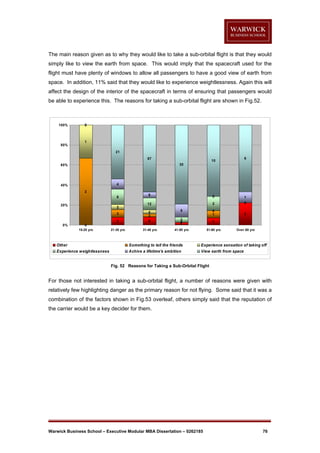
Fig. 52 Reasons for Taking a Sub-Orbital Flight ......................................................................................................... 76
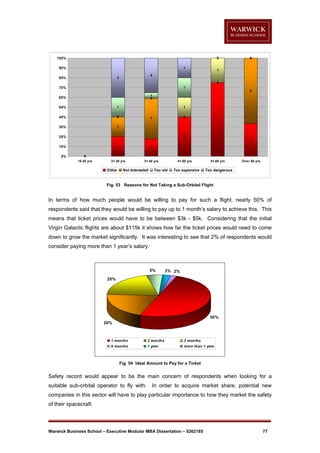
Fig. 53 Reasons for Not Taking a Sub-Orbital Flight .................................................................................................. 77
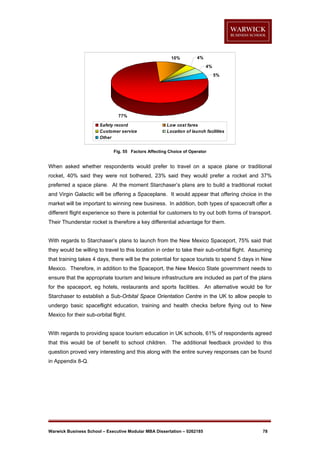
Fig. 54 Ideal Amount to Pay for a Ticket ...................................................................................................................... 77
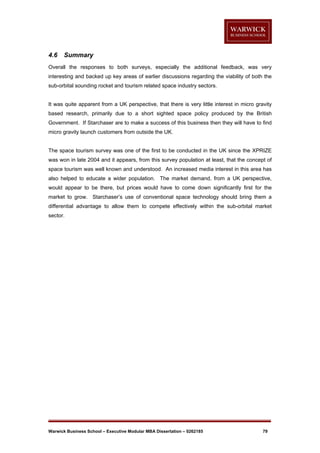
Fig. 55 Factors Affecting Choice of Operator ............................................................................................................. 78
Fig. 56 Worldwide Launch Activity, 1980 – 2004 ........................................................................................................ 88
Fig. 57 Commercial Intermediate & Heavy Lift Launches, By Country ....................................................................... 89
Fig. 58 National Origin of Components of Commercial Intermediate & Heavy Lift Launch Vehicles.......................... 90
Fig. 59 ASCENT Market Share Projection of Commercial Launches by Country ..................................................... 91
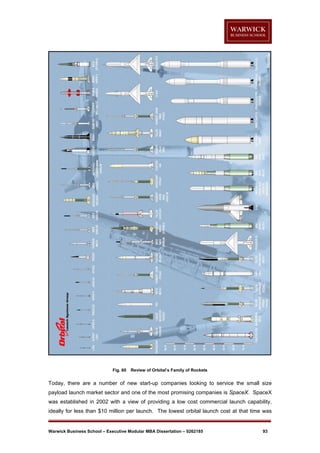
Fig. 60 Review of Orbital’s Family of Rockets ............................................................................................................ 93
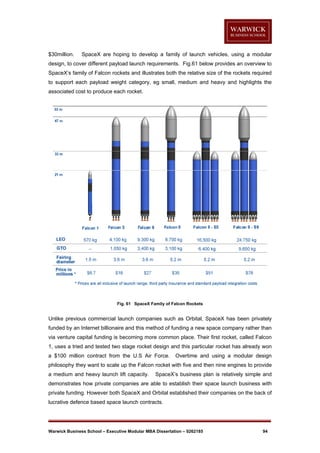
Fig. 61 SpaceX Family of Falcon Rockets .................................................................................................................. 94
Fig. 62 How the Demand for Satellite Launch is Calculated ....................................................................................... 96
Fig. 63 Historical and Forecast Commercial Launch Activity for 2005-2014 .............................................................. 97
Fig. 64 Today’s Commercial Satellite Industry Sectors & Associated 2004 Worldwide Revenues ............................ 97
Fig. 65 Payload Usage (Orbital Launches Only) – April to December 2005............................................................... 98
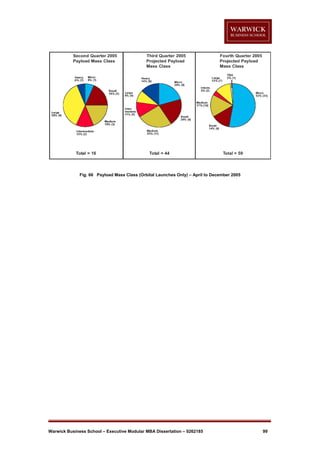
Fig. 66 Payload Mass Class (Orbital Launches Only) – April to December 2005 ...................................................... 99
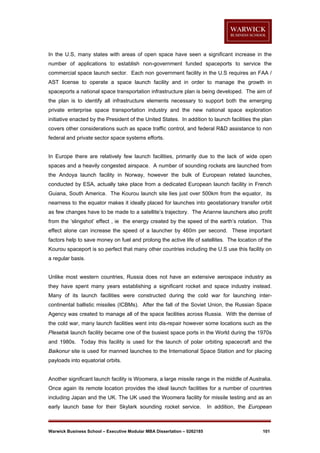
Fig. 67 Location of Today’s Primary Spaceports ...................................................................................................... 100
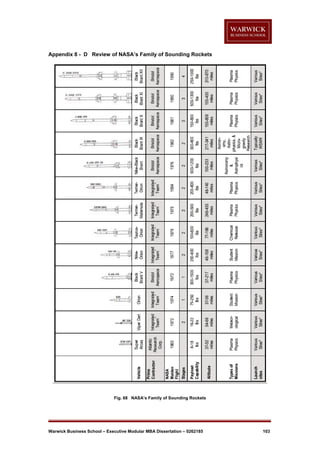
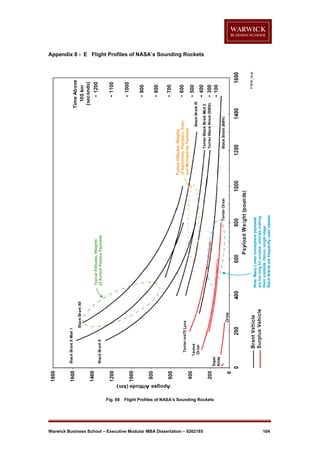
Fig. 68 NASA’s Family of Sounding Rockets ............................................................................................................ 103
Fig. 69 Flight Profiles of NASA’s Sounding Rockets ................................................................................................ 104
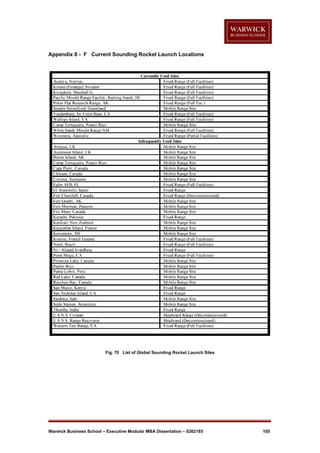
Fig. 70 List of Global Sounding Rocket Launch Sites ............................................................................................... 105

Warwick Business School – Executive Modular MBA Dissertation – 0262185

6
Fig. 71
Fig. 72
Fig. 73
Fig. 74
Fig. 75
Fig. 76
Fig. 77

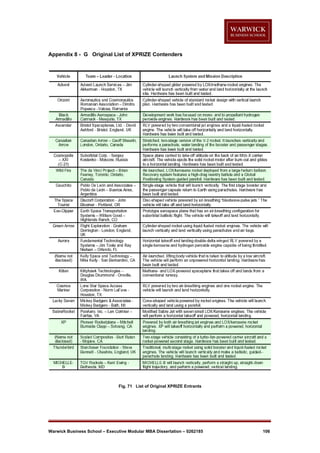
List of Original XPRIZE Entrants .................................................................................................................. 106
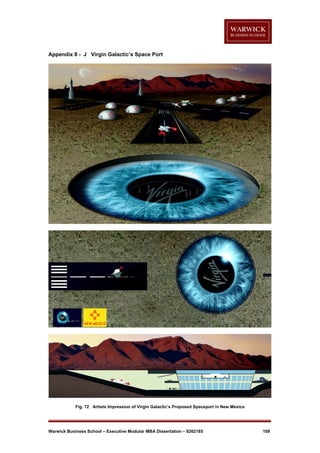
Artists Impression of Virgin Galactic’s Proposed Spaceport in New Mexico ................................................ 109
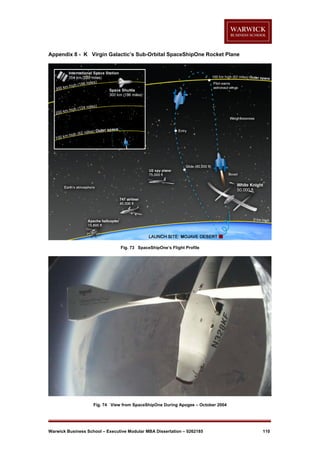
SpaceShipOne’s Flight Profile ...................................................................................................................... 110
View from SpaceShipOne During Apogee – October 2004 .......................................................................... 110
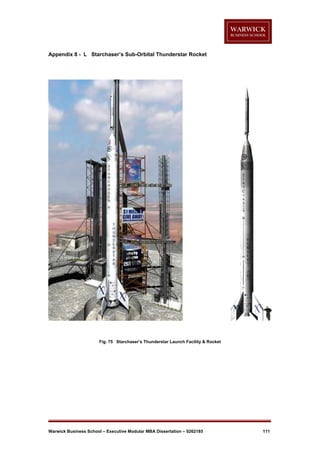
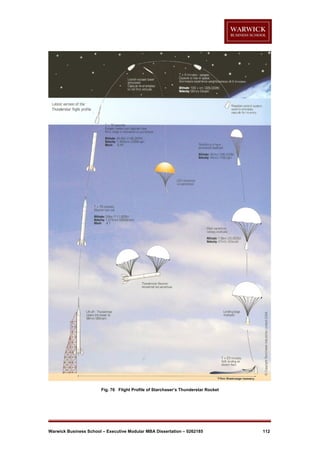
Starchaser’s Thunderstar Launch Facility & Rocket ..................................................................................... 111
Flight Profile of Starchaser’s Thunderstar Rocket ........................................................................................ 112
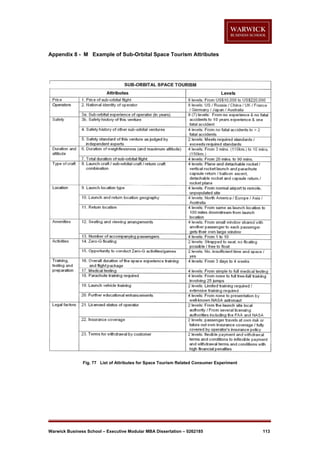
List of Attributes for Space Tourism Related Consumer Experiment ........................................................... 113

List of Appendices
Appendix 8 Appendix 8 Appendix 8 Appendix 8 Appendix 8 Appendix 8 Appendix 8 Appendix 8 Appendix 8 Appendix 8 Appendix 8 Appendix 8 Appendix 8 Appendix 8 Appendix 8 Appendix 8 Appendix 8 -

A
B
C
D
E
F
G
H
I
J
K
L
M
N
O
P
Q

Review of Today’s Global Orbital Space Industry ............................................................................. 88
Review of Today’s Satellite Industry ................................................................................................. 96
Review of Global Launch Locations ................................................................................................ 100
Review of NASA’s Family of Sounding Rockets ............................................................................. 103
Flight Profiles of NASA’s Sounding Rockets ................................................................................... 104
Current Sounding Rocket Launch Locations ................................................................................... 105
Original List of XPRIZE Contenders ............................................................................................... 106
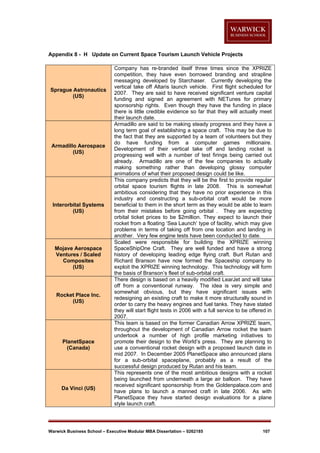
Update on Current Space Tourism Launch Vehicle Projects.......................................................... 107
New Entrants to the Sub-Orbital Space Craft Market ...................................................................... 108
Virgin Galactic’s Space Port ............................................................................................................ 109
Virgin Galactic’s Sub-Orbital SpaceShipOne Rocket Plane............................................................ 110
Starchaser’s Sub-Orbital Thunderstar Rocket ................................................................................. 111
Example of Sub-Orbital Space Tourism Attributes ......................................................................... 113
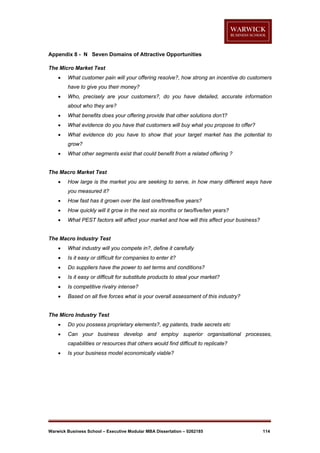
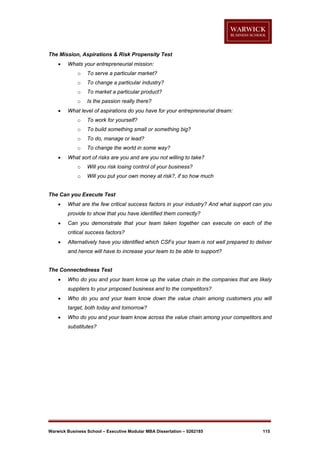
Seven Domains of Attractive Opportunities .................................................................................... 114
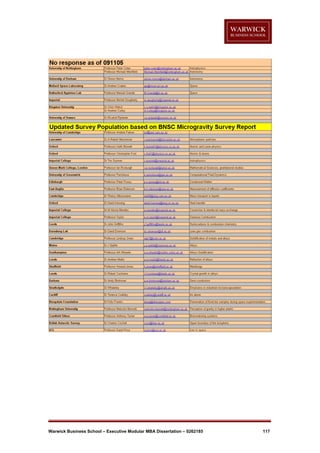
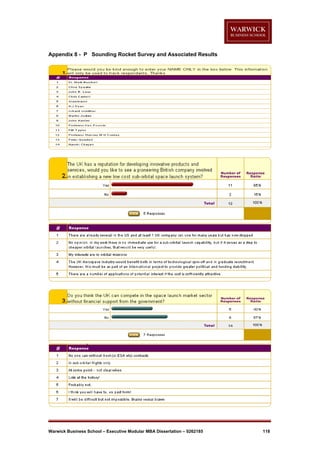
Sounding Rocket Survey Contacts ................................................................................................. 116
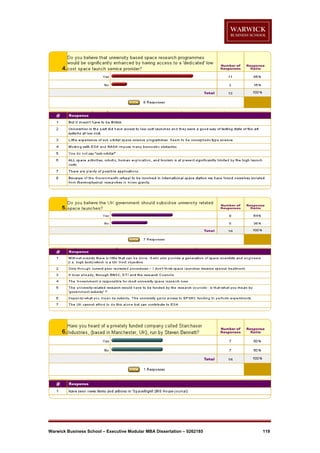
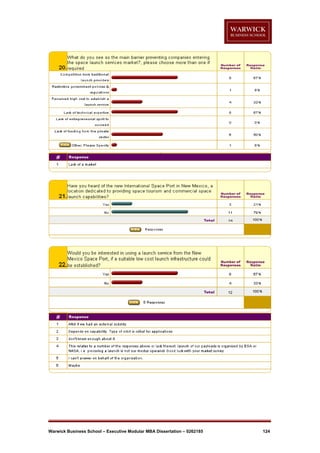
Sounding Rocket Survey and Associated Results .......................................................................... 118
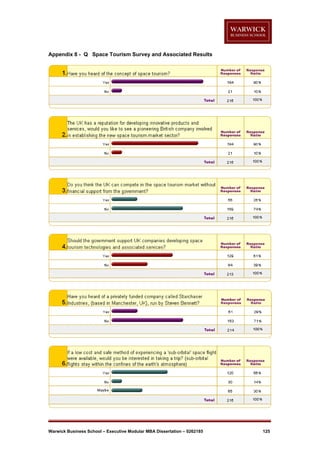
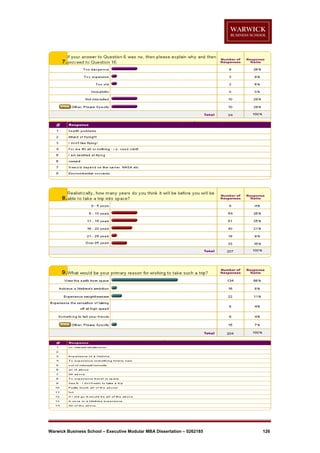
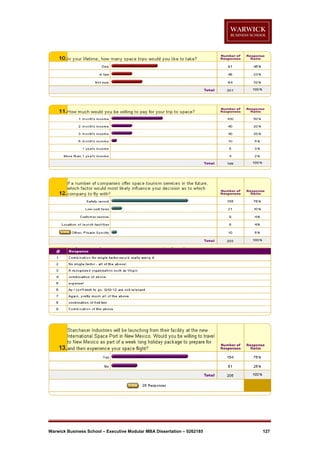
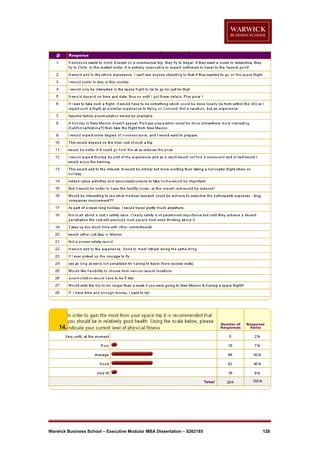
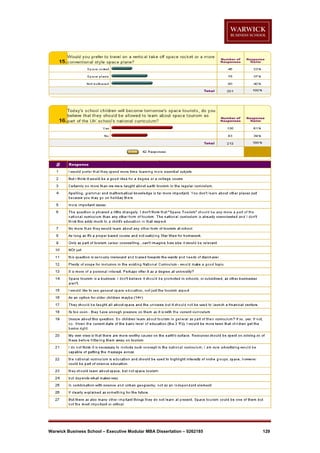
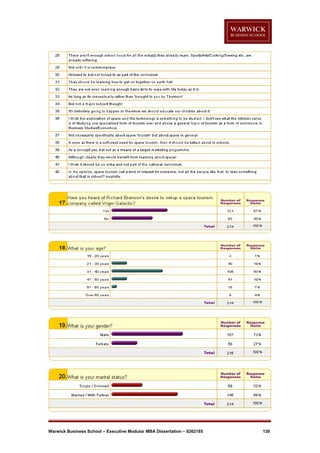
Space Tourism Survey and Associated Results ............................................................................. 125

Warwick Business School – Executive Modular MBA Dissertation – 0262185

7
1

Introduction

The aim of this chapter is to provide an introduction to the subject area being researched,
how the research will be conducted and the methods, tools and supporting materials that will
be used to deliver this dissertation.

1.1

Background of the study

Space exploration has traditionally been associated with well funded, government backed
space agencies. Billion dollar research programmes such as the International Space Station
(ISS) serve as a platform for understanding the origins of space and for conducting research
into the space technologies of the future. Today’s space industry is dominated by a number
of high profile space agencies, namely the U.S National Aeronautics & Space Administration
(NASA), European Space Agency (ESA) and the Russian Space Agency (RSA). In the next
few years the emerging Chinese Space Agency will also become a major player in the launch
market sector.

The ISS provides a rich environment for conducting many scientific experiments in zero
gravity. However many of the world’s universities will never have a chance of having their
experiments conducted on the ISS due to high costs and lack of suitable launch vehicles to
reach the ISS. For this reason many universities use a much cheaper and easier to access
space launch service known as a sounding rocket. Private enterprise has been able to enter
this launch market as sounding rockets are not required to go into orbit (they will normally rise
to just above the earth’s atmosphere) and therefore the technical challenges of designing a
suitable rocket are much easier and cheaper. In the late 1960s the British government started
to fund a sounding rocket service called Skylark and this programme ran successfully for
many years until its final launch in 2005.

The UK has a worldwide reputation for being an innovative country, laying claim to many
world firsts over the years including the design of innovative projects such as the Concorde
supersonic aircraft, Hovercraft and the Jet Engine. It was the Concorde project that led the
British government to reconsider its position of funding expensive high risk projects. This was
due to the fact that Concorde faced significant time and cost over runs during its design
phase. Exploration of space may be considered as one of the most risky projects for a
government to fund and hence this would explain the British government’s reluctance to
assign significant budgets to manned exploration of space.

The British government currently provides very little funding to ESA and for this reason British
universities are at a significant disadvantage when trying to get their experiments aboard an

Warwick Business School – Executive Modular MBA Dissertation – 0262185

8
ESA rocket or launched up to the ISS. Many of the UK’s leading universities, undertaking
space related research, such as Leicester and the Open University tend to take part in high
profile space programmes which are funded by the Particle Physics & Astronomy Research
Council (PPARC).

There still remains a significant amount of research that could be

undertaken if British universities had access to their own dedicated, low cost sounding rocket
service. Therefore one of the main aims of this project will be to look at the current market
demand from British universities and whether a new low cost and dedicated sounding rocket
service could be established.

One company looking to explore the potential of the sounding rocket market is Starchaser
Industries, based in Manchester UK, they are one of the world’s leading privately funded
space rocket companies. Starchaser would like to exploit the gap in the market left by the
Skylark programme and see if a new sounding rocket could be established to target
universities wishing to have access to a low cost space launch system for conducting microgravity based experiments. This project will therefore help Starchaser to identify its potential
new customers, review current British university research projects that could benefit from
such a service and whether or not Starchaser has a long term future in this market without
government funding.

The other area that will be reviewed in this project is Space Tourism. Over the last fifty years
the public’s imagination has been gripped by the possibility of one day being able to take a
trip into space. In recent years a few high net worth individuals have been able to buy their
way into space by way of the Russian space programme.

The Russians see this as a

potentially lucrative sideline business which brings millions of dollars into their cash strapped
space programme.

In order to kick start the space tourism industry a global competition known as the Ansari
XPRIZE was launched with the sole aim of encouraging private enterprise to develop a low
cost reusable launch vehicle (RLV) which could be used to fly individuals to the edge of
space. Extensive research has already been undertaken into the area of space tourism, but
the general public’s perception of space tourism is still not widely understood. Competitions
such as the XPRIZE help to capture the public’s imagination to the potential of one day being
able to take a space flight. This project will therefore conduct a survey to see what the British
public’s thoughts are to the potential of space tourism and whether it could offer a company
such as Starchaser a lucrative business opportunity in the near future. Many space tourism
surveys have been conducted in the past, prior to the winning of the XPRIZE, however this
will be one of the first to be conducted on the British public since the XPRIZE was won.

Warwick Business School – Executive Modular MBA Dissertation – 0262185

9
The author has worked with Starchaser since 1999, in this time the company has shown true
spirit and determination to achieve their dreams of one day establishing a commercial space
business. They have been able to run their business on a minimal budget, primarily through
sponsorship activities, but at the same time they have been able to achieve many goals
including the launch of the largest unmanned rocket from British soil. It is hoped that this
dissertation will provide a number of strategic recommendations and additional information for
Starchaser to be able to secure future funding to help them grow their business.

The author has a close relationship with the management team at Starchaser and hence
there is a personal interest to make this business a success. This project, albeit a small
contribution, to the overall success of the venture will allow Starchaser to understand their
target markets and any potential barriers that may exist to them achieving their future
business objectives.

1.2

Project objectives

There are two fundamental objectives for this project. Firstly a review of the current sounding
rocket market will be conducted to see whether there is enough market demand from British
universities to establish a dedicated sounding rocket service for them. The second objective
of this project is to understand the general public’s thoughts on space tourism and whether
they would be interested in using such a service if it were made available in the near future.
The aim will be to try and understand their requirements and concerns about taking a flight
aboard a reusable space launch vehicle. Starchaser would then be able to tailor their future
space tourism business to meet these requirements.

This research will then allow the author to make a proposal as to how Starchaser should enter
their target markets, what barriers may exist to them achieving their business objectives and
what the potential of the target markets are likely to be.

1.3

Methodology

The area of space flight and space tourism has provided the author with many references on
the current market trends, competitors, issues and future trends for the development of the
space industry. Most of the references were obtained from the government space agencies,
British universities, conference proceedings and websites.

Various academic related

reference materials have been obtained directly from the world’s leading authorities in the
subject areas being discussed in this project.

Warwick Business School – Executive Modular MBA Dissertation – 0262185

10
A number of relevant surveys have been conducted in the past and these provided the
inspiration for the two surveys conducted as part of this project. To meet the needs of the two
objectives of this project, two different surveys will be undertaken. One qualitative and the
other will be quantitative in nature.

The first survey, qualitative in nature, will target British universities who are currently
undertaking space related research and who could benefit from having access to a micro
gravity, sub orbital sounding rocket launch service.

The main aim will be to try and

understand current launch requirements, payloads carried and whether they would use a new
low cost launch service if one were made available.

The second survey, quantitative in nature, was targeted at a much wider audience. This
audience would comprise of members of the general public who would be asked questions on
their thoughts on space tourism and whether or not they would be interested in using such a
service in the future. Both of these surveys will be distributed by way of a suitable web based
survey tool.

1.4

Organisation of the report

This dissertation will be split into the following chapter headings :

Chapter 1 : Provides an introduction to the dissertation, how it will be written, the
objectives to be met and the research to be undertaken



Chapter 2 : Provides an overview to both the sounding rocket and emerging space
tourism markets, competitive analysis of both of these market sectors, an introduction
to Starchaser and how they hope to grow their business over the next few years



Chapter 3 : The literature review will examine the current academic research that can
support this dissertation along with identifying relevant MBA frameworks and
management tools that can support the areas being researched for Starchaser



Chapter 4 : Discusses the results from the surveys conducted for this project and
synthesises the findings from Chapters 2 & 3 to allow a strategy to be defined for
Starchaser



Chapter 5 : Proposes a strategy for Starchaser and a rationale will be developed as
to why Starchaser should follow this strategy and the expected benefits to be
obtained from following this strategy



Chapter 6 : Provides a conclusion to the dissertation and the overall findings and
proposed strategy will once again be highlighted in a simplified manner. Limitations
of the research will be discussed along with proposed future areas for research

Warwick Business School – Executive Modular MBA Dissertation – 0262185

11
2
2.1

Industry & Company Review
Introduction

The following chapter provides a brief overview of the sounding rocket and emerging space
tourism industries, with a particular emphasis on emerging technologies, companies and
trends which may impact the future growth of Starchaser.

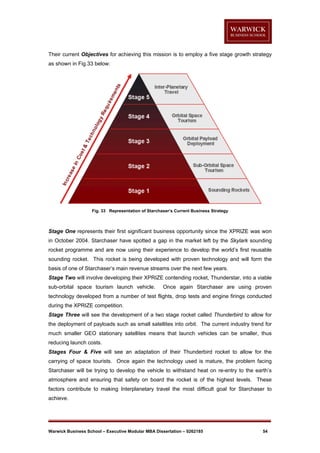
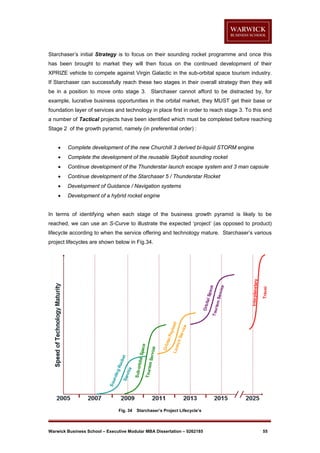
Starchaser currently have a five stage growth plan and in order to derive a strategy, as part of
this dissertation, to execute this plan it was important to review the current orbital launch
market and the industry that they primary serve, namely launching satellites.

This chapter will also include an analysis of the key competitors and challenges that
Starchaser will have to overcome in order to grow their business. It was also necessary to
review the UK’s current space policy in order to understand any barriers that may exist which
could affect the growth of Starchaser. A review of Starchaser will also be carried out,
providing further information about their current business model, technology and company
direction.

2.2

Review of Today’s Global Space Industry

The commercial space sector has seen significant changes in recent years, with the dotcom
period during the late 1990s causing a sharp rise and fall in the number of commercial
launches worldwide. As communications technology has improved, satellites have become
much smaller and there is now a requirement to evaluate designs for new lower cost launch
vehicles. These will be able to launch smaller satellites more economically than the larger
launch vehicles traditionally offered by the government backed space agencies. At the same
time, other low cost launch services are being developed to service other sectors such as the
emerging space tourism industry.

Today’s space industry is dominated by the government backed space agencies such as
NASA and ESA. Over the years NASA has tended to focus on developing their Space Shuttle
programmes to support the International Space Station (ISS) and this has meant that a
number of commercial organisations have emerged to service the ever expanding orbital
launch market.

Today’s primary orbital launch providers are discussed in more detail in

Appendix 8-A.

Most of the commercial launch providers are serving the lucrative satellite launch industry and
deploying payloads into earth orbit represents the largest commercial opportunity in today’s
space industry. Today’s satellite industry is discussed in more detail in Appendix 8-B.

Warwick Business School – Executive Modular MBA Dissertation – 0262185

12
2.3

Overview to the Sub-Orbital Sounding Rocket Industry

Sounding rockets take their name from the nautical term ‘to sound’, which means to take
measurements. Sounding rockets have been in use since the 1950s and the technology used
in their design is relatively simple and based primarily on military missile technology. They
are used as an experimental platform to test instruments on satellites / spacecraft and to
provide scientific information about the sun, stars, galaxies and the earth’s atmosphere. This
type of testing is unique because it is simple, cost-effective and time efficient, also the
payloads used for experimentation can be developed in a short period of time, eg six months.

Sounding rockets are ideal for deploying Micro Gravity based experiments, ie those scientific
experiments that need to be conducted in a near zero effect gravitational environment. It is
possible to conduct micro gravity based experiments in high drop towers or by using a plane
following a parabolic flight curve, (as used for astronaut training). However sounding rockets
provide the ideal means of deploying these payloads as they are able to reach a far greater
height and more importantly the experiments can be conducted for longer periods of time.
The various micro gravity launch methods are compared below in Fig. 1 [1]. It is possible to
also conduct these experiments on either the Space Shuttle or ISS however the country
wishing to launch the payload would have to be a member of either the NASA or ESA space
programmes in order to gain access to these facilities.

Fig. 1

Comparison of Micro Gravity Launch Methods

Warwick Business School – Executive Modular MBA Dissertation – 0262185

13
Fig.2 [2] below shows a typical layout for a sounding rocket, the rocket is normally split into
two parts, the payload and the rocket motor. This is called a single stage rocket. For greater
height and hence longer experimentation times, multi stage rockets are used. The rockets
are modular in nature meaning that the rockets can be easily configured according to the
weight of payload being carried. In addition to the motor and payload, the rocket will contain
a simple guidance system, telemetry antenna (for transmitting results back to the ground) and
a radar tracking beacon so that the rocket can be tracked during flight.

Fig. 2 Typical Configuration for a Sounding Rocket

After the rocket is launched it follows a parabolic trajectory into space and as the rocket motor
uses its fuel, it separates from the payload and falls back to earth. Meanwhile, the payload
continues into space and when the payload reaches the top of the parabolic flight, ie at it’s
apogee, the experiments are conducted. In most cases, after the payload has re-entered the
atmosphere, it is brought gently down to earth by way of a parachute and is then retrieved. A
typical flight trajectory profile is shown below in Fig.3 [2].

Fig. 3 Typical Parabolic Flight Path for a Sounding Rocket

Warwick Business School – Executive Modular MBA Dissertation – 0262185

14
Scientific payloads are carried to altitudes of between 30 and 800 miles and although the
overall time spent in space is relatively short, (typically 5 to 20 minutes) the experiment is
perfectly positioned to conduct its mission successfully. As the scientific payload does not go
into orbit, sounding rocket missions do not need expensive booster rockets or extended
telemetry and tracking technology. Significant cost savings are realised as parts and rocket
motors are acquired in large quantities and they utilise tried and tested design configurations
for each launch.

In some cases, namely those missions conducting astronomy, planetary or micro gravity
experiments, the payloads are recoverable which means the costs of experiments and subsystems are spread over many missions. Scientists are able to accomplish their research at a
specific time and place because the sounding rockets can potentially be launched from
temporary sites all over the world. Due to the low cost and short lead time, sounding rocket
payload testing is invaluable for University students conducting graduate work in scientific
fields.

Sounding rockets offer one of the most robust, versatile and cost-effective launch systems
and in the case of NASA has provided nearly 40 years of critical scientific, technical and
educational contributions to the nation’s space programme. The reasons for their success
are as follows [3] :

Quick, low cost and fast access to high altitudes where optical observations of
astronomical, solar and planetary sources can be made of radiation at wavelengths
absorbed by the earth’s lower atmosphere



Direct access to the earth’s mesosphere and lower thermosphere (40-120km)



Ability to fly relatively large payloads (>500kg) masses on inexpensive vehicles



Provision of several minutes of ideal, “vibration free” microgravity



Ability to gather in-situ data in specific geophysical targets such as the aurora, the
equatorial electro jet and thunderstorms



Access to remote geophysical sites and southern hemisphere astronomical objects



Long dwell times at apogee



Ability to fly simultaneous rockets along different trajectories, eg with different
apogees, flight profiles etc



Ability to fly numerous free-flying sub-payloads from a single launch vehicle



Ability to recover and re-launch instruments

Warwick Business School – Executive Modular MBA Dissertation – 0262185

15
2.3.1

Review of the Primary Sounding Rocket Launch Providers

Today’s sounding rocket launch activities are mainly conducted in the US or Northern Europe.
Both NASA and ESA have active sounding rocket programmes and there are a number of
companies that build sounding rockets on behalf of these space agencies and for
independent research organisations.

These particular regions have been able to develop and sustain a reliable launch record and
for this reason other countries around the world tend to use these services rather than go to
the time and effort of developing their own sounding rocket launch capabilities.

Given that

the sounding rocket experiments are relatively expensive and sometimes irreplaceable, many
universities and research establishments prefer to launch their payloads with leading space
agencies such as NASA and ESA. The primary reason is to ensure that their payloads are
launched safely with good quality measurements being taken when the payload reaches
apogee. Commercial companies such as Orbital Sciences Inc. have been successful at
entering this market sector, primarily launching U.S Air Force related sounding rockets,
however their business model is changing to support small satellite related launches. The
following section identifies the key sounding rocket programmes.
2.3.1.1

European Based Sounding Rocket Programmes

Up until 2005, Europe had one of the oldest sounding rocket programmes, the British Skylark
sounding rocket service which was first launched in the 1950s. Skylark was initially flown
from the Woomera launch facility in Australia and was first operated on a commercial basis by
British Aerospace. This programme was then taken over by Matra Marconi Space and finally
Sounding Rocket Services (SRS) Ltd in 1999. Skylark [4] was flown for the last time in April
2005 from the Esrange range in Northern Sweden. Following the demise of the Skylark
programme, SRS now plan to become the European agent for the American built Oriole range
of rockets and a supplier of hardware to the German / Brazilian VSB-30 vehicle. ESA are
currently participating in four different sounding rocket programmes, namely the German
Texus and Mini-Texus programmes, the Swedish Maser programme and the joint German
and Swedish Maxus programmes [5]

The Texus and Mini Texus programmes were initiated in 1976 by the German Ministry for
Research as a preparatory programme to the 1983 Spacelab programme.

The Texus

programme was commercialised and is today managed by EADS-ST, Bremen. The Texus
programme employed Skylark VII rocket motors as the basis of its programme. The most
recent Texus rocket, Texus-EML1, was flown on 1st December 2005 and provided 7 minutes
of micro-gravity experimentation time. This particular flight used the Brazilian VSB-30 rocket
engine, the successor to the Skylark rocket motor.

The Mini Texus programme was

established to fill the gap in the market for projects requiring microgravity for the range of 3-4

Warwick Business School – Executive Modular MBA Dissertation – 0262185

16
minutes and employed two stage rockets from surplus military equipment. They are able to
launch 100kg scientific payloads to an altitude of 140km.

The Swedish Maser programme was started in 1986 and is managed by the Swedish Space
Corporation, (SSC), Solna. The Maser programme also used Skylark VII rocket motors. The
first Maser payload was launched in March 1987 with their latest Maser 10 rocket programme
being successfully flown in March 2005. These rockets are relatively large and are able to
carry multiple payloads if required.

The Maxus Programme is a long duration sounding rocket service developed as a joint
development between EADS-ST and the SSC. This programme is capable of launching a
780kg payload to an apogee of 715km which corresponds to about 13 minutes of microgravity time. As the rocket flies above the Esrange’s limit of 300km, the range’s safety
regulations require the Maxus to have a guidance control system and a self destruct system.
The Maxus rocket is ESA’s most powerful sounding rocket. The last Maxus sounding rocket,
number 6, was launched in November 2004, this particular rocket cost $12million to launch
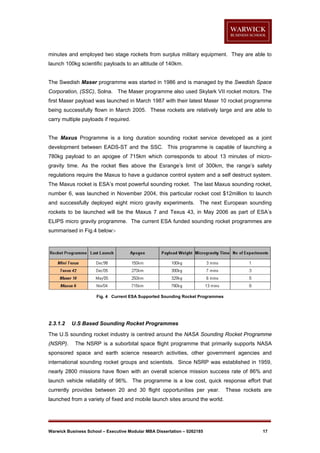
and successfully deployed eight micro gravity experiments. The next European sounding
rockets to be launched will be the Maxus 7 and Texus 43, in May 2006 as part of ESA’s
ELIPS micro gravity programme. The current ESA funded sounding rocket programmes are
summarised in Fig.4 below:-

Fig. 4 Current ESA Supported Sounding Rocket Programmes

2.3.1.2

U.S Based Sounding Rocket Programmes

The U.S sounding rocket industry is centred around the NASA Sounding Rocket Programme
(NSRP).

The NSRP is a suborbital space flight programme that primarily supports NASA

sponsored space and earth science research activities, other government agencies and
international sounding rocket groups and scientists. Since NSRP was established in 1959,
nearly 2800 missions have flown with an overall science mission success rate of 86% and
launch vehicle reliability of 96%. The programme is a low cost, quick response effort that
currently provides between 20 and 30 flight opportunities per year.

These rockets are

launched from a variety of fixed and mobile launch sites around the world.

Warwick Business School – Executive Modular MBA Dissertation – 0262185

17
NSRP customers are primarily from the university and government research groups however
some research activities involve the commercial sector. The programme has contributed
major scientific findings and research to the world of suborbital space science and has also
provided a valuable proving ground for space ship / station sub-components. There are
currently eleven operational support launch vehicles in the NSRP and all of these launch
vehicles utilise a solid propellant propulsion system. These rockets typically use surplus 2030 year old military rocket motors and all the rockets are unguided.

The NSRP uses three

main groups of rockets [6] and these are described overleaf and referenced in more detail in
Appendices 8-D & E [58]

Black Brant, produced by Bristol Aerospace Limited has been in service since 1962 and
provides the main ‘workhorse’ of the NASA sounding rocket fleet. Different versions of the
Black Brant can carry payloads ranging between 70 & 850 kilograms to altitudes from 150 to
1500 kilometres and can provide up to 20 minutes of microgravity time during flight. The
smallest Black Brant rocket is the Black Brant 5 single stage rocket and is used as the basis
of larger multi stage rockets from the Black Brant family. The most powerful rocket the Black
Brant 12 is a four stage vehicle that can launch a 113 kg payload to 1400 kilometres or a 454
kilogram payload to an altitude of at least 400 kilometers.

Oriole, produced by DTI Associates, was developed in the late 1990s to provide launch
services for commercial and scientific payloads.

Oriole is significant as it was the first

privately funded sounding rocket in the U.S and the first new sounding rocket for 25 years.
The Oriole, when combined with a Terrier rocket motor can reach an altitude of 385
kilometres providing between 6 to 9 minutes of microgravity time.

Terrier – Orion, produced by DTI Associates, is a two stage spin stabilized sounding rocket.
The Terrier-Orion can launch a payload weighing up to 290kg to an altitude of 190 kilometers.
2.3.2

Review of Sounding Rocket Launch Sites

Most of today’s global sounding rocket launch sites, have been developed from existing
missile test ranges and others have been established due to the restrictions with getting
access to some government owned launch sites.

One of the first sounding rocket test

facilities was established in Woomera, Australia and since then numerous sub-orbital launch
facilities have been established to cater for the sounding rocket market sector. The main
sounding rocket launch sites around the world are listed in Appendix 8-F.

From a U.S perspective there are two main launch sites, White Sands Missile Range, New
Mexico & Wallops Island, Virginia. All launches at these facilities are overseen by NASA and
hence it can be difficult to obtain a launch slot outside of the allotted launch programme. The

Warwick Business School – Executive Modular MBA Dissertation – 0262185

18
locations of these sites and other proposed non-federal launch sites are shown below in
Fig.5. [6] White Sands Missile Range is the Department of Defense’s largest overland
national range and is located in southern New Mexico approximately 35 miles northeast of
Las Cruces. The climate is semi arid with usually unlimited visibility, warm to hot temperatures
and a low humidity. The range covers an area of 8100 square miles making it ideal for the
launch and recovery of high altitude sounding rockets. The facility is operated by the U.S
Army and is also used for missile flight testing, rocket engine development and for conducting
experimental space craft flights.

Fig. 5 U.S Federal, Non-Federal and Proposed New Spaceports

Wallops Island is the location from which the majority of U.S sounding rockets are launched.
The facility was established in 1945 and since then there have been over 14,000 small rocket
launches from this facility. The facility is maintained by NASA and caters for both orbital and
sub-orbital launches. On average there are about 20 sub-orbital sounding rocket launches
per year. Moving forwards, the facility intends to become a centre of excellence for suborbital launches and the facility has been upgraded to include launch facilities for commercial
organisations.

From a European perspective there are two key sounding rocket launch facilities. They are
located in Northern Europe, the Esrange facility in Sweden and the Andoya range in Norway.
The Esrange facility is the operational centre for the Swedish Space Corporation (SSC) and
its location 200km north of the Arctic circle offers several unique advantages, namely

Warwick Business School – Executive Modular MBA Dissertation – 0262185

19
payloads from sounding rockets have a landing zone of 120 x 75 km in size. This makes it
ideal for easy payload recovery operations (this is the only place in Europe where payloads
can be recovered on land). The location is outstanding for the observation of the boreal
phenomena such as the northern lights and a good launch infrastructure is in place to support
space agencies from across the World. Nearly all of ESA’s sounding rockets are launched
from this facility due to its proximity to the Arctic Circle.

The Andoya range in Norway is unique as it stretches North West from Norway over the
Arctic and provides the most northern location in the World for a permanent rocket launch
facility. The facility was built in 1962 and is owned and operated by the Norwegian Space
Centre. Andoya range has conducted more than 650 rocket launches and has hosted nearly
70 universities and research institutes from around the World.

Its location provides

favourable conditions for studying various atmosphere and ionosphere phenomena and as
the launches are conducted over the arctic the airspace is relatively clear and there are hardly
any major shipping lanes to worry about. The facility has a large impact area, permitting a
variety of launch directions and rocket configurations without the need for guidance systems.

2.4

Overview to the Emerging Sub-Orbital Space Tourism Industry

The world’s first commercial orbital space tourism flight took place on April 28th 2001 when a
wealthy Californian investor Dennis Tito boarded a Russian Soyuz rocket to the International
Space Station at a price of $20million [7]. This made him the first individual to personally pay
for a ticket into space. This had two knock on effects for the Russian space industry. Firstly
they could see that there would be huge financial reward to their own space industry if they
supported these space tourism flights. Secondly the Russian space craft was considered to
be a fairly reliable space craft, despite its age, and it helped to improve its public image,
something the Americans were struggling to achieve with its ill-fated Shuttle programme.

Since Tito’s flight in 2001 two other space tourists have taken off on Russian space craft, in
April 2002 Mark Shuttleworth [8] became the second commercial space tourist as a member
of another mission to the ISS. More recently in September 2005 Greg Olsen [9], a U.S
scientist & entrepreneur, became the third space tourist. Both Mark and Greg were thought to
have also paid the Russian Space Agency $20million for the privilege of travelling to the ISS.

The Soyuz space craft is currently the only vehicle which can provide supplies to the ISS and
with there being three seats onboard and only two cosmonauts required to fly the Soyuz craft,
for the moment at least, this spare seat provides the only means for private individuals to
achieve orbital flight. Clearly the $20million cost per ticket of flying into space will have to be
brought down considerably if the orbital space tourism industry is to attract many more private

Warwick Business School – Executive Modular MBA Dissertation – 0262185

20
space travellers. These three privately funded space flights have demonstrated to the public
that space tourism is not only possible but will become more popular in the not too distant
future. According to the Futron Corporation, who conducted a Space Tourism Market Study in
2002 [10], there is a potential sub-orbital market for 15,000 passengers and $700 million in
revenues per year by 2021. The orbital space tourism industry is estimated to have 60
passengers who will help to bring in $300 million per year by 2021. This makes the industry
potentially worth $1 billion by 2021.

In terms of potential market growth, sub-orbital flight, simply due to its cost benefits, would
appear to be the main sector that will drive the space tourism industry. The main problem with
kick starting the sub-orbital space tourism industry is the availability of suitable space craft.
Up until now, nearly all space craft and launch services have been provided by the
government backed agencies such as NASA and ESA. These facilities were developed for
manned exploration, launching payloads into space and constructing the ISS. In order for this
industry to establish itself, a new breed of cheaper, more affordable, space craft and launch
facilities need to be developed. As with any new industry, companies will not invest time and
money in developing these space craft without a suitable incentive.

For this reason and to help kick start the space tourism industry a global competition was
established, and a significant financial prize offered, to the first non-government organisation /
company who could develop a reusable sub-orbital space craft. This competition was known
as the Ansari XPRIZE.
2.4.1

The Ansari XPRIZE Competition

The Ansari XPRIZE [11] is widely regarded as the catalyst for the emerging sub-orbital space
tourism industry and is based on a competition run in the 1920s, won by Charles Lindberg in
his Spirit of St.Louis aircraft, for the first aircraft to successfully cross the Atlantic. Once it was
shown that it was possible to cross the Atlantic by plane, other companies emerged and
started to develop aircraft which would one day help the birth of Atlantic passenger travel. The
Spirit of St.Louis proved that the principal barrier to commercial air travel was not a
technological barrier but more of a psychological one.

It was this competition that gave Peter Diamandis the idea of establishing the XPRIZE
Foundation. The aim of the XPRIZE Foundation was to create a future in which the general
public would personally participate in space travel and its benefits. The Ansari XPRIZE was
the first competition initiated by the XPRIZE Foundation and it offered a $10million prize to
establish the space tourism industry through competition amongst the most talented
entrepreneurs and rocket experts in the world.

Warwick Business School – Executive Modular MBA Dissertation – 0262185

21
The prize would be awarded to the first team that could :

Privately finance, build and launch a spaceship, able to carry three people to 100
kilometers , (the official start of space)



Return safely to Earth



Repeat the launch with the same spaceship within 2 weeks

The aim of repeating the launch was to prove that the spaceship could be reused rather than
having to rebuild a new spaceship from scratch each time. Since its inception in May 1996,
(up until the XPRIZE was won in October 2004), 27 teams from seven countries competed in
the prize. The aim of the prize was to :


Create a new generation of aviation heroes in the mould of Lindberg



Provide inspiration and education opportunities for students



Focus public attention and investment capital on this new business opportunity



To challenge explorers and rocket scientists from around the world

From its inception in 1996, many different designs of space craft were entered into the
competition. These ranged from conventional plane style craft which took off on a runway,
traditional multi-stage rockets complete with a three person space capsule, through to
vehicles that were towed or carried aloft to a high altitude before being released to travel to
their final apogee. Further information about the original XPRIZE contenders can be found in
Appendix 8-G. The XPRIZE was won in October 2004 by Scaled Composites and their
SpaceShipOne vehicle [12]. This was carried aloft by a high altitude plane called White
Knight. Once the White Knight had reached a specific altitude the SpaceShipOne rocket
powered plane would be released, its engines would be ignited and it would then continue up
to an altitude of 112 kilometers. It would remain on the edge of space for 5 minutes before
starting its descent.

SpaceShipOne then glided back to its original takeoff location.

SpaceShipOne is shown below in Fig.6 underneath its launch carrier, White Knight.

Fig. 6 SpaceShipOne Space Craft & White Knight Launcher

Warwick Business School – Executive Modular MBA Dissertation – 0262185

22
SpaceShipOne technology is currently owned by the co-founder of Microsoft, Paul Allen and
his company called Mojave Aerospace Ventures (MAV). He bankrolled the $20Million project
and even though the prize was only $10 million, the prestige of winning the XPRIZE combined
with the downstream commercial opportunities that would come along, made the investment
worth while.
2.4.2

Current Developments in Low Cost Space Craft Design

The original Ansari XPRIZE had 27 entrants competing for the $10 million prize. Today, only
7 of the original contenders remain in business and a number of new companies have
entered the low cost space launch industry.

Many of the original entrants to the competition

were designing craft which could be used after the XPRIZE, however a few companies
including Starchaser were designing their craft with one goal in mind, to win the XPRIZE.
Starchaser felt that using a single stage rocket would be the simplest and most cost effective
way of winning the XPRIZE. Starchaser were the second favourite entrant to win the XPRIZE
as they were the only other entrant to have actually launched an XPRIZE development rocket
prior to SpaceShipOne winning the prize.

The following table lists the original XPRIZE

contenders who are still developing space craft for the space tourism sector. Further
information about these companies can be found in Appendix 8-H [13].

Fig. 7 Post XPRIZE Contenders Currently in Business, (See Appendix 8-H)

The XPRIZE contenders, in most parts, were funded privately from numerous sponsoring
companies and organisations. They were able to develop significant space technology on a
minimal budget and in the case of Starchaser were able to develop a fully working rocket.
Their rocket ‘Nova’ was successfully launched in November 2001 and was subsequently used
to promote the XPRIZE initiative until the prize was claimed by Paul Allen’s company.
Compared to the government space agencies, the XPRIZE contenders were developing their
craft on relatively small budgets. Private enterprise will make or break the future space
tourism industry and during the latter stages of the XPRIZE competition a number of the
World’s most high profile billionaires decided that they wanted to get involved with the
privately funded commercial space industry. Fig.8 overleaf shows the new entrants to the
sub-orbital spacecraft market sector.

Warwick Business School – Executive Modular MBA Dissertation – 0262185

23
Fig. 8 New Entrants to the Privately Funded Space Industry

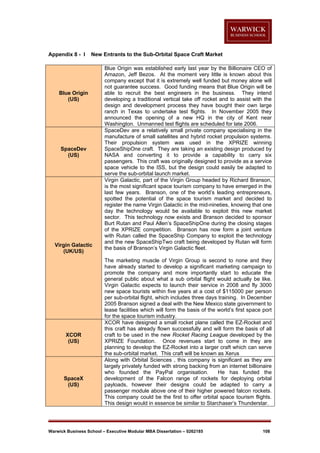
Further information about these companies can be found in Appendix 8-I. Virgin Galactic are
currently leading the way in terms of introducing economically viable technology but it won’t
be too long before other companies such as Starchaser develop their own technology to
compete in this market sector.
2.4.3

Emergence of Commercial Spaceports

As of today there are five non federal spaceports licensed in the U.S however due to the
expected growth in the private space sector, eight other locations in the U.S have applied for
a license to operate a space port. For private space companies such as Starchaser this is
important as it will provide them with a gateway into space without fear of imposing on any
government backed space programmes.

One of the first new spaceports has been

established in New Mexico with the help of the local government. They realised that the
private space industry could bring significant financial and employment benefits to its region
and with an abundance of wide open space it decided to apply to the Federal Aviation
Authority (FAA) for an official license to operate a non-federal spaceport. The Southwest
Regional Spaceport is located at Las Cruces, New Mexico and as part of its marketing
campaign recently hosted the global XPRIZE Cup, a competition for privately funded space
companies to demonstrate their capabilities.

The primary reasons that Las Cruces was granted an FAA operational license were [14]:

Its relatively high altitude, where the air is thinner, allowing rockets to be launched
much more easily



Approximately 350 days of sunshine annually, providing near perfect launch and
recovery operations



The availability of large, open, unpopulated land for establishing launch facilities with
unrestricted airspace



The availability of significant infrastructure along with access to a large population of
engineers and scientists that have previously been involved with a distinguished
history in space related research

Warwick Business School – Executive Modular MBA Dissertation – 0262185

24
The New Mexico Government commissioned Futron Corporation to estimate the potential
space tourism market size [14].

Using a number of quantitative and qualitative survey

methods they were able to estimate the potential total market size (in terms of number of
flights) shown in the first row of Fig.9. The New Mexico market share is shown in the second
row.

Fig. 9 Global Space Tourism Market Opportunity

It is expected that other spaceports will be developed overtime which explains the drop from
75% to 50% market share, however with New Mexico developing the first Spaceport they will
have a significant first mover advantage. Starchaser were the first space tourism company to
establish a base at the spaceport and now with Virgin Galactic wishing to establish a
significant presence in the region, New Mexico has the opportunity to position itself as the
primary destination for those interested in space tourism. Taking into account the space
tourism providers, visitors and spectators to the proposed rocket racing league developed by
XCOR, Futron expect the economic benefits to the region to be very significant, these are
highlighted below in Fig.10.

Fig. 10 Economic Value to New Mexico State

Over time, the Spaceport will expand considerably and will become home to a number of
space tourism operators, service companies and manufacturing operations. These activities
are summarised overleaf in Fig.11 [14].

The combination of Virgin Galactic, Starchaser and New Mexico State has for the first time
shown that space tourism for the masses is not only a reality but will be possible within 2
years. The technology has been demonstrated and proven, Virgin and Starchaser have the
vision that space tourism is economically achievable and the New Mexico State authorities
have the belief that they can lay the foundations for an entirely new industry which will bring
significant economic benefits to it’s region.

Warwick Business School – Executive Modular MBA Dissertation – 0262185

25
Fig. 11 New Mexico Spaceport Business Opportunities

2.5

Review of the UK’s Space Strategy

Today’s UK space strategy, prepared by the British National Space Committee (BNSC)
focuses on three core areas and is currently supported by the British Government with nearly
£200Million of funding. This is relatively small when compared to France which contributes
nearly £2Billion to its space efforts, making the UK a relatively small partner in the European
space industry. The UK’s space strategy maps out clear scientific and commercial objectives
rather than to develop space technology as an end to itself.

For this reason, the UK’s Vision is [15]:-

“To be the most developed user of space-based systems in Europe for science, enterprise
and the environment. UK citizens will provide and exploit the advanced space-based systems
and services which will stimulate innovation in the knowledge driven society”.

To achieve this vision the government has therefore decided to focus on the following :

To expand knowledge in astronomy, planetary and environmental sciences



To create opportunities for commercial exploitation of satellite systems



To advance key public services

Warwick Business School – Executive Modular MBA Dissertation – 0262185

26
2.5.1

Enhancing UK’s standing in astronomy, planetary & environmental science

One of the largest beneficiaries of the Government’s £200Million investment per year is the
Particle Physics and Astronomy Research Council (PPARC). The council provides grants to
University based research programmes which are working towards a greater understanding of
the earth and the universe.
2.5.2

Increased productivity through promoting the UK’s use of space

Today’s space industry is helping to stimulate new opportunities in the economy, in
commerce, public policy, science and for consumers.

This is achieved through direct

provision of satellite services. The Government’s main goal is to maximise the exploitation of
these opportunities throughout society. To achieve this it needs to influence the development
of new space systems within the international market and it needs to establish the
downstream services which could exploit them. The number of different projects identified by
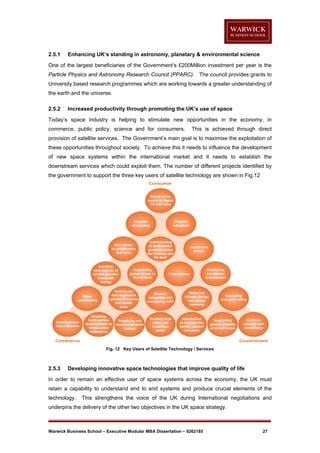
the government to support the three key users of satellite technology are shown in Fig.12

Fig. 12 Key Users of Satellite Technology / Services

2.5.3

Developing innovative space technologies that improve quality of life

In order to remain an effective user of space systems across the economy, the UK must
retain a capability to understand end to end systems and produce crucial elements of the
technology.

This strengthens the voice of the UK during International negotiations and

underpins the delivery of the other two objectives in the UK space strategy.

Warwick Business School – Executive Modular MBA Dissertation – 0262185

27
2.5.4

Size and Health of the UK Space Industry

The commercial sector of the British space industry primarily supports the satellite industry.
This particular industry is split into two sectors, those companies providing space technology
for the satellites, the ‘upstream’ industry and those companies that actually exploit the satellite
services, namely the ‘downstream’ industry. In 2004 the BNSC conducted a survey of all UK
companies involved with space related business, 222 organisations were represented in the
findings [16].

The space related turnover of these companies varies over a wide range with only five
companies having a space turnover of £100Million and some 68% of the companies having a
space related turnover of less than £1Million. The total space related turnover of the UK
space industry is estimated to be £4Billion.

Compared to the upstream sector the

downstream turnover represents 87%of the total industry turnover. The breakdown of the
upstream and downstream sectors are shown below in Fig.13.

Fig. 13 The Upstream and Downstream Sectors of the UK Space Industry

The application of these activities is dominated by the telecommunications and broadcasting
industry, this application alone represents nearly 80% of all UK space industry turnover. This
investment has paid off as the UK is one of the World leaders in the adoption of digital
television services. Fig.14 below shows the turnover by space application. It is significant that
the space transportation sector represents only 1% of the total turnover.

Fig. 14 2003 Turnover by Application, Excluding the Consumer Market

Warwick Business School – Executive Modular MBA Dissertation – 0262185

28
2.5.5

UK Involvement with the ESA Programme

The UK is one of the founding members of the ESA programme which is divided into two
categories, optional and mandatory programmes. The UK chooses to take part in most of the
optional programmes, and membership of the mandatory programmes is subscription based
and rates are worked out as a percentage of each European country’s GNP. Fig.15 below
shows the various ESA programmes in 2001 and how the UK subscribes to programmes
which it feels best supports the UK space strategy, namely Navigation, Earth Observation and
Science [1]. Today, the UK contributions to ESA are roughly the same, this is despite the UK
being the second richest country, (behind Germany), in Europe.

Fig. 15 UK Financial Contributions to ESA Programmes

2.5.6

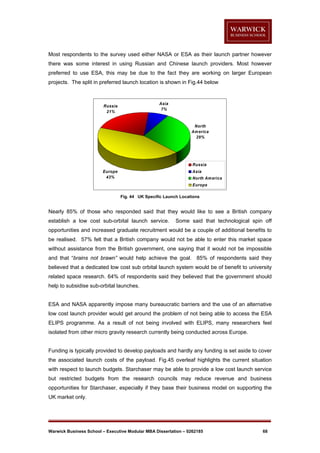
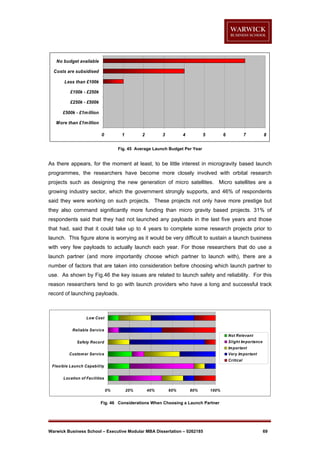
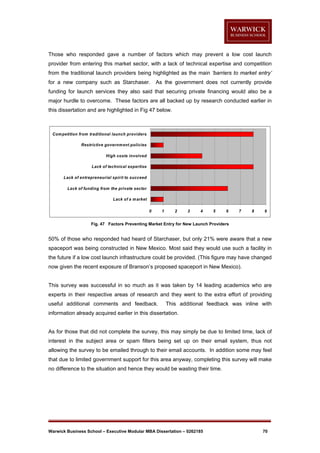
UK Micro-Gravity Activities

The main issue faced by the UK is that it does not have access to a dedicated micro gravity
environment. The UK decided not to be a member of the ISS when it was being discussed in
the 1980s. Similarly the UK has refused to become involved with micro gravity programmes
run by ESA.

The UK has decided to not participate in the European Life and Physical

Sciences (ELIPS) research programme and as such will not be able to get access to the
research and data derived from this programme. In 2002 , 102 UK researchers from 33
universities, 5 research institutions and 13 industrial companies were identified as potential
users of the ELIPS programme [1].

These researchers also formed part of the survey

population for this dissertation and the results will be discussed in Chapter 4.

Some UK universities have used sounding rockets for conducting micro gravity experiments
but with the demise of the Skylark programme the UK currently does not have a dedicated
launch facility for these experiments. As mentioned earlier, Sounding Rocket Services Ltd
are looking to re-introduce a new sounding rocket service in the near future.

Warwick Business School – Executive Modular MBA Dissertation – 0262185

29
2.6

An Overview of Starchaser Industries

Starchaser Industries is a privately held, high technology company that specialises in the
development, operation and commercialisation of space related products and services.
Starchaser enables new space related business opportunities by providing safe, reliable
affordable and reusable access to space for both space tourism and micro-satellite launch
markets. Founded in 1992 by current CEO Steve Bennett, the company is staffed by a highly
skilled, innovative and motivated workforce based at its research & development, assembly
and integration facility in Hyde, Cheshire, UK.

Steve Bennett also serves as the Director of

Space Technology at the University of Salford.

Starchaser began life as an experimental rocket test programme set up by Steve in 1992.
The objective had been to develop an inexpensive means of delivering small scientific
payloads to high altitudes. This research was funded through a variety of sponsorship deals
and by the mid-nineties the project had grown into a team effort.

In 1996 the team

successfully launched a 21ft rocket, Starchaser 2, which at that time qualified as the largest
private civilian rocket ever to be built and flown in Europe. Starchaser has an enviable record
of successful launches and they have now become internationally recognised as leader’s in
their field and are rapidly becoming a household name.

Starchaser officially entered the Ansari XPRIZE in 1997, one of the original entrants to the
competition and was incorporated as a private limited company in December 1998. On 22nd
November 2001 Starchaser successfully launched Nova, the world’s first privately built
reusable rocket capable of carrying passengers into space. In 2001 Starchaser started the
development of their Churchill range of rocket engines, culminating with the development in
November 2003 of the Churchill Mk3, a large 15 tonne bi-liquid engine. The intention was to
use a pair of these engines to power Starchaser’s official entry to the XPRIZE competition,
the Thunderstar rocket.

Starchaser initiated a very successful educational outreach programme in 2003, an ideal
platform to educate the school children of today into the technology and space tourism
possibilities of tomorrow. This activity along with open days at their facility provided a steady
source of income for the company. Starchaser then transferred its presentation and exhibit
materials to the Spaceport Visitor Centre in Liverpool in July 2005, this was to become the
UK’s leading space related visitor attraction. In 2005 Starchaser opened an office in New
Mexico, the world’s first dedicated commercial spaceport.

Starchaser intend to use this

facility as their launch facility for future sub-orbital and orbital space programmes.

Warwick Business School – Executive Modular MBA Dissertation – 0262185

30
Starchaser spent nearly six years working towards their goal of winning the XPRIZE
competition however they were beaten by Paul Allen’s SpaceShipOne programme. They had
acquired valuable knowledge and experience in developing low cost rocket systems and
rather than disappear, as most other XPRIZE contenders did after the competition, they
decided they wanted to develop Starchaser into a proper commercial space business. As
part of this process, Starchaser began work in 2004 to convert their business into a public
limited company and raise the necessary funding to develop new facilities, rocket
programmes and allow a facility to be opened in the States, potentially Starchaser’s single
largest market. Overtime, Starchaser began to devise a business plan, one which would
allow the business to grow organically and allow the company to one day be able to compete
in the orbital space tourism market.

Starchaser’s primary objectives are :


to provide safe, reliable and affordable access to space for all



to become market leader in non government space access



to be recognised as ‘the’ British space programme

Starchaser realised early on that the investment community was nervous about funding purely
space tourism focused companies and therefore devised a stepping stone business plan that
would allow them to gradually achieve their space tourism dreams.

Starchaser will initially develop a new programme for sub-orbital sounding rockets, Project
Skybolt, shown in Fig.16 below, was conceived to address this market sector. Skybolt is
effectively a reusable sounding rocket providing the capability to launch scientific payloads
into space at a very affordable rate.

The reusable nature of Skybolt makes it unique in the

industry and will help drive down launch costs. Skybolt will be 12m tall and will deliver a
100kg payload to a target altitude of 100 miles.

Skybolt could be seen as the natural

successor to the British Skylark programme referenced earlier in this chapter.

Fig. 16 Reusable Skybolt Sounding Rocket

Warwick Business School – Executive Modular MBA Dissertation – 0262185

31
One of the key strengths of Starchaser is its internal design capabilities.

Through a

sponsorship agreement with a product development software company they use state of the
art computer aided design systems to design all components of their rockets. As well as the
launch vehicle, Starchaser also design their own engines. Their latest engine, Storm, is a
modified and slightly smaller version of their Churchill 3 engine and this will be used to power
the Skybolt sounding rocket. This engine is shown below in Fig.17.

Fig. 17 ‘Storm’, 7 tonne Bi-Liquid Rocket Engine

The Skybolt programme will allow revenues to be generated which will then contribute
towards their next programme, Project Thunderstar, to enter the new and lucrative sub-orbital
space tourism sector. Thunderstar is a single stage rocket powered by a pair of Churchill 3
engines. The capsule would be capable of carrying three people and after reaching apogee
would return to earth via a GPS guided parachute. The flight profile of Thunderstar is shown
in Appendix 8-L and Starchaser’s range of rockets are shown below in Fig.18.

Fig. 18 Starchaser Range of Rockets

Warwick Business School – Executive Modular MBA Dissertation – 0262185

32
Despite limited funding, Starchaser have reached many milestones over the last twelve years
and they have remained in business with the aid of creative ways of raising revenue streams.
If they had proper financial and business plans then their dream of being the UK’s space
business will become a reality. The remainder of this dissertation will identify how this can be
achieved.

2.7

Summary

The aim of this chapter has been to understand the shape and make up of the current
sounding rocket and emerging space tourism industries, who the main players are within each
sector, provide an understanding of new business opportunities within the these sectors and
finally to understand the UK government’s strategy for space related activities and research.

The sounding rocket and space tourism industries represent the two opposite ends of
Starchaser’s business strategy and the information researched within this chapter will allow
Starchaser to develop their business plan in order to execute their long term strategy.

Warwick Business School – Executive Modular MBA Dissertation – 0262185

33
3

Review of Literature

3.1

Introduction

The following chapter will provide a review of academic literature researched for this
dissertation. This review will be split into the two fundamental areas introduced in Chapter 2,
namely the sounding rocket and space tourism market sectors. This dissertation is primarily
focused on marketing, business strategy and entrepreneurship activities and therefore
relevant MBA frameworks and tools will be employed to analyse the industry and company
specific issues faced by Starchaser when they enter these market sectors. The sounding
rocket market sector will be reviewed first.

3.2

Review of the Sounding Rocket Market Sector

As discussed earlier in Chapter 2, the sounding rocket market was initially conceived to
service the demand from research and educational institutions for a microgravity based
research platform. Most of the academic research that has been conducted in recent years
has been to understand the potential ‘uses’ for microgravity and the ‘need’ for microgravity
based research platforms. The microgravity sector has been constrained for a number of
reasons, for example a lack of low cost launch providers and government policies on
providing access to these facilities. Even though Starchaser are hoping to establish a non
government funded business model, most of their market opportunity actually comes from the
scientific and research communities, which are primarily supported by government grants.
3.2.1

Microgravity & Sounding Rocket Industry Analysis

Today’s European sounding rocket industry is dominated by ESA sponsored launches from
Northern Europe. The main competitive advantage that Sweden has is that it has access to a
large area of uninhabited space where sounding rockets can be launched. As a result of
these facilities, the Swedish government has been very supportive of companies wishing to
enter the sounding rocket industry and as such provide favourable grants to help new space
related companies establish themselves in this region. By comparison, the UK government
has a completely different attitude to supporting the microgravity and associated sounding
rocket industry.

Some of these reasons were discussed in Chapter 2, but the following PEST analysis of the
microgravity and sounding rocket industry summarises the issues from a political, economic,
society and technology standpoint.

Warwick Business School – Executive Modular MBA Dissertation – 0262185

34
Fig. 19 PEST Analysis of the UK Sounding Rocket Industry

Over the years the sounding rocket industry has seen many new entrants into a market which
was once dominated by the larger space agencies such as NASA.

Over time, smaller

companies began to emerge who subsequently took over from where the major agencies left
off. Today, NASA sub-contracts out the manufacture of the rockets for its sounding rocket
programme and numerous other companies have emerged, primarily in the U.S and Europe,
to compete in this specialised industry. The PEST analysis in Fig.19 provided a high level
overview to the industry as a whole and the companies competing within this industry are
analysed by way of Porter’s Five Forces [17], illustrated in Fig.20 below.

Fig. 20 Porter’s Five Forces Analysis



New Entrants – The space industry has always been perceived as a technically
challenging and high cost industry to enter. For this reason there are relatively few
companies involved in this industry. Government red tape, flight safety and
operational licenses from the respective aviation industry bodies all add to keeping

Warwick Business School – Executive Modular MBA Dissertation – 0262185

35
the entry barrier high. Space launch system projects are also perceived as offering
risky investment opportunities and so many projects require private investment to
prove capability before investment houses are willing to provide funds for growth


Supplier Power – One of the key components of any sounding rocket is the engine.
Today, both NASA and ESA use rockets powered by ex-military rocket motors.
These motors are in short supply and the industry needs new rocket engines such as
the Brazilian VSB30 to secure the future of the sounding rocket market sector.



Buyer Power – In recent years the buying power has shifted from individual research
groups launching their own rockets to the larger space agencies sub-contracting out
the manufacture of their own sounding rockets to companies such as Orbital
Sciences. Most sounding rocket launches today are carrying scientific payloads
developed by universities which in turn are indirectly funded by various governments.
Government has the ability to control grants awarded to research groups and hence
limit the number of potential launches that can be conducted



Threat of Substitutes – In recent years a number of private companies such as
Orbital Sciences and SpaceX have developed lower cost rocket launch systems. In
addition, the emerging space tourism industry may see companies such as Virgin
Galactic using their space tourism vehicles to not only carry passengers but to also
carry scientific payloads for deployment during apogee.



Competitor Rivalry – As NASA and ESA have largely sub-contracted out most of
their sounding rocket programmes, most of the competition in the market is between
companies such as Orbital and the Swedish Space Corporation.

As these

organisations receive significant space agency contracts, they are very well funded.
Sounding rocket manufacturers who have a good safety record and undertake work
on behalf of a space agency tend to win the lucrative high profile launch contracts.

3.2.2

UK Microgravity Research Policy

In order to understand the potential market demand for a UK sounding rocket service it is
important to understand the UK government policy concerning microgravity based research.

In 2002 the UK government wanted to obtain a better understanding of the potential of
microgravity based research and a microgravity review panel was established to examine the
potential opportunities for microgravity based research. The review panel was headed by
Professor Bill Wakeham, Vice Chancellor of Southampton University and Chairman of the
BNSC Life and Physical Sciences Network Group. The review panel subsequently asked the
BNSC and the Rutherford Appleton Laboratory to establish the ‘market demand’ for such a
service.

Warwick Business School – Executive Modular MBA Dissertation – 0262185

36
The Rutherford / BNSC report [1] noted that from a historical perspective, the life and physical
sciences research areas, (that exploit microgravity conditions), have never been a high
priority in comparison with other UK space related activities. One of the initial academic
research studies, the Pippard Report [18] , was conducted in 1989 by Professor Sir Brian
Pippard on behalf of SERC and it concluded that there was no strong case at that point for
the UK to join the ESA microgravity programme. Whilst many European countries signed up
with the construction of the ISS, the UK declined becoming involved with this project. This
negative attitude to any involvement with microgravity and the ISS continues to this very day,
with the government’s current space policy centred on “putting space to work”, ie needing to
identify clear scientific or commercial benefits from space activities before participating.

The microgravity review panel concluded [19] that there were a number of scientific
opportunities for microgravity based research and these were divided into six disciplines,
namely fundamental physics, fluid and combustion physics, materials science, biology,
physiology and astro/exobiology and planetary exploration. (The leading academics involved
with these areas of research were contacted as part of the research for this dissertation and
the results of the survey are discussed in Chapter 4).

In May 2000, ESA commissioned a strategic marketing study on the potential industrial
opportunities for microgravity based work. This was conducted by Batelle ITM, Cranfield
School of Management and Access-Matrix.

The common overall conclusion from these

independently conducted studies was that the tangible commercial returns in the field of
microgravity were far from being mature. They forecasted that the need over the next 5-10
years is for state sponsored basic research to establish a background from which a
partnership between industry and government can proceed to demonstrate potential, and
then for a similar further period before genuine commercially sponsored R&D would be
attainable.

The falling number of students choosing to study science and technology subjects at
university is a matter of widespread and growing concern in UK industry. Subjects which
involve space research are effective at generating interest in young people. One advantage
of having a UK microgravity research programme would be the opportunity to generate more
interest in science and technology amongst the young generation in particular.

At the time of the microgravity review panel research, the UK had a number of options with
respect to establishing a microgravity research programme, namely [19] :-

Warwick Business School – Executive Modular MBA Dissertation – 0262185

37


Join ESA Programme (ELIPS), which would provide access for UK researchers to
European collaborations and facilities and provide significant commercial space
contracts to UK companies



Collaborate with NASA, this would only be possible if the UK were to become a
member of ELIPS



Collaborate with other U.S Agencies, this would allow UK institutions to make their
own arrangements but they would have to source their own funding rather than
depend on a central funding system



Use facilities of a commercial basis, Individual research groups would be free to
make use of ISS facilities either through ISS partners of one of the commercial
agents. Similarly most other microgravity facilities could be hired commercially from
the operators



Do nothing – Naturally the lowest cost option but there would be no involvement in
research or industrial collaborations, no access to results and more importantly a
poor political impression of the UK as a world-class player

Upon reviewing the available options, the review panel recommended to the UK government
that they should join the ELIPS programme at the minimum membership level. They believed
that while there was no single scientific area where such an investment would lead to a real
breakthrough there were a number of areas where access to this complimentary tool would
be of value. In May 2003 the UK government reviewed the panel’s report and based on the
findings decided not to sign up with the ELIPS programme due to limited budget availability
and lack of demonstrable commercial benefits to be gained [20].

The government also

highlighted the problems with the ISS and the issues associated with getting suitable launch
vehicles, such as the Space Shuttle, up to the ISS. The potential issues faced with
establishing a microgravity industry in the UK can be summarised by way of the Porter’s
Diamond [21] shown below in Fig.21

Fig. 21 Porter’s Diamond Summary of Potential UK Based Microgravity Industry

Warwick Business School – Executive Modular MBA Dissertation – 0262185

38


Factor Conditions – In terms of location, Starchaser are well positioned to take
advantage of a good network of suppliers, contractors and skilled workforce.
Starchaser have all the required resources to be able to construct their sounding
rockets however the one major drawback is a lack of launch facilities in the UK.



Demand Conditions – The UK demand for sounding rocket services is relatively low
due to limited commercial opportunities and scientific research projects have limited
budget availability to fund microgravity related launch programmes.

This will not

change until the government changes its policy towards microgravity research.


Related and Supporting Industries – Even though the UK does not have its own
microgravity programme, it does have a strong presence in other space sectors such
as satellites, deep space exploration probes and participation in other major
European space projects.



Strategy, Structure , Rivalry – As of January 2006 there were no other UK based
manufacturers of sounding rockets. Starchaser have a good opportunity to become
the only major player in this market sector, however key to the growth of this part of
the business is going to be acquiring new microgravity launch customers

Therefore we can conclude from this that the weakest area is related to microgravity demand
conditions in the UK, apart from suitable launch facilities the factor conditions are relatively
high. The remaining two factors, related and supported industries & strategy, structure and
rivalry are the strongest factors relating to microgravity activities in the UK.

Based on these findings the main issue facing the government’s support of microgravity
based research is the lack of funds to support what is perceived as a high cost programme. If
the launch costs could be brought down, thus increasing demand for such launch services,
then there is the possibility that the government would eventually support such a programme
providing that there is no long term tie in. This was the main issue surrounding the ELIPS
programme, namely committing to a five year rolling programme where there was no visible
downstream benefit to the UK from a commercial point of view.

If private enterprise

companies such as Starchaser can make this financially viable then this should help to
increase interest and demand for such launch services.

3.2.3

Review of Starchaser’s Sounding Rocket Programme

Since Starchaser was formed in 1992 they have produced and successfully flown numerous
rockets, with each design becoming progressively larger and more technically advanced.
This step by step evolution of their designs has allowed Starchaser to focus on getting each
technical issue resolved before moving onto the next step, eg incorporating telemetry
systems, parachute recovery systems and ensuring that each engine design has suitable

Warwick Business School – Executive Modular MBA Dissertation – 0262185

39
thrust to lift the rocket to the required altitude. This demonstrates the confidence that they
have to push the boundaries with rocket development and prove that private enterprise is
capable of establishing a business in this market sector.

Starchaser have progressively increased their work force to meet the challenges of
developing more complex rockets and they have defied the odds in terms of raising the
necessary financial security to get the business to where it is today. They have been able to
retain key members of staff and encourage more people to join their operation. Fig.22 below
summarises the current situation at Starchaser and highlights the key strengths, weaknesses,
opportunities and threats facing Starchaser at the moment.

Fig. 22 SWOT Analysis of Starchaser Industries Sounding Rocket Business

As a company, Starchaser has one key advantage over its competitors, namely it’s ability to
manufacture the rocket body and engine in-house, thus allowing Starchaser to retain control
of the entire design process and guarantee rocket motor supply for their Skybolt programme.
Most other sounding rocket manufacturers would traditionally outsource rocket motors rather
than build their own, but the number of off the shelf rocket motors is dwindling very quickly,
thus putting Starchaser in an increased competitive position.

Warwick Business School – Executive Modular MBA Dissertation – 0262185

40
Starchaser’s sounding rocket programme has been designed to provide significant
advantages over its competitors, namely:


Skybolt will be the industry’s first reusable sounding rocket.

Many of today’s

sounding rockets are expendable meaning that new sounding rockets currently have
to be built for each launch.

This is both very expensive and a drain on a limited

supply of rocket engines. The other issue associated with today’s sounding rockets is
that they are being designed to carry more than one scientific payload.

So for

example the latest MASER rocket carried six different payloads. In order for the
MASER rocket to be economically viable it must carry its full payload capacity
otherwise it will be launched at a significant loss. Having to wait for six payloads to
be ready for launch puts a significant time delay on the launch of the MASER rocket
and hence makes it very inflexible from a launch timing point of view. The reusable
nature of Skybolt will hopefully alleviate this problem and allow payloads to be
launched on a more frequent basis.


Skybolt will also represent one of the lowest cost sounding rocket services.
Starchaser have had to manage for years on a minimal development budget but they
have proven that they are capable of developing high altitude rockets. The lack of
budget has actually worked in Starchaser’s favour as they have been able to design
and build rockets using cheaper materials and manufacturing processes, more
importantly without compromising on safety or performance grounds.

Starchaser’s current strategic position is therefore summarised by way of Fig.23 below [17]

Fig. 23 Strategic Focus of Starchaser’s Sounding Rocket Programme

Warwick Business School – Executive Modular MBA Dissertation – 0262185

41
In the context of the whole space industry, Starchaser’s Skybolt programme is targeting a
narrow market segment, namely the sounding rocket market sector. Starchaser’s current
strategy is to adopt a significant product differential over its competitors (ie the reusable
nature of Skybolt) which in turn will help to drive down overall launch costs. In terms of
improving a company’s competitive advantage there are three recognised approaches,
adopting either a specific product focus, product differentiation or product cost leadership.
The reusable nature of Skybolt and its uniqueness in the sounding rocket market means that
Starchaser should be following a differentiation strategy which has the characteristics shown
below in Fig.24 [22]. Other more general company related strategies and issues will be
discussed in section 3.4

Fig. 24 Competitive Advantage through Product Differentiation

3.3

Review of the Space Tourism Market Sector

As highlighted in the previous chapter, space tourism potentially represents a lucrative
$1Billion a year industry by 2020. Initially the main area of development will be the sub-orbital
market sector and then as technology is developed and the investment community start to
take an interest then orbital space tourism will develop very quickly. Prior to the winning of
the XPRIZE in late 2004 it has been the orbital space tourism sector which has received most
interest from the academic community. For example predicting what it would be like to orbit
the earth as a space tourist, what business opportunities could evolve, eg orbital space hotels
and space sports centres.

Warwick Business School – Executive Modular MBA Dissertation – 0262185

42
Fig.25 below tries to predict what the orbital space tourism market and associated
opportunities, could be like by 2030 [23]. Clearly, significant investment and technological
advances will have to be realised before this vision can become a reality and the recent
interest in sub-orbital space tourism ignited by the XPRIZE competition has led the academic
community to re-focus their research into the short term business opportunities rather than
the long term. Orbital space tourism will happen one day and U.S billionaire Robert Bigelow
has established a new $50 million competition [24], similar to the XPRIZE, for the first
company to design a reusable orbital spacecraft which can be used to service his proposed
network of orbital space hotels. It is forward thinking entrepreneurs such as Bigelow and
Branson that will help to kick start the future orbital space tourism industry.

Fig. 25 Space Tourism Market Opportunities by 2030

Today’s academic sub-orbital market research research focusses on :


Trying to establish the potential market demand for what is a completely new and
unknown industry and then trying to predict the likely ticket price per trip into space



Estimating potential economic benefits, eg the Futron study conducted on behalf of
the New Mexico State government



Establishing which of the current sub-orbital space tourism companies are likely to
succeed based on their proposed spacecraft designs, individual business models,
marketing capabilities and proposed methods of financial investment



Trying to work out how to market and position a space tourism company, within an
entirely new industry sector, to a general public that knows little about the industry



The likely human ‘endurance’ implications for passengers wishing to take such flights



The technological barriers which have to be overcome to develop a cost effective
space craft design

Warwick Business School – Executive Modular MBA Dissertation – 0262185

43
3.3.1

Sub-Orbital Space Tourism Industry Analysis

One of the World’s leading authorities on space tourism is Professor Geoffrey Crouch from La
Trobe University in Australia.

Professor Crouch has written a number of space tourism

research papers which address some of the afore-mentioned key areas of the space tourism
market sector. Some of these will be discussed later in this section but first, the following
PEST analysis shown in Fig.26 below, (adapted from one prepared by Professor Crouch,[25])
attempts to highlight the current issues facing the sub-orbital space tourism industry.

Fig. 26 Sub-Orbital Space Tourism Industry PEST Analysis

The future direction of the space industry lies in part with what the major space agencies such
as NASA and ESA will do. They have already started to sub contract work out to companies
such as Orbital Sciences but they will need to do more to help small private firms enter what
is currently a very lucrative market. NASA suffers from two externally controlled forces,
uncertainty concerning its funding because the granting agency, the US congress, changes
elected membership every two years and in addition, members of congress have repeatedly
changed the content of NASA programmes to benefit the private space contractors within
their constituency [25]. This situation has called for privatisation of the space industry [26]
which will open up more commercial opportunities for entrepreneurs to establish new
commercial space companies. The recent success of projects such as the XPRIZE has
helped to highlight what small companies are able to achieve on relatively small budgets.

Warwick Business School – Executive Modular MBA Dissertation – 0262185

44
A viable commercial space tourism industry will require a clear legal framework to facilitate
and encourage developments in space tourism [24], rather than the existing legal regime
which originated during the cold war era. Legal issues that need addressing include the need
for co-ordination of potentially high frequency space launches (availability and desirability of
insurance for spacecraft / owners / operators / passengers and even the drafting of new
criminal laws to apply in a space context, (eg anti terrorism / hijacking etc). If the space
tourism industry is to flourish then these issues need to be addressed at an international level
rather than have different laws for each country.

Although governments may play an

important regulatory role, and the use of government assets may be a part of a space tourism
industry for some time, the real driving force behind space tourism, apart from customer
demand will be the financial returns that arise from new competition and enterprise. (Grouch,
2004)

3.3.2

Competitive Analysis of the Space Tourism Market

The space tourism market today is very much in it’s infancy with some of the original entrants
to the XPRIZE competition trying to transition their projects into commercial sub-orbital space
tourism businesses. As Virgin Galactic [27], in partnership with Burt Rutan, won the XPRIZE
they are perceived for the moment to be the market leaders (in terms of proven technology)
but the true measure of success of the venture will depend upon how quickly they can bring
their SpaceShipTwo craft into service. At the moment this is scheduled for 2008. Since the
XPRIZE competition, Virgin Galactic have used the marketing muscle of the Virgin Group to
help promote and position the company as the world’s only ‘viable’ space tourism company.
Virgin Galactic certainly has the technology and marketing skills in place to help build their
business but there are other companies aiming to take on Virgin Galactic in the future.

The nearest competitor is Starchaser, primarily as they were perceived as the only serious
competitor, other than Virgin Galactic to win the XPRIZE. From an XPRIZE point of view the
‘competition factor’ was measured by how much ‘working & demonstrable’ technology was in
place. Starchaser had completed a number of launches in the past and another 12 months
work could have seen them winning the XPRIZE ahead of Virgin Galactic.

There are many other companies continuing to develop sub-orbital technologies, most of the
XPRIZE teams had conducted engine tests but had never flown a full size version of their
craft. Other companies such as XCOR have developed a rocket plane to be used in the
Rocket Racing League competition, a further development of this craft, called Xerus, will
allow XCOR to enter the sub-orbital tourism market. One other competitor to watch out for
over the next few years will be Blue Origin [28], funded by the Amazon CEO Jeff Bezos, they
currently do not have any demonstrable technology to speak of but they are determined to

Warwick Business School – Executive Modular MBA Dissertation – 0262185

45
recruit the best rocket engineers in the industry and money will be no object when
establishing their launch facilities in Texas. The marketing experience of Amazon will ensure
that Blue Origin will become a well known global brand, very quickly.

In order to determine a competitive positioning matrix based on today’s main sub-orbital
space tourism competitors the author had to derive two positioning variables based on
measurable variables emerging today. As the market is still developing, some technology has
not been fully flight tested / approved and levels of service offering cannot be measured as
yet. The author therefore decided to base the matrix on the level of demonstrable technology
they currently have in place now and the brand visibility with respect to the competition.
Naturally, potential space tourists will want to fly with a company they have heard of, where
the technology is proven and safety records are at the highest possible levels. The
competitive position matrix shown below in Fig.27 aims to show where today’s key players
are with respect to each other.

Fig. 27 Sub-Orbital Competitive Positioning Matrix

Most of today’s private sub-orbital space tourism companies are funded by world famous
billionaires and as with the companies they have built their respective fortunes on, they will be
extremely competitive at proving that their space company is the most successful on the
market. However it is a known fact that you can have all the money in the world and the
project could still fail, this is where industry experience and proven capability can provide a
significant competitive advantage.

Warwick Business School – Executive Modular MBA Dissertation – 0262185

46
3.3.2.1

SWOT Analysis of Virgin Galactic & Starchaser

The following section provides a comparison of Virgin Galactic and Starchaser :-

Fig. 28 Comparative SWOT Analysis Between Virgin Galactic & Starchaser Industries

Warwick Business School – Executive Modular MBA Dissertation – 0262185

47
Virgin Galactic and Starchaser represent two completely different companies, one is well
funded with a global reputation for marketing expertise and risk taking whereas the other is
very much smaller, with minimal budget but a significant industry and knowledge base to offer
the potential of one day being a large and success full space tourism company. Richard
Branson and Steven Bennett share a desire to be successful at everything they do and if
necessary take risks to achieve their respective goals. They are both entrepreneurial in
nature and are sometimes referred to today as tomorrow’s ‘Astropreneurs’ [29].

3.3.3

Estimating Market Demand for Space Tourism Services

One of the key factors to the success of the space tourism industry will be the ability to
accurately predict the market demand levels for sub-orbital flights. A number of surveys have
been conducted to gauge the general public’s thoughts on space tourism. (This dissertation
undertook a similar survey and the results to which are discussed in Chapter 4). The one
common question asked by all surveys was “how much would you be willing to pay for a
space flight”. Market demand or in this case ‘interest’ [30] in terms of number of people willing
to take a trip into space was thus mainly determined by the price of the flight. Numerous
space tourism surveys have been conducted over the years and each one has provided
interesting feedback on the likely demand for space tourism services in the future. The overall
market elasticity was calculated by Ivan Bekey [31], this summarises the various price /
demand estimations and is shown by way of the graph in Fig.29 below.

Fig. 29 Estimating the Elasticity of the Space Tourism Industry

Warwick Business School – Executive Modular MBA Dissertation – 0262185

48
Once all the demand curves had been placed on the graph it became clear that the overall
demand trend highlighted that space flight ticket prices would become within the grasps of the
average person once ticket prices were between $5k and $10k. The survey conducted for
this dissertation showed that a significant number of respondents would be willing to pay up to
3 months average salary to take a sub-orbital space flight, (this ties in with the estimation
provided above). It will only be possible for the prices to come down once the technology is
‘in service’ and there are enough operators to encourage competition.

It has been argued that most of these surveys will have been very simplistic, measuring
‘interest’ instead of true ‘demand’ for space tourism [25]. One also has to consider that the
wide variety of possible space tourism products and experiences that might develop, will
affect potential demand tremendously as a function of the attributes of the various alternatives
which might emerge, [25].

In addition to ticket price, Crouch [30] highlights a number of other market factors which may
influence demand, eg how will the design of the spacecraft affects ticket reservations, ie plane
style or conventional rocket style. Each method of travel affects other factors such as cost,
risk, flight duration, comfort, training requirements, viewing configurations, launch and return
locations. Every passenger will subliminally assess all these variables before choosing which
operator to fly with. Therefore, with so many variables being measured within a new market
sector and with no previous comparable market demand data to work from, how can the
demand be estimated ?

There are a number of behavioural theories and research methodologies which can
potentially address these challenges. Discrete Choice Modelling, DCM, [32] using Random
Utility Theory (RUT), [33], combined with Information Acceleration (IA) [34], provides a
rigorous and reliable means for making progress in answering problems of this nature.
Gathering the data required to enable the DCM of consumer choice in space tourism would
therefore entail the design and execution of consumer choice experiments [30]. An example
of the attributes making up a consumer choice experiment related to space tourism is shown
in Appendix 8-M, [30]

In addition to the consumer choice experiment above which relies on probability to help
determine the ‘estimated’ market demand a much more simpler way would be to try and use
data that exists at the moment to form the basis of an estimation. In order to secure funding
from the investment community, they prefer to see hard facts relating to market demand
rather than the estimates derived from an extrapolated graph. Two leading experts from the
financial community, [35], proposed that a more accurate picture could be established by
using suitable figures from the World Wealth Report [36]. An overall market potential of over

Warwick Business School – Executive Modular MBA Dissertation – 0262185

49
40,000 people was calculated and conservatively estimating that 0.56% of high income
people would actually buy a ticket. The maximum ticket price was assumed to be $100k. The
demand figure was suitably high and gives a high enough safety margin. There is even room
for competitors hence the data shown below in Fig.30 presents a strong business case.

Fig. 30 Estimated Ticket Demand Based on World Wealth Report

3.3.4

Financial Investment Issues Associated With Space Tourism

Securing financial investment for space related technology development is one of the biggest
hurdles with developing a space tourism business. The XPRIZE was won by a company
funded by one of the richest men in the World, namely Paul Allen co-founder of Microsoft. If
he had not provided the $20 million investment into his Mojave Aerospace Ventures to
develop SpaceShipOne then there is a chance that organisations would still be competing for
the XPRIZE today.

A number of billionaires have now entered the space tourism industry, Jeff Bezos (Amazon
CEO), Richard Branson (Virgin Group) and of course Paul Allen (Microsoft) to name but a
few. These men are regarded as risk takers and are willing to put up money for a venture
which has a potential for a good return.

Venture capital companies are also renowned for investing in risky businesses however the
space tourism industry is an unknown quantity and many venture capital firms shy away from
providing funding with the following reasons being highlighted by Dr Livingston and venture
capital company Colony Fund LLC [37]

Warwick Business School – Executive Modular MBA Dissertation – 0262185

50


Unwillingness or inability to identify the team, space companies require a team of
people with a diverse set of skills and experiences with the minimum team comprising
of technical experts, managers, financial specialists, marketing people and other
industry professionals. Any entrepreneur who will not discuss the identity of his team
or the skills they bring to the table will be considered as being suspect



Nebulous funding sources, In addition to a team, a space enterprise requires
startup capital. Companies having ‘exotic’ sources of income or those refusing to
specify their sources of capital will also be treated suspiciously. Startup funds
provided by the people involved with the company will be seen as being very positive
and a willingness to take financial risks themselves in order to get established.



Any mention of the word Billion or Dollars with a straight face, Any startup
looking for eight or nine figure capitalisation in the current embryonic state of the
commercial space industry are extremely questionable.

The reality is that the total

private capitalisation in the New Space companies to date is probably nearer to the
$200-$300million range. As this is a new industry with little to show so far in the way
of overall track record, it can be safely claimed that a string of successful, but modest,
space startups will be needed to lay the groundwork enabling venture capitalists to
feel more comfortable with larger risks (ie “Aim small, miss small”)


No understanding of the target market, Knowledge of a target market is essential,
who are the customers ?, how much are they willing to pay ?, how do you plan to
attract these customers ?. In short, a strong marketing plan with extensive research
conducted on the target industry, competitors and customers is essential



Large quantities of ‘unobtanium’ infused into the business plan, business plans
containing proposals for technologies or exotic materials that don’t even exist yet is
often a sign of trouble. Most rocket technology available today has been tried and
tested over many years. The trick from an investment point of view is trying to make
the design and manufacturing process much more economical to bring down costs
and hence increase overall profitability



Playing the conspiracy card, be wary of entrepreneurs who claim that their
business plans have been impeded in the past by ‘Big Business’ or Government
issues, this means that poor planning, unachievable goals and lack of research may
actually be to blame for poor company performance

Warwick Business School – Executive Modular MBA Dissertation – 0262185

51
In addition to a very strong business and marketing plan, a venture capital company will
require the following characteristics when looking to invest in a project :

Exceptional management teams



Clear value propositions



High growth markets



Strong competitive position



Focused and differentiated technologies



Substantial gross margins

The apparent ‘signal to noise’ ratio [37] of today’s space enterprises is significantly high, with
some of the ex-XPRIZE contenders being the main examples of companies promoting nonviable business plans involving unrealistic concepts that deters VC’s from placing funds into
the industry.

The problem is that these companies are actually putting up a barrier for

companies such as Starchaser who have actually got their hands dirty with the technology
and who now need guidance as how to take their business to the next stage of evolution.

Some typical questions asked about the robustness of a space tourism startup are ;


Can the company raise what it needs under the projected market conditions ?



Can the company carry the cost of capital even if there is a slip in schedule ?



How high are the safety margins in the cash flow plan ?

If a space entrepreneur has to present a financial proposal to the investment community then
the following aspects should be researched in detail [35],

Parameter

Drivers

Cost of Capital

Debt / Equity Ratio

R & D Cost

Technology Maturity Level

Time to Market

Project Management / Regulatory Env.

Revenue Expectations

Overall Demand Competition

Fig. 31 Key Information Sought by the Investment Community

Warwick Business School – Executive Modular MBA Dissertation – 0262185

52
3.4

Review of Starchaser’s Current Business Strategy

Starchaser have matured immensely over the last ten years, starting out as a group of people
developing small rockets on a part time basis to now having ambitious plans to establish a
presence in the sounding rocket & emerging sub-orbital space tourism industries. This shows
that they have the entrepreneurial spirit and determination to grow their business. Unlike most
of the XPRIZE entrants, Starchaser have been able to keep their business afloat by securing
additional outside investment from private individuals and by developing a range of other
revenue generating initiatives. These activities have allowed Starchaser to continue to
develop their technology and to get the business to a position where it can begin to structure
itself so as to make itself attractive to the investment community.
3.4.1

Company Strategy

It is recognised that there are four stages to the effective development of an organisation,
Mission & Objectives describe what an organisation is looking to do and Strategy & Tactics
are the methods of how they will be achieved. This has simply become know as the M.O.S.T
method [38] of applying a systematic approach to business development which will increase
its long term stability and effectiveness. This model allows organisations to focus its
resources and provides a foundation on which to evaluate its performance. In terms of
identifying if Starchaser are undertaking the correct initiatives to help grow their business the
M.O.S.T analysis was used to examine their current business strategy.

Fig. 32 M.O.S.T Method of Analysing Business Growth

Using this method of analysing Starchaser’s current business strategy, their primary Mission
is to:


Provide a safe , reliable and affordable access to space for all



To become the market leader in non government space access



To be recognised as ‘the’ British Space Programme

Warwick Business School – Executive Modular MBA Dissertation – 0262185

53
Their current Objectives for achieving this mission is to employ a five stage growth strategy
as shown in Fig.33 below:

Fig. 33 Representation of Starchaser’s Current Business Strategy

Stage One represents their first significant business opportunity since the XPRIZE was won
in October 2004. Starchaser have spotted a gap in the market left by the Skylark sounding
rocket programme and are now using their experience to develop the world’s first reusable
sounding rocket. This rocket is being developed with proven technology and will form the
basis of one of Starchaser’s main revenue streams over the next few years.
Stage Two will involve developing their XPRIZE contending rocket, Thunderstar, into a viable
sub-orbital space tourism launch vehicle.

Once again Starchaser are using proven

technology developed from a number of test flights, drop tests and engine firings conducted
during the XPRIZE competition.
Stage Three will see the development of a two stage rocket called Thunderbird to allow for
the deployment of payloads such as small satellites into orbit. The current industry trend for
much smaller GEO stationary satellites means that launch vehicles can be smaller, thus
reducing launch costs.
Stages Four & Five will see an adaptation of their Thunderbird rocket to allow for the
carrying of space tourists. Once again the technology used is mature, the problem facing
Starchaser will be trying to develop the vehicle to withstand heat on re-entry to the earth’s
atmosphere and ensuring that safety on board the rocket is of the highest levels. These
factors contribute to making Interplanetary travel the most difficult goal for Starchaser to
achieve.

Warwick Business School – Executive Modular MBA Dissertation – 0262185

54
Starchaser’s initial Strategy is to focus on their sounding rocket programme and once this
has been brought to market they will then focus on the continued development of their
XPRIZE vehicle to compete against Virgin Galactic in the sub-orbital space tourism industry.
If Starchaser can successfully reach these two stages in their overall strategy then they will
be in a position to move onto stage 3. Starchaser cannot afford to be distracted by, for
example, lucrative business opportunities in the orbital market, they MUST get their base or
foundation layer of services and technology in place first in order to reach stage 3. To this end
a number of Tactical projects have been identified which must be completed before reaching
Stage 2 of the growth pyramid, namely (in preferential order) :


Complete development of the new Churchill 3 derived bi-liquid STORM engine



Complete the development of the reusable Skybolt sounding rocket



Continue development of the Thunderstar launch escape system and 3 man capsule



Continue development of the Starchaser 5 / Thunderstar Rocket



Development of Guidance / Navigation systems



Development of a hybrid rocket engine

In terms of identifying when each stage of the business growth pyramid is likely to be
reached, we can use an S-Curve to illustrate the expected ‘project’ (as opposed to product)
lifecycle according to when the service offering and technology mature. Starchaser’s various
project lifecycles are shown below in Fig.34.

Fig. 34

Starchaser’s Project Lifecycle’s

Warwick Business School – Executive Modular MBA Dissertation – 0262185

55
Fig.35 attempts to show how each service will mature and we can see for example that the
sounding rocket service will be brought into service relatively quickly as the technology being
used is fairly mature and Starchaser already have significant experience in this area. It is
hoped that the sounding rocket service will become Starchaser’s initial source of income to
allow the continued development of the next stage of their programme. Their sub-orbital
service will require a longer period for R&D due to the additional requirement of carrying
passengers, but once again some of this work has already been conducted as part of the
XPRIZE competition. Overtime it is hoped that the lessons learnt developing sub-orbital space
technology will be applied to the orbital programmes that Starchaser would like to develop in
the future. Interplanetary travel is seen as a very long term goal and will require significant
financial investment.

Before Starchaser can devise a comprehensive business plan to take to the investment
community, they will need to undertake a number of assessments as to whether the company
is ‘ready’ to enter these new markets. According to Dr John Mullins [39], they will need three
crucial elements, a market, an industry and a core team of people to be able to successfully
execute the strategy. To assess whether Starchaser can reach each stage of their proposed
growth pyramid, Mullins recommends analysing each stage using the seven domains of
attractive opportunities.

The seven domains are shown overleaf in Fig.35 and each is

explained in more detail in Appendix 8-N.

Fig. 35 Seven Domains of Market Attractiveness

Warwick Business School – Executive Modular MBA Dissertation – 0262185

56
On first glance this model appears to highlight the normal issues when assessing a business
opportunity but there are three additional observations which are often missed, according to
Mullins, by entrepreneurs and some investors :

Markets and industries are not the same thing



Macro and micro level considerations are necessary, also markets and industries
must be reviewed at both levels



The keys to assessing entrepreneurs and their teams aren’t simply found on their
resumes or in assessment of their entrepreneurial character.

The PEST analysis of the proposed new market sectors was highlighted earlier along with a
SWOT analysis of Starchaser and their ability to enter these sectors. The critical factor now
is whether Starchaser has the correct internal resources to be able to drive the proposed
business strategy. The questions highlighted in Appendix 8-N [39] will help Starchaser to
effectively ‘road test’ their business ideas and identify what their internal needs will be in order
to develop an appropriate business plan to execute their proposed strategy.

In terms of assessing where Starchaser are now with respect to the growth of their company
we can use Greiner’s model of the five stages of growth [40] of a company to identify the
position of Starchaser according to its size and age. This is illustrated below in Fig.36.

Fig. 36 Position of Starchaser with Respect to its own Growth

Warwick Business School – Executive Modular MBA Dissertation – 0262185

57
At the moment Starchaser would be considered to be positioned near the beginning of phase
3 of the growth through delegation phase. Phases 1 & 2 saw Starchaser develop its early
rocket programmes before moving onto developing a rocket to compete in the XPRIZE
competition. The company is now growing strategically by choosing two projects, Skybolt &
Thunderstar and developing a business plan to bring these projects to market in order to bring
further investment into the company.

To explain this further and understand how a company grows from a people perspective, it is
important to understand the individuals that actually work for the company. According to
Sykes [41], you need the correct mix of people to be able to initially grow the organisation.
Sykes proposes that there are three types of people to be found in a company, namely
Envisioners, Enablers and Enactors and at company startup phase they should all be aligned
around a unifying vision or shared mission. The envisioner has the ability amongst an
individual or group to conceptualise.

Entrepreneurs are categorised as envisioners as they are responsible for generating the initial
business idea but then it is up to the enabler to take the envisioner’s idea and put it into
production. Finally the enabler gets the enactors to actually undertake the work in hand.

Fig. 37 Metamorphosis of a Company

Warwick Business School – Executive Modular MBA Dissertation – 0262185

58
Fig.37 on the previous page shows how the organisational structure changes over time,
initially you have the three Es at the start up of ‘Egg’ phase, as time moves on, rapid growth is
seen, the external environment changes and more resources are required. At point A on the
graph a period of ‘second thinking’ [41] is required to re-evaluate the organisation of the
company and if required bring in more people to delegate responsibility to. This process
repeats itself and the organisation grows organically into a ‘butterfly’ until a point is reached
where the product or service is brought to market. The important thing to note is that the
whole organisational structure is designed around the vision for the company and its
products.

From Starchaser’s point of view they are transitioning into the enlargement phase, shown by
the yellow star and expanding their business around the two strategies defined earlier. This is
backed up with the recent news that Starchaser has opened up a U.S office in New Mexico
and the CEO has delegated responsibilities to two new employees over there.

Up until

recently the CEO was undertaking both the envisioning and enabling role, ie minimal
delegation.

Moving forwards, the CEO needs to appoint an Operations Manager or

equivalent to undertake the day to day management tasks of running the business whilst he
focuses his time on developing the new business plan and securing new funding from
investors.

3.4.2

Marketing Strategy

In order to try and assess Starchaser’s marketing activities, the framework [42] shown in
Fig.38 overleaf was applied to examine their marketing mix, strategy and macro environment
that they currently operate in. Starchaser’s perceived marketing strengths / awareness are
shown by way of the yellow highlighted text.

From a marketing environment point of view Starchaser have a very good understanding of
the target markets they wish to enter. Starchaser have been around for many years and
during this time they have established a very good understanding of the macro environmental
issues which could affect their business.

They have a strong link with the XPRIZE

Foundation, the organisation that will help to develop the new space tourism industry and they
have a new relationship with the Governor of New Mexico State, the location of the
Spaceport. The PEST and SWOT analysis conducted earlier in this dissertation will help to
re-enforce Starchaser’s understanding of the environment that they will be operating in.

Warwick Business School – Executive Modular MBA Dissertation – 0262185

59
Fig. 38 Review of Starchaser’s Marketing Activities

From a strategy point of view, as highlighted earlier, they are currently focused on a
differential advantage strategy both in terms of a reusable sounding rocket and a traditional
rocket for space tourism. The next stage is for Starchaser to derive the marketing strategy for
each new sector and to start thinking about how they wish to position their products in the
market space. The next major issue faced by Starchaser is to work out how to position their
brand as the provider of low cost sub-orbital sounding rocket and space tourism services.
Ideally, when people think of space tourism they will immediately think of the name
Starchaser. According to Dibb& Simkin [43], a brand can have five groups of key attributes.
The attributes shown in Fig.39 represent the current perception, by the author, of the
Starchaser brand name.

Fig. 39 Starchaser Brand Characteristics

Warwick Business School – Executive Modular MBA Dissertation – 0262185

60
Starchaser are in a position where they have a very strong company name, unique and at the
same time relevant to the industry that they serve, but they now need to develop the brand
still further in order to try and compete with one of the strongest brands in the World, Virgin.
Dibb&Simkin [43] suggest that a successful brand should have six key characteristics and
these are shown in Fig.40 below.

Fig. 40 The Characteristics of a Successful Brand

Starchaser’s brand currently meets three of these criteria. The company name and identity
are unique in the market, they have a long term growth plan to develop their business and
enter new markets and they have a differential strategy for competing with other companies.
To develop the brand further they need to focus on developing the other three characteristics
shown in red.

One of the issues that needs addressing is related to the area of integrated marketing
communications. In order to further develop their brand strength they need to ensure that
there is a consistent ‘brand image’ across the whole company. Moving forwards Starchaser
need to develop a Branding Guide which will allow the management of all logos, colour
schemes and fonts to be used in all electronic and printed materials. In addition, Starchaser
need to start registering all logo designs and trademarks to prevent brand identity theft. The
brand, in terms of company name, is one of their biggest assets, which needs protecting.

Ever since Starchaser was formed they had a very strong logo and text font which was
immediately identifiable with the Starchaser brand.

Starchaser recently employed the

services of a marketing communications company who decided to give the company a fresh
look by re-designing their logo.

Warwick Business School – Executive Modular MBA Dissertation – 0262185

61
Their original logo is shown on the left in Fig.41 and the updated logo is shown on the right.
The new design is very simple and clean and the white square and blue arc represents the
trajectory of a rocket. The issue that Starchaser have is that in some of their marketing
activities and materials they are still using a mixture of both old and new logos which from a
branding perspective can be quite confusing. Instead they need one consistent image across
everything they do, similar in a way to one of the leading Formula One Teams such as
McLaren or Ferrari.

Fig. 41 Starchaser’s Old & New Logos

By comparison, Virgin Galactic have also undergone a major re-branding exercise, shown
below in Fig.42, employing a world leading brand identity consultant to redesign their logo.
Unfortunately they have gone from a very simple clean logo which can be easily re-produced
to one which is very fussy, difficult to re-produce (due to the detail) and is difficult to read the
word galactic. The new design is suppose to represent the iris of Richard Branson’s eye.

Fig. 42 Virgin Galactic’s New Image

With respect to Marketing Mix, Starchaser, due to where they are in terms of growth of the
business, are really only focussing on the Promotion and Product related activities of the mix.
One of Starchaser’s biggest marketing strengths is how they have managed to promote
themselves. Even though the survey for this dissertation highlighted a low awareness of the
Starchaser brand name, they have undertaken some unique projects aimed at trying to
increase awareness of not only their company name but also the space tourism industry in

Warwick Business School – Executive Modular MBA Dissertation – 0262185

62
general. Starchaser have launched a number of rockets over the years and these have
formed the basis of an exhibition at the new Spaceport visitor attraction in Liverpool. As well
as displaying rockets Starchaser provide support for educational activities in the Spaceport’s
own lecture theatre.

Starchaser’s largest rocket, Nova shown below in Fig.43 is used as part of their educational
outreach programme for UK based schools. The rocket provides huge brand presence when
travelling around the country to various schools and events. Hiring out the rocket, along with
activities at the Liverpool Spaceport has allowed Starchaser to develop a revenue stream into
the business to help part fund operational expenses.

Fig. 43 NOVA Launch Vehicle

Starchaser have a very loyal members club and numerous sponsoring companies who have
either made cash donations or supplied products free of charge into the business. They need
to exploit these networking opportunities further in order to try and get access to the
investment community.

Overall, Starchaser’s promotional marketing efforts over the last few years have been
excellent given their limited budget. Moving forwards, they need to introduce other areas of
the marketing mix to help strengthen their company brand and to put them in a better position
to try and compete with Virgin Galactic.

Warwick Business School – Executive Modular MBA Dissertation – 0262185

63
3.5

Summary

The aim of this chapter was to try and identify a number of research materials, in the context
of Starchaser’s business strategy, and apply a number of MBA models and frameworks to
analyse Starchaser’s current position. This was achieved successfully despite the unusual
nature of the industries that Stachaser are looking to get in to and the restricted amount of
academic research materials that are available.

The lessons learnt from this chapter will now form the basis of discussion in Chapter 4 and
provide input to the proposed strategy recommendations in Chapter 5.

Warwick Business School – Executive Modular MBA Dissertation – 0262185

64
4
4.1

Discussion
Introduction

The following chapter synthesises the previous two chapters to allow a strategy to be
developed for Starchaser. Included within this discussion will be an analysis of the results
from the two surveys conducted for this dissertation. The results from the survey and the
synthesis of the previous two chapters will result in a strategy being developed for Starchaser,
this will be discussed in more detail in Chapter 5.

4.2

General Review of the Sounding Rocket Industry

This industry is very mature, both in terms of how long it has been established and the type of
technology being used. Compared to other areas of the space industry, namely the orbital
launch sector, the sounding rocket sector has a very strong launch and safety record. The
industry has relatively few companies competing within this sector and most launches occur
in the U.S or Northern Europe. Nearly all launches are serving the scientific & research
communities with some NASA and ESA programmes being used to test flight equipment for
their respective orbital launch programmes, eg the Shuttle and Arianne rocket.

There appears to be very little in the way of pure commercial opportunities in the sounding
rocket industry, ie launching payloads for companies outside of the research community. The
only real commercial opportunity is in the design and manufacture of sounding rockets to the
various launch organisations. Today’s sounding rockets are largely expendable, meaning
that a new rocket has to be built for each launch.

In order to try and reduce costs,

programmes such as the MASER are able to deploy multiple payloads in one flight.

In

addition the supply of rocket motors is dwindling quickly and ESA have had to look else where
for the supply of their rocket motors. It would appear that the number of flights being launched
could be constrained by the cost and number of rocket motors available on the market.

As sounding rockets are primarily supporting the research community, who in turn are funded
by government grants, it is important to understand each country’s space policy before trying
to make an estimate of the future demand for these services. The UK appears to be in a
minority within Europe where by they will happily fund the space related scientific community
with £200Million per year, but without membership of programmes such as ESA’s ELIPS or
providing alternative launch funds there is very limited opportunity to spend this budget on
microgravity based research. The government seems keen not to waste money on space
related research and as such prefers to fund space projects that can provide significant
commercial returns.

Warwick Business School – Executive Modular MBA Dissertation – 0262185

65
As highlighted by the Microgravity Report 2002, there were significant opportunities to exploit
microgravity but without government support the interest in this area of research appears,
from the survey at least, to have totally disappeared. This will be discussed in section 4.3.
4.2.1

Can Starchaser Compete in the Sounding Rocket Market?

Starchaser have a long and successful history of developing small rockets, more importantly
they have been able to achieve this on a relatively small budget and without lucrative
government contracts to develop the launcher technology. As discussed earlier, Starchaser’s
Skybolt rocket has two key advantages over the competition, namely it is reusable and low
cost. Starchaser also benefits significantly from the fact they have designed and developed
their own engine and rocket meaning they are totally self sufficient, ie not affected by the
industry wide shortage of rocket motors.

Based on this information alone it would appear that Starchaser could compete in this market
effectively but based on the survey findings from the UK at least, they would have to explore
other market opportunities. This could involve offering a sounding rocket service to U.S
based research organisations from its proposed New Mexico launch facility or partnering with
ESA to offer a reusable sounding rocket service. ESA’s current MASER programme has two
main draw backs in so much as it is very expensive to operate and due to its current
configuration is very inflexible from a launch frequency point of view. It would appear that the
shortage of suppliers of sounding rocket services and components, such as rocket motors,
opens up a strong commercial opportunity for Starchaser to sell or license their technology to
other launch organisations such as the Swedish Space Corporation. In addition, Starchaser
could secure financial investment to develop the rocket motor development part of their
company to such an extent that they become an official supplier of rocket motors to other
sounding rocket manufacturers across the World.

Starchaser have the opportunity to offer a complete sounding rocket development and launch
service but the key issue they need to address at the moment is how to get financial
investment into the company to help bring their ideas to market. Even if Starchaser cannot
provide a dedicated launch service to UK universities, due to the restrictive nature of the
government’s policy of microgravity research, they still have the opportunity to promote
themselves as the leading UK space company and sell their services to other more forward
thinking countries. The Skylark programme brought immense pride and exposure to the
capabilities of the British space industry and hopefully Starchaser will be able to resurrect this
pride once again via their Skybolt programme.

Warwick Business School – Executive Modular MBA Dissertation – 0262185

66
4.3

Analysis of the Results from the Sounding Rocket Survey

This section aims to review the results obtained from the sounding rocket survey conducted
on UK based space & micro gravity research institutions. The aim of the survey was to
establish if there was enough UK market demand for Starchaser’s Skybolt sounding rocket
service. The methodology used to conduct the survey will be briefly explained first.
4.3.1

Review of Survey Methodology

In order to try and find a relevant and large survey population, a number of universities had to
be identified who were likely to undertake space microgravity related research. These were
identified by firstly looking through the University Course Admissions Service (UCAS) website
to see which universities were offering space related undergraduate degrees and post
graduate research. Secondly a number of British universities receive significant funding from
the Particle Physics & Astronomy Research Council (PPARC) to conduct space related
research and these educational establishments were identified from their 2004 annual report.
Finally, the 2002 Micro Gravity Report produced by the British National Space Centre (BNSC)
identified all UK universities involved with life science or physical science research which may
benefit from having access to a sub orbital launch facility.

Due to the number of Doctors and Professors that were identified for the qualitative survey it
was felt that an interview based survey would be logistically impossible and difficult in the
timeframe allocated for this project. A postal survey would be expensive and again would not
guarantee a quick response and therefore it was decided that a web based tool would be the
most efficient method of conducting the survey. Suitable web based survey tools were
reviewed and one tool from a company called Zoomerang.com was used to host, prepare and
analyse the responses from the individual surveys. The qualitative survey was kept relatively
short to guarantee completions and additional comment boxes were provided against each
question for further feedback if each respondent felt the need to elaborate on their answers.
Each person in the qualitative contact database would be sent a personal email together with
a web link to the survey website.
4.3.2

Discussion of the Results Obtained

This particular survey was distributed, by way of personalised emails, to 84 potential
respondents (listed in Appendix 8-N). During the survey period, 14 academics agreed to
complete the survey which represents a relatively low response rate. Those who did complete
the survey were all very well respected academics within their field of research. Additional
feedback was provided which improved the qualitative nature of this survey however there
may be a number of reasons as to why there were so many non-completed surveys. This will
be discussed at the end of this section. The complete survey responses are shown in
Appendix 8-P. The highlights from this survey will now be discussed.

Warwick Business School – Executive Modular MBA Dissertation – 0262185

67
Most respondents to the survey used either NASA or ESA as their launch partner however
there was some interest in using Russian and Chinese launch providers. Most however
preferred to use ESA, this may be due to the fact they are working on larger European
projects. The split in preferred launch location is shown in Fig.44 below

Asia
7%

Russia
21%

North
Am erica
29%

Russia
Asia

Europe
43%

North Am erica
Europe

Fig. 44 UK Specific Launch Locations

Nearly 85% of those who responded said that they would like to see a British company
establish a low cost sub-orbital launch service.

Some said that technological spin off

opportunities and increased graduate recruitment would be a couple of additional benefits to
be realised. 57% felt that a British company would not be able to enter this market space
without assistance from the British government, one saying that it would not be impossible
and that “brains not brawn” would help achieve the goal. 85% of respondents said they
believed that a dedicated low cost sub orbital launch system would be of benefit to university
related space research. 64% of respondents said they believed that the government should
help to subsidise sub-orbital launches.

ESA and NASA apparently impose many bureaucratic barriers and the use of an alternative
low cost launch provider would get around the problem of not being able to access the ESA
ELIPS programme. As a result of not being involved with ELIPS, many researchers feel
isolated from other micro gravity research currently being conducted across Europe.

Funding is typically provided to develop payloads and hardly any funding is set aside to cover
the associated launch costs of the payload. Fig.45 overleaf highlights the current situation
with respect to launch budgets. Starchaser may be able to provide a low cost launch service
but restricted budgets from the research councils may reduce revenue and business
opportunities for Starchaser, especially if they base their business model on supporting the
UK market only.

Warwick Business School – Executive Modular MBA Dissertation – 0262185

68
No budget available
Costs are subsidised
Less than £100k
£100k - £250k
£250k - £500k
£500k - £1m illion
More than £1m illion
0

1

2

3

4

5

6

7

8

Fig. 45 Average Launch Budget Per Year

As there appears, for the moment at least, to be little interest in microgravity based launch
programmes, the researchers have become more closely involved with orbital research
projects such as designing the new generation of micro satellites. Micro satellites are a
growing industry sector, which the government strongly supports, and 46% of respondents
said they were working on such projects. These projects not only have more prestige but
they also command significantly more funding than micro gravity based projects. 31% of
respondents said that they had not launched any payloads in the last five years and those
that had, said that it could take up to 4 years to complete some research projects prior to
launch. This figure alone is worrying as it would be very difficult to sustain a launch business
with very few payloads to actually launch each year. For those researchers that do use a
launch partner (and more importantly choose which partner to launch with), there are a
number of factors that are taken into consideration before choosing which launch partner to
use. As shown by Fig.46 the key issues are related to launch safety and reliability. For this
reason researchers tend to go with launch providers who have a long and successful track
record of launching payloads.

Low Cost
Reliable Service
Not Relevant
Slight Im portance

Safety Record

Im portant
Very Im portant

Custom er Service

Critical
Flexible Launch Capability
Location of Facilities
0%

20%

40%

60%

80%

100%

Fig. 46 Considerations When Choosing a Launch Partner

Warwick Business School – Executive Modular MBA Dissertation – 0262185

69
Those who responded gave a number of factors which may prevent a low cost launch
provider from entering this market sector, with a lack of technical expertise and competition
from the traditional launch providers being highlighted as the main ‘barriers to market entry’
for a new company such as Starchaser.

As the government does not currently provide

funding for launch services they also said that securing private financing would also be a
major hurdle to overcome. These factors are all backed up by research conducted earlier in
this dissertation and are highlighted in Fig 47 below.

Com petition from traditional launch providers
Restrictive governm ent policies
High costs involved
Lack of technical expertise
Lack of entrepreneurial spirit to succeed
Lack of funding from the private sector
Lack of a m arket
0

1

2

3

4

5

6

7

8

9

Fig. 47 Factors Preventing Market Entry for New Launch Providers

50% of those who responded had heard of Starchaser, but only 21% were aware that a new
spaceport was being constructed in New Mexico. Most said they would use such a facility in
the future if a low cost launch infrastructure could be provided. (This figure may have changed
now given the recent exposure of Branson’s proposed spaceport in New Mexico).

This survey was successful in so much as it was taken by 14 leading academics who are
experts in their respective areas of research and they went to the extra effort of providing
useful additional comments and feedback.

This additional feedback was inline with

information already acquired earlier in this dissertation.

As for those that did not complete the survey, this may simply be due to limited time, lack of
interest in the subject area or spam filters being set up on their email system, thus not
allowing the survey to be emailed through to their email accounts. In addition some may feel
that due to limited government support for this area anyway, completing this survey will make
no difference to the situation and hence they would be wasting their time.

Warwick Business School – Executive Modular MBA Dissertation – 0262185

70
4.4

General Review of the Space Tourism Market

The space tourism market is very much in its infancy at the moment. Despite the XPRIZE
being claimed in 2004, there remains a long way to go to bringing the space craft technology
to market and to inform the general public as to what a sub-orbital flight might be like. The
XPRIZE has certainly been the catalyst for developing a low cost sub-orbital space industry
but the orbital space industry remains the long term dream of many people. This dream has
become reality for a few high net worth individuals but there is a long way to go before this
type of service can be offered to the general public.

Many barriers exist to the successful development of the sub-orbital flight market, with safety
and regulatory concerns being widely understood to be the main issues. The technology has
been successfully proven and in some cases the technology being used has been around and
used successfully in other launch programmes. The other main issue is how to bring costs
down to such a point that business opportunities become commercially viable for small, non
government operators such as Starchaser.

The XPRIZE has partly helped to educate the public as to what space tourism is all about and
since the XPRIZE was claimed, the media have begun to take a significant interest in this new
and exciting area. One of the main interests for the media is how Richard Branson will bring
his Virgin Galactic company to market. Branson has already applied the Virgin ‘Marketing
Machine’ to his venture and in the process has already positioned the Virgin Galactic brand
as the number one space tourism company of the future. Branson has a reputation for being
involved with risky projects but the strength and reputation of the Virgin brand has meant he
has been able to invest significant money into the Virgin Galactic business. This may seem to
be unfair to a company such as Starchaser but the positive thing to come out of this is that
Branson is not only promoting his business but promoting the space tourism as a whole. This
alone has to be good for all prospective competitors who will enter this market in the near
future.

It is clear that money talks in this industry and this more than any other industry seems to be
getting significant interest from a number of high net worth ‘investment’ individuals. Once suborbital spacecraft go into service in 2008 and proven that not only the technology is
commercially viable but there is also a significant market as well then the investment
community will start to take an interest and provide funding for new business start ups in this
sector. For the moment it would appear that ‘the industry’s start up costs’, will be financed by
a relatively few high net worth individuals such as Jef Bezos, Paul Allen and Richard Branson.
Once they have done the hard work of establishing the industry, so to speak, competition will
be introduced into the market bringing down ticket prices, reducing operational costs and
encouraging other smaller sub-orbital operators to enter the market.

Warwick Business School – Executive Modular MBA Dissertation – 0262185

71
4.4.1

Can Starchaser Compete in the Space Tourism Market ?

There is no doubt that Starchaser will one day hold a sizeable part of the sub-orbital space
tourism industry. They have the technology, the people and sheer determination to make the
business a success. The one thing missing at this moment in time is funding to grow their
business. Starchaser are suffering because the financial community perceive the industry to
be very risky from an investment opportunity.

Starchaser’s proposal for a sub-orbital craft uses rocket technology that has been around
since the early days of the Apollo missions. Whereas Branson will be offering a plane style
launch vehicle, Starchaser will be offering a traditional vertical launch vehicle. This will offer a
completely different launch and flight experience to Virgin Galactic’s craft and could be seen
as a differentiator rather than competitive advantage in the sub-orbital launch sector.

Starchaser have been able to use their rocket launches to date to test components that will
one day be used in their Thunderstar launch vehicle. This has allowed them to build up
credibility and experience in the industry. This credibility and experience could be the key
factors in bringing investment into the company. To improve these factors still further they
need to prove that they can develop a commercial business from their proposed Skybolt
sounding rocket programme.

In the meantime Starchaser need to continue developing their sounding rocket business and
educating tomorrow’s space tourists by way of their successful educational outreach
programme. They also need to fully develop their business and marketing plans in order to
fully realise the exciting opportunities that present themselves in the near future.

4.4.2

Increased Media Interest in the Space Tourism Industry

During the writing of this dissertation, November’05 to January’06, there have been three
major TV productions featuring the space industry and more importantly space tourism. All
three programmes were broadcast after the surveys were closed and in hindsight it would be
interesting to re-run the space tourism survey to see if any questions would have been
answered differently.

The first programme produced by the BBC, The Space Race, highlighted the history of space
flight and how the space race evolved between the U.S and Russia. The programme was
very informative and was told as more of a ‘story’ rather than in the more traditional
documentary format. The second programme, produced by the BBC, Rocket Man, highlighted
one man’s attempt to build a rocket to go into space.

The interesting point about this

programme was that it mirrored the life of Steve Bennett, CEO of Starchaser. Even though

Warwick Business School – Executive Modular MBA Dissertation – 0262185

72
no mention was directly made of Starchaser, there were certain events in the series which
were identical to events that have happened in Steve’s own life to establish Starchaser
Industries. Finally, the BBC Horizon programme, produced a documentary on space tourism
and featured many of the U.S based XPRIZE contenders. Particular emphasis was placed on
Virgin Galactic and for the first time the general public could visualise Branson’s dream of
establishing a space tourism based company.

4.5

Analysis of the Results from the Space Tourism Survey

This section aims to review the results obtained from the space tourism survey conducted on
a number of members of the general public. The aim of the survey was to gauge opinion on
the perceptions of space tourism and whether those surveyed would be interested in taking a
sub-orbital flight if a company could offer a low cost sub-orbital launch service. The
methodology used to conduct the survey will be briefly explained first.
4.5.1

Review of Survey Methodology

In order to acquire a large survey population, a database of survey contacts could have been
purchased from a specialist survey company however this would have imposed a significant
cost to the author and therefore an alternative approach had to be derived.

It was felt that

the target market for a space tourism company would be a young professional with
disposable income and so an initial email database of fifty contacts was compiled from friends
of the author. This contact database was made up of ex-work colleagues, personal and
family friends, fellow students from the Warwick MBA and a number of members of web
based technical forums used by the author. Once again, a suitable survey was compiled
using the Zoomerang.com tool set, but only a few comment boxes were added as it was felt
that the survey population would want to complete this survey as quickly as possible. This
particular survey was therefore looking for trends in statistical results rather than lengthy
additional comments and feedback.

The intention would be to email each individual and ask then to complete the online survey
and then ask them to forward the email to a number of their friends and work colleagues
Hence overtime the eventual number of contacts would grow significantly from the initial
contacts that were emailed. This ‘snowball’ or viral effect of acquiring new email contacts
would hopefully ensure that a large population could be reached and a meaningful set of
survey results could be obtained. Once a noticeable trend develops in both surveys then the
surveys would be closed and the results would be analysed.
4.5.2

Discussion of the Results Obtained

The space tourism survey was conducted between October and November 2005 and in total
215 survey forms were completed. The initial group of people targeted were the 31-40 year

Warwick Business School – Executive Modular MBA Dissertation – 0262185

73
old range as this age group was likely to have the disposable income in the future when suborbital flights begin. The gender and age range of all respondents to this survey are shown
below in Fig.48.
90
79

80

Number of Responses

70
60
50

Male
Female

40
31

30

27

26

20

14
10

10

10

8

5

3

1

0

0
15-20 yrs

21-30 yrs

31-40 yrs

41-50 yrs

51-60 yrs

Over 60 yrs

Age Range

Fig. 48 Age Range and Gender of Space Tourism Survey

As with the sounding rocket survey there was immense pride in British innovation and 90% of
respondents said that they would like to see a British company enter this new industry.
However there was concern that due to the high start up costs involved , 74% felt that it would
be difficult for a private company to establish their business without government support.
Interestingly, 90% of respondents said that they had heard of the concept of space tourism.
This could be partly to do with the marketing efforts of Virgin Galactic as their XPRIZE efforts
attracted a lot of media coverage during late 2004.
120
98

Number of Responses

100

80
Yes

60

No
37

40

36

20

12

8
3

0

5

3

8

3

1

0
15-20 yrs

21-30 yrs

31-40 yrs

41-50 yrs

51-60 yrs

Over 60 yrs

Age Range

Fig. 49 Awareness of Space Tourism

Warwick Business School – Executive Modular MBA Dissertation – 0262185

74
The Starchaser brand was known by only 29% of those surveyed which shows, as discussed
in Chapter 3, that Starchaser need to significantly improve their brand awareness. Meanwhile
Virgin Galactic was known by 57% of the respondents. This is interesting as Virgin Galactic
have only been around for 1 year so this demonstrates the power of the Virgin marketing
machine in terms of increasing brand awareness in a relatively short period of time.

90
79

80

Number of Responses

70
60
50

Yes
No

40
31
26

30

23
18

20

10

9

10

5

3

0

6

3

0
15-20 yrs

21-30 yrs

31-40 yrs

41-50 yrs

51-60 yrs

Over 60 yrs

Age Range

Fig. 50 Awareness of the Starchaser Brand Name

When asked whether they would be interested in taking a sub-orbital space flight, nearly 56%
of respondents said that they would be interested. This positive outlook was common across
all age ranges, as shown below in Fig.51. The trends are identical for each age range as
well.
70
61

Number of Responses

60
50
40

Yes
No

29

30
20

14

10
3

Maybe

23

22
16

14

4
0

4

6

4

5

0

4

2

3

0
15-20 yrs

21-30 yrs

31-40 yrs

41-50 yrs

51-60 yrs

Over 60 yrs

Age Range

Fig. 51 Those Interested in Taking a Sub-Orbital Flight

Warwick Business School – Executive Modular MBA Dissertation – 0262185

75
The main reason given as to why they would like to take a sub-orbital flight is that they would
simply like to view the earth from space. This would imply that the spacecraft used for the
flight must have plenty of windows to allow all passengers to have a good view of earth from
space. In addition, 11% said that they would like to experience weightlessness. Again this will
affect the design of the interior of the spacecraft in terms of ensuring that passengers would
be able to experience this. The reasons for taking a sub-orbital flight are shown in Fig.52.

100%

0

1
80%
21
67

6

10
30

60%

4

40%
2

20%

6

0

1

12

6

2

0

0
1

2

2

3

4
3
8

21-30 yrs

31-40 yrs

3
0%

0
15-20 yrs

5
2
0
1

1

41-50 yrs

51-60 yrs

Over 60 yrs

Other

Something to tell the friends

Experience sensation of taking off

Experience weightlessness

Achive a lifetime's ambition

View earth from space

Fig. 52 Reasons for Taking a Sub-Orbital Flight

For those not interested in taking a sub-orbital flight, a number of reasons were given with
relatively few highlighting danger as the primary reason for not flying. Some said that it was a
combination of the factors shown in Fig.53 overleaf, others simply said that the reputation of
the carrier would be a key decider for them.

Warwick Business School – Executive Modular MBA Dissertation – 0262185

76
0

100%
1

90%

1

6

2

80%

0

0
1

70%

2

1
0

60%
50%

1

40%

0

30%

1

1

0

7

2

20%
1
0
15-20 yrs

21-30 yrs

31-40 yrs

1

3

10%
0%

3

Other

Not Interested

41-50 yrs

Too old

Too expensive

51-60 yrs

Over 60 yrs

Too dangerous

Fig. 53 Reasons for Not Taking a Sub-Orbital Flight

In terms of how much people would be willing to pay for such a flight, nearly 50% of
respondents said that they would be willing to pay up to 1 month’s salary to achieve this. This
means that ticket prices would have to be between $3k - $5k. Considering that the initial
Virgin Galactic flights are about $115k it shows how far the ticket prices would need to come
down to grow the market significantly. It was interesting to see that 2% of respondents would
consider paying more than 1 year’s salary.

5%

3% 2%

20%

50%
20%

1 months

2 months

3 months

6 months

1 year

more than 1 year

Fig. 54 Ideal Amount to Pay for a Ticket

Safety record would appear to be the main concern of respondents when looking for a
suitable sub-orbital operator to fly with.

In order to acquire market share, potential new

companies in this sector will have to play particular importance to how they market the safety
of their spacecraft.

Warwick Business School – Executive Modular MBA Dissertation – 0262185

77
10%

4%
4%
5%

77%
Safety record
Customer service
Other

Low cost fares
Location of launch facilities

Fig. 55 Factors Affecting Choice of Operator

When asked whether respondents would prefer to travel on a space plane or traditional
rocket, 40% said they were not bothered, 23% said they would prefer a rocket and 37%
preferred a space plane. At the moment Starchaser’s plans are to build a traditional rocket
and Virgin Galactic will be offering a Spaceplane. It would appear that offering choice in the
market will be important to winning new business. In addition, both types of spacecraft offer a
different flight experience so there is potential for customers to try out both forms of transport.
Their Thunderstar rocket is therefore a key differential advantage for them.

With regards to Starchaser’s plans to launch from the New Mexico Spaceport, 75% said that
they would be willing to travel to this location in order to take their sub-orbital flight. Assuming
that training takes 4 days, there will be the potential for space tourists to spend 5 days in New
Mexico. Therefore, in addition to the Spaceport, the New Mexico State government needs to
ensure that the appropriate tourism and leisure infrastructure are included as part of the plans
for the spaceport, eg hotels, restaurants and sports facilities. An alternative would be for
Starchaser to establish a Sub-Orbital Space Orientation Centre in the UK to allow people to
undergo basic spaceflight education, training and health checks before flying out to New
Mexico for their sub-orbital flight.

With regards to providing space tourism education in UK schools, 61% of respondents agreed
that this would be of benefit to school children. The additional feedback provided to this
question proved very interesting and this along with the entire survey responses can be found
in Appendix 8-Q.

Warwick Business School – Executive Modular MBA Dissertation – 0262185

78
4.6

Summary

Overall the responses to both surveys, especially the additional feedback, was very
interesting and backed up key areas of earlier discussions regarding the viability of both the
sub-orbital sounding rocket and tourism related space industry sectors.

It was quite apparent from a UK perspective, that there is very little interest in micro gravity
based research, primarily due to a short sighted space policy produced by the British
Government. If Starchaser are to make a success of this business then they will have to find
micro gravity launch customers from outside the UK.

The space tourism survey was one of the first to be conducted in the UK since the XPRIZE
was won in late 2004 and it appears, from this survey population at least, that the concept of
space tourism was well known and understood. An increased media interest in this area has
also helped to educate a wider population. The market demand, from a UK perspective,
would appear to be there, but prices would have to come down significantly first for the
market to grow. Starchaser’s use of conventional space technology should bring them a
differential advantage to allow them to compete effectively within the sub-orbital market
sector.

Warwick Business School – Executive Modular MBA Dissertation – 0262185

79
5
5.1

Proposed Strategy
Introduction

The following chapter discusses the proposed strategy that Starchaser should take to develop
their sounding rocket and space tourism areas of their business. The proposed strategies are
based on the findings from the previous chapters and a rationale will be proposed as to why
Starchaser should implement them.

5.2

Proposed Sounding Rocket Market Strategies

The global sounding rocket market sector is very mature and in the UK at least, (due to
restricted government policies), offers very little in the way of commercial opportunities for
Starchaser. This section will attempt to recommend key strategies that Starchaser should
follow in order to grow their sounding rocket business.

The main problem facing Starchaser’s sounding rocket programme will be how quickly they
can acquire revenue streams once the Skybolt launch service becomes operational. Skybolt
has a key differential advantage over other sounding rocket launch providers, namely it is
reusable. This factor alone should help to bring launch costs down considerably and allow
more launches to take place. With this in mind Starchaser should look to see if they can offer
an outsourced launch service to ESA’s ELIPS programme. In addition to having access to a
reusable sounding rocket, a partnership with Starchaser would provide ESA with an
alternative sounding rocket launch location to Esrange, namely the New Mexico Spaceport.
This will also provide ESA with a presence in what will become one of the major
commercialised launch facilities in the world. If Starchaser can secure a long term launch
contract with ESA / NASA, they will be able to develop a significant revenue stream and they
will then be in a position to make themselves more attractive to the investment community.

One of Starchaser’s key strengths is its internal capability to design and build its own rocket
motors. One of the main issues affecting the sounding rocket industry is the very limited
supply of rocket motors. Starchaser could look to either license the rocket motor technology
to another company or establish their own company Starchaser Rocket Motors Inc. SpaceDev
secured external funding of $2.5Million from the investment community to design a rocket
motor specifically for SpaceShipOne. This investment has now paid off as Rutan / Branson’s
Spaceship Company will now be building the SpaceShipTwo craft, initially for Virgin Galactic
but also for other space tourism launch operators.

This will provide SpaceDev with a

significant revenue stream for both the manufacture and in service maintenance of these new
hybrid rocket motors. Starchaser could look to establish a similar operation for the sounding
rocket launch operators, ie provide competition to the Brazilian VSB-30 rocket motor.

Warwick Business School – Executive Modular MBA Dissertation – 0262185

80
Due to limited time and resources, this dissertation has only been able to focus on the UK
market for sub-orbital sounding rocket launches. Even though the survey conducted had a
low response rate, the general feeling from the academic community was that there was a
limited need for microgravity launch services in the UK. For this reason Starchaser should
consider running a similar survey across Universities in both Europe and the U.S to establish
market demand for these regions. If Starchaser could establish a partnership with ESA’s
ELIPS programme, then this would offer other universities around the world an alternative and
more flexible launch capability than those available today.

5.3

Proposed Sub-Orbital Space Tourism Market Strategies

The sub-orbital space tourism sector represents the second stage of Starchaser’s business
plan. The following strategies would help Starchaser establish their brand in this sector and
identify how they can establish a complete service offering for this industry.

Starchaser’s current business strategy is to develop their Thunderstar launch vehicle to serve
the sub-orbital space tourism market. Even though it may be too early, Starchaser will need
to consider what to do if the space tourists prefer to use the space plane vehicle rather than a
conventional vertical take off rocket. Also, the easiest way for a new competitor to enter the
sub-orbital space tourism market would be to lease existing technology. The competition for
passengers will help to reduce ticket prices but more significantly will have the knock on effect
of eating into Starchaser’s share of the market. Starchaser could therefore use their industry
experience to negotiate with the investment community to possibly provide the funding to
lease SpaceShipTwo vehicles as well.

If Starchaser could utilise proven technology in

addition to their own, then they may find it easier to raise the money required from the
investment community. In addition, Starchaser could use their experience with the sounding
rocket industry to adapt the SpaceShipTwo craft to launch micro gravity payloads (similar in
concept to the Space Shuttle’s payload bay). This would mean the craft would have a dual
capability, carrying space tourists and at the same time deploying scientific payloads once the
craft reaches apogee. The launch of the payloads would therefore be party funded by the
space tourists

New Mexico’s Spaceport will become the global ‘hub’ of the World’s commercialised space
industry. Once the market has been established, both commercial and academic institutions
from around the world will require information about all aspects of the industry. Working in
partnership with the XPRIZE foundation, Starchaser should look to establish The Institute of
Space Tourism. The whole aim of this will be to improve the awareness of the Starchaser
brand in the commercial and academic communities. In years to come, we can be sure that
business schools across the world will use Virgin Galactic as the basis of MBA and
undergraduate case studies of how to establish a space tourism business. If Starchaser can

Warwick Business School – Executive Modular MBA Dissertation – 0262185

81
establish thought leadership and develop a ‘lighthouse’ brand for their company name then
whenever someone mentions space tourism, Starchaser will always be associated first with
this industry.

Starchaser have successfully partnered with the Liverpool Spaceport visitor attraction and a
natural development of this would be to provide facilities whereby potential space tourists
could undergo basic training before arriving at the New Mexico Spaceport.

The Space

Tourism Orientation Centre would offer a comprehensive two day course which would include
health checks, exercise routines and formal class lectures on what to expect from their suborbital flight. Finally, a virtual reality sub-orbital flight could be offered by way of a Thunderstar
flight simulator. This would help to prepare space tourists prior to their arrival in New Mexico.
Similar facilities could be opened in other strategic locations around the world, for example
Dubai which is currently the world’s fastest growing tourist destination. Dubai also has some
of the best hotel and leisure facilities in the world and attracts many high net worth individuals
who could afford sub-orbital flights.

In addition to developing the launch vehicles, Starchaser need to establish a plan for how
they will offer their space tourism service to the general public. For example could Space
Adventures Inc. take space tourist bookings on behalf of Starchaser?. Space Adventures
have already established credibility by negotiating for the world’s first space tourist, Denis
Tito, to visit the ISS. In addition, Virgin Galactic have one key advantage over Starchaser in
so much as they have many resources available to them from within the Virgin Group.
Branson will be keen to integrate his Virgin Holidays and Virgin Atlantic airline business into a
completely integrated space tourism holiday package. Branson would also be able to fly
space tourists directly to a terminal at the New Mexico Spaceport from any airport around the
world. Starchaser need to think now about establishing partnerships with suitable airlines that
could offer a similar capability to Virgin Atlantic, eg British Airways, KLM, Emirates etc.

5.4

Proposed Company Strategies

Starchaser need to focus on getting a better understanding of the potential size of the space
tourism market, understand the key customer values / expectations / concerns and how they
can develop their brand strength to compete with Virgin Galactic.

In addition to conducting another, more globally focused, sounding rocket survey, Starchaser
need to look at running a more comprehensive and more widely distributed space tourism
survey. Many surveys have been conducted in the past on a country by country basis, but
very few have been conducted since the XPRIZE was won in late 2004. Starchaser should
work with Professor Geoffrey Crouch at La Trobe University to develop such a survey.

Warwick Business School – Executive Modular MBA Dissertation – 0262185

82
Crouch is regarded as one of the world leaders in academic research into this area. Naturally
if Starchaser are sponsoring the survey they will then be credited with its publication and
hence referenced in numerous global publications once the survey results have been
compiled. Once again it is indirectly increasing brand awareness and provides Starchaser
with a much better understanding of the market they are looking to enter.

Starchaser’s educational outreach programme has been extremely successful, it has helped
bring revenues into the business, it has contributed towards children’s understanding of space
and it has provided significant brand awareness opportunities by way of it’s rocket and trailer
travelling the length and breadth of the UK. Moving forwards, Starchaser should look to
develop this idea further by developing a national competition for school children to either
design & build small rockets to compete in an altitude based competition or to develop
experiments which could be deployed via Starchaser’s Skybolt sounding rocket service. This
could be run in a similar way to the popular Formula One in Schools competition whereby
school children design racing cars using the latest computer aided design software and then
compete in regional and national competitions. The aim would be to get the school children to
develop basic rocket technology or micro gravity experiments which will help them to get a
better understanding of the space industry. More importantly this would encourage today’s
school children to become the space engineers and researchers of the future.

Finally, from an operational perspective Starchaser should look to appoint an Operations
Manager who would be responsible for the day to day running of the company. This person
would have a manufacturing background and have prior experience of working in the space
industry. This will allow the CEO to spend more time on developing plans for the business
and working with the investment community to secure more funding. You can have a great
product or service but without a coherent business strategy and associated funding the
company will struggle to remain in business.

5.5

Summary

The aim of this chapter has been to try and identify some key strategies that Starchaser
should follow, based on the research that has been conducted for this dissertation and the
issues faced by the sounding rocket and sub-orbital space tourism industries.

These strategies were identified by utilising Starchaser’s perceived strengths and experience
today and to find ways of increasing revenue and brand awareness opportunities in the future.

Warwick Business School – Executive Modular MBA Dissertation – 0262185

83
6

Conclusions

6.1

Introduction

The following chapter draws a conclusion to the research undertaken for this dissertation.
The strategic recommendations from the previous chapter are re-emphasised in a simplified
manner. In addition, key limitations of the study will be discussed along with possible future
research directions that could be followed to enhance this research activity.

Based on the research conducted, the primary aim of these recommendations is to provide
input towards Starchaser’s new business and marketing plans.

6.2

Major Recommendations

In summary, this dissertation proposes the following recommendations to Starchaser :

Establish a partnership with a leading space agency launch partner, this will
serve to secure a stable revenue stream for their sounding rocket service



Evaluate rocket motor production as a spin off venture, this will capitalise on one
of Starchaser’s key design strengths and help to fill a key component supply shortage
for other sounding rocket manufacturers in the industry



Investigate micro gravity launch demand from other universities around world,
due to low demand in the UK for such a service, a similar survey / analysis should be
conducted in other key markets to evaluate potential demand



Evaluate possibility of leasing a SpaceShipTwo vehicle, this will serve to provide
Starchaser with a low cost alternative solution to Thunderstar, it will allow Starchaser
to increase market share using proven technology and allow it to explore the
possibility of incorporating a micro gravity payload deployment system



Establish The Institute of Space Tourism, This will help to position Starchaser as a
thought leader in this new industry and help to increase brand awareness in both the
commercial and academic sectors



Establish UK based Sub-Orbital Space Tourism Orientation Centre, This will
provide a facility to help pre-train potential space tourists before they arrive in New
Mexico. It will also enhance and expand the excellent facilities at the Liverpool
Spaceport visitor attraction



Establish partnerships with a suitable airline and space tour holiday operator,
this will allow Starchaser to establish the foundations of their service offering,
providing a totally integrated holiday package

Warwick Business School – Executive Modular MBA Dissertation – 0262185

84


Conduct global space tourism survey with La Trobe University, To leverage the
academic skills of one of the leading experts in space tourism in order to provide
more accurate ‘market’ research as to the future potential of space tourism.
Published results will once again help to position Starchaser as a thought leader



Further develop the school’s outreach programme, This will provide a natural
extension to their existing outreach programme, allowing older school children to take
an interest in space related technology which in turn will help to enhance the design
and technology area of the UK’s National Curriculum.



Appoint an Operations Manager to look after the day to day running of the
business, This will help to relieve the management ‘strain’ within Starchaser in order
to allow the company to be more focussed on developing and delivering on their
planned business strategies and goals.

6.3

Limitations of the study

Due to time constraints and the broad subject areas being covered, this dissertation was
restricted to surveying a limited population, both in terms of the sounding rocket and space
tourism surveys. In hindsight this project could have covered either sounding rockets or
space tourism as a single dissertation subject on their own. During this project it was found
that the UK space policy does not currently include micro gravity based research and hence
the low response rate to the sounding rocket survey was therefore to be expected. Had there
been a keen interest in this area then the author would have arranged a few face to face
interviews but in hindsight the method used for gathering the qualitative data was the most
appropriate.

6.4

Future research directions

The sounding rocket market is very mature and a further area of study would be to try and
review the global market potential for Skybolt, rather than just the UK, as conducted by this
dissertation. The sub-orbital space tourism market sector probably offers the most potential
for future analysis, especially with regards to trying to survey a much wider population. Over
the next two years there will be a need to conduct more general business related research to
help companies such as Starchaser bring their products and services to market. The area of
market demand and securing financial investment would appear to be the key areas where
further research will be required. As the industry is very new, with limited competitors in the
market, this could offer an excellent area of research for either a marketing or
entrepreneurship based Ph.D.

Warwick Business School – Executive Modular MBA Dissertation – 0262185

85
7

References
1.

Review of UK Life & Physical Science Research using Space Facilities, Jeremy Curtis, CCLRC
Rutherford Appleton Laboratory, October 2002, pp1-48

2.

Suborbital RLVs & Applicable Markets, J.C.Martin, The Aerospace Corporation, October 2002,
pp1-114

3.

NASA Sounding Rocket Science Website, website accessed 30th Jan 2005
http://rscience.gsfc.nasa.gov/srrov.html

4.

SkyLark Completes its Last Sounding Rocket Mission, Satellite Today. Potomac: May 4,
2005.Vol.4, Iss. 86; pg. 1

5.

ESA Sounding Rocket Programme, description of ESA’s sounding rocket programmes, accessed
th

30 Jan 2005 http://www.spaceflight.esa.int/users/index.cfm?act=default.page&level=11&page=1792
6.

2005 U.S Commercial Space Transportation Developments and Concepts: Vehicles,
Technologies & Spaceports, Office of Commercial Space Transportation, U.S Federal Aviation
Administration Report, 2005, pp1-60

7.

Reach for the Stars, Meg Green. Best's Review. Oldwick: Mar2005. Vol.105, Iss.11;

8.

Space Tourist Returns to Earth, BBC News Website, accessed 30 Jan 2005,

pg.20, 5 pgs

th

http://news.bbc.co.uk/1/hi/sci/tech/1968793.stm
9.

th

Space Tourist Blasts off to ISS, BBC News website, website accessed 30 Jan 2005,
http://news.bbc.co.uk/1/hi/sci/tech/4298814.stm

10.

Space Tourism Market Study, Futron Corporation, October 2002, pp1-79

11.

Extraordinary Feats of an X-Man, J.J.Miller, Philanthropy Magazine, July 2005, pp25-29

12.

Spaceship Won, Michael A. Dornheim. Aviation Week & Space Technology. New York: Oct 11,
2004.Vol.161, Iss. 14; pg. 34

13.

Suborbital Reusable Launch Vehicles and Emerging Markets, Office of Commercial Space
Transportation, U.S Federal Aviation Administration Report, 2005, pp1-43

14.

New Mexico Commercial Spaceport Economic Impact Study, Futron Coporation, December 2005,
pp 1-31

15.

UK Space Strategy 2003 – 2006, British National Space Centre Report, 2003, pp1-69

16.

Size & Health of the UK Space Industry, 2003 Update Study, BNSC Report, pp1-8

17.

Competitive Strategy, M.E.Porter, 1980, New York, Free Press

18.

Prospects for British Participation in Microgravity Research, Prof Sir Brian Pippard, 1989

19.

Recommendations of the Microgravity Review Panel, Professor Bill Wakeham, Southampton
University, January 2003, pp1-5

20.

Micro Gravity Statement, Lord Sainsbury, UK Space Minister, September 2003, pp1-2

21.

The Competitive Advantage of Nations, M.E.Porter, Harvard Business Review, April 1990, pp73-93

22.

Strategy, Analysis & Practice, J.McGee, 2005, McGraw Hill, London, pp210-211

23.

The Space Tourism Industry in 2030, Patrick Collins, Proceedings of Space 2000, ASCE, pp594603, March 2000, web link to article

24.

Hotelier to Launch $50m Space Tourism Contest, Rob Coppinger, Guy Norris. Flight
International. London: Nov 16-Nov 22, 2004.Vol.116, Iss. 4960; pg. 31, 1 pgs

25.

st

Space Tourism Through the 21 Century, Professor Geoffrey I. Crouch, La Trobe University,
Australia, June 2004, pp1-25

26.

The Future of Space Policy, in The Free Market Frontier, B.Walker, 2002, Washington DC: The
Cato Institute, pp. 3-10

27.

Virgin Galactic to Launch Spaceships in Two Years, Businessline. Chennai: Apr 1, 2005. pg. 1

28.

Blue Origin Sets Date for Tourist RLV Flights, Rob Coppinger. Flight International. London: Jul 5Jul 11, 2005.Vol.168, Iss. 4992; pg. 31, 1 pgs

Warwick Business School – Executive Modular MBA Dissertation – 0262185

86
29.

GQ Goes into Space, Steve Bennett the UK’s first Astro-Preneur, Paul Wilson, GQ Magazine,
January 2005, pp164-175

30.

Developments in Space Tourism, Current & Future Research, Professor Geoffrey I. Crouch, La
Trobe University, Australia, July 2005, pp1-25

31.

th

Economically Viable Public Space Travel, Bekey, I. 1998, Proceedings of the 49 IAF Congress,
th

September 28 – October 2, Melbourne, Australia, website accessed 30 Jan 2005
http://www.spacefuture.com/archive/economically_viable_public_space_travel.shtml
32.

Stated Choice Methods: Analysis and Application, Louviere, Jordan J., David A. Hensher and
Joffre D. Swait (2000), Cambridge University Press, Cambridge: UK

33.

The Choice Theory Approach to Marketing Research, McFadden, Daniel (1986). Marketing
Science, 5 (4), 275–297

34.

Information Acceleration: Validation and Lessons from the Field, Urban, Glen, L., John R.
Hauser, William J. Qualls, Bruce D, Weinberg, Jonathan D. Bohlmann and Roberta A. Chicos (1997),
Journal of Marketing Research, 34 (1), 143–153

35.

Developing Viable Financing Models for Space Tourism, Fabian Eilingsfeld, Daniel Schaetzler
(2002), Proceedings of the International Astronautical Congress, Texas

36.

World Wealth Report 2000, Merrill Lynch & Cap Gemini Consulting

37.

The Signal to Noise Ratio in Financing New Space Startups, Dr David Livingstone, The Space
Review , February 2005, 2 pages

38.

The M.O.S.T Strategy Model, MBA Management Models, Sue Harding (2003), Gower Press,
Aldershot, pp161-163

39.

The New Business Road Test, Dr. John Mullins (2003), FT Prentice Hall, London

40.

Greiner’s Model of Five Stages of Growth, Dr. L.E.Greiner (1972), Harvard Business Review

41.

Envisioning, Enabling & Enacting: Metamorphosing the Enterprise, Nigel Sykes (2003),
Entrepreneurship MBA Module Notes, Warwick Business School

42.

The Marketing Framework, Sally Dibb & Lyndon Simkin (2001), Marketing Concepts & Strategies,
Houghton Mifflin, Boston

43.

Brand Identity, Sally Dibb & Lyndon Simkin (2003), Marketing Analysis MBA Module Notes, Warwick
Business School

44.

The Declining U.S Role in the Commercial Launch Industry, Futron Corporation, 2005, pp1-10

45.

Space Business Overview for 2004 & Outlook for 2005, Futron Corporation, 2005, pp1-12

46.

Ascent Market Study Report, Futron Corporation, 2003, pp1-9

47.

How Many Satellites Are Enough ?, A Forecast of Demand for Satellites, 2004-2012, Futron
Corporation, 2004, pp1-8

48.

The State of the Space Industry, Futron Corporation, 2004, pp1-18

49.

Global Quarterly Launch Report, 3rd Quarter 2005, Office of Commercial Space Transportation,
U.S Federal Aviation Administration Report, 2005, pp1-12

50.

2003 U.S Commercial Space Transportation Developments & Concepts, Associate Administrator
for Commercial Space Transportation, January 2003, pp1-63

51.

NASA Sounding Rocket Handbook, Suborbital and Special Orbital Projects Directorate, NASA, July
2001, pp 1-258

Warwick Business School – Executive Modular MBA Dissertation – 0262185

87
8

Appendices

Appendix 8 - A Review of Today’s Global Orbital Space Industry
Over the last thirty years there have been two main competitors dominating the space
industry, namely the United States and Russia. During the cold war of the 1970s and 1980s
most space launches were related to government funded defence programmes. This period
saw an extensive network of global spy and reconnaissance satellites being placed into orbit,
these satellites were relatively heavy and the U.S and Russia had to spend billions of dollars
on their respective heavy lift space launch facilities. The so called ‘space race’ saw the U.S
and Russia achieve a number of World firsts but even today the two countries are keen to
prove that their launch facilities offer the most efficient means of launching a heavy payload
into space.

Fig. 56 Worldwide Launch Activity, 1980 – 2004

With the ending of the cold war in the late 1980s, these two nations had to find alternative
uses for their launch facilities and so emerged the beginning of the commercialised space
industry. Fig.56 above [44] shows the number of launches Worldwide over the last 25 years,
it is clear that at the height of the cold war, Russia was the dominant launch provider of
primarily defence related payloads. During the 1980s the number of space launches began to
decrease until 1986 and the Challenger Shuttle disaster. Up until the Challenger disaster
Russia’s space industry was very much supporting its own interests, but the need for an
alternative launch provider to the Space Shuttle provoked the Russians into providing launch
services for other countries, albeit on a very controlled basis. Russia saw a slight increase in
the number of launches during this period.

Warwick Business School – Executive Modular MBA Dissertation – 0262185

88
1986 was also a significant year as many other countries began to realise that without access
to the Space Shuttle programme and with limited commercial access to the Russian Soyuz
programme they had few alternatives other than to try and develop their own launch
capabilities. One of the key new entrants to the launch market at this time was the European
Space Agency and their Arianne programme. The U.S and Russia began to upgrade their
respective Space Shuttle and Soyuz launch programmes to support the emerging commercial
launch market and at the same time began to work on the joint development of the
International Space Station.

The commercial space market has grown exponentially since the Challenger disaster and the
period of most significant growth was during the late 1990s. This growth was due to two
factors, firstly to support the building of the International Space Station and secondly the
emergence of the digital telecommunications industry. One of the key factors affecting the
growth of the telecommunications industry was the rise of the internet and the period around
2000 saw the number of commercial launches peak to coincide with the so called ‘DotCom’
boom period. The DotCom crash in late 2000 saw the number of worldwide launches drop off
considerably, not just by the U.S and Russia but by all countries involved with the launch
industry. Fig.57 [44] clearly shows that the launch industry is demand driven.

Fig. 57 Commercial Intermediate & Heavy Lift Launches, By Country

Warwick Business School – Executive Modular MBA Dissertation – 0262185

89
The development of the commercial space industry has been driven by the government
backed heavy launch providers. In addition to the recently re-introduced Space Shuttle there
are currently six other heavy lift launch providers around the World. Even though there are
only six key heavy launch providers, the associated support services to design and maintain
these rockets are provided by some of the World’s largest Aerospace companies such as
Boeing, EADS, Lockheed Martin and Saab. Space programmes are and always will be a
great platform to showcase engineering technology and this is why some of the World’s
leading engineering conglomerates bid for these high profile government space contracts.

Fig.58 [45] below highlights which aerospace companies are involved with providing systems
and services to each launch provider and it is noticeable that each country’s launch
programme prefers to use companies within their respective country to manufacture their
rockets. As the rockets are designed and assembled in a modular nature it is relatively easy
to assign contracts to a number of different companies working on the same rocket
development programme. Where possible, highly competitive companies will not work on the
same contract and this is demonstrated by Lockheed Martin and Boeing who are working on
the U.S Atlas 5 and International Zenit 3SL Sea Launch programmes respectively.

Fig. 58 National Origin of Components of Commercial Intermediate & Heavy Lift Launch Vehicles

Warwick Business School – Executive Modular MBA Dissertation – 0262185

90
Most of the heavy launch providers are funded by their country’s respective governments,
Atlas 5 backed by the U.S, Arianne 5 by Europe, H2A by Japan and Proton / Soyuz by
Russia. From a commercial launch perspective the most interesting of today’s launch
providers is Sea Launch, this is one of the world’s first, privately funded, heavy lift launch
facilities. Sea Launch was formed in 1995 in response to an increased market demand for a
more affordable and reliable commercial satellite launch service. Within the space of five
years Sea Launch partners had built an entire launch infrastructure and operating launch
system. Sea Launch offers superior value, both from an operational and economic launch
point of view and this will be discussed further in section 2.5. The one thing that Sea Launch
has proved is that it is possible to establish a non government funded space launch business
which in this case is winning market share from the more established heavy lift providers.
Starchaser would like to emulate what Sea Launch have achieved but at the other end of the
market, namely sub-orbital and micro-small payload orbital launch systems.

Sea Launch was established to service the growing commercial space launch business and it
is this sector more than any other which will grow exponentially over the next 15 years. The
Analysis of Space Concepts and Enabled by New Transportation (ASCENT) report conducted
by NASA and Futron Corporation [46], was prepared to try and provide an estimate of the
future potential of the Commercial Intermediate and Heavy lift market sectors.

This is

illustrated in Fig.59 [44]. The chart illustrates that the U.S and Russia will still be a dominant
force in 15 years time, both having a similar trend and number of commercial launches per
year.

Fig. 59 ASCENT Market Share Projection of Commercial Launches by Country

Warwick Business School – Executive Modular MBA Dissertation – 0262185

91
Due to technological advances in the 1980s, there was a growing demand for launch services
to cater for the medium payload launch sector.

The U.S government had spent billions of

dollars developing their heavy lift launch programme only to find that there was a need in the
market for a smaller launch system to cover the medium weight sector. For this reason NASA
decided to sponsor a project at Harvard Business School which looked at future commercial
space applications. Upon completion of the Harvard project, and after winning a prize for
space business research, three MBA students went on to secure seed capital funding from a
group of businessmen. A company called Orbital Sciences Corporation was established in
1982 to service the low to medium end of the orbital launch market.

Orbital Sciences Corporation was one of the first non-government funded private space
launch companies and it was as a result of identifying a need for medium sized payload
launchers that they were then able to secure a lucrative contract from NASA.

Once Orbital

had proven its business case by securing the NASA contract they were able to approach
venture capitalist organisations in New York to raise the necessary funding to build their new
launch vehicle. In 1988 Orbital were in a position to acquire another company, Space Data
Corporation, a manufacturer of sub-orbital sounding rockets. Within the space of ten years
Orbital had become one of the leading providers of sub-orbital and orbital payload launchers
in the World. The many different types of launch vehicles provided by Orbital are shown
overleaf in Fig.60.

During the 1990s Orbital went on to acquire further companies which would provide it with in
house capabilities to design and manufacture its own satellites and missile systems for the
U.S Navy. Today, with numerous high profile customers including for example NASA, Orbital
Sciences are valued at $677 million.

Orbital also mirrors what Starchaser would like to

achieve in terms of establishing their business to serve the sounding rocket and micro
satellite launching markets.

Warwick Business School – Executive Modular MBA Dissertation – 0262185

92
Fig. 60

Review of Orbital’s Family of Rockets

Today, there are a number of new start-up companies looking to service the small size
payload launch market sector and one of the most promising companies is SpaceX. SpaceX
was established in 2002 with a view of providing a low cost commercial launch capability,
ideally for less than $10 million per launch. The lowest orbital launch cost at that time was

Warwick Business School – Executive Modular MBA Dissertation – 0262185

93
$30million.

SpaceX are hoping to develop a family of launch vehicles, using a modular

design, to cover different payload launch requirements. Fig.61 below provides an overview to
SpaceX’s family of Falcon rockets and illustrates both the relative size of the rockets required
to support each payload weight category, eg small, medium and heavy and highlights the
associated cost to produce each rocket.

Fig. 61 SpaceX Family of Falcon Rockets

Unlike previous commercial launch companies such as Orbital, SpaceX has been privately
funded by an Internet billionaire and this method of funding a new space company rather than
via venture capital funding is becoming more common place. Their first rocket, called Falcon
1, uses a tried and tested two stage rocket design and this particular rocket has already won
a $100 million contract from the U.S Air Force.

Overtime and using a modular design

philosophy they want to scale up the Falcon rocket with five and then nine engines to provide
a medium and heavy launch lift capacity.

SpaceX’s business plan is relatively simple and

demonstrates how private companies are able to establish their space launch business with
private funding. However both SpaceX and Orbital established their companies on the back of
lucrative defence based space launch contracts.

Warwick Business School – Executive Modular MBA Dissertation – 0262185

94
In the same way that SpaceX have been able to undercut Orbital’s launch costs, Starchaser
hope to offer a cheaper service still by offering an alternative to the Falcon 1. This will be to
serve the micro / small size payload launch sectors.

Today’s space agencies and private launch providers utilise a number of launch facilities
around the world and these are discussed in more detail in Appendix 8-C.

Warwick Business School – Executive Modular MBA Dissertation – 0262185

95
Appendix 8 - B Review of Today’s Satellite Industry
The non defence related commercial space launch market is very much consumer driven,
relatively new technologies such as digital television, the internet and global positioning
systems are fuelling the demand for high speed communications, this is depicted below in
Fig.62. [47]

Fig. 62

How the Demand for Satellite Launch is Calculated

It is this consumer demand which is ultimately increasing the demand for new satellites to be
placed into orbit. Advances in technology and materials has meant that satellites can be
designed to be much smaller in size than the satellites designed ten years ago, this was when
the initial heavy lift space rockets were designed. The introduction of smaller, lightweight
satellites ultimately means that in the future less powerful, much smaller launch systems can
be used for deploying satellites into space.

For a new launch provider to come to market it is important to understand the current
consumer trends, the technology coming in the future and then work out the likely demand for
launch services. Organisations such as Futron Corporation conduct market research into
most areas of the space industry and they will be featured later in this report. They recently
conducted analysis of the future demand for satellite services and their findings are illustrated
overleaf in Fig.63 [44]. This chart shows a significant number of Non-geostationary satellites
being launched in the late 1990s to coincide with the emergence of the Dot-Com boom. Next
year there is forecast to be another peak in NGSO satellite launches to coincide with new
trends in telecommunications technology.

Warwick Business School – Executive Modular MBA Dissertation – 0262185

96
Fig. 63 Historical and Forecast Commercial Launch Activity for 2005-2014

The current satellite industry, shown below in Fig.64 [48], is worth nearly $100B per year, with
the launch industry making up only $2.8B.

It is the provision of launch services which

Starchaser would eventually like to provide subject to being able to design a suitable launch
craft to enter the lightweight launch sector, namely less than 100kg in weight.

Fig. 64 Today’s Commercial Satellite Industry Sectors & Associated 2004 Worldwide Revenues

Today’s satellites are being used for a number of different purposes, with telecommunications
remaining as the largest user of satellite services. As mentioned on the previous page it is
technological trends and associated consumer demand which will drive the future launch
requirements.

If a company is able to tailor their launch service to suit an emerging

Warwick Business School – Executive Modular MBA Dissertation – 0262185

97
technology trend then that company will have a significant competitive advantage in terms of
targeting those companies with the offer of a launch service.

The U.S Federal Aviation

Administration monitors all global payload launches and as can be seen by Fig.65 [49] a
noticeable trend is developing in the type of satellites being placed into orbit. It can be seen
that during 2005 there is a three fold increase in satellite launches, this is due to a significant
increase in demand for Navigation, Scientific and Meteorological services.

Fig. 65 Payload Usage (Orbital Launches Only) – April to December 2005

Global Positioning Systems are used as the basis of Satellite Navigation Systems and as of
2005 this is one of the high growth areas with consumers. In the past, older network of
military satellites were used for this purpose but now the companies behind the satellite
navigation systems are demanding faster and more reliable services which in turn means
there is a demand for new satellites. It is noticeable that one of the other major growth areas
is in the deployment of scientific payloads, a sector that Starchaser will initially be pursuing
with their new sounding rocket service. It is clear to see that if Starchaser can establish their
sounding rocket service then placing scientific payloads into orbit would be the next logical
step and based on the above projections the demand would be there for such a service.

In parallel with the type of payload being launched it is interesting to see in Fig.66 [49]
overleaf that there is a growing trend for the deployment of smaller payloads. As described
earlier, advances in lightweight materials, improved power source (battery/solar) design and
the overall miniaturisation of technology means that much smaller satellites will be produced
by the commercial sector. These so called Micro / Nano sized satellites will form the basis of
most orbital payload launches in the future and once again due to their reduced weight and
compact size means that much cheaper launch technology will be in demand. This means
that new entrants such as Starchaser would be able to enter the micro satellite launch market
at a fraction of the cost of the larger government backed programmes such as NASA.

Warwick Business School – Executive Modular MBA Dissertation – 0262185

98
Fig. 66 Payload Mass Class (Orbital Launches Only) – April to December 2005

Warwick Business School – Executive Modular MBA Dissertation – 0262185

99
Appendix 8 - C Review of Global Launch Locations

Launch and re-entry sites, often referred to as ‘Spaceports’, are the locations across the world
used as gateways to and from space. Although individual capabilities vary on a site by site
basis, these facilities will typically contain launch pads and runways as well as infrastructure,
equipment and fuels needed to process launch vehicles and their respective payloads before
launch. The U.S was one of the first countries to develop spaceport facilities, the federal
governments of the 1940s began to build and operate space launch facilities, ranges and
bases to meet a variety of national security needs. Many of the original spaceports were
established on secret test facilities for launching military missiles. Whilst U.S military and civil
government agencies were the original and still are the primary users and operators of these
facilities, commercial payload customers have become frequent users of these government
backed spaceports.

Today’s spaceports, as shown below in Fig.67 [50], are scattered across the World and one
of the common characteristics of their locations is that they tend to be in largely uninhabited
areas, in some cases contained within many hundreds of square miles of open space.

Fig. 67 Location of Today’s Primary Spaceports

Warwick Business School – Executive Modular MBA Dissertation – 0262185

100
In the U.S, many states with areas of open space have seen a significant increase in the
number of applications to establish non-government funded spaceports to service the
commercial space launch sector. Each non government facility in the U.S requires an FAA /
AST license to operate a space launch facility and in order to manage the growth in
spaceports a national space transportation infrastructure plan is being developed. The aim of
the plan is to identify all infrastructure elements necessary to support both the emerging
private enterprise space transportation industry and the new national space exploration
initiative enacted by the President of the United States. In addition to launch facilities the plan
covers other considerations such as space traffic control, and federal R&D assistance to non
federal and private sector space systems efforts.

In Europe there are relatively few launch facilities, primarily due to the lack of wide open
spaces and a heavily congested airspace. A number of sounding rockets are launched from
the Andoya launch facility in Norway, however the bulk of European related launches,
conducted by ESA, actually take place from a dedicated European launch facility in French
Guiana, South America. The Kourou launch site lies just over 500km from the equator, its
nearness to the equator makes it ideally placed for launches into geostationary transfer orbit
as few changes have to be made to a satellite’s trajectory. The Arianne launchers also profit
from the ‘slingshot’ effect , ie the energy created by the speed of the earth’s rotation. This
effect alone can increase the speed of a launcher by 460m per second. These important
factors help to save money on fuel and prolong the active life of satellites. The location of the
Kourou spaceport is so perfect that many other countries including the U.S use this facility on
a regular basis.

Unlike most western countries, Russia does not have an extensive aerospace industry as
they have spent many years establishing a significant rocket and space industry instead.
Many of its launch facilities were constructed during the cold war for launching intercontinental ballistic missiles (ICBMs). After the fall of the Soviet Union, the Russian Space
Agency was created to manage all of the space facilities across Russia. With the demise of
the cold war, many launch facilities went into dis-repair however some locations such as the
Plesetsk launch facility became one of the busiest space ports in the World during the 1970s
and 1980s. Today this facility is used for the launch of polar orbiting spacecraft and the
Baikonur site is used for manned launches to the International Space Station and for placing
payloads into equatorial orbits.

Another significant launch facility is Woomera, a large missile range in the middle of Australia.
Once again its remote location provides the ideal launch facilities for a number of countries
including Japan and the UK. The UK used the Woomera facility for missile testing and as an
early launch base for their Skylark sounding rocket service.

Warwick Business School – Executive Modular MBA Dissertation – 0262185

In addition, the European

101
Launcher Development Organisation, the predecessor to ESA, began development of a
European launch facility at Woomera in the 1960s before moving to French Guiana in June
1970. Britain ended its operations in Woomera in 1976 and relocated its sounding rocket
programme to the Norwegian Andoya launch facility.

The most significant fact about

Woomera is that it had the potential to help Britain become a significant player in the
International Space Race, but new government priorities of the time changed that. Today,
Woomera is still used for experimental tests of rockets but in the future there is the potential
for this to become one of the World’s leading spaceports.

In recent years there has been a limited number of locations that could be used by companies
to access to space, either due to political or for geographical reasons. Given that most of the
World’s surface is covered in water, one enterprising company decided to establish Sea
Launch, a portable floating facility that is currently based in the Pacific Ocean. The Sea
Launch facility was converted from an old Russian self propelled oil rig with private finance
from companies in Norway, U.S and Russia.

It has the ability to provide heavy launch

capabilities to match any land based facility around the world and as it is located in the middle
of the Pacific Ocean it does not have any of the restrictions encountered by its land based
competitors. Sea Launch would appear to offer the perfect launch facility, especially for
launching payloads into orbit, however new and emerging markets such as space tourism will
require primarily land based launch facilities. Sea Launch has only been in operation for ten
years but it has become highly successful and could provide the template for how privately
funded organisations could establish similar launch facilities in the future to exploit the
emerging non government funded commercial launch market sector.

Warwick Business School – Executive Modular MBA Dissertation – 0262185

102
Appendix 8 - D Review of NASA’s Family of Sounding Rockets

Fig. 68 NASA’s Family of Sounding Rockets

Warwick Business School – Executive Modular MBA Dissertation – 0262185

103
Appendix 8 - E Flight Profiles of NASA’s Sounding Rockets

Fig. 69

Flight Profiles of NASA’s Sounding Rockets

Warwick Business School – Executive Modular MBA Dissertation – 0262185

104
Appendix 8 - F Current Sounding Rocket Launch Locations

Fig. 70 List of Global Sounding Rocket Launch Sites

Warwick Business School – Executive Modular MBA Dissertation – 0262185

105
Appendix 8 - G Original List of XPRIZE Contenders

Fig. 71 List of Original XPRIZE Entrants

Warwick Business School – Executive Modular MBA Dissertation – 0262185

106
Appendix 8 - H Update on Current Space Tourism Launch Vehicle Projects

Sprague Astronautics
(US)

Armadillo Aerospace
(US)

Interorbital Systems
(US)

Mojave Aerospace
Ventures / Scaled
Composites
(US)

Rocket Place Inc.
(US)

PlanetSpace
(Canada)

Da Vinci (US)

Company has re-branded itself three times since the XPRIZE
competition, they have even borrowed branding and strapline
messaging developed by Starchaser. Currently developing the
vertical take off Altaris launch vehicle. First flight scheduled for
2007. They are said to have received significant venture capital
funding and signed an agreement with NETunes for primary
sponsorship rights. Even though they have the funding in place
there is little credible evidence so far that they will actually meet
their launch date.
Armadillo are said to be making steady progress and they have a
long term goal of establishing a space craft. This may be due to
the fact that they are supported by a team of volunteers but they
do have funding from a computer games millionaire.
Development of their vertical take off and landing rocket is
progressing well with a number of test firings being carried out
already. Armadillo are one of the few companies to actually
making something rather than developing glossy computer
animations of what their proposed design could be like.
This company predicts that they will be the first to provide regular
orbital space tourism flights in late 2008. This is somewhat
ambitious considering that they have no prior experience in this
industry and constructing a sub-orbital craft would be more
beneficial to them in the short term as they would be able to learn
from their mistakes before going orbital . They are expecting
orbital ticket prices to be $2million. They expect to launch their
rocket from a floating ‘Sea Launch’ type of facility, which may give
problems in terms of taking off from one location and landing in
another. Very few engine tests have been conducted to date.
Scaled were responsible for building the XPRIZE winning
SpaceShipOne Craft. They are well funded and have a strong
history of developing leading edge flying craft. Burt Rutan and
Richard Branson have now formed the Spaceship company to
exploit the XPRIZE winning technology. This technology will form
the basis of Branson’s fleet of sub-orbital craft.
There design is based on a heavily modified LearJet and will take
off from a conventional runway. The idea is very simple and
somewhat obvious, but they have significant issues with
redesigning an existing craft to make it more structurally sound in
order to carry the heavy engines and fuel tanks. They have stated
they will start flight tests in 2006 with a full service to be offered in
2007.
This team is based on the former Canadian Arrow XPRIZE team,
throughout the development of Canadian Arrow rocket the team
undertook a number of high profile marketing initiatives to
promote their design to the World’s press. They are planning to
use a conventional rocket design with a proposed launch date in
mid 2007. In December 2005 PlanetSpace also announced plans
for a sub-orbital spaceplane, probably as a result of the
successful design produced by Rutan and his team.
This represents one of the most ambitious designs with a rocket
being launched from underneath a large air balloon. They have
received significant sponsorship from the Goldenpalace.com and
have plans to launch a manned craft in late 2006. As with
PlanetSpace they have started design evaluations for a plane
style launch craft.

Warwick Business School – Executive Modular MBA Dissertation – 0262185

107
Appendix 8 - I

New Entrants to the Sub-Orbital Space Craft Market

Blue Origin
(US)

SpaceDev
(US)

Virgin Galactic
(UK/US)

XCOR
(US)

SpaceX
(US)

Blue Origin was established early last year by the Billionaire CEO of
Amazon, Jeff Bezos. At the moment very little is known about this
company except that it is extremely well funded but money alone will
not guarantee success. Good funding means that Blue Origin will be
able to recruit the best engineers in the business. They intend
developing a traditional vertical take off rocket and to assist with the
design and development process they have bought their own large
ranch in Texas to undertake test flights. In November 2005 they
announced the opening of a new HQ in the city of Kent near
Washington. Unmanned test flights are scheduled for late 2006.
SpaceDev are a relatively small private company specialising in the
manufacture of small satellites and hybrid rocket propulsion systems.
Their propulsion system was used in the XPRIZE winning
SpaceShipOne craft. They are taking an existing design produced by
NASA and converting it to provide a capability to carry six
passengers. This craft was originally designed to provide as a service
space vehicle to the ISS, but the design could easily be adapted to
serve the sub-orbital launch market.
Virgin Galactic, part of the Virgin Group headed by Richard Branson,
is the most significant space tourism company to have emerged in the
last few years. Branson, one of the world’s leading entrepreneurs,
spotted the potential of the space tourism market and decided to
register the name Virgin Galactic in the mid-nineties, knowing that one
day the technology would be available to exploit this new market
sector. This technology now exists and Branson decided to sponsor
Burt Rutan and Paul Allen’s SpaceShipOne during the closing stages
of the XPRIZE competition. Branson has now form a joint venture
with Rutan called the SpaceShip Company to exploit the technology
and the new SpaceShipTwo craft being developed by Rutan will form
the basis of Branson’s Virgin Galactic fleet.
The marketing muscle of Virgin Group is second to none and they
have already started to develop a significant marketing campaign to
promote the company and more importantly start to educate the
general public about what a sub orbital flight would actually be like.
Virgin Galactic expects to launch their service in 2008 and fly 3000
new space tourists within five years at a cost of $115000 per person
per sub-orbital flight, which includes three days training. In December
2005 Branson signed a deal with the New Mexico state government to
lease facilities which will form the basis of the world’s first space port
for the space tourism industry.
XCOR have designed a small rocket plane called the EZ-Rocket and
this craft has already flown successfully and will form the basis of all
craft to be used in the new Rocket Racing League developed by the
XPRIZE Foundation. Once revenues start to come in they are
planning to develop the EZ-Rocket into a larger craft which can serve
the sub-orbital market. This craft will be known as Xerus
Along with Orbital Sciences , this company is significant as they are
largely privately funded with strong backing from an internet billionaire
who founded the PayPal organisation.
He has funded the
development of the Falcon range of rockets for deploying orbital
payloads, however their designs could be adapted to carry a
passenger module above one of their higher powered falcon rockets.
This company could be the first to offer orbital space tourism flights.
This design would in essence be similar to Starchaser’s Thunderstar.

Warwick Business School – Executive Modular MBA Dissertation – 0262185

108
Appendix 8 - J Virgin Galactic’s Space Port

Fig. 72 Artists Impression of Virgin Galactic’s Proposed Spaceport in New Mexico

Warwick Business School – Executive Modular MBA Dissertation – 0262185

109
Appendix 8 - K Virgin Galactic’s Sub-Orbital SpaceShipOne Rocket Plane

Fig. 73 SpaceShipOne’s Flight Profile

Fig. 74 View from SpaceShipOne During Apogee – October 2004

Warwick Business School – Executive Modular MBA Dissertation – 0262185

110
Appendix 8 - L Starchaser’s Sub-Orbital Thunderstar Rocket

Fig. 75 Starchaser’s Thunderstar Launch Facility & Rocket

Warwick Business School – Executive Modular MBA Dissertation – 0262185

111
Fig. 76 Flight Profile of Starchaser’s Thunderstar Rocket

Warwick Business School – Executive Modular MBA Dissertation – 0262185

112
Appendix 8 - M Example of Sub-Orbital Space Tourism Attributes

Fig. 77 List of Attributes for Space Tourism Related Consumer Experiment

Warwick Business School – Executive Modular MBA Dissertation – 0262185

113
Appendix 8 - N Seven Domains of Attractive Opportunities
The Micro Market Test


What customer pain will your offering resolve?, how strong an incentive do customers
have to give you their money?



Who, precisely are your customers?, do you have detailed, accurate information
about who they are?



What benefits does your offering provide that other solutions don’t?



What evidence do you have that customers will buy what you propose to offer?



What evidence do you have to show that your target market has the potential to
grow?



What other segments exist that could benefit from a related offering ?

The Macro Market Test


How large is the market you are seeking to serve, in how many different ways have
you measured it?



How fast has it grown over the last one/three/five years?



How quickly will it grow in the next six months or two/five/ten years?



What PEST factors will affect your market and how will this affect your business?

The Macro Industry Test


What industry will you compete in?, define it carefully



Is it easy or difficult for companies to enter it?



Do suppliers have the power to set terms and conditions?



Is it easy or difficult for substitute products to steal your market?



Is competitive rivalry intense?



Based on all five forces what is your overall assessment of this industry?

The Micro Industry Test


Do you possess proprietary elements?, eg patents, trade secrets etc



Can your business develop and employ superior organisational processes,
capabilities or resources that others would find difficult to replicate?



Is your business model economically viable?

Warwick Business School – Executive Modular MBA Dissertation – 0262185

114
The Mission, Aspirations & Risk Propensity Test


Whats your entrepreneurial mission:
o
o

To change a particular industry?

o

To market a particular product?

o


To serve a particular market?

Is the passion really there?

What level of aspirations do you have for your entrepreneurial dream:
o
o

To build something small or something big?

o

To do, manage or lead?

o


To work for yourself?

To change the world in some way?

What sort of risks are you and are you not willing to take?
o

Will you risk losing control of your business?

o

Will you put your own money at risk?, if so how much

The Can you Execute Test


What are the few critical success factors in your industry? And what support can you
provide to show that you have identified them correctly?



Can you demonstrate that your team taken together can execute on each of the
critical success factors?



Alternatively have you identified which CSFs your team is not well prepared to deliver
and hence will have to increase your team to be able to support?

The Connectedness Test


Who do you and your team know up the value chain in the companies that are likely
suppliers to your proposed business and to the competitors?



Who do you and your team know down the value chain among customers you will
target, both today and tomorrow?



Who do you and your team know across the value chain among your competitors and
substitutes?

Warwick Business School – Executive Modular MBA Dissertation – 0262185

115
Appendix 8 - O Sounding Rocket Survey Contacts

Warwick Business School – Executive Modular MBA Dissertation – 0262185

116
Warwick Business School – Executive Modular MBA Dissertation – 0262185

117
Appendix 8 - P Sounding Rocket Survey and Associated Results

Warwick Business School – Executive Modular MBA Dissertation – 0262185

118
Warwick Business School – Executive Modular MBA Dissertation – 0262185

119
Warwick Business School – Executive Modular MBA Dissertation – 0262185

120
Warwick Business School – Executive Modular MBA Dissertation – 0262185

121
Warwick Business School – Executive Modular MBA Dissertation – 0262185

122
Warwick Business School – Executive Modular MBA Dissertation – 0262185

123
Warwick Business School – Executive Modular MBA Dissertation – 0262185

124
Appendix 8 - Q Space Tourism Survey and Associated Results

Warwick Business School – Executive Modular MBA Dissertation – 0262185

125
Warwick Business School – Executive Modular MBA Dissertation – 0262185

126
Warwick Business School – Executive Modular MBA Dissertation – 0262185

127
Warwick Business School – Executive Modular MBA Dissertation – 0262185

128
Warwick Business School – Executive Modular MBA Dissertation – 0262185

129
Warwick Business School – Executive Modular MBA Dissertation – 0262185

130

Space Tourism MBA Dissertation

  • 1.
    Executive MBA Dissertation “Establishinga Low Cost Sub-Orbital Space Business in the UK” Submitted by: Mark Morley, 0262185 Submitted on: 10th February 2006 A Dissertation submitted in part-fulfilment of the requirements for the Degree of Master of Business Administration of the University of Warwick “All the work contained within is my own unaided effort and conforms with the University’s guidelines on plagiarism” Warwick Business School – Executive Modular MBA Dissertation – 0262185 1
  • 2.
    Acknowledgements This dissertation isdedicated to Melanie Carleton-Mills who has provided me with a constant source of inspiration and support throughout the writing of this dissertation. Warwick Business School – Executive Modular MBA Dissertation – 0262185 2
  • 3.
    Abstract The purpose ofthis project is to look at the viability of establishing a low cost sub-orbital space business in the UK. In recent years, most space rocket launches have been conducted by government funded space agencies around the world. These agencies command multi billion dollar budgets to develop space related equipment and launch services. The high cost of accessing these launch services restricts the amount of research that can be conducted by the scientific and university communities. Sub-orbital launch services such as Sounding Rockets provide an ideal low cost, flexible launch platform however a dedicated launch service for UK universities does not currently exist. In recent years, a few high net worth individuals have paid significant amounts of money to fly aboard Russian space craft. These individuals, or Space Tourists, have ignited the general public’s interest in the future potential of the space tourism industry. Once again, high costs and limited launch services will restrict growth of this industry unless a number of nongovernment funded commercial space companies are established and are able to compete in this new and exciting industry sector. This project will undertake research to establish whether a low cost UK space business can be established to address these two market requirements, namely a service for launching scientific based payloads into sub-orbital space and a launch service to meet the needs of the emerging space tourism market. The aim will be to see if this low cost venture can be established without the need for government funding. Warwick Business School – Executive Modular MBA Dissertation – 0262185 3
  • 4.
    Table of Contents 1 2 3 4 5 Introduction...................................................................................................................................... 8 1.1 Background of the study ........................................................................................................ 8 1.2 Project objectives ................................................................................................................. 10 1.3 Methodology ........................................................................................................................ 10 1.4 Organisation of the report .................................................................................................... 11 Industry & Company Review ......................................................................................................... 12 2.1 Introduction .......................................................................................................................... 12 2.2 Review of Today’s Global Space Industry ........................................................................... 12 2.3 Overview to the Sub-Orbital Sounding Rocket Industry ....................................................... 13 2.3.1 Review of the Primary Sounding Rocket Launch Providers ....................................... 16 2.3.1.1 European Based Sounding Rocket Programmes ............................................. 16 2.3.1.2 U.S Based Sounding Rocket Programmes ....................................................... 17 2.3.2 Review of Sounding Rocket Launch Sites .................................................................. 18 2.4 Overview to the Emerging Sub-Orbital Space Tourism Industry .......................................... 20 2.4.1 The Ansari XPRIZE Competition ................................................................................ 21 2.4.2 Current Developments in Low Cost Space Craft Design ............................................ 23 2.4.3 Emergence of Commercial Spaceports ...................................................................... 24 2.5 Review of the UK’s Space Strategy ..................................................................................... 26 2.5.1 Enhancing UK’s standing in astronomy, planetary & environmental science ............. 27 2.5.2 Increased productivity through promoting the UK’s use of space ............................... 27 2.5.3 Developing innovative space technologies that improve quality of life ....................... 27 2.5.4 Size and Health of the UK Space Industry ................................................................. 28 2.5.5 UK Involvement with the ESA Programme ................................................................. 29 2.5.6 UK Micro-Gravity Activities ......................................................................................... 29 2.6 An Overview of Starchaser Industries .................................................................................. 30 2.7 Summary ............................................................................................................................. 33 Review of Literature....................................................................................................................... 34 3.1 Introduction .......................................................................................................................... 34 3.2 Review of the Sounding Rocket Market Sector .................................................................... 34 3.2.1 Microgravity & Sounding Rocket Industry Analysis .................................................... 34 3.2.2 UK Microgravity Research Policy ............................................................................... 36 3.2.3 Review of Starchaser’s Sounding Rocket Programme ............................................... 39 3.3 Review of the Space Tourism Market Sector ....................................................................... 42 3.3.1 Sub-Orbital Space Tourism Industry Analysis ............................................................ 44 3.3.2 Competitive Analysis of the Space Tourism Market ................................................... 45 3.3.2.1 SWOT Analysis of Virgin Galactic & Starchaser ............................................... 47 3.3.3 Estimating Market Demand for Space Tourism Services ........................................... 48 3.3.4 Financial Investment Issues Associated With Space Tourism.................................... 50 3.4 Review of Starchaser’s Current Business Strategy.............................................................. 53 3.4.1 Company Strategy ...................................................................................................... 53 3.4.2 Marketing Strategy ..................................................................................................... 59 3.5 Summary ............................................................................................................................. 64 Discussion ..................................................................................................................................... 65 4.1 Introduction .......................................................................................................................... 65 4.2 General Review of the Sounding Rocket Industry............................................................... 65 4.2.1 Can Starchaser Compete in the Sounding Rocket Market? ....................................... 66 4.3 Analysis of the Results from the Sounding Rocket Survey .................................................. 67 4.3.1 Review of Survey Methodology .................................................................................. 67 4.3.2 Discussion of the Results Obtained ............................................................................ 67 4.4 General Review of the Space Tourism Market.................................................................... 71 4.4.1 Can Starchaser Compete in the Space Tourism Market ? ......................................... 72 4.4.2 Increased Media Interest in the Space Tourism Industry ........................................... 72 4.5 Analysis of the Results from the Space Tourism Survey ..................................................... 73 4.5.1 Review of Survey Methodology .................................................................................. 73 4.5.2 Discussion of the Results Obtained ............................................................................ 73 4.6 Summary ............................................................................................................................. 79 Proposed Strategy ......................................................................................................................... 80 5.1 Introduction .......................................................................................................................... 80 5.2 Proposed Sounding Rocket Market Strategies .................................................................... 80 5.3 Proposed Sub-Orbital Space Tourism Market Strategies .................................................... 81 5.4 Proposed Company Strategies ............................................................................................ 82 Warwick Business School – Executive Modular MBA Dissertation – 0262185 4
  • 5.
    5.5 Summary ............................................................................................................................. 83 Conclusions................................................................................................................................... 84 6.1 Introduction .......................................................................................................................... 84 6.2 Major Recommendations ..................................................................................................... 84 6.3 Limitations of the study ........................................................................................................ 85 6.4 Future research directions ................................................................................................... 85 7 References .................................................................................................................................... 86 8 Appendices .................................................................................................................................... 88 6 Warwick Business School – Executive Modular MBA Dissertation – 0262185 5
  • 6.
    List of Figures Fig.1 Comparison of Micro Gravity Launch Methods ................................................................................................. 13 Fig. 2 Typical Configuration for a Sounding Rocket ................................................................................................... 14 Fig. 3 Typical Parabolic Flight Path for a Sounding Rocket ........................................................................................ 14 Fig. 4 Current ESA Supported Sounding Rocket Programmes .................................................................................. 17 Fig. 5 U.S Federal, Non-Federal and Proposed New Spaceports .............................................................................. 19 Fig. 6 SpaceShipOne Space Craft & White Knight Launcher ..................................................................................... 22 Fig. 7 Post XPRIZE Contenders Currently in Business, (See Appendix 8-H) ............................................................ 23 Fig. 8 New Entrants to the Privately Funded Space Industry ..................................................................................... 24 Fig. 9 Global Space Tourism Market Opportunity ....................................................................................................... 25 Fig. 10 Economic Value to New Mexico State ............................................................................................................ 25 Fig. 11 New Mexico Spaceport Business Opportunities ............................................................................................. 26 Fig. 12 Key Users of Satellite Technology / Services ................................................................................................. 27 Fig. 13 The Upstream and Downstream Sectors of the UK Space Industry............................................................... 28 Fig. 14 2003 Turnover by Application, Excluding the Consumer Market .................................................................... 28 Fig. 15 UK Financial Contributions to ESA Programmes ........................................................................................... 29 Fig. 16 Reusable Skybolt Sounding Rocket ............................................................................................................... 31 Fig. 17 ‘Storm’, 7 tonne Bi-Liquid Rocket Engine ....................................................................................................... 32 Fig. 18 Starchaser Range of Rockets ......................................................................................................................... 32 Fig. 19 PEST Analysis of the UK Sounding Rocket Industry ...................................................................................... 35 Fig. 20 Porter’s Five Forces Analysis ......................................................................................................................... 35 Fig. 21 Porter’s Diamond Summary of Potential UK Based Microgravity Industry ..................................................... 38 Fig. 22 SWOT Analysis of Starchaser Industries Sounding Rocket Business ............................................................ 40 Fig. 23 Strategic Focus of Starchaser’s Sounding Rocket Programme ...................................................................... 41 Fig. 24 Competitive Advantage through Product Differentiation ................................................................................. 42 Fig. 25 Space Tourism Market Opportunities by 2030 .............................................................................................. 43 Fig. 26 Sub-Orbital Space Tourism Industry PEST Analysis ...................................................................................... 44 Fig. 27 Sub-Orbital Competitive Positioning Matrix .................................................................................................... 46 Fig. 28 Comparative SWOT Analysis Between Virgin Galactic & Starchaser Industries............................................ 47 Fig. 29 Estimating the Elasticity of the Space Tourism Industry ................................................................................. 48 Fig. 30 Estimated Ticket Demand Based on World Wealth Report ............................................................................ 50 Fig. 31 Key Information Sought by the Investment Community .................................................................................. 52 Fig. 32 M.O.S.T Method of Analysing Business Growth ............................................................................................. 53 Fig. 33 Representation of Starchaser’s Current Business Strategy ........................................................................... 54 Fig. 34 Starchaser’s Project Lifecycle’s ...................................................................................................................... 55 Fig. 35 Seven Domains of Market Attractiveness ....................................................................................................... 56 Fig. 36 Position of Starchaser with Respect to its own Growth .................................................................................. 57 Fig. 37 Metamorphosis of a Company ........................................................................................................................ 58 Fig. 38 Review of Starchaser’s Marketing Activities ................................................................................................... 60 Fig. 39 Starchaser Brand Characteristics ................................................................................................................... 60 Fig. 40 The Characteristics of a Successful Brand ..................................................................................................... 61 Fig. 41 Starchaser’s Old & New Logos ....................................................................................................................... 62 Fig. 42 Virgin Galactic’s New Image ........................................................................................................................... 62 Fig. 43 NOVA Launch Vehicle .................................................................................................................................... 63 Fig. 44 UK Specific Launch Locations ........................................................................................................................ 68 Fig. 45 Average Launch Budget Per Year ................................................................................................................... 69 Fig. 46 Considerations When Choosing a Launch Partner ......................................................................................... 69 Fig. 47 Factors Preventing Market Entry for New Launch Providers .......................................................................... 70 Fig. 48 Age Range and Gender of Space Tourism Survey ........................................................................................ 74 Fig. 49 Awareness of Space Tourism ......................................................................................................................... 74 Fig. 50 Awareness of the Starchaser Brand Name .................................................................................................... 75 Fig. 51 Those Interested in Taking a Sub-Orbital Flight ............................................................................................. 75 Fig. 52 Reasons for Taking a Sub-Orbital Flight ......................................................................................................... 76 Fig. 53 Reasons for Not Taking a Sub-Orbital Flight .................................................................................................. 77 Fig. 54 Ideal Amount to Pay for a Ticket ...................................................................................................................... 77 Fig. 55 Factors Affecting Choice of Operator ............................................................................................................. 78 Fig. 56 Worldwide Launch Activity, 1980 – 2004 ........................................................................................................ 88 Fig. 57 Commercial Intermediate & Heavy Lift Launches, By Country ....................................................................... 89 Fig. 58 National Origin of Components of Commercial Intermediate & Heavy Lift Launch Vehicles.......................... 90 Fig. 59 ASCENT Market Share Projection of Commercial Launches by Country ..................................................... 91 Fig. 60 Review of Orbital’s Family of Rockets ............................................................................................................ 93 Fig. 61 SpaceX Family of Falcon Rockets .................................................................................................................. 94 Fig. 62 How the Demand for Satellite Launch is Calculated ....................................................................................... 96 Fig. 63 Historical and Forecast Commercial Launch Activity for 2005-2014 .............................................................. 97 Fig. 64 Today’s Commercial Satellite Industry Sectors & Associated 2004 Worldwide Revenues ............................ 97 Fig. 65 Payload Usage (Orbital Launches Only) – April to December 2005............................................................... 98 Fig. 66 Payload Mass Class (Orbital Launches Only) – April to December 2005 ...................................................... 99 Fig. 67 Location of Today’s Primary Spaceports ...................................................................................................... 100 Fig. 68 NASA’s Family of Sounding Rockets ............................................................................................................ 103 Fig. 69 Flight Profiles of NASA’s Sounding Rockets ................................................................................................ 104 Fig. 70 List of Global Sounding Rocket Launch Sites ............................................................................................... 105 Warwick Business School – Executive Modular MBA Dissertation – 0262185 6
  • 7.
    Fig. 71 Fig. 72 Fig.73 Fig. 74 Fig. 75 Fig. 76 Fig. 77 List of Original XPRIZE Entrants .................................................................................................................. 106 Artists Impression of Virgin Galactic’s Proposed Spaceport in New Mexico ................................................ 109 SpaceShipOne’s Flight Profile ...................................................................................................................... 110 View from SpaceShipOne During Apogee – October 2004 .......................................................................... 110 Starchaser’s Thunderstar Launch Facility & Rocket ..................................................................................... 111 Flight Profile of Starchaser’s Thunderstar Rocket ........................................................................................ 112 List of Attributes for Space Tourism Related Consumer Experiment ........................................................... 113 List of Appendices Appendix 8 Appendix 8 Appendix 8 Appendix 8 Appendix 8 Appendix 8 Appendix 8 Appendix 8 Appendix 8 Appendix 8 Appendix 8 Appendix 8 Appendix 8 Appendix 8 Appendix 8 Appendix 8 Appendix 8 - A B C D E F G H I J K L M N O P Q Review of Today’s Global Orbital Space Industry ............................................................................. 88 Review of Today’s Satellite Industry ................................................................................................. 96 Review of Global Launch Locations ................................................................................................ 100 Review of NASA’s Family of Sounding Rockets ............................................................................. 103 Flight Profiles of NASA’s Sounding Rockets ................................................................................... 104 Current Sounding Rocket Launch Locations ................................................................................... 105 Original List of XPRIZE Contenders ............................................................................................... 106 Update on Current Space Tourism Launch Vehicle Projects.......................................................... 107 New Entrants to the Sub-Orbital Space Craft Market ...................................................................... 108 Virgin Galactic’s Space Port ............................................................................................................ 109 Virgin Galactic’s Sub-Orbital SpaceShipOne Rocket Plane............................................................ 110 Starchaser’s Sub-Orbital Thunderstar Rocket ................................................................................. 111 Example of Sub-Orbital Space Tourism Attributes ......................................................................... 113 Seven Domains of Attractive Opportunities .................................................................................... 114 Sounding Rocket Survey Contacts ................................................................................................. 116 Sounding Rocket Survey and Associated Results .......................................................................... 118 Space Tourism Survey and Associated Results ............................................................................. 125 Warwick Business School – Executive Modular MBA Dissertation – 0262185 7
  • 8.
    1 Introduction The aim ofthis chapter is to provide an introduction to the subject area being researched, how the research will be conducted and the methods, tools and supporting materials that will be used to deliver this dissertation. 1.1 Background of the study Space exploration has traditionally been associated with well funded, government backed space agencies. Billion dollar research programmes such as the International Space Station (ISS) serve as a platform for understanding the origins of space and for conducting research into the space technologies of the future. Today’s space industry is dominated by a number of high profile space agencies, namely the U.S National Aeronautics & Space Administration (NASA), European Space Agency (ESA) and the Russian Space Agency (RSA). In the next few years the emerging Chinese Space Agency will also become a major player in the launch market sector. The ISS provides a rich environment for conducting many scientific experiments in zero gravity. However many of the world’s universities will never have a chance of having their experiments conducted on the ISS due to high costs and lack of suitable launch vehicles to reach the ISS. For this reason many universities use a much cheaper and easier to access space launch service known as a sounding rocket. Private enterprise has been able to enter this launch market as sounding rockets are not required to go into orbit (they will normally rise to just above the earth’s atmosphere) and therefore the technical challenges of designing a suitable rocket are much easier and cheaper. In the late 1960s the British government started to fund a sounding rocket service called Skylark and this programme ran successfully for many years until its final launch in 2005. The UK has a worldwide reputation for being an innovative country, laying claim to many world firsts over the years including the design of innovative projects such as the Concorde supersonic aircraft, Hovercraft and the Jet Engine. It was the Concorde project that led the British government to reconsider its position of funding expensive high risk projects. This was due to the fact that Concorde faced significant time and cost over runs during its design phase. Exploration of space may be considered as one of the most risky projects for a government to fund and hence this would explain the British government’s reluctance to assign significant budgets to manned exploration of space. The British government currently provides very little funding to ESA and for this reason British universities are at a significant disadvantage when trying to get their experiments aboard an Warwick Business School – Executive Modular MBA Dissertation – 0262185 8
  • 9.
    ESA rocket orlaunched up to the ISS. Many of the UK’s leading universities, undertaking space related research, such as Leicester and the Open University tend to take part in high profile space programmes which are funded by the Particle Physics & Astronomy Research Council (PPARC). There still remains a significant amount of research that could be undertaken if British universities had access to their own dedicated, low cost sounding rocket service. Therefore one of the main aims of this project will be to look at the current market demand from British universities and whether a new low cost and dedicated sounding rocket service could be established. One company looking to explore the potential of the sounding rocket market is Starchaser Industries, based in Manchester UK, they are one of the world’s leading privately funded space rocket companies. Starchaser would like to exploit the gap in the market left by the Skylark programme and see if a new sounding rocket could be established to target universities wishing to have access to a low cost space launch system for conducting microgravity based experiments. This project will therefore help Starchaser to identify its potential new customers, review current British university research projects that could benefit from such a service and whether or not Starchaser has a long term future in this market without government funding. The other area that will be reviewed in this project is Space Tourism. Over the last fifty years the public’s imagination has been gripped by the possibility of one day being able to take a trip into space. In recent years a few high net worth individuals have been able to buy their way into space by way of the Russian space programme. The Russians see this as a potentially lucrative sideline business which brings millions of dollars into their cash strapped space programme. In order to kick start the space tourism industry a global competition known as the Ansari XPRIZE was launched with the sole aim of encouraging private enterprise to develop a low cost reusable launch vehicle (RLV) which could be used to fly individuals to the edge of space. Extensive research has already been undertaken into the area of space tourism, but the general public’s perception of space tourism is still not widely understood. Competitions such as the XPRIZE help to capture the public’s imagination to the potential of one day being able to take a space flight. This project will therefore conduct a survey to see what the British public’s thoughts are to the potential of space tourism and whether it could offer a company such as Starchaser a lucrative business opportunity in the near future. Many space tourism surveys have been conducted in the past, prior to the winning of the XPRIZE, however this will be one of the first to be conducted on the British public since the XPRIZE was won. Warwick Business School – Executive Modular MBA Dissertation – 0262185 9
  • 10.
    The author hasworked with Starchaser since 1999, in this time the company has shown true spirit and determination to achieve their dreams of one day establishing a commercial space business. They have been able to run their business on a minimal budget, primarily through sponsorship activities, but at the same time they have been able to achieve many goals including the launch of the largest unmanned rocket from British soil. It is hoped that this dissertation will provide a number of strategic recommendations and additional information for Starchaser to be able to secure future funding to help them grow their business. The author has a close relationship with the management team at Starchaser and hence there is a personal interest to make this business a success. This project, albeit a small contribution, to the overall success of the venture will allow Starchaser to understand their target markets and any potential barriers that may exist to them achieving their future business objectives. 1.2 Project objectives There are two fundamental objectives for this project. Firstly a review of the current sounding rocket market will be conducted to see whether there is enough market demand from British universities to establish a dedicated sounding rocket service for them. The second objective of this project is to understand the general public’s thoughts on space tourism and whether they would be interested in using such a service if it were made available in the near future. The aim will be to try and understand their requirements and concerns about taking a flight aboard a reusable space launch vehicle. Starchaser would then be able to tailor their future space tourism business to meet these requirements. This research will then allow the author to make a proposal as to how Starchaser should enter their target markets, what barriers may exist to them achieving their business objectives and what the potential of the target markets are likely to be. 1.3 Methodology The area of space flight and space tourism has provided the author with many references on the current market trends, competitors, issues and future trends for the development of the space industry. Most of the references were obtained from the government space agencies, British universities, conference proceedings and websites. Various academic related reference materials have been obtained directly from the world’s leading authorities in the subject areas being discussed in this project. Warwick Business School – Executive Modular MBA Dissertation – 0262185 10
  • 11.
    A number ofrelevant surveys have been conducted in the past and these provided the inspiration for the two surveys conducted as part of this project. To meet the needs of the two objectives of this project, two different surveys will be undertaken. One qualitative and the other will be quantitative in nature. The first survey, qualitative in nature, will target British universities who are currently undertaking space related research and who could benefit from having access to a micro gravity, sub orbital sounding rocket launch service. The main aim will be to try and understand current launch requirements, payloads carried and whether they would use a new low cost launch service if one were made available. The second survey, quantitative in nature, was targeted at a much wider audience. This audience would comprise of members of the general public who would be asked questions on their thoughts on space tourism and whether or not they would be interested in using such a service in the future. Both of these surveys will be distributed by way of a suitable web based survey tool. 1.4 Organisation of the report This dissertation will be split into the following chapter headings : Chapter 1 : Provides an introduction to the dissertation, how it will be written, the objectives to be met and the research to be undertaken  Chapter 2 : Provides an overview to both the sounding rocket and emerging space tourism markets, competitive analysis of both of these market sectors, an introduction to Starchaser and how they hope to grow their business over the next few years  Chapter 3 : The literature review will examine the current academic research that can support this dissertation along with identifying relevant MBA frameworks and management tools that can support the areas being researched for Starchaser  Chapter 4 : Discusses the results from the surveys conducted for this project and synthesises the findings from Chapters 2 & 3 to allow a strategy to be defined for Starchaser  Chapter 5 : Proposes a strategy for Starchaser and a rationale will be developed as to why Starchaser should follow this strategy and the expected benefits to be obtained from following this strategy  Chapter 6 : Provides a conclusion to the dissertation and the overall findings and proposed strategy will once again be highlighted in a simplified manner. Limitations of the research will be discussed along with proposed future areas for research Warwick Business School – Executive Modular MBA Dissertation – 0262185 11
  • 12.
    2 2.1 Industry & CompanyReview Introduction The following chapter provides a brief overview of the sounding rocket and emerging space tourism industries, with a particular emphasis on emerging technologies, companies and trends which may impact the future growth of Starchaser. Starchaser currently have a five stage growth plan and in order to derive a strategy, as part of this dissertation, to execute this plan it was important to review the current orbital launch market and the industry that they primary serve, namely launching satellites. This chapter will also include an analysis of the key competitors and challenges that Starchaser will have to overcome in order to grow their business. It was also necessary to review the UK’s current space policy in order to understand any barriers that may exist which could affect the growth of Starchaser. A review of Starchaser will also be carried out, providing further information about their current business model, technology and company direction. 2.2 Review of Today’s Global Space Industry The commercial space sector has seen significant changes in recent years, with the dotcom period during the late 1990s causing a sharp rise and fall in the number of commercial launches worldwide. As communications technology has improved, satellites have become much smaller and there is now a requirement to evaluate designs for new lower cost launch vehicles. These will be able to launch smaller satellites more economically than the larger launch vehicles traditionally offered by the government backed space agencies. At the same time, other low cost launch services are being developed to service other sectors such as the emerging space tourism industry. Today’s space industry is dominated by the government backed space agencies such as NASA and ESA. Over the years NASA has tended to focus on developing their Space Shuttle programmes to support the International Space Station (ISS) and this has meant that a number of commercial organisations have emerged to service the ever expanding orbital launch market. Today’s primary orbital launch providers are discussed in more detail in Appendix 8-A. Most of the commercial launch providers are serving the lucrative satellite launch industry and deploying payloads into earth orbit represents the largest commercial opportunity in today’s space industry. Today’s satellite industry is discussed in more detail in Appendix 8-B. Warwick Business School – Executive Modular MBA Dissertation – 0262185 12
  • 13.
    2.3 Overview to theSub-Orbital Sounding Rocket Industry Sounding rockets take their name from the nautical term ‘to sound’, which means to take measurements. Sounding rockets have been in use since the 1950s and the technology used in their design is relatively simple and based primarily on military missile technology. They are used as an experimental platform to test instruments on satellites / spacecraft and to provide scientific information about the sun, stars, galaxies and the earth’s atmosphere. This type of testing is unique because it is simple, cost-effective and time efficient, also the payloads used for experimentation can be developed in a short period of time, eg six months. Sounding rockets are ideal for deploying Micro Gravity based experiments, ie those scientific experiments that need to be conducted in a near zero effect gravitational environment. It is possible to conduct micro gravity based experiments in high drop towers or by using a plane following a parabolic flight curve, (as used for astronaut training). However sounding rockets provide the ideal means of deploying these payloads as they are able to reach a far greater height and more importantly the experiments can be conducted for longer periods of time. The various micro gravity launch methods are compared below in Fig. 1 [1]. It is possible to also conduct these experiments on either the Space Shuttle or ISS however the country wishing to launch the payload would have to be a member of either the NASA or ESA space programmes in order to gain access to these facilities. Fig. 1 Comparison of Micro Gravity Launch Methods Warwick Business School – Executive Modular MBA Dissertation – 0262185 13
  • 14.
    Fig.2 [2] belowshows a typical layout for a sounding rocket, the rocket is normally split into two parts, the payload and the rocket motor. This is called a single stage rocket. For greater height and hence longer experimentation times, multi stage rockets are used. The rockets are modular in nature meaning that the rockets can be easily configured according to the weight of payload being carried. In addition to the motor and payload, the rocket will contain a simple guidance system, telemetry antenna (for transmitting results back to the ground) and a radar tracking beacon so that the rocket can be tracked during flight. Fig. 2 Typical Configuration for a Sounding Rocket After the rocket is launched it follows a parabolic trajectory into space and as the rocket motor uses its fuel, it separates from the payload and falls back to earth. Meanwhile, the payload continues into space and when the payload reaches the top of the parabolic flight, ie at it’s apogee, the experiments are conducted. In most cases, after the payload has re-entered the atmosphere, it is brought gently down to earth by way of a parachute and is then retrieved. A typical flight trajectory profile is shown below in Fig.3 [2]. Fig. 3 Typical Parabolic Flight Path for a Sounding Rocket Warwick Business School – Executive Modular MBA Dissertation – 0262185 14
  • 15.
    Scientific payloads arecarried to altitudes of between 30 and 800 miles and although the overall time spent in space is relatively short, (typically 5 to 20 minutes) the experiment is perfectly positioned to conduct its mission successfully. As the scientific payload does not go into orbit, sounding rocket missions do not need expensive booster rockets or extended telemetry and tracking technology. Significant cost savings are realised as parts and rocket motors are acquired in large quantities and they utilise tried and tested design configurations for each launch. In some cases, namely those missions conducting astronomy, planetary or micro gravity experiments, the payloads are recoverable which means the costs of experiments and subsystems are spread over many missions. Scientists are able to accomplish their research at a specific time and place because the sounding rockets can potentially be launched from temporary sites all over the world. Due to the low cost and short lead time, sounding rocket payload testing is invaluable for University students conducting graduate work in scientific fields. Sounding rockets offer one of the most robust, versatile and cost-effective launch systems and in the case of NASA has provided nearly 40 years of critical scientific, technical and educational contributions to the nation’s space programme. The reasons for their success are as follows [3] : Quick, low cost and fast access to high altitudes where optical observations of astronomical, solar and planetary sources can be made of radiation at wavelengths absorbed by the earth’s lower atmosphere  Direct access to the earth’s mesosphere and lower thermosphere (40-120km)  Ability to fly relatively large payloads (>500kg) masses on inexpensive vehicles  Provision of several minutes of ideal, “vibration free” microgravity  Ability to gather in-situ data in specific geophysical targets such as the aurora, the equatorial electro jet and thunderstorms  Access to remote geophysical sites and southern hemisphere astronomical objects  Long dwell times at apogee  Ability to fly simultaneous rockets along different trajectories, eg with different apogees, flight profiles etc  Ability to fly numerous free-flying sub-payloads from a single launch vehicle  Ability to recover and re-launch instruments Warwick Business School – Executive Modular MBA Dissertation – 0262185 15
  • 16.
    2.3.1 Review of thePrimary Sounding Rocket Launch Providers Today’s sounding rocket launch activities are mainly conducted in the US or Northern Europe. Both NASA and ESA have active sounding rocket programmes and there are a number of companies that build sounding rockets on behalf of these space agencies and for independent research organisations. These particular regions have been able to develop and sustain a reliable launch record and for this reason other countries around the world tend to use these services rather than go to the time and effort of developing their own sounding rocket launch capabilities. Given that the sounding rocket experiments are relatively expensive and sometimes irreplaceable, many universities and research establishments prefer to launch their payloads with leading space agencies such as NASA and ESA. The primary reason is to ensure that their payloads are launched safely with good quality measurements being taken when the payload reaches apogee. Commercial companies such as Orbital Sciences Inc. have been successful at entering this market sector, primarily launching U.S Air Force related sounding rockets, however their business model is changing to support small satellite related launches. The following section identifies the key sounding rocket programmes. 2.3.1.1 European Based Sounding Rocket Programmes Up until 2005, Europe had one of the oldest sounding rocket programmes, the British Skylark sounding rocket service which was first launched in the 1950s. Skylark was initially flown from the Woomera launch facility in Australia and was first operated on a commercial basis by British Aerospace. This programme was then taken over by Matra Marconi Space and finally Sounding Rocket Services (SRS) Ltd in 1999. Skylark [4] was flown for the last time in April 2005 from the Esrange range in Northern Sweden. Following the demise of the Skylark programme, SRS now plan to become the European agent for the American built Oriole range of rockets and a supplier of hardware to the German / Brazilian VSB-30 vehicle. ESA are currently participating in four different sounding rocket programmes, namely the German Texus and Mini-Texus programmes, the Swedish Maser programme and the joint German and Swedish Maxus programmes [5] The Texus and Mini Texus programmes were initiated in 1976 by the German Ministry for Research as a preparatory programme to the 1983 Spacelab programme. The Texus programme was commercialised and is today managed by EADS-ST, Bremen. The Texus programme employed Skylark VII rocket motors as the basis of its programme. The most recent Texus rocket, Texus-EML1, was flown on 1st December 2005 and provided 7 minutes of micro-gravity experimentation time. This particular flight used the Brazilian VSB-30 rocket engine, the successor to the Skylark rocket motor. The Mini Texus programme was established to fill the gap in the market for projects requiring microgravity for the range of 3-4 Warwick Business School – Executive Modular MBA Dissertation – 0262185 16
  • 17.
    minutes and employedtwo stage rockets from surplus military equipment. They are able to launch 100kg scientific payloads to an altitude of 140km. The Swedish Maser programme was started in 1986 and is managed by the Swedish Space Corporation, (SSC), Solna. The Maser programme also used Skylark VII rocket motors. The first Maser payload was launched in March 1987 with their latest Maser 10 rocket programme being successfully flown in March 2005. These rockets are relatively large and are able to carry multiple payloads if required. The Maxus Programme is a long duration sounding rocket service developed as a joint development between EADS-ST and the SSC. This programme is capable of launching a 780kg payload to an apogee of 715km which corresponds to about 13 minutes of microgravity time. As the rocket flies above the Esrange’s limit of 300km, the range’s safety regulations require the Maxus to have a guidance control system and a self destruct system. The Maxus rocket is ESA’s most powerful sounding rocket. The last Maxus sounding rocket, number 6, was launched in November 2004, this particular rocket cost $12million to launch and successfully deployed eight micro gravity experiments. The next European sounding rockets to be launched will be the Maxus 7 and Texus 43, in May 2006 as part of ESA’s ELIPS micro gravity programme. The current ESA funded sounding rocket programmes are summarised in Fig.4 below:- Fig. 4 Current ESA Supported Sounding Rocket Programmes 2.3.1.2 U.S Based Sounding Rocket Programmes The U.S sounding rocket industry is centred around the NASA Sounding Rocket Programme (NSRP). The NSRP is a suborbital space flight programme that primarily supports NASA sponsored space and earth science research activities, other government agencies and international sounding rocket groups and scientists. Since NSRP was established in 1959, nearly 2800 missions have flown with an overall science mission success rate of 86% and launch vehicle reliability of 96%. The programme is a low cost, quick response effort that currently provides between 20 and 30 flight opportunities per year. These rockets are launched from a variety of fixed and mobile launch sites around the world. Warwick Business School – Executive Modular MBA Dissertation – 0262185 17
  • 18.
    NSRP customers areprimarily from the university and government research groups however some research activities involve the commercial sector. The programme has contributed major scientific findings and research to the world of suborbital space science and has also provided a valuable proving ground for space ship / station sub-components. There are currently eleven operational support launch vehicles in the NSRP and all of these launch vehicles utilise a solid propellant propulsion system. These rockets typically use surplus 2030 year old military rocket motors and all the rockets are unguided. The NSRP uses three main groups of rockets [6] and these are described overleaf and referenced in more detail in Appendices 8-D & E [58] Black Brant, produced by Bristol Aerospace Limited has been in service since 1962 and provides the main ‘workhorse’ of the NASA sounding rocket fleet. Different versions of the Black Brant can carry payloads ranging between 70 & 850 kilograms to altitudes from 150 to 1500 kilometres and can provide up to 20 minutes of microgravity time during flight. The smallest Black Brant rocket is the Black Brant 5 single stage rocket and is used as the basis of larger multi stage rockets from the Black Brant family. The most powerful rocket the Black Brant 12 is a four stage vehicle that can launch a 113 kg payload to 1400 kilometres or a 454 kilogram payload to an altitude of at least 400 kilometers. Oriole, produced by DTI Associates, was developed in the late 1990s to provide launch services for commercial and scientific payloads. Oriole is significant as it was the first privately funded sounding rocket in the U.S and the first new sounding rocket for 25 years. The Oriole, when combined with a Terrier rocket motor can reach an altitude of 385 kilometres providing between 6 to 9 minutes of microgravity time. Terrier – Orion, produced by DTI Associates, is a two stage spin stabilized sounding rocket. The Terrier-Orion can launch a payload weighing up to 290kg to an altitude of 190 kilometers. 2.3.2 Review of Sounding Rocket Launch Sites Most of today’s global sounding rocket launch sites, have been developed from existing missile test ranges and others have been established due to the restrictions with getting access to some government owned launch sites. One of the first sounding rocket test facilities was established in Woomera, Australia and since then numerous sub-orbital launch facilities have been established to cater for the sounding rocket market sector. The main sounding rocket launch sites around the world are listed in Appendix 8-F. From a U.S perspective there are two main launch sites, White Sands Missile Range, New Mexico & Wallops Island, Virginia. All launches at these facilities are overseen by NASA and hence it can be difficult to obtain a launch slot outside of the allotted launch programme. The Warwick Business School – Executive Modular MBA Dissertation – 0262185 18
  • 19.
    locations of thesesites and other proposed non-federal launch sites are shown below in Fig.5. [6] White Sands Missile Range is the Department of Defense’s largest overland national range and is located in southern New Mexico approximately 35 miles northeast of Las Cruces. The climate is semi arid with usually unlimited visibility, warm to hot temperatures and a low humidity. The range covers an area of 8100 square miles making it ideal for the launch and recovery of high altitude sounding rockets. The facility is operated by the U.S Army and is also used for missile flight testing, rocket engine development and for conducting experimental space craft flights. Fig. 5 U.S Federal, Non-Federal and Proposed New Spaceports Wallops Island is the location from which the majority of U.S sounding rockets are launched. The facility was established in 1945 and since then there have been over 14,000 small rocket launches from this facility. The facility is maintained by NASA and caters for both orbital and sub-orbital launches. On average there are about 20 sub-orbital sounding rocket launches per year. Moving forwards, the facility intends to become a centre of excellence for suborbital launches and the facility has been upgraded to include launch facilities for commercial organisations. From a European perspective there are two key sounding rocket launch facilities. They are located in Northern Europe, the Esrange facility in Sweden and the Andoya range in Norway. The Esrange facility is the operational centre for the Swedish Space Corporation (SSC) and its location 200km north of the Arctic circle offers several unique advantages, namely Warwick Business School – Executive Modular MBA Dissertation – 0262185 19
  • 20.
    payloads from soundingrockets have a landing zone of 120 x 75 km in size. This makes it ideal for easy payload recovery operations (this is the only place in Europe where payloads can be recovered on land). The location is outstanding for the observation of the boreal phenomena such as the northern lights and a good launch infrastructure is in place to support space agencies from across the World. Nearly all of ESA’s sounding rockets are launched from this facility due to its proximity to the Arctic Circle. The Andoya range in Norway is unique as it stretches North West from Norway over the Arctic and provides the most northern location in the World for a permanent rocket launch facility. The facility was built in 1962 and is owned and operated by the Norwegian Space Centre. Andoya range has conducted more than 650 rocket launches and has hosted nearly 70 universities and research institutes from around the World. Its location provides favourable conditions for studying various atmosphere and ionosphere phenomena and as the launches are conducted over the arctic the airspace is relatively clear and there are hardly any major shipping lanes to worry about. The facility has a large impact area, permitting a variety of launch directions and rocket configurations without the need for guidance systems. 2.4 Overview to the Emerging Sub-Orbital Space Tourism Industry The world’s first commercial orbital space tourism flight took place on April 28th 2001 when a wealthy Californian investor Dennis Tito boarded a Russian Soyuz rocket to the International Space Station at a price of $20million [7]. This made him the first individual to personally pay for a ticket into space. This had two knock on effects for the Russian space industry. Firstly they could see that there would be huge financial reward to their own space industry if they supported these space tourism flights. Secondly the Russian space craft was considered to be a fairly reliable space craft, despite its age, and it helped to improve its public image, something the Americans were struggling to achieve with its ill-fated Shuttle programme. Since Tito’s flight in 2001 two other space tourists have taken off on Russian space craft, in April 2002 Mark Shuttleworth [8] became the second commercial space tourist as a member of another mission to the ISS. More recently in September 2005 Greg Olsen [9], a U.S scientist & entrepreneur, became the third space tourist. Both Mark and Greg were thought to have also paid the Russian Space Agency $20million for the privilege of travelling to the ISS. The Soyuz space craft is currently the only vehicle which can provide supplies to the ISS and with there being three seats onboard and only two cosmonauts required to fly the Soyuz craft, for the moment at least, this spare seat provides the only means for private individuals to achieve orbital flight. Clearly the $20million cost per ticket of flying into space will have to be brought down considerably if the orbital space tourism industry is to attract many more private Warwick Business School – Executive Modular MBA Dissertation – 0262185 20
  • 21.
    space travellers. Thesethree privately funded space flights have demonstrated to the public that space tourism is not only possible but will become more popular in the not too distant future. According to the Futron Corporation, who conducted a Space Tourism Market Study in 2002 [10], there is a potential sub-orbital market for 15,000 passengers and $700 million in revenues per year by 2021. The orbital space tourism industry is estimated to have 60 passengers who will help to bring in $300 million per year by 2021. This makes the industry potentially worth $1 billion by 2021. In terms of potential market growth, sub-orbital flight, simply due to its cost benefits, would appear to be the main sector that will drive the space tourism industry. The main problem with kick starting the sub-orbital space tourism industry is the availability of suitable space craft. Up until now, nearly all space craft and launch services have been provided by the government backed agencies such as NASA and ESA. These facilities were developed for manned exploration, launching payloads into space and constructing the ISS. In order for this industry to establish itself, a new breed of cheaper, more affordable, space craft and launch facilities need to be developed. As with any new industry, companies will not invest time and money in developing these space craft without a suitable incentive. For this reason and to help kick start the space tourism industry a global competition was established, and a significant financial prize offered, to the first non-government organisation / company who could develop a reusable sub-orbital space craft. This competition was known as the Ansari XPRIZE. 2.4.1 The Ansari XPRIZE Competition The Ansari XPRIZE [11] is widely regarded as the catalyst for the emerging sub-orbital space tourism industry and is based on a competition run in the 1920s, won by Charles Lindberg in his Spirit of St.Louis aircraft, for the first aircraft to successfully cross the Atlantic. Once it was shown that it was possible to cross the Atlantic by plane, other companies emerged and started to develop aircraft which would one day help the birth of Atlantic passenger travel. The Spirit of St.Louis proved that the principal barrier to commercial air travel was not a technological barrier but more of a psychological one. It was this competition that gave Peter Diamandis the idea of establishing the XPRIZE Foundation. The aim of the XPRIZE Foundation was to create a future in which the general public would personally participate in space travel and its benefits. The Ansari XPRIZE was the first competition initiated by the XPRIZE Foundation and it offered a $10million prize to establish the space tourism industry through competition amongst the most talented entrepreneurs and rocket experts in the world. Warwick Business School – Executive Modular MBA Dissertation – 0262185 21
  • 22.
    The prize wouldbe awarded to the first team that could : Privately finance, build and launch a spaceship, able to carry three people to 100 kilometers , (the official start of space)  Return safely to Earth  Repeat the launch with the same spaceship within 2 weeks The aim of repeating the launch was to prove that the spaceship could be reused rather than having to rebuild a new spaceship from scratch each time. Since its inception in May 1996, (up until the XPRIZE was won in October 2004), 27 teams from seven countries competed in the prize. The aim of the prize was to :  Create a new generation of aviation heroes in the mould of Lindberg  Provide inspiration and education opportunities for students  Focus public attention and investment capital on this new business opportunity  To challenge explorers and rocket scientists from around the world From its inception in 1996, many different designs of space craft were entered into the competition. These ranged from conventional plane style craft which took off on a runway, traditional multi-stage rockets complete with a three person space capsule, through to vehicles that were towed or carried aloft to a high altitude before being released to travel to their final apogee. Further information about the original XPRIZE contenders can be found in Appendix 8-G. The XPRIZE was won in October 2004 by Scaled Composites and their SpaceShipOne vehicle [12]. This was carried aloft by a high altitude plane called White Knight. Once the White Knight had reached a specific altitude the SpaceShipOne rocket powered plane would be released, its engines would be ignited and it would then continue up to an altitude of 112 kilometers. It would remain on the edge of space for 5 minutes before starting its descent. SpaceShipOne then glided back to its original takeoff location. SpaceShipOne is shown below in Fig.6 underneath its launch carrier, White Knight. Fig. 6 SpaceShipOne Space Craft & White Knight Launcher Warwick Business School – Executive Modular MBA Dissertation – 0262185 22
  • 23.
    SpaceShipOne technology iscurrently owned by the co-founder of Microsoft, Paul Allen and his company called Mojave Aerospace Ventures (MAV). He bankrolled the $20Million project and even though the prize was only $10 million, the prestige of winning the XPRIZE combined with the downstream commercial opportunities that would come along, made the investment worth while. 2.4.2 Current Developments in Low Cost Space Craft Design The original Ansari XPRIZE had 27 entrants competing for the $10 million prize. Today, only 7 of the original contenders remain in business and a number of new companies have entered the low cost space launch industry. Many of the original entrants to the competition were designing craft which could be used after the XPRIZE, however a few companies including Starchaser were designing their craft with one goal in mind, to win the XPRIZE. Starchaser felt that using a single stage rocket would be the simplest and most cost effective way of winning the XPRIZE. Starchaser were the second favourite entrant to win the XPRIZE as they were the only other entrant to have actually launched an XPRIZE development rocket prior to SpaceShipOne winning the prize. The following table lists the original XPRIZE contenders who are still developing space craft for the space tourism sector. Further information about these companies can be found in Appendix 8-H [13]. Fig. 7 Post XPRIZE Contenders Currently in Business, (See Appendix 8-H) The XPRIZE contenders, in most parts, were funded privately from numerous sponsoring companies and organisations. They were able to develop significant space technology on a minimal budget and in the case of Starchaser were able to develop a fully working rocket. Their rocket ‘Nova’ was successfully launched in November 2001 and was subsequently used to promote the XPRIZE initiative until the prize was claimed by Paul Allen’s company. Compared to the government space agencies, the XPRIZE contenders were developing their craft on relatively small budgets. Private enterprise will make or break the future space tourism industry and during the latter stages of the XPRIZE competition a number of the World’s most high profile billionaires decided that they wanted to get involved with the privately funded commercial space industry. Fig.8 overleaf shows the new entrants to the sub-orbital spacecraft market sector. Warwick Business School – Executive Modular MBA Dissertation – 0262185 23
  • 24.
    Fig. 8 NewEntrants to the Privately Funded Space Industry Further information about these companies can be found in Appendix 8-I. Virgin Galactic are currently leading the way in terms of introducing economically viable technology but it won’t be too long before other companies such as Starchaser develop their own technology to compete in this market sector. 2.4.3 Emergence of Commercial Spaceports As of today there are five non federal spaceports licensed in the U.S however due to the expected growth in the private space sector, eight other locations in the U.S have applied for a license to operate a space port. For private space companies such as Starchaser this is important as it will provide them with a gateway into space without fear of imposing on any government backed space programmes. One of the first new spaceports has been established in New Mexico with the help of the local government. They realised that the private space industry could bring significant financial and employment benefits to its region and with an abundance of wide open space it decided to apply to the Federal Aviation Authority (FAA) for an official license to operate a non-federal spaceport. The Southwest Regional Spaceport is located at Las Cruces, New Mexico and as part of its marketing campaign recently hosted the global XPRIZE Cup, a competition for privately funded space companies to demonstrate their capabilities. The primary reasons that Las Cruces was granted an FAA operational license were [14]: Its relatively high altitude, where the air is thinner, allowing rockets to be launched much more easily  Approximately 350 days of sunshine annually, providing near perfect launch and recovery operations  The availability of large, open, unpopulated land for establishing launch facilities with unrestricted airspace  The availability of significant infrastructure along with access to a large population of engineers and scientists that have previously been involved with a distinguished history in space related research Warwick Business School – Executive Modular MBA Dissertation – 0262185 24
  • 25.
    The New MexicoGovernment commissioned Futron Corporation to estimate the potential space tourism market size [14]. Using a number of quantitative and qualitative survey methods they were able to estimate the potential total market size (in terms of number of flights) shown in the first row of Fig.9. The New Mexico market share is shown in the second row. Fig. 9 Global Space Tourism Market Opportunity It is expected that other spaceports will be developed overtime which explains the drop from 75% to 50% market share, however with New Mexico developing the first Spaceport they will have a significant first mover advantage. Starchaser were the first space tourism company to establish a base at the spaceport and now with Virgin Galactic wishing to establish a significant presence in the region, New Mexico has the opportunity to position itself as the primary destination for those interested in space tourism. Taking into account the space tourism providers, visitors and spectators to the proposed rocket racing league developed by XCOR, Futron expect the economic benefits to the region to be very significant, these are highlighted below in Fig.10. Fig. 10 Economic Value to New Mexico State Over time, the Spaceport will expand considerably and will become home to a number of space tourism operators, service companies and manufacturing operations. These activities are summarised overleaf in Fig.11 [14]. The combination of Virgin Galactic, Starchaser and New Mexico State has for the first time shown that space tourism for the masses is not only a reality but will be possible within 2 years. The technology has been demonstrated and proven, Virgin and Starchaser have the vision that space tourism is economically achievable and the New Mexico State authorities have the belief that they can lay the foundations for an entirely new industry which will bring significant economic benefits to it’s region. Warwick Business School – Executive Modular MBA Dissertation – 0262185 25
  • 26.
    Fig. 11 NewMexico Spaceport Business Opportunities 2.5 Review of the UK’s Space Strategy Today’s UK space strategy, prepared by the British National Space Committee (BNSC) focuses on three core areas and is currently supported by the British Government with nearly £200Million of funding. This is relatively small when compared to France which contributes nearly £2Billion to its space efforts, making the UK a relatively small partner in the European space industry. The UK’s space strategy maps out clear scientific and commercial objectives rather than to develop space technology as an end to itself. For this reason, the UK’s Vision is [15]:- “To be the most developed user of space-based systems in Europe for science, enterprise and the environment. UK citizens will provide and exploit the advanced space-based systems and services which will stimulate innovation in the knowledge driven society”. To achieve this vision the government has therefore decided to focus on the following : To expand knowledge in astronomy, planetary and environmental sciences  To create opportunities for commercial exploitation of satellite systems  To advance key public services Warwick Business School – Executive Modular MBA Dissertation – 0262185 26
  • 27.
    2.5.1 Enhancing UK’s standingin astronomy, planetary & environmental science One of the largest beneficiaries of the Government’s £200Million investment per year is the Particle Physics and Astronomy Research Council (PPARC). The council provides grants to University based research programmes which are working towards a greater understanding of the earth and the universe. 2.5.2 Increased productivity through promoting the UK’s use of space Today’s space industry is helping to stimulate new opportunities in the economy, in commerce, public policy, science and for consumers. This is achieved through direct provision of satellite services. The Government’s main goal is to maximise the exploitation of these opportunities throughout society. To achieve this it needs to influence the development of new space systems within the international market and it needs to establish the downstream services which could exploit them. The number of different projects identified by the government to support the three key users of satellite technology are shown in Fig.12 Fig. 12 Key Users of Satellite Technology / Services 2.5.3 Developing innovative space technologies that improve quality of life In order to remain an effective user of space systems across the economy, the UK must retain a capability to understand end to end systems and produce crucial elements of the technology. This strengthens the voice of the UK during International negotiations and underpins the delivery of the other two objectives in the UK space strategy. Warwick Business School – Executive Modular MBA Dissertation – 0262185 27
  • 28.
    2.5.4 Size and Healthof the UK Space Industry The commercial sector of the British space industry primarily supports the satellite industry. This particular industry is split into two sectors, those companies providing space technology for the satellites, the ‘upstream’ industry and those companies that actually exploit the satellite services, namely the ‘downstream’ industry. In 2004 the BNSC conducted a survey of all UK companies involved with space related business, 222 organisations were represented in the findings [16]. The space related turnover of these companies varies over a wide range with only five companies having a space turnover of £100Million and some 68% of the companies having a space related turnover of less than £1Million. The total space related turnover of the UK space industry is estimated to be £4Billion. Compared to the upstream sector the downstream turnover represents 87%of the total industry turnover. The breakdown of the upstream and downstream sectors are shown below in Fig.13. Fig. 13 The Upstream and Downstream Sectors of the UK Space Industry The application of these activities is dominated by the telecommunications and broadcasting industry, this application alone represents nearly 80% of all UK space industry turnover. This investment has paid off as the UK is one of the World leaders in the adoption of digital television services. Fig.14 below shows the turnover by space application. It is significant that the space transportation sector represents only 1% of the total turnover. Fig. 14 2003 Turnover by Application, Excluding the Consumer Market Warwick Business School – Executive Modular MBA Dissertation – 0262185 28
  • 29.
    2.5.5 UK Involvement withthe ESA Programme The UK is one of the founding members of the ESA programme which is divided into two categories, optional and mandatory programmes. The UK chooses to take part in most of the optional programmes, and membership of the mandatory programmes is subscription based and rates are worked out as a percentage of each European country’s GNP. Fig.15 below shows the various ESA programmes in 2001 and how the UK subscribes to programmes which it feels best supports the UK space strategy, namely Navigation, Earth Observation and Science [1]. Today, the UK contributions to ESA are roughly the same, this is despite the UK being the second richest country, (behind Germany), in Europe. Fig. 15 UK Financial Contributions to ESA Programmes 2.5.6 UK Micro-Gravity Activities The main issue faced by the UK is that it does not have access to a dedicated micro gravity environment. The UK decided not to be a member of the ISS when it was being discussed in the 1980s. Similarly the UK has refused to become involved with micro gravity programmes run by ESA. The UK has decided to not participate in the European Life and Physical Sciences (ELIPS) research programme and as such will not be able to get access to the research and data derived from this programme. In 2002 , 102 UK researchers from 33 universities, 5 research institutions and 13 industrial companies were identified as potential users of the ELIPS programme [1]. These researchers also formed part of the survey population for this dissertation and the results will be discussed in Chapter 4. Some UK universities have used sounding rockets for conducting micro gravity experiments but with the demise of the Skylark programme the UK currently does not have a dedicated launch facility for these experiments. As mentioned earlier, Sounding Rocket Services Ltd are looking to re-introduce a new sounding rocket service in the near future. Warwick Business School – Executive Modular MBA Dissertation – 0262185 29
  • 30.
    2.6 An Overview ofStarchaser Industries Starchaser Industries is a privately held, high technology company that specialises in the development, operation and commercialisation of space related products and services. Starchaser enables new space related business opportunities by providing safe, reliable affordable and reusable access to space for both space tourism and micro-satellite launch markets. Founded in 1992 by current CEO Steve Bennett, the company is staffed by a highly skilled, innovative and motivated workforce based at its research & development, assembly and integration facility in Hyde, Cheshire, UK. Steve Bennett also serves as the Director of Space Technology at the University of Salford. Starchaser began life as an experimental rocket test programme set up by Steve in 1992. The objective had been to develop an inexpensive means of delivering small scientific payloads to high altitudes. This research was funded through a variety of sponsorship deals and by the mid-nineties the project had grown into a team effort. In 1996 the team successfully launched a 21ft rocket, Starchaser 2, which at that time qualified as the largest private civilian rocket ever to be built and flown in Europe. Starchaser has an enviable record of successful launches and they have now become internationally recognised as leader’s in their field and are rapidly becoming a household name. Starchaser officially entered the Ansari XPRIZE in 1997, one of the original entrants to the competition and was incorporated as a private limited company in December 1998. On 22nd November 2001 Starchaser successfully launched Nova, the world’s first privately built reusable rocket capable of carrying passengers into space. In 2001 Starchaser started the development of their Churchill range of rocket engines, culminating with the development in November 2003 of the Churchill Mk3, a large 15 tonne bi-liquid engine. The intention was to use a pair of these engines to power Starchaser’s official entry to the XPRIZE competition, the Thunderstar rocket. Starchaser initiated a very successful educational outreach programme in 2003, an ideal platform to educate the school children of today into the technology and space tourism possibilities of tomorrow. This activity along with open days at their facility provided a steady source of income for the company. Starchaser then transferred its presentation and exhibit materials to the Spaceport Visitor Centre in Liverpool in July 2005, this was to become the UK’s leading space related visitor attraction. In 2005 Starchaser opened an office in New Mexico, the world’s first dedicated commercial spaceport. Starchaser intend to use this facility as their launch facility for future sub-orbital and orbital space programmes. Warwick Business School – Executive Modular MBA Dissertation – 0262185 30
  • 31.
    Starchaser spent nearlysix years working towards their goal of winning the XPRIZE competition however they were beaten by Paul Allen’s SpaceShipOne programme. They had acquired valuable knowledge and experience in developing low cost rocket systems and rather than disappear, as most other XPRIZE contenders did after the competition, they decided they wanted to develop Starchaser into a proper commercial space business. As part of this process, Starchaser began work in 2004 to convert their business into a public limited company and raise the necessary funding to develop new facilities, rocket programmes and allow a facility to be opened in the States, potentially Starchaser’s single largest market. Overtime, Starchaser began to devise a business plan, one which would allow the business to grow organically and allow the company to one day be able to compete in the orbital space tourism market. Starchaser’s primary objectives are :  to provide safe, reliable and affordable access to space for all  to become market leader in non government space access  to be recognised as ‘the’ British space programme Starchaser realised early on that the investment community was nervous about funding purely space tourism focused companies and therefore devised a stepping stone business plan that would allow them to gradually achieve their space tourism dreams. Starchaser will initially develop a new programme for sub-orbital sounding rockets, Project Skybolt, shown in Fig.16 below, was conceived to address this market sector. Skybolt is effectively a reusable sounding rocket providing the capability to launch scientific payloads into space at a very affordable rate. The reusable nature of Skybolt makes it unique in the industry and will help drive down launch costs. Skybolt will be 12m tall and will deliver a 100kg payload to a target altitude of 100 miles. Skybolt could be seen as the natural successor to the British Skylark programme referenced earlier in this chapter. Fig. 16 Reusable Skybolt Sounding Rocket Warwick Business School – Executive Modular MBA Dissertation – 0262185 31
  • 32.
    One of thekey strengths of Starchaser is its internal design capabilities. Through a sponsorship agreement with a product development software company they use state of the art computer aided design systems to design all components of their rockets. As well as the launch vehicle, Starchaser also design their own engines. Their latest engine, Storm, is a modified and slightly smaller version of their Churchill 3 engine and this will be used to power the Skybolt sounding rocket. This engine is shown below in Fig.17. Fig. 17 ‘Storm’, 7 tonne Bi-Liquid Rocket Engine The Skybolt programme will allow revenues to be generated which will then contribute towards their next programme, Project Thunderstar, to enter the new and lucrative sub-orbital space tourism sector. Thunderstar is a single stage rocket powered by a pair of Churchill 3 engines. The capsule would be capable of carrying three people and after reaching apogee would return to earth via a GPS guided parachute. The flight profile of Thunderstar is shown in Appendix 8-L and Starchaser’s range of rockets are shown below in Fig.18. Fig. 18 Starchaser Range of Rockets Warwick Business School – Executive Modular MBA Dissertation – 0262185 32
  • 33.
    Despite limited funding,Starchaser have reached many milestones over the last twelve years and they have remained in business with the aid of creative ways of raising revenue streams. If they had proper financial and business plans then their dream of being the UK’s space business will become a reality. The remainder of this dissertation will identify how this can be achieved. 2.7 Summary The aim of this chapter has been to understand the shape and make up of the current sounding rocket and emerging space tourism industries, who the main players are within each sector, provide an understanding of new business opportunities within the these sectors and finally to understand the UK government’s strategy for space related activities and research. The sounding rocket and space tourism industries represent the two opposite ends of Starchaser’s business strategy and the information researched within this chapter will allow Starchaser to develop their business plan in order to execute their long term strategy. Warwick Business School – Executive Modular MBA Dissertation – 0262185 33
  • 34.
    3 Review of Literature 3.1 Introduction Thefollowing chapter will provide a review of academic literature researched for this dissertation. This review will be split into the two fundamental areas introduced in Chapter 2, namely the sounding rocket and space tourism market sectors. This dissertation is primarily focused on marketing, business strategy and entrepreneurship activities and therefore relevant MBA frameworks and tools will be employed to analyse the industry and company specific issues faced by Starchaser when they enter these market sectors. The sounding rocket market sector will be reviewed first. 3.2 Review of the Sounding Rocket Market Sector As discussed earlier in Chapter 2, the sounding rocket market was initially conceived to service the demand from research and educational institutions for a microgravity based research platform. Most of the academic research that has been conducted in recent years has been to understand the potential ‘uses’ for microgravity and the ‘need’ for microgravity based research platforms. The microgravity sector has been constrained for a number of reasons, for example a lack of low cost launch providers and government policies on providing access to these facilities. Even though Starchaser are hoping to establish a non government funded business model, most of their market opportunity actually comes from the scientific and research communities, which are primarily supported by government grants. 3.2.1 Microgravity & Sounding Rocket Industry Analysis Today’s European sounding rocket industry is dominated by ESA sponsored launches from Northern Europe. The main competitive advantage that Sweden has is that it has access to a large area of uninhabited space where sounding rockets can be launched. As a result of these facilities, the Swedish government has been very supportive of companies wishing to enter the sounding rocket industry and as such provide favourable grants to help new space related companies establish themselves in this region. By comparison, the UK government has a completely different attitude to supporting the microgravity and associated sounding rocket industry. Some of these reasons were discussed in Chapter 2, but the following PEST analysis of the microgravity and sounding rocket industry summarises the issues from a political, economic, society and technology standpoint. Warwick Business School – Executive Modular MBA Dissertation – 0262185 34
  • 35.
    Fig. 19 PESTAnalysis of the UK Sounding Rocket Industry Over the years the sounding rocket industry has seen many new entrants into a market which was once dominated by the larger space agencies such as NASA. Over time, smaller companies began to emerge who subsequently took over from where the major agencies left off. Today, NASA sub-contracts out the manufacture of the rockets for its sounding rocket programme and numerous other companies have emerged, primarily in the U.S and Europe, to compete in this specialised industry. The PEST analysis in Fig.19 provided a high level overview to the industry as a whole and the companies competing within this industry are analysed by way of Porter’s Five Forces [17], illustrated in Fig.20 below. Fig. 20 Porter’s Five Forces Analysis  New Entrants – The space industry has always been perceived as a technically challenging and high cost industry to enter. For this reason there are relatively few companies involved in this industry. Government red tape, flight safety and operational licenses from the respective aviation industry bodies all add to keeping Warwick Business School – Executive Modular MBA Dissertation – 0262185 35
  • 36.
    the entry barrierhigh. Space launch system projects are also perceived as offering risky investment opportunities and so many projects require private investment to prove capability before investment houses are willing to provide funds for growth  Supplier Power – One of the key components of any sounding rocket is the engine. Today, both NASA and ESA use rockets powered by ex-military rocket motors. These motors are in short supply and the industry needs new rocket engines such as the Brazilian VSB30 to secure the future of the sounding rocket market sector.  Buyer Power – In recent years the buying power has shifted from individual research groups launching their own rockets to the larger space agencies sub-contracting out the manufacture of their own sounding rockets to companies such as Orbital Sciences. Most sounding rocket launches today are carrying scientific payloads developed by universities which in turn are indirectly funded by various governments. Government has the ability to control grants awarded to research groups and hence limit the number of potential launches that can be conducted  Threat of Substitutes – In recent years a number of private companies such as Orbital Sciences and SpaceX have developed lower cost rocket launch systems. In addition, the emerging space tourism industry may see companies such as Virgin Galactic using their space tourism vehicles to not only carry passengers but to also carry scientific payloads for deployment during apogee.  Competitor Rivalry – As NASA and ESA have largely sub-contracted out most of their sounding rocket programmes, most of the competition in the market is between companies such as Orbital and the Swedish Space Corporation. As these organisations receive significant space agency contracts, they are very well funded. Sounding rocket manufacturers who have a good safety record and undertake work on behalf of a space agency tend to win the lucrative high profile launch contracts. 3.2.2 UK Microgravity Research Policy In order to understand the potential market demand for a UK sounding rocket service it is important to understand the UK government policy concerning microgravity based research. In 2002 the UK government wanted to obtain a better understanding of the potential of microgravity based research and a microgravity review panel was established to examine the potential opportunities for microgravity based research. The review panel was headed by Professor Bill Wakeham, Vice Chancellor of Southampton University and Chairman of the BNSC Life and Physical Sciences Network Group. The review panel subsequently asked the BNSC and the Rutherford Appleton Laboratory to establish the ‘market demand’ for such a service. Warwick Business School – Executive Modular MBA Dissertation – 0262185 36
  • 37.
    The Rutherford /BNSC report [1] noted that from a historical perspective, the life and physical sciences research areas, (that exploit microgravity conditions), have never been a high priority in comparison with other UK space related activities. One of the initial academic research studies, the Pippard Report [18] , was conducted in 1989 by Professor Sir Brian Pippard on behalf of SERC and it concluded that there was no strong case at that point for the UK to join the ESA microgravity programme. Whilst many European countries signed up with the construction of the ISS, the UK declined becoming involved with this project. This negative attitude to any involvement with microgravity and the ISS continues to this very day, with the government’s current space policy centred on “putting space to work”, ie needing to identify clear scientific or commercial benefits from space activities before participating. The microgravity review panel concluded [19] that there were a number of scientific opportunities for microgravity based research and these were divided into six disciplines, namely fundamental physics, fluid and combustion physics, materials science, biology, physiology and astro/exobiology and planetary exploration. (The leading academics involved with these areas of research were contacted as part of the research for this dissertation and the results of the survey are discussed in Chapter 4). In May 2000, ESA commissioned a strategic marketing study on the potential industrial opportunities for microgravity based work. This was conducted by Batelle ITM, Cranfield School of Management and Access-Matrix. The common overall conclusion from these independently conducted studies was that the tangible commercial returns in the field of microgravity were far from being mature. They forecasted that the need over the next 5-10 years is for state sponsored basic research to establish a background from which a partnership between industry and government can proceed to demonstrate potential, and then for a similar further period before genuine commercially sponsored R&D would be attainable. The falling number of students choosing to study science and technology subjects at university is a matter of widespread and growing concern in UK industry. Subjects which involve space research are effective at generating interest in young people. One advantage of having a UK microgravity research programme would be the opportunity to generate more interest in science and technology amongst the young generation in particular. At the time of the microgravity review panel research, the UK had a number of options with respect to establishing a microgravity research programme, namely [19] :- Warwick Business School – Executive Modular MBA Dissertation – 0262185 37
  • 38.
     Join ESA Programme(ELIPS), which would provide access for UK researchers to European collaborations and facilities and provide significant commercial space contracts to UK companies  Collaborate with NASA, this would only be possible if the UK were to become a member of ELIPS  Collaborate with other U.S Agencies, this would allow UK institutions to make their own arrangements but they would have to source their own funding rather than depend on a central funding system  Use facilities of a commercial basis, Individual research groups would be free to make use of ISS facilities either through ISS partners of one of the commercial agents. Similarly most other microgravity facilities could be hired commercially from the operators  Do nothing – Naturally the lowest cost option but there would be no involvement in research or industrial collaborations, no access to results and more importantly a poor political impression of the UK as a world-class player Upon reviewing the available options, the review panel recommended to the UK government that they should join the ELIPS programme at the minimum membership level. They believed that while there was no single scientific area where such an investment would lead to a real breakthrough there were a number of areas where access to this complimentary tool would be of value. In May 2003 the UK government reviewed the panel’s report and based on the findings decided not to sign up with the ELIPS programme due to limited budget availability and lack of demonstrable commercial benefits to be gained [20]. The government also highlighted the problems with the ISS and the issues associated with getting suitable launch vehicles, such as the Space Shuttle, up to the ISS. The potential issues faced with establishing a microgravity industry in the UK can be summarised by way of the Porter’s Diamond [21] shown below in Fig.21 Fig. 21 Porter’s Diamond Summary of Potential UK Based Microgravity Industry Warwick Business School – Executive Modular MBA Dissertation – 0262185 38
  • 39.
     Factor Conditions –In terms of location, Starchaser are well positioned to take advantage of a good network of suppliers, contractors and skilled workforce. Starchaser have all the required resources to be able to construct their sounding rockets however the one major drawback is a lack of launch facilities in the UK.  Demand Conditions – The UK demand for sounding rocket services is relatively low due to limited commercial opportunities and scientific research projects have limited budget availability to fund microgravity related launch programmes. This will not change until the government changes its policy towards microgravity research.  Related and Supporting Industries – Even though the UK does not have its own microgravity programme, it does have a strong presence in other space sectors such as satellites, deep space exploration probes and participation in other major European space projects.  Strategy, Structure , Rivalry – As of January 2006 there were no other UK based manufacturers of sounding rockets. Starchaser have a good opportunity to become the only major player in this market sector, however key to the growth of this part of the business is going to be acquiring new microgravity launch customers Therefore we can conclude from this that the weakest area is related to microgravity demand conditions in the UK, apart from suitable launch facilities the factor conditions are relatively high. The remaining two factors, related and supported industries & strategy, structure and rivalry are the strongest factors relating to microgravity activities in the UK. Based on these findings the main issue facing the government’s support of microgravity based research is the lack of funds to support what is perceived as a high cost programme. If the launch costs could be brought down, thus increasing demand for such launch services, then there is the possibility that the government would eventually support such a programme providing that there is no long term tie in. This was the main issue surrounding the ELIPS programme, namely committing to a five year rolling programme where there was no visible downstream benefit to the UK from a commercial point of view. If private enterprise companies such as Starchaser can make this financially viable then this should help to increase interest and demand for such launch services. 3.2.3 Review of Starchaser’s Sounding Rocket Programme Since Starchaser was formed in 1992 they have produced and successfully flown numerous rockets, with each design becoming progressively larger and more technically advanced. This step by step evolution of their designs has allowed Starchaser to focus on getting each technical issue resolved before moving onto the next step, eg incorporating telemetry systems, parachute recovery systems and ensuring that each engine design has suitable Warwick Business School – Executive Modular MBA Dissertation – 0262185 39
  • 40.
    thrust to liftthe rocket to the required altitude. This demonstrates the confidence that they have to push the boundaries with rocket development and prove that private enterprise is capable of establishing a business in this market sector. Starchaser have progressively increased their work force to meet the challenges of developing more complex rockets and they have defied the odds in terms of raising the necessary financial security to get the business to where it is today. They have been able to retain key members of staff and encourage more people to join their operation. Fig.22 below summarises the current situation at Starchaser and highlights the key strengths, weaknesses, opportunities and threats facing Starchaser at the moment. Fig. 22 SWOT Analysis of Starchaser Industries Sounding Rocket Business As a company, Starchaser has one key advantage over its competitors, namely it’s ability to manufacture the rocket body and engine in-house, thus allowing Starchaser to retain control of the entire design process and guarantee rocket motor supply for their Skybolt programme. Most other sounding rocket manufacturers would traditionally outsource rocket motors rather than build their own, but the number of off the shelf rocket motors is dwindling very quickly, thus putting Starchaser in an increased competitive position. Warwick Business School – Executive Modular MBA Dissertation – 0262185 40
  • 41.
    Starchaser’s sounding rocketprogramme has been designed to provide significant advantages over its competitors, namely:  Skybolt will be the industry’s first reusable sounding rocket. Many of today’s sounding rockets are expendable meaning that new sounding rockets currently have to be built for each launch. This is both very expensive and a drain on a limited supply of rocket engines. The other issue associated with today’s sounding rockets is that they are being designed to carry more than one scientific payload. So for example the latest MASER rocket carried six different payloads. In order for the MASER rocket to be economically viable it must carry its full payload capacity otherwise it will be launched at a significant loss. Having to wait for six payloads to be ready for launch puts a significant time delay on the launch of the MASER rocket and hence makes it very inflexible from a launch timing point of view. The reusable nature of Skybolt will hopefully alleviate this problem and allow payloads to be launched on a more frequent basis.  Skybolt will also represent one of the lowest cost sounding rocket services. Starchaser have had to manage for years on a minimal development budget but they have proven that they are capable of developing high altitude rockets. The lack of budget has actually worked in Starchaser’s favour as they have been able to design and build rockets using cheaper materials and manufacturing processes, more importantly without compromising on safety or performance grounds. Starchaser’s current strategic position is therefore summarised by way of Fig.23 below [17] Fig. 23 Strategic Focus of Starchaser’s Sounding Rocket Programme Warwick Business School – Executive Modular MBA Dissertation – 0262185 41
  • 42.
    In the contextof the whole space industry, Starchaser’s Skybolt programme is targeting a narrow market segment, namely the sounding rocket market sector. Starchaser’s current strategy is to adopt a significant product differential over its competitors (ie the reusable nature of Skybolt) which in turn will help to drive down overall launch costs. In terms of improving a company’s competitive advantage there are three recognised approaches, adopting either a specific product focus, product differentiation or product cost leadership. The reusable nature of Skybolt and its uniqueness in the sounding rocket market means that Starchaser should be following a differentiation strategy which has the characteristics shown below in Fig.24 [22]. Other more general company related strategies and issues will be discussed in section 3.4 Fig. 24 Competitive Advantage through Product Differentiation 3.3 Review of the Space Tourism Market Sector As highlighted in the previous chapter, space tourism potentially represents a lucrative $1Billion a year industry by 2020. Initially the main area of development will be the sub-orbital market sector and then as technology is developed and the investment community start to take an interest then orbital space tourism will develop very quickly. Prior to the winning of the XPRIZE in late 2004 it has been the orbital space tourism sector which has received most interest from the academic community. For example predicting what it would be like to orbit the earth as a space tourist, what business opportunities could evolve, eg orbital space hotels and space sports centres. Warwick Business School – Executive Modular MBA Dissertation – 0262185 42
  • 43.
    Fig.25 below triesto predict what the orbital space tourism market and associated opportunities, could be like by 2030 [23]. Clearly, significant investment and technological advances will have to be realised before this vision can become a reality and the recent interest in sub-orbital space tourism ignited by the XPRIZE competition has led the academic community to re-focus their research into the short term business opportunities rather than the long term. Orbital space tourism will happen one day and U.S billionaire Robert Bigelow has established a new $50 million competition [24], similar to the XPRIZE, for the first company to design a reusable orbital spacecraft which can be used to service his proposed network of orbital space hotels. It is forward thinking entrepreneurs such as Bigelow and Branson that will help to kick start the future orbital space tourism industry. Fig. 25 Space Tourism Market Opportunities by 2030 Today’s academic sub-orbital market research research focusses on :  Trying to establish the potential market demand for what is a completely new and unknown industry and then trying to predict the likely ticket price per trip into space  Estimating potential economic benefits, eg the Futron study conducted on behalf of the New Mexico State government  Establishing which of the current sub-orbital space tourism companies are likely to succeed based on their proposed spacecraft designs, individual business models, marketing capabilities and proposed methods of financial investment  Trying to work out how to market and position a space tourism company, within an entirely new industry sector, to a general public that knows little about the industry  The likely human ‘endurance’ implications for passengers wishing to take such flights  The technological barriers which have to be overcome to develop a cost effective space craft design Warwick Business School – Executive Modular MBA Dissertation – 0262185 43
  • 44.
    3.3.1 Sub-Orbital Space TourismIndustry Analysis One of the World’s leading authorities on space tourism is Professor Geoffrey Crouch from La Trobe University in Australia. Professor Crouch has written a number of space tourism research papers which address some of the afore-mentioned key areas of the space tourism market sector. Some of these will be discussed later in this section but first, the following PEST analysis shown in Fig.26 below, (adapted from one prepared by Professor Crouch,[25]) attempts to highlight the current issues facing the sub-orbital space tourism industry. Fig. 26 Sub-Orbital Space Tourism Industry PEST Analysis The future direction of the space industry lies in part with what the major space agencies such as NASA and ESA will do. They have already started to sub contract work out to companies such as Orbital Sciences but they will need to do more to help small private firms enter what is currently a very lucrative market. NASA suffers from two externally controlled forces, uncertainty concerning its funding because the granting agency, the US congress, changes elected membership every two years and in addition, members of congress have repeatedly changed the content of NASA programmes to benefit the private space contractors within their constituency [25]. This situation has called for privatisation of the space industry [26] which will open up more commercial opportunities for entrepreneurs to establish new commercial space companies. The recent success of projects such as the XPRIZE has helped to highlight what small companies are able to achieve on relatively small budgets. Warwick Business School – Executive Modular MBA Dissertation – 0262185 44
  • 45.
    A viable commercialspace tourism industry will require a clear legal framework to facilitate and encourage developments in space tourism [24], rather than the existing legal regime which originated during the cold war era. Legal issues that need addressing include the need for co-ordination of potentially high frequency space launches (availability and desirability of insurance for spacecraft / owners / operators / passengers and even the drafting of new criminal laws to apply in a space context, (eg anti terrorism / hijacking etc). If the space tourism industry is to flourish then these issues need to be addressed at an international level rather than have different laws for each country. Although governments may play an important regulatory role, and the use of government assets may be a part of a space tourism industry for some time, the real driving force behind space tourism, apart from customer demand will be the financial returns that arise from new competition and enterprise. (Grouch, 2004) 3.3.2 Competitive Analysis of the Space Tourism Market The space tourism market today is very much in it’s infancy with some of the original entrants to the XPRIZE competition trying to transition their projects into commercial sub-orbital space tourism businesses. As Virgin Galactic [27], in partnership with Burt Rutan, won the XPRIZE they are perceived for the moment to be the market leaders (in terms of proven technology) but the true measure of success of the venture will depend upon how quickly they can bring their SpaceShipTwo craft into service. At the moment this is scheduled for 2008. Since the XPRIZE competition, Virgin Galactic have used the marketing muscle of the Virgin Group to help promote and position the company as the world’s only ‘viable’ space tourism company. Virgin Galactic certainly has the technology and marketing skills in place to help build their business but there are other companies aiming to take on Virgin Galactic in the future. The nearest competitor is Starchaser, primarily as they were perceived as the only serious competitor, other than Virgin Galactic to win the XPRIZE. From an XPRIZE point of view the ‘competition factor’ was measured by how much ‘working & demonstrable’ technology was in place. Starchaser had completed a number of launches in the past and another 12 months work could have seen them winning the XPRIZE ahead of Virgin Galactic. There are many other companies continuing to develop sub-orbital technologies, most of the XPRIZE teams had conducted engine tests but had never flown a full size version of their craft. Other companies such as XCOR have developed a rocket plane to be used in the Rocket Racing League competition, a further development of this craft, called Xerus, will allow XCOR to enter the sub-orbital tourism market. One other competitor to watch out for over the next few years will be Blue Origin [28], funded by the Amazon CEO Jeff Bezos, they currently do not have any demonstrable technology to speak of but they are determined to Warwick Business School – Executive Modular MBA Dissertation – 0262185 45
  • 46.
    recruit the bestrocket engineers in the industry and money will be no object when establishing their launch facilities in Texas. The marketing experience of Amazon will ensure that Blue Origin will become a well known global brand, very quickly. In order to determine a competitive positioning matrix based on today’s main sub-orbital space tourism competitors the author had to derive two positioning variables based on measurable variables emerging today. As the market is still developing, some technology has not been fully flight tested / approved and levels of service offering cannot be measured as yet. The author therefore decided to base the matrix on the level of demonstrable technology they currently have in place now and the brand visibility with respect to the competition. Naturally, potential space tourists will want to fly with a company they have heard of, where the technology is proven and safety records are at the highest possible levels. The competitive position matrix shown below in Fig.27 aims to show where today’s key players are with respect to each other. Fig. 27 Sub-Orbital Competitive Positioning Matrix Most of today’s private sub-orbital space tourism companies are funded by world famous billionaires and as with the companies they have built their respective fortunes on, they will be extremely competitive at proving that their space company is the most successful on the market. However it is a known fact that you can have all the money in the world and the project could still fail, this is where industry experience and proven capability can provide a significant competitive advantage. Warwick Business School – Executive Modular MBA Dissertation – 0262185 46
  • 47.
    3.3.2.1 SWOT Analysis ofVirgin Galactic & Starchaser The following section provides a comparison of Virgin Galactic and Starchaser :- Fig. 28 Comparative SWOT Analysis Between Virgin Galactic & Starchaser Industries Warwick Business School – Executive Modular MBA Dissertation – 0262185 47
  • 48.
    Virgin Galactic andStarchaser represent two completely different companies, one is well funded with a global reputation for marketing expertise and risk taking whereas the other is very much smaller, with minimal budget but a significant industry and knowledge base to offer the potential of one day being a large and success full space tourism company. Richard Branson and Steven Bennett share a desire to be successful at everything they do and if necessary take risks to achieve their respective goals. They are both entrepreneurial in nature and are sometimes referred to today as tomorrow’s ‘Astropreneurs’ [29]. 3.3.3 Estimating Market Demand for Space Tourism Services One of the key factors to the success of the space tourism industry will be the ability to accurately predict the market demand levels for sub-orbital flights. A number of surveys have been conducted to gauge the general public’s thoughts on space tourism. (This dissertation undertook a similar survey and the results to which are discussed in Chapter 4). The one common question asked by all surveys was “how much would you be willing to pay for a space flight”. Market demand or in this case ‘interest’ [30] in terms of number of people willing to take a trip into space was thus mainly determined by the price of the flight. Numerous space tourism surveys have been conducted over the years and each one has provided interesting feedback on the likely demand for space tourism services in the future. The overall market elasticity was calculated by Ivan Bekey [31], this summarises the various price / demand estimations and is shown by way of the graph in Fig.29 below. Fig. 29 Estimating the Elasticity of the Space Tourism Industry Warwick Business School – Executive Modular MBA Dissertation – 0262185 48
  • 49.
    Once all thedemand curves had been placed on the graph it became clear that the overall demand trend highlighted that space flight ticket prices would become within the grasps of the average person once ticket prices were between $5k and $10k. The survey conducted for this dissertation showed that a significant number of respondents would be willing to pay up to 3 months average salary to take a sub-orbital space flight, (this ties in with the estimation provided above). It will only be possible for the prices to come down once the technology is ‘in service’ and there are enough operators to encourage competition. It has been argued that most of these surveys will have been very simplistic, measuring ‘interest’ instead of true ‘demand’ for space tourism [25]. One also has to consider that the wide variety of possible space tourism products and experiences that might develop, will affect potential demand tremendously as a function of the attributes of the various alternatives which might emerge, [25]. In addition to ticket price, Crouch [30] highlights a number of other market factors which may influence demand, eg how will the design of the spacecraft affects ticket reservations, ie plane style or conventional rocket style. Each method of travel affects other factors such as cost, risk, flight duration, comfort, training requirements, viewing configurations, launch and return locations. Every passenger will subliminally assess all these variables before choosing which operator to fly with. Therefore, with so many variables being measured within a new market sector and with no previous comparable market demand data to work from, how can the demand be estimated ? There are a number of behavioural theories and research methodologies which can potentially address these challenges. Discrete Choice Modelling, DCM, [32] using Random Utility Theory (RUT), [33], combined with Information Acceleration (IA) [34], provides a rigorous and reliable means for making progress in answering problems of this nature. Gathering the data required to enable the DCM of consumer choice in space tourism would therefore entail the design and execution of consumer choice experiments [30]. An example of the attributes making up a consumer choice experiment related to space tourism is shown in Appendix 8-M, [30] In addition to the consumer choice experiment above which relies on probability to help determine the ‘estimated’ market demand a much more simpler way would be to try and use data that exists at the moment to form the basis of an estimation. In order to secure funding from the investment community, they prefer to see hard facts relating to market demand rather than the estimates derived from an extrapolated graph. Two leading experts from the financial community, [35], proposed that a more accurate picture could be established by using suitable figures from the World Wealth Report [36]. An overall market potential of over Warwick Business School – Executive Modular MBA Dissertation – 0262185 49
  • 50.
    40,000 people wascalculated and conservatively estimating that 0.56% of high income people would actually buy a ticket. The maximum ticket price was assumed to be $100k. The demand figure was suitably high and gives a high enough safety margin. There is even room for competitors hence the data shown below in Fig.30 presents a strong business case. Fig. 30 Estimated Ticket Demand Based on World Wealth Report 3.3.4 Financial Investment Issues Associated With Space Tourism Securing financial investment for space related technology development is one of the biggest hurdles with developing a space tourism business. The XPRIZE was won by a company funded by one of the richest men in the World, namely Paul Allen co-founder of Microsoft. If he had not provided the $20 million investment into his Mojave Aerospace Ventures to develop SpaceShipOne then there is a chance that organisations would still be competing for the XPRIZE today. A number of billionaires have now entered the space tourism industry, Jeff Bezos (Amazon CEO), Richard Branson (Virgin Group) and of course Paul Allen (Microsoft) to name but a few. These men are regarded as risk takers and are willing to put up money for a venture which has a potential for a good return. Venture capital companies are also renowned for investing in risky businesses however the space tourism industry is an unknown quantity and many venture capital firms shy away from providing funding with the following reasons being highlighted by Dr Livingston and venture capital company Colony Fund LLC [37] Warwick Business School – Executive Modular MBA Dissertation – 0262185 50
  • 51.
     Unwillingness or inabilityto identify the team, space companies require a team of people with a diverse set of skills and experiences with the minimum team comprising of technical experts, managers, financial specialists, marketing people and other industry professionals. Any entrepreneur who will not discuss the identity of his team or the skills they bring to the table will be considered as being suspect  Nebulous funding sources, In addition to a team, a space enterprise requires startup capital. Companies having ‘exotic’ sources of income or those refusing to specify their sources of capital will also be treated suspiciously. Startup funds provided by the people involved with the company will be seen as being very positive and a willingness to take financial risks themselves in order to get established.  Any mention of the word Billion or Dollars with a straight face, Any startup looking for eight or nine figure capitalisation in the current embryonic state of the commercial space industry are extremely questionable. The reality is that the total private capitalisation in the New Space companies to date is probably nearer to the $200-$300million range. As this is a new industry with little to show so far in the way of overall track record, it can be safely claimed that a string of successful, but modest, space startups will be needed to lay the groundwork enabling venture capitalists to feel more comfortable with larger risks (ie “Aim small, miss small”)  No understanding of the target market, Knowledge of a target market is essential, who are the customers ?, how much are they willing to pay ?, how do you plan to attract these customers ?. In short, a strong marketing plan with extensive research conducted on the target industry, competitors and customers is essential  Large quantities of ‘unobtanium’ infused into the business plan, business plans containing proposals for technologies or exotic materials that don’t even exist yet is often a sign of trouble. Most rocket technology available today has been tried and tested over many years. The trick from an investment point of view is trying to make the design and manufacturing process much more economical to bring down costs and hence increase overall profitability  Playing the conspiracy card, be wary of entrepreneurs who claim that their business plans have been impeded in the past by ‘Big Business’ or Government issues, this means that poor planning, unachievable goals and lack of research may actually be to blame for poor company performance Warwick Business School – Executive Modular MBA Dissertation – 0262185 51
  • 52.
    In addition toa very strong business and marketing plan, a venture capital company will require the following characteristics when looking to invest in a project : Exceptional management teams  Clear value propositions  High growth markets  Strong competitive position  Focused and differentiated technologies  Substantial gross margins The apparent ‘signal to noise’ ratio [37] of today’s space enterprises is significantly high, with some of the ex-XPRIZE contenders being the main examples of companies promoting nonviable business plans involving unrealistic concepts that deters VC’s from placing funds into the industry. The problem is that these companies are actually putting up a barrier for companies such as Starchaser who have actually got their hands dirty with the technology and who now need guidance as how to take their business to the next stage of evolution. Some typical questions asked about the robustness of a space tourism startup are ;  Can the company raise what it needs under the projected market conditions ?  Can the company carry the cost of capital even if there is a slip in schedule ?  How high are the safety margins in the cash flow plan ? If a space entrepreneur has to present a financial proposal to the investment community then the following aspects should be researched in detail [35], Parameter Drivers Cost of Capital Debt / Equity Ratio R & D Cost Technology Maturity Level Time to Market Project Management / Regulatory Env. Revenue Expectations Overall Demand Competition Fig. 31 Key Information Sought by the Investment Community Warwick Business School – Executive Modular MBA Dissertation – 0262185 52
  • 53.
    3.4 Review of Starchaser’sCurrent Business Strategy Starchaser have matured immensely over the last ten years, starting out as a group of people developing small rockets on a part time basis to now having ambitious plans to establish a presence in the sounding rocket & emerging sub-orbital space tourism industries. This shows that they have the entrepreneurial spirit and determination to grow their business. Unlike most of the XPRIZE entrants, Starchaser have been able to keep their business afloat by securing additional outside investment from private individuals and by developing a range of other revenue generating initiatives. These activities have allowed Starchaser to continue to develop their technology and to get the business to a position where it can begin to structure itself so as to make itself attractive to the investment community. 3.4.1 Company Strategy It is recognised that there are four stages to the effective development of an organisation, Mission & Objectives describe what an organisation is looking to do and Strategy & Tactics are the methods of how they will be achieved. This has simply become know as the M.O.S.T method [38] of applying a systematic approach to business development which will increase its long term stability and effectiveness. This model allows organisations to focus its resources and provides a foundation on which to evaluate its performance. In terms of identifying if Starchaser are undertaking the correct initiatives to help grow their business the M.O.S.T analysis was used to examine their current business strategy. Fig. 32 M.O.S.T Method of Analysing Business Growth Using this method of analysing Starchaser’s current business strategy, their primary Mission is to:  Provide a safe , reliable and affordable access to space for all  To become the market leader in non government space access  To be recognised as ‘the’ British Space Programme Warwick Business School – Executive Modular MBA Dissertation – 0262185 53
  • 54.
    Their current Objectivesfor achieving this mission is to employ a five stage growth strategy as shown in Fig.33 below: Fig. 33 Representation of Starchaser’s Current Business Strategy Stage One represents their first significant business opportunity since the XPRIZE was won in October 2004. Starchaser have spotted a gap in the market left by the Skylark sounding rocket programme and are now using their experience to develop the world’s first reusable sounding rocket. This rocket is being developed with proven technology and will form the basis of one of Starchaser’s main revenue streams over the next few years. Stage Two will involve developing their XPRIZE contending rocket, Thunderstar, into a viable sub-orbital space tourism launch vehicle. Once again Starchaser are using proven technology developed from a number of test flights, drop tests and engine firings conducted during the XPRIZE competition. Stage Three will see the development of a two stage rocket called Thunderbird to allow for the deployment of payloads such as small satellites into orbit. The current industry trend for much smaller GEO stationary satellites means that launch vehicles can be smaller, thus reducing launch costs. Stages Four & Five will see an adaptation of their Thunderbird rocket to allow for the carrying of space tourists. Once again the technology used is mature, the problem facing Starchaser will be trying to develop the vehicle to withstand heat on re-entry to the earth’s atmosphere and ensuring that safety on board the rocket is of the highest levels. These factors contribute to making Interplanetary travel the most difficult goal for Starchaser to achieve. Warwick Business School – Executive Modular MBA Dissertation – 0262185 54
  • 55.
    Starchaser’s initial Strategyis to focus on their sounding rocket programme and once this has been brought to market they will then focus on the continued development of their XPRIZE vehicle to compete against Virgin Galactic in the sub-orbital space tourism industry. If Starchaser can successfully reach these two stages in their overall strategy then they will be in a position to move onto stage 3. Starchaser cannot afford to be distracted by, for example, lucrative business opportunities in the orbital market, they MUST get their base or foundation layer of services and technology in place first in order to reach stage 3. To this end a number of Tactical projects have been identified which must be completed before reaching Stage 2 of the growth pyramid, namely (in preferential order) :  Complete development of the new Churchill 3 derived bi-liquid STORM engine  Complete the development of the reusable Skybolt sounding rocket  Continue development of the Thunderstar launch escape system and 3 man capsule  Continue development of the Starchaser 5 / Thunderstar Rocket  Development of Guidance / Navigation systems  Development of a hybrid rocket engine In terms of identifying when each stage of the business growth pyramid is likely to be reached, we can use an S-Curve to illustrate the expected ‘project’ (as opposed to product) lifecycle according to when the service offering and technology mature. Starchaser’s various project lifecycles are shown below in Fig.34. Fig. 34 Starchaser’s Project Lifecycle’s Warwick Business School – Executive Modular MBA Dissertation – 0262185 55
  • 56.
    Fig.35 attempts toshow how each service will mature and we can see for example that the sounding rocket service will be brought into service relatively quickly as the technology being used is fairly mature and Starchaser already have significant experience in this area. It is hoped that the sounding rocket service will become Starchaser’s initial source of income to allow the continued development of the next stage of their programme. Their sub-orbital service will require a longer period for R&D due to the additional requirement of carrying passengers, but once again some of this work has already been conducted as part of the XPRIZE competition. Overtime it is hoped that the lessons learnt developing sub-orbital space technology will be applied to the orbital programmes that Starchaser would like to develop in the future. Interplanetary travel is seen as a very long term goal and will require significant financial investment. Before Starchaser can devise a comprehensive business plan to take to the investment community, they will need to undertake a number of assessments as to whether the company is ‘ready’ to enter these new markets. According to Dr John Mullins [39], they will need three crucial elements, a market, an industry and a core team of people to be able to successfully execute the strategy. To assess whether Starchaser can reach each stage of their proposed growth pyramid, Mullins recommends analysing each stage using the seven domains of attractive opportunities. The seven domains are shown overleaf in Fig.35 and each is explained in more detail in Appendix 8-N. Fig. 35 Seven Domains of Market Attractiveness Warwick Business School – Executive Modular MBA Dissertation – 0262185 56
  • 57.
    On first glancethis model appears to highlight the normal issues when assessing a business opportunity but there are three additional observations which are often missed, according to Mullins, by entrepreneurs and some investors : Markets and industries are not the same thing  Macro and micro level considerations are necessary, also markets and industries must be reviewed at both levels  The keys to assessing entrepreneurs and their teams aren’t simply found on their resumes or in assessment of their entrepreneurial character. The PEST analysis of the proposed new market sectors was highlighted earlier along with a SWOT analysis of Starchaser and their ability to enter these sectors. The critical factor now is whether Starchaser has the correct internal resources to be able to drive the proposed business strategy. The questions highlighted in Appendix 8-N [39] will help Starchaser to effectively ‘road test’ their business ideas and identify what their internal needs will be in order to develop an appropriate business plan to execute their proposed strategy. In terms of assessing where Starchaser are now with respect to the growth of their company we can use Greiner’s model of the five stages of growth [40] of a company to identify the position of Starchaser according to its size and age. This is illustrated below in Fig.36. Fig. 36 Position of Starchaser with Respect to its own Growth Warwick Business School – Executive Modular MBA Dissertation – 0262185 57
  • 58.
    At the momentStarchaser would be considered to be positioned near the beginning of phase 3 of the growth through delegation phase. Phases 1 & 2 saw Starchaser develop its early rocket programmes before moving onto developing a rocket to compete in the XPRIZE competition. The company is now growing strategically by choosing two projects, Skybolt & Thunderstar and developing a business plan to bring these projects to market in order to bring further investment into the company. To explain this further and understand how a company grows from a people perspective, it is important to understand the individuals that actually work for the company. According to Sykes [41], you need the correct mix of people to be able to initially grow the organisation. Sykes proposes that there are three types of people to be found in a company, namely Envisioners, Enablers and Enactors and at company startup phase they should all be aligned around a unifying vision or shared mission. The envisioner has the ability amongst an individual or group to conceptualise. Entrepreneurs are categorised as envisioners as they are responsible for generating the initial business idea but then it is up to the enabler to take the envisioner’s idea and put it into production. Finally the enabler gets the enactors to actually undertake the work in hand. Fig. 37 Metamorphosis of a Company Warwick Business School – Executive Modular MBA Dissertation – 0262185 58
  • 59.
    Fig.37 on theprevious page shows how the organisational structure changes over time, initially you have the three Es at the start up of ‘Egg’ phase, as time moves on, rapid growth is seen, the external environment changes and more resources are required. At point A on the graph a period of ‘second thinking’ [41] is required to re-evaluate the organisation of the company and if required bring in more people to delegate responsibility to. This process repeats itself and the organisation grows organically into a ‘butterfly’ until a point is reached where the product or service is brought to market. The important thing to note is that the whole organisational structure is designed around the vision for the company and its products. From Starchaser’s point of view they are transitioning into the enlargement phase, shown by the yellow star and expanding their business around the two strategies defined earlier. This is backed up with the recent news that Starchaser has opened up a U.S office in New Mexico and the CEO has delegated responsibilities to two new employees over there. Up until recently the CEO was undertaking both the envisioning and enabling role, ie minimal delegation. Moving forwards, the CEO needs to appoint an Operations Manager or equivalent to undertake the day to day management tasks of running the business whilst he focuses his time on developing the new business plan and securing new funding from investors. 3.4.2 Marketing Strategy In order to try and assess Starchaser’s marketing activities, the framework [42] shown in Fig.38 overleaf was applied to examine their marketing mix, strategy and macro environment that they currently operate in. Starchaser’s perceived marketing strengths / awareness are shown by way of the yellow highlighted text. From a marketing environment point of view Starchaser have a very good understanding of the target markets they wish to enter. Starchaser have been around for many years and during this time they have established a very good understanding of the macro environmental issues which could affect their business. They have a strong link with the XPRIZE Foundation, the organisation that will help to develop the new space tourism industry and they have a new relationship with the Governor of New Mexico State, the location of the Spaceport. The PEST and SWOT analysis conducted earlier in this dissertation will help to re-enforce Starchaser’s understanding of the environment that they will be operating in. Warwick Business School – Executive Modular MBA Dissertation – 0262185 59
  • 60.
    Fig. 38 Reviewof Starchaser’s Marketing Activities From a strategy point of view, as highlighted earlier, they are currently focused on a differential advantage strategy both in terms of a reusable sounding rocket and a traditional rocket for space tourism. The next stage is for Starchaser to derive the marketing strategy for each new sector and to start thinking about how they wish to position their products in the market space. The next major issue faced by Starchaser is to work out how to position their brand as the provider of low cost sub-orbital sounding rocket and space tourism services. Ideally, when people think of space tourism they will immediately think of the name Starchaser. According to Dibb& Simkin [43], a brand can have five groups of key attributes. The attributes shown in Fig.39 represent the current perception, by the author, of the Starchaser brand name. Fig. 39 Starchaser Brand Characteristics Warwick Business School – Executive Modular MBA Dissertation – 0262185 60
  • 61.
    Starchaser are ina position where they have a very strong company name, unique and at the same time relevant to the industry that they serve, but they now need to develop the brand still further in order to try and compete with one of the strongest brands in the World, Virgin. Dibb&Simkin [43] suggest that a successful brand should have six key characteristics and these are shown in Fig.40 below. Fig. 40 The Characteristics of a Successful Brand Starchaser’s brand currently meets three of these criteria. The company name and identity are unique in the market, they have a long term growth plan to develop their business and enter new markets and they have a differential strategy for competing with other companies. To develop the brand further they need to focus on developing the other three characteristics shown in red. One of the issues that needs addressing is related to the area of integrated marketing communications. In order to further develop their brand strength they need to ensure that there is a consistent ‘brand image’ across the whole company. Moving forwards Starchaser need to develop a Branding Guide which will allow the management of all logos, colour schemes and fonts to be used in all electronic and printed materials. In addition, Starchaser need to start registering all logo designs and trademarks to prevent brand identity theft. The brand, in terms of company name, is one of their biggest assets, which needs protecting. Ever since Starchaser was formed they had a very strong logo and text font which was immediately identifiable with the Starchaser brand. Starchaser recently employed the services of a marketing communications company who decided to give the company a fresh look by re-designing their logo. Warwick Business School – Executive Modular MBA Dissertation – 0262185 61
  • 62.
    Their original logois shown on the left in Fig.41 and the updated logo is shown on the right. The new design is very simple and clean and the white square and blue arc represents the trajectory of a rocket. The issue that Starchaser have is that in some of their marketing activities and materials they are still using a mixture of both old and new logos which from a branding perspective can be quite confusing. Instead they need one consistent image across everything they do, similar in a way to one of the leading Formula One Teams such as McLaren or Ferrari. Fig. 41 Starchaser’s Old & New Logos By comparison, Virgin Galactic have also undergone a major re-branding exercise, shown below in Fig.42, employing a world leading brand identity consultant to redesign their logo. Unfortunately they have gone from a very simple clean logo which can be easily re-produced to one which is very fussy, difficult to re-produce (due to the detail) and is difficult to read the word galactic. The new design is suppose to represent the iris of Richard Branson’s eye. Fig. 42 Virgin Galactic’s New Image With respect to Marketing Mix, Starchaser, due to where they are in terms of growth of the business, are really only focussing on the Promotion and Product related activities of the mix. One of Starchaser’s biggest marketing strengths is how they have managed to promote themselves. Even though the survey for this dissertation highlighted a low awareness of the Starchaser brand name, they have undertaken some unique projects aimed at trying to increase awareness of not only their company name but also the space tourism industry in Warwick Business School – Executive Modular MBA Dissertation – 0262185 62
  • 63.
    general. Starchaser havelaunched a number of rockets over the years and these have formed the basis of an exhibition at the new Spaceport visitor attraction in Liverpool. As well as displaying rockets Starchaser provide support for educational activities in the Spaceport’s own lecture theatre. Starchaser’s largest rocket, Nova shown below in Fig.43 is used as part of their educational outreach programme for UK based schools. The rocket provides huge brand presence when travelling around the country to various schools and events. Hiring out the rocket, along with activities at the Liverpool Spaceport has allowed Starchaser to develop a revenue stream into the business to help part fund operational expenses. Fig. 43 NOVA Launch Vehicle Starchaser have a very loyal members club and numerous sponsoring companies who have either made cash donations or supplied products free of charge into the business. They need to exploit these networking opportunities further in order to try and get access to the investment community. Overall, Starchaser’s promotional marketing efforts over the last few years have been excellent given their limited budget. Moving forwards, they need to introduce other areas of the marketing mix to help strengthen their company brand and to put them in a better position to try and compete with Virgin Galactic. Warwick Business School – Executive Modular MBA Dissertation – 0262185 63
  • 64.
    3.5 Summary The aim ofthis chapter was to try and identify a number of research materials, in the context of Starchaser’s business strategy, and apply a number of MBA models and frameworks to analyse Starchaser’s current position. This was achieved successfully despite the unusual nature of the industries that Stachaser are looking to get in to and the restricted amount of academic research materials that are available. The lessons learnt from this chapter will now form the basis of discussion in Chapter 4 and provide input to the proposed strategy recommendations in Chapter 5. Warwick Business School – Executive Modular MBA Dissertation – 0262185 64
  • 65.
    4 4.1 Discussion Introduction The following chaptersynthesises the previous two chapters to allow a strategy to be developed for Starchaser. Included within this discussion will be an analysis of the results from the two surveys conducted for this dissertation. The results from the survey and the synthesis of the previous two chapters will result in a strategy being developed for Starchaser, this will be discussed in more detail in Chapter 5. 4.2 General Review of the Sounding Rocket Industry This industry is very mature, both in terms of how long it has been established and the type of technology being used. Compared to other areas of the space industry, namely the orbital launch sector, the sounding rocket sector has a very strong launch and safety record. The industry has relatively few companies competing within this sector and most launches occur in the U.S or Northern Europe. Nearly all launches are serving the scientific & research communities with some NASA and ESA programmes being used to test flight equipment for their respective orbital launch programmes, eg the Shuttle and Arianne rocket. There appears to be very little in the way of pure commercial opportunities in the sounding rocket industry, ie launching payloads for companies outside of the research community. The only real commercial opportunity is in the design and manufacture of sounding rockets to the various launch organisations. Today’s sounding rockets are largely expendable, meaning that a new rocket has to be built for each launch. In order to try and reduce costs, programmes such as the MASER are able to deploy multiple payloads in one flight. In addition the supply of rocket motors is dwindling quickly and ESA have had to look else where for the supply of their rocket motors. It would appear that the number of flights being launched could be constrained by the cost and number of rocket motors available on the market. As sounding rockets are primarily supporting the research community, who in turn are funded by government grants, it is important to understand each country’s space policy before trying to make an estimate of the future demand for these services. The UK appears to be in a minority within Europe where by they will happily fund the space related scientific community with £200Million per year, but without membership of programmes such as ESA’s ELIPS or providing alternative launch funds there is very limited opportunity to spend this budget on microgravity based research. The government seems keen not to waste money on space related research and as such prefers to fund space projects that can provide significant commercial returns. Warwick Business School – Executive Modular MBA Dissertation – 0262185 65
  • 66.
    As highlighted bythe Microgravity Report 2002, there were significant opportunities to exploit microgravity but without government support the interest in this area of research appears, from the survey at least, to have totally disappeared. This will be discussed in section 4.3. 4.2.1 Can Starchaser Compete in the Sounding Rocket Market? Starchaser have a long and successful history of developing small rockets, more importantly they have been able to achieve this on a relatively small budget and without lucrative government contracts to develop the launcher technology. As discussed earlier, Starchaser’s Skybolt rocket has two key advantages over the competition, namely it is reusable and low cost. Starchaser also benefits significantly from the fact they have designed and developed their own engine and rocket meaning they are totally self sufficient, ie not affected by the industry wide shortage of rocket motors. Based on this information alone it would appear that Starchaser could compete in this market effectively but based on the survey findings from the UK at least, they would have to explore other market opportunities. This could involve offering a sounding rocket service to U.S based research organisations from its proposed New Mexico launch facility or partnering with ESA to offer a reusable sounding rocket service. ESA’s current MASER programme has two main draw backs in so much as it is very expensive to operate and due to its current configuration is very inflexible from a launch frequency point of view. It would appear that the shortage of suppliers of sounding rocket services and components, such as rocket motors, opens up a strong commercial opportunity for Starchaser to sell or license their technology to other launch organisations such as the Swedish Space Corporation. In addition, Starchaser could secure financial investment to develop the rocket motor development part of their company to such an extent that they become an official supplier of rocket motors to other sounding rocket manufacturers across the World. Starchaser have the opportunity to offer a complete sounding rocket development and launch service but the key issue they need to address at the moment is how to get financial investment into the company to help bring their ideas to market. Even if Starchaser cannot provide a dedicated launch service to UK universities, due to the restrictive nature of the government’s policy of microgravity research, they still have the opportunity to promote themselves as the leading UK space company and sell their services to other more forward thinking countries. The Skylark programme brought immense pride and exposure to the capabilities of the British space industry and hopefully Starchaser will be able to resurrect this pride once again via their Skybolt programme. Warwick Business School – Executive Modular MBA Dissertation – 0262185 66
  • 67.
    4.3 Analysis of theResults from the Sounding Rocket Survey This section aims to review the results obtained from the sounding rocket survey conducted on UK based space & micro gravity research institutions. The aim of the survey was to establish if there was enough UK market demand for Starchaser’s Skybolt sounding rocket service. The methodology used to conduct the survey will be briefly explained first. 4.3.1 Review of Survey Methodology In order to try and find a relevant and large survey population, a number of universities had to be identified who were likely to undertake space microgravity related research. These were identified by firstly looking through the University Course Admissions Service (UCAS) website to see which universities were offering space related undergraduate degrees and post graduate research. Secondly a number of British universities receive significant funding from the Particle Physics & Astronomy Research Council (PPARC) to conduct space related research and these educational establishments were identified from their 2004 annual report. Finally, the 2002 Micro Gravity Report produced by the British National Space Centre (BNSC) identified all UK universities involved with life science or physical science research which may benefit from having access to a sub orbital launch facility. Due to the number of Doctors and Professors that were identified for the qualitative survey it was felt that an interview based survey would be logistically impossible and difficult in the timeframe allocated for this project. A postal survey would be expensive and again would not guarantee a quick response and therefore it was decided that a web based tool would be the most efficient method of conducting the survey. Suitable web based survey tools were reviewed and one tool from a company called Zoomerang.com was used to host, prepare and analyse the responses from the individual surveys. The qualitative survey was kept relatively short to guarantee completions and additional comment boxes were provided against each question for further feedback if each respondent felt the need to elaborate on their answers. Each person in the qualitative contact database would be sent a personal email together with a web link to the survey website. 4.3.2 Discussion of the Results Obtained This particular survey was distributed, by way of personalised emails, to 84 potential respondents (listed in Appendix 8-N). During the survey period, 14 academics agreed to complete the survey which represents a relatively low response rate. Those who did complete the survey were all very well respected academics within their field of research. Additional feedback was provided which improved the qualitative nature of this survey however there may be a number of reasons as to why there were so many non-completed surveys. This will be discussed at the end of this section. The complete survey responses are shown in Appendix 8-P. The highlights from this survey will now be discussed. Warwick Business School – Executive Modular MBA Dissertation – 0262185 67
  • 68.
    Most respondents tothe survey used either NASA or ESA as their launch partner however there was some interest in using Russian and Chinese launch providers. Most however preferred to use ESA, this may be due to the fact they are working on larger European projects. The split in preferred launch location is shown in Fig.44 below Asia 7% Russia 21% North Am erica 29% Russia Asia Europe 43% North Am erica Europe Fig. 44 UK Specific Launch Locations Nearly 85% of those who responded said that they would like to see a British company establish a low cost sub-orbital launch service. Some said that technological spin off opportunities and increased graduate recruitment would be a couple of additional benefits to be realised. 57% felt that a British company would not be able to enter this market space without assistance from the British government, one saying that it would not be impossible and that “brains not brawn” would help achieve the goal. 85% of respondents said they believed that a dedicated low cost sub orbital launch system would be of benefit to university related space research. 64% of respondents said they believed that the government should help to subsidise sub-orbital launches. ESA and NASA apparently impose many bureaucratic barriers and the use of an alternative low cost launch provider would get around the problem of not being able to access the ESA ELIPS programme. As a result of not being involved with ELIPS, many researchers feel isolated from other micro gravity research currently being conducted across Europe. Funding is typically provided to develop payloads and hardly any funding is set aside to cover the associated launch costs of the payload. Fig.45 overleaf highlights the current situation with respect to launch budgets. Starchaser may be able to provide a low cost launch service but restricted budgets from the research councils may reduce revenue and business opportunities for Starchaser, especially if they base their business model on supporting the UK market only. Warwick Business School – Executive Modular MBA Dissertation – 0262185 68
  • 69.
    No budget available Costsare subsidised Less than £100k £100k - £250k £250k - £500k £500k - £1m illion More than £1m illion 0 1 2 3 4 5 6 7 8 Fig. 45 Average Launch Budget Per Year As there appears, for the moment at least, to be little interest in microgravity based launch programmes, the researchers have become more closely involved with orbital research projects such as designing the new generation of micro satellites. Micro satellites are a growing industry sector, which the government strongly supports, and 46% of respondents said they were working on such projects. These projects not only have more prestige but they also command significantly more funding than micro gravity based projects. 31% of respondents said that they had not launched any payloads in the last five years and those that had, said that it could take up to 4 years to complete some research projects prior to launch. This figure alone is worrying as it would be very difficult to sustain a launch business with very few payloads to actually launch each year. For those researchers that do use a launch partner (and more importantly choose which partner to launch with), there are a number of factors that are taken into consideration before choosing which launch partner to use. As shown by Fig.46 the key issues are related to launch safety and reliability. For this reason researchers tend to go with launch providers who have a long and successful track record of launching payloads. Low Cost Reliable Service Not Relevant Slight Im portance Safety Record Im portant Very Im portant Custom er Service Critical Flexible Launch Capability Location of Facilities 0% 20% 40% 60% 80% 100% Fig. 46 Considerations When Choosing a Launch Partner Warwick Business School – Executive Modular MBA Dissertation – 0262185 69
  • 70.
    Those who respondedgave a number of factors which may prevent a low cost launch provider from entering this market sector, with a lack of technical expertise and competition from the traditional launch providers being highlighted as the main ‘barriers to market entry’ for a new company such as Starchaser. As the government does not currently provide funding for launch services they also said that securing private financing would also be a major hurdle to overcome. These factors are all backed up by research conducted earlier in this dissertation and are highlighted in Fig 47 below. Com petition from traditional launch providers Restrictive governm ent policies High costs involved Lack of technical expertise Lack of entrepreneurial spirit to succeed Lack of funding from the private sector Lack of a m arket 0 1 2 3 4 5 6 7 8 9 Fig. 47 Factors Preventing Market Entry for New Launch Providers 50% of those who responded had heard of Starchaser, but only 21% were aware that a new spaceport was being constructed in New Mexico. Most said they would use such a facility in the future if a low cost launch infrastructure could be provided. (This figure may have changed now given the recent exposure of Branson’s proposed spaceport in New Mexico). This survey was successful in so much as it was taken by 14 leading academics who are experts in their respective areas of research and they went to the extra effort of providing useful additional comments and feedback. This additional feedback was inline with information already acquired earlier in this dissertation. As for those that did not complete the survey, this may simply be due to limited time, lack of interest in the subject area or spam filters being set up on their email system, thus not allowing the survey to be emailed through to their email accounts. In addition some may feel that due to limited government support for this area anyway, completing this survey will make no difference to the situation and hence they would be wasting their time. Warwick Business School – Executive Modular MBA Dissertation – 0262185 70
  • 71.
    4.4 General Review ofthe Space Tourism Market The space tourism market is very much in its infancy at the moment. Despite the XPRIZE being claimed in 2004, there remains a long way to go to bringing the space craft technology to market and to inform the general public as to what a sub-orbital flight might be like. The XPRIZE has certainly been the catalyst for developing a low cost sub-orbital space industry but the orbital space industry remains the long term dream of many people. This dream has become reality for a few high net worth individuals but there is a long way to go before this type of service can be offered to the general public. Many barriers exist to the successful development of the sub-orbital flight market, with safety and regulatory concerns being widely understood to be the main issues. The technology has been successfully proven and in some cases the technology being used has been around and used successfully in other launch programmes. The other main issue is how to bring costs down to such a point that business opportunities become commercially viable for small, non government operators such as Starchaser. The XPRIZE has partly helped to educate the public as to what space tourism is all about and since the XPRIZE was claimed, the media have begun to take a significant interest in this new and exciting area. One of the main interests for the media is how Richard Branson will bring his Virgin Galactic company to market. Branson has already applied the Virgin ‘Marketing Machine’ to his venture and in the process has already positioned the Virgin Galactic brand as the number one space tourism company of the future. Branson has a reputation for being involved with risky projects but the strength and reputation of the Virgin brand has meant he has been able to invest significant money into the Virgin Galactic business. This may seem to be unfair to a company such as Starchaser but the positive thing to come out of this is that Branson is not only promoting his business but promoting the space tourism as a whole. This alone has to be good for all prospective competitors who will enter this market in the near future. It is clear that money talks in this industry and this more than any other industry seems to be getting significant interest from a number of high net worth ‘investment’ individuals. Once suborbital spacecraft go into service in 2008 and proven that not only the technology is commercially viable but there is also a significant market as well then the investment community will start to take an interest and provide funding for new business start ups in this sector. For the moment it would appear that ‘the industry’s start up costs’, will be financed by a relatively few high net worth individuals such as Jef Bezos, Paul Allen and Richard Branson. Once they have done the hard work of establishing the industry, so to speak, competition will be introduced into the market bringing down ticket prices, reducing operational costs and encouraging other smaller sub-orbital operators to enter the market. Warwick Business School – Executive Modular MBA Dissertation – 0262185 71
  • 72.
    4.4.1 Can Starchaser Competein the Space Tourism Market ? There is no doubt that Starchaser will one day hold a sizeable part of the sub-orbital space tourism industry. They have the technology, the people and sheer determination to make the business a success. The one thing missing at this moment in time is funding to grow their business. Starchaser are suffering because the financial community perceive the industry to be very risky from an investment opportunity. Starchaser’s proposal for a sub-orbital craft uses rocket technology that has been around since the early days of the Apollo missions. Whereas Branson will be offering a plane style launch vehicle, Starchaser will be offering a traditional vertical launch vehicle. This will offer a completely different launch and flight experience to Virgin Galactic’s craft and could be seen as a differentiator rather than competitive advantage in the sub-orbital launch sector. Starchaser have been able to use their rocket launches to date to test components that will one day be used in their Thunderstar launch vehicle. This has allowed them to build up credibility and experience in the industry. This credibility and experience could be the key factors in bringing investment into the company. To improve these factors still further they need to prove that they can develop a commercial business from their proposed Skybolt sounding rocket programme. In the meantime Starchaser need to continue developing their sounding rocket business and educating tomorrow’s space tourists by way of their successful educational outreach programme. They also need to fully develop their business and marketing plans in order to fully realise the exciting opportunities that present themselves in the near future. 4.4.2 Increased Media Interest in the Space Tourism Industry During the writing of this dissertation, November’05 to January’06, there have been three major TV productions featuring the space industry and more importantly space tourism. All three programmes were broadcast after the surveys were closed and in hindsight it would be interesting to re-run the space tourism survey to see if any questions would have been answered differently. The first programme produced by the BBC, The Space Race, highlighted the history of space flight and how the space race evolved between the U.S and Russia. The programme was very informative and was told as more of a ‘story’ rather than in the more traditional documentary format. The second programme, produced by the BBC, Rocket Man, highlighted one man’s attempt to build a rocket to go into space. The interesting point about this programme was that it mirrored the life of Steve Bennett, CEO of Starchaser. Even though Warwick Business School – Executive Modular MBA Dissertation – 0262185 72
  • 73.
    no mention wasdirectly made of Starchaser, there were certain events in the series which were identical to events that have happened in Steve’s own life to establish Starchaser Industries. Finally, the BBC Horizon programme, produced a documentary on space tourism and featured many of the U.S based XPRIZE contenders. Particular emphasis was placed on Virgin Galactic and for the first time the general public could visualise Branson’s dream of establishing a space tourism based company. 4.5 Analysis of the Results from the Space Tourism Survey This section aims to review the results obtained from the space tourism survey conducted on a number of members of the general public. The aim of the survey was to gauge opinion on the perceptions of space tourism and whether those surveyed would be interested in taking a sub-orbital flight if a company could offer a low cost sub-orbital launch service. The methodology used to conduct the survey will be briefly explained first. 4.5.1 Review of Survey Methodology In order to acquire a large survey population, a database of survey contacts could have been purchased from a specialist survey company however this would have imposed a significant cost to the author and therefore an alternative approach had to be derived. It was felt that the target market for a space tourism company would be a young professional with disposable income and so an initial email database of fifty contacts was compiled from friends of the author. This contact database was made up of ex-work colleagues, personal and family friends, fellow students from the Warwick MBA and a number of members of web based technical forums used by the author. Once again, a suitable survey was compiled using the Zoomerang.com tool set, but only a few comment boxes were added as it was felt that the survey population would want to complete this survey as quickly as possible. This particular survey was therefore looking for trends in statistical results rather than lengthy additional comments and feedback. The intention would be to email each individual and ask then to complete the online survey and then ask them to forward the email to a number of their friends and work colleagues Hence overtime the eventual number of contacts would grow significantly from the initial contacts that were emailed. This ‘snowball’ or viral effect of acquiring new email contacts would hopefully ensure that a large population could be reached and a meaningful set of survey results could be obtained. Once a noticeable trend develops in both surveys then the surveys would be closed and the results would be analysed. 4.5.2 Discussion of the Results Obtained The space tourism survey was conducted between October and November 2005 and in total 215 survey forms were completed. The initial group of people targeted were the 31-40 year Warwick Business School – Executive Modular MBA Dissertation – 0262185 73
  • 74.
    old range asthis age group was likely to have the disposable income in the future when suborbital flights begin. The gender and age range of all respondents to this survey are shown below in Fig.48. 90 79 80 Number of Responses 70 60 50 Male Female 40 31 30 27 26 20 14 10 10 10 8 5 3 1 0 0 15-20 yrs 21-30 yrs 31-40 yrs 41-50 yrs 51-60 yrs Over 60 yrs Age Range Fig. 48 Age Range and Gender of Space Tourism Survey As with the sounding rocket survey there was immense pride in British innovation and 90% of respondents said that they would like to see a British company enter this new industry. However there was concern that due to the high start up costs involved , 74% felt that it would be difficult for a private company to establish their business without government support. Interestingly, 90% of respondents said that they had heard of the concept of space tourism. This could be partly to do with the marketing efforts of Virgin Galactic as their XPRIZE efforts attracted a lot of media coverage during late 2004. 120 98 Number of Responses 100 80 Yes 60 No 37 40 36 20 12 8 3 0 5 3 8 3 1 0 15-20 yrs 21-30 yrs 31-40 yrs 41-50 yrs 51-60 yrs Over 60 yrs Age Range Fig. 49 Awareness of Space Tourism Warwick Business School – Executive Modular MBA Dissertation – 0262185 74
  • 75.
    The Starchaser brandwas known by only 29% of those surveyed which shows, as discussed in Chapter 3, that Starchaser need to significantly improve their brand awareness. Meanwhile Virgin Galactic was known by 57% of the respondents. This is interesting as Virgin Galactic have only been around for 1 year so this demonstrates the power of the Virgin marketing machine in terms of increasing brand awareness in a relatively short period of time. 90 79 80 Number of Responses 70 60 50 Yes No 40 31 26 30 23 18 20 10 9 10 5 3 0 6 3 0 15-20 yrs 21-30 yrs 31-40 yrs 41-50 yrs 51-60 yrs Over 60 yrs Age Range Fig. 50 Awareness of the Starchaser Brand Name When asked whether they would be interested in taking a sub-orbital space flight, nearly 56% of respondents said that they would be interested. This positive outlook was common across all age ranges, as shown below in Fig.51. The trends are identical for each age range as well. 70 61 Number of Responses 60 50 40 Yes No 29 30 20 14 10 3 Maybe 23 22 16 14 4 0 4 6 4 5 0 4 2 3 0 15-20 yrs 21-30 yrs 31-40 yrs 41-50 yrs 51-60 yrs Over 60 yrs Age Range Fig. 51 Those Interested in Taking a Sub-Orbital Flight Warwick Business School – Executive Modular MBA Dissertation – 0262185 75
  • 76.
    The main reasongiven as to why they would like to take a sub-orbital flight is that they would simply like to view the earth from space. This would imply that the spacecraft used for the flight must have plenty of windows to allow all passengers to have a good view of earth from space. In addition, 11% said that they would like to experience weightlessness. Again this will affect the design of the interior of the spacecraft in terms of ensuring that passengers would be able to experience this. The reasons for taking a sub-orbital flight are shown in Fig.52. 100% 0 1 80% 21 67 6 10 30 60% 4 40% 2 20% 6 0 1 12 6 2 0 0 1 2 2 3 4 3 8 21-30 yrs 31-40 yrs 3 0% 0 15-20 yrs 5 2 0 1 1 41-50 yrs 51-60 yrs Over 60 yrs Other Something to tell the friends Experience sensation of taking off Experience weightlessness Achive a lifetime's ambition View earth from space Fig. 52 Reasons for Taking a Sub-Orbital Flight For those not interested in taking a sub-orbital flight, a number of reasons were given with relatively few highlighting danger as the primary reason for not flying. Some said that it was a combination of the factors shown in Fig.53 overleaf, others simply said that the reputation of the carrier would be a key decider for them. Warwick Business School – Executive Modular MBA Dissertation – 0262185 76
  • 77.
    0 100% 1 90% 1 6 2 80% 0 0 1 70% 2 1 0 60% 50% 1 40% 0 30% 1 1 0 7 2 20% 1 0 15-20 yrs 21-30 yrs 31-40yrs 1 3 10% 0% 3 Other Not Interested 41-50 yrs Too old Too expensive 51-60 yrs Over 60 yrs Too dangerous Fig. 53 Reasons for Not Taking a Sub-Orbital Flight In terms of how much people would be willing to pay for such a flight, nearly 50% of respondents said that they would be willing to pay up to 1 month’s salary to achieve this. This means that ticket prices would have to be between $3k - $5k. Considering that the initial Virgin Galactic flights are about $115k it shows how far the ticket prices would need to come down to grow the market significantly. It was interesting to see that 2% of respondents would consider paying more than 1 year’s salary. 5% 3% 2% 20% 50% 20% 1 months 2 months 3 months 6 months 1 year more than 1 year Fig. 54 Ideal Amount to Pay for a Ticket Safety record would appear to be the main concern of respondents when looking for a suitable sub-orbital operator to fly with. In order to acquire market share, potential new companies in this sector will have to play particular importance to how they market the safety of their spacecraft. Warwick Business School – Executive Modular MBA Dissertation – 0262185 77
  • 78.
    10% 4% 4% 5% 77% Safety record Customer service Other Lowcost fares Location of launch facilities Fig. 55 Factors Affecting Choice of Operator When asked whether respondents would prefer to travel on a space plane or traditional rocket, 40% said they were not bothered, 23% said they would prefer a rocket and 37% preferred a space plane. At the moment Starchaser’s plans are to build a traditional rocket and Virgin Galactic will be offering a Spaceplane. It would appear that offering choice in the market will be important to winning new business. In addition, both types of spacecraft offer a different flight experience so there is potential for customers to try out both forms of transport. Their Thunderstar rocket is therefore a key differential advantage for them. With regards to Starchaser’s plans to launch from the New Mexico Spaceport, 75% said that they would be willing to travel to this location in order to take their sub-orbital flight. Assuming that training takes 4 days, there will be the potential for space tourists to spend 5 days in New Mexico. Therefore, in addition to the Spaceport, the New Mexico State government needs to ensure that the appropriate tourism and leisure infrastructure are included as part of the plans for the spaceport, eg hotels, restaurants and sports facilities. An alternative would be for Starchaser to establish a Sub-Orbital Space Orientation Centre in the UK to allow people to undergo basic spaceflight education, training and health checks before flying out to New Mexico for their sub-orbital flight. With regards to providing space tourism education in UK schools, 61% of respondents agreed that this would be of benefit to school children. The additional feedback provided to this question proved very interesting and this along with the entire survey responses can be found in Appendix 8-Q. Warwick Business School – Executive Modular MBA Dissertation – 0262185 78
  • 79.
    4.6 Summary Overall the responsesto both surveys, especially the additional feedback, was very interesting and backed up key areas of earlier discussions regarding the viability of both the sub-orbital sounding rocket and tourism related space industry sectors. It was quite apparent from a UK perspective, that there is very little interest in micro gravity based research, primarily due to a short sighted space policy produced by the British Government. If Starchaser are to make a success of this business then they will have to find micro gravity launch customers from outside the UK. The space tourism survey was one of the first to be conducted in the UK since the XPRIZE was won in late 2004 and it appears, from this survey population at least, that the concept of space tourism was well known and understood. An increased media interest in this area has also helped to educate a wider population. The market demand, from a UK perspective, would appear to be there, but prices would have to come down significantly first for the market to grow. Starchaser’s use of conventional space technology should bring them a differential advantage to allow them to compete effectively within the sub-orbital market sector. Warwick Business School – Executive Modular MBA Dissertation – 0262185 79
  • 80.
    5 5.1 Proposed Strategy Introduction The followingchapter discusses the proposed strategy that Starchaser should take to develop their sounding rocket and space tourism areas of their business. The proposed strategies are based on the findings from the previous chapters and a rationale will be proposed as to why Starchaser should implement them. 5.2 Proposed Sounding Rocket Market Strategies The global sounding rocket market sector is very mature and in the UK at least, (due to restricted government policies), offers very little in the way of commercial opportunities for Starchaser. This section will attempt to recommend key strategies that Starchaser should follow in order to grow their sounding rocket business. The main problem facing Starchaser’s sounding rocket programme will be how quickly they can acquire revenue streams once the Skybolt launch service becomes operational. Skybolt has a key differential advantage over other sounding rocket launch providers, namely it is reusable. This factor alone should help to bring launch costs down considerably and allow more launches to take place. With this in mind Starchaser should look to see if they can offer an outsourced launch service to ESA’s ELIPS programme. In addition to having access to a reusable sounding rocket, a partnership with Starchaser would provide ESA with an alternative sounding rocket launch location to Esrange, namely the New Mexico Spaceport. This will also provide ESA with a presence in what will become one of the major commercialised launch facilities in the world. If Starchaser can secure a long term launch contract with ESA / NASA, they will be able to develop a significant revenue stream and they will then be in a position to make themselves more attractive to the investment community. One of Starchaser’s key strengths is its internal capability to design and build its own rocket motors. One of the main issues affecting the sounding rocket industry is the very limited supply of rocket motors. Starchaser could look to either license the rocket motor technology to another company or establish their own company Starchaser Rocket Motors Inc. SpaceDev secured external funding of $2.5Million from the investment community to design a rocket motor specifically for SpaceShipOne. This investment has now paid off as Rutan / Branson’s Spaceship Company will now be building the SpaceShipTwo craft, initially for Virgin Galactic but also for other space tourism launch operators. This will provide SpaceDev with a significant revenue stream for both the manufacture and in service maintenance of these new hybrid rocket motors. Starchaser could look to establish a similar operation for the sounding rocket launch operators, ie provide competition to the Brazilian VSB-30 rocket motor. Warwick Business School – Executive Modular MBA Dissertation – 0262185 80
  • 81.
    Due to limitedtime and resources, this dissertation has only been able to focus on the UK market for sub-orbital sounding rocket launches. Even though the survey conducted had a low response rate, the general feeling from the academic community was that there was a limited need for microgravity launch services in the UK. For this reason Starchaser should consider running a similar survey across Universities in both Europe and the U.S to establish market demand for these regions. If Starchaser could establish a partnership with ESA’s ELIPS programme, then this would offer other universities around the world an alternative and more flexible launch capability than those available today. 5.3 Proposed Sub-Orbital Space Tourism Market Strategies The sub-orbital space tourism sector represents the second stage of Starchaser’s business plan. The following strategies would help Starchaser establish their brand in this sector and identify how they can establish a complete service offering for this industry. Starchaser’s current business strategy is to develop their Thunderstar launch vehicle to serve the sub-orbital space tourism market. Even though it may be too early, Starchaser will need to consider what to do if the space tourists prefer to use the space plane vehicle rather than a conventional vertical take off rocket. Also, the easiest way for a new competitor to enter the sub-orbital space tourism market would be to lease existing technology. The competition for passengers will help to reduce ticket prices but more significantly will have the knock on effect of eating into Starchaser’s share of the market. Starchaser could therefore use their industry experience to negotiate with the investment community to possibly provide the funding to lease SpaceShipTwo vehicles as well. If Starchaser could utilise proven technology in addition to their own, then they may find it easier to raise the money required from the investment community. In addition, Starchaser could use their experience with the sounding rocket industry to adapt the SpaceShipTwo craft to launch micro gravity payloads (similar in concept to the Space Shuttle’s payload bay). This would mean the craft would have a dual capability, carrying space tourists and at the same time deploying scientific payloads once the craft reaches apogee. The launch of the payloads would therefore be party funded by the space tourists New Mexico’s Spaceport will become the global ‘hub’ of the World’s commercialised space industry. Once the market has been established, both commercial and academic institutions from around the world will require information about all aspects of the industry. Working in partnership with the XPRIZE foundation, Starchaser should look to establish The Institute of Space Tourism. The whole aim of this will be to improve the awareness of the Starchaser brand in the commercial and academic communities. In years to come, we can be sure that business schools across the world will use Virgin Galactic as the basis of MBA and undergraduate case studies of how to establish a space tourism business. If Starchaser can Warwick Business School – Executive Modular MBA Dissertation – 0262185 81
  • 82.
    establish thought leadershipand develop a ‘lighthouse’ brand for their company name then whenever someone mentions space tourism, Starchaser will always be associated first with this industry. Starchaser have successfully partnered with the Liverpool Spaceport visitor attraction and a natural development of this would be to provide facilities whereby potential space tourists could undergo basic training before arriving at the New Mexico Spaceport. The Space Tourism Orientation Centre would offer a comprehensive two day course which would include health checks, exercise routines and formal class lectures on what to expect from their suborbital flight. Finally, a virtual reality sub-orbital flight could be offered by way of a Thunderstar flight simulator. This would help to prepare space tourists prior to their arrival in New Mexico. Similar facilities could be opened in other strategic locations around the world, for example Dubai which is currently the world’s fastest growing tourist destination. Dubai also has some of the best hotel and leisure facilities in the world and attracts many high net worth individuals who could afford sub-orbital flights. In addition to developing the launch vehicles, Starchaser need to establish a plan for how they will offer their space tourism service to the general public. For example could Space Adventures Inc. take space tourist bookings on behalf of Starchaser?. Space Adventures have already established credibility by negotiating for the world’s first space tourist, Denis Tito, to visit the ISS. In addition, Virgin Galactic have one key advantage over Starchaser in so much as they have many resources available to them from within the Virgin Group. Branson will be keen to integrate his Virgin Holidays and Virgin Atlantic airline business into a completely integrated space tourism holiday package. Branson would also be able to fly space tourists directly to a terminal at the New Mexico Spaceport from any airport around the world. Starchaser need to think now about establishing partnerships with suitable airlines that could offer a similar capability to Virgin Atlantic, eg British Airways, KLM, Emirates etc. 5.4 Proposed Company Strategies Starchaser need to focus on getting a better understanding of the potential size of the space tourism market, understand the key customer values / expectations / concerns and how they can develop their brand strength to compete with Virgin Galactic. In addition to conducting another, more globally focused, sounding rocket survey, Starchaser need to look at running a more comprehensive and more widely distributed space tourism survey. Many surveys have been conducted in the past on a country by country basis, but very few have been conducted since the XPRIZE was won in late 2004. Starchaser should work with Professor Geoffrey Crouch at La Trobe University to develop such a survey. Warwick Business School – Executive Modular MBA Dissertation – 0262185 82
  • 83.
    Crouch is regardedas one of the world leaders in academic research into this area. Naturally if Starchaser are sponsoring the survey they will then be credited with its publication and hence referenced in numerous global publications once the survey results have been compiled. Once again it is indirectly increasing brand awareness and provides Starchaser with a much better understanding of the market they are looking to enter. Starchaser’s educational outreach programme has been extremely successful, it has helped bring revenues into the business, it has contributed towards children’s understanding of space and it has provided significant brand awareness opportunities by way of it’s rocket and trailer travelling the length and breadth of the UK. Moving forwards, Starchaser should look to develop this idea further by developing a national competition for school children to either design & build small rockets to compete in an altitude based competition or to develop experiments which could be deployed via Starchaser’s Skybolt sounding rocket service. This could be run in a similar way to the popular Formula One in Schools competition whereby school children design racing cars using the latest computer aided design software and then compete in regional and national competitions. The aim would be to get the school children to develop basic rocket technology or micro gravity experiments which will help them to get a better understanding of the space industry. More importantly this would encourage today’s school children to become the space engineers and researchers of the future. Finally, from an operational perspective Starchaser should look to appoint an Operations Manager who would be responsible for the day to day running of the company. This person would have a manufacturing background and have prior experience of working in the space industry. This will allow the CEO to spend more time on developing plans for the business and working with the investment community to secure more funding. You can have a great product or service but without a coherent business strategy and associated funding the company will struggle to remain in business. 5.5 Summary The aim of this chapter has been to try and identify some key strategies that Starchaser should follow, based on the research that has been conducted for this dissertation and the issues faced by the sounding rocket and sub-orbital space tourism industries. These strategies were identified by utilising Starchaser’s perceived strengths and experience today and to find ways of increasing revenue and brand awareness opportunities in the future. Warwick Business School – Executive Modular MBA Dissertation – 0262185 83
  • 84.
    6 Conclusions 6.1 Introduction The following chapterdraws a conclusion to the research undertaken for this dissertation. The strategic recommendations from the previous chapter are re-emphasised in a simplified manner. In addition, key limitations of the study will be discussed along with possible future research directions that could be followed to enhance this research activity. Based on the research conducted, the primary aim of these recommendations is to provide input towards Starchaser’s new business and marketing plans. 6.2 Major Recommendations In summary, this dissertation proposes the following recommendations to Starchaser : Establish a partnership with a leading space agency launch partner, this will serve to secure a stable revenue stream for their sounding rocket service  Evaluate rocket motor production as a spin off venture, this will capitalise on one of Starchaser’s key design strengths and help to fill a key component supply shortage for other sounding rocket manufacturers in the industry  Investigate micro gravity launch demand from other universities around world, due to low demand in the UK for such a service, a similar survey / analysis should be conducted in other key markets to evaluate potential demand  Evaluate possibility of leasing a SpaceShipTwo vehicle, this will serve to provide Starchaser with a low cost alternative solution to Thunderstar, it will allow Starchaser to increase market share using proven technology and allow it to explore the possibility of incorporating a micro gravity payload deployment system  Establish The Institute of Space Tourism, This will help to position Starchaser as a thought leader in this new industry and help to increase brand awareness in both the commercial and academic sectors  Establish UK based Sub-Orbital Space Tourism Orientation Centre, This will provide a facility to help pre-train potential space tourists before they arrive in New Mexico. It will also enhance and expand the excellent facilities at the Liverpool Spaceport visitor attraction  Establish partnerships with a suitable airline and space tour holiday operator, this will allow Starchaser to establish the foundations of their service offering, providing a totally integrated holiday package Warwick Business School – Executive Modular MBA Dissertation – 0262185 84
  • 85.
     Conduct global spacetourism survey with La Trobe University, To leverage the academic skills of one of the leading experts in space tourism in order to provide more accurate ‘market’ research as to the future potential of space tourism. Published results will once again help to position Starchaser as a thought leader  Further develop the school’s outreach programme, This will provide a natural extension to their existing outreach programme, allowing older school children to take an interest in space related technology which in turn will help to enhance the design and technology area of the UK’s National Curriculum.  Appoint an Operations Manager to look after the day to day running of the business, This will help to relieve the management ‘strain’ within Starchaser in order to allow the company to be more focussed on developing and delivering on their planned business strategies and goals. 6.3 Limitations of the study Due to time constraints and the broad subject areas being covered, this dissertation was restricted to surveying a limited population, both in terms of the sounding rocket and space tourism surveys. In hindsight this project could have covered either sounding rockets or space tourism as a single dissertation subject on their own. During this project it was found that the UK space policy does not currently include micro gravity based research and hence the low response rate to the sounding rocket survey was therefore to be expected. Had there been a keen interest in this area then the author would have arranged a few face to face interviews but in hindsight the method used for gathering the qualitative data was the most appropriate. 6.4 Future research directions The sounding rocket market is very mature and a further area of study would be to try and review the global market potential for Skybolt, rather than just the UK, as conducted by this dissertation. The sub-orbital space tourism market sector probably offers the most potential for future analysis, especially with regards to trying to survey a much wider population. Over the next two years there will be a need to conduct more general business related research to help companies such as Starchaser bring their products and services to market. The area of market demand and securing financial investment would appear to be the key areas where further research will be required. As the industry is very new, with limited competitors in the market, this could offer an excellent area of research for either a marketing or entrepreneurship based Ph.D. Warwick Business School – Executive Modular MBA Dissertation – 0262185 85
  • 86.
    7 References 1. Review of UKLife & Physical Science Research using Space Facilities, Jeremy Curtis, CCLRC Rutherford Appleton Laboratory, October 2002, pp1-48 2. Suborbital RLVs & Applicable Markets, J.C.Martin, The Aerospace Corporation, October 2002, pp1-114 3. NASA Sounding Rocket Science Website, website accessed 30th Jan 2005 http://rscience.gsfc.nasa.gov/srrov.html 4. SkyLark Completes its Last Sounding Rocket Mission, Satellite Today. Potomac: May 4, 2005.Vol.4, Iss. 86; pg. 1 5. ESA Sounding Rocket Programme, description of ESA’s sounding rocket programmes, accessed th 30 Jan 2005 http://www.spaceflight.esa.int/users/index.cfm?act=default.page&level=11&page=1792 6. 2005 U.S Commercial Space Transportation Developments and Concepts: Vehicles, Technologies & Spaceports, Office of Commercial Space Transportation, U.S Federal Aviation Administration Report, 2005, pp1-60 7. Reach for the Stars, Meg Green. Best's Review. Oldwick: Mar2005. Vol.105, Iss.11; 8. Space Tourist Returns to Earth, BBC News Website, accessed 30 Jan 2005, pg.20, 5 pgs th http://news.bbc.co.uk/1/hi/sci/tech/1968793.stm 9. th Space Tourist Blasts off to ISS, BBC News website, website accessed 30 Jan 2005, http://news.bbc.co.uk/1/hi/sci/tech/4298814.stm 10. Space Tourism Market Study, Futron Corporation, October 2002, pp1-79 11. Extraordinary Feats of an X-Man, J.J.Miller, Philanthropy Magazine, July 2005, pp25-29 12. Spaceship Won, Michael A. Dornheim. Aviation Week & Space Technology. New York: Oct 11, 2004.Vol.161, Iss. 14; pg. 34 13. Suborbital Reusable Launch Vehicles and Emerging Markets, Office of Commercial Space Transportation, U.S Federal Aviation Administration Report, 2005, pp1-43 14. New Mexico Commercial Spaceport Economic Impact Study, Futron Coporation, December 2005, pp 1-31 15. UK Space Strategy 2003 – 2006, British National Space Centre Report, 2003, pp1-69 16. Size & Health of the UK Space Industry, 2003 Update Study, BNSC Report, pp1-8 17. Competitive Strategy, M.E.Porter, 1980, New York, Free Press 18. Prospects for British Participation in Microgravity Research, Prof Sir Brian Pippard, 1989 19. Recommendations of the Microgravity Review Panel, Professor Bill Wakeham, Southampton University, January 2003, pp1-5 20. Micro Gravity Statement, Lord Sainsbury, UK Space Minister, September 2003, pp1-2 21. The Competitive Advantage of Nations, M.E.Porter, Harvard Business Review, April 1990, pp73-93 22. Strategy, Analysis & Practice, J.McGee, 2005, McGraw Hill, London, pp210-211 23. The Space Tourism Industry in 2030, Patrick Collins, Proceedings of Space 2000, ASCE, pp594603, March 2000, web link to article 24. Hotelier to Launch $50m Space Tourism Contest, Rob Coppinger, Guy Norris. Flight International. London: Nov 16-Nov 22, 2004.Vol.116, Iss. 4960; pg. 31, 1 pgs 25. st Space Tourism Through the 21 Century, Professor Geoffrey I. Crouch, La Trobe University, Australia, June 2004, pp1-25 26. The Future of Space Policy, in The Free Market Frontier, B.Walker, 2002, Washington DC: The Cato Institute, pp. 3-10 27. Virgin Galactic to Launch Spaceships in Two Years, Businessline. Chennai: Apr 1, 2005. pg. 1 28. Blue Origin Sets Date for Tourist RLV Flights, Rob Coppinger. Flight International. London: Jul 5Jul 11, 2005.Vol.168, Iss. 4992; pg. 31, 1 pgs Warwick Business School – Executive Modular MBA Dissertation – 0262185 86
  • 87.
    29. GQ Goes intoSpace, Steve Bennett the UK’s first Astro-Preneur, Paul Wilson, GQ Magazine, January 2005, pp164-175 30. Developments in Space Tourism, Current & Future Research, Professor Geoffrey I. Crouch, La Trobe University, Australia, July 2005, pp1-25 31. th Economically Viable Public Space Travel, Bekey, I. 1998, Proceedings of the 49 IAF Congress, th September 28 – October 2, Melbourne, Australia, website accessed 30 Jan 2005 http://www.spacefuture.com/archive/economically_viable_public_space_travel.shtml 32. Stated Choice Methods: Analysis and Application, Louviere, Jordan J., David A. Hensher and Joffre D. Swait (2000), Cambridge University Press, Cambridge: UK 33. The Choice Theory Approach to Marketing Research, McFadden, Daniel (1986). Marketing Science, 5 (4), 275–297 34. Information Acceleration: Validation and Lessons from the Field, Urban, Glen, L., John R. Hauser, William J. Qualls, Bruce D, Weinberg, Jonathan D. Bohlmann and Roberta A. Chicos (1997), Journal of Marketing Research, 34 (1), 143–153 35. Developing Viable Financing Models for Space Tourism, Fabian Eilingsfeld, Daniel Schaetzler (2002), Proceedings of the International Astronautical Congress, Texas 36. World Wealth Report 2000, Merrill Lynch & Cap Gemini Consulting 37. The Signal to Noise Ratio in Financing New Space Startups, Dr David Livingstone, The Space Review , February 2005, 2 pages 38. The M.O.S.T Strategy Model, MBA Management Models, Sue Harding (2003), Gower Press, Aldershot, pp161-163 39. The New Business Road Test, Dr. John Mullins (2003), FT Prentice Hall, London 40. Greiner’s Model of Five Stages of Growth, Dr. L.E.Greiner (1972), Harvard Business Review 41. Envisioning, Enabling & Enacting: Metamorphosing the Enterprise, Nigel Sykes (2003), Entrepreneurship MBA Module Notes, Warwick Business School 42. The Marketing Framework, Sally Dibb & Lyndon Simkin (2001), Marketing Concepts & Strategies, Houghton Mifflin, Boston 43. Brand Identity, Sally Dibb & Lyndon Simkin (2003), Marketing Analysis MBA Module Notes, Warwick Business School 44. The Declining U.S Role in the Commercial Launch Industry, Futron Corporation, 2005, pp1-10 45. Space Business Overview for 2004 & Outlook for 2005, Futron Corporation, 2005, pp1-12 46. Ascent Market Study Report, Futron Corporation, 2003, pp1-9 47. How Many Satellites Are Enough ?, A Forecast of Demand for Satellites, 2004-2012, Futron Corporation, 2004, pp1-8 48. The State of the Space Industry, Futron Corporation, 2004, pp1-18 49. Global Quarterly Launch Report, 3rd Quarter 2005, Office of Commercial Space Transportation, U.S Federal Aviation Administration Report, 2005, pp1-12 50. 2003 U.S Commercial Space Transportation Developments & Concepts, Associate Administrator for Commercial Space Transportation, January 2003, pp1-63 51. NASA Sounding Rocket Handbook, Suborbital and Special Orbital Projects Directorate, NASA, July 2001, pp 1-258 Warwick Business School – Executive Modular MBA Dissertation – 0262185 87
  • 88.
    8 Appendices Appendix 8 -A Review of Today’s Global Orbital Space Industry Over the last thirty years there have been two main competitors dominating the space industry, namely the United States and Russia. During the cold war of the 1970s and 1980s most space launches were related to government funded defence programmes. This period saw an extensive network of global spy and reconnaissance satellites being placed into orbit, these satellites were relatively heavy and the U.S and Russia had to spend billions of dollars on their respective heavy lift space launch facilities. The so called ‘space race’ saw the U.S and Russia achieve a number of World firsts but even today the two countries are keen to prove that their launch facilities offer the most efficient means of launching a heavy payload into space. Fig. 56 Worldwide Launch Activity, 1980 – 2004 With the ending of the cold war in the late 1980s, these two nations had to find alternative uses for their launch facilities and so emerged the beginning of the commercialised space industry. Fig.56 above [44] shows the number of launches Worldwide over the last 25 years, it is clear that at the height of the cold war, Russia was the dominant launch provider of primarily defence related payloads. During the 1980s the number of space launches began to decrease until 1986 and the Challenger Shuttle disaster. Up until the Challenger disaster Russia’s space industry was very much supporting its own interests, but the need for an alternative launch provider to the Space Shuttle provoked the Russians into providing launch services for other countries, albeit on a very controlled basis. Russia saw a slight increase in the number of launches during this period. Warwick Business School – Executive Modular MBA Dissertation – 0262185 88
  • 89.
    1986 was alsoa significant year as many other countries began to realise that without access to the Space Shuttle programme and with limited commercial access to the Russian Soyuz programme they had few alternatives other than to try and develop their own launch capabilities. One of the key new entrants to the launch market at this time was the European Space Agency and their Arianne programme. The U.S and Russia began to upgrade their respective Space Shuttle and Soyuz launch programmes to support the emerging commercial launch market and at the same time began to work on the joint development of the International Space Station. The commercial space market has grown exponentially since the Challenger disaster and the period of most significant growth was during the late 1990s. This growth was due to two factors, firstly to support the building of the International Space Station and secondly the emergence of the digital telecommunications industry. One of the key factors affecting the growth of the telecommunications industry was the rise of the internet and the period around 2000 saw the number of commercial launches peak to coincide with the so called ‘DotCom’ boom period. The DotCom crash in late 2000 saw the number of worldwide launches drop off considerably, not just by the U.S and Russia but by all countries involved with the launch industry. Fig.57 [44] clearly shows that the launch industry is demand driven. Fig. 57 Commercial Intermediate & Heavy Lift Launches, By Country Warwick Business School – Executive Modular MBA Dissertation – 0262185 89
  • 90.
    The development ofthe commercial space industry has been driven by the government backed heavy launch providers. In addition to the recently re-introduced Space Shuttle there are currently six other heavy lift launch providers around the World. Even though there are only six key heavy launch providers, the associated support services to design and maintain these rockets are provided by some of the World’s largest Aerospace companies such as Boeing, EADS, Lockheed Martin and Saab. Space programmes are and always will be a great platform to showcase engineering technology and this is why some of the World’s leading engineering conglomerates bid for these high profile government space contracts. Fig.58 [45] below highlights which aerospace companies are involved with providing systems and services to each launch provider and it is noticeable that each country’s launch programme prefers to use companies within their respective country to manufacture their rockets. As the rockets are designed and assembled in a modular nature it is relatively easy to assign contracts to a number of different companies working on the same rocket development programme. Where possible, highly competitive companies will not work on the same contract and this is demonstrated by Lockheed Martin and Boeing who are working on the U.S Atlas 5 and International Zenit 3SL Sea Launch programmes respectively. Fig. 58 National Origin of Components of Commercial Intermediate & Heavy Lift Launch Vehicles Warwick Business School – Executive Modular MBA Dissertation – 0262185 90
  • 91.
    Most of theheavy launch providers are funded by their country’s respective governments, Atlas 5 backed by the U.S, Arianne 5 by Europe, H2A by Japan and Proton / Soyuz by Russia. From a commercial launch perspective the most interesting of today’s launch providers is Sea Launch, this is one of the world’s first, privately funded, heavy lift launch facilities. Sea Launch was formed in 1995 in response to an increased market demand for a more affordable and reliable commercial satellite launch service. Within the space of five years Sea Launch partners had built an entire launch infrastructure and operating launch system. Sea Launch offers superior value, both from an operational and economic launch point of view and this will be discussed further in section 2.5. The one thing that Sea Launch has proved is that it is possible to establish a non government funded space launch business which in this case is winning market share from the more established heavy lift providers. Starchaser would like to emulate what Sea Launch have achieved but at the other end of the market, namely sub-orbital and micro-small payload orbital launch systems. Sea Launch was established to service the growing commercial space launch business and it is this sector more than any other which will grow exponentially over the next 15 years. The Analysis of Space Concepts and Enabled by New Transportation (ASCENT) report conducted by NASA and Futron Corporation [46], was prepared to try and provide an estimate of the future potential of the Commercial Intermediate and Heavy lift market sectors. This is illustrated in Fig.59 [44]. The chart illustrates that the U.S and Russia will still be a dominant force in 15 years time, both having a similar trend and number of commercial launches per year. Fig. 59 ASCENT Market Share Projection of Commercial Launches by Country Warwick Business School – Executive Modular MBA Dissertation – 0262185 91
  • 92.
    Due to technologicaladvances in the 1980s, there was a growing demand for launch services to cater for the medium payload launch sector. The U.S government had spent billions of dollars developing their heavy lift launch programme only to find that there was a need in the market for a smaller launch system to cover the medium weight sector. For this reason NASA decided to sponsor a project at Harvard Business School which looked at future commercial space applications. Upon completion of the Harvard project, and after winning a prize for space business research, three MBA students went on to secure seed capital funding from a group of businessmen. A company called Orbital Sciences Corporation was established in 1982 to service the low to medium end of the orbital launch market. Orbital Sciences Corporation was one of the first non-government funded private space launch companies and it was as a result of identifying a need for medium sized payload launchers that they were then able to secure a lucrative contract from NASA. Once Orbital had proven its business case by securing the NASA contract they were able to approach venture capitalist organisations in New York to raise the necessary funding to build their new launch vehicle. In 1988 Orbital were in a position to acquire another company, Space Data Corporation, a manufacturer of sub-orbital sounding rockets. Within the space of ten years Orbital had become one of the leading providers of sub-orbital and orbital payload launchers in the World. The many different types of launch vehicles provided by Orbital are shown overleaf in Fig.60. During the 1990s Orbital went on to acquire further companies which would provide it with in house capabilities to design and manufacture its own satellites and missile systems for the U.S Navy. Today, with numerous high profile customers including for example NASA, Orbital Sciences are valued at $677 million. Orbital also mirrors what Starchaser would like to achieve in terms of establishing their business to serve the sounding rocket and micro satellite launching markets. Warwick Business School – Executive Modular MBA Dissertation – 0262185 92
  • 93.
    Fig. 60 Review ofOrbital’s Family of Rockets Today, there are a number of new start-up companies looking to service the small size payload launch market sector and one of the most promising companies is SpaceX. SpaceX was established in 2002 with a view of providing a low cost commercial launch capability, ideally for less than $10 million per launch. The lowest orbital launch cost at that time was Warwick Business School – Executive Modular MBA Dissertation – 0262185 93
  • 94.
    $30million. SpaceX are hopingto develop a family of launch vehicles, using a modular design, to cover different payload launch requirements. Fig.61 below provides an overview to SpaceX’s family of Falcon rockets and illustrates both the relative size of the rockets required to support each payload weight category, eg small, medium and heavy and highlights the associated cost to produce each rocket. Fig. 61 SpaceX Family of Falcon Rockets Unlike previous commercial launch companies such as Orbital, SpaceX has been privately funded by an Internet billionaire and this method of funding a new space company rather than via venture capital funding is becoming more common place. Their first rocket, called Falcon 1, uses a tried and tested two stage rocket design and this particular rocket has already won a $100 million contract from the U.S Air Force. Overtime and using a modular design philosophy they want to scale up the Falcon rocket with five and then nine engines to provide a medium and heavy launch lift capacity. SpaceX’s business plan is relatively simple and demonstrates how private companies are able to establish their space launch business with private funding. However both SpaceX and Orbital established their companies on the back of lucrative defence based space launch contracts. Warwick Business School – Executive Modular MBA Dissertation – 0262185 94
  • 95.
    In the sameway that SpaceX have been able to undercut Orbital’s launch costs, Starchaser hope to offer a cheaper service still by offering an alternative to the Falcon 1. This will be to serve the micro / small size payload launch sectors. Today’s space agencies and private launch providers utilise a number of launch facilities around the world and these are discussed in more detail in Appendix 8-C. Warwick Business School – Executive Modular MBA Dissertation – 0262185 95
  • 96.
    Appendix 8 -B Review of Today’s Satellite Industry The non defence related commercial space launch market is very much consumer driven, relatively new technologies such as digital television, the internet and global positioning systems are fuelling the demand for high speed communications, this is depicted below in Fig.62. [47] Fig. 62 How the Demand for Satellite Launch is Calculated It is this consumer demand which is ultimately increasing the demand for new satellites to be placed into orbit. Advances in technology and materials has meant that satellites can be designed to be much smaller in size than the satellites designed ten years ago, this was when the initial heavy lift space rockets were designed. The introduction of smaller, lightweight satellites ultimately means that in the future less powerful, much smaller launch systems can be used for deploying satellites into space. For a new launch provider to come to market it is important to understand the current consumer trends, the technology coming in the future and then work out the likely demand for launch services. Organisations such as Futron Corporation conduct market research into most areas of the space industry and they will be featured later in this report. They recently conducted analysis of the future demand for satellite services and their findings are illustrated overleaf in Fig.63 [44]. This chart shows a significant number of Non-geostationary satellites being launched in the late 1990s to coincide with the emergence of the Dot-Com boom. Next year there is forecast to be another peak in NGSO satellite launches to coincide with new trends in telecommunications technology. Warwick Business School – Executive Modular MBA Dissertation – 0262185 96
  • 97.
    Fig. 63 Historicaland Forecast Commercial Launch Activity for 2005-2014 The current satellite industry, shown below in Fig.64 [48], is worth nearly $100B per year, with the launch industry making up only $2.8B. It is the provision of launch services which Starchaser would eventually like to provide subject to being able to design a suitable launch craft to enter the lightweight launch sector, namely less than 100kg in weight. Fig. 64 Today’s Commercial Satellite Industry Sectors & Associated 2004 Worldwide Revenues Today’s satellites are being used for a number of different purposes, with telecommunications remaining as the largest user of satellite services. As mentioned on the previous page it is technological trends and associated consumer demand which will drive the future launch requirements. If a company is able to tailor their launch service to suit an emerging Warwick Business School – Executive Modular MBA Dissertation – 0262185 97
  • 98.
    technology trend thenthat company will have a significant competitive advantage in terms of targeting those companies with the offer of a launch service. The U.S Federal Aviation Administration monitors all global payload launches and as can be seen by Fig.65 [49] a noticeable trend is developing in the type of satellites being placed into orbit. It can be seen that during 2005 there is a three fold increase in satellite launches, this is due to a significant increase in demand for Navigation, Scientific and Meteorological services. Fig. 65 Payload Usage (Orbital Launches Only) – April to December 2005 Global Positioning Systems are used as the basis of Satellite Navigation Systems and as of 2005 this is one of the high growth areas with consumers. In the past, older network of military satellites were used for this purpose but now the companies behind the satellite navigation systems are demanding faster and more reliable services which in turn means there is a demand for new satellites. It is noticeable that one of the other major growth areas is in the deployment of scientific payloads, a sector that Starchaser will initially be pursuing with their new sounding rocket service. It is clear to see that if Starchaser can establish their sounding rocket service then placing scientific payloads into orbit would be the next logical step and based on the above projections the demand would be there for such a service. In parallel with the type of payload being launched it is interesting to see in Fig.66 [49] overleaf that there is a growing trend for the deployment of smaller payloads. As described earlier, advances in lightweight materials, improved power source (battery/solar) design and the overall miniaturisation of technology means that much smaller satellites will be produced by the commercial sector. These so called Micro / Nano sized satellites will form the basis of most orbital payload launches in the future and once again due to their reduced weight and compact size means that much cheaper launch technology will be in demand. This means that new entrants such as Starchaser would be able to enter the micro satellite launch market at a fraction of the cost of the larger government backed programmes such as NASA. Warwick Business School – Executive Modular MBA Dissertation – 0262185 98
  • 99.
    Fig. 66 PayloadMass Class (Orbital Launches Only) – April to December 2005 Warwick Business School – Executive Modular MBA Dissertation – 0262185 99
  • 100.
    Appendix 8 -C Review of Global Launch Locations Launch and re-entry sites, often referred to as ‘Spaceports’, are the locations across the world used as gateways to and from space. Although individual capabilities vary on a site by site basis, these facilities will typically contain launch pads and runways as well as infrastructure, equipment and fuels needed to process launch vehicles and their respective payloads before launch. The U.S was one of the first countries to develop spaceport facilities, the federal governments of the 1940s began to build and operate space launch facilities, ranges and bases to meet a variety of national security needs. Many of the original spaceports were established on secret test facilities for launching military missiles. Whilst U.S military and civil government agencies were the original and still are the primary users and operators of these facilities, commercial payload customers have become frequent users of these government backed spaceports. Today’s spaceports, as shown below in Fig.67 [50], are scattered across the World and one of the common characteristics of their locations is that they tend to be in largely uninhabited areas, in some cases contained within many hundreds of square miles of open space. Fig. 67 Location of Today’s Primary Spaceports Warwick Business School – Executive Modular MBA Dissertation – 0262185 100
  • 101.
    In the U.S,many states with areas of open space have seen a significant increase in the number of applications to establish non-government funded spaceports to service the commercial space launch sector. Each non government facility in the U.S requires an FAA / AST license to operate a space launch facility and in order to manage the growth in spaceports a national space transportation infrastructure plan is being developed. The aim of the plan is to identify all infrastructure elements necessary to support both the emerging private enterprise space transportation industry and the new national space exploration initiative enacted by the President of the United States. In addition to launch facilities the plan covers other considerations such as space traffic control, and federal R&D assistance to non federal and private sector space systems efforts. In Europe there are relatively few launch facilities, primarily due to the lack of wide open spaces and a heavily congested airspace. A number of sounding rockets are launched from the Andoya launch facility in Norway, however the bulk of European related launches, conducted by ESA, actually take place from a dedicated European launch facility in French Guiana, South America. The Kourou launch site lies just over 500km from the equator, its nearness to the equator makes it ideally placed for launches into geostationary transfer orbit as few changes have to be made to a satellite’s trajectory. The Arianne launchers also profit from the ‘slingshot’ effect , ie the energy created by the speed of the earth’s rotation. This effect alone can increase the speed of a launcher by 460m per second. These important factors help to save money on fuel and prolong the active life of satellites. The location of the Kourou spaceport is so perfect that many other countries including the U.S use this facility on a regular basis. Unlike most western countries, Russia does not have an extensive aerospace industry as they have spent many years establishing a significant rocket and space industry instead. Many of its launch facilities were constructed during the cold war for launching intercontinental ballistic missiles (ICBMs). After the fall of the Soviet Union, the Russian Space Agency was created to manage all of the space facilities across Russia. With the demise of the cold war, many launch facilities went into dis-repair however some locations such as the Plesetsk launch facility became one of the busiest space ports in the World during the 1970s and 1980s. Today this facility is used for the launch of polar orbiting spacecraft and the Baikonur site is used for manned launches to the International Space Station and for placing payloads into equatorial orbits. Another significant launch facility is Woomera, a large missile range in the middle of Australia. Once again its remote location provides the ideal launch facilities for a number of countries including Japan and the UK. The UK used the Woomera facility for missile testing and as an early launch base for their Skylark sounding rocket service. Warwick Business School – Executive Modular MBA Dissertation – 0262185 In addition, the European 101
  • 102.
    Launcher Development Organisation,the predecessor to ESA, began development of a European launch facility at Woomera in the 1960s before moving to French Guiana in June 1970. Britain ended its operations in Woomera in 1976 and relocated its sounding rocket programme to the Norwegian Andoya launch facility. The most significant fact about Woomera is that it had the potential to help Britain become a significant player in the International Space Race, but new government priorities of the time changed that. Today, Woomera is still used for experimental tests of rockets but in the future there is the potential for this to become one of the World’s leading spaceports. In recent years there has been a limited number of locations that could be used by companies to access to space, either due to political or for geographical reasons. Given that most of the World’s surface is covered in water, one enterprising company decided to establish Sea Launch, a portable floating facility that is currently based in the Pacific Ocean. The Sea Launch facility was converted from an old Russian self propelled oil rig with private finance from companies in Norway, U.S and Russia. It has the ability to provide heavy launch capabilities to match any land based facility around the world and as it is located in the middle of the Pacific Ocean it does not have any of the restrictions encountered by its land based competitors. Sea Launch would appear to offer the perfect launch facility, especially for launching payloads into orbit, however new and emerging markets such as space tourism will require primarily land based launch facilities. Sea Launch has only been in operation for ten years but it has become highly successful and could provide the template for how privately funded organisations could establish similar launch facilities in the future to exploit the emerging non government funded commercial launch market sector. Warwick Business School – Executive Modular MBA Dissertation – 0262185 102
  • 103.
    Appendix 8 -D Review of NASA’s Family of Sounding Rockets Fig. 68 NASA’s Family of Sounding Rockets Warwick Business School – Executive Modular MBA Dissertation – 0262185 103
  • 104.
    Appendix 8 -E Flight Profiles of NASA’s Sounding Rockets Fig. 69 Flight Profiles of NASA’s Sounding Rockets Warwick Business School – Executive Modular MBA Dissertation – 0262185 104
  • 105.
    Appendix 8 -F Current Sounding Rocket Launch Locations Fig. 70 List of Global Sounding Rocket Launch Sites Warwick Business School – Executive Modular MBA Dissertation – 0262185 105
  • 106.
    Appendix 8 -G Original List of XPRIZE Contenders Fig. 71 List of Original XPRIZE Entrants Warwick Business School – Executive Modular MBA Dissertation – 0262185 106
  • 107.
    Appendix 8 -H Update on Current Space Tourism Launch Vehicle Projects Sprague Astronautics (US) Armadillo Aerospace (US) Interorbital Systems (US) Mojave Aerospace Ventures / Scaled Composites (US) Rocket Place Inc. (US) PlanetSpace (Canada) Da Vinci (US) Company has re-branded itself three times since the XPRIZE competition, they have even borrowed branding and strapline messaging developed by Starchaser. Currently developing the vertical take off Altaris launch vehicle. First flight scheduled for 2007. They are said to have received significant venture capital funding and signed an agreement with NETunes for primary sponsorship rights. Even though they have the funding in place there is little credible evidence so far that they will actually meet their launch date. Armadillo are said to be making steady progress and they have a long term goal of establishing a space craft. This may be due to the fact that they are supported by a team of volunteers but they do have funding from a computer games millionaire. Development of their vertical take off and landing rocket is progressing well with a number of test firings being carried out already. Armadillo are one of the few companies to actually making something rather than developing glossy computer animations of what their proposed design could be like. This company predicts that they will be the first to provide regular orbital space tourism flights in late 2008. This is somewhat ambitious considering that they have no prior experience in this industry and constructing a sub-orbital craft would be more beneficial to them in the short term as they would be able to learn from their mistakes before going orbital . They are expecting orbital ticket prices to be $2million. They expect to launch their rocket from a floating ‘Sea Launch’ type of facility, which may give problems in terms of taking off from one location and landing in another. Very few engine tests have been conducted to date. Scaled were responsible for building the XPRIZE winning SpaceShipOne Craft. They are well funded and have a strong history of developing leading edge flying craft. Burt Rutan and Richard Branson have now formed the Spaceship company to exploit the XPRIZE winning technology. This technology will form the basis of Branson’s fleet of sub-orbital craft. There design is based on a heavily modified LearJet and will take off from a conventional runway. The idea is very simple and somewhat obvious, but they have significant issues with redesigning an existing craft to make it more structurally sound in order to carry the heavy engines and fuel tanks. They have stated they will start flight tests in 2006 with a full service to be offered in 2007. This team is based on the former Canadian Arrow XPRIZE team, throughout the development of Canadian Arrow rocket the team undertook a number of high profile marketing initiatives to promote their design to the World’s press. They are planning to use a conventional rocket design with a proposed launch date in mid 2007. In December 2005 PlanetSpace also announced plans for a sub-orbital spaceplane, probably as a result of the successful design produced by Rutan and his team. This represents one of the most ambitious designs with a rocket being launched from underneath a large air balloon. They have received significant sponsorship from the Goldenpalace.com and have plans to launch a manned craft in late 2006. As with PlanetSpace they have started design evaluations for a plane style launch craft. Warwick Business School – Executive Modular MBA Dissertation – 0262185 107
  • 108.
    Appendix 8 -I New Entrants to the Sub-Orbital Space Craft Market Blue Origin (US) SpaceDev (US) Virgin Galactic (UK/US) XCOR (US) SpaceX (US) Blue Origin was established early last year by the Billionaire CEO of Amazon, Jeff Bezos. At the moment very little is known about this company except that it is extremely well funded but money alone will not guarantee success. Good funding means that Blue Origin will be able to recruit the best engineers in the business. They intend developing a traditional vertical take off rocket and to assist with the design and development process they have bought their own large ranch in Texas to undertake test flights. In November 2005 they announced the opening of a new HQ in the city of Kent near Washington. Unmanned test flights are scheduled for late 2006. SpaceDev are a relatively small private company specialising in the manufacture of small satellites and hybrid rocket propulsion systems. Their propulsion system was used in the XPRIZE winning SpaceShipOne craft. They are taking an existing design produced by NASA and converting it to provide a capability to carry six passengers. This craft was originally designed to provide as a service space vehicle to the ISS, but the design could easily be adapted to serve the sub-orbital launch market. Virgin Galactic, part of the Virgin Group headed by Richard Branson, is the most significant space tourism company to have emerged in the last few years. Branson, one of the world’s leading entrepreneurs, spotted the potential of the space tourism market and decided to register the name Virgin Galactic in the mid-nineties, knowing that one day the technology would be available to exploit this new market sector. This technology now exists and Branson decided to sponsor Burt Rutan and Paul Allen’s SpaceShipOne during the closing stages of the XPRIZE competition. Branson has now form a joint venture with Rutan called the SpaceShip Company to exploit the technology and the new SpaceShipTwo craft being developed by Rutan will form the basis of Branson’s Virgin Galactic fleet. The marketing muscle of Virgin Group is second to none and they have already started to develop a significant marketing campaign to promote the company and more importantly start to educate the general public about what a sub orbital flight would actually be like. Virgin Galactic expects to launch their service in 2008 and fly 3000 new space tourists within five years at a cost of $115000 per person per sub-orbital flight, which includes three days training. In December 2005 Branson signed a deal with the New Mexico state government to lease facilities which will form the basis of the world’s first space port for the space tourism industry. XCOR have designed a small rocket plane called the EZ-Rocket and this craft has already flown successfully and will form the basis of all craft to be used in the new Rocket Racing League developed by the XPRIZE Foundation. Once revenues start to come in they are planning to develop the EZ-Rocket into a larger craft which can serve the sub-orbital market. This craft will be known as Xerus Along with Orbital Sciences , this company is significant as they are largely privately funded with strong backing from an internet billionaire who founded the PayPal organisation. He has funded the development of the Falcon range of rockets for deploying orbital payloads, however their designs could be adapted to carry a passenger module above one of their higher powered falcon rockets. This company could be the first to offer orbital space tourism flights. This design would in essence be similar to Starchaser’s Thunderstar. Warwick Business School – Executive Modular MBA Dissertation – 0262185 108
  • 109.
    Appendix 8 -J Virgin Galactic’s Space Port Fig. 72 Artists Impression of Virgin Galactic’s Proposed Spaceport in New Mexico Warwick Business School – Executive Modular MBA Dissertation – 0262185 109
  • 110.
    Appendix 8 -K Virgin Galactic’s Sub-Orbital SpaceShipOne Rocket Plane Fig. 73 SpaceShipOne’s Flight Profile Fig. 74 View from SpaceShipOne During Apogee – October 2004 Warwick Business School – Executive Modular MBA Dissertation – 0262185 110
  • 111.
    Appendix 8 -L Starchaser’s Sub-Orbital Thunderstar Rocket Fig. 75 Starchaser’s Thunderstar Launch Facility & Rocket Warwick Business School – Executive Modular MBA Dissertation – 0262185 111
  • 112.
    Fig. 76 FlightProfile of Starchaser’s Thunderstar Rocket Warwick Business School – Executive Modular MBA Dissertation – 0262185 112
  • 113.
    Appendix 8 -M Example of Sub-Orbital Space Tourism Attributes Fig. 77 List of Attributes for Space Tourism Related Consumer Experiment Warwick Business School – Executive Modular MBA Dissertation – 0262185 113
  • 114.
    Appendix 8 -N Seven Domains of Attractive Opportunities The Micro Market Test  What customer pain will your offering resolve?, how strong an incentive do customers have to give you their money?  Who, precisely are your customers?, do you have detailed, accurate information about who they are?  What benefits does your offering provide that other solutions don’t?  What evidence do you have that customers will buy what you propose to offer?  What evidence do you have to show that your target market has the potential to grow?  What other segments exist that could benefit from a related offering ? The Macro Market Test  How large is the market you are seeking to serve, in how many different ways have you measured it?  How fast has it grown over the last one/three/five years?  How quickly will it grow in the next six months or two/five/ten years?  What PEST factors will affect your market and how will this affect your business? The Macro Industry Test  What industry will you compete in?, define it carefully  Is it easy or difficult for companies to enter it?  Do suppliers have the power to set terms and conditions?  Is it easy or difficult for substitute products to steal your market?  Is competitive rivalry intense?  Based on all five forces what is your overall assessment of this industry? The Micro Industry Test  Do you possess proprietary elements?, eg patents, trade secrets etc  Can your business develop and employ superior organisational processes, capabilities or resources that others would find difficult to replicate?  Is your business model economically viable? Warwick Business School – Executive Modular MBA Dissertation – 0262185 114
  • 115.
    The Mission, Aspirations& Risk Propensity Test  Whats your entrepreneurial mission: o o To change a particular industry? o To market a particular product? o  To serve a particular market? Is the passion really there? What level of aspirations do you have for your entrepreneurial dream: o o To build something small or something big? o To do, manage or lead? o  To work for yourself? To change the world in some way? What sort of risks are you and are you not willing to take? o Will you risk losing control of your business? o Will you put your own money at risk?, if so how much The Can you Execute Test  What are the few critical success factors in your industry? And what support can you provide to show that you have identified them correctly?  Can you demonstrate that your team taken together can execute on each of the critical success factors?  Alternatively have you identified which CSFs your team is not well prepared to deliver and hence will have to increase your team to be able to support? The Connectedness Test  Who do you and your team know up the value chain in the companies that are likely suppliers to your proposed business and to the competitors?  Who do you and your team know down the value chain among customers you will target, both today and tomorrow?  Who do you and your team know across the value chain among your competitors and substitutes? Warwick Business School – Executive Modular MBA Dissertation – 0262185 115
  • 116.
    Appendix 8 -O Sounding Rocket Survey Contacts Warwick Business School – Executive Modular MBA Dissertation – 0262185 116
  • 117.
    Warwick Business School– Executive Modular MBA Dissertation – 0262185 117
  • 118.
    Appendix 8 -P Sounding Rocket Survey and Associated Results Warwick Business School – Executive Modular MBA Dissertation – 0262185 118
  • 119.
    Warwick Business School– Executive Modular MBA Dissertation – 0262185 119
  • 120.
    Warwick Business School– Executive Modular MBA Dissertation – 0262185 120
  • 121.
    Warwick Business School– Executive Modular MBA Dissertation – 0262185 121
  • 122.
    Warwick Business School– Executive Modular MBA Dissertation – 0262185 122
  • 123.
    Warwick Business School– Executive Modular MBA Dissertation – 0262185 123
  • 124.
    Warwick Business School– Executive Modular MBA Dissertation – 0262185 124
  • 125.
    Appendix 8 -Q Space Tourism Survey and Associated Results Warwick Business School – Executive Modular MBA Dissertation – 0262185 125
  • 126.
    Warwick Business School– Executive Modular MBA Dissertation – 0262185 126
  • 127.
    Warwick Business School– Executive Modular MBA Dissertation – 0262185 127
  • 128.
    Warwick Business School– Executive Modular MBA Dissertation – 0262185 128
  • 129.
    Warwick Business School– Executive Modular MBA Dissertation – 0262185 129
  • 130.
    Warwick Business School– Executive Modular MBA Dissertation – 0262185 130