


CHAPTER 8 
NONVERBAL INTERCULTURAL 
COMMUNICATION 
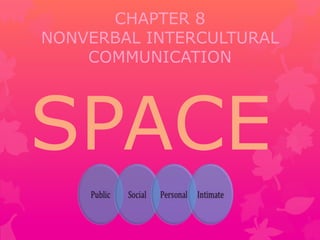
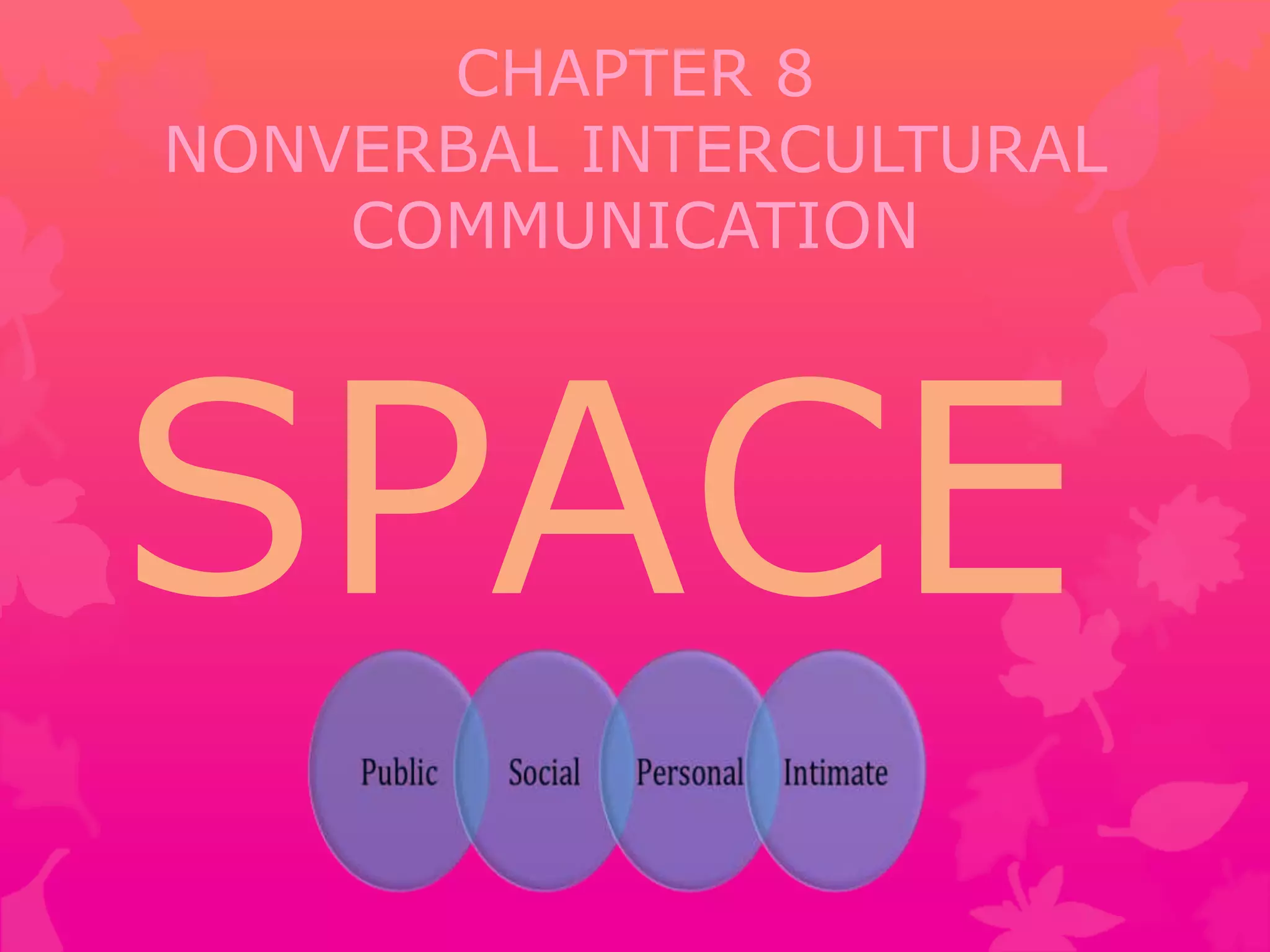
SPACE
INTRODUCTION 
The use of space functions 
as an important 
communication system in 
all cultures.
Important Features 
 2 important features of the way culture use the 
space around them are: 
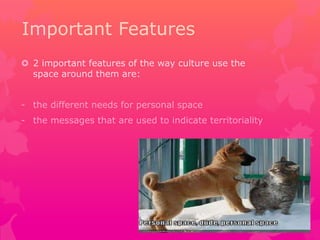
- the different needs for personal space 
- the messages that are used to indicate territoriality
Cultural Differences in the Use 
of Personal Space 
 We are surrounded by a personal space “bubble” 
 Proxemics (Edward Hall): 
- The study of how people differ in their use of personal space, 
social and public 
- Characterised by: 
 differences in the ways that people relate to one another 
 the behaviours that typify the communication that will probably 
occur in them
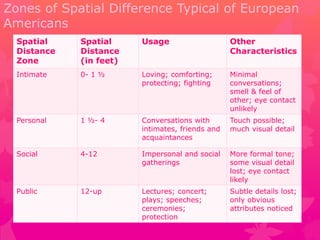
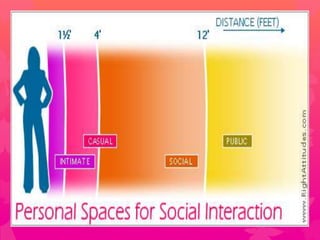
Zones of Spatial Difference Typical of European 
Americans 
Spatial 
Distance 
Zone 
Spatial 
Distance 
(in feet) 
Usage Other 
Characteristics 
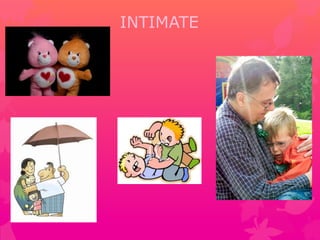
Intimate 0- 1 ½ Loving; comforting; 
protecting; fighting 
Minimal 
conversations; 
smell & feel of 
other; eye contact 
unlikely 
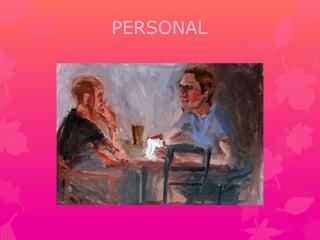
Personal 1 ½- 4 Conversations with 
intimates, friends and 
acquaintances 
Touch possible; 
much visual detail 
Social 4-12 Impersonal and social 
gatherings 
More formal tone; 
some visual detail 
lost; eye contact 
likely 
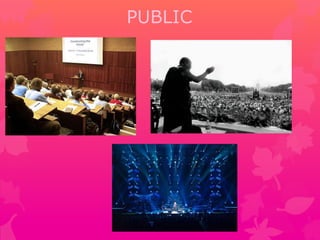
Public 12-up Lectures; concert; 
plays; speeches; 
ceremonies; 
protection 
Subtle details lost; 
only obvious 
attributes noticed
INTIMATE
PERSONAL
PUBLIC
Personal Space 
o Culture specific 
- Colder climates: large physical distances 
 northern European 
- Warm weather climates: close distances 
 Mediterranean 
o Germany, Scandinavia, England vs. France, Mediterranean 
countries (Italy, Greece, Spain) 
 Italian vs. Norwegian 
 Move closer (comfort zone for conversation) vs. move 
backward (maintain the “correct” conversational distance)
Habitual 
 The habitual use of the culturally proper spacing 
distance is accompanied by a predictable level and kind 
of sensory information 
- Personal conversation with acquaintance 
 3 ft. 
Accustomed to: sights, sounds, smells 
 Accustomed > 3ft. 
Too close, out of normal focal range, sound too loud, smell 
the breath
Cultural Differences in Territoriality 
 Territoriality: 
- the need to protect and defend a particular spatial area 
- a set of behaviours that people display to show that they 
“own” or have the right to control the use of a particular 
geographic area
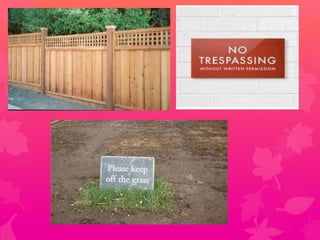
Marking 
 Formally: 
- Actual barriers 
 Fences 
 Signs : No Trespassing, Keep Off the Grass 
 Informally: 
- Nonverbal markers 
 Clothing 
 Books
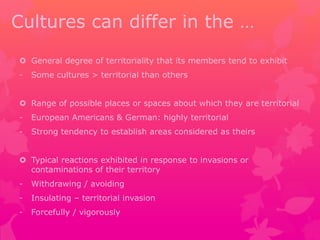
Cultures can differ in the … 
 General degree of territoriality that its members tend to exhibit 
- Some cultures > territorial than others 
 Range of possible places or spaces about which they are territorial 
- European Americans & German: highly territorial 
- Strong tendency to establish areas considered as theirs 
 Typical reactions exhibited in response to invasions or 
contaminations of their territory 
- Withdrawing / avoiding 
- Insulating – territorial invasion 
- Forcefully / vigorously
References 
 Google Image 
 Koester, J. & Lustig M.W. (2010). Boston: Pearson
Space

Space

  • 1.
    CHAPTER 8 NONVERBALINTERCULTURAL COMMUNICATION SPACE
  • 2.
    INTRODUCTION The useof space functions as an important communication system in all cultures.
  • 3.
    Important Features 2 important features of the way culture use the space around them are: - the different needs for personal space - the messages that are used to indicate territoriality
  • 4.
    Cultural Differences inthe Use of Personal Space  We are surrounded by a personal space “bubble”  Proxemics (Edward Hall): - The study of how people differ in their use of personal space, social and public - Characterised by:  differences in the ways that people relate to one another  the behaviours that typify the communication that will probably occur in them
  • 5.
    Zones of SpatialDifference Typical of European Americans Spatial Distance Zone Spatial Distance (in feet) Usage Other Characteristics Intimate 0- 1 ½ Loving; comforting; protecting; fighting Minimal conversations; smell & feel of other; eye contact unlikely Personal 1 ½- 4 Conversations with intimates, friends and acquaintances Touch possible; much visual detail Social 4-12 Impersonal and social gatherings More formal tone; some visual detail lost; eye contact likely Public 12-up Lectures; concert; plays; speeches; ceremonies; protection Subtle details lost; only obvious attributes noticed
  • 7.
  • 8.
  • 9.
  • 10.
    Personal Space oCulture specific - Colder climates: large physical distances  northern European - Warm weather climates: close distances  Mediterranean o Germany, Scandinavia, England vs. France, Mediterranean countries (Italy, Greece, Spain)  Italian vs. Norwegian  Move closer (comfort zone for conversation) vs. move backward (maintain the “correct” conversational distance)
  • 11.
    Habitual  Thehabitual use of the culturally proper spacing distance is accompanied by a predictable level and kind of sensory information - Personal conversation with acquaintance  3 ft. Accustomed to: sights, sounds, smells  Accustomed > 3ft. Too close, out of normal focal range, sound too loud, smell the breath
  • 12.
    Cultural Differences inTerritoriality  Territoriality: - the need to protect and defend a particular spatial area - a set of behaviours that people display to show that they “own” or have the right to control the use of a particular geographic area
  • 14.
    Marking  Formally: - Actual barriers  Fences  Signs : No Trespassing, Keep Off the Grass  Informally: - Nonverbal markers  Clothing  Books
  • 16.
    Cultures can differin the …  General degree of territoriality that its members tend to exhibit - Some cultures > territorial than others  Range of possible places or spaces about which they are territorial - European Americans & German: highly territorial - Strong tendency to establish areas considered as theirs  Typical reactions exhibited in response to invasions or contaminations of their territory - Withdrawing / avoiding - Insulating – territorial invasion - Forcefully / vigorously
  • 18.
    References  GoogleImage  Koester, J. & Lustig M.W. (2010). Boston: Pearson