





















Evolution  of  the  CDN
Hooman  Beheshti,  VP  Technology
SPA2015
CDN
• Globally  distributed  network  of  servers
• Built  primarily  with  caching  engines  (squid,  nginx,  varnish,  etc)
• Footprints  vary
CDN  benefits
• Performance
• Latency  decrease  due  to  footprint
• Origin  offload
• Much  much  more…
Deployment
• Originally  simple:
• Serve  root  web  page  (HTML)  direct  from  origin
• Point  static  assets  on  the  page  to  a  domain  owned  by  the  CDN
• Everything  controlled  through  DNS
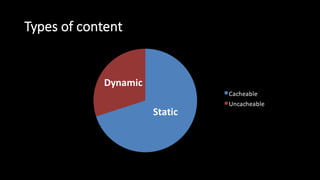
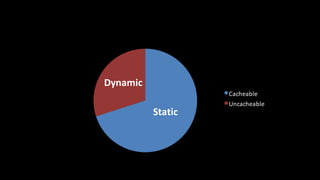
Types  of  content
Cacheable
Uncacheable
Static
Dynamic
Cache-Control: max-age=31536000
Dynamic  Content
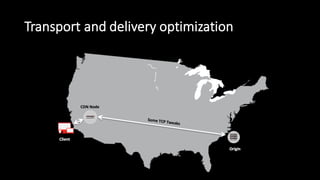
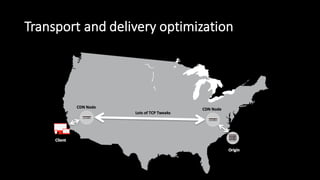
Transport  and  delivery  optimization
Application  delivery  platform
Things  have  started  changing…
Applications  have  became  
smarter
Caching  has  gotten  more  
complicated
Cacheable
Uncacheable
Static
Dynamic
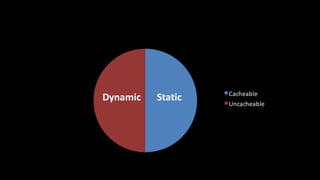
Cacheable
Uncacheable
StaticDynamic
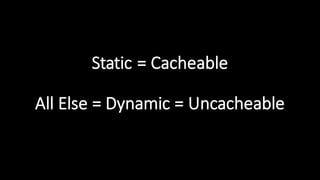
Static  =  Cacheable
All  Else  =  Dynamic  =  Uncacheable
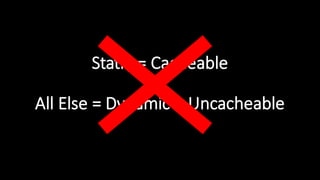
Static  =  Cacheable
All  Else  =  Dynamic  =  Uncacheable
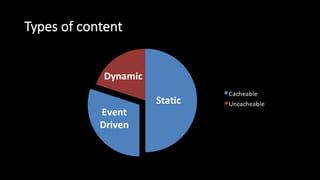
Types  of  content
Cacheable
UncacheableStatic
Dynamic
Event
Driven
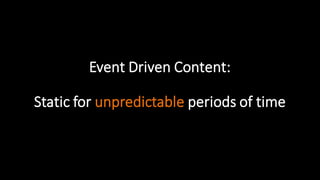
Static  for  unpredictable  periods  of  time
Event  Driven  Content:
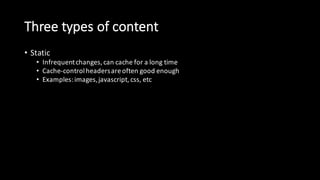
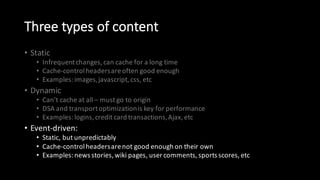
Three  types  of  content
• Static
• Infrequent  changes,  can  cache  for  a  long  time
• Cache-­‐control  headers  are  often  good  enough
• Examples:  images,  javascript,  css,  etc
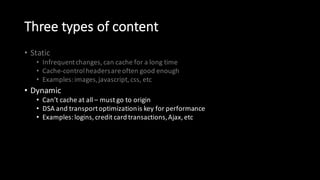
• Dynamic
• Can’t  cache  at  all  – must  go  to  origin
• DSA  and  transport  optimization  is  key  for  performance
• Examples:  logins,  credit  card  transactions,  Ajax,  etc
• Event-­‐driven:
• Static,  but  unpredictably
• Cache-­‐control  headers  are  not  good  enough  on  their  own
• Examples:  news  stories,  wiki  pages,  user  comments,  sports  scores,  etc
Three  types  of  content
• Static
• Infrequent  changes,  can  cache  for  a  long  time
• Cache-­‐control  headers  are  often  good  enough
• Examples:  images,  javascript,  css,  etc
• Dynamic
• Can’t  cache  at  all  – must  go  to  origin
• DSA  and  transport  optimization  is  key  for  performance
• Examples:  logins,  credit  card  transactions,  Ajax,  etc
• Event-­‐driven:
• Static,  but  unpredictably
• Cache-­‐control  headers  are  not  good  enough  on  their  own
• Examples:  news  stories,  wiki  pages,  user  comments,  sports  scores,  etc
Three  types  of  content
• Static
• Infrequent  changes,  can  cache  for  a  long  time
• Cache-­‐control  headers  are  often  good  enough
• Examples:  images,  javascript,  css,  etc
• Dynamic
• Can’t  cache  at  all  – must  go  to  origin
• DSA  and  transport  optimization  is  key  for  performance
• Examples:  logins,  credit  card  transactions,  Ajax,  etc
• Event-­‐driven:
• Static,  but  unpredictably
• Cache-­‐control  headers  are  not  good  enough  on  their  own
• Examples:  news  stories,  wiki  pages,  user  comments,  sports  scores,  etc
Long-­‐tail  Content
(cacheable  but  seldom  fetched)
Usage  patterns  have  changed
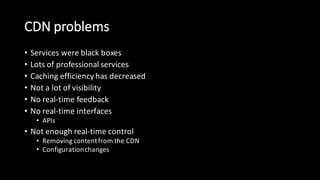
CDN  problems
• Services  were  black  boxes
• Lots  of  professional  services
• Caching  efficiency  has  decreased
• Not  a  lot  of  visibility
• No  real-­‐time  feedback
• No  real-­‐time  interfaces
• APIs
• Not  enough  real-­‐time  control
• Removing  content  from  the  CDN
• Configuration  changes
CDNs  have  to  evolve…
Caching
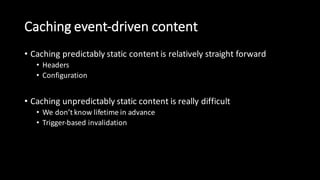
Caching  event-­‐driven  content
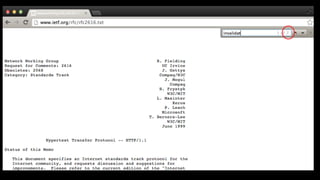
• Caching  predictably  static  content  is  relatively  straight  forward
• Headers
• Configuration
• Caching  unpredictably  static  content  is  really  difficult
• We  don’t  know  lifetime  in  advance
• Trigger-­‐based  invalidation
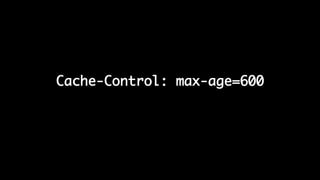
Cache-Control: max-age=600
Uncaching
Purging
Purging  content  from  a  CDN
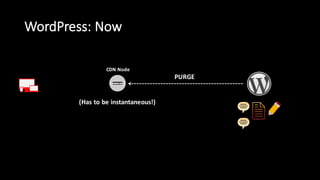
• Event-­‐driven  content  can  be  cached  if  the  CDN  allows  instantaneous  
programmatic  purging
• Cache  normally
• Purge  when  change  trigger  happens
• Rinse  and  repeat!
• Slow  purge  times  unacceptable  in  this  case
• We  need  instant purging
• Deterministic  and  predictable
Example:
CMS  +  Purge
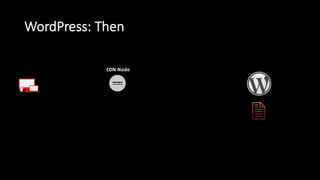
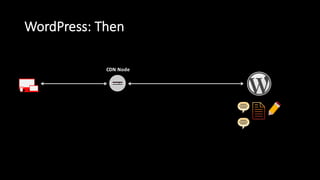
WordPress:  Then
CDN  Node
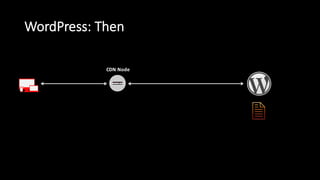
WordPress:  Then
CDN  Node
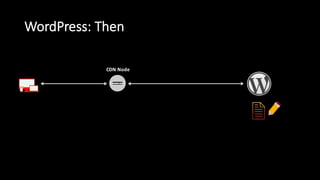
WordPress:  Then
CDN  Node
WordPress:  Then
CDN  Node
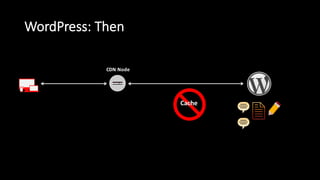
WordPress:  Then
CDN  Node
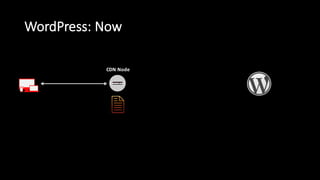
Cache
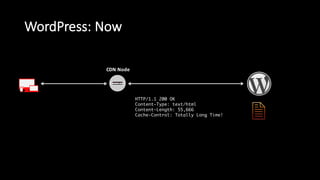
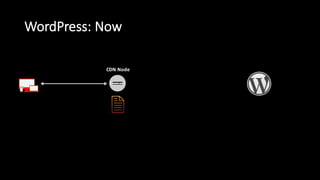
WordPress:  Now
CDN  Node
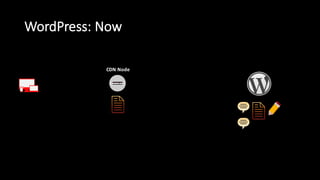
WordPress:  Now
CDN  Node
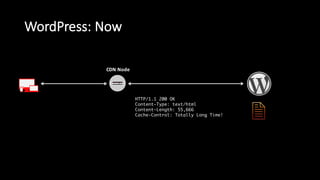
HTTP/1.1 200 OK
Content-Type: text/html
Content-Length: 55,666
Cache-Control: Totally Long Time!
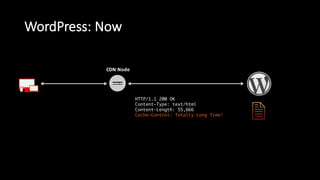
WordPress:  Now
CDN  Node
HTTP/1.1 200 OK
Content-Type: text/html
Content-Length: 55,666
Cache-Control: Totally Long Time!
WordPress:  Now
CDN  Node
WordPress:  Now
CDN  Node
WordPress:  Now
CDN  Node
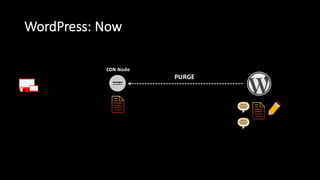
PURGE
WordPress:  Now
CDN  Node
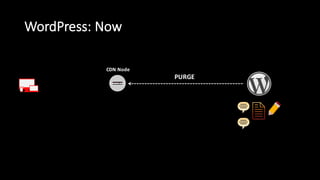
PURGE
WordPress:  Now
CDN  Node
(Has  to  be  instantaneous!)
PURGE
WordPress:  Now
CDN  Node
HTTP/1.1 200 OK
Content-Type: text/html
Content-Length: 55,666
Cache-Control: Totally Long Time!
WordPress:  Now
CDN  Node
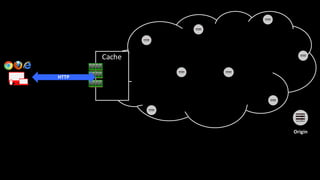
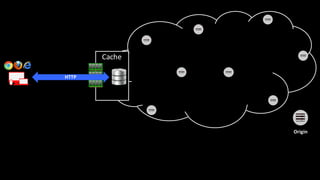
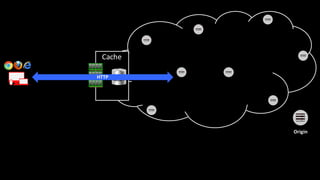
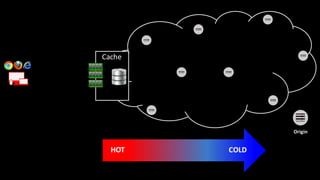
Long  tail  content  
and  
cache  hit  ratio
Origin
Origin
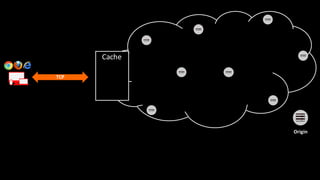
Cache
TCP
Origin
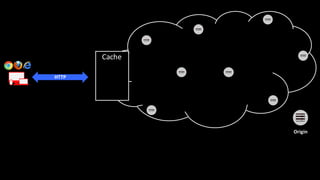
Cache
HTTP
Origin
Cache
Origin
Cache
HTTP
Origin
Cache
HTTP
Origin
Cache
HTTP
Origin
Cache
HOT COLD
Origin
Cache
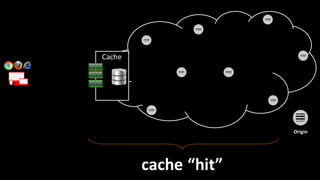
cache  “hit”
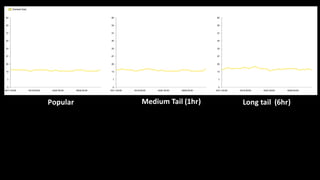
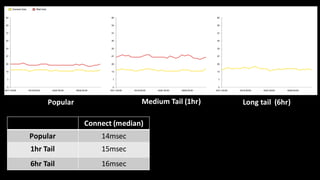
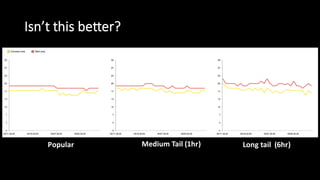
Popular Medium  Tail  (1hr) Long  tail    (6hr)
Connect  (median)
Popular 14msec
1hr  Tail 15msec
6hr Tail 16msec
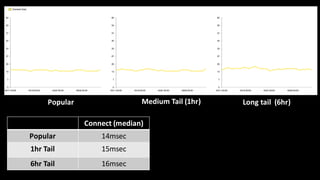
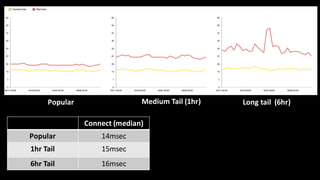
Popular Medium  Tail  (1hr) Long  tail    (6hr)
Connect  (median)
Popular 14msec
1hr  Tail 15msec
6hr Tail 16msec
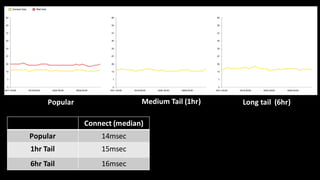
Popular Medium  Tail  (1hr) Long  tail    (6hr)
Connect  (median)
Popular 14msec
1hr  Tail 15msec
6hr Tail 16msec
Popular Medium  Tail  (1hr) Long  tail    (6hr)
Connect  (median)
Popular 14msec
1hr  Tail 15msec
6hr Tail 16msec
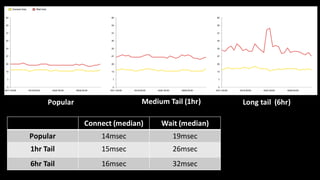
Popular Medium  Tail  (1hr) Long  tail    (6hr)
Connect  (median) Wait (median)
Popular 14msec 19msec
1hr  Tail 15msec 26msec
6hr Tail 16msec 32msec
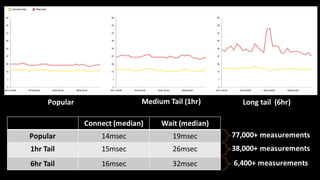
Popular Medium  Tail  (1hr) Long  tail    (6hr)
Connect  (median) Wait (median)
Popular 14msec 19msec
1hr  Tail 15msec 26msec
6hr Tail 16msec 32msec 6,400+  measurements
77,000+  measurements
38,000+  measurements
Popular Medium  Tail  (1hr) Long  tail    (6hr)
Isn’t  this  better?
Object  storage
Caching
• Cache  more
• Serve  more  from  the  edge
• Control  caching  and  uncaching,  instantaneously  
Control
Programmability
• Granular  invalidation  API
• Configuration  API
• Logic  at  the  edge
• All  configuration  interaction  must  be  instantaneous
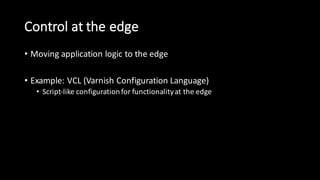
Control  at  the  edge
• Moving  application  logic  to  the  edge
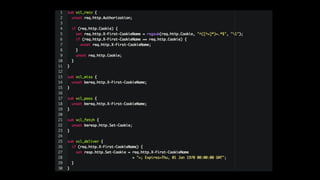
• Example:  VCL  (Varnish  Configuration  Language)
• Script-­‐like  configuration  for  functionality  at  the  edge
Control  at  the  edge
• Moving  application  logic  to  the  edge
• Example:  VCL  (Varnish  Configuration  Language)
• Script-­‐like  configuration  for  functionality  at  the  edge
• Not  exclusive  to  varnish
• Any  mechanism  offered  by  the  CDN  to  allow  logic  to  be  executed  at  the  edge  
is  good
Logic  at  the  edge
• Generate  content  at  the  edge
• HTTP  header  manipulation
• Origin  selection
• Caching  rules
• Geo-­‐IP  rules
• Forcing  SSL
• Serving  stale  content  
• Etc,  etc,  etc
Applications  without  origins?
Control
• Programmatic  interfaces
• Real-­‐time  interaction  with  the  CDN
• Running  logic  at  the  edge
Visibility
Real-­‐time  analytics
• Statistics  API
• Network  stats
• HTTP  stats  (status  codes,  etc)
• Caching  stats  (hits,  misses,  errors,  etc)
• Everything  has  to  be  real-­‐time
• Historic  data  is  also  a  must
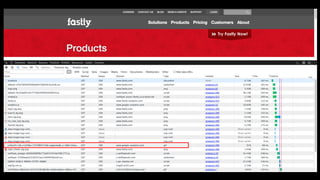
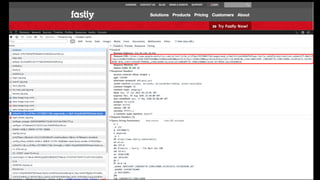
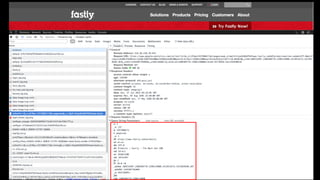
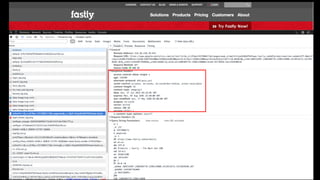
Logging
• Daily  or  hourly  logs  are  not  good  enough
• Logs  in  real-­‐time
• Log  streaming
• To  any  logging  destination  endpoint
• Syslog,  S3,  FTP,  etc.
Visibility
• We  need  to  see  what’s  going  on
• Real-­‐time  stats
• Stats  API
• Real-­‐time  logs
Example:
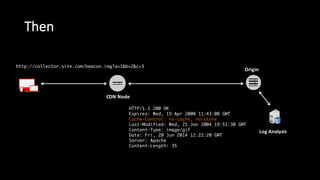
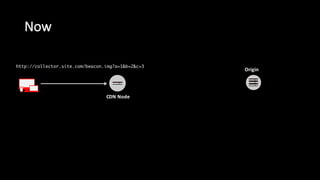
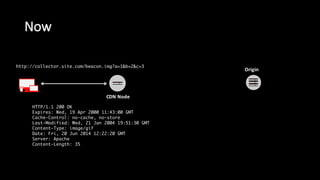
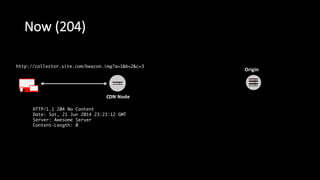
Beacon  Termination  at  the  Edge
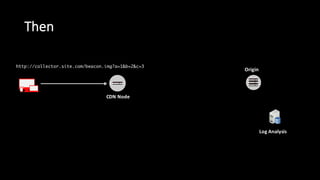
Then
CDN  Node
Origin
Log  Analysis
http://collector.site.com/beacon.img?a=1&b=2&c=3
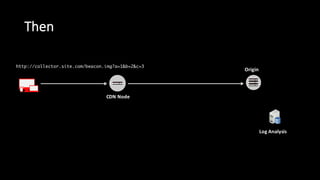
Then
CDN  Node
Origin
Log  Analysis
http://collector.site.com/beacon.img?a=1&b=2&c=3
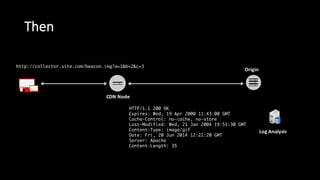
Then
CDN  Node
Origin
Log  Analysis
HTTP/1.1 200 OK
Expires: Wed, 19 Apr 2000 11:43:00 GMT
Cache-Control: no-cache, no-store
Last-Modified: Wed, 21 Jan 2004 19:51:30 GMT
Content-Type: image/gif
Date: Fri, 20 Jun 2014 12:22:20 GMT
Server: Apache
Content-Length: 35
http://collector.site.com/beacon.img?a=1&b=2&c=3
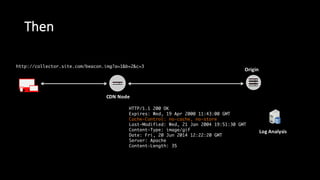
Then
CDN  Node
Origin
Log  Analysis
HTTP/1.1 200 OK
Expires: Wed, 19 Apr 2000 11:43:00 GMT
Cache-Control: no-cache, no-store
Last-Modified: Wed, 21 Jan 2004 19:51:30 GMT
Content-Type: image/gif
Date: Fri, 20 Jun 2014 12:22:20 GMT
Server: Apache
Content-Length: 35
http://collector.site.com/beacon.img?a=1&b=2&c=3
Then
CDN  Node
Origin
Log  Analysis
HTTP/1.1 200 OK
Expires: Wed, 19 Apr 2000 11:43:00 GMT
Cache-Control: no-cache, no-store
Last-Modified: Wed, 21 Jan 2004 19:51:30 GMT
Content-Type: image/gif
Date: Fri, 20 Jun 2014 12:22:20 GMT
Server: Apache
Content-Length: 35
http://collector.site.com/beacon.img?a=1&b=2&c=3
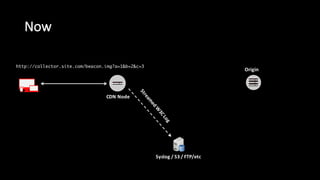
Now
CDN  Node
Origin
http://collector.site.com/beacon.img?a=1&b=2&c=3
Now
CDN  Node
Origin
HTTP/1.1 200 OK
Expires: Wed, 19 Apr 2000 11:43:00 GMT
Cache-Control: no-cache, no-store
Last-Modified: Wed, 21 Jan 2004 19:51:30 GMT
Content-Type: image/gif
Date: Fri, 20 Jun 2014 12:22:20 GMT
Server: Apache
Content-Length: 35
http://collector.site.com/beacon.img?a=1&b=2&c=3
Now  (204)
CDN  Node
Origin
HTTP/1.1 204 No Content
Date: Sat, 21 Jun 2014 23:21:12 GMT
Server: Awesome Server
Content-Length: 0
http://collector.site.com/beacon.img?a=1&b=2&c=3
Now
CDN  Node
Origin
Syslog  /  S3  /  FTP/etc
Stream
ed  W
3C  Log
http://collector.site.com/beacon.img?a=1&b=2&c=3
Summary:  CDN  is  an  extension  of  the  app
• Flexible  caching…
• …and  uncaching
• All  tail  sizes  should  perform  comparably!
• Control  over  functionality  at  the  edge
• Real  time  interfaces  for  programmability
• Logic  at  the  edge
• Real-­‐time  visibility
• Real-­‐time  analytics
The  future
• Security  (more  now  than  future!)
• Even  more  at  the  edge
• More  logic
• Other  parts  of  applications
• More  delivery  features
Thank  you!
hooman@fastly.com

SPA2015: Hooman Beheshti – The Future of CDNs