SOME BASIC CONCEPTS OF CHEMISTRY
KAPISHWAR KRISHNA
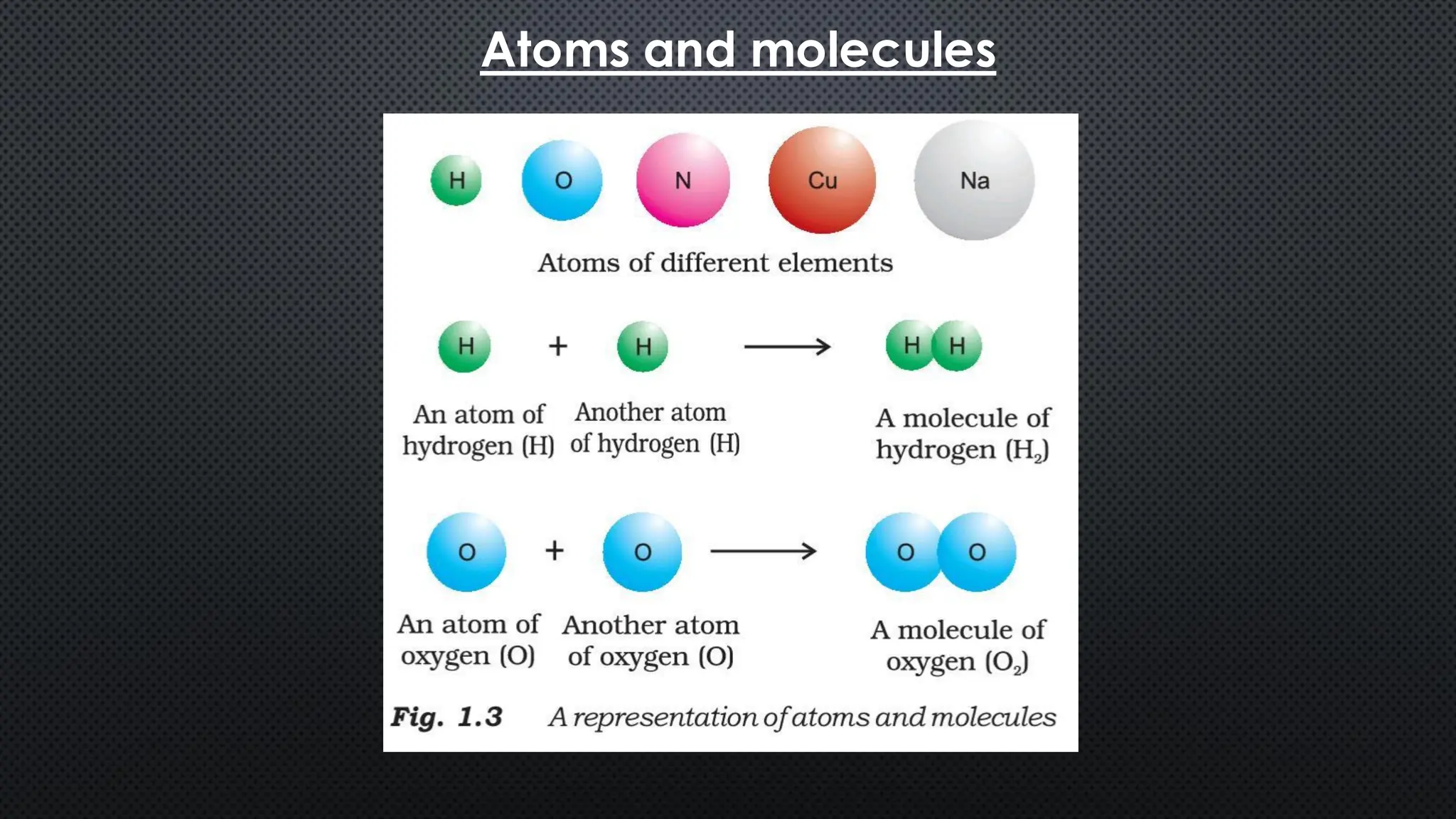
Atoms and molecules
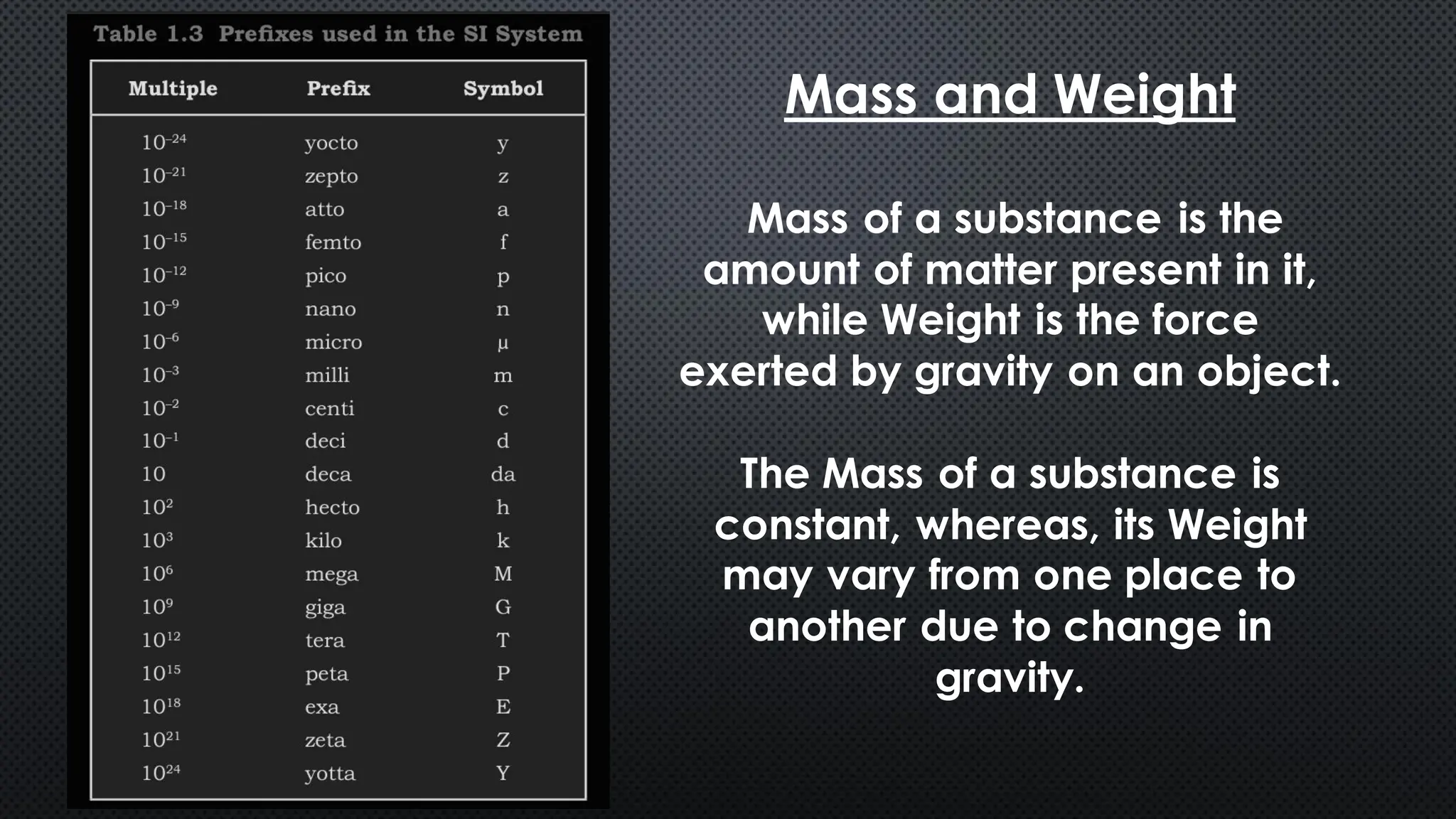
Mass and Weight
Mass of a substance is the

amount of matter present in it,
while Weight is the force
exerted by gravity on an object.
The Mass of a substance is
constant, whereas, its Weight
may vary from one place to
another due to change in
gravity.
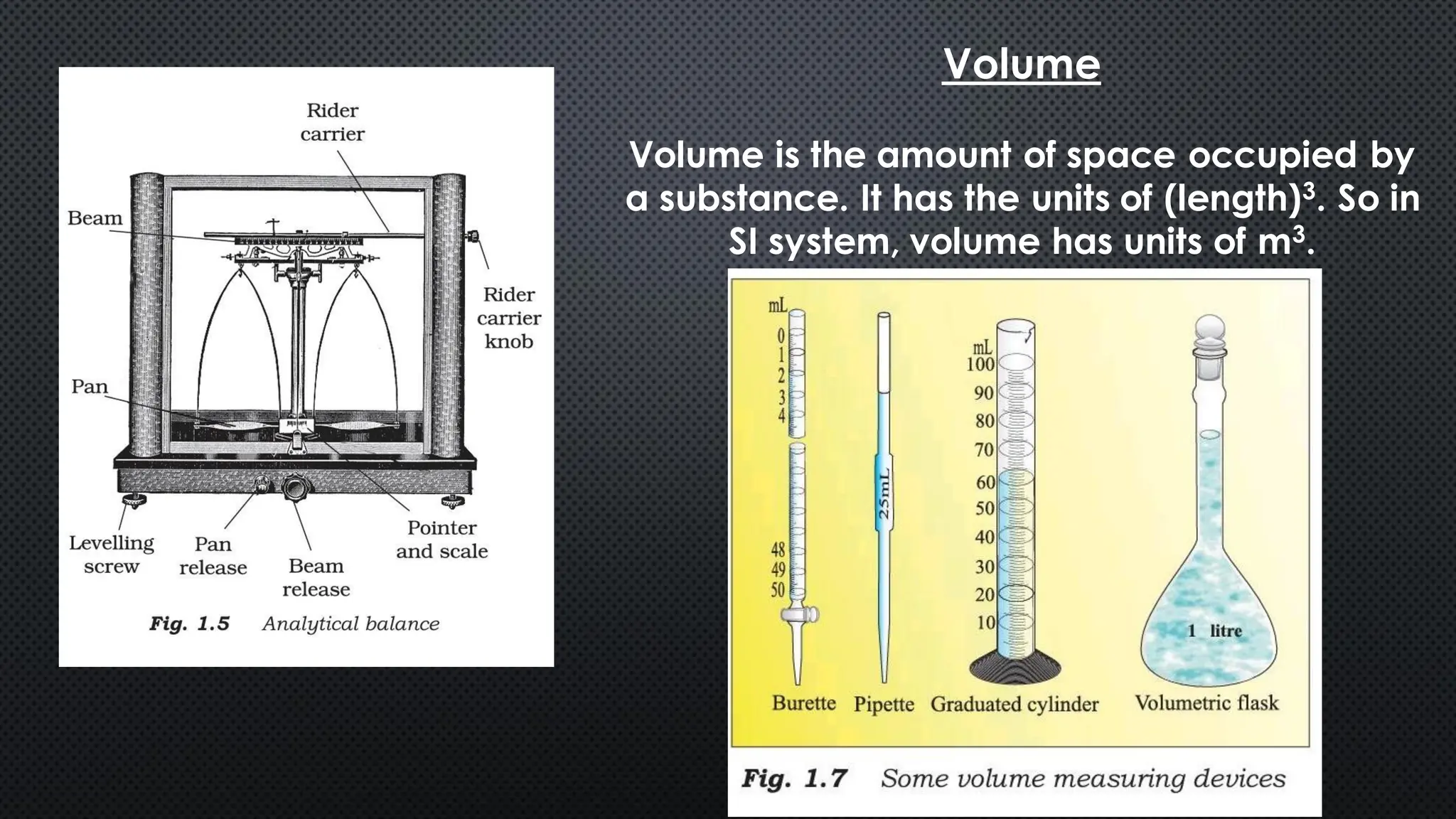
Volume
Volume is the amount of space occupied by
a substance. It has the units of (length)3. So in
SI system, volume has units of m3.
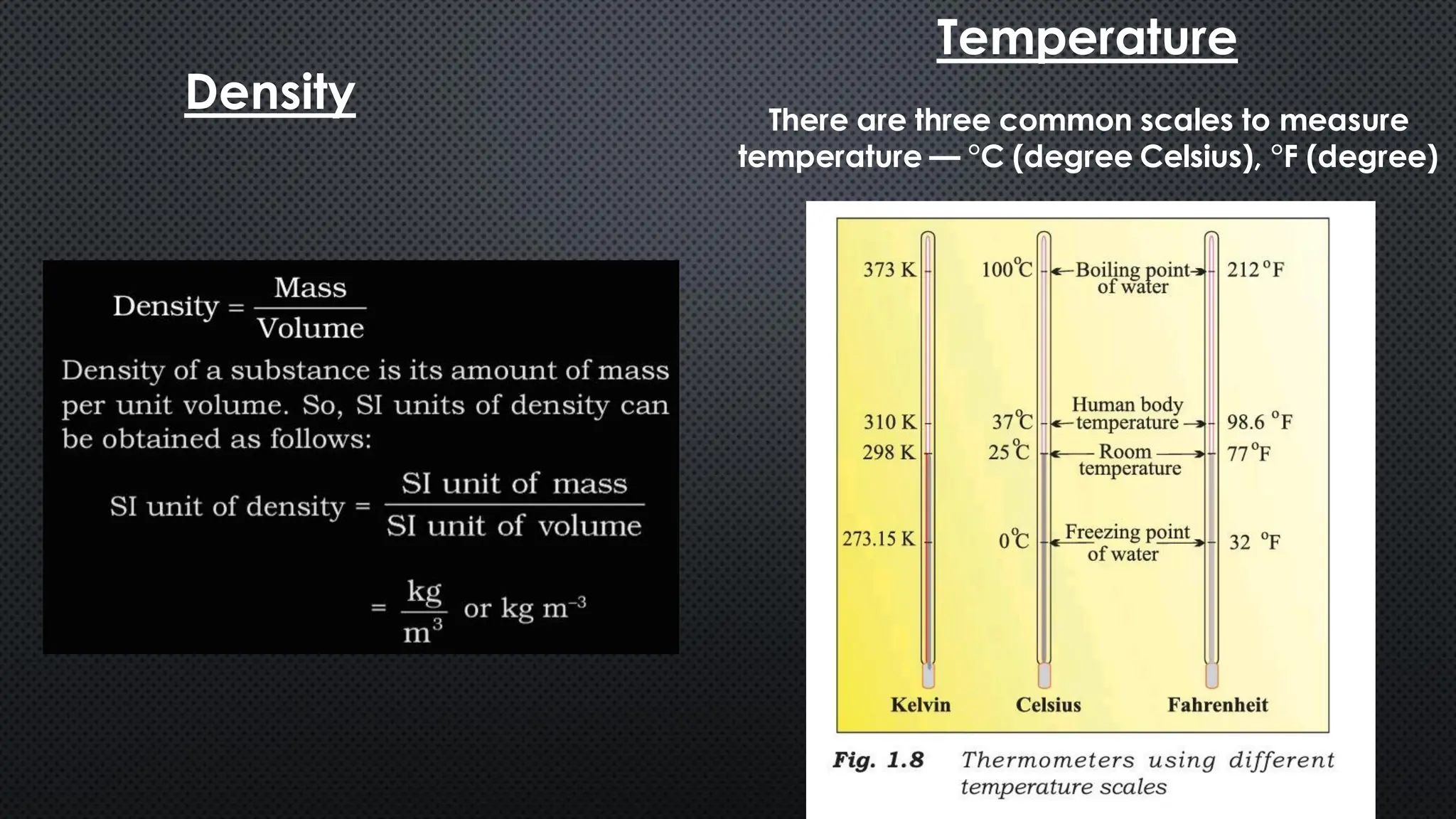
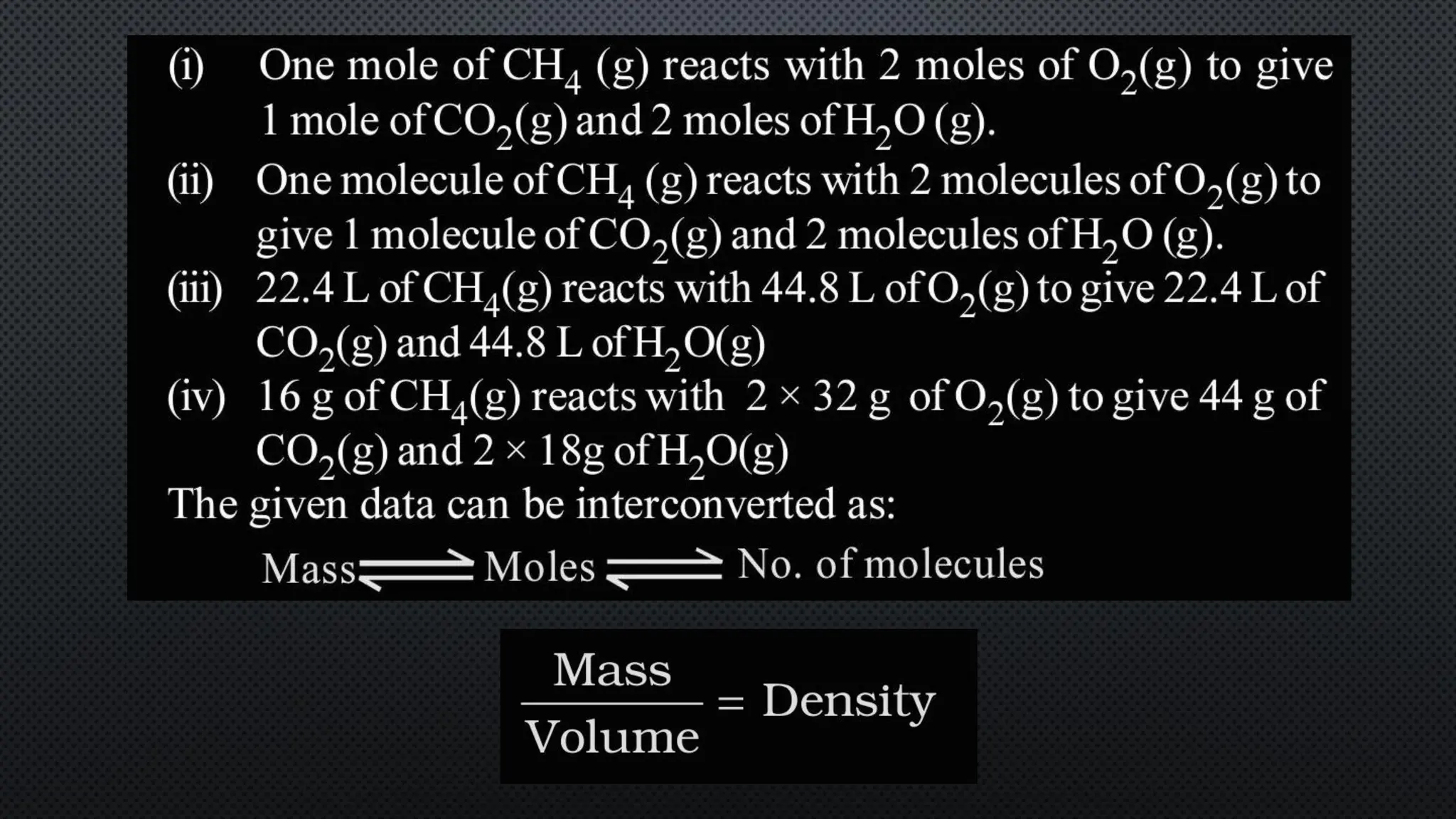
Density
Temperature
There are three common scales to measure
temperature — °C (degree Celsius), °F (degree)
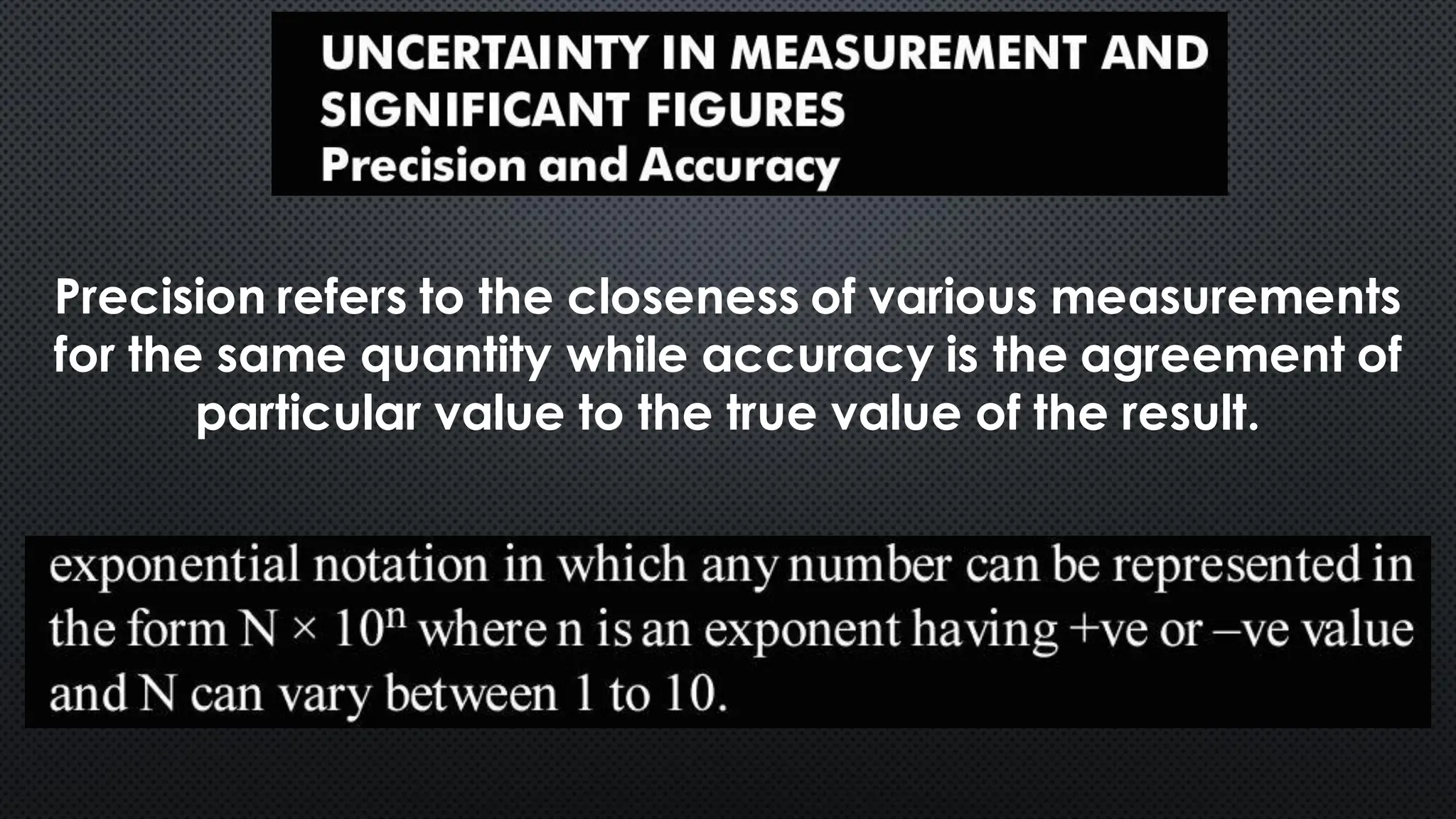
Precision refers to the closeness of various measurements
for the same quantity while accuracy is the agreement of
particular value to the true value of the result.
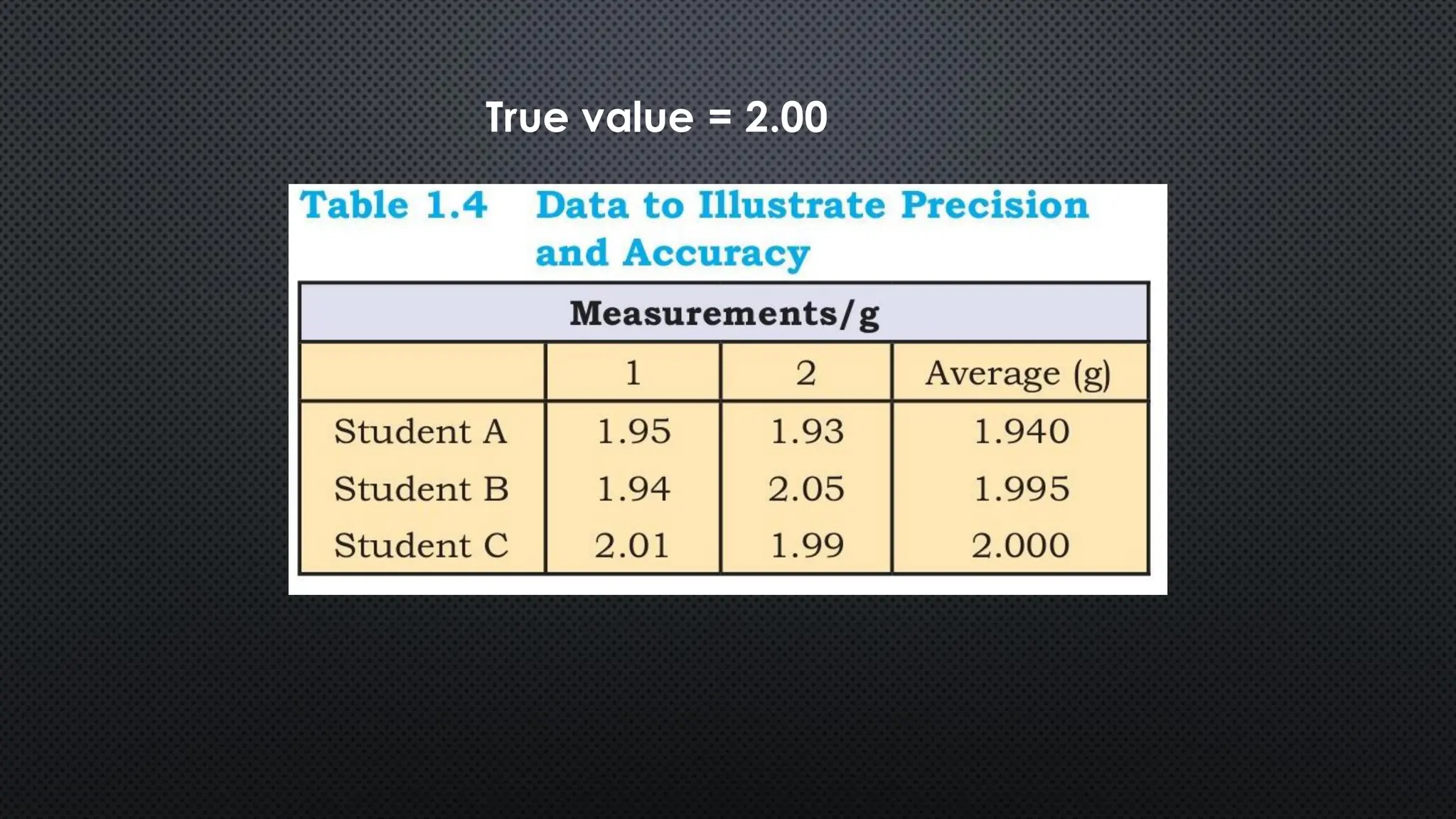
True value = 2.00
(4) Zeros at the end or right of a number are significant, provided they are
on the right side of the decimal point.
For example, 0.200 g has three significant figures. But, if otherwise, the
terminal zeros are not significant if there is no decimal point.
For example, 100 has only one significant figure, but 100 has three
significant figures and 100.0 has four significant figures.
Such numbers are better represented in scientific notation. We can express
the number 100 as 1×10² for one significant figure, 1.0×10² for two significant
figures and 1.00×10² for three significant figure
(5) Counting the numbers of object, for example, 2 balls or 20 eggs, have
infinite significant figures
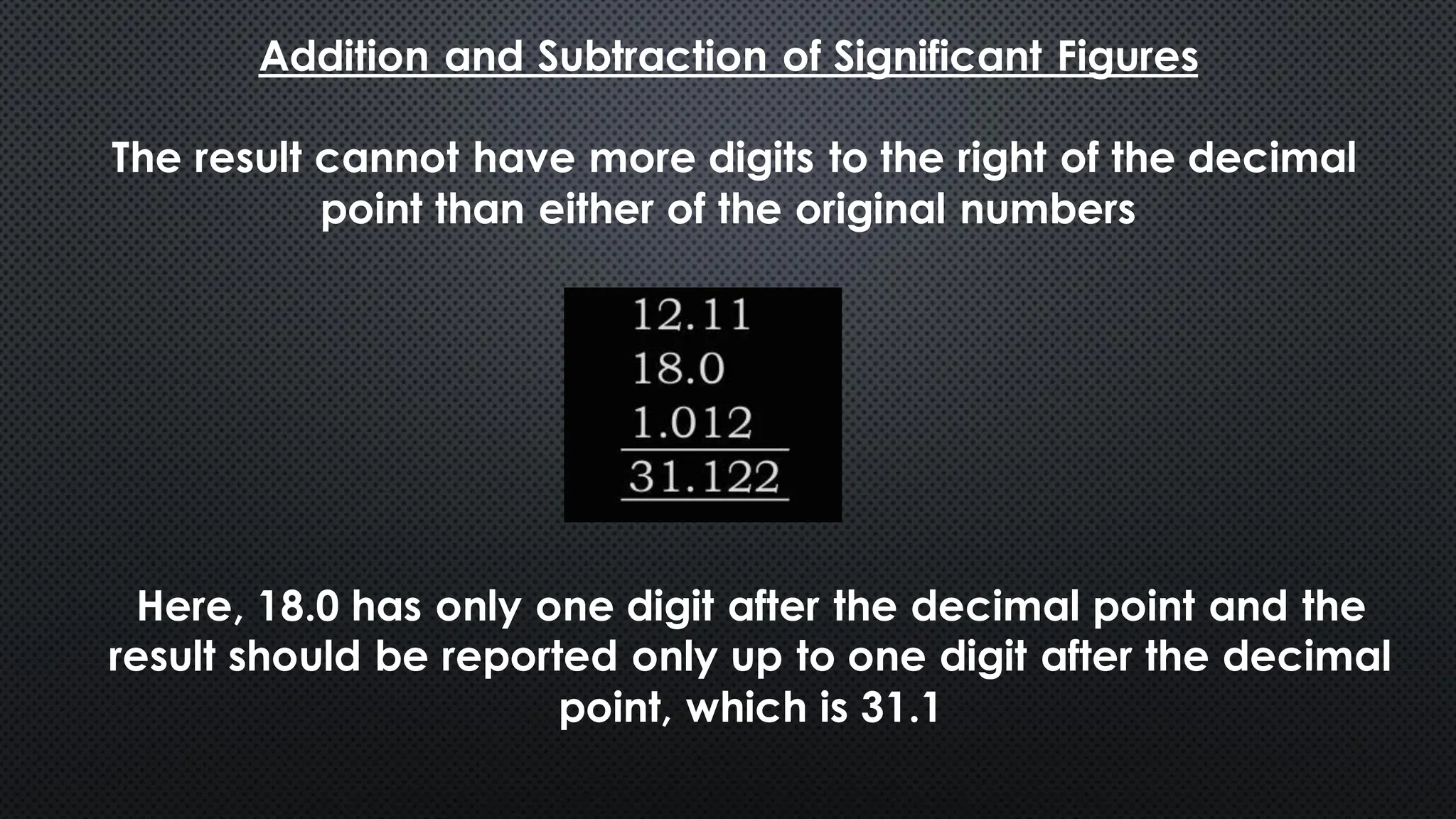
Addition and Subtraction of Significant Figures
The result cannot have more digits to the right of the decimal
point than either of the original numbers
Here, 18.0 has only one digit after the decimal point and the
result should be reported only up to one digit after the decimal
point, which is 31.1
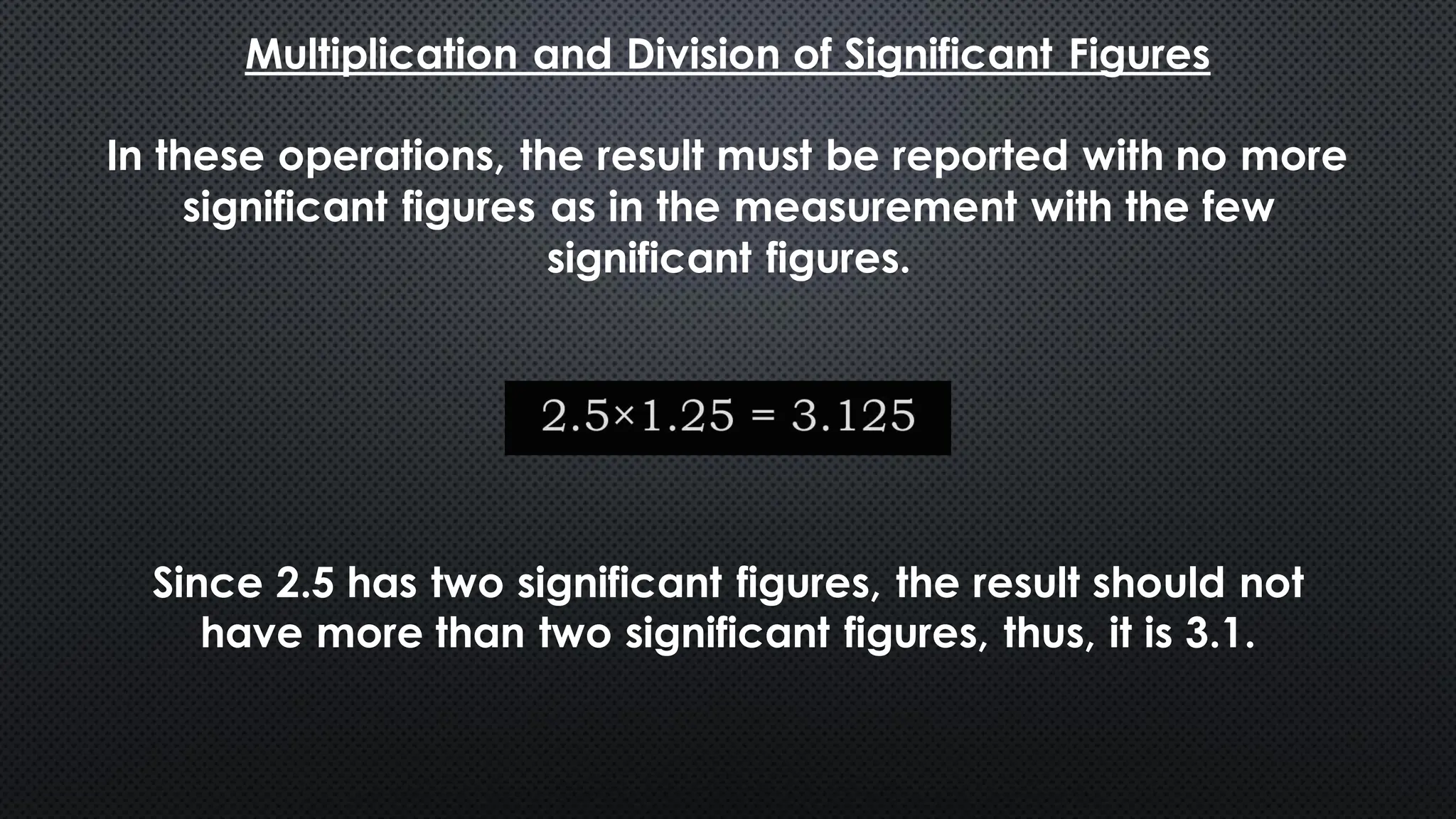
Multiplication and Division of Significant Figures
In these operations, the result must be reported with no more
significant figures as in the measurement with the few
significant figures.
Since 2.5 has two significant figures, the result should not
have more than two significant figures, thus, it is 3.1.
Rounding off
1.If the rightmost digit to be removed is more than 5, the
preceding number is increased by one.
For example, 1.386. If we have to remove 6, we have to round it
to 1.39.
2. If the rightmost digit to be removed is less than 5, the
preceding number is not changed.
For example, 4.334 if 4 is to be removed, then the result is
rounded upto 4.33
3. If the rightmost digit to be removed is 5, then the preceding
number is not changed if it is an even number but it is increased
by one if it is an odd number.
For example, if 6.35 is to be rounded by removing 5, we have to
increase 3 to 4 giving 6.4 as the result.
However, if 6.25 is to be rounded off it is rounded off to 6.2.
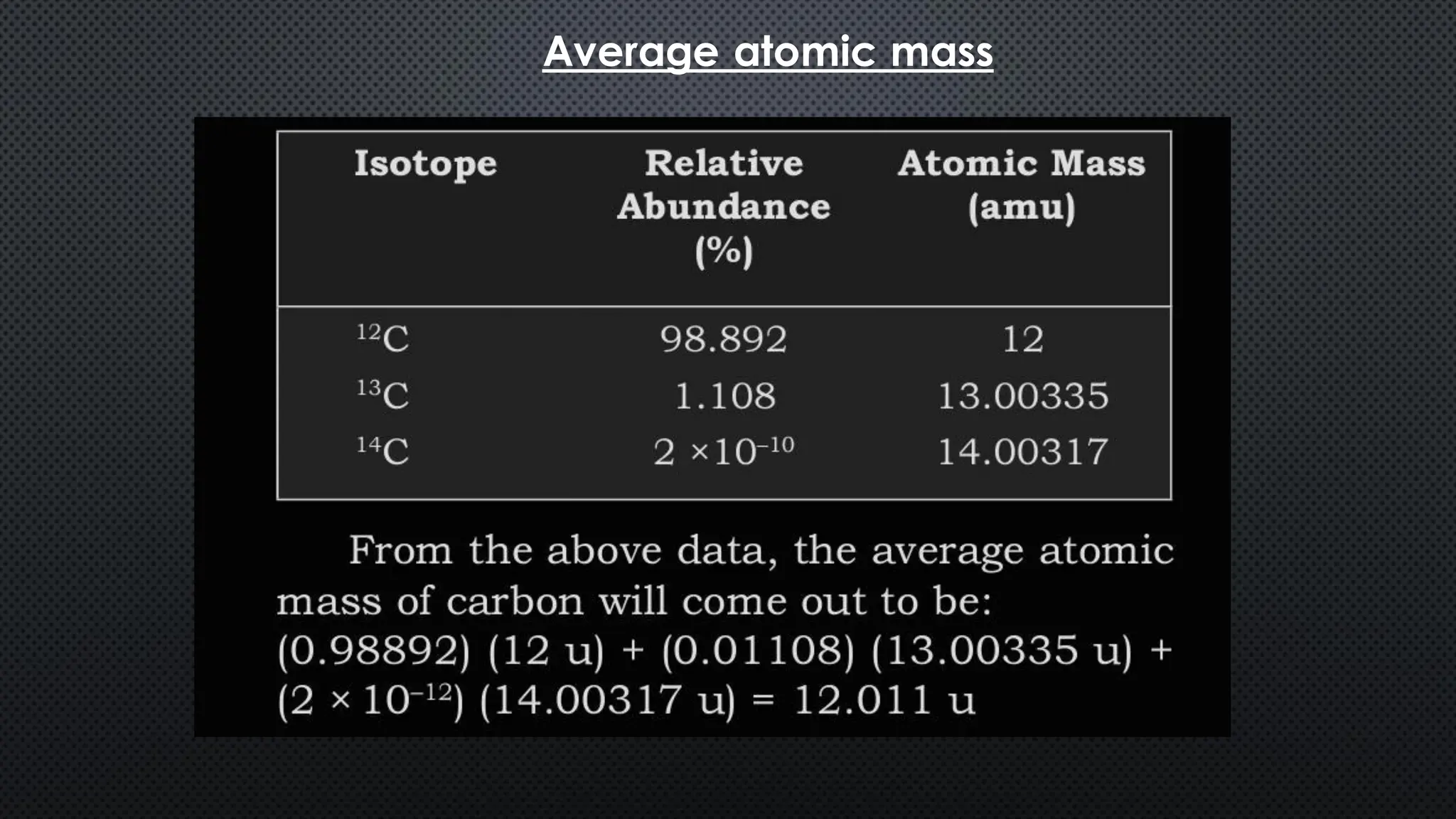
Average atomic mass
THANK YOU

Some basic concepts of chemistry best.pdf

  • 1.
    SOME BASIC CONCEPTSOF CHEMISTRY KAPISHWAR KRISHNA
  • 4.
  • 7.
    Mass and Weight Massof a substance is the amount of matter present in it, while Weight is the force exerted by gravity on an object. The Mass of a substance is constant, whereas, its Weight may vary from one place to another due to change in gravity.
  • 8.
    Volume Volume is theamount of space occupied by a substance. It has the units of (length)3. So in SI system, volume has units of m3.
  • 9.
    Density Temperature There are threecommon scales to measure temperature — °C (degree Celsius), °F (degree)
  • 10.
    Precision refers tothe closeness of various measurements for the same quantity while accuracy is the agreement of particular value to the true value of the result.
  • 11.
  • 14.
    (4) Zeros atthe end or right of a number are significant, provided they are on the right side of the decimal point. For example, 0.200 g has three significant figures. But, if otherwise, the terminal zeros are not significant if there is no decimal point. For example, 100 has only one significant figure, but 100 has three significant figures and 100.0 has four significant figures. Such numbers are better represented in scientific notation. We can express the number 100 as 1×10² for one significant figure, 1.0×10² for two significant figures and 1.00×10² for three significant figure (5) Counting the numbers of object, for example, 2 balls or 20 eggs, have infinite significant figures
  • 15.
    Addition and Subtractionof Significant Figures The result cannot have more digits to the right of the decimal point than either of the original numbers Here, 18.0 has only one digit after the decimal point and the result should be reported only up to one digit after the decimal point, which is 31.1
  • 16.
    Multiplication and Divisionof Significant Figures In these operations, the result must be reported with no more significant figures as in the measurement with the few significant figures. Since 2.5 has two significant figures, the result should not have more than two significant figures, thus, it is 3.1.
  • 17.
    Rounding off 1.If therightmost digit to be removed is more than 5, the preceding number is increased by one. For example, 1.386. If we have to remove 6, we have to round it to 1.39. 2. If the rightmost digit to be removed is less than 5, the preceding number is not changed. For example, 4.334 if 4 is to be removed, then the result is rounded upto 4.33
  • 18.
    3. If therightmost digit to be removed is 5, then the preceding number is not changed if it is an even number but it is increased by one if it is an odd number. For example, if 6.35 is to be rounded by removing 5, we have to increase 3 to 4 giving 6.4 as the result. However, if 6.25 is to be rounded off it is rounded off to 6.2.
  • 24.
  • 38.