Ahsanullah University of
Science & Technology

Pre-stressed Concrete Lab
CE-416
Course Teacher:

Ms. Sabreena Nasrin
Assistant Professor
and

Mr. Galib Muktadir
Lecturer
Department of Civil Engineering
Presentation by :
Ishrat Jahan
ID: 10.01.03.130
Presentation on :
Solving Statically Indeterminate
Structure by Stiffness Method
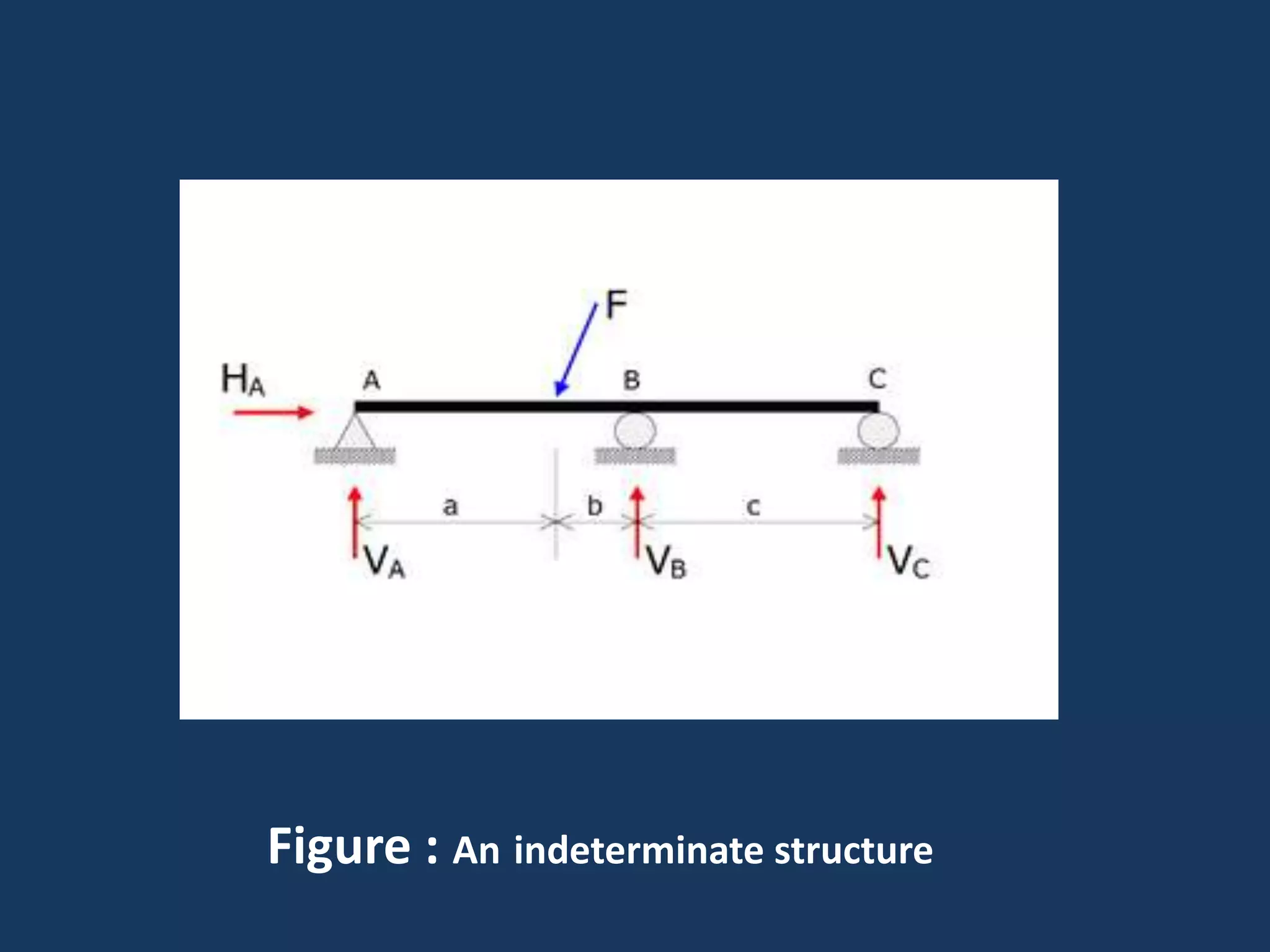
Introduction :
The structures which can not be analyzed by the equations of static
equilibriums alone are called indeterminate structures.

This kind of structures consist of more members and/or more
supports.
The excess members or reactions of an indeterminate structure are
called redundant.
Figure : An indeterminate structure
Direct stiffness method :
It is a matrix method that makes use of the members' stiffness
relations for computing member forces and displacements in
structures.
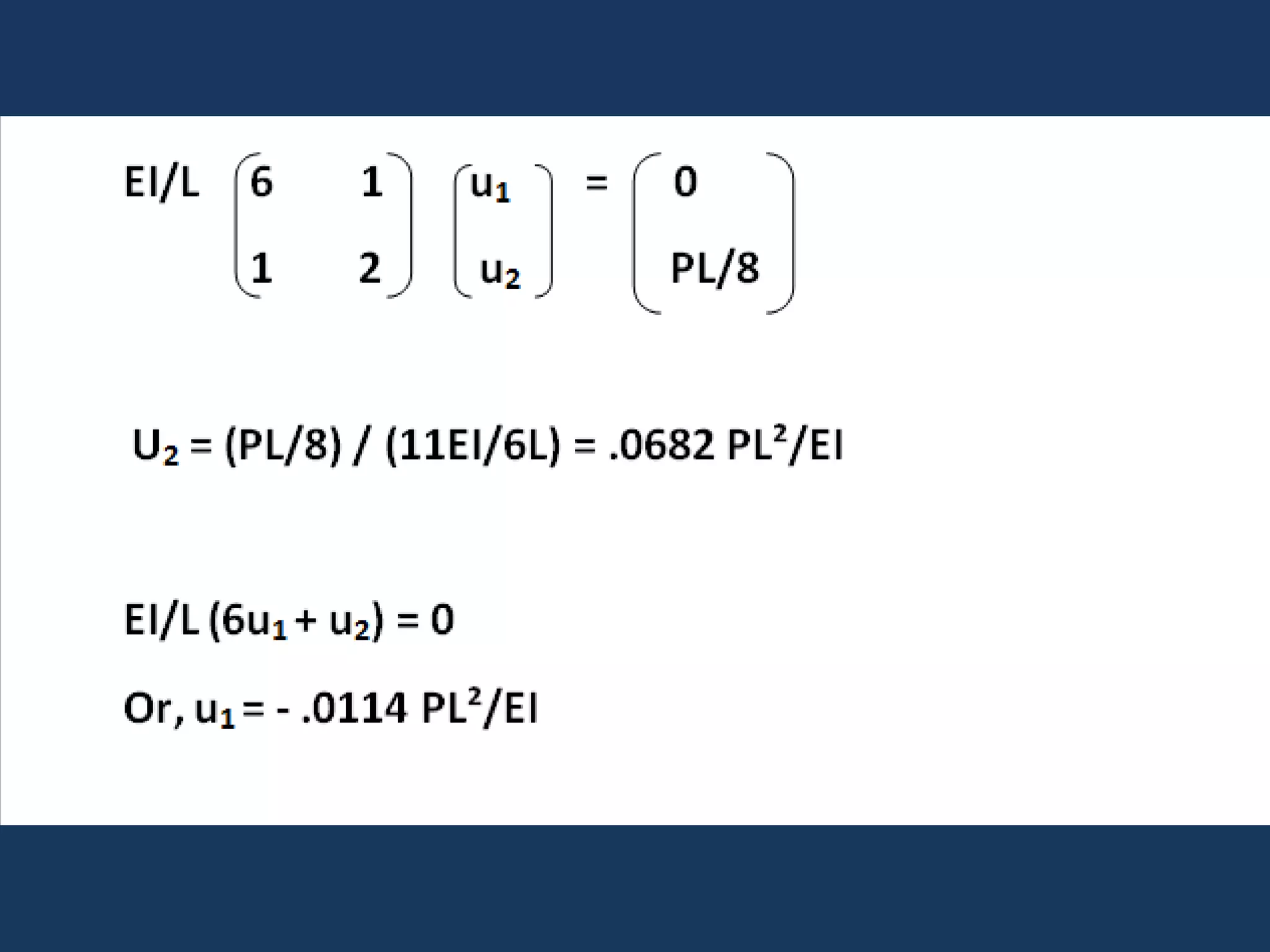
In applying the method, additional restrains ( supports) are
added to fix all the degrees of freedom and the values of these
restraints calculated. The restraints are then removed to allow
deformations and restore equilibrium. The resulting equilibrium
equations are solved for the displacements and subsequently
the force actions are determined by compiling into a single
matrix equation.
Analytical steps :
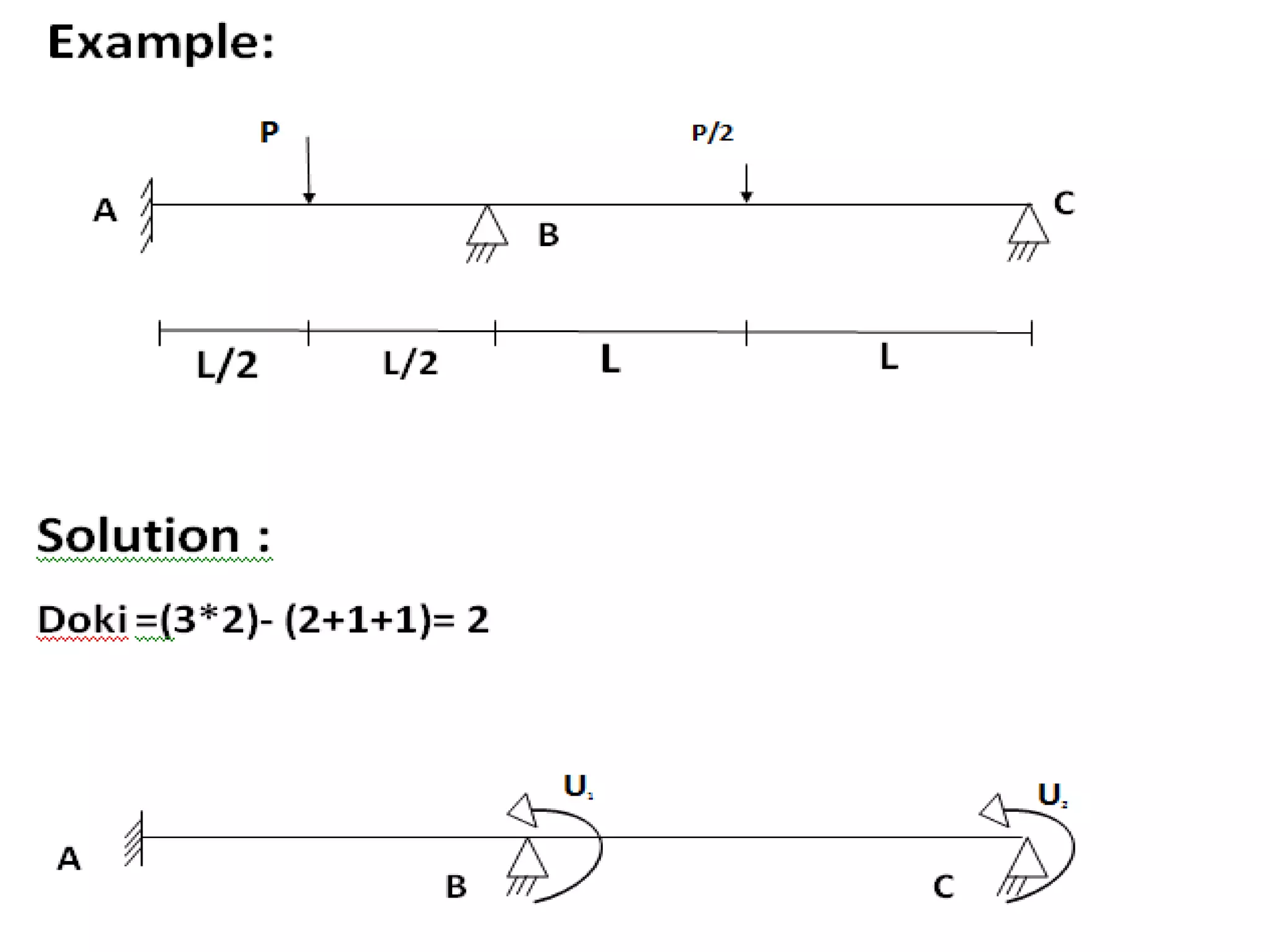
 At first , identify the degree of kinematic indeterminacy,
 Apply restrains and make it kinematically determinate
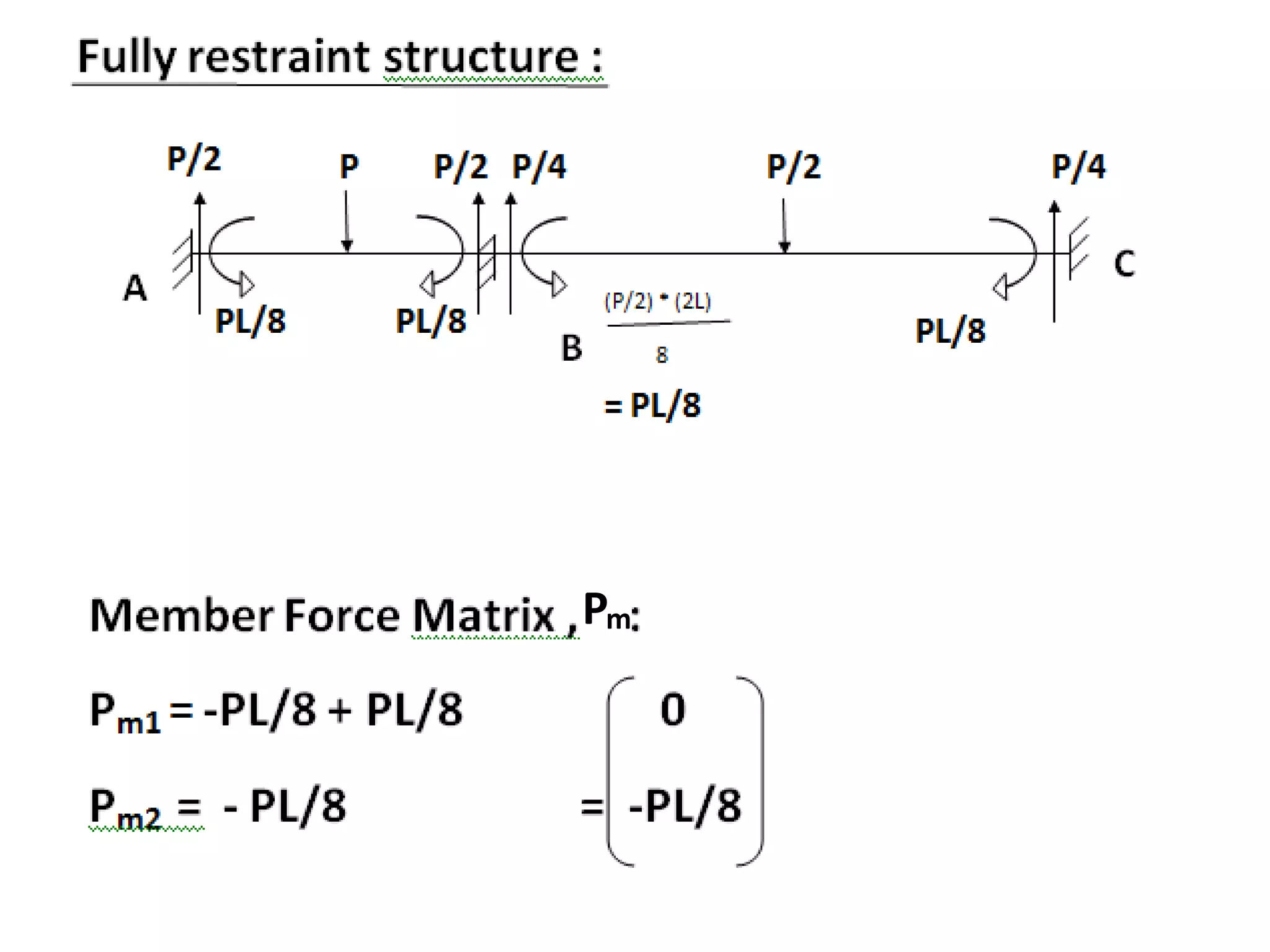
(fully restraint structure) ,
 Apply loads on the fully restraint structure and calculate
forces,
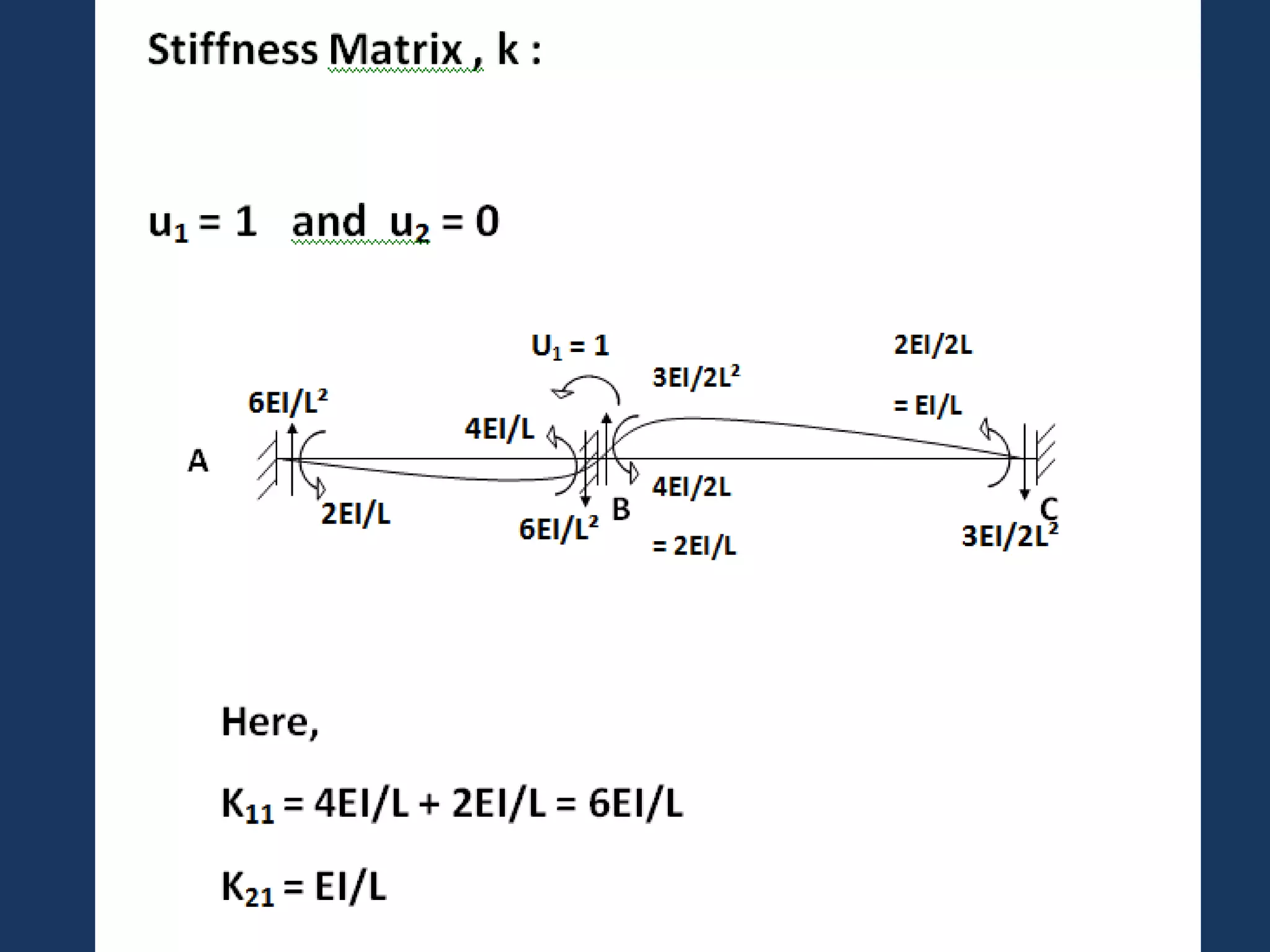
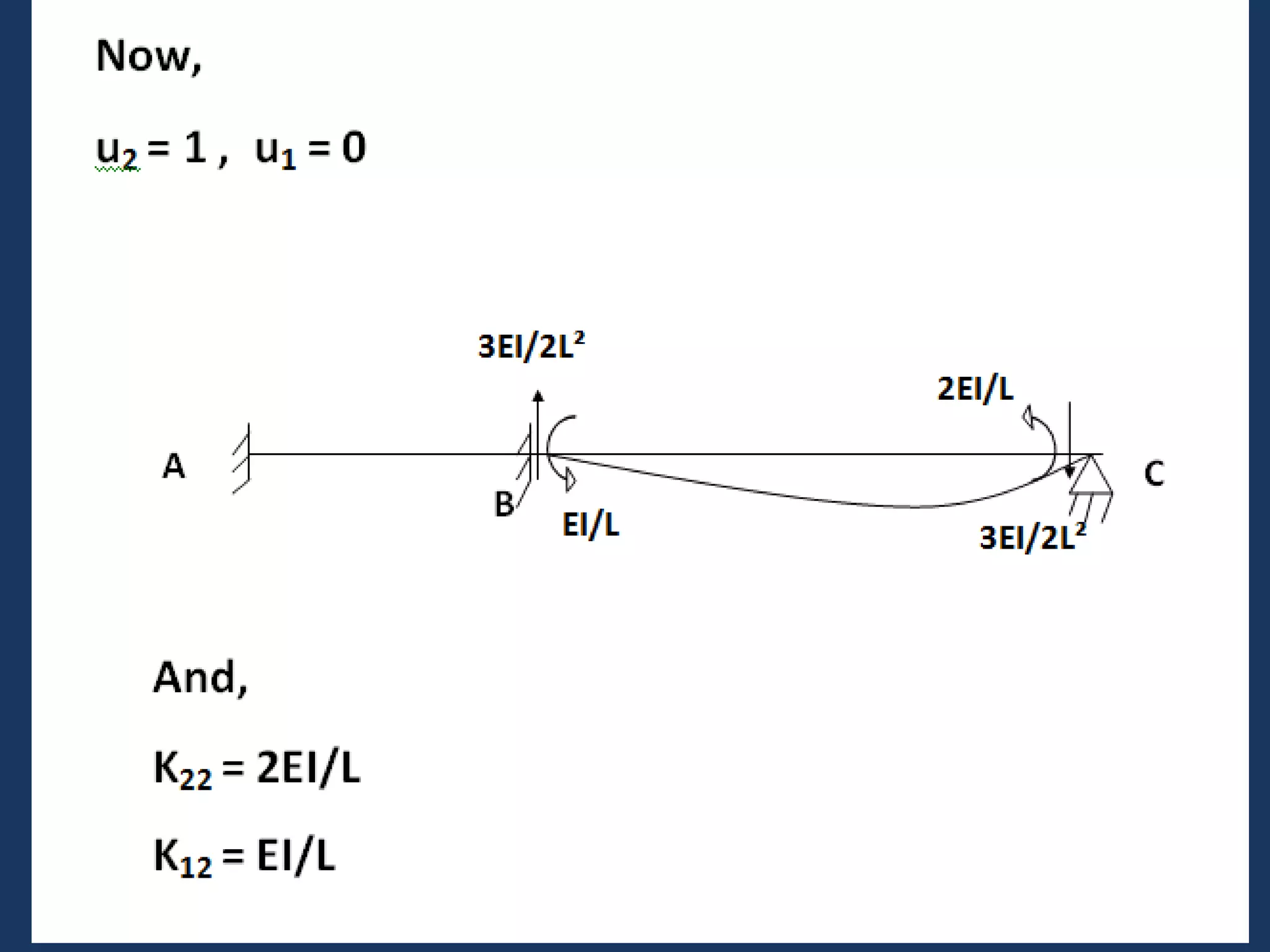
 Apply unknown displacements to the structure one at a
time keeping all the other displacements zero and calculate
forces corresponding to each degree of freedom,
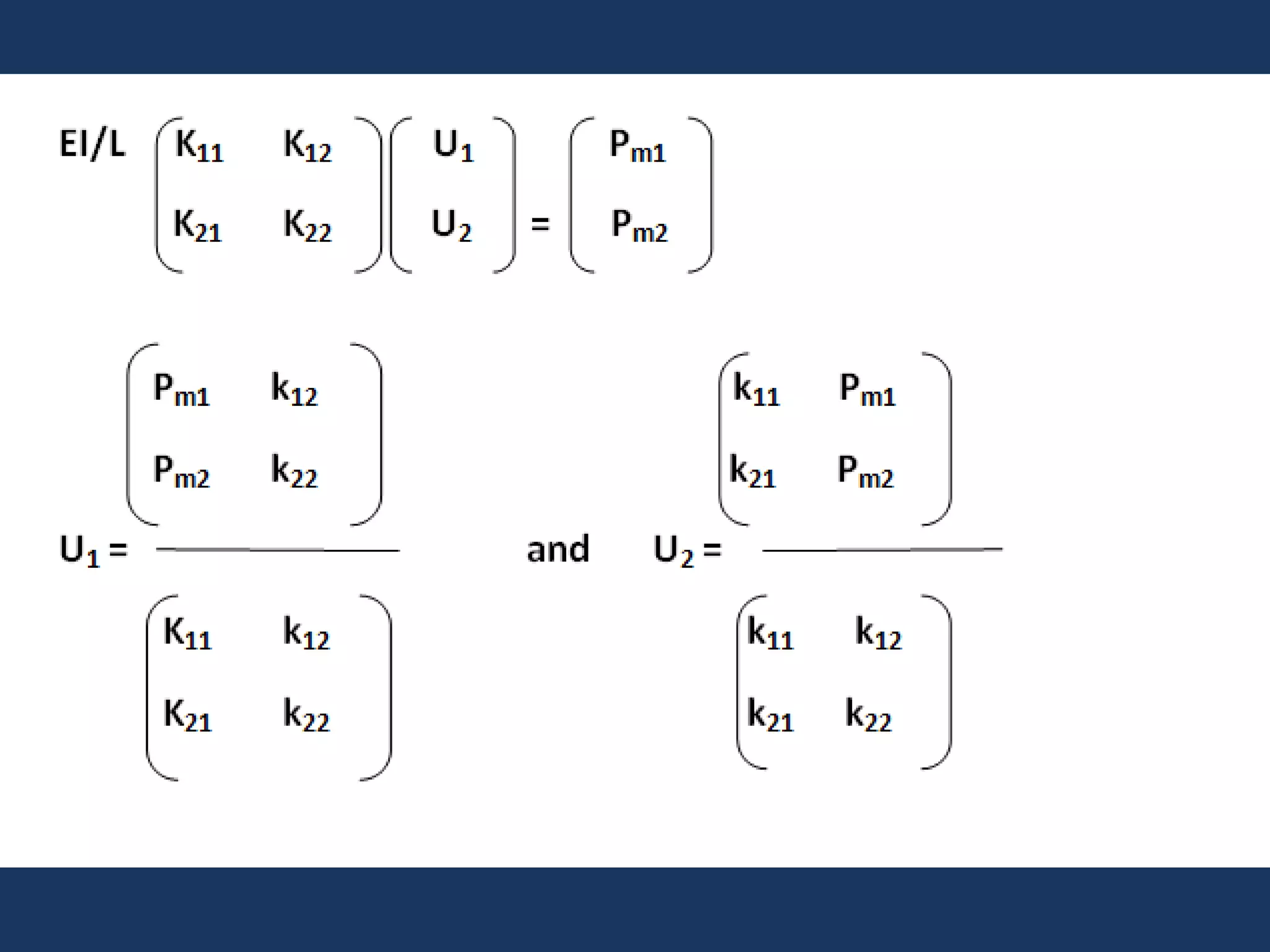
 Write the equilibrium equations,
 Solve the equations in matrix form and obtain the value
of unknown displacements,
 Calculate other reactions (reactions, SF,BM etc)
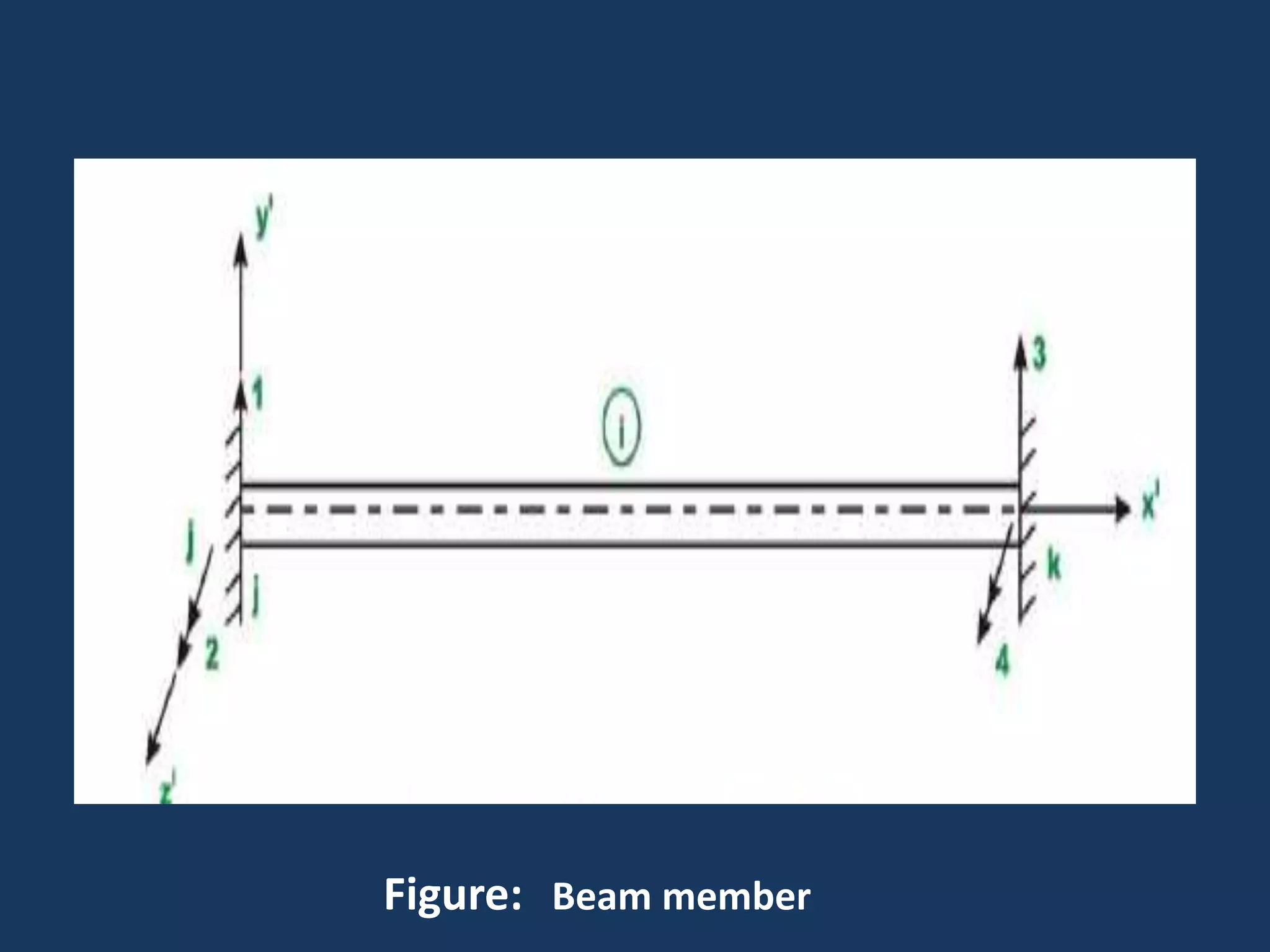
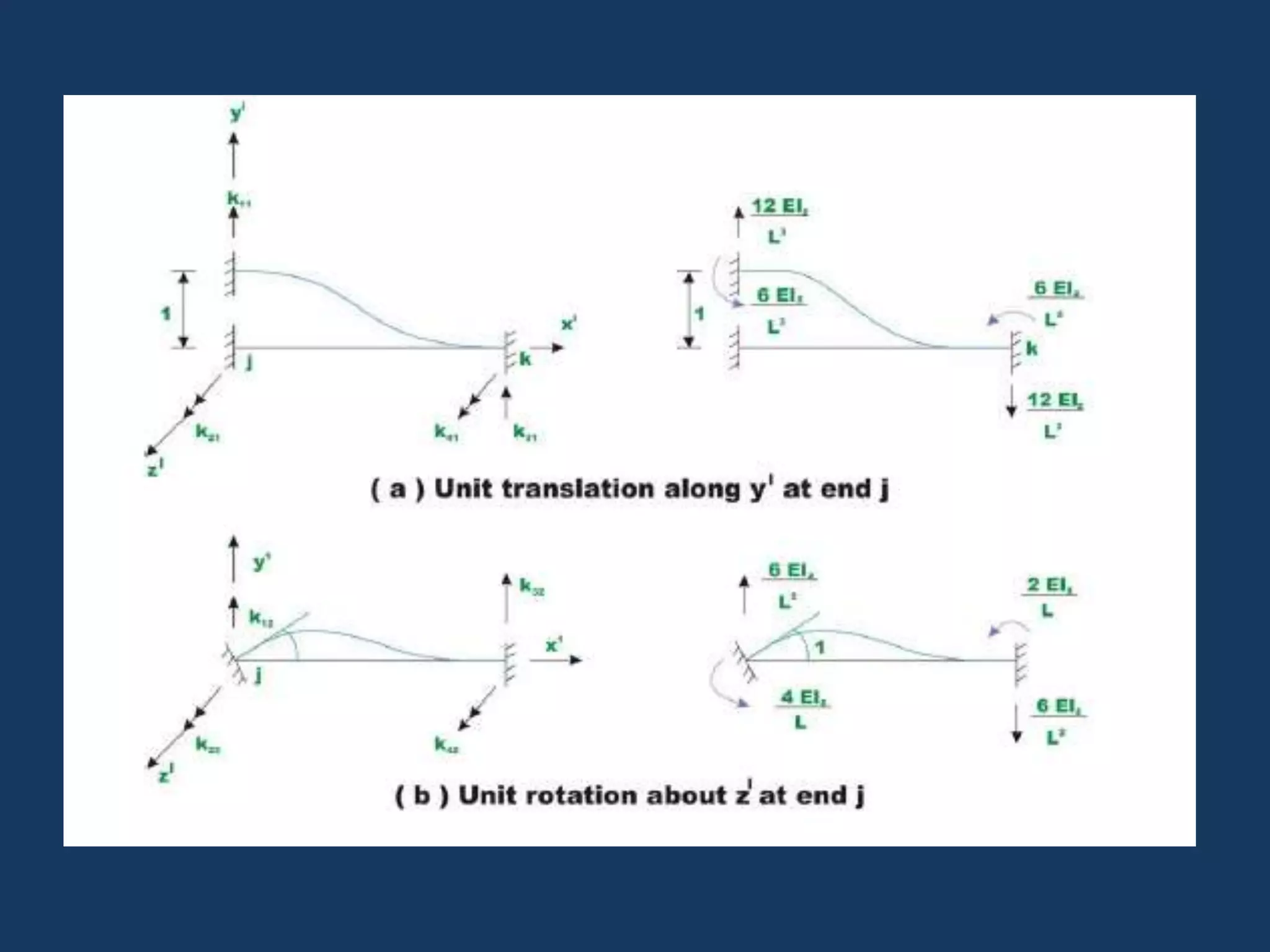
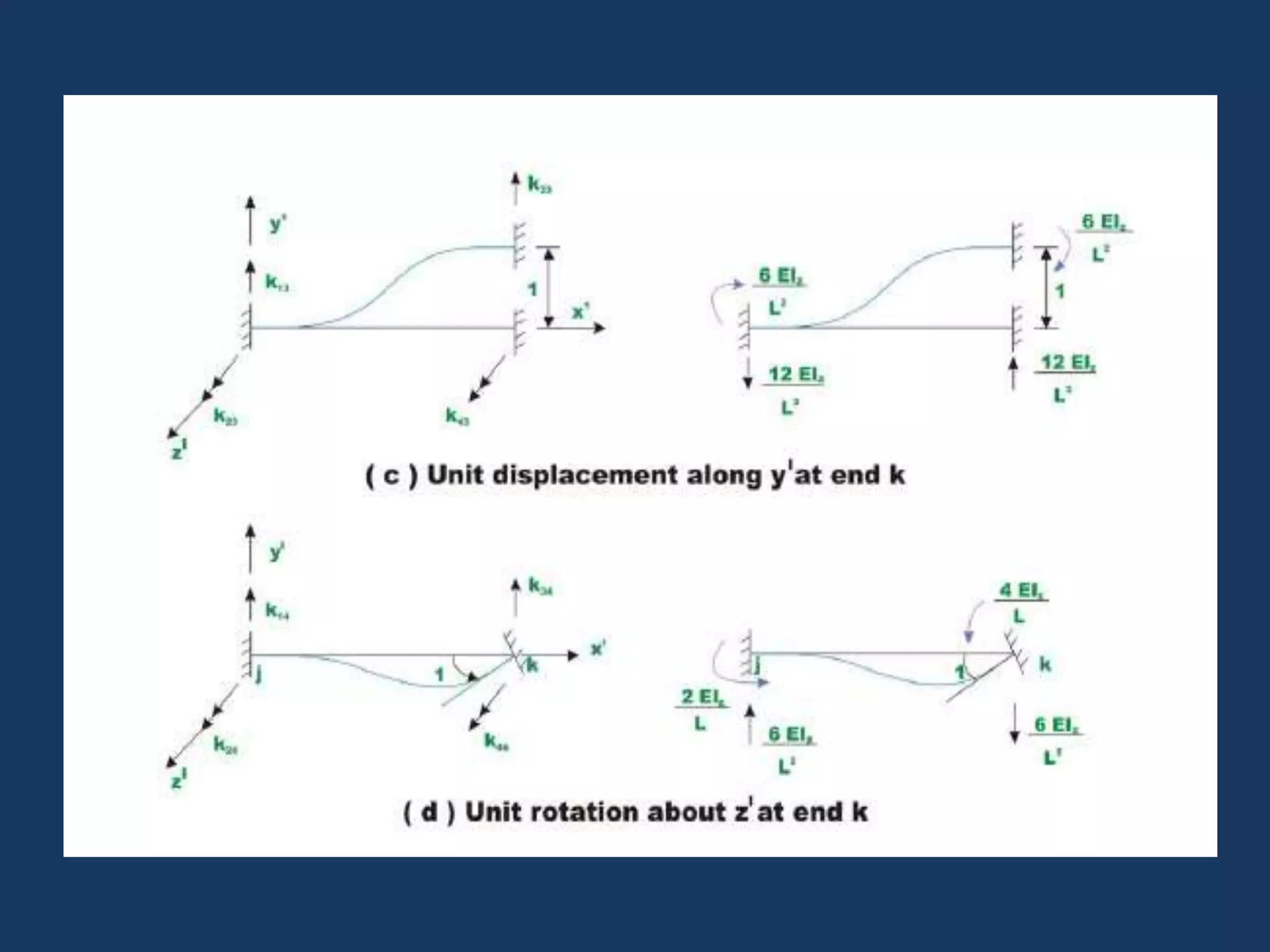
Figure: Beam member
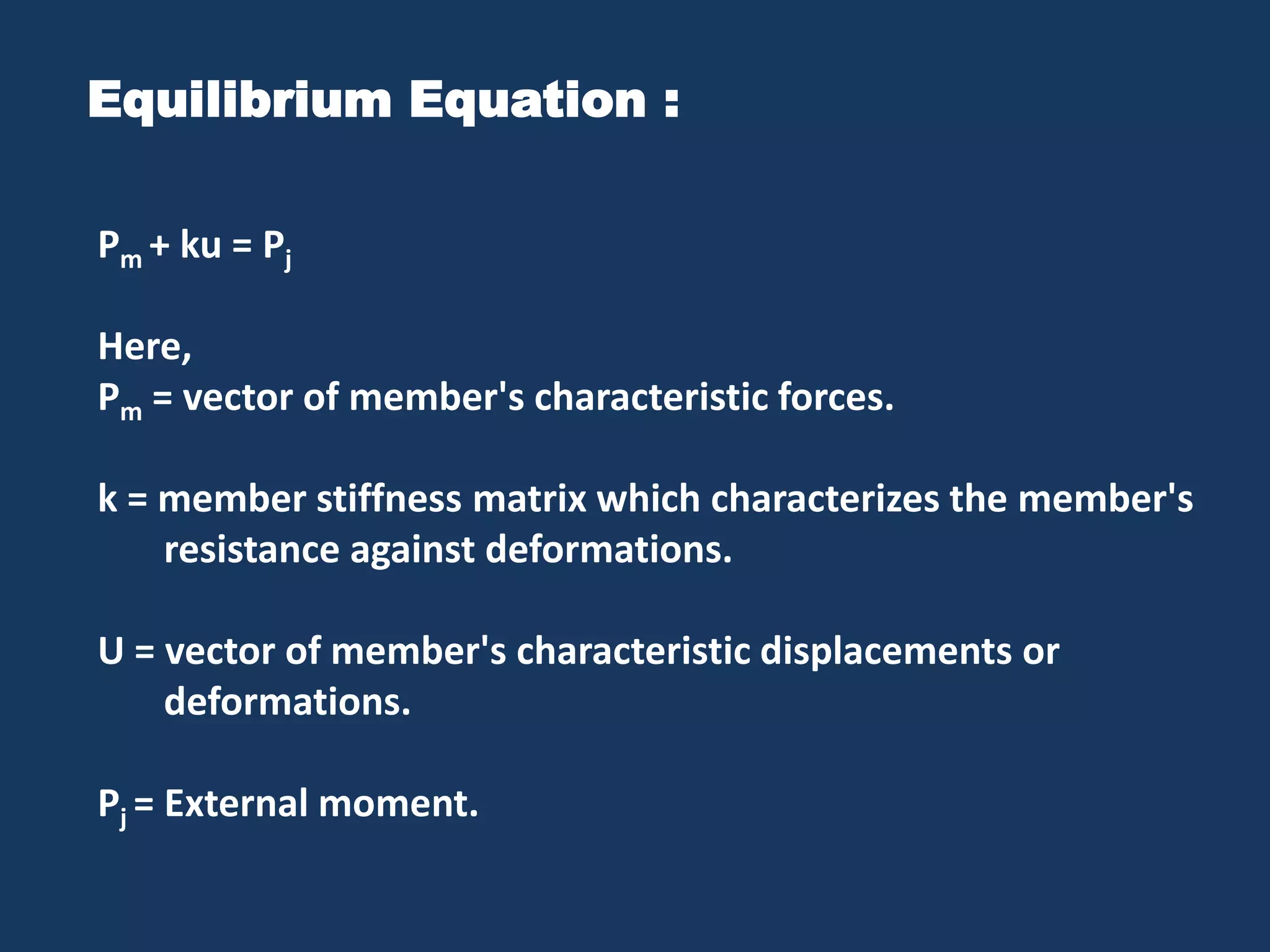
Equilibrium Equation :
Pm + ku = Pj
Here,
Pm = vector of member's characteristic forces.
k = member stiffness matrix which characterizes the member's
resistance against deformations.
U = vector of member's characteristic displacements or
deformations.
Pj = External moment.
Pm
Benefits :
 The direct stiffness method was developed specifically
to effectively and easily implement into computer
software to evaluate complicated structures that
contain a large number of elements.
 Nearly every finite element solver available is based
on the direct stiffness method.
 Reduces computation time and reduce the required
memory.
 One of the largest areas to utilize the direct stiffness method
is the field of structural analysis where this method has been
incorporated into modeling software. The software allows
users to model a structure and, after the user defines the
material properties of the elements, the program automatically
generates element and global stiffness relationships.
Thank you

Solving indeterminate structures by using stiffness method. 10.01.03.130

  • 1.
    Ahsanullah University of Science& Technology Pre-stressed Concrete Lab CE-416 Course Teacher: Ms. Sabreena Nasrin Assistant Professor and Mr. Galib Muktadir Lecturer Department of Civil Engineering
  • 2.
    Presentation by : IshratJahan ID: 10.01.03.130
  • 3.
    Presentation on : SolvingStatically Indeterminate Structure by Stiffness Method
  • 4.
    Introduction : The structureswhich can not be analyzed by the equations of static equilibriums alone are called indeterminate structures. This kind of structures consist of more members and/or more supports. The excess members or reactions of an indeterminate structure are called redundant.
  • 5.
    Figure : Anindeterminate structure
  • 6.
    Direct stiffness method: It is a matrix method that makes use of the members' stiffness relations for computing member forces and displacements in structures. In applying the method, additional restrains ( supports) are added to fix all the degrees of freedom and the values of these restraints calculated. The restraints are then removed to allow deformations and restore equilibrium. The resulting equilibrium equations are solved for the displacements and subsequently the force actions are determined by compiling into a single matrix equation.
  • 7.
    Analytical steps : At first , identify the degree of kinematic indeterminacy,  Apply restrains and make it kinematically determinate (fully restraint structure) ,  Apply loads on the fully restraint structure and calculate forces,  Apply unknown displacements to the structure one at a time keeping all the other displacements zero and calculate forces corresponding to each degree of freedom,  Write the equilibrium equations,  Solve the equations in matrix form and obtain the value of unknown displacements,  Calculate other reactions (reactions, SF,BM etc)
  • 8.
  • 11.
    Equilibrium Equation : Pm+ ku = Pj Here, Pm = vector of member's characteristic forces. k = member stiffness matrix which characterizes the member's resistance against deformations. U = vector of member's characteristic displacements or deformations. Pj = External moment.
  • 13.
  • 18.
    Benefits :  Thedirect stiffness method was developed specifically to effectively and easily implement into computer software to evaluate complicated structures that contain a large number of elements.  Nearly every finite element solver available is based on the direct stiffness method.  Reduces computation time and reduce the required memory.  One of the largest areas to utilize the direct stiffness method is the field of structural analysis where this method has been incorporated into modeling software. The software allows users to model a structure and, after the user defines the material properties of the elements, the program automatically generates element and global stiffness relationships.
  • 19.